One Community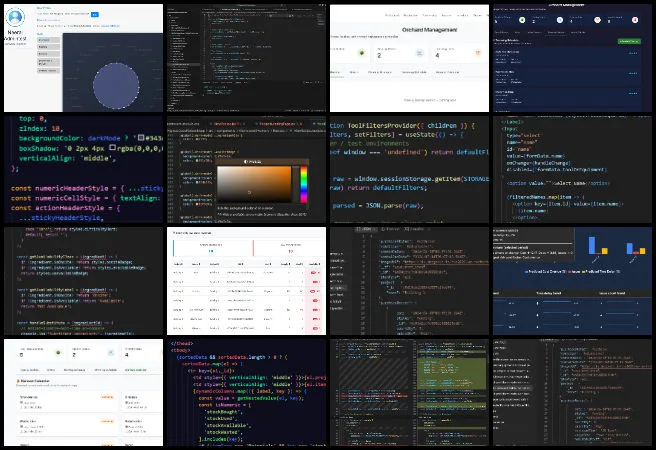
Making Eco-living Mainstream Accessible – One Community Weekly Progress Update #678
Making eco-living mainstream accessible is our commitment to evolving sustainability through open source solutions created by an all-volunteer team. At One Community, we are developing sustainable approaches to food, energy, housing, education, economics, and social architecture as a self-replicating model designed to regenerate our planet. We open source and free share the complete process to support a global collaboration of teacher/demonstration hubs, all working together for “The Highest Good of All” and creating a world that works for everyone through fulfilled living and global stewardship practices.
- Here’s our project overview
- Here’s our world-change methodology
- Here’s how this becomes self-replicating
- Here’s how we are open source and free-sharing all the do-it-yourself designs
OUR MAIN OPEN SOURCE HUBS
Click on each icon to be taken to the corresponding Highest Good hub page.
One Community’s physical location will forward this movement as the first of many self-replicating teacher/demonstration communities, villages, and cities to be built around the world. This is the March 16, 2026 edition (#678) of our weekly progress update detailing our team’s development and accomplishments:
Making Eco-living Mainstream Accessible
One Community Progress Update #678
Making Eco living Mainstream Accessible - One Community Weekly Update #678

DONATE | COLLABORATE | HELP WITH LARGE-SCALE FUNDING
CLICK HERE IF YOU’D LIKE TO RECEIVE AN EMAIL EACH WEEK WHEN WE RELEASE A NEW UPDATE
YOU CAN ALSO JOIN US THROUGH SOCIAL MEDIA


ONE COMMUNITY WEEKLY UPDATE DETAILS
HIGHEST GOOD HOUSING PROGRESS
One Community is making eco-living mainstream accessible through Highest Good housing that is artistic and beautiful, more affordable, more space efficient, lasts longer, DIY buildable, and constructed with healthy and sustainable materials:
- Learn about: Our Upcoming Crowdfunding Campaign
- Learn about the different village models and making eco-living mainstream accessible: 7 Sustainable Village Models
- Visit the open source portals for the first two: Earthbag Village OS Hub | Straw Bale Village OS Hub
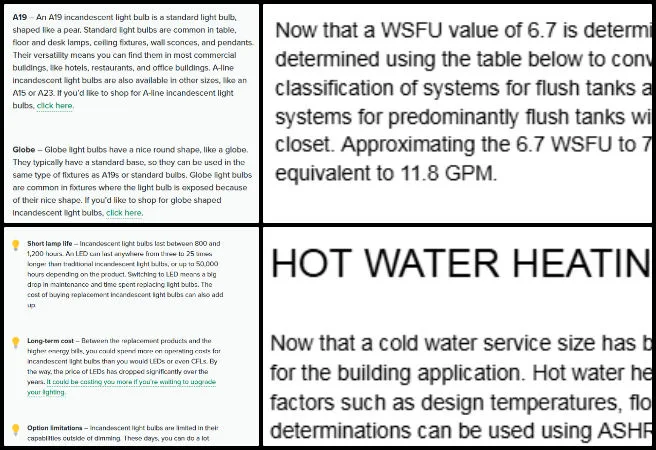
This week, Derrell Brown (Plumbing Designer) continued working on the Earthbag Village home final MEP report and applied required revisions to align the final draft with submitted comments and expectations. He advanced work on the MEP Final Report by addressing formatting issues in the previous draft related to plumbing images, introductory text for calculations and figures, and terminology used in the plumbing section. He updated the document to improve consistency in how methods and plumbing references were presented and revised sections so the descriptions of calculations and supporting images aligned with the rest of the document. He also continued researching the use of incandescent lighting as a potential replacement load for existing LED lighting and evaluated how this change could affect the electrical load assumptions used in the report. This work contributes to making eco-living mainstream accessible by strengthening the clarity and usability of sustainable building system documentation. See below for some of the pictures related to this work.
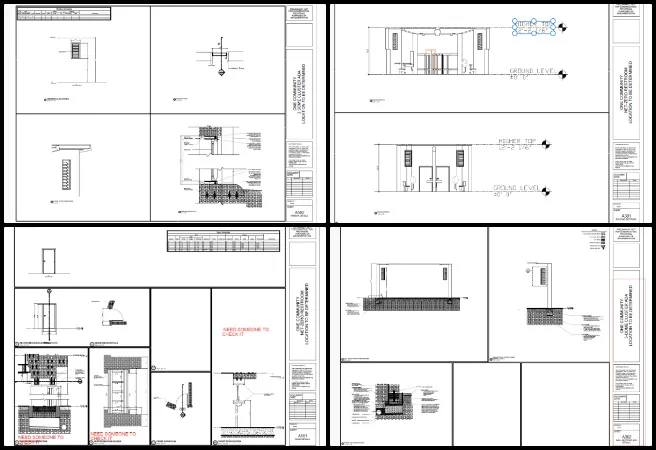
Fangting Xu (Interior Design Intern) continued working with ADA codes related to building connections for the ADA 3-dome cluster of the Earthbag Village. She reviewed the ADA restroom and cluster checklists and documented code requirements on sheet A001. Fangting addressed Jae’s feedback to revise wall profiles and clean up the sheet layouts. She revised wall profiles, adjusted connected path labeling, compared drawing scales with Mikayla’s original drawings, and removed irrelevant detail boxes. She also reviewed Baraka’s work and planned the ADA shower room construction documents. Her efforts support making eco-living mainstream accessible by ensuring accessibility standards are integrated into sustainable housing design. Review the latest updates in the images below.
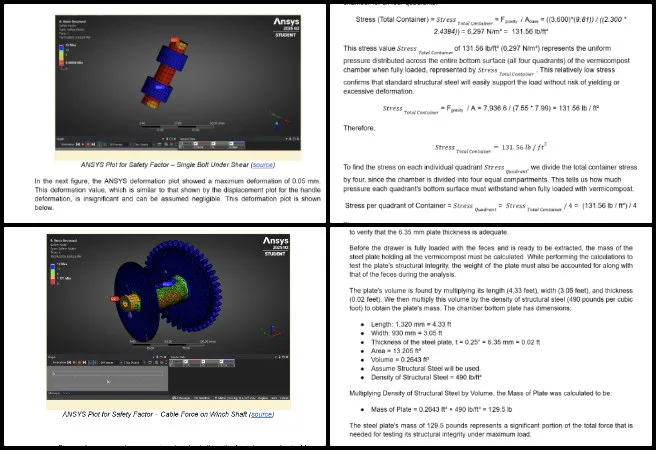
Rishi Chakrapani (Mechanical Engineer) continued working on the Vermiculture Toilet. He completed and proofread the vermiculture calculations report to ensure the analysis and explanations were clearly presented. He also continued work on the sensor selection report by updating the content and supporting information. Rishi reformatted both reports to align with the required documentation standards and maintain consistency across the project materials. These updates support making eco-living mainstream accessible by improving the clarity and reliability of technical documentation for sustainable infrastructure systems. Review the latest updates in the images below.
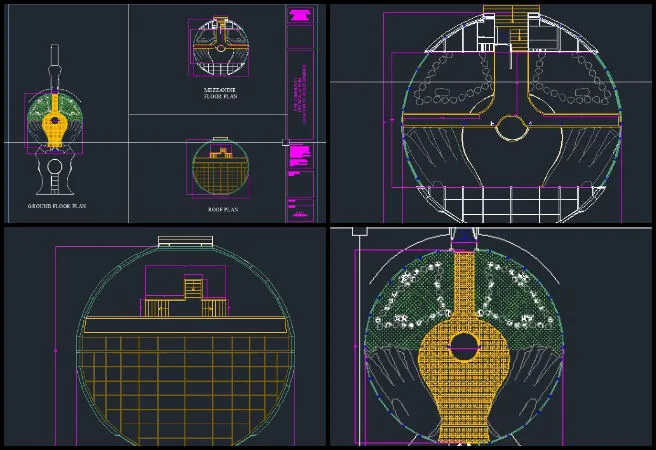
Vaishnav Sanjay Chavan (Intern Volunteer Architectural Project Manager) worked on the Earthbag Village by completing several drawing tasks related to the tropical atrium, including layout drawings, sections, and elevations. He developed multiple layout drawings for the tropical atrium, including the ground floor plan, mezzanine floor plan, and roof plan. He updated and coordinated these drawings to maintain consistency across the overall drawing set and align them with the project design. Vaishnav also organized and prepared the first draft of the floor plans as part of the construction drawing set. His work focused on establishing base dimensions, spatial layout, and the overall organization of the plans. The drawings were compiled to represent the current layout of the tropical atrium and support coordination across the different plans within the project, contributing to making eco-living mainstream accessible through clear and replicable sustainable design documentation. Below, you’ll find some images of this work.
DUPLICABLE CITY CENTER PROGRESS
One Community is making eco-living mainstream accessible through a Duplicable and Sustainable City Center that is LEED Platinum certified/Sustainable, can feed 200 people at a time, provide laundry for over 300 people, is beautiful, spacious, and saves resources, money, and space:
- Learn about this building and it’s function and making eco-living mainstream accessible: Duplicable City Center Open Source Hub
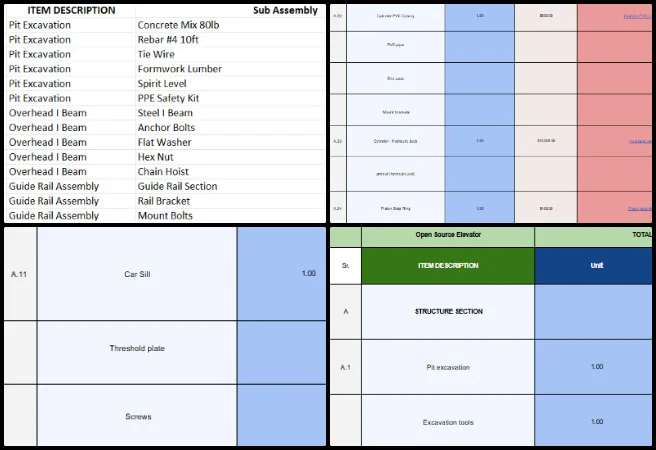
This week, Akhil Shesham (Mechanical Engineer) continued working on the Duplicable City Center design. He focused on elevator subcomponents by adding product URLs and updating the cost analysis sheet. He reviewed existing entries, identified missing or outdated subcomponent details, and researched current prices across multiple sources to ensure the sheet reflected accurate and up-to-date cost information. Akhil systematically added new subcomponents, verified product specifications, and organized the data to maintain consistency throughout the sheet. Discover One Community’s open source Duplicable City Center, which is making eco-living mainstream accessible. See the visuals below for a closer look.
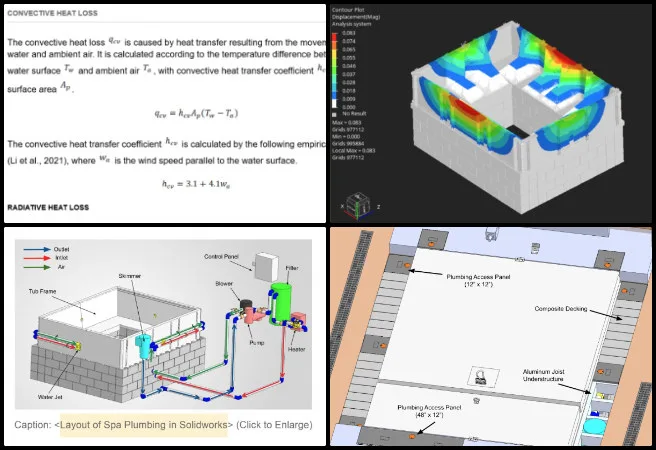
Bevan Chiu (Mechanical Engineer) continued his work finishing the City Center Eco-spa Designs. He focused on developing the content for the final report and edited the plumbing access panel section while adding relevant diagrams. He also embedded the thermal study and structural FEA content into the report and adjusted the wording so it would be suitable for multiple audiences. Bevan began researching methods to insulate the plumbing access panels, including the use of rigid boards placed beneath the decking material. This open source Duplicable City Center project is making eco-living mainstream accessible. For more details, refer to the image below.
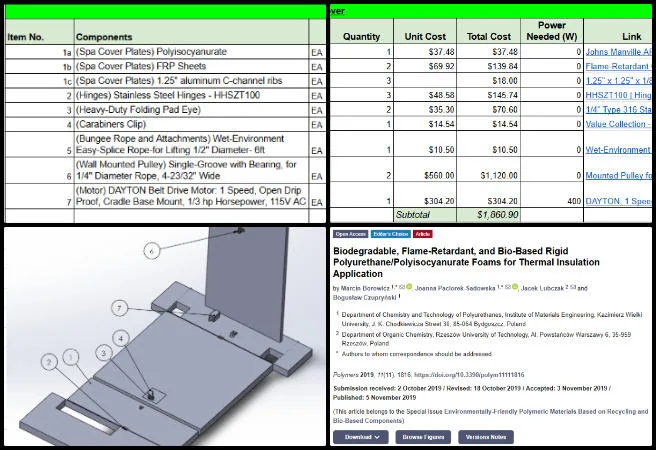
Shivarama Krishna Revanuru (Mechanical Engineer) continued working on the Duplicable City Center design. He focused on cost analysis and the bill of materials (BOM), selecting suitable materials and attaching reference images for the components. He also analyzed the thermal losses of the spa cover and evaluated the insulation capacity to understand how effectively the design retains heat. Shivarama spent additional time learning how to structure and write the technical report for the project. He also examined the stability of the spa cover to ensure the design maintains proper support and balance during use and made modifications to the design and documentation based on the given requirements. This open source Duplicable City Center project is currently making eco-living mainstream accessible. The images below illustrate aspects of this work.
HIGHEST GOOD FOOD PROGRESS
One Community is making eco-living mainstream accessible through Highest Good food that is more diverse, more nutritious, locally grown and sustainable, and part of our open source botanical garden model to support and share bio-diversity:
- Learn about the structures and making eco-living mainstream accessible: Hoop House Hub | Aquapini & Walipini Open Source Hub
- See what we’ll be growing: Gardens & Hoop Houses | Large-scale Structures | Food Forest | TA
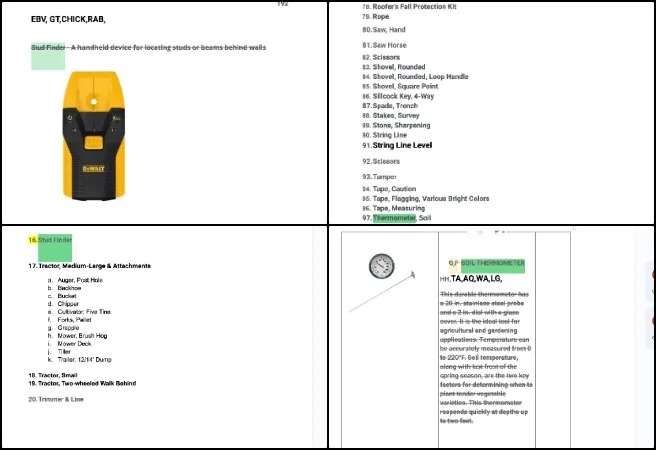
This week, the core team continued working on the Master Tools, Equipment, and Materials/Supplies List for the Large-scale Garden, Botanical Garden, and other Highest Good Food components. They added the stud finder to the Master Tools, Equipment, and Materials/Supplies List and included it in the Goat, Chicken, Rabbit, and Earthbag Village documents as part of ongoing updates to the Highest Good Food documentation. They also removed the soil thermometer from the Goat and Chicken documents and continued reviewing the Master Tools, Equipment, and Materials/Supplies document. This work contributes to making eco-living mainstream accessible by improving the organization and accuracy of open-source tools and equipment documentation, as shown in the images below.
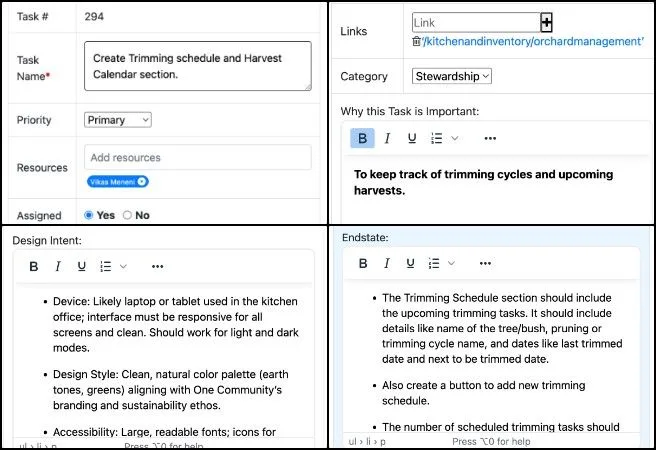
Chelsea Mariah Stellmach (Project Manager) continued working on the Transition Food Self-sufficiency food and inventory tracking software plans. She reviewed the Google document titled “HGN Phase 6: Food-Ingredient Inventory Procurement and Management Software” to monitor comments and requests from the software developers. She assigned these items to related tasks, including “Create Trimming Schedule and Harvest Calendar section,” so development work could continue expanding the system. Chelsea also worked with one developer to draft new task descriptions so the project could continue after his departure. She confirmed his plans to merge the pull requests and ensured the transition process was clearly documented. This work supports making eco-living mainstream accessible by helping maintain progress and coordination within the software development process, as shown in the images below.
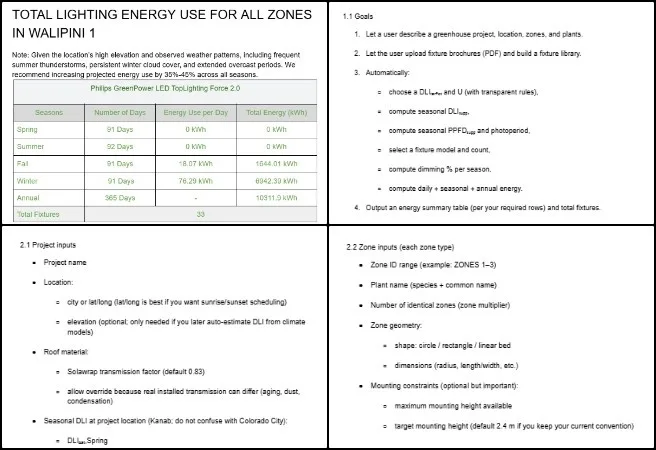
Jay Nair (BIM Designer) continued working on the Aquapini and Walipini Planting and Harvesting documents. He prepared documentation for the creation of a lighting energy calculator and outlined the project requirements. He organized calculation procedures, defined the required input data, and described the expected outputs for the calculator. Jay also structured the documentation so it could guide software developers in implementing the tool and ensure it aligns with the needs of the greenhouse lighting energy analysis. This work supports making eco-living mainstream accessible by helping organize and clarify documentation needed for implementing energy analysis tools, as shown in the images below.
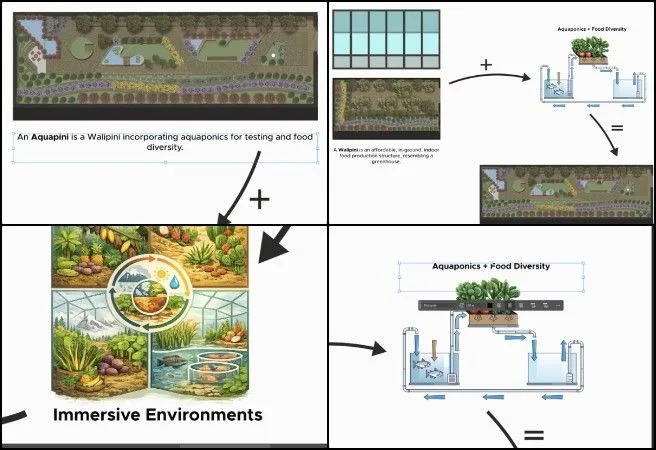
Shivangi Varma (Architectural Designer and Planner) continued working on the redesign of the Highest Good Food overall presentation. She developed the Differences diagram based on feedback, including edits to the two iterations and updates to the axonometric version. She added 3D details from the shared model, incorporated revisions from the updated definitions discussed during feedback, and refined the axonometric Differences diagram to reflect these changes. Shivangi also ensured that the visual updates clearly communicate the project information. This work supports making eco-living mainstream accessible by improving the clarity and structure of visual documentation used for project communication and planning, as shown in the images below.
HIGHEST GOOD ENERGY PROGRESS
One Community is making eco-living mainstream accessible through Highest Good energy that is more sustainable, resilient, supports self-sufficiency and includes solar, wind, hydro and more:
- Learn about the open source sustainable-energy foundations and making eco-living mainstream accessible: Solar, Hydro, and Wind
- Explore our research into the most sustainable products and companies for saving water and energy: Insulation, Eco-laundry, Lightbulbs and Light Bulb Companies, Doors and Door Companies, Windows and Window Companies, Toilets, Faucets and Faucet Accessories, Urinals, and more.
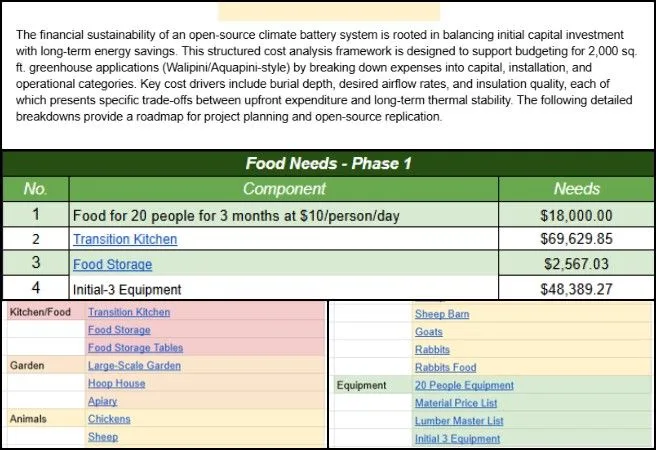
This week, the core team continued contributing to the Highest Good Energy initiative. They reviewed a stakeholder’s feedback video and incorporated the suggestions into the cost summary for the food rollout phases. They also analyzed the cost for the Climate Battery used in the Aquapini and Walipinis and made minor adjustments to improve clarity. The team reviewed the energy needs analysis along with Vaishnav’s ongoing review documentation. This work supports making eco-living mainstream accessible by improving the clarity and organization of cost and energy planning documentation, as shown in the images below.
HIGHEST GOOD EDUCATION PROGRESS
One Community is accelerating component development for sustainable evolution through Highest Good education that is for all ages, applicable in any environment, adaptable to individual needs, far exceeds traditional education standards, and more fun for both the teachers and the students. This component of One Community is about 95% complete with only the Open Source School Licensing and Ultimate Classroom construction and assembly details remaining to be finished. We’ll report on the final two elements to be finished as we develop them.
With over 8 years of work invested in the process, the sections below are all complete until we move onto the property and continue the development and open sourcing process with teachers and students – a development process that is built directly into the structure of the education program and everything else we’re creating too:
- Program Overview: Education Open Source Hub
- How the components work together in designing human orchestrated eco-abundance: How to use the Education for Life Program
- Lesson Plans for Life – Lesson Plans How-to
- Foundations of Outstanding Leaders, Teachers, and Communicators
- Curriculum for Life
- Teaching Strategies for Life
- Learning Tools and Toys for Life
- Evaluation and Evolution
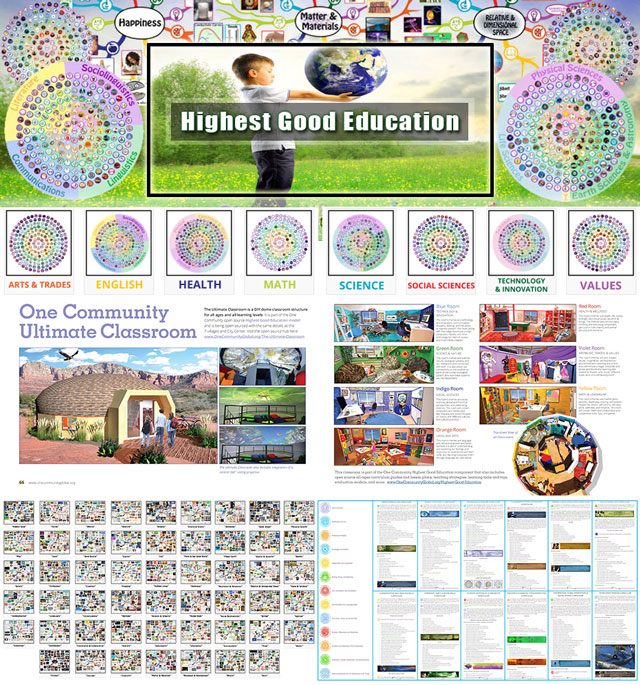
Highest Good Education: All Subjects | All Learning Levels | Any Age – Click image for the open source hub
HIGHEST GOOD SOCIETY PROGRESS
One Community is making eco-living mainstream accessible through a Highest Good society approach to living that is founded on fulfilled living, the study of meeting human needs, Community, and making a difference in the world:
- Read the Highest Good society overview: Highest Good Society
- Learn about the model for fulfilled living and sharing and making eco-living mainstream accessible: A Day in the Life
- Learn about the 4 economic models: RBE | For-profit | Non-profit | Entrepreneurship
- Learn about our open source community collaboration and management software: The Highest Good Network
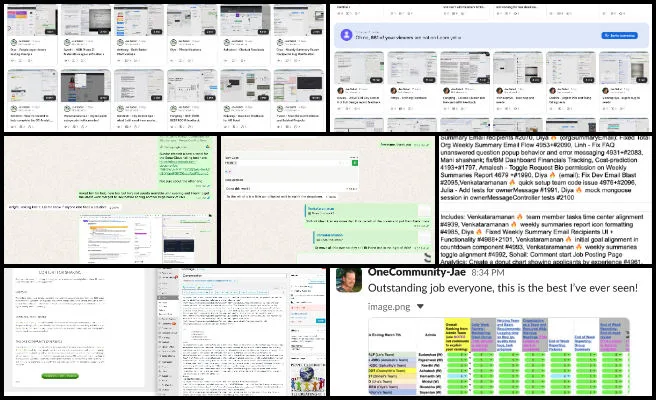
This week, the core team completed over 38 hours managing volunteer work reviews, handling emails, overseeing social media accounts, supporting web development, and integrating bug fixes for the Highest Good Network.. They also interviewed and onboarded new volunteer team members. Additionally, they produced and integrated the video above, which demonstrates how making eco-living mainstream accessible serves as a foundational element of One Community’s broader mission. The following images showcase highlights of this work.
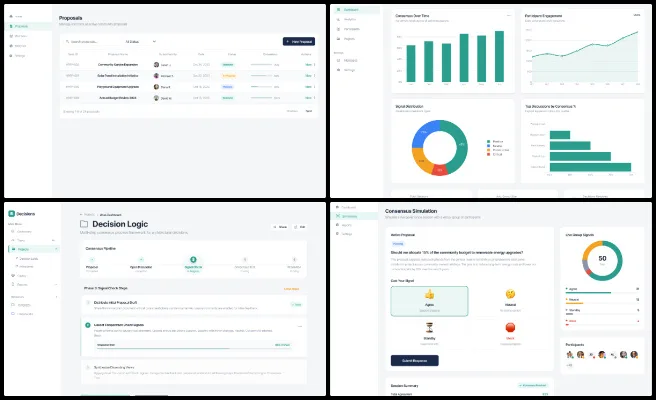
Pooja Kulkarni (UI/UX Designer) continued advancing governance platform designs through structured interaction flows and collaborative engagement features that support transparent participation and informed decision-making on the Highest Good Networkk. She designed multiple governance interfaces, including the Decision Logic interface, which visualizes the multi-step consensus pipeline: proposal submission, open discussion, signal check, consensus testing, and final resolution. This interface helps users understand the decision-making flow. Pooja also created a Consensus Simulation interface that allows users to practice governance participation by casting signals such as agree, neutral, standby, or block while viewing real-time group signal distribution. She designed the Governance Analytics dashboard to help moderators and community leaders monitor consensus trends, participant engagement, and signal distribution across discussions. Pooja developed the Proposals management interface, enabling users to track community proposals, view consensus progress, and manage decision workflows. This work supports One Community’s efforts toward making eco-living mainstream accessible; the images below highlight key aspects of her work.
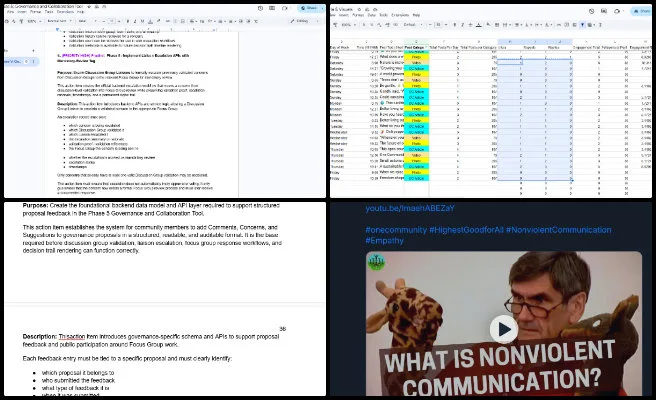
Prudhvi Marpina (Data Analyst) continued contributing to the Highest Good Network software development, marketing, and administrative initiatives in support of making eco-living mainstream accessible. He supported Phase 5 governance work by writing detailed action items for Deliverable 3 and updating frontend tasks for Deliverable 2. Prudhvi reviewed the related Figma designs to maintain alignment between documentation and interface planning. He coordinated with the Figma developer to review and align the required design components for these deliverables. Prudhvi also scheduled the week’s BlueSky posts, monitored analytics, and updated performance data in the Social Media Master Dashboard and BlueSky tracking sheets. He supported OC administration by updating the weekly blog and providing feedback on the administration team’s work for the reporting week. This reinforces making eco-living mainstream accessible through collaboration and ongoing refinement. The following images showcase highlights of this work.
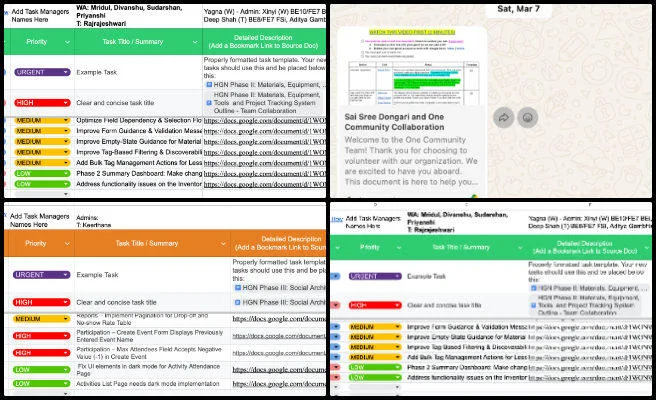
Yagna Reddy Badvel (Data Analyst and Team Administrator) continued supporting administrative and tracking operations on the Highest Good Network. He reviewed Sai Sree Dongari’s Admin-in-Training progress across all four steps, verifying completeness, formatting, and alignment with current admin guidelines while providing structured feedback for improvement. Yagna also supported ongoing administrative processes by reviewing documentation, updating tracking records, and ensuring tasks remained consistent with project standards. He maintained Phase 2 tracking sheets to support accurate task organization, updated task statuses where needed, and maintained workflow visibility across the system. Yagna reinforced One Community’s efforts toward making eco-living mainstream accessible. The images below show some of his work.
ADMINISTRATION TEAM
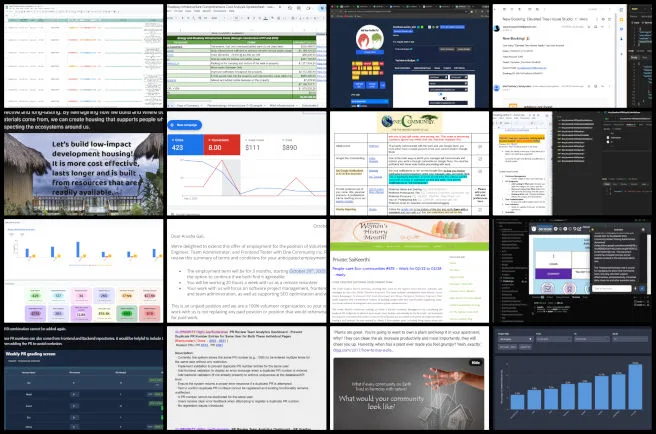
The Administration Team’s summary, which covers their work on the Highest Good Network, was managed by Prudhvi Marpina (Data Analyst) and includes Anusha Gali (Software Engineer), Ashutosh Mishra (Software Engineer), Keerthana Chitturi (System Administrator), Divanshu Bakshi (Team Admin), Hemanth Sai Venkata Srinivasa Kumar Nidamanuru (Administrative Assistant), Leo Lishin Shiu (Software Engineer), Manish Kanuri (Data Scientist), Mridul Bhushan (Volunteer Project Strategy Analyst and Team Administrator), Olawunmi “Ola” Ijisesan (Administrative and Management Support), Priyanshi Sharma (Data Analyst and Team Administrator), Rachna Malav (Data Analyst), Rajeshwari Bhirud (Administrator), Rishitha Adepu (Administrator), Sai Keerthi Domakonda (System Administrator), Sai Sree Dongari (Data Analyst), Sayantan Paul (Frontend Tester and Software Team Administrator), Shameera Musthafa (Data Analyst), Shreya Shetty (Data Analyst), and Sudarshan Raju Chintalapati Venkata (Data Analyst). The Administration Team supports the Highest Good Network, a tool designed to track and measure progress while developing systems that contribute to making eco-living mainstream accessible. Through administrative support, documentation, testing, training, recruiting, analytics, and content management, the team helps advance this mission, aligning with One Community’s vision of building a replicable and sustainable future model.
This week, Anusha reviewed and tested more than fifty pull requests across frontend and backend components while coordinating with developers to resolve defects and verify fixes. Ashutosh advanced development of the AI chatbot by integrating the frontend and backend with the vector database, refining embedding workflows, and beginning work on a document ingestion pipeline. Divanshu maintained Mastodon communications, automated engagement metric extraction using Python scripts, and updated analytics dashboards while documenting feature issues and supporting backlog coordination. Hemanth performed local pull request testing, reproduced reported issues, and documented validation results through GitHub comments. Keerthana reviewed administrative submissions for compliance, provided structured feedback to team members, and addressed dark mode interface issues affecting system components. Together, these efforts strengthen development, testing, and administrative workflows in support of making eco-living mainstream accessible.
Leo compiled and formatted team summaries for the blog, verified analytics data uploads, and tested Meta API functionality running through AWS systems. Manish reviewed multiple pull requests, followed up on previously reported issues, and maintained documentation for testing updates and unresolved items. Mridul managed LinkedIn and X/Twitter publishing schedules while updating analytics dashboards and supporting WordPress blog preparation. Ola organized shared folders, trained a new PR review manager, refreshed social media dashboards, and updated Pinterest analytics using exported CSV data. Priyanshi conducted detailed testing across project management dashboards, validating chart functionality, filters, export features, and usability across light and dark modes while documenting improvement suggestions. These coordinated activities strengthen collaboration, accountability, and system reliability in support of making eco-living mainstream accessible.
Rachna reviewed communications, revisited pending tasks, and analyzed SEO pages while preparing for upcoming coordination activities. Rajeshwari supported blog administration, tested PR dashboard endpoints, and began implementing a hotfix within the user management workflow while documenting administrative feedback. Rishitha coordinated weekly blog compilation, SEO optimization, Threads engagement, and dashboard updates using Excel and Python scripts. Sai Keerthi reviewed administrative submissions and Admin-in-Training work to ensure guideline compliance and workflow clarity. Sai Sree coordinated PR review activities, reviewed blog submissions for guideline alignment, and communicated with developers regarding bugs and feature improvements. This progress strengthens organized workflows and operational clarity that support making eco-living mainstream accessible.
Sayantan tested frontend and backend pull requests, documented system issues, assigned development tasks across multiple modules, and validated dashboard functionality improvements. Shameera coordinated PR review processes, curated visual documentation, and supported hiring interviews. Shreya refined Aircrete data visualizations and optimized Google Ads campaign performance while contributing to blog updates and collages. Sudarshan managed blog SEO updates, tested dashboard pull requests, documented system issues, and created tasks addressing usability improvements and bug fixes. To learn more about how this work supports making eco-living mainstream accessible, visit the Highest Good Society and Highest Good Network pages. Highlights of the team’s contributions are shown in the collage below.
HIGHEST GOOD NETWORK PROGRESS
 One Community is making eco-living mainstream accessible through open source Highest Good Network® software that is a web-based application for collaboration, time tracking, and objective data collection. The purpose of the Highest Good Network is to provide software for internal operations and external cooperation. It is being designed for global use in support of the different countries and communities replicating the One Community sustainable village models and related components.
- Learn about our open source community collaboration and management software and making eco-living mainstream accessible: The Highest Good Network
This week, the core team tested Highest Good Network pull requests and confirmed eight as fixed, highlighting One Community’s commitment to reinventing the sustainability industry. pull requests and confirmed eight as fixed, highlighting One Community’s commitment to reinventing the sustainability industry. The team found that several issues were not fixed, including FAQ unanswered question popup behavior and error messaging, the unsaved changes prompt after template save, hiring analytics chart rendering and layout styling, the refresh button for a disconnected timer, and the Job Posting Page Analytics donut chart showing applicants by experience. In addition, they reported that the cost prediction line chart PR could not be tested due to the absence of data on the Main branch. The team also identified twelve pages that still contain light and dark mode issues, created a new task related to removing or deleting a reviewer on the PR Review Team Analytics Dashboard weekly PR grading page, and recorded a new bug for tracking how many times a task has been extended. Additional bugs were reported related to the header image, menu, text display on smaller screens, and the Job Posting Page Analytics donut chart showing applicants by experience. This work supports One Community’s mission of making eco-living mainstream accessible. See the Highest Good Society and the Highest Good Network pages, and the collage below, for an overview of the team’s contributions.

ALPHA SOFTWARE DEVELOPMENT TEAM
The Alpha Software Team, working on the Highest Good Network software, was managed by Lin Khant Htel (Frontend Software Developer). The team includes Linh Huynh (Software Engineer), Maithili Kalkar (Software Engineer), Som Ramnani (Software Engineer), and Casstiel Pi (Software Engineer). The Highest Good Network software is a key part of creating measurable global transformation. The software supports social architecture, construction, production, and maintenance processes that contribute to the open source project and resilient ecosystems. Designed to be portable and scalable, the Highest Good Network is ideal for off-grid and sustainable living communities, reflecting One Community’s open source commitment to making eco-living mainstream accessible.
This week, Lin reviewed PR #1764 by examining the code, running tests on a local machine, and confirming that all tests passed. He also checked the Alpha team members’ weekly summaries, photos, and videos, and handled Alpha team management tasks. These activities contributed to progress toward making eco-living mainstream accessible. And Linh implemented backend work for student evaluation results by adding new models for evaluations and evaluation tasks, extending the notification schema to support evaluation result notifications, and adding a student profile field to track when results were last viewed. He built service logic to publish evaluation data, calculate overall scores and submission status metrics, map performance levels to display colors, return student evaluation summaries, and update notification read state when results were opened. Linh also added student endpoints for fetching evaluation results and checking for new result notifications, along with an educator endpoint for publishing evaluation results for a student. This outcome supports making eco-living mainstream accessible through documented and DIY-ready progress.
As part of backend verification, the team registered the new routes in the backend startup configuration, created unit tests for the student evaluation controller, educator controller, and evaluation service, and verified backend behavior with focused Jest test runs. Manual verification was supported by creating a Postman collection, a local environment template, negative test cases for validation and permission errors, a README with testing steps, and a seed script that generates sample educator and student data, publishes evaluation results, and prints tokens and IDs for local testing. This effort supported making eco-living mainstream accessible.
Maithili resolved repository access issues by requesting and obtaining git push permissions for HGNRest and fixed ESLint errors triggered during the Husky pre-commit process so commits passed the required checks. She reviewed the requirements documentation and confirmed that the issues previously reported in PR #1618 had already been addressed in PR #1808, after which PR #1618 was closed by the project lead. Following direction from the project lead, she tested the bookings payment workflow and identified a logic issue where the create-payment-intent endpoint allowed payment for a date range that overlapped with an existing booking. Maithili worked on resolving this inconsistency between payment intent creation and booking validation logic, contributing to making eco-living mainstream accessible.
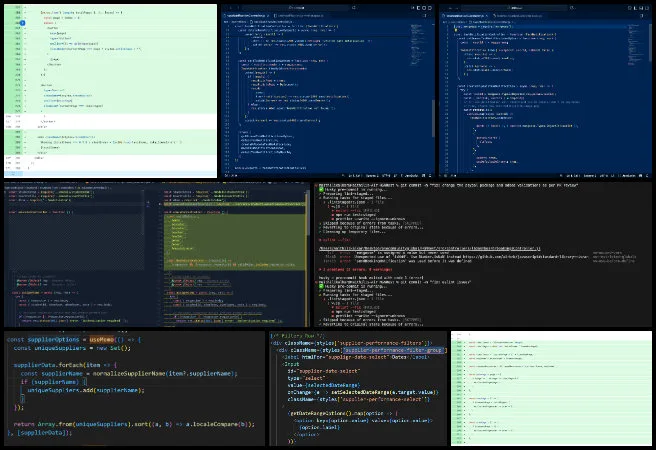
Work also continued on the frontend, where Som implemented pagination for the ResourceManagement component by adding centralized pagination state for currentPage and itemsPerPage, updating table logic so that only the correct portion of filtered data is displayed for the active page, and synchronizing pagination behavior with the search functionality. He enhanced the interface with dynamic page number controls, previous and next navigation buttons, an items-per-page selector, and a record count indicator showing ranges such as “Showing X–Y of Z.” After implementing and testing these updates, he created a pull request with photos, videos, and written descriptions demonstrating the pagination behavior. Casstiel continued work on adding a supplier filter and an “All Suppliers” option for the Supplier Performance by On-Time Delivery % chart, implementing client-side filtering so selecting a supplier updates the chart without triggering additional API requests. See the Highest Good Society and Highest Good Network pages for more on how we are contributing to making eco-living mainstream accessible. See the collage below to view the team’s work.
BINARY BRIGADE SOFTWARE DEVELOPMENT TEAM
The Binary Brigade Team, which presented their work on the Highest Good Network software, was managed by Amalesh Arivanan (Software Engineer) and included Roshini Seelamsetty (Software Engineer), Sourabh Bagde (Software Developer), Ramsundar (Ram) Konety Govindarajan (Software Engineer), and Harsha Rudhraraju (Software Engineer). The Highest Good Network software is our tool for managing and objectively measuring progress, ensuring that all contributions are tracked and aligned with our mission of making eco-living mainstream accessible. It supports social architecture, construction, production, and maintenance processes that contribute to open-source projects and resilient, sustainable ecosystems.
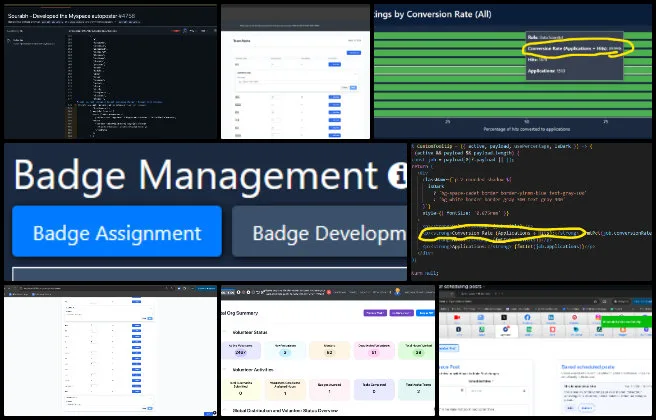
This week, Roshini updated the Total Active Teams metric in the Volunteer Activities dashboard under owner login. She changed the logic so a team is counted as active only when at least one member logged volunteer hours during the selected reporting period, instead of counting all teams marked active, and created a pull request for that change. Roshini also began work on the Hours Completed / Tasks report after identifying that previous data inflated total hours beyond realistic volunteer capacity. She checked the report across multiple past weeks to verify aggregation and calculation logic and added a label below the Hours Completed bar chart to show the percentage split between tasks and projects, including project counts. Both backend and frontend updates are in progress. These efforts accelerate making eco-living mainstream accessible through continuous improvement and transparency.
Harshavarma addressed the issue reported in PR 4325 by tracing the root cause of graph-related problems, correcting the y-axis role label truncation, and continuing duplicate job role consolidation so each role appears only once. He analyzed both frontend rendering and backend processing, implemented a backend change to combine duplicate roles before data reaches the frontend, verified the graph shows a single entry per role, added a formula display for the conversion rate between Applications and Hits, and updated tooltip styling for dark mode readability. Ram worked on a PR Grading Dashboard duplication bug where the same reviewer appeared multiple times. He changed the workflow so records are grouped by reviewer name, merged graded PRs from different dates into one deduplicated list, and updated save behavior so only newly added PRs are sent while previously loaded PRs are excluded. These improvements reinforce making eco-living mainstream accessible through collaboration and ongoing refinement.
Work also continued with Sourabh, who implemented a Plurk-only image insertion feature in the Announcements composer by adding an image URL field and an Insert Image button that inserts the URL at the cursor position while preserving cursor stability. He added and wired the scheduling model and routes, registered scheduling endpoints under the API, updated middleware to allow schedule-related testing, configured a cron scheduler to publish posts at the correct time, and set successful Plurk posts to automatically remove their scheduled records. Sourabh also aligned the Plurk scheduling UI with the existing Slashdot scheduled post flow for consistent behavior across platforms. This work demonstrates making eco-living mainstream accessible in practical and measurable ways.
Amalesh resolved merge conflicts and updated Node versions for multiple pull requests, including PR 4975 and PR 2120, spent 42 minutes in the weekly team meeting, and addressed reviewer comments across other PRs. These tasks ensure smooth integration and version consistency for the project. By managing these updates and coordinating contributions across the team, he supports making eco-living mainstream accessible. See the Highest Good Society and Highest Good Network pages for more on how this supports making eco-living mainstream accessible. The collage below shows images of the team’s work.
CODE CRAFTERS SOFTWARE DEVELOPMENT TEAM
The Code Crafters Team’s summary, covering their work on the Highest Good Network software, was managed by Sphurthy Satish (Software Engineer). The team includes contributions from Akshith Kumar Reddy Balappagari Gnaneswara (Full-Stack Developer), Shreya Padaganur (Software Engineer) and Yu Yan (Software Engineer). Their work contributes to One Community’s mission of making eco-living mainstream accessible through collaborative software development and continuous system improvements.
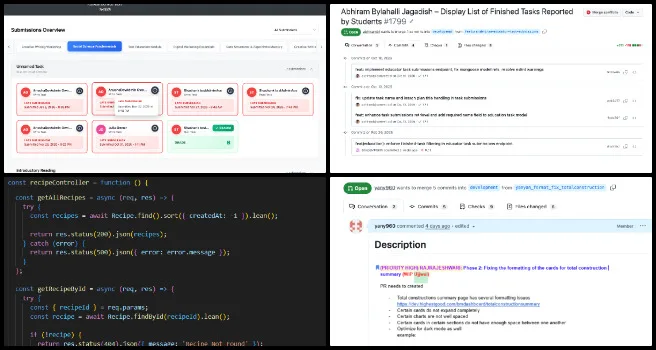
This week, Akshith worked on Phase 6 Kitchen Inventory Management by creating backend API endpoints to add and store recipes and their instructions. He defined the recipe model with required fields, implemented the controller with GET, POST, and DELETE methods, and created the router to connect the endpoints to the controller for full recipe functionality. Akshith has pushed the code and is preparing to test the endpoints to verify behavior before raising a pull request. These contributions advance making eco-living mainstream accessible by supporting structured and replicable backend development.
Shreya focused on finishing an abandoned pull request for the Educator Task Submissions UI Implementation. She updated the backend endpoint by enforcing finished-task filtering, refining query handling, and standardizing status mapping for accurate UI data. Shreya adjusted logic to return only completed and graded tasks, improved response formatting, consolidated filtering behavior, and ensured consistent status representation across API responses. She also performed local API testing for authentication, query parameters, and edge cases, and updated the written summary intended for publication on the website. These actions strengthen the goal of making eco-living mainstream accessible through clear and reliable software functionality.
Sphurthy investigated a UI issue on the Community Portal All Events page where opening dropdown menus in the Search Filters section prevented scrolling while the dropdown remained active. He documented the behavior, describing how scroll lock interferes with navigation, particularly on smaller screens or when multiple event cards are displayed. Sphurthy outlined the expected behavior so scrolling remains enabled while interacting with dropdowns, categorized the problem as a UI and usability concern, and clarified its impact on accessibility. This work supports making eco-living mainstream accessible by maintaining inclusive design and open standards for software interfaces.
Yu implemented dark mode support and refined layout for the Total Construction Summary dashboard. He updated styling for labor hours distribution, project risk profiles, and cost comparison components to ensure visibility in dark theme. Yu adjusted the weekly project summary by changing the financial section to a dual-chart display, set the loss tracking card to full width, corrected map container dimensions, and integrated CSS variables for consistent theming. He verified component contrast and layout alignment across themes to ensure a clear and inclusive interface. These updates contribute to making eco-living mainstream accessible. Below is a collage highlighting the team’s work for the week.
DEV DYNASTY SOFTWARE DEVELOPMENT TEAM
The Dev Dynasty Team’s summary, covering their work on the Highest Good Network software, was managed by Deekshith Kumar Singirikonda (Developer) and includes Adithya Cherukuri (Volunteer Software Engineer), Aditya Gambhir (Software Engineer), Neeraj Kondaveeti (Software Engineer), Sai Shravan Neelamsetty (Software Engineer), Sriamsh Reddy Enugu (Software Engineer), and Vikas Meneni (Software Engineer). The Highest Good Network software helps manage and objectively measure processes for open sourcing a better world through social architecture, construction, production, and maintenance processes. This progress supports One Community in making eco-living mainstream accessible.
This week, Adithya focused on the HGN Software Development project by implementing inventory health indicators and summary cards for materials. He added a filter checkbox to display low-stock items, used Flexbox for toolbar layout rows, and moved calculation logic into the ItemsTable component to ensure summary cards update correctly. He also applied decimal formatting to waste calculations to resolve floating-point errors. These efforts support making eco-living mainstream accessible by providing clear and accurate inventory tracking. Aditya completed the backend and frontend infrastructure for equipment image uploads, adding imageUrl fields to the buildingEquipment schema, creating middleware for 5MB PNG and JPEG limits, and refactoring the bmEquipmentController for Azure Blob Storage. He wrote 650 lines of tests covering 28 scenarios and updated the frontend to support FormData and notifications for specific error codes. These contributions advance making eco-living mainstream accessible through well-tested and maintainable code.
Deekshith managed code quality using Vite, Vitest, and Husky configurations while developing the EquipmentUpdateForm React component with controlled inputs and conditional rendering for tool and equipment selection. Neeraj implemented skill score summary cards on the user profile page and created placeholder cards for the PR Team Analysis Dashboard to maintain layout consistency. Shravan developed the View Recipe detail functionality, creating a slide-in panel that displays recipe metadata, ingredient availability status badges, and step-by-step instructions with dark mode support and responsive design.
Sriamsh addressed Phase 2 tasks by resolving merge conflicts and UI misalignments in the Daily Equipment Log and Project Risk Profile sections, and ensured backend code accessibility for pull request reviews. Vikas assisted with coordinating testing and providing feedback on pull request integrations. Together, their work supports making eco-living mainstream accessible through improved collaboration, documentation, and interface reliability. See the Highest Good Society and Highest Good Network pages for more on how this relates to our mission of making eco-living mainstream accessible. Explore some of the team’s work in the collage below.
LUCKY STAR SOFTWARE DEVELOPMENT TEAM
The Lucky Star Team’s summary, covering their work on the Highest Good Network, was managed by Hemanth Sai Venkata Srinivasa Kumar Nidamanuru (Administrative Assistant) and Sohail Uddin Syed (Software Engineer). The team includes contributions from Abhinav Tharamel Baiju (Software Engineer), Chirag Bellara (Software Engineer), Veda Bellam (Software Engineer), Venkataramanan Venkateswaran (Software Engineer), and Vinay Krishna (Software Engineer). Their work supports One Community’s mission of making eco-living mainstream accessible through cross-functional software development and ongoing system improvements.
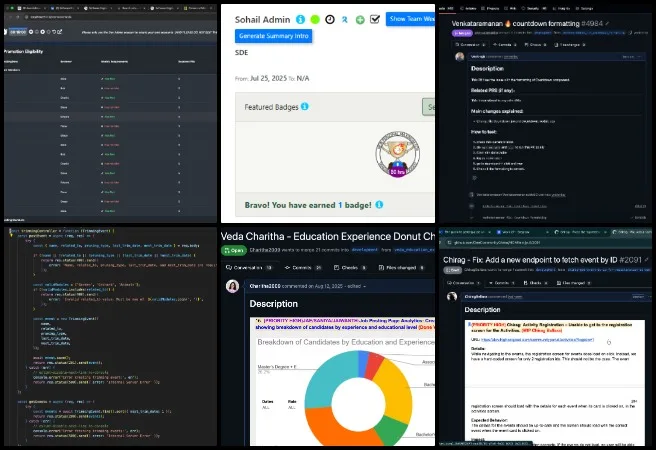
This week, Abhinav worked on Phase 6 of the Kitchen Inventory Management project by building database models and backend API endpoints for orchard and animal management events as part of a high-priority task assigned to Bhanu Anish. He created models to record planting, trimming, and culling activities with fields for ID, name, related_to, count, date, and location, allowing consistent task tracking across modules. He also implemented backend endpoints to post and retrieve events and added documentation outlining request formats, authentication, and error handling, supporting the mission of making eco-living mainstream accessible through ongoing system improvements.
Chirag fixed the event registration screen by updating the backend and adding a new API to retrieve event details by ID. He linked the correct data to the UI components and created draft pull requests for combined backend and frontend testing. Meanwhile, Sohail worked on the Personal Max badge logic in HGNRest, resolving a race condition in checkPersonalMax, updating badge behavior to allow only one Personal Max badge per user, and adding unit tests covering 12 edge cases. These efforts contribute to making eco-living mainstream accessible through improved system reliability.
Veda resolved backend and frontend issues for job posting analytics, including merge conflicts, the Country of Application Map Chart feature, dark mode fixes, and the donut chart in the Job Posting Page Analytics module. Venkataramanan updated UI and functionality in HighestGoodNetworkApp and HGNRest, including formatting fixes in the Countdown component, Weekly Summaries Report, Assign Team and Projects modal, and Team Member Tasks time display. Their work strengthens platform functionality while supporting the mission of making eco-living mainstream accessible.
Vinay worked on enabling persistent admin actions in the Team Analytics Dashboard Promotion Eligibility section for PR 3851. He implemented backend updates to save promotion selections, ensured only authorized roles can modify selections, maintained the state after page reloads, and provided feedback messages for success or errors. These updates, along with testing in light and dark modes, align with ongoing platform improvements focused on making eco-living mainstream accessible. See the Highest Good Society and Highest Good Network Pages to learn more about how this work supports making eco-living mainstream accessible. See the collage below highlighting the team’s work for the week.
MOONFALL SOFTWARE DEVELOPMENT TEAM
The Moonfall Team’s summary, which covers their work on the Highest Good Network, was managed by Uha Kruthi (Software Engineer) and includes Aayush Shetty (Software Engineer), Alisha Walunj (Software Engineer), Mani Shashank Marneni (Software Engineer), Sai Teja Kaasoju (Software Engineer), Sudheesh Thuralkalmakki Dharmappa Gowda (Full Stack Developer), and Vishnupriya Swaminathan (Software Engineer). Their efforts support One Community by making eco-living mainstream accessible through open-source collaboration, ecologically responsible innovation, and holistic global progress.
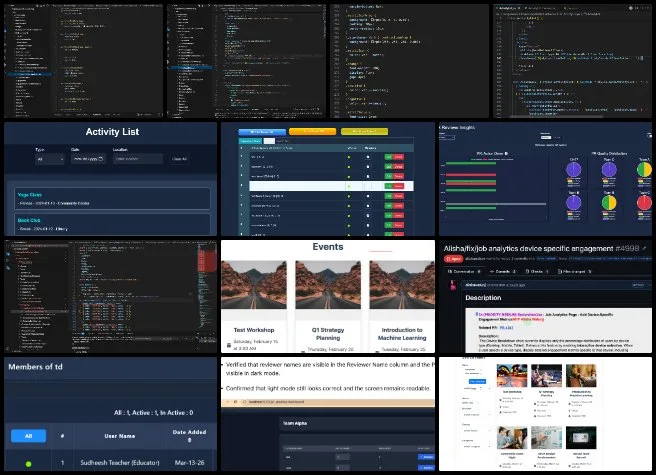
This week, Uha improved the usability of the Purchase Request Form in the BM Dashboard Tools section by implementing dynamic filtering of the Tool dropdown based on the selected Project. She also added functionality to display tool metadata such as availability status, last requested date, and common use cases when a tool is selected, helping reduce selection errors and duplicate requests. Vishnupriya worked on the Job Application Listing Page related to PRs 4307 and 1872 by setting up the project locally and reviewing how the JobApplicationForm component loads and renders application questions. She resolved a form submission issue, verified updates to personal information fields, confirmed removal of the “What is your degree major?” question, updated the submit button label to “Submit Now,” and analyzed logic for technology selection questions involving years of experience. These updates strengthen the reliability and reuse of shared infrastructure supporting the mission of making eco-living mainstream accessible.
Sudheesh addressed HGN Software Development Phase 1 bugs related to PR 2850 by identifying backend issues that caused system failures and implementing fixes. He also updated the frontend Teams component to ensure team data displays correctly and resolved problems in the Add Member functionality by verifying API interactions and aligning the interface with backend logic. Aayush worked on dark mode improvements for the Activity Attendance and Activities List pages by reviewing requirements, updating UI components that were not visible in dark mode, testing fixes locally, and creating a pull request for review. These refinements improve accessibility and system usability while supporting the mission of making eco-living mainstream accessible.
Mani resolved search filter dropdown misalignment on the dashboard by reviewing the parent container positioning context and updating relative attributes so dropdown coordinates align with the correct trigger element. He added dynamic alignment logic, collision detection, and coordinate overrides to prevent menus from being cut off on smaller screens, validating the results through cross-browser testing in Chrome, Safari, and Firefox. Sai Teja continued work on PR3876 to implement a loss tracking line graph by reviewing existing code, identifying merge conflicts in several project files, and analyzing issues in the material filter logic that currently filters by year instead of material type.
Additional improvements identified by Sai Teja include adjusting text contrast in light and dark modes, adding a Reset Filters button to the Planned vs Actual Cost section, removing unused interface components, and validating that start dates precede end dates. Alisha worked on the Job Analytics Page by resolving issues with the device selection dropdown used for desktop, mobile, and tablet engagement metrics and updating the compare-with dropdown used for user trend comparisons. She prepared a pull request for the updates and will rebase the branch addressing the Source of Applicants 403 error before submitting the changes for review. Visit the Highest Good Society and Highest Good Network pages for more on how this work supports making eco-living mainstream accessible through open-source development and globally accessible resources. The collage portrayed below displays the team’s efforts and accomplishments for the week.
REACTONAUTS SOFTWARE DEVELOPMENT TEAM
The Reactonauts team summary, which covers their work on the Highest Good Network, was managed by Diya Wadhwani (Software Developer) and Divanshu Bakshi (Product Manager) and it includes Aseem Deshmukh (Software Developer), Namitha Vijaykumar Pawar (Software Engineer), Sayali Sable (Software Engineer), Sri Satya Venkatasai Siri Sudheeksha Vavila (Software Engineer), and Suparshwa Patil (Software Engineer). This work is part of One Community’s broader mission of making eco-living mainstream accessible.
This week, Aseem worked on PR #4546 by creating a new branch from scratch to move task-related code and avoid further merge conflicts. She transferred the relevant code to the new branch and continued development there to maintain a cleaner git history. Aseem also modified the HoursPledgedChart.module.css file to resolve dark mode styling issues so components display correctly when dark mode is enabled. These improvements contribute to the continued development of the HGN platform supporting the mission of making eco-living mainstream accessible.
Diya worked across several areas of the HGN platform, including UI alignment, email safety, and reporting workflows. Updates included numeric alignment fixes across the dashboard, improved leaderboard responsiveness, and alignment of status and time icons near usernames, resulting in PR #4979. She also added production-only guards to EmailSender and weekly cron jobs so Blue Square assignments, weekly summaries, and organization emails run only in production, submitted as PR #2095. Additional improvements included fixing UI alignment on the single task page, correcting People Report calculations so project and task hours reconcile accurately, and improving the weekly summary email recipient workflow with search, add, and remove functionality in the popup interface. These updates support making eco-living mainstream accessible.
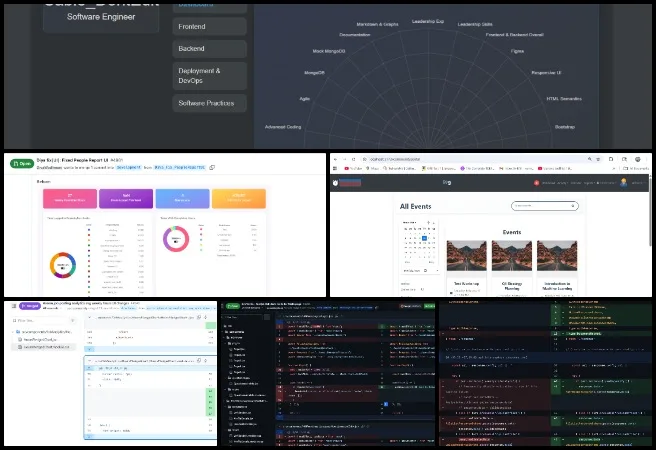
Namitha updated the dashboard search filters date picker component in PR #4986 after identifying redundant icons in the date input field. She removed the dropdown arrow so the field displays only the calendar icon while ensuring the calendar function remains intact. Sayali completed several frontend improvements, including making email and Slack icons actionable on the team member skill and contact page with accessible hover tooltips and keyboard support. She also resolved radar chart resizing issues on the skills profile page, corrected dark mode color styling, fixed service worker registration issues, and addressed report calculation and filtering bugs while resolving multiple code quality and accessibility concerns.
Sudheeksha logged 20 hours implementing dark mode styles for the HGN skills and member list pages, applying pull request feedback, fixing quality gate issues, and enabling redirection to the skills page when the form is already completed. Suparshwa worked on authentication and access control for the chatbot system by reviewing integration documentation, testing authentication within the application, and developing an initial access restriction structure limiting chatbot access to admin accounts while broader role-based access logic is developed. These improvements strengthen the infrastructure supporting the mission of making eco-living mainstream accessible. The collage below highlights the Reactonauts team’s work for the week.
SKYE SOFTWARE DEVELOPMENT TEAM
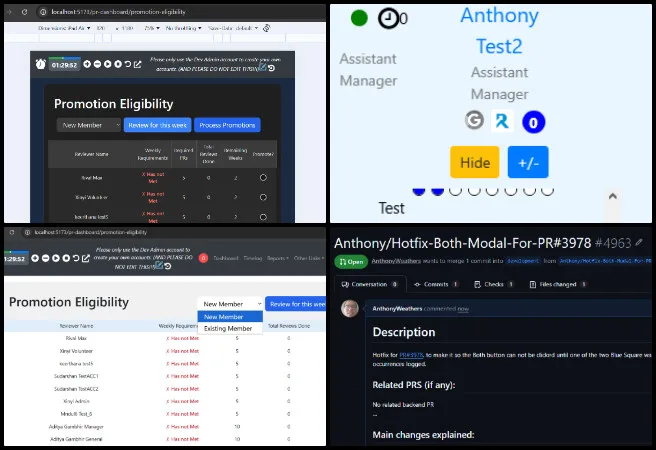
The Skye Team’s summary, covering their work on the Highest Good Network, was managed by Sayantan Paul (Frontend Tester and Software Team Administrator) and Anthony Weathers (Software Engineer). The team includes Swathi Angadi (Software Engineer). The Highest Good Network software is dedicated to making eco-living mainstream accessible by objectively tracking and managing progress across social architecture, construction, production, and maintenance processes, utilizing transparent, scalable systems that strengthen accountability, coordination, and resilient ecosystems.
This week, Swathi implemented a compact dropdown toggle to switch between Existing Members and New Members views. She checked the feature for responsiveness across different screen sizes and added dark mode support for the dropdown component. She tested the functionality to confirm that the view switching and styling worked as expected in both themes. After completing the implementation and testing, she raised a pull request and attached the required screenshots and videos to demonstrate the changes. This progress reflects continued momentum in making eco-living mainstream accessible through open, collaborative development. Anthony reviewed the styling issues he identified while continuing work on PR #3600, organized his findings, and shared them with a stakeholder as action items to be reassigned to another contributor.
For the follow-up work related to PR #3917, he created a new branch from the development branch to ensure it included the latest updates, then reapplied the code originally introduced in PR #3917 along with subsequent improvements, establishing a cleaner baseline. During this process, he noted a potential new issue and conducted a brief investigation before setting it aside to maintain focus on the primary task. He also created PR #4963 as a hotfix for PR #3978—initially uncommenting a line as a temporary measure until the stakeholder clarified the intended behavior—after which he reworked the code, pushed the updated fix, and revised the PR description to accurately reflect the final implementation. By addressing these challenges, the Skye Team’s work plays a significant role in making eco-living mainstream accessible by strengthening scalable, transparent systems within the broader Highest Good Network infrastructure. See the Highest Good Society and Highest Good Network pages to learn more about how making eco-living mainstream accessible is central to One Community’s goals, demonstrated through transparent, collaborative innovation within the Highest Good Network open source hub. See the collage below for the team’s work.
SOFTWARE PR REVIEW TEAM A-N
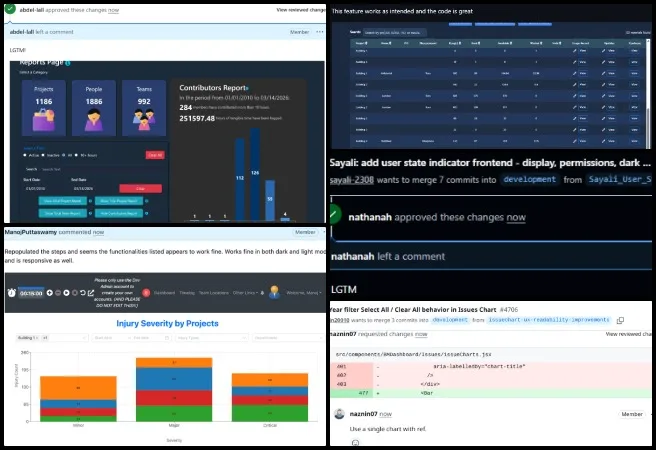
The PR Review Team’s summary for members with names starting with A–N was managed by Sai Sree Dongari (Data Analyst). The Highest Good Network is a foundation for measuring our results in making eco-living mainstream accessible. This week’s active members of this team were Abdelmounaim Lallouache (Software Developer), Carl Bebli (Software Developer), Manoj Puttaswamy (Software Engineer), Nathan Hoffman (Software Engineer), and Naznin Sultana (Software Engineer). They reviewed all Highest Good Network PRs shared in this week’s update. Learn more about how the Highest Good Network open source hub measures progress toward making eco-living mainstream accessible. The collage below shows a compilation of this team’s work.
SOFTWARE PR REVIEW TEAM O-Z
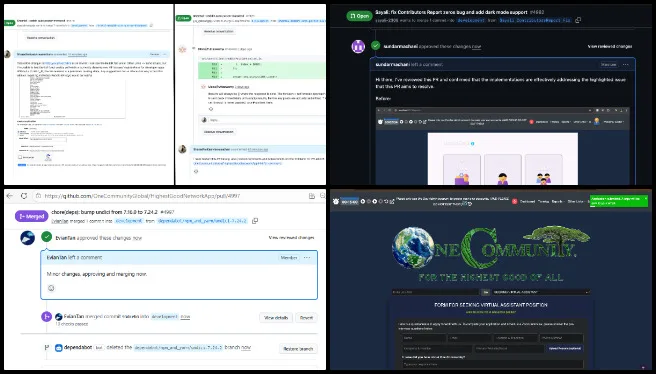
The PR Review Team’s summary for members with names starting with O–Z was managed by Shameera Musthafa (Data Analyst). The Highest Good Network is a foundation for measuring our results in making eco-living mainstream accessible. This week’s active members of this team were Rohan Rastogi (Software Engineer), Sundar Machani (Software Engineer), Sharadha Kasiviswanathan (Software Engineer), and Yiyun Tan (Software Engineer). They reviewed all the Highest Good Network PRs shared in this week’s update. Learn more about how the Highest Good Network open source hub measures progress toward our goal of making eco-living mainstream accessible. The collage below shows a compilation of this team’s work.
AND WE PRODUCED THIS WEEKLY UPDATES BLOG – CLICK HERE TO SUBSCRIBE
FOLLOW ONE COMMUNITY’S PROGRESS (click icons for our pages)
INVESTOR PAGES
GET INVOLVED
DONATE | WAYS ANYONE CAN HELP | MEMBERSHIP
CLICK HERE FOR ALL PAST UPDATES