One Community
Comprehensive and Sustainable Global Reinvention – One Community Weekly Progress Update #672
At One Community, we are advancing comprehensive and sustainable global reinvention through open source systems that integrate food, energy, housing, education, economics, social architecture, and global stewardship practices. Developed entirely by an all-volunteer team, our work is designed to be freely shared and self-replicating, supporting the creation of teacher/demonstration hubs worldwide. By evolving sustainability and prioritizing fulfilled living, we aim to regenerate our planet and help create a world that works for everyone, always for The Highest Good of All.
- Here’s our project overview
- Here’s our world-change methodology
- Here’s how this becomes self-replicating
- Here’s how we are open source and free-sharing all the do-it-yourself designs
OUR MAIN OPEN SOURCE HUBS
Click on each icon to be taken to the corresponding Highest Good hub page.
One Community’s physical location will forward this movement as the first of many self-replicating teacher/demonstration communities, villages, and cities to be built around the world. This is the February 2, 2026 edition (#672) of our weekly progress update detailing our team’s development and accomplishments:
Comprehensive and Sustainable Global Reinvention
One Community Progress Update #672

DONATE | COLLABORATE | HELP WITH LARGE-SCALE FUNDING
CLICK HERE IF YOU’D LIKE TO RECEIVE AN EMAIL EACH WEEK WHEN WE RELEASE A NEW UPDATE
YOU CAN ALSO JOIN US THROUGH SOCIAL MEDIA


ONE COMMUNITY WEEKLY UPDATE DETAILS
HIGHEST GOOD HOUSING PROGRESS
One Community is advancing comprehensive and sustainable global reinvention through Highest Good housing that is artistic and beautiful, more affordable, more space efficient, lasts longer, DIY buildable, and constructed with healthy and sustainable materials:
- Learn about: Our Upcoming Crowdfunding Campaign
- Learn about the different village models and comprehensive and sustainable global reinvention: 7 Sustainable Village Models
- Visit the open source portals for the first two: Earthbag Village OS Hub | Straw Bale Village OS Hub
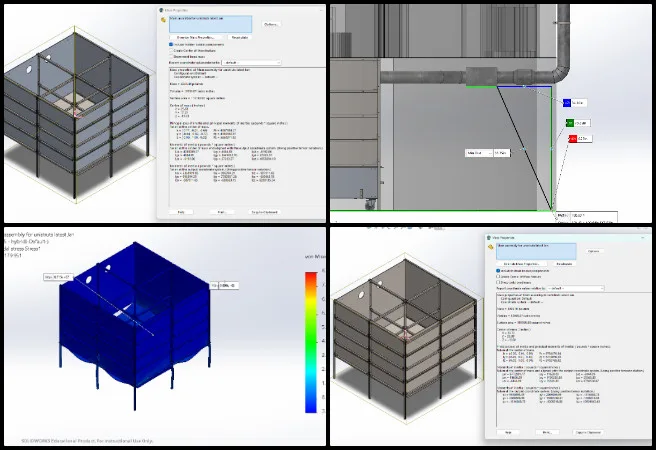
This week, Ajay Adithiya Kumar Elancheliyan Tamilalagi (Mechanical Engineer) continued working on the ventilation system design for the Vermiculture Toilet component of the Earthbag Village. He worked on multiple components of the project, beginning with cross‑checking data for the HVAC report and re‑evaluating the HVAC simulations to confirm the accuracy of results, while also updating the ventilation system design and verifying the vermiculture volume and loading calculations. He completed additional simulations for the Unistruct assembly, finalized the results, and submitted the report for review. He also finished the FEA work for the alternative configuration, ensuring the analysis supported design reliability. This work contributes to a comprehensive and sustainable global reinvention by strengthening open, data-driven infrastructure solutions. Below, you’ll find some images of this work.
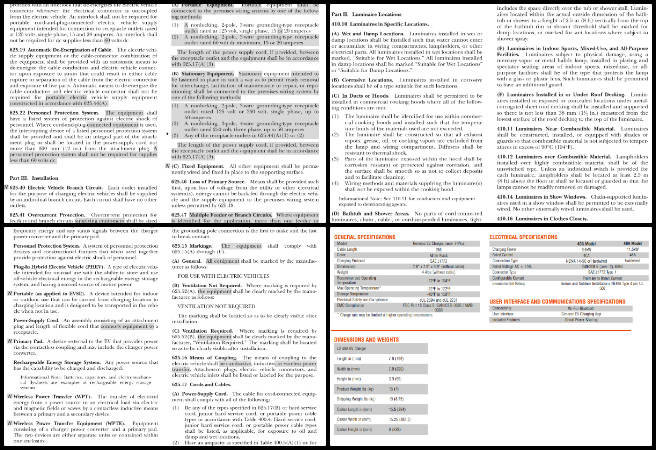
Derrell Brown (Plumbing Designer) continued working on the Earthbag Village 4-dome home final MEP report provided for One Community and applied required revisions to align the final draft with the submitted comments and expectations. Updates focused on adjusting technical language, clarifying assumptions, and refining calculations where feedback identified gaps or inconsistencies. In parallel, he began preparatory work for updating the electrical plan to account for potential EV charging provisions within the 4-Dome-Home. This effort included evaluating the existing electrical panel and connected loads to determine available capacity, reviewing the original circuit layout to assess feasible charger locations and routing constraints, and referencing applicable requirements within NEC Article 625 to understand code limitations related to EV supply equipment, branch circuits, and load considerations, supporting a comprehensive and sustainable global reinvention through infrastructure planning. See below for some of the pictures related to this work.
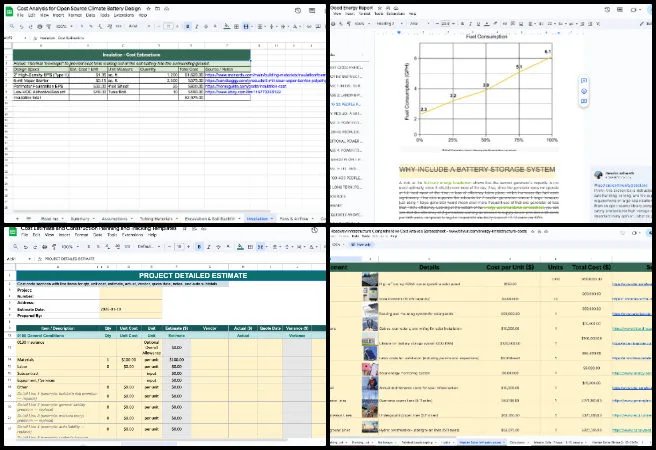
Iteesha Vishalakshi Aswath (Technical Program Manager) continued work on the Open Source Climate Battery Design cost analysis by revising and updating cost inputs across the Tubing Materials, Excavation and Soil Backfill, Insulation, Fans and Airflow, and Controls and Sensors sections. She also reviewed and provided feedback on the Highest Good Energy Report to prepare it for publication, and examined the associated Energy and Roadway Infrastructure cost analysis spreadsheet to verify calculations and referenced data. In addition, Iteesha developed automation within the Cost Estimate and Construction Planning and Tracking Templates, adding visual charts and automated Gantt charts to improve tracking and usability in the open source version. These efforts support a comprehensive and sustainable global reinvention by enabling scalable planning and transparent cost modeling. See below for some of the pictures related to this work.
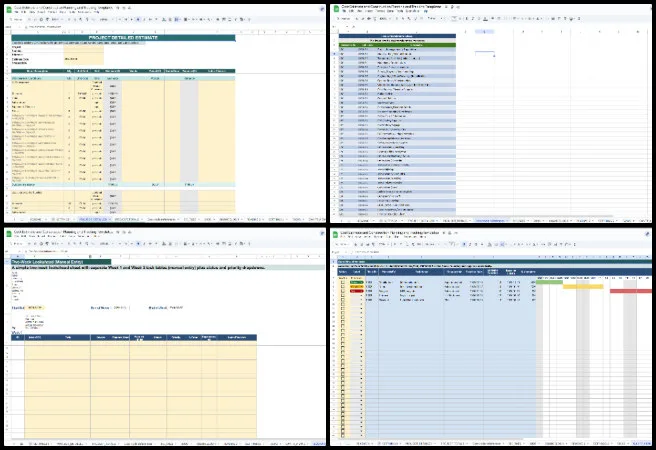
Kaustubh Kadam (Construction Engineering and Management Professional) continued working on the Highest Good Housing project at One Community corrected errors in the Project Details and Project Totals sections of the template. He also worked with Iteesha to improve the Gantt chart approach by setting up the required Google Sheets logic and adding a small working example directly in the sheet to show how it functions. In addition, Kaustubh added more cost sheets as reference examples in case they are needed for estimating or validation needs, contributing to a comprehensive and sustainable global reinvention through improved construction planning tools. See below for some of the pictures related to this work.
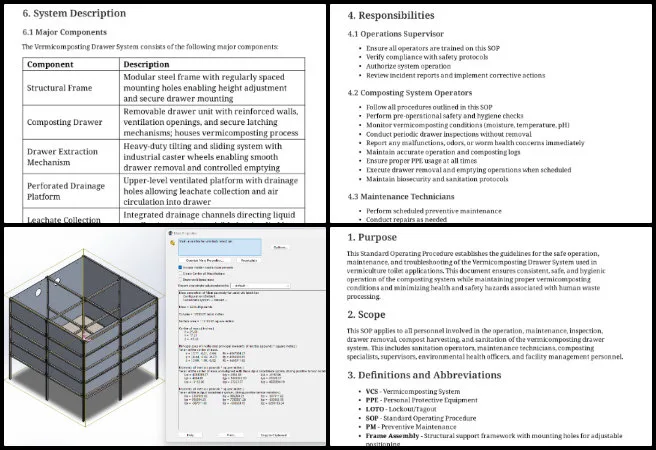
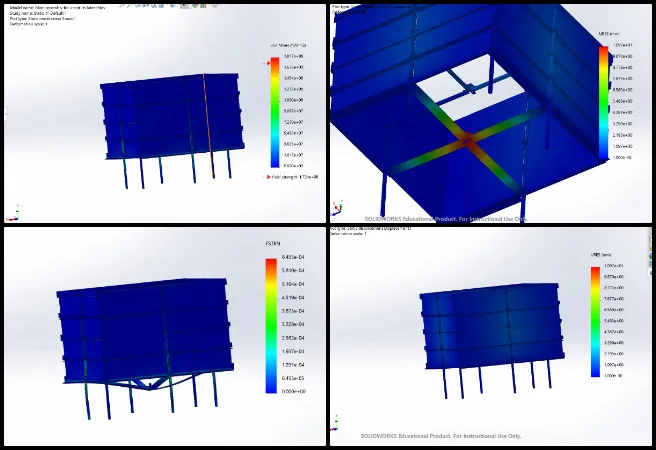
Malhar Solanki (Mechanical Engineer) continued working on the Vermiculture Toilet component of the Earthbag Village. He worked on a standard operating procedure for the assembly process and the waste dumping mechanism. He assisted with repeated FEA model verification for various materials and loading conditions. He added material property and strength data to the Unistrut assembly section of the report, created the Bill of Materials for fasteners, and wrote a new report section documenting these updates. He also checked task progress for Rishi and Ajay and prepared a consolidated progress summary, reinforcing a comprehensive and sustainable global reinvention through structured documentation and verification. Review the latest updates in the images below.
Rishi Chakrapani (Mechanical Engineer) continued working on the Vermiculture Toilet. His work focused on the main unistrut chamber structure, including performing FEA to verify that it could withstand the specified loading conditions. The analysis was used to confirm load assumptions and support the structural design. Additional effort was spent checking that the remaining reports were complete and making updates to the Bill of Materials, followed by review and signoff to confirm accuracy and alignment with the finalized designs. This work supports a comprehensive and sustainable global reinvention by validating structural integrity and build readiness. Review the latest updates in the images below.
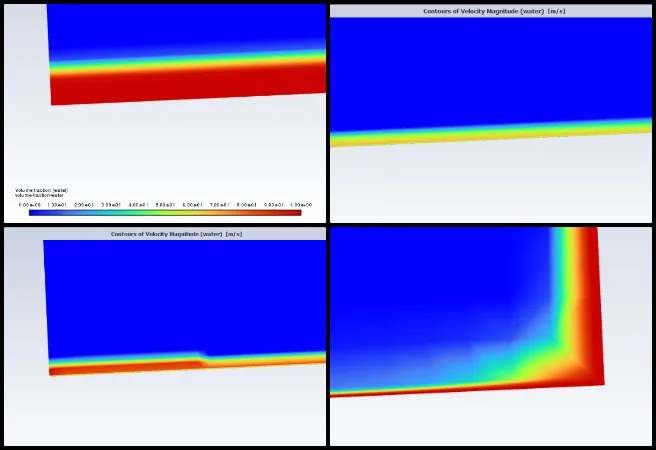
Sai Bhuvanesh Nandipati (Mechanical Engineer) continued working on the Earthbag Village by introducing a turbulence model into the sheet flow simulation and completed the transient numerical run in ANSYS Fluent. He reviewed solver behavior and confirmed that the simulation progressed to completion under the defined time-step and boundary condition settings. Following completion of the run, he identified post-processing tasks required to extract results and generate graphical outputs, including velocity fields and volume fraction visualizations, for use in web-based presentation. In parallel, he prepared a detailed, week-by-week technical report documenting his progress to date, including analytical background, numerical setup, solver behavior, and simulation status to date, contributing to a comprehensive and sustainable global reinvention through transparent, data-backed environmental analysis. See below for some of the pictures related to this work.
DUPLICABLE CITY CENTER PROGRESS
One Community is advancing comprehensive and sustainable global reinvention through a Duplicable and Sustainable City Center that is LEED Platinum certified/Sustainable, can feed 200 people at a time, provide laundry for over 300 people, is beautiful, spacious, and saves resources, money, and space:
- Learn about this building and it’s function and comprehensive and sustainable global reinvention: Duplicable City Center Open Source Hub
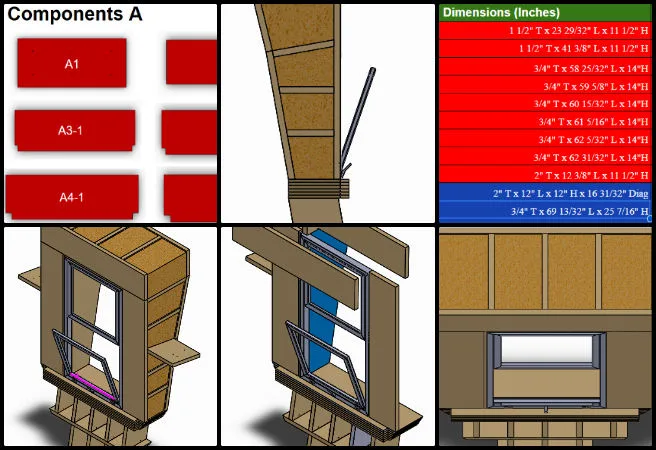
This week, Ariana Virginia Gutierrez Doria Medina (Industrial Designer) continued working on the Duplicable City Center window and door framing by working on improving the 3D CAD design, which will serve as the basis for cost estimation, cut/planning, and assembly instructions. Based on input from project leads, the model was updated to include an insulation frame using one and a half layers of material to achieve an overall thickness of 11 inches. The design was also revised to adjust wood dimensions to reflect the actual sizes of the materials being used, ensuring better alignment between the digital model and physical components. This open source Duplicable City Center project is dedicated to advancing comprehensive and sustainable global reinvention. Please see the illustration below for more specific information.
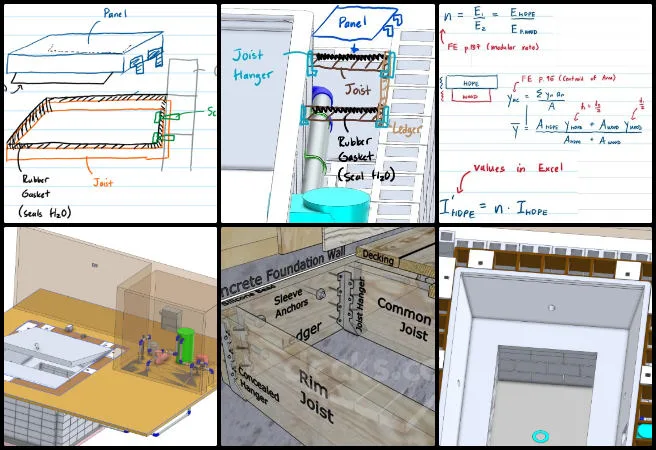
Bevan Chiu (Mechanical Engineer) continued his work finishing the City Center Eco-spa Designs. He worked on incorporating the joist structure into the CAD model, defining how the current pressure-treated lumber joists attach to the outer cinderblocks and the concrete layer of the tub. He evaluated aluminum joists as a possible alternative material. Bevan researched sustainable options for the plumbing access panel, focusing on recycled plastic lumber and recycled HDPE as candidate materials, while also considering the incorporation of aluminum joists in the panel understructure. Initial hand calculations were performed for the plumbing access panel under a stepping load, and the calculator allowed material properties and assumptions to be adjusted for comparison purposes. This week’s results move us closer to comprehensive and sustainable global reinvention.
Bevan also researched applicable building code requirements related to floor joist spans and joist spacing to inform the structural layout. He identified a requirement for the deck surface to slope and reviewed practical methods for achieving this slope in the panel design. This open source Duplicable City Center project is currently advancing comprehensive and sustainable global reinvention. For more details, refer to the image below.
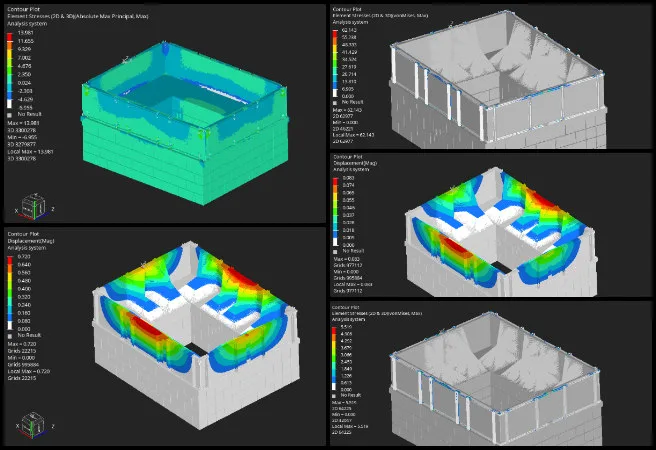
Sandesh Kumawat (Mechanical Engineer) continued developing the City Center Eco-spa Designs. He focused on completing the structural validation phase by finalizing the full-assembly finite element simulation that integrates the upper Unistrut shell with the reinforced cinder block foundation. He analyzed the complete hybrid model under a combined worst-case loading scenario that included bolt pretension, hydrostatic pressure, and bather loads, confirming stable and realistic load transfer across steel, cork, and masonry interfaces. The results show well-managed stress levels throughout the assembly, with the steel frame primarily operating in a safe 27 MPa range and an absolute maximum principal stress of approximately 13.98 MPa localized at reinforced joint regions, keeping all components well below material failure limits. Together, these updates advance comprehensive and sustainable global reinvention with practical, shareable solutions.
Global deformation remained minimal, with a peak displacement of only about 0.72 mm under full water load, demonstrating the high stiffness of the foundation interface. A key insight from this iteration was the interaction between load cases, where bather loads on the seating surfaces partially counteract hydrostatic pressure, reducing overall shell stress compared to the water-only condition. The final solution was achieved using a refined, high-density mesh that ensured numerical stability and contact convergence, and the results confirm a robust factor of safety exceeding typical residential spa requirements, indicating the design is structurally validated and ready for the next integration steps. Discover One Community’s open source Duplicable City Center, which is dedicated to advancing comprehensive and sustainable global reinvention. See the visuals below for a closer look.
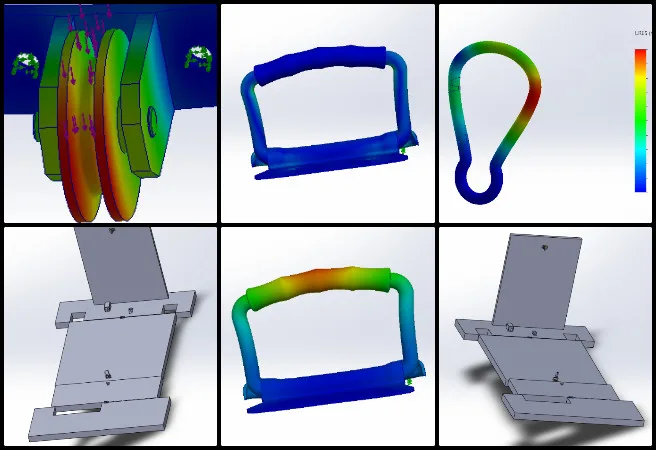
Shivarama Krishna Revanuru (Mechanical Engineer) continued working on the Duplicable City Center design. He involved performing finite element analysis on the carabiner and the pull handle to evaluate structural behavior under the defined loading conditions, along with a cost analysis to support material selection decisions. Material options were compared based on availability, mechanical properties, and estimated cost to align with design and budget constraints. Discussions were held with a teammate to review the FEA approach, assumptions, boundary conditions, and results, as well as to align on the cost analysis methodology and material choices. Based on these discussions, updates were made to the material selection to better match performance and cost requirements. In addition, minor design changes were made to the spa cover to align the geometry and features with updated spa requirements and functional constraints. This open source Duplicable City Center project is advancing comprehensive and sustainable global reinvention. The images below illustrate aspects of this work.
HIGHEST GOOD FOOD PROGRESS
One Community is advancing comprehensive and sustainable global reinvention through Highest Good food that is more diverse, more nutritious, locally grown and sustainable, and part of our open source botanical garden model to support and share bio-diversity:
- Learn about the structures and comprehensive and sustainable global reinvention: Hoop House Hub | Aquapini & Walipini Open Source Hub
- See what we’ll be growing: Gardens & Hoop Houses | Large-scale Structures | Food Forest | TA
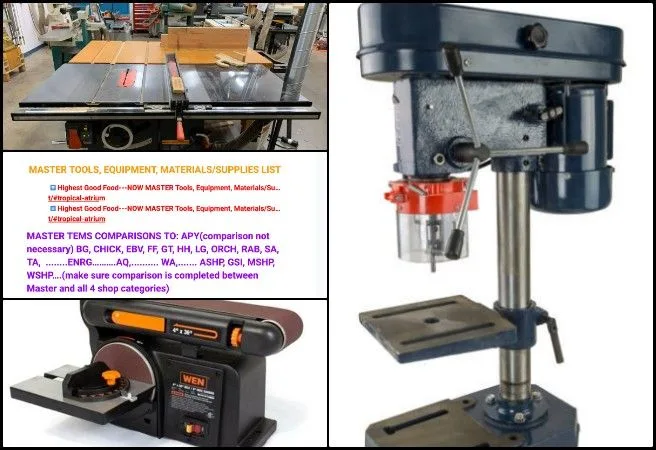
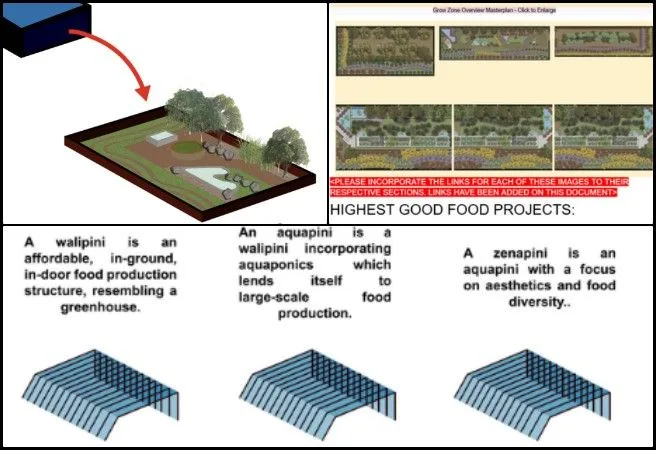
This week, the core team continued working on the Master Tools, Equipment, and Materials and Supplies List for the Large-scale Garden, Botanical Garden, and other Highest Good Food components. The photo inclusions were updated for the shop documents and designated recent tool additions for the Automotive Shop (ASHP), General Storage & Inventory (GSI), Metal Shop (MSHP), and Wood Shop (WSHP) documents. These additions included vice grips, a table saw, a drill press, portable and fixed workbenches, and a combination belt/disc sander. The cross-referencing process between the Master Document and the Shop Documents was initiated to support accurate alignment between the two sets of documents. The Highest Good Food initiative is a key component of One Community’s open source plans, focused on advancing comprehensive and sustainable global reinvention and exemplifying the organization’s commitment through innovative design and implementation. Below are some images showcasing this work.
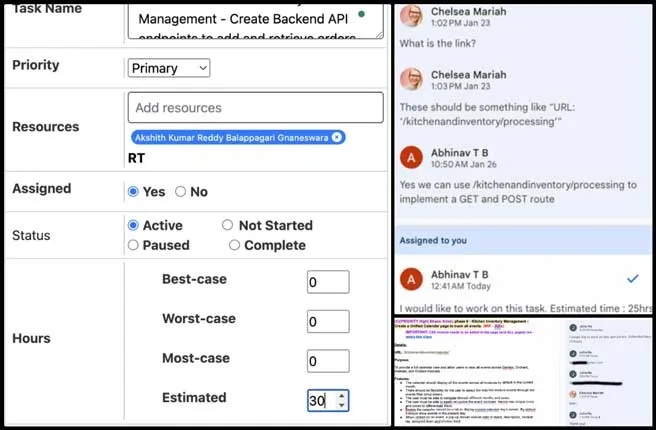
Chelsea Mariah Stellmach (Project Manager) continued working on the Transition Food Self-sufficiency food and inventory tracking software plans. She coordinated and tracked assignments related to the creation of backend API endpoints to add and retrieve orders and suppliers, working with developers Julia, Bhanu, Akshith, and Abhinav. She monitored task status and alignment across contributors and reviewed ongoing progress through GitHub activity and Dropbox demos to ensure work items were moving forward according to current expectations and timelines. Throughout the week, she focused on identifying and resolving blockers as they arose, coordinating with team members to address questions and align next steps, with the goal of maintaining steady progress and avoiding disruptions to the software development workflow. As an essential aspect of One Community’s open source goals, the Highest Good Food initiative supports advancing comprehensive and sustainable global reinvention. The following images provide a view of her contributions.
Japneet Kour (Volunteer Architect) continued contributing to the Highest Good Food initiative. This week, she reviewed the Word document for the Walipini 3 Tropical House project, verifying that all image and render captions were accurate and corresponded correctly to the visuals. She also checked the write-up to ensure it matched the content of the project and reflected the intended information, making adjustments where necessary to maintain consistency and clarity throughout the document. The Highest Good Food initiative is a key part of One Community’s open source platform, focused on sustainable and participatory development while supporting comprehensive and sustainable global reinvention. Visual examples from her work are presented below.
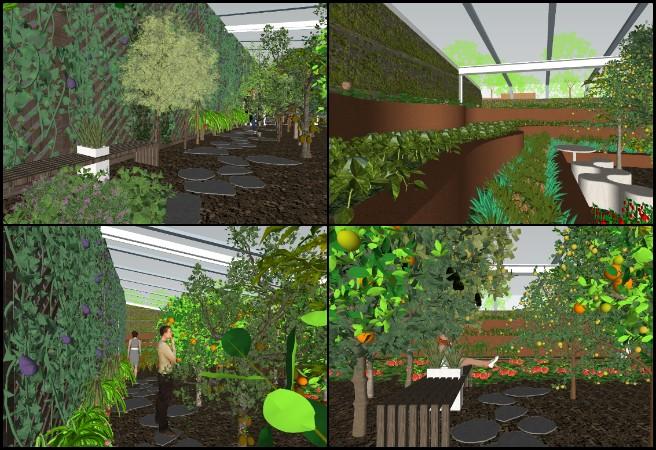
Jay Nair (BIM Designer) continued developing the Aquapini and Walipini Planting and Harvesting documents. This week, he worked on compiling the lighting electrical calculation data for the Greenhouse Walipini to support the development of software intended to automate similar calculations for other greenhouses. The task involved organizing calculation inputs, outputs, and assumptions into a structured format, ensuring the information is clear, consistent, and suitable for use in a standardized digital tool. The Highest Good Food initiative is a key part of One Community’s open-source platform, focused on sustainable and participatory development and advancing comprehensive and sustainable global reinvention. See below for pictures related to this work.
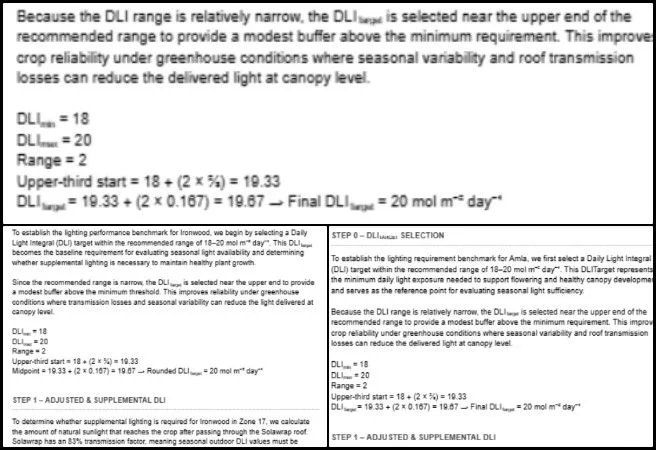
Nitin Parate (Architect) continued contributing to the Aquapini and Walipini renders and layout graphics. The work focused on developing the axonometric drawing of the Zen Aquapini. Updates were made to improve clarity, alignment, and overall layout while maintaining the design intent. Attention was given to detailing roof members, glazing, and structural elements, and this information was incorporated into the axonometric view. Detailing of the plantation axonometric view is ongoing to clearly represent plant types, layers, spacing, and height variations, helping to show the overall planting structure and layout. Different visual methods were tested to assess effectiveness, and selected approaches were applied to refine the drawings. Annotations, labels, and infographics were added to provide clear information and improve readability and understanding of the design and its components. The Highest Good Food initiative is a key part of One Community’s open source platform, promoting regenerative and participatory development while advancing comprehensive and sustainable global reinvention. Images below showcase his contributions.
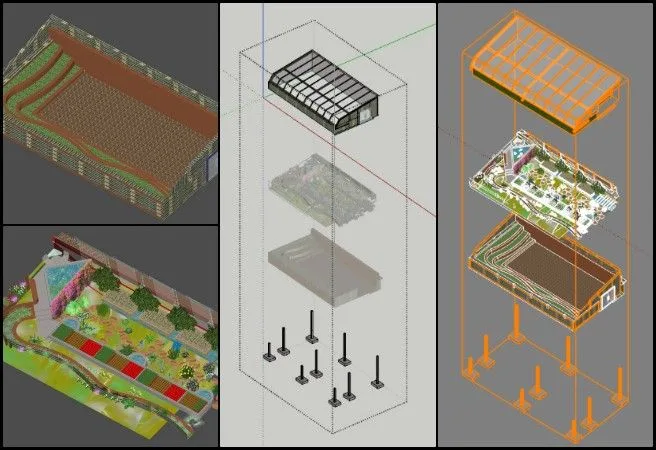
Pallavi Deshmukh (Software Engineer) continued working on the Aquapini and Walipini Planting and Harvesting web details. She developed new content for blog 671 and collaborated with teammates by incorporating their suggestions and feedback to maintain clarity and consistency in the final version. She continued adding Walipini 1 content based on Gayatri Pandkar’s work, making updates in response to feedback from Jae, including editing and incorporating revised images. She also added a table of contents for the Zenipini section to improve structure and navigation. In addition, Jae assigned her a new web page focused on integrating all related content for the Aquahaven Southwest Area web design, and she began organizing and preparing the materials needed for this integration work. She completed five interviews and provided the required details. The Highest Good Food project integrates advancing comprehensive and sustainable global reinvention into a larger vision of regenerative living. Her contributions are highlighted in the collage below.
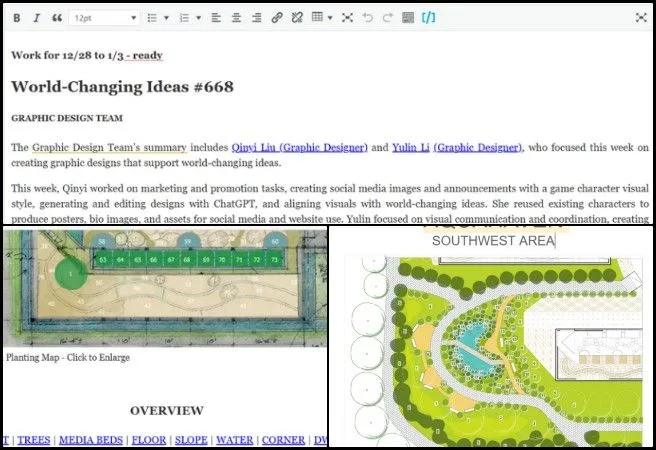
Shivangi Varma (Architectural Designer and Planner) continued the redesign of the Highest Good Food overall presentation, currently focused on the Aquapini and Walipini masterplan render. She began incorporating the masterplan render into the Highest Good Food pages and continued editing the axonometric graphics for the Differences diagram for the Open Source Hub page. She started detailing Zenipini features, began developing the Walipini axonometric, and added features and clarified details to differentiate the three structures. The Highest Good Food initiative plays a leading role in One Community’s open source platform by promoting sustainable and participatory development, focused on advancing comprehensive and sustainable global reinvention. Below are visuals highlighting this work.
HIGHEST GOOD ENERGY PROGRESS
One Community is advancing comprehensive and sustainable global reinvention through Highest Good energy that is more sustainable, resilient, supports self-sufficiency and includes solar, wind, hydro and more:
- Learn about the open source sustainable-energy foundations and comprehensive and sustainable global reinvention: Solar, Hydro, and Wind
- Explore our research into the most sustainable products and companies for saving water and energy: Insulation, Eco-laundry, Lightbulbs and Light Bulb Companies, Doors and Door Companies, Windows and Window Companies, Toilets, Faucets and Faucet Accessories, Urinals, and more.
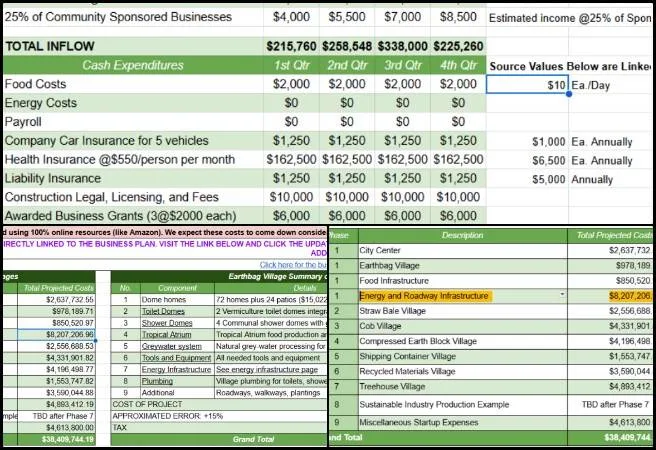
This week, the core team continued contributing to the Highest Good Energy initiative. The core team spent several hours reviewing Michaela’s templates, materials related to the Earthbag Village, and content associated with the Tropical Atrium pages to better understand existing formats and reference materials in preparation for upcoming meetings. The core team also completed an additional review of the business plan along with related financial documents. The Highest Good Energy initiative plays a leading role in One Community’s open source platform by promoting sustainable and participatory development, focused on advancing comprehensive and sustainable global reinvention. Below are images related to this project.
HIGHEST GOOD EDUCATION PROGRESS
One Community is advancing comprehensive and sustainable global reinvention through Highest Good education that is for all ages, applicable in any environment, adaptable to individual needs, far exceeds traditional education standards, and more fun for both the teachers and the students. This component of One Community is about 95% complete with only the Open Source School Licensing and Ultimate Classroom construction and assembly details remaining to be finished. We’ll report on the final two elements to be finished as we develop them.
With over 8 years of work invested in the process, the sections below are all complete until we move onto the property and continue the development and open sourcing process with teachers and students – a development process that is built directly into the structure of the education program and everything else we’re creating too:
- Program Overview: Education Open Source Hub
- How the components work together in designing human orchestrated eco-abundance and comprehensive and sustainable global reinvention: How to use the Education for Life Program
- Lesson Plans for Life – Lesson Plans How-to
- Foundations of Outstanding Leaders, Teachers, and Communicators
- Curriculum for Life
- Teaching Strategies for Life
- Learning Tools and Toys for Life
- Evaluation and Evolution
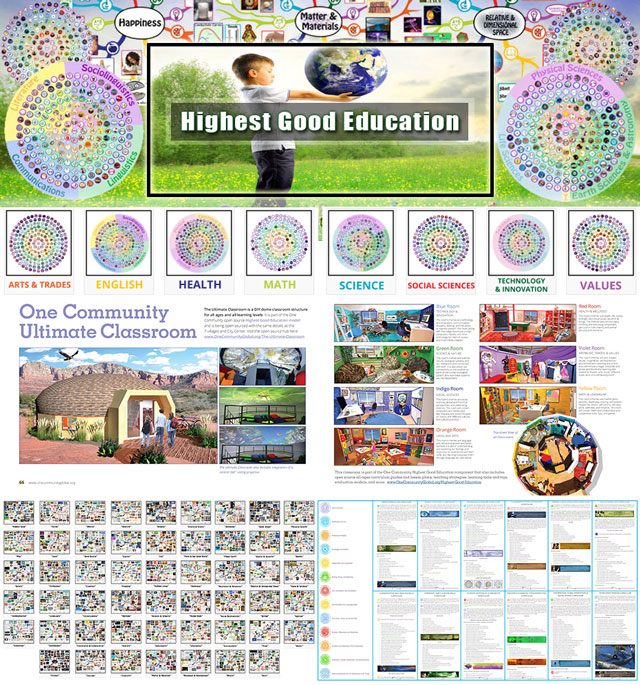
Highest Good Education: All Subjects | All Learning Levels | Any Age – Click image for the open source hub
HIGHEST GOOD SOCIETY PROGRESS
One Community is advancing comprehensive and sustainable global reinvention through a Highest Good society approach to living that is founded on fulfilled living, the study of meeting human needs, Community, and making a difference in the world:
- Read the Highest Good society overview: Highest Good Society
- Learn about the model for fulfilled living and sharing and comprehensive and sustainable global reinvention: A Day in the Life
- Learn about the 4 economic models: RBE | For-profit | Non-profit | Entrepreneurship
- Learn about our open source community collaboration and management software: The Highest Good Network
This week, the core team completed over 37 hours managing volunteer work reviews, handling emails, overseeing social media accounts, supporting web development, and identifying and integrating bug fixes for the Highest Good Network. The team also interviewed and onboarded new volunteer team members. Additionally, they produced and integrated the video above, which highlights how comprehensive and sustainable global reinvention serve as a foundational element of One Community’s broader mission. The following images showcase highlights of this work.
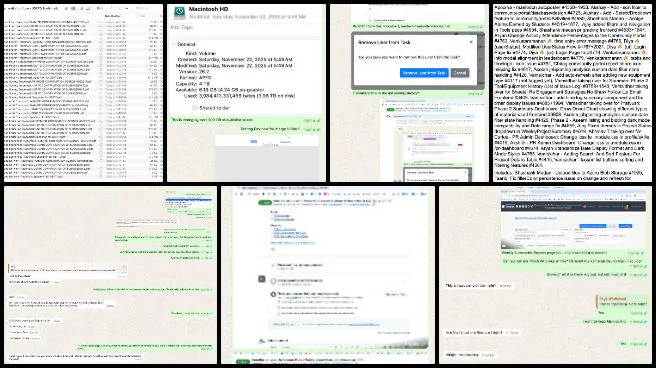
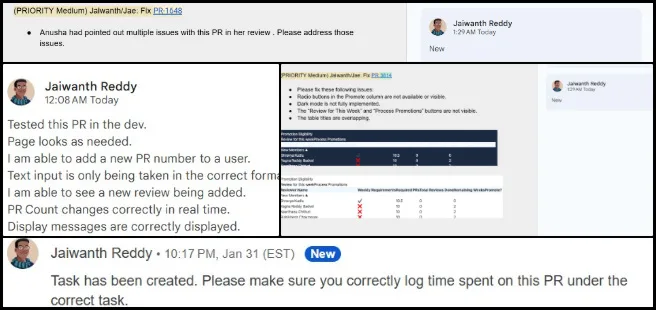
Jaiwanth Reddy Adavalli (Project Manager) continued developing the Job Applicants page and key components of the Highest Good Network. He tested multiple pull requests of components in various parts of the HGN Software. He created action items for the PR Dashboard. Jaiwanth tracked updates in software team management documents to support task management. As a member of the pull request review team, he reviewed submissions from the volunteer team assigned to him.This work supports One Community’s commitment to comprehensive and sustainable global reinvention. The images below highlight his contributions.
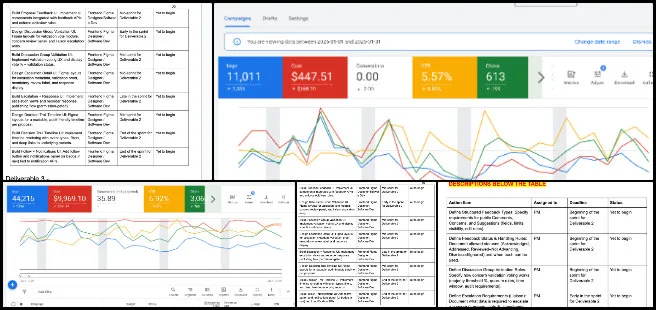
Rajrajeshwari Gangadhar Sangolli (Data Analyst) continued working on Google Ads management and strategy evolution of the Highest Good Network. She assisted Shreya in rechecking her work during a meeting, provided comments, and requested specific changes. She worked with Shreya to explain assigned tasks, relevant focus areas, and navigation of the Google Ads interface, including an overview of key performance indicators, goals, and objectives, and shared reference materials for study. She met with Pooja to discuss phase progress and spent time working on Deliverable 2. These steps help scale comprehensive and sustainable global reinvention for communities worldwide.
Rajrajeshwari further clarified the ad workflow for Shreya, covering the process, interface, and creation of ads, campaigns, and ad groups, applied Google recommendations, and shared certification resources. She added Deliverable 2 to the Phase 5 tracking sheet and made edits as required. She reviewed project documentation to understand her scope of contribution and phase goals in preparation for future discussions. She also worked on Deliverable 3 by developing the concept and formatting it for inclusion in the document. This project supports One Community’s commitment to demonstrating comprehensive and sustainable global reinvention. The images below highlight key aspects of her work.
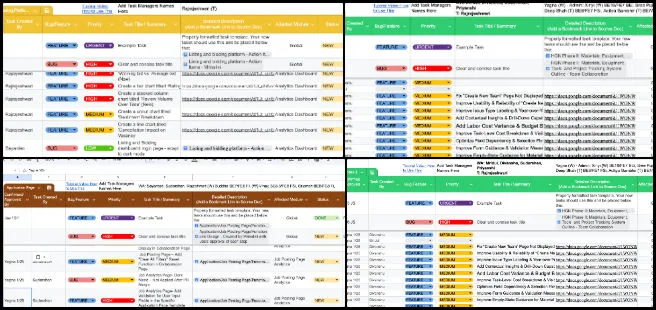
Yagna Reddy Badvel (Data Analyst and Team Administrator) continued working on the Summary Dashboards and Weekly Report page on the Highest Good Network. He reviewed and maintained the Phase 2 “Materials, Equipment, Tools, and Project Tracking System” tab by correcting task categorization, dropdown usage, priorities, formatting issues, links, and filters to keep the sheet accurate and consistent. He also completed weekly admin responsibilities by reviewing team submissions, providing feedback, verifying media and tracking requirements, optimizing and uploading images to WordPress with proper SEO and formatting, and conducting admin reviews for multiple volunteers to ensure alignment with current admin standards and overall workflow consistency. This work supports One Community’s commitment to comprehensive and sustainable global reinvention. The images below highlight his contributions.
ADMINISTRATION TEAM
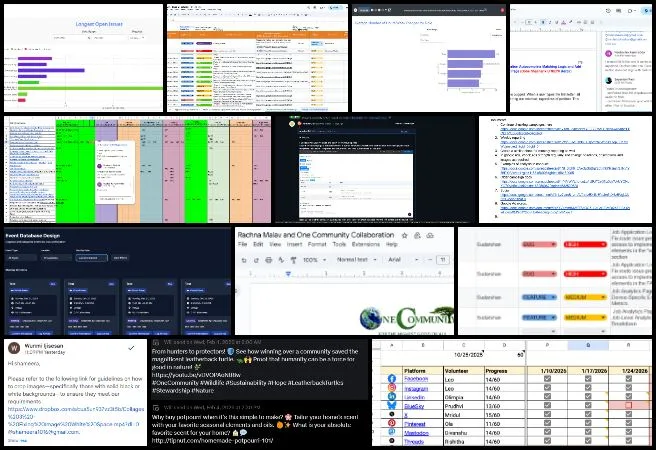
The Administration Team’s summary, which covers their work on the Highest Good Network, was managed by Prudhvi Marpina (Data Analyst) and includes Anusha Gali (Software Engineer), Ashutosh Mishra (Software Engineer), Keerthana Chitturi (System Administrator), Leo Lishin Shiu (Software Engineer), Manish Kanuri (Data Scientist), Mridul Bhushan (Volunteer Project Strategy Analyst and Team Administrator), Neeharika Kamireddy (Data Analyst), Olawunmi “Ola” Ijisesan (Administrative and Management Support), Priyanshi Sharma (Data Analyst and Team Administrator), Rachna Malav (Data Analyst), Rajeshwari Bhirud (Administrator), Sayantan Paul (Frontend Tester and Software Team Administrator), Shreya Shetty (Data Analyst), and Sudarshan Raju Chintalapati Venkata (Data Analyst). The Administration Team supports the Highest Good Network, a tool designed to track and measure progress while developing systems that contribute to advancing comprehensive and sustainable global reinvention. Through administrative support, documentation, testing, training, recruiting, analytics, and content management, the team helps advance this mission, aligning with One Community’s vision of building a replicable and sustainable future model.
This week, Anusha completed Level 2 software testing and QA by reviewing and testing 30 frontend and backend pull requests, approving several and issuing change requests for UI issues, functionality gaps, setup problems, and incomplete fixes. She also covered administrative responsibilities by reviewing submissions, creating image collages, editing summaries and image attributes, updating tracking documents, and providing structured feedback on blog content. These efforts strengthen comprehensive and sustainable global reinvention by improving clarity, quality, and repeatability.
Ashutosh finalized the chatbot framework by defining the class model, testing the MD-based pipeline endpoint, and developing test case scenarios. He completed design documentation for document ingestion into Pinecone, evaluated vector database configurations for scalability and security, and reviewed weekly contributions for Team Dev Dynasty. Keerthana reviewed team summaries for accuracy, formatting, and completeness, and updated Step 2 and Step 4 tracking documents to reflect current progress. She prepared the weekly blog, reviewed Manish’s admin work, and added Phase 3 action items for developer follow-up. Together, these efforts support advancing comprehensive and sustainable global reinvention.
Leo compiled and formatted weekly summaries from 17 LeDCC members and created visual collages to document contributions. He scheduled Instagram and Facebook posts, analyzed Meta performance data, and researched Meta Graph API integration for improved analytics automation. Manish conducted development testing and validation by verifying UI behavior, data displays, and user interactions across light and dark modes. He tested multiple pull requests, documented observations, and confirmed stability of updated components in the development environment. Mridul reviewed and validated individual and team summaries for Weekly Progress Update #671 and supported WordPress blog preparation. He tested multiple HGN documentation and frontend pull requests, updated Twitter/X analytics dashboards, and scheduled social media content. This coordinated administrative and publishing work advances comprehensive and sustainable global reinvention.
Neeharika reviewed software team management documents, followed up on assigned tasks, and tested pull requests in the development environment. She also verified fixed PDFs against updated versions and reviewed admin work submitted by three team members. Ola trained a new team member on PR review processes and managed weekly social media scheduling and analytics tracking. She organized administrative workspaces, prepared visual content, and updated reports and documentation. Priyanshi continued Phase 2 page-by-page testing by reviewing dashboard sections, validating bar graph rendering, and testing filter behavior. She documented issues related to missing tabs and nonfunctional date filters to support follow-up tracking. Rachna reviewed emails, comments, and previously assigned tasks while exploring One Community webpages. She also reviewed SEO-related pages and did not contribute to hiring activities this week. This work helps advancing comprehensive and sustainable global reinvention.
Rajeshwari tested multiple application endpoints and PR dashboard routes, documenting bugs related to data visualization and dark-mode styling. She also supported administration by reviewing summaries, updating WordPress blog content, maintaining SEO keywords, and organizing team collages. Sayantan tested merged pull requests across multiple HGN pages, identifying dark mode issues, missing icons, and filter behavior problems. He logged bugs, suggested usability improvements, and continued local testing of application features. This work contributes to comprehensive and sustainable global reinvention by making replication easier.
Shreya completed training on Google Search Ads analysis, campaign structure, keyword performance, and optimization practices. She reviewed tracking documents, analyzed KPIs, and began preparation for Google Search Ads certification. Sudarshan managed Alpha Software Team blog updates, applied SEO changes, and created visual collages. He reviewed multiple pull requests, documented issues, and created tasks to address bugs and improve system functionality. To learn more about how this work supports advancing comprehensive and sustainable global reinvention, visit the Highest Good Society and Highest Good Network pages. Highlights of the team’s contributions are shown in the collage below.
GRAPHIC DESIGN TEAM
The Graphic Design Team, working on the Highest Good Society, was managed by Manish Kanuri (Data Scientist). The team includes Qinyi Liu (Graphic Designer) and Yulin Li (Graphic Designer). who focused this week on creating graphic designs that support comprehensive and sustainable global reinvention.
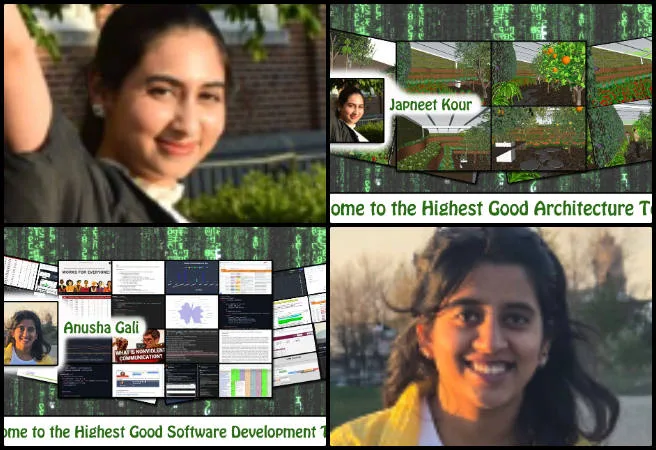
This week, Yulin contributed to comprehensive and sustainable global reinvention by focusing on visual communication and coordination tasks. She created and updated infographics based on feedback to improve clarity, visual consistency, and alignment with One Community’s sustainability goals. Yulin also prepared and published a collaboration announcement for the Highest Good Network software team to support transparent communication. See the Highest Good Society pages and the collage below for examples of their work.
HIGHEST GOOD NETWORK PROGRESS
 One Community is advancing comprehensive and sustainable global reinvention through open source Highest Good Network® software that is a web-based application for collaboration, time tracking, and objective data collection. The purpose of the Highest Good Network is to provide software for internal operations and external cooperation. It is being designed for global use in support of the different countries and communities replicating the One Community sustainable village models and related components.
- Learn about our open source community collaboration and management software and comprehensive and sustainable global reinvention: The Highest Good Network
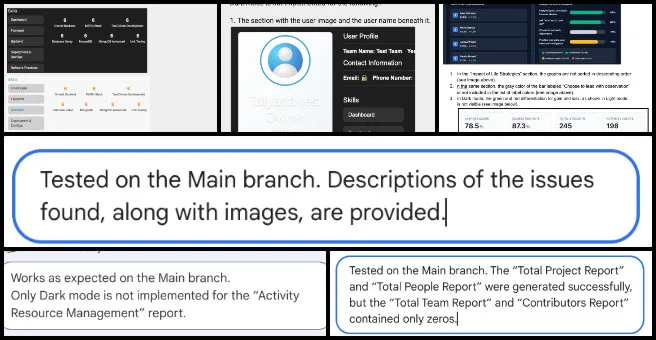
This week, the core team tested Highest Good Network pull requests and confirmed 9 as fixed. This effort highlights One Community’s commitment demonstrating comprehensive and sustainable global reinvention.
The following PRs were not fixed: the Phase 4 Analytics Insights Widget frontend, fixes and improvements to application functionality on phones, the issue with the Resource Usage Overview page not loading, and the Phase 4 Support Team frontend. They were also not able to test 11 merged PRs because there was no data available on the Main branch, which prevented verification of expected behavior and results. This work strengthens One Community’s mission of demonstrating comprehensive and sustainable global reinvention. See the Highest Good Society and The Highest Good Network pages, and the collage below, for an overview of the team’s contributions.
ALPHA SOFTWARE DEVELOPMENT TEAM
The Alpha Software Team, working on the Highest Good Network software, was managed by Lin Khant Htel (Frontend Software Developer), who currently serves as the team’s sole member. The Highest Good Network software is a key part of sustainable and free-shared eco-solutions, helping track and measure progress toward advancing comprehensive and sustainable global reinvention. The software supports social architecture, construction, production, and maintenance processes that contribute to the open source project and resilient ecosystems. Designed to be portable and scalable, the Highest Good Network software is well suited for off-grid and sustainable living communities. This project reflects One Community’s open source commitment to advancing comprehensive and sustainable global reinvention.
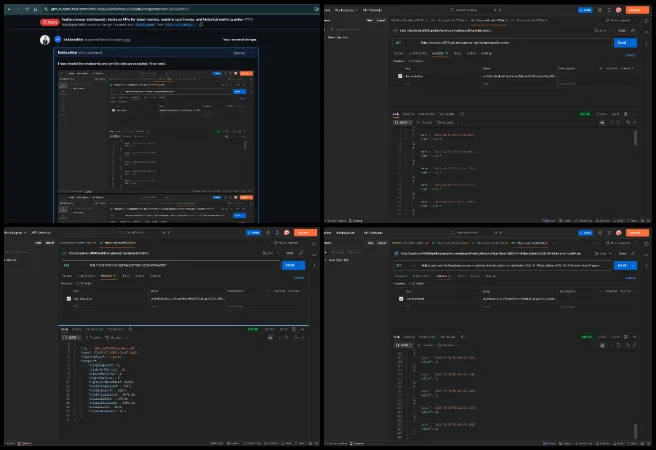
This week, Lin reviewed PR #1746, checked the code, tested it on a local machine, and confirmed that all tests passed, then reviewed and checked the weekly summaries, photos, and videos submitted by Alpha team members and handled management duties for the Alpha Team. Work continued toward resolving the existing task related to the multi-select filter solutions. See the Highest Good Society and Highest Good Network pages for more on how this contributed to advancing comprehensive and sustainable global reinvention. See the collage below to view the team’s work.
BINARY BRIGADE SOFTWARE DEVELOPMENT TEAM
The Binary Brigade Team, presenting their work on the Highest Good Network software, was managed by Amalesh Arivanan (Software Engineer) and included Sourabh Bagde (Software Developer), Harsha Rudhraraju (Software Engineer), and Nikhil Routh (Software Engineer). The Highest Good Network software is our tool for managing and objectively measuring progress, ensuring that all contributions are tracked and aligned with our mission, and for modeling and advancing comprehensive and sustainable global reinvention. It supports social architecture, construction, production, and maintenance processes that contribute to open-source projects and resilient, sustainable ecosystems.
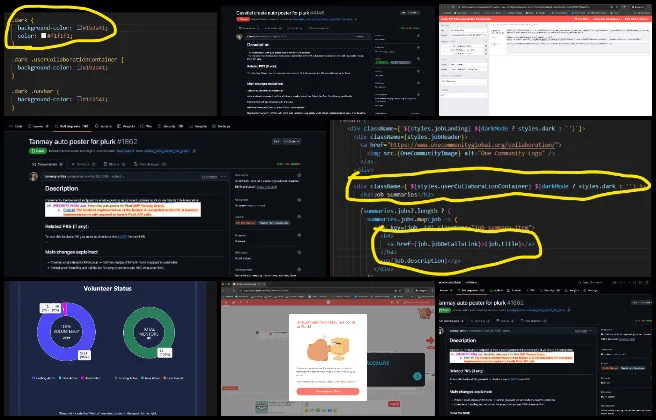
This week, Sourabh reviewed PR 4287 and PR 1862, along with Debadyuti’s notes, to confirm the Plurk integration status. He verified that PR 1862 already supports scheduling and deleting Plurk posts on the backend, with final validation currently blocked by the lack of access to live Plurk API credentials. He also revisited PR 4146 to map the completed frontend scheduling flow to the backend endpoints, noting a gap in aligning deletion workflows with existing Mastodon scheduling patterns. Sourabh completed the Plurk setup by creating a test Plurk account, registering a development application as a third-party website integration, generating OAuth credentials, and updating environment validation so the backend checks for required OAuth variables at startup. The outcome supports comprehensive and sustainable global reinvention through documented, DIY-ready progress. He modified the scheduled post schema and controller to add a UUID-based postid, extended platform support to include Plurk while preserving existing scheduling and metadata fields, and added Express routes to (1) post immediately to Plurk, (2) create a scheduled Plurk post, and (3) delete a scheduled Plurk post. He implemented request validation that returns 400 for invalid inputs, 404 for missing scheduled items, passes upstream Plurk API errors, and returns 500 for server failures. He also added timezone-aware date and time validation to enforce accepted scheduler formats, while normalizing stored scheduled date/time values to the America/Chicago timezone to match cron parser requirements. This is part of our broader mission of comprehensive and sustainable global reinvention.
Amalesh worked on “Total Org Summary – Fix PR 4138” by correcting two mobile layout defects in the Total Org Summary graph. These fixes prevented graph text from being clipped and separated overlapping indicators and labels, so values remain readable on smaller screens. He tested and documented the fix with screenshots and videos using the required naming conventions, tracked time in the HGN timer, and completed required onboarding steps for ongoing tool access. These steps help scale comprehensive and sustainable global reinvention for communities worldwide. Harsha investigated the raw HTML appearing in job summaries by creating a local branch and tracing the issue to backend job records containing embedded HTML rather than a frontend rendering defect. He removed the affected records from the Job table and replaced them with clean, consistently formatted content to stabilize rendering. Harsha added dark mode styling for the job summaries section so text, backgrounds, and interactive controls meet the approved palette in both themes, adjusted layout structure, spacing, and text wrapping to improve responsiveness on smaller laptops and tablets, verified consistent display in light and dark modes, ran regression checks to confirm other job views and filters were not impacted by the data cleanup, and prepared a pull request that includes both the backend data changes and the dark mode and responsive UI updates, with notes describing the root cause and fix. This momentum accelerates comprehensive and sustainable global reinvention through consistent iteration and transparency.
And Nikhil completed the handover by reviewing and closing all pull requests under their ownership, auditing the remaining CSS-to–module CSS migration pull requests to confirm review status and documentation coverage, and coordinating with the team to finalize ownership transitions and confirm that no outstanding tasks or review items remained under their scope. See the Highest Good Society and Highest Good Network pages for more information on how this works in advancing comprehensive and sustainable global reinvention. The collage below shows images of their work.
BLUE STEEL SOFTWARE DEVELOPMENT TEAM
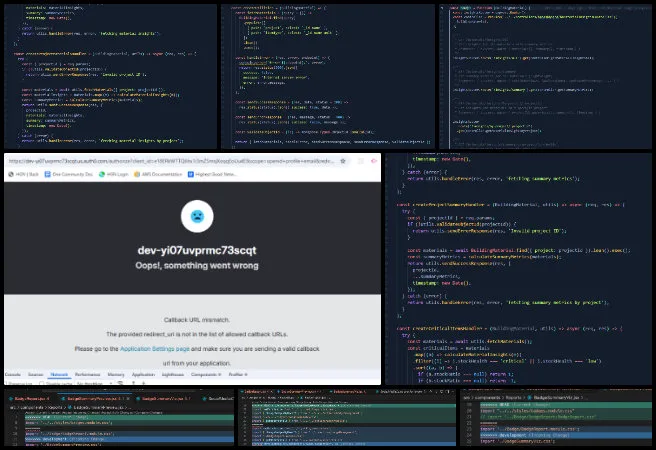
The Blue Steel Software Team, working on the Highest Good Network software, was managed by Sheetal Mangate (Software Engineer) and includes Linh Huynh (Software Engineer), Som Ramnani (Software Engineer). This week Som worked on PR #4215 to address merge conflicts introduced by recent updates from the main branch while resolving issues related to selecting featured badges and saving changes, with conflicts affecting BadgeReport.jsx, BadgeSummaryPreview.jsx, BadgeSummaryViz.js, and yarn.lock. As part of advancing comprehensive and sustainable global reinvention, he focused on a BadgeReport.module.css import that caused styling inconsistencies across badge-related components, and he updated CSS module imports and verified that affected components rendered correctly while preserving existing behavior.
Linh focused on the backend implementation for the Material Usage Insights and Visual Indicators feature in the BM Dashboard by building APIs and calculation logic to support inventory health and usage analysis, advancing comprehensive and sustainable global reinvention, This included pure calculation utilities for usage percentage, stock ratio, stock health status, and formatted numeric outputs with handling for missing or zero purchase data, backend handlers that combined raw material data with calculated metrics such as stock health labels, colors, and usage percentages, and summary metric calculations for total materials, low stock counts and percentages, over-usage counts and percentages, and items on hold, along with multiple API endpoints to fetch insights for all materials, by project, summary metrics globally and by project, critical or low stock items, high usage items, and detailed material views, while integrating routes into the BM Dashboard routing structure, ensuring related project and item type data population, and standardizing API responses with success flags, data payloads, and timestamps, with work tracked in a backend branch through a work-in-progress pull request.
Sheetal managed this week’s summary and worked on integrating Auth0Provider with the existing routing setup, confirming that app-level wrapping functions as expected while route-level wrapping of the Announcement component results in Auth0 remaining in a loading state, and she continued investigating the cause to support component-level Auth0Provider usage without disrupting application flow, while also resolving merge conflicts by reviewing local branch changes, comparing modified files, and determining which updates to merge to maintain consistency with the shared codebase, supporting scalable platform foundations that align with data transparency and tooling needs used towards advancing comprehensive and sustainable global reinvention. Supporting images of the related work are provided below.
CODE CRAFTERS SOFTWARE DEVELOPMENT TEAM
The Code Crafters Team, covering their work on the Highest Good Network software, was managed by Sphurthy Satish (Software Engineer) and includes Ajay Naidu (Software Engineer), Akshith Kumar Reddy Balappagari Gnaneswara (Software Engineer – Full Stack), and Shreya Padaganur (Software Engineer). The Highest Good Network software coordinates social, construction, production, and maintenance systems to objectively measure progress toward comprehensive and sustainable global reinvention.
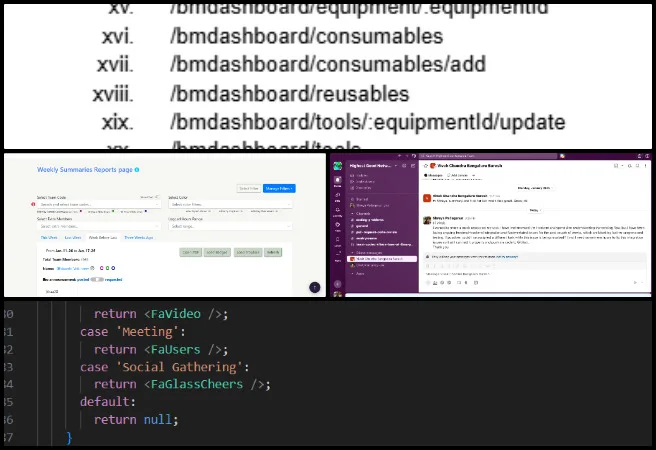
This week, Ajay fixed an issue that caused the events search bar to return no results for both new and existing events, restoring expected filtering and improving navigation on the events page. He refined the search experience by correcting input and icon styling, optimizing the action triggered by the search icon, and verifying that results update based on user input. To address dark mode inconsistencies, adjustments were made to align colors, backgrounds, and typography with theme variables and ensure that inputs, dropdowns, and labels meet contrast expectations. Ajay also reviewed areas flagged by reviewers, corrected edge cases where styles were not applied, and confirmed that hover, focus, and disabled states render as intended. In addition, merge conflicts related to these updates were resolved, and layout and spacing were validated to remain stable when switching themes. Local checks across common user flows confirmed that search behavior, visual states, and theme handling integrate with current components without regressions. These efforts reflect One Community’s goal of developing comprehensive and sustainable global reinvention.
Akshith worked on Phase 3 improvement tasks, including adding fuzzy search and typo tolerance for event searches, implementing typo tolerance for type and location searches in the activity list, fixing radio button and checkbox alignment mismatches, and updating date selection in the search filter. He created a new utility function to handle typos in search queries and updated the community portal date filter to display events based on the selected date. He also made UI adjustments to align buttons and checkboxes according to the Figma design specifications. The progress shown here reflects continued advancement toward advancing comprehensive and sustainable global reinvention through coordinated social architecture supported by documented actions. This supports comprehensive and sustainable global reinvention by strengthening open, data-informed decision-making.
Shreya worked on the assigned user state indicator task, implementing frontend components and continuing development of related UI functionality, including button behavior. Time was spent reviewing and understanding the existing frontend and backend flow to ensure alignment with the current system design. Several frontend elements and partial functionality have been implemented; however, progress has been impacted by ongoing frontend–backend integration issues, including Node-related problems, which have prevented successful connectivity and testing for approximately two weeks. As a result, the implemented changes cannot yet be fully validated. Initial integration efforts are still in progress, and investigation into the blocking issue is ongoing. Due to these continued integration challenges, reassignment to an alternative task is being considered if needed. The progress demonstrated reflects ongoing advancement toward comprehensive and sustainable global reinvention through coordinated, well-documented social architecture.
Sphurthy fixed a font color and styling issue in the Search Filters section on the All Events page to better align with the Figma design. Previously, section headings such as Branches, Themes, and Categories appeared darker and bolder than the selectable filter text, whereas the intended design required headings to be lighter and selectable text to be more prominent. Updates were made in the CPDashboard.module.css file to correct the visual hierarchy. This is part of our broader mission of comprehensive and sustainable global reinvention.
Filter headings now use a lighter gray color with normal font weight, while select inputs and option text use a darker color with medium font weight. Dark mode styles were also added to ensure consistent appearance across themes. Additionally, radio button alignment issues in the date filter section were fixed, ensuring the Tomorrow and This Weekend options display correctly without overlap or misalignment. These efforts help move One Community closer to developing comprehensive and sustainable global reinvention. Visual examples of this work are presented below
DEV DYNASTY SOFTWARE DEVELOPMENT TEAM
The Dev Dynasty Team’s summary, covering their work on the Highest Good Network software, was managed by Deekshith Kumar Singirikonda (Developer) and includes Adithya Cherukuri (Volunteer Software Engineer), Aditya Gambhir (Software Engineer), Neeraj Kondaveeti (Software Engineer), Sai Shravan Neelamsetty (Software Engineer), Sriamsh Reddy (Software Engineer) and Vikas Meneni (Software Engineer). The Highest Good Network software is how we’ll manage and objectively measure our processes for open sourcing a better world for us all through our social architecture, construction, production, and maintenance processes. This progress supports One Community in advancing comprehensive and sustainable global reinvention.
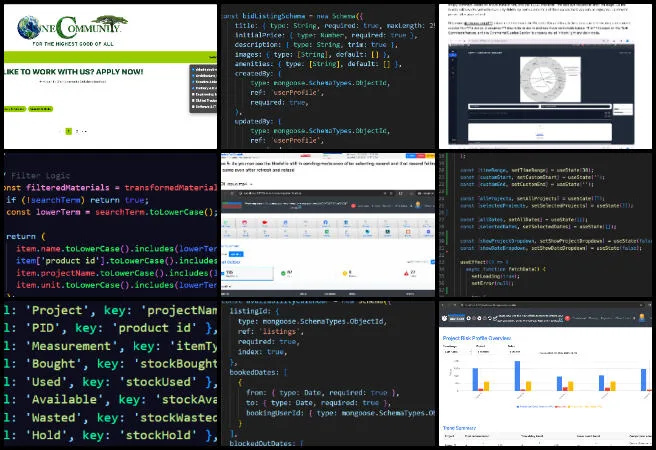
This week Adithya worked on the HGN Software Development project by implementing search and enhanced filtering for the Materials Table, adding local state management, multi-field filtering, responsive layout adjustments using Bootstrap and Flexbox, a conditional clear button, and safeguards against null values using optional chaining, followed by testing and preparation of weekly documentation. Deekshith developed a client-side React component to visualize resource usage data with responsive bar charts using Recharts, integrated dropdown controls, structured static datasets for materials, equipment, and venues, and implemented a themed CSS module supporting light and dark modes with consistent layout and styling. This reinforces comprehensive and sustainable global reinvention through collaboration and continuous improvement.
Neeraj improved the Collaboration page by replacing comma-separated job category filters with styled filter chips, updating only the relevant component and CSS module, ensuring compatibility with existing search, pagination, and API logic, and validating behavior across light and dark modes. Shravan addressed multiple PR review issues in the email management system by fixing sending state handling, improving modal behavior, implementing cache-busting and refresh logic, adjusting layout and spacing through CSS updates, removing duplicate selectors, and continuing work on template page layout, hover behavior, and dark mode support. This work helps demonstrate comprehensive and sustainable global reinvention in real, measurable ways.
Sriamsh implemented the Project Risk Profile page at the required route, added project and time-based filtering, integrated risk charts and trend indicators, restructured core component logic for consistent state handling, verified dynamic rendering, and aligned the implementation with documented requirements. Vikas reviewed and tested five abandoned pull requests related to reporting, analytics, attendance, and summaries, validating functionality, permissions, workflows, visual behavior, and dark mode compatibility, identifying merge conflicts and environment blockers, resolving code quality issues, and preparing several items for approval pending final conflict resolution. See the Highest Good Society and Highest Good Network pages for more on how this relates to our mission of advancing comprehensive and sustainable global reinvention. Explore some of the team’s work in the collage below.
LUCKY STAR SOFTWARE DEVELOPMENT TEAM
The Lucky Star Team’s summary, covering their work on the Highest Good Network, was managed by Keerthana Chitturi (System Administrator). The team includes contributions from Abhinav Tharamel Baiju (Software Engineer), Aryan Rachala (Software Engineer), Chirag Bellara (Software Engineer), Shashank Madan (Software Engineer), Shravya Kudlu (Software Development Engineer), Veda Bellam (Software Engineer), Venkataramanan Venkateswaran (Software Engineer) and Vinay Krishna (Software Engineer). Their work supports One Community’s goal of comprehensive and sustainable global reinvention through cross-functional software development and ongoing system improvements.
This week, Abhinav implemented backend API endpoints for Phase 6 of the Kitchen Inventory Management system’s processing projects. The endpoints support adding and retrieving data for project queues including canning, dehydration, freeze drying, and cellar storage, and the database model defines attributes such as item name, process name, quantity, supplies quantity, supplies type, scheduled date, and priority. This work contributes to comprehensive and sustainable global reinvention. Aryan worked on Phase 3 of the HGN Software Development project by standardizing the date display format on the Used Resources page. He verified timestamp accuracy, ensured correct handling of user local time zones, removed relative time labels, and tested formatting and layout behavior across multiple browsers and screen sizes while cleaning up related code and performing regression testing. This work contributes to comprehensive and sustainable global reinvention.
Chirag completed the “Add toggle to show or hide past events in the Activities List” feature by implementing and testing the changes, resolving merge issues, and creating pull request 4772. He also added icons to the Event Details display in the Calendar View and fixed merge errors that were blocking the merge of pull request 4647. This work contributes to comprehensive and sustainable global reinvention. Shashank reviewed high priority pull requests and provided detailed feedback using screenshots and screen recordings to demonstrate functionality and highlight issues. He submitted code comments addressing coding patterns, structure, and implementation approaches, and coordinated with team members to clarify requirements and confirm expected behavior before moving pull requests forward. This work contributes to comprehensive and sustainable global reinvention.
Shravya addressed merge conflicts for ticket 3926 and researched git rebasing as a method to streamline future updates. She also worked on bugs associated with ticket 3106 by fixing functional requirements for one component and correcting dark theme display issues for another. This work contributes to comprehensive and sustainable global reinvention. Veda worked on analytics and dashboard improvements for the Listing and Bidding platform within the HGN Software Development project. She created and refined the “Cancellation Impact on Vacancy” chart with vacancy and cancellation rate visualizations, added date range and category-based filters, worked with placeholder data while resolving dependency issues, created a donut chart for Job Posting Page Analytics, resolved merge conflicts across frontend and backend codebases, converted stylesheets to module-based CSS, and fixed a dark mode filter display issue. This work contributes to comprehensive and sustainable global reinvention.
Venkataramanan resolved a mix of frontend and backend issues across the Highest Good Network App and HGNRest repositories, including updating WBS labels, fixing time entry validation messages, correcting user profile update issues affecting project visibility, aligning UI elements across dashboards and leaderboards, fixing unclickable WBS task areas, and improving navigation and layout consistency across multiple pages. This work contributes to comprehensive and sustainable global reinvention.
Vinay worked on updating the Team button behavior in the Project Risk Profile so that it redirects users to the Home page, improving navigation clarity within the Risk Profile flow. He reviewed the existing button configuration, updated redirect logic, validated behavior across common user paths, and ensured the changes did not introduce layout, permission, or routing regressions. This work contributes to comprehensive and sustainable global reinvention. See the Highest Good Society and Highest Good Network pages to learn more about how this work supports comprehensive and sustainable global reinvention. See the collage below highlighting the team’s work for the week.
MOONFALL SOFTWARE DEVELOPMENT TEAM
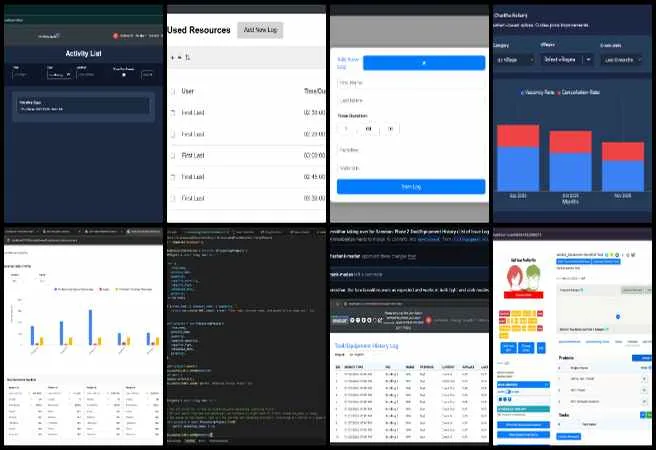
The Moonfall Team’s summary, which covers their work on the Highest Good Network, was managed by Uha Kruthi (Software Engineer) and includes Aayush Shetty (Software Engineer), Alisha Walunj (Software Engineer), Sai Krishna (Software Engineer), and Mani Shashank Marneni (Software Engineer). Their efforts support One Community by advancing the mission of comprehensive and sustainable global reinvention through open-source collaboration, ecologically responsible innovation, and holistic global progress.
This week, Uha focused on improving dark mode behavior and visual consistency in the Lesson Form component by updating CSS and JSX to prevent unintended background changes in input fields, text areas, and dropdowns, implementing dedicated dark mode styles for lesson titles, content fields, select elements, and tag inputs, resolving duplicated dropdown indicators, hover color issues, and contrast problems, adjusting focus and active state styling, and validating all changes locally for usability and correctness. This week’s results move us closer to comprehensive and sustainable global reinvention.
Sai worked on adding the Consumables button to the project dropdown on the BMDashboard by completing required frontend changes, testing the functionality, raising a pull request, and beginning implementation of the Consumables Update History feature by analyzing requirements, creating a modal, defining display fields, and setting up the initial frontend structure to support backend integration. This work contributes to comprehensive and sustainable global reinvention by strengthening the reliability, maintainability, and reuse of shared open-source infrastructure.
Aayush worked on Phase 2 tasks by optimizing field dependency and selection flow through requirement analysis, codebase review, local branch setup, partial implementation, local testing, documentation with screenshots, and weekly reporting, and also resolved the Create New Team page display issue by handling empty dataset scenarios with appropriate user messaging and validating behavior locally. Mani worked on a Priority Medium task to add an Insights Panel to the PR Team Analytics Dashboard by designing and implementing a responsive UI component, developing metric calculation logic from filtered datasets to display key indicators, adding logic to identify and highlight the most-reviewed pull request, and aligning styling with existing light and dark mode standards. These refinements improve reuse and accessibility, supporting comprehensive and sustainable global reinvention.
Alisha worked on frontend wishlist functionality by integrating the correct dashboard header, fixing username rendering, correcting amenities list styling, raising and linking related pull requests, creating and fixing an applicant reason distribution pie chart, resolving merge conflicts through rebasing, addressing dark mode issues, developing a grouped bar chart for issues created versus resolved, resolving failing checks, and implementing requested changes on a prior pull request. Visit the Highest Good Society and Highest Good Network pages for more on how this work supports comprehensive and sustainable global reinvention through open-source development and globally accessible resources. The collage below illustrates the team’s work and accomplishments for the week:
REACTONAUTS SOFTWARE DEVELOPMENT TEAM
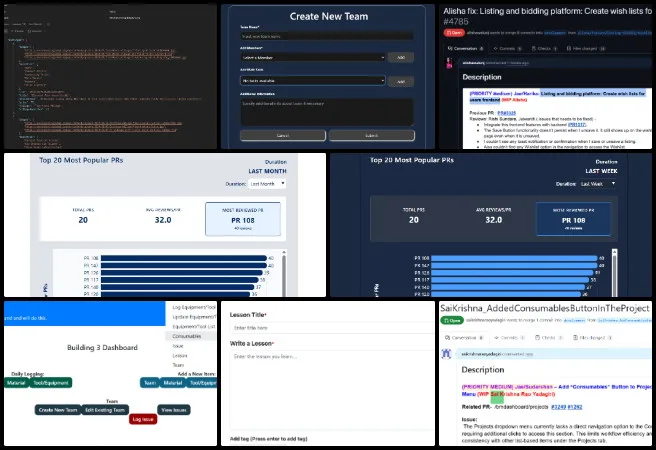
The Reactonauts team summary was managed by Diya Wadhwani (Software Developer) and Iteesha Vishalakshi Aswath (Technical Program Manager), and it includes Aseem Deshmukh (Software Developer), Guna Pranith Reddy Cheelam (Software Developer), Kristin Dingchuan Hu (Software Engineer), Peterson Rodrigues dos Santos (Full Stack Developer), Siva Putti (Software Engineer), Sri Satya Venkatasai Siri Sudheeksha Vavila (Software Engineer), and Suparshwa Patil (Software Engineer). The Highest Good Network software helps manage and objectively measure progress by focusing on advancing comprehensive and sustainable global reinvention. It supports social architecture, construction, production, and maintenance processes to build sustainable and thriving ecosystems.
This week, Aseem updated multiple pull requests by adjusting tooltip sizing for improved chart readability in PR4354 and adding logic in PR4426 to prevent users from selecting future end dates through both the date picker and manual entry, then shared progress with Jae and pushed all changes to GitHub. Diya validated the full user status lifecycle from the User Profile page, including activation, immediate deactivation, scheduling a final day cancellation, and reactivation flows, refactored hook-based helpers to work within the User Management page’s class-based architecture and routed actions through unified dispatch utilities. This strengthens the foundation for comprehensive and sustainable global reinvention through free-sharing and open standards.
She resolved issues with premature execution and missing popup context, completed end-to-end testing to confirm unified endpoint usage, and correct cron job behavior for final-day calculations and notifications and restored email sending across all status actions. Diya also raised and merged PRs 2021 and 4767 after fixing CI failures, and resolved a login page UI issue in PR4774. The progress made this week contributes to our long-term goal of advancing comprehensive and sustainable global reinvention.
Guna continued refining the listings home page frontend by addressing remaining review notes for PR3999, focusing on image GET request error fixes and consistent tab heading behavior, while advancing Phase 3 Re-Engagement Strategies by investigating a ‘page not found’ issue affecting the log attendance route in the development environment. Kristin resolved merge conflicts for PR4589, implemented an organizer-based dropdown menu on the Event Participation page with aligned styling and updated mock data for testing. She also identified and debugged an issue with upcoming events being filtered out due to past-dated mock entries. This work supports advancing comprehensive and sustainable global reinvention through open source software.
Peterson improved the Projects page user filter experience by adding visual feedback through background color changes on the active All and Find buttons. Siva added a dynamic Community Portal Activity Agenda page with full event detail rendering and corrected loading and no-data state handling in PR4434, restored routing and integrated the comments page with the FAQs API in PR4553, and resolved merge conflicts related to Engagement page dark mode work in PR4467. This work plays an important role in advancing comprehensive and sustainable global reinvention through coordinated, real-world implementation.
Sudheeksha implemented dark mode styles for the HGN Skills page, troubleshooting and resolving pull request errors over multiple sessions before successfully raising the PR. Suparshwa refined the chatbot prompt to restrict responses to provided documentation and began developing an orchestration layer to persist and retrieve conversational memory to maintain accurate context across sessions. See the Highest Good Network and Highest Good Society pages to learn more about how this work supports advancing comprehensive and sustainable global reinvention. Below is the picture collage of the work done by the Reactonauts team towards advancing comprehensive and sustainable global reinvention.
SKYE SOFTWARE DEVELOPMENT TEAM
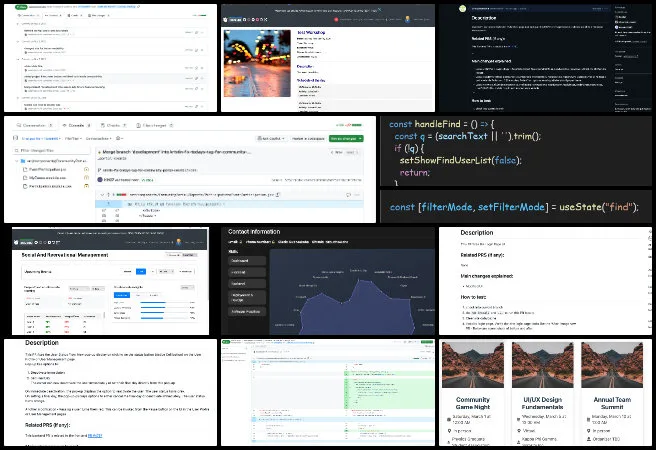
The Skye Team’s summary, covering their work on the Highest Good Network, was managed by Sayantan Paul (Frontend Tester and Software Team Administrator) and Anthony Weathers (Software Engineer). The team includes Marcus Yi (Software Engineer) and Swathi Angadi (Software Engineer). The Highest Good Network software objectively tracks and manages progress, supports social architecture, construction, production, and maintenance processes that foster sustainable and thriving ecosystems, while advancing comprehensive and sustainable global reinvention through systems designed for transparency, scalability, and shared improvement.
This week, Marcus collaborated with fellow software developers to clarify reviewer testing requirements for his pull request, including expectations around local setup and validation workflows. Through these discussions, he helped successfully configure one reviewer’s environment so testing could move forward, while another setup remained unresolved and pending follow-up. Marcus also aligned with reviewers on the scope and status of testing completed to date, documenting progress and confirming that no code changes were made during this period due to incomplete reviewer readiness. In parallel, he provided guidance to support testing of related frontend and backend functionality for Facebook post uploads, clarifying instructions and troubleshooting reported issues such as reconnection failures, inconsistent connection status messaging, scheduled posts not executing, and questions around whether post history visibility should be user specific. This progress reflects continued momentum in promoting comprehensive and sustainable global reinvention through open, collaborative development.
Swathi worked on the edit functionality and the view update history feature on the Consumables page, ensuring that users can modify data and view change history as expected. She generalized both backend and frontend logic to support materials and consumables through shared implementations, reducing code duplication and improving maintainability. She fixed dark mode issues on the Consumables page to ensure consistent appearance across themes. She also resolved errors in test files and module.css files that occurred during the merge process, addressing build and styling issues. In addition, she tested multiple edge case scenarios related to the updated functionality and applied fixes where issues were identified. This effort facilitates comprehensive and sustainable global reinvention through consistent, actionable development practices.
By addressing these challenges, the Skye team’s work reinforces long-term stability in stewardship tracking features and fosters comprehensive and sustainable global reinvention by strengthening scalable, transparent systems within the broader Highest Good Network (HGN) infrastructure. See the Highest Good Society and Highest Good Network pages for more on how this contribution aligns with One Community’s goals by encouraging comprehensive and sustainable global reinvention within the Highest Good Network open source hub. See the collage below for the team’s work.
SOFTWARE PR REVIEW TEAM A-N
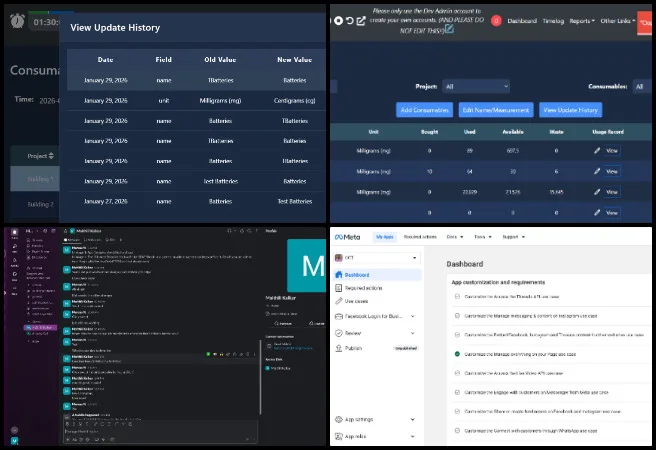
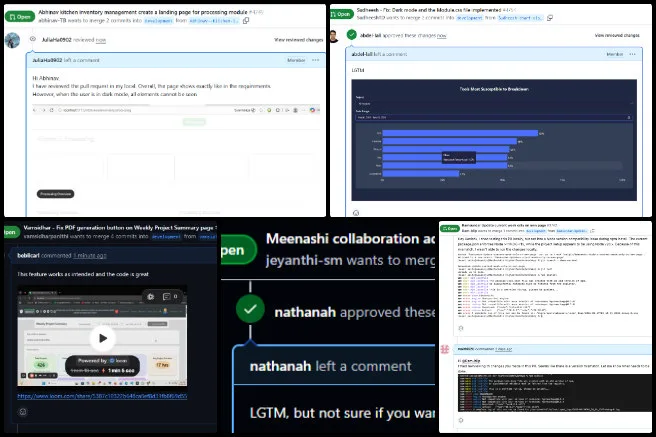
The PR Review Team’s summary for members with names starting A–N, managed by Neeharika Kamireddy (Data Analyst), highlights their contributions to the Highest Good Network software. This platform forms the foundation for measuring our results in advancing comprehensive and sustainable global reinvention. Active team members included Abdelmounaim Lallouache (Software Developer), Carl Bebli (Software Developer), Julia Ha (Software Engineer), Maithili Kalkar (Software Engineer), and Nathan Hoffman (Software Engineer). They supported the project by reviewing all pull requests shared this week. Learn more about how the Highest Good Network tracks progress toward advancing comprehensive and sustainable global reinvention in the Highest Good Network open source hub. The collage below showcases a compilation of this team’s work.
SOFTWARE PR REVIEW TEAM O-Z
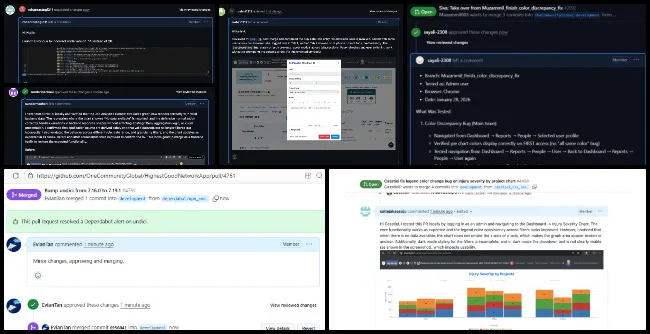
The PR Review Team’s summary for members with names starting with O–Z was managed by Shameera Musthafa (Data Analyst). The Highest Good Network is a foundation for measuring our results in developing comprehensive and sustainable global reinvention. This week’s active members of this team were Rohan Rastogi (Software Engineer), Roshini Seelamsetty (Software Engineer), Sai Teja Kaasoju (Software Engineer), Sayali Sable (Software Engineer), Sundar Machani (Software Engineer), and Yiyun Tan (Software Engineer). They reviewed all the Highest Good Network PRs (Pull Requests) shared in this week’s update. Learn more about how the Highest Good Network open-source hub measures progress towards our goal of developing comprehensive and sustainable global reinvention. The collage below shows a compilation of the work from this team.
AND WE PRODUCED THIS WEEKLY UPDATES BLOG – CLICK HERE TO SUBSCRIBE
FOLLOW ONE COMMUNITY’S PROGRESS (click icons for our pages)
INVESTOR PAGES
GET INVOLVED
DONATE | WAYS ANYONE CAN HELP | MEMBERSHIP
CLICK HERE FOR ALL PAST UPDATES