One Community
DIY Sustainable Construction Models – One Community Weekly Progress Update #671
At One Community, we are developing DIY sustainable construction models as part of a larger open source framework for building resilient and regenerative communities. Created by an all-volunteer team, our solutions integrate housing with food, energy, housing, education, economics, and social architecture, all free-shared to support global replication. Designed to evolve into a network of teacher/demonstration hubs, this work promotes fulfilled living, planetary regeneration, and a world that works for everyone, always guided by The Highest Good of All.
- Here’s our project overview
- Here’s our world-change methodology
- Here’s how this becomes self-replicating
- Here’s how we are open source and free-sharing all the do-it-yourself designs
OUR MAIN OPEN SOURCE HUBS
Click on each icon to be taken to the corresponding Highest Good hub page.

One Community’s physical location will forward this movement as the first of many self-replicating teacher/demonstration communities, villages, and cities to be built around the world. This is the January 26, 2026 edition (#671) of our weekly progress update detailing our team’s development and accomplishments:
DIY Sustainable Construction Models
One Community Progress Update #671

DONATE | COLLABORATE | HELP WITH LARGE-SCALE FUNDING
CLICK HERE IF YOU’D LIKE TO RECEIVE AN EMAIL EACH WEEK WHEN WE RELEASE A NEW UPDATE
YOU CAN ALSO JOIN US THROUGH SOCIAL MEDIA


ONE COMMUNITY WEEKLY UPDATE DETAILS
HIGHEST GOOD HOUSING PROGRESS
One Community is developing DIY sustainable construction models through Highest Good housing that is artistic and beautiful, more affordable, more space efficient, lasts longer, DIY buildable, and constructed with healthy and sustainable materials:
- Learn about: Our Upcoming Crowdfunding Campaign
- Learn about the different village models and DIY Sustainable Construction Models: 7 Sustainable Village Models
- Visit the open source portals for the first two: Earthbag Village OS Hub | Straw Bale Village OS Hub
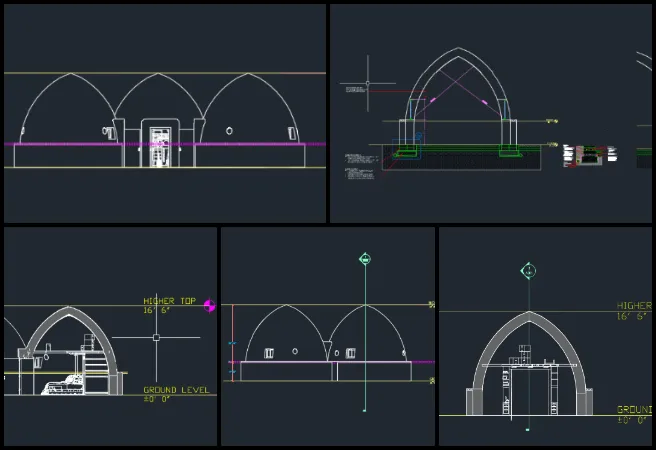
This week, Fangting Xu (Interior Design Intern) continued working with ADA codes related to building connections for the ADA 3-dome cluster of the Earthbag Village. She wrote and refined the building elevations, sections, wall sections, and construction details for the 3-dome cluster ADA project. Fangting exported the drawings from the SketchUp model and discovered scale inconsistencies caused by the model being exported in an incorrect camera projection, requiring careful rescaling in AutoCAD to ensure dimensional accuracy and code-compliant documentation. Her attention to precision strengthens DIY sustainable construction models through accessible and compliant design documentation. Below, you’ll find some images of this work.
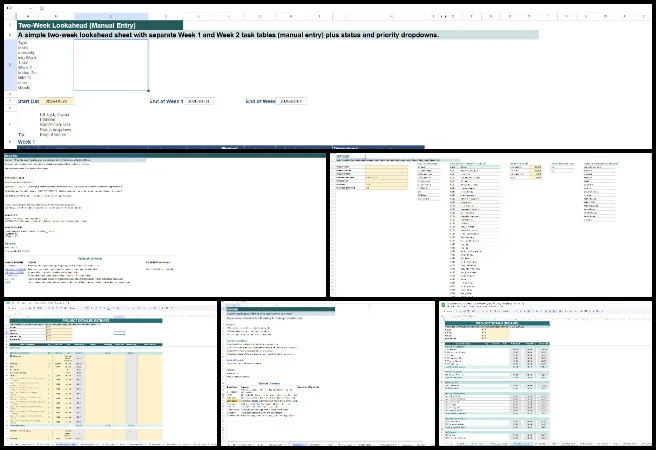
Iteesha Vishalakshi Aswath (Technical Program Manager) worked on the open source Climate Battery design cost analysis by updating and expanding the Google sheet template to match the current project structure and planning requirements. She revised the README sheet to clarify its purpose, scope, and use for cost estimation and construction planning. The Summary sheet was updated with project information, component listings, and cost rollup structures, while the Assumptions sheet was created to document design, pricing, and scope considerations. Line items were organized across materials, excavation, insulation, airflow, controls, and sensors, with defined units, quantities, costs, and references. In parallel, Iteesha collaborated with a general contractor to refine layout, formatting, and usability based on real-world construction workflows. Her work supports DIY sustainable construction models by making cost planning transparent and replicable. Below, you’ll find some images of this work.
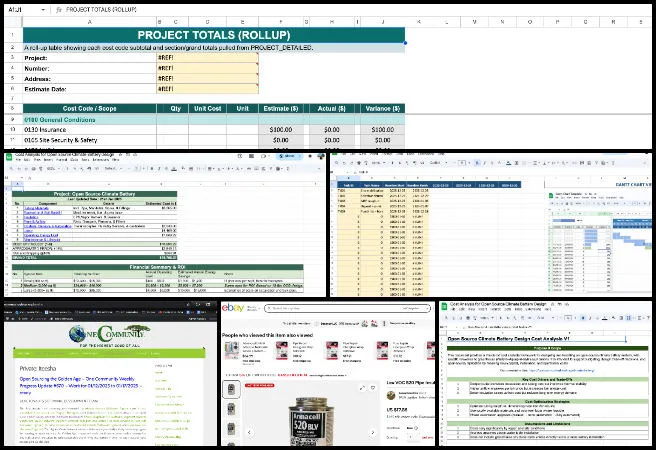
Kaustubh Kadam (Construction Engineering and Management Professional) continued working on the Highest Good housing project by updating the cost estimate templates based on Jae’s feedback. This included adjusting the color coding to better match the reference format, adding clear example references in the detailed estimate lines so non-industry users understand what to enter, and correcting formula issues that were causing errors and incorrect rollups. He also cleaned up the layout and formatting to improve readability and presentation, contributing to DIY sustainable construction models by simplifying construction cost estimation for broader use. Below are some images showcasing this work.
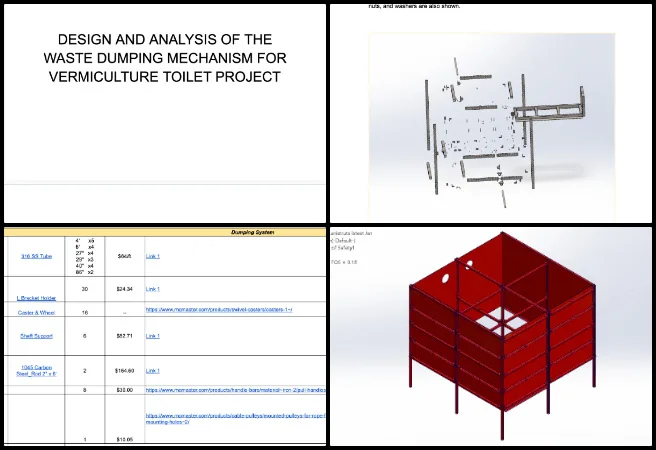
Malhar Solanki (Mechanical Engineer) continued working on the Vermiculture Toilet component of the Earthbag Village. He attended the weekly mechanical team meeting to monitor progress, discussed obstacles, and evaluated FEA results. Malhar updated the Bill of Materials with final adjustments and pricing data. Because FEA analysis showed that AL 6061 was unsuitable for the application, he identified a different material and updated the BOM. He added technical content and images to the dumping assembly section of the report. The report now includes three types of FEA analyses to justify the material selection. His contributions reinforce DIY sustainable construction models through evidence-based engineering decisions. Review the latest updates in the images below.
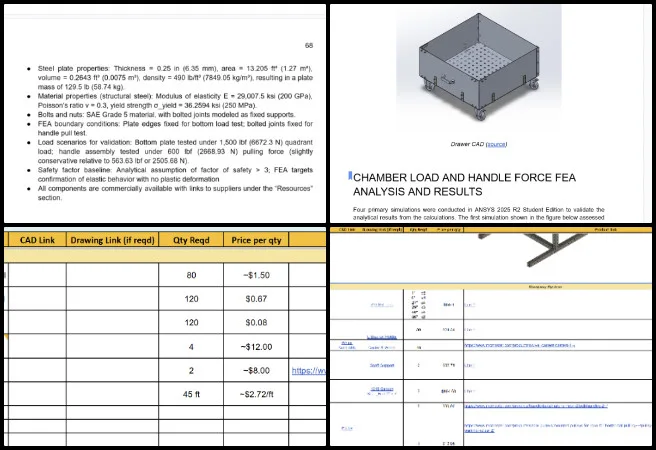
Rishi Chakrapani (Mechanical Engineer) continued working on the Vermiculture Toilet. He completed his section of the signoff on the Bill of Materials for the dumping mechanism and the main unistrut structure, with verification that all listed parts, including fixtures, were properly identified, sourced, quoted, and available. The reports for the sensor selection and analysis, as well as the manual winch and drawer stress analysis, were also completed and prepared for inclusion in the project documentation. His validation work supports DIY sustainable construction models by ensuring reliability and build-readiness. Visual examples from his work are presented below.
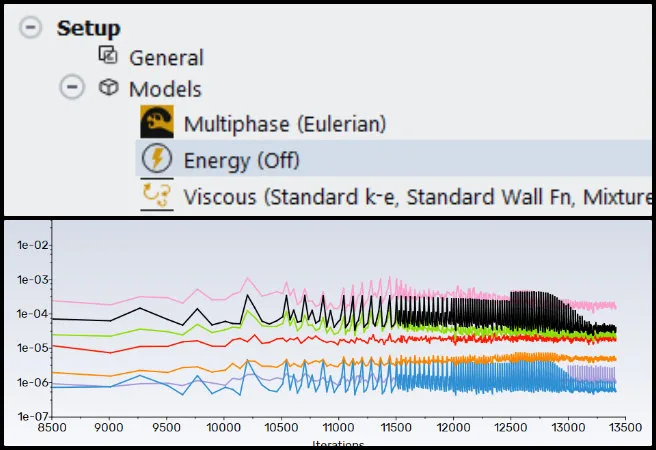
Sai Bhuvanesh Nandipati (Mechanical Engineer) continued working on the Earthbag Village by reviewing the CAD drawings and correlating the geometric and layout information with the water management calculations provided in the Excel file. He focused on aligning drainage paths, flow lengths, and surface characteristics shown in the drawings with the assumptions used in the calculations. In parallel, Sai updated the existing simulation setup by introducing an appropriate turbulence model into the sheet flow analysis to better represent flow behavior under the defined conditions. This work supports the development of DIY sustainable construction models. See below for some of the pictures related to this work.
DUPLICABLE CITY CENTER PROGRESS
One Community is developing DIY sustainable construction models through a Duplicable and Sustainable City Center that is LEED Platinum certified/Sustainable, can feed 200 people at a time, provide laundry for over 300 people, is beautiful, spacious, and saves resources, money, and space:
- Learn about this building and it’s function and DIY Sustainable Construction Models: Duplicable City Center Open Source Hub
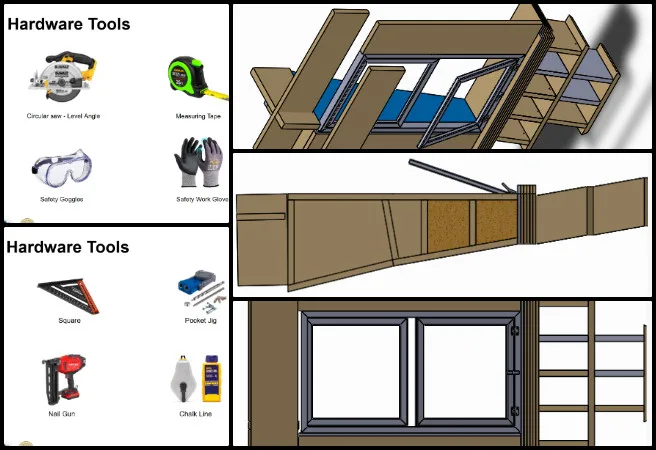
This week, Ariana Virginia Gutierrez Doria Medina (Industrial Designer) continued working on the Duplicable City Center window and door framing by researching insulation materials to inform material selection and compatibility with the current design. In parallel, the support structure was modified to address fit and stability requirements identified during development activities. The 3D CAD design was updated to reflect the structural changes and the selected insulation approach, ensuring alignment between components. The updated CAD model serves as a reference for defining cut layouts, estimating material and fabrication costs, and preparing assembly instructions, allowing the design to be used consistently across planning and fabrication tasks. This open-source Duplicable City Center project is dedicated to developing DIY sustainable construction models. Please see the illustration below for more specific information.
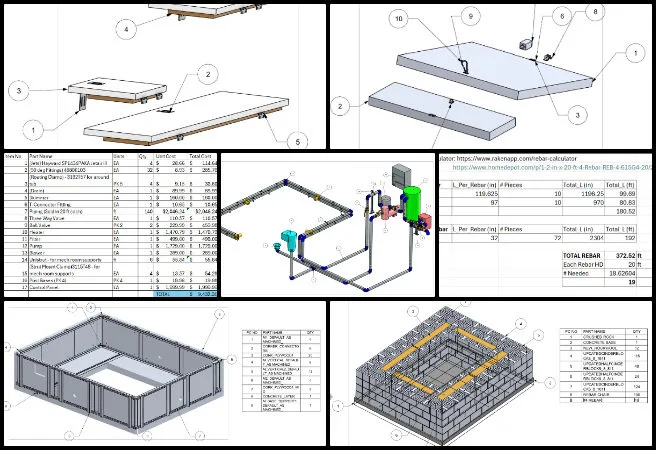
Bevan Chiu (Mechanical Engineer) continued his work on the City Center Eco-spa Designs. He worked on developing the Bill of Materials for the spa assembly, focusing on both layout definition and material quantification. The cinder block assembly was rearranged to accommodate R30 rockwool insulation that is currently available in the market. To support the Bill of Materials, Bevan created drawings that documented the layout and identified each component with corresponding quantities. In parallel, he prepared an Excel spreadsheet to calculate material quantities and costs, including detailed calculations for items such as rebar and other construction materials required for the assembly. This open source Duplicable City Center project is currently developing DIY sustainable construction models. For more details, refer to the image below.
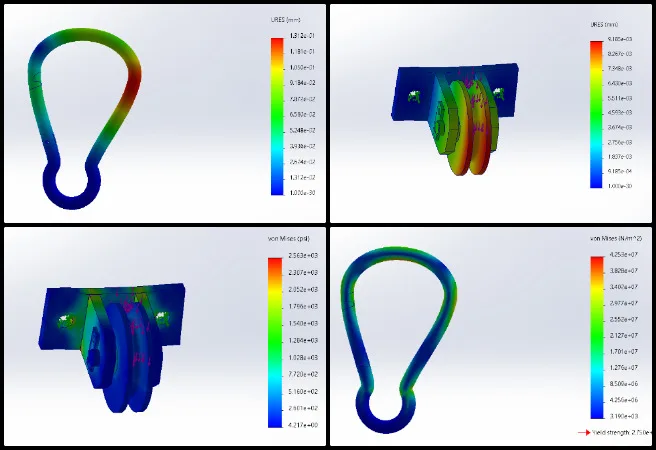
Shivarama Krishna Revanuru (Mechanical Engineer) continued working on the Duplicable City Center design. He focused on finite element analysis of the pulley holder and carabiner, including cost analysis and material selection. Discussions were held with a teammate regarding the FEA results and cost considerations. In addition, structural load analysis for both the pulley holder and carabiner was started, and preliminary calculations were performed to determine load distribution and identify critical points for further evaluation. This open source Duplicable City Center project is developing DIY sustainable construction models. The images below illustrate aspects of this work.
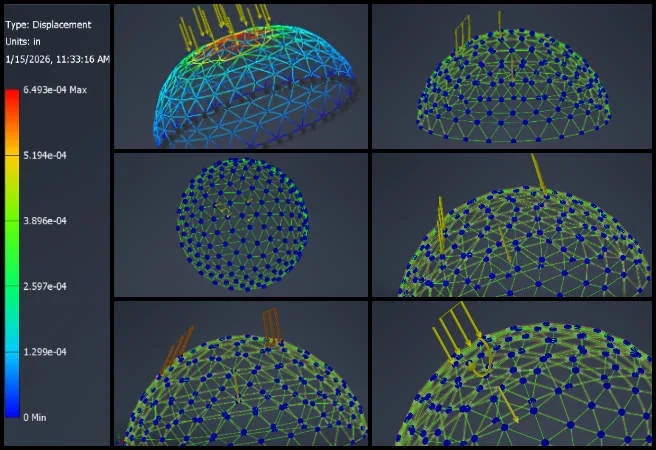
Shreyas Nagaraj (Design Engineer) made more updates to the City Center Dome Hub Connector Engineering and beams for the Duplicable City Center. He spent his hours on the Duplicable City Center project, focusing on setting up and verifying finite element analyses for the dome assembly under multiple load conditions. He set up the analysis environment in Inventor and checked the dome assembly model across various load cases, ensuring all relevant loads were considered. Additionally, Shreyas continued performing finite element analysis checks under different load conditions to validate the model’s structural behavior. This open source Duplicable City Center project focused on developing DIY sustainable construction models. For more details, refer to the image below.
HIGHEST GOOD FOOD PROGRESS
One Community is developing DIY sustainable construction models through Highest Good food that is more diverse, more nutritious, locally grown and sustainable, and part of our open source botanical garden model to support and share bio-diversity:
- Learn about the structures and DIY sustainable construction models: Hoop House Hub | Aquapini & Walipini Open Source Hub
- See what we’ll be growing: Gardens & Hoop Houses | Large-scale Structures | Food Forest | TA
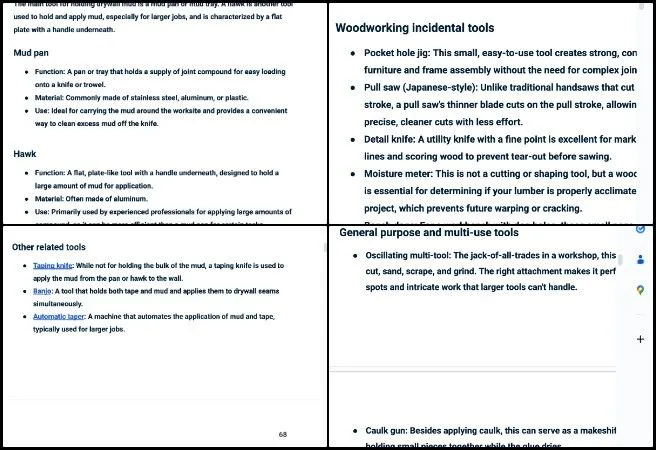
This week, the core team continued working on the Master Tools, Equipment, and Materials and Supplies List for the Large-scale Garden, Botanical Garden, and other Highest Good Food components. The team completed the Master Document comparisons for the Automotive Shop (ASHP), General Storage & Inventory (GSI), Metal Shop (MSHP), and Wood Shop (WSHP). All entries within these sections were alphabetized for improved organization. Additionally, descriptive paragraphs were developed for various tools, including general purpose and multi-use items, incidental tools for both metalworking and woodworking, automotive incidental tools, safety and organizational tools, and drywall tools such as the mud pan, hawk, taping knife, banjo, and automatic taper. The Highest Good Food initiative is a key component of One Community’s open source plans, focused on DIY sustainable construction models and exemplifying the organization’s commitment through innovative design and implementation. Below are some images showcasing this work.
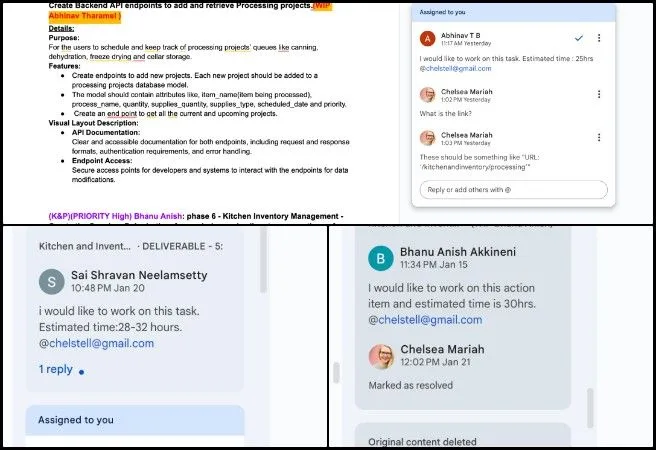
Chelsea Mariah Stellmach (Project Manager) continued working on the Transition Food Self-sufficiency food and inventory tracking software plans. She addressed technical issues affecting the project while managing the onboarding of several new software developers. The addition of new developers enabled broader testing of Bhanu’s work and increased visibility into existing code, while also creating some uncertainty regarding task ownership and the delegation of work within the team. Chelsea worked to clarify roles, responsibilities, and expectations to reduce overlap and confusion. Throughout the week, she focused on identifying and resolving blockers as they arose, coordinating with team members to address questions and align next steps, with the goal of maintaining steady progress and avoiding disruptions to the software development workflow. As an essential aspect of One Community’s open source goals, the Highest Good Food initiative supports open sourcing DIY sustainable construction models. The following images provide a view of her contributions.
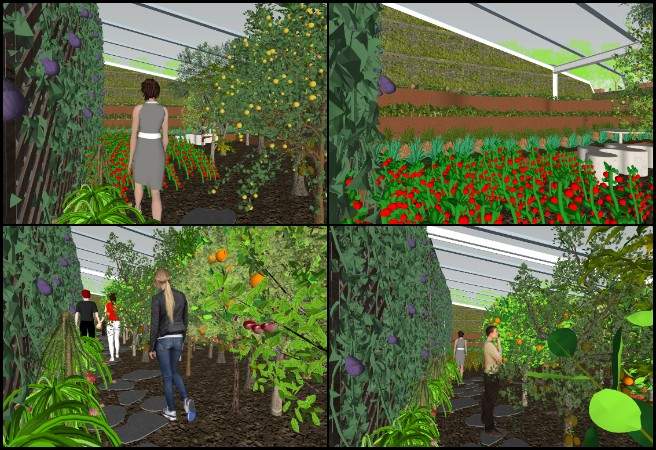
Japneet Kour (Volunteer Architect) continued contributing to the Highest Good Food initiative. She worked on updating the SketchUp model of the Walipini 3 tropical house, focusing on design changes that included adding more people, expanding outdoor spaces, incorporating greater diversity within the scene, adding a table as part of the layout, and integrating all updated SketchUp renders into the project document. The Highest Good Food initiative is a key part of One Community’s open source platform, focused on sustainable and participatory development while supporting DIY sustainable construction models. Visual examples from her work are presented below.
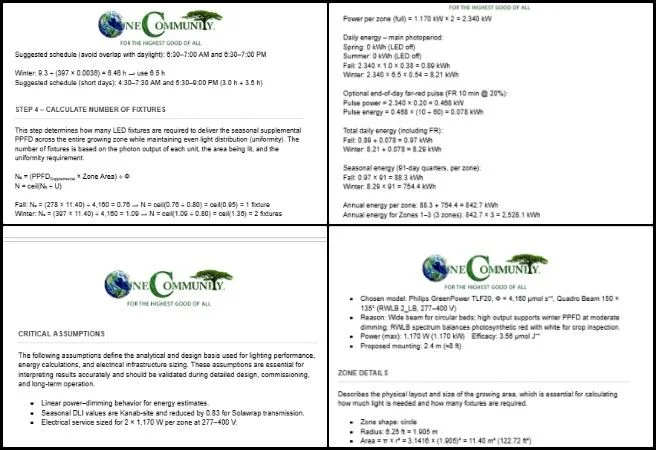
Jay Nair (BIM Designer) continued developing the Aquapini and Walipini Planting and Harvesting documents. Jay worked on completing the missing data required for the standardization of the lighting energy calculations for Walipini 1. The effort involved reviewing calculation sections, filling in incomplete values, verifying consistency across inputs, and ensuring the information aligned with the established documentation format. These updates were made to support clarity, accuracy, and consistency within the lighting energy calculation document. The Highest Good Food initiative is a key part of One Community’s open-source platform, focused on sustainable and participatory development and the open sourcing of DIY sustainable construction models. See below for pictures related to this work.
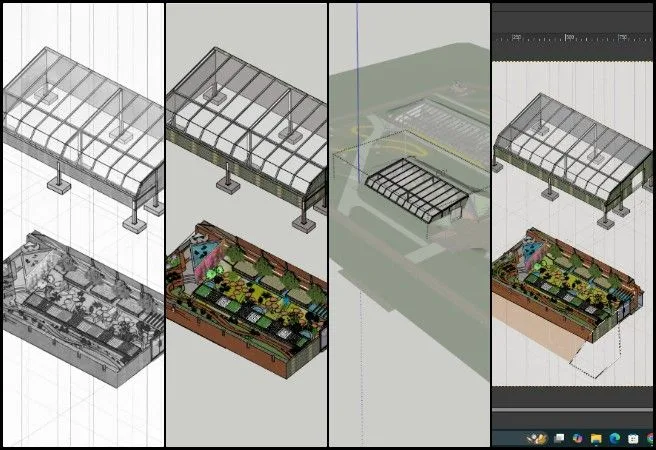
Nitin Parate (Architect) continued contributing to the Aquapini and Walipini renders and layout graphics. The work focused on developing the axonometric drawing of the Zen Aquapini. Updates were made to improve clarity, alignment, and overall layout while maintaining the design intent. Attention was given to detailing roof members, glazing, and structural elements, and this information was incorporated into the axonometric view. The drawings were refined by improving line work, colors, and layout to make them easier to read and understand. Explanatory text was added to describe key elements, materials, and systems. Sectional drawings were also prepared to show construction details, levels, and internal connections between different parts of the design. The Highest Good Food initiative is a key part of One Community’s open source platform, promoting regenerative and participatory development while supporting DIY sustainable construction models. Images below showcase his contributions.
Pallavi Deshmukh (Software Engineer) continued working on the Aquapini and Walipini Planting and Harvesting web details. She continued adding Walipini 1 content based on Gayatri Pandkar’s work, making updates in response to feedback from Jae, including editing and incorporating revised images. Pallavi also added a table of contents for the Zenapini section to improve structure and navigation. In addition, Jae assigned her a new web page focused on integrating all related content for the Aquahaven Southwest Area web design, and Pallavi began organizing and preparing the materials needed for this integration work. The Highest Good Food project integrates DIY sustainable construction models into a larger vision of regenerative living. Her contributions are highlighted in the collage below.
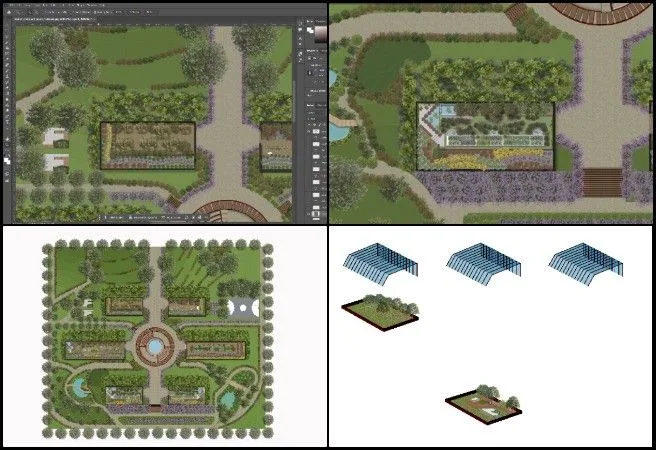
Shivangi Varma (Architectural Designer and Planner) continued the redesign of the Highest Good Food overall presentation, currently focused on the Aquapini and Walipini masterplan render. She detailed the Aquapini feature graphics for the Differences diagram and edited the distinctions between Aquapini, Walipini, and Zenipini. She also coordinated with the architect volunteer to align on the outstanding graphics needed for the Open Source Hub page. The Highest Good Food initiative plays a leading role in One Community’s open source platform by promoting sustainable and participatory development, focused on DIY sustainable construction models. Below are visuals highlighting this work.
HIGHEST GOOD ENERGY PROGRESS
One Community is developing DIY sustainable construction models through Highest Good energy that is more sustainable, resilient, supports self-sufficiency and includes solar, wind, hydro and more:
- Learn about the open source sustainable-energy foundations: Solar, Hydro, and Wind
- Explore our research into the most sustainable products and companies for saving water and energy and DIY Sustainable Construction Models: Insulation, Eco-laundry, Lightbulbs and Light Bulb Companies, Doors and Door Companies, Windows and Window Companies, Toilets, Faucets and Faucet Accessories, Urinals, and more.
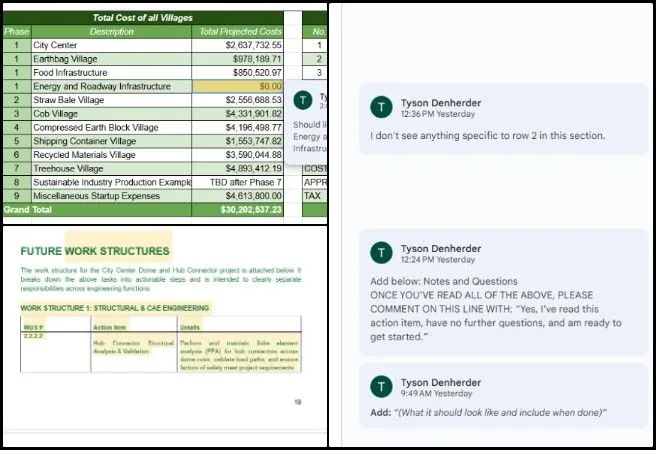
This week, the core team continued contributing to the Highest Good Energy initiative. The core team reviewed and corrected the financial documents attached to the business plan, examined the earthbag village dome construction documents, and began drafting questions for Michaela based on that review. They made formatting changes to Ayushman’s future work instructions to improve clarity and consistency, and compared the six-dome earthbag construction documents with the four-dome example to identify differences and areas requiring attention. The Highest Good Energy initiative plays a leading role in One Community’s open source platform by promoting sustainable and participatory development, focused on DIY sustainable construction models. Below are images related to this project.
HIGHEST GOOD EDUCATION PROGRESS
One Community is developing DIY sustainable construction models through Highest Good education that is for all ages, applicable in any environment, adaptable to individual needs, far exceeds traditional education standards, and more fun for both the teachers and the students. This component of One Community is about 95% complete with only the Open Source School Licensing and Ultimate Classroom construction and assembly details remaining to be finished. We’ll report on the final two elements to be finished as we develop them.
With over 8 years of work invested in the process, the sections below are all complete until we move onto the property and continue the development and open sourcing process with teachers and students – a development process that is built directly into the structure of the education program and everything else we’re creating too:
- Program Overview and DIY Sustainable Construction Models: Education Open Source Hub
- How the components work together in designing human orchestrated eco-abundance: How to use the Education for Life Program
- Lesson Plans for Life – Lesson Plans How-to
- Foundations of Outstanding Leaders, Teachers, and Communicators
- Curriculum for Life
- Teaching Strategies for Life
- Learning Tools and Toys for Life
- Evaluation and Evolution
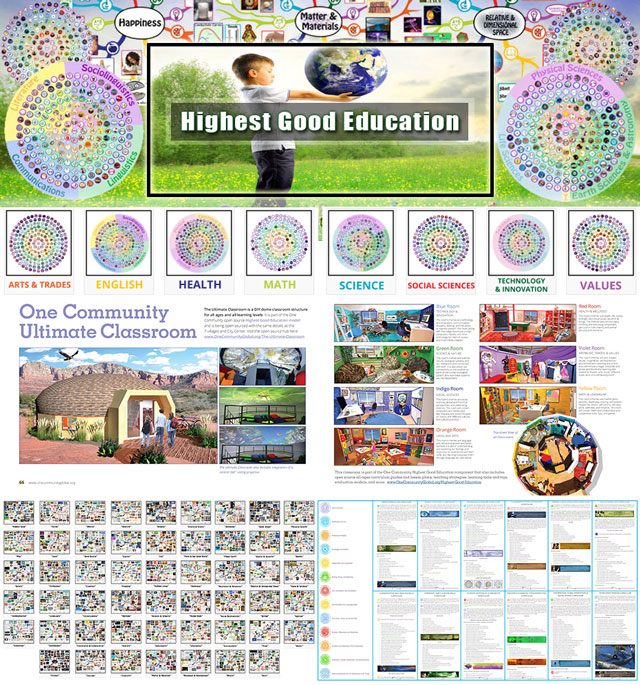
Highest Good Education: All Subjects | All Learning Levels | Any Age – Click image for the open source hub
HIGHEST GOOD SOCIETY PROGRESS
One Community is developing DIY sustainable construction models through a Highest Good society approach to living that is founded on fulfilled living, the study of meeting human needs, Community, and making a difference in the world:
- Read the Highest Good society overview and DIY Sustainable Construction Models: Highest Good Society
- Learn about the model for fulfilled living and sharing: A Day in the Life
- Learn about the 4 economic models: RBE | For-profit | Non-profit | Entrepreneurship
- Learn about our open source community collaboration and management software: The Highest Good Network
This week, the core team completed over 44 hours managing volunteer work reviews, handling emails, overseeing social media accounts, supporting web development, and identifying and integrating bug fixes for the Highest Good Network. The team also interviewed and onboarded new volunteer team members. Additionally, they produced and integrated the video above, which highlights how DIY sustainable construction models serve as a foundational element of One Community’s broader mission. The following images showcase highlights of this work.
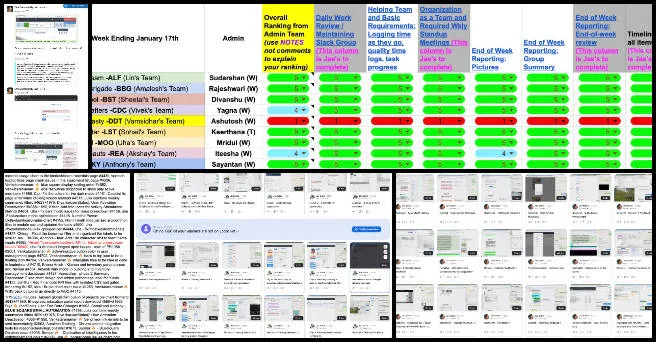
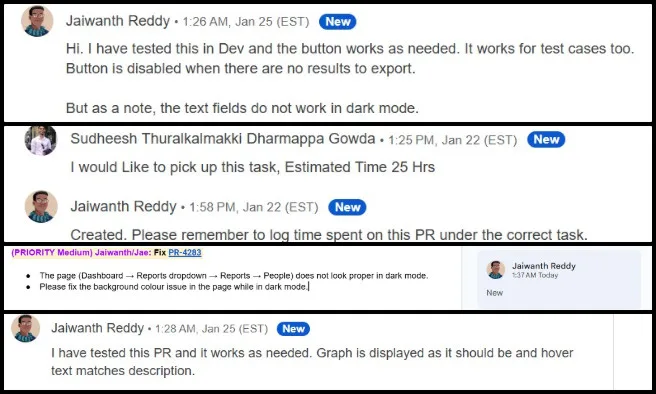
Jaiwanth Reddy Adavalli (Project Manager) continued developing the Job Applicants page and key components of the Highest Good Network. He tested multiple pull requests of components in various parts of the HGN Software. He created action items for the HGN Phase 1 Software. He tracked updates in software team management documents to support task management. As a member of the pull request review team, he reviewed submissions from the volunteer team assigned to him. This work supports One Community’s commitment to DIY sustainable construction models. The images below highlight his contributions.
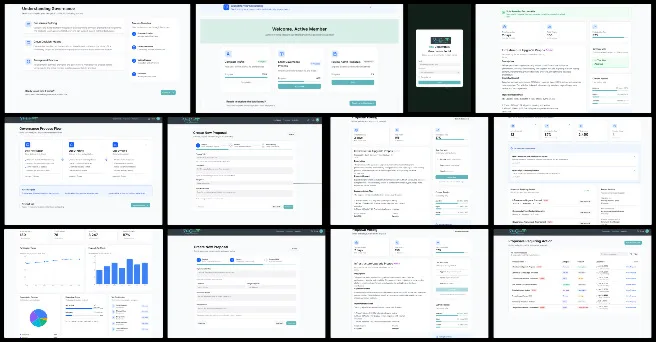
Pooja Kulkarni (UI/UX Designer) continued working on UX and UI design of the Highest Good Network. She focused on designing and refining a governance platform experience, creating a complete set of mid-fidelity wireframes that cover the end-to-end lifecycle of community decision-making. She designed the core dashboard to surface active proposals, participation metrics, voting power, announcements, and recent activity, ensuring information hierarchy and clarity for frequent users. Pooja also designed the proposal creation flow as a multi-step process, including purpose definition, implementation planning, budgeting, risks, and accountability, with clear progress indicators and form guidance to reduce cognitive load. Additional work included proposal review and voting screens that display proposal details, timelines, expected impact, real-time participation data, voting actions, and confirmation states after a vote is submitted. This work supports developing DIY sustainable construction models.
She designed analytics views to visualize community engagement trends, proposal distribution, delegation status, and contributor activity. Supporting screens such as login, governance education, and a process flow walkthrough were also created to help onboard users and explain how decisions move from discussion to voting. Across all screens, Pooja emphasized consistency in layout, typography, spacing, and component usage to support usability and scalability of the system. This project supports One Community’s commitment to DIY sustainable construction models. The images below highlight key aspects of her work.
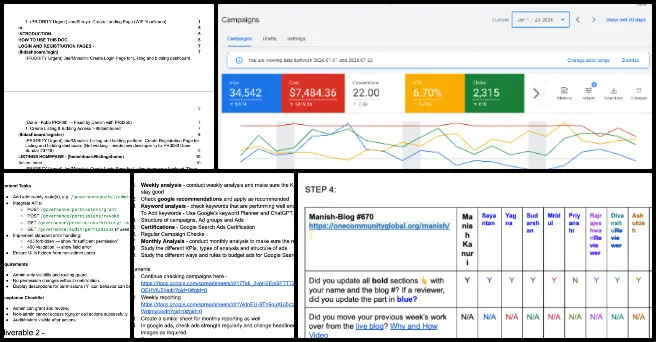
Rajrajeshwari Gangadhar Sangolli (Data Analyst) continued working on Google Ads management and strategy evolution of the Highest Good Network. She completed administrative work for the Highest Good Food and Highest Good Energy volunteers and reviewed work submitted by other volunteers by adding comments and checking all required parts. She worked on understanding Deliverable 2 by identifying possible tasks to add and discussed these ideas with Prudhvi to confirm what could be included. Rajrajeshwari read through the document for the listing and bidding platform, checked for errors, reviewed merged comments, and replied to comments that required responses. She rechecked administrative work and explained the process and expectations to Shreya in detail to ensure clarity and consistency. She completed the review of Manish’s work and left clear and structured comments so that the feedback could be easily understood and applied. Rajrajeshwari also created a document for Shreya and future AdWords team members to follow, providing guidance to help them understand workflows and maintain consistency in their work. This project supports One Community’s commitment to demonstrating DIY sustainable construction models. The images below highlight key aspects of her work.
ADMINISTRATION TEAM
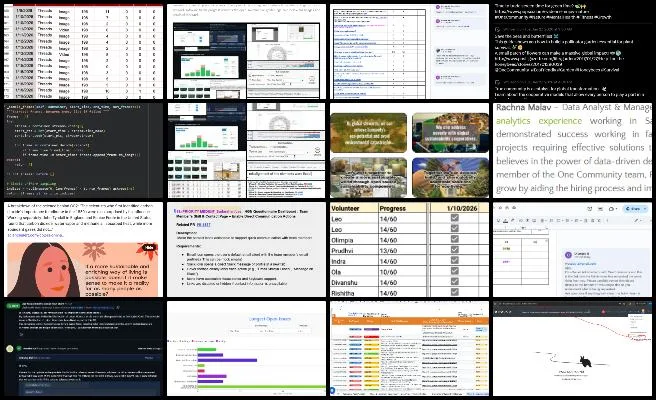
The Administration Team’s summary, which covers their work on the Highest Good Network, was managed by Prudhvi Marpina (Data Analyst) and includes Anusha Gali (Software Engineer), Ashutosh Mishra (Software Engineer), Divanshu Bakshi (Team Admin), Keerthana Chitturi (System Administrator), Leo Lishin Shiu (Software Engineer), Manish Kanuri (Data Scientist), Mridul Bhushan (Volunteer Project Strategy Analyst and Team Administrator), Neeharika Kamireddy (Data Analyst), Olawunmi “Ola” Ijisesan (Administrative and Management Support), Olimpia Borgohain (Data Analyst and Team Administrator), Priyanshi Sharma (Data Analyst and Team Administrator), Rachna Malav (Data Analyst), Rajeshwari Bhirud (Administrator), Rishitha Adepu (Administrator), Sayantan Paul (Frontend Tester and Software Team Administrator), Shreya Shetty (Data Analyst), and Sudarshan Raju Chintalapati Venkata (Data Analyst). The Administration Team supports the Highest Good Network, a tool designed to track and measure progress while developing systems that contribute to developing DIY sustainable construction models. Through administrative support, documentation, testing, training, recruiting, analytics, and content management, the team helps advance this mission, aligning with One Community’s vision of building a replicable and sustainable future model.
This week, Anusha completed Level 2 Software Testing and QA for HGN Software Development, handling 45 pull requests across approvals, change requests, and re-reviews while identifying UI, responsiveness, functionality, and regression issues. She also covered administrative duties by reviewing submissions, creating image collages, editing summaries, updating tracking documents, and reviewing admin blog posts with structured feedback. Ashutosh tested Chatbot UI front-end changes, validating light and dark modes, preparing the Team Dev Dynasty report, and building reusable components. He also redesigned video and audio workflows after technical analysis and explored a CLIP- and Whisper-based proof of concept. Divanshu managed the end-to-end Mastodon content workflow, publishing and monitoring four daily posts while maintaining brand standards. He also built a Python automation to normalize analytics data and integrated it into the reporting dashboard. Together, these efforts support developing DIY sustainable construction models.
Keerthana handled administrative responsibilities by reviewing summaries, updating Step 2 and Step 4 tracking documents, reviewing new admins’ work, and preparing the weekly blog. She also added action items to Phase 3 documentation for follow-up. Leo audited weekly summaries for compliance, combined approved content into a team blog, and created aligned photo collages. He also organized and analyzed social media datasets across platforms to identify engagement trends. Manish coordinated team documentation by consolidating summaries, maintaining tracking tables, and updating the WordPress blog while ensuring formatting, accessibility, and SEO compliance. Mridul coordinated Moonfall team deliverables for Weekly Progress Update #670, resolving missing submissions and ensuring consistency across reporting artifacts. He also managed Twitter/X analytics, scheduled posts through January 31, 2026, and reviewed dry-run admin work. This coordinated administrative and publishing work advances developing DIY sustainable construction models.
Neeharika reviewed task assignments, followed up on progress, tested pull requests in development, and reported findings. She also verified updated PDFs, reviewed admin work, conducted an interview, and shared outcomes with leadership. Ola updated Pinterest analytics, transferred CSV data into the KPI dashboard, monitored engagement metrics, organized admin folders, and submitted the weekly report with images. Olimpia updated LinkedIn analytics KPIs, reviewed volunteer documentation as part of her senior admin role, resolved prior admin comments, and scheduled posts for the upcoming week. Priyanshi continued Phase 2 page-by-page testing of HGN dashboards, identifying visualization, filter, and execution issues across light and dark modes and documenting findings for follow-up. This work helps advance developing DIY sustainable construction models.
Rachna revisited prior tasks, emails, comments, and reviewed One Community webpages and SEO pages, with no hiring work completed this week. Rishitha served as weekly content administrator by combining blogs, applying SEO updates, managing bio administration, maintaining Threads engagement, and updating dashboards and trackers. Sayantan completed Level 1 and Level 2 software testing across multiple portals, validating charts, filters, exports, and indicators while documenting issues and reviewing new joiner training work. Shreya completed weekly reporting and blog training tasks by editing summaries, creating image collages, managing WordPress updates, and ensuring publishing compliance. Sudarshan managed Alpha Software Team blog updates, applied SEO improvements, reviewed and tested multiple pull requests, and created tasks to address bugs and inconsistencies. To learn more about how this work supports developing DIY sustainable construction models, visit the Highest Good Society and Highest Good Network pages. Highlights of the team’s contributions are shown in the collage below.
GRAPHIC DESIGN TEAM
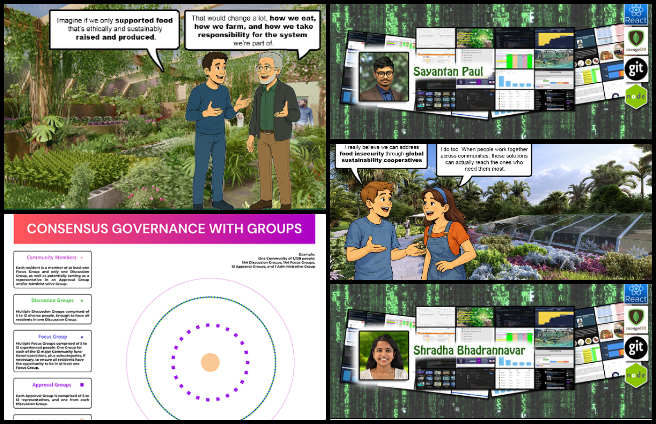
The Graphic Design Team’s summary includes Qinyi Liu (Graphic Designer) and Yulin Li (Graphic Designer), who focused this week on creating graphic designs that support DIY sustainable construction models.
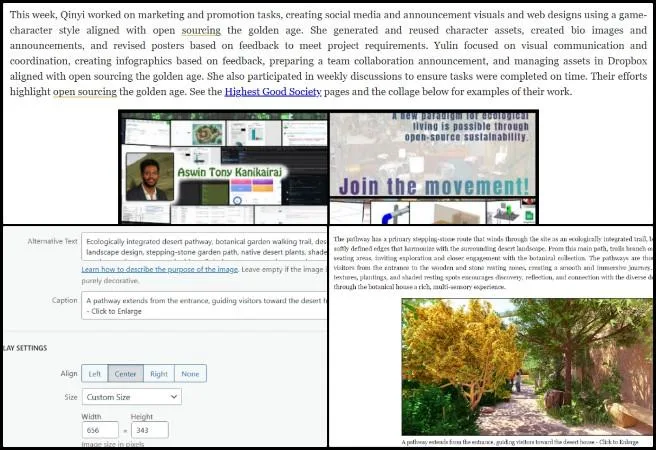
This week, Qinyi worked on marketing and promotion tasks, including social media and website visuals using a game character style, with content related to DIY sustainable construction models. She created and reused character assets, updated bio and announcement images, and refined posters to improve clarity and consistency across platforms. Yulin focused on visual communication, creating infographics related to DIY sustainable construction models, publishing a team collaboration announcement, maintaining assets in Dropbox, and participating in weekly reviews. Their efforts highlight DIY sustainable construction models. See the Highest Good Society pages and the collage below for examples of their work.
HIGHEST GOOD NETWORK PROGRESS
 One Community is developing DIY sustainable construction models through open source Highest Good Network® software that is a web-based application for collaboration, time tracking, and objective data collection. The purpose of the Highest Good Network is to provide software for internal operations and external cooperation. It is being designed for global use in support of the different countries and communities replicating the One Community sustainable village models and related components.
- Learn about our open source community collaboration and management software and DIY Sustainable Construction Models: The Highest Good Network
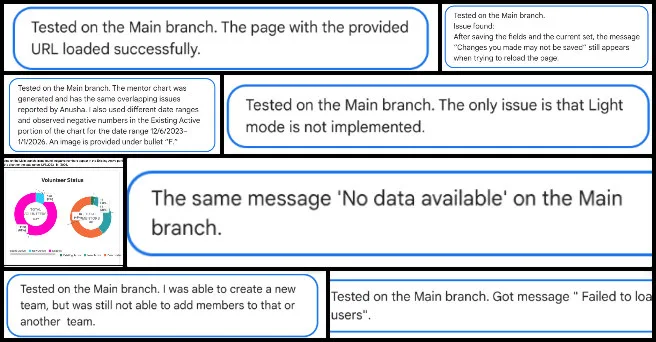
This week, the core team tested Highest Good Network pull requests and confirmed 11 as fixed. This effort highlights One Community’s commitment demonstrating DIY sustainable construction models.
The following PRs were not fixed: implementation of the community members list, fixes to the Volunteer Status pie chart in the Total Organization Summary, the issue preventing visibility or assignment of members to newly created teams, the horizontal bar graph comparing role competitiveness on the Job Posting Page Analytics, dark mode issues in the Total Organization Summary dashboard, and the warning prompt for users before refreshing or navigating away from the application form template on the Application and Job Posting pages. They were also not able to test several PRs due to the absence of data on the Main branch, including fixes for chart legend visibility and dark mode theming on rental cost and related report charts, the addition of a dedicated search button or icon for improved usability in Phase 3, and the multi-category selection feature for job filtering on the Job Posting Page. This work strengthens One Community’s mission of demonstrating DIY sustainable construction models. See the Highest Good Society and The Highest Good Network pages, and the collage below, for an overview of the team’s contributions.
ALPHA SOFTWARE DEVELOPMENT TEAM
The Alpha Software Team, working on the Highest Good Network software, was managed by Lin Khant Htel (Frontend Software Developer). The team includes Casstiel Pi (Software Engineer). The Highest Good Network software is a key part of sustainable and free-shared eco-solutions, helping track and measure progress toward DIY sustainable construction models. The software supports social architecture, construction, production, and maintenance processes that contribute to the open source project and resilient ecosystems. Designed to be portable and scalable, the Highest Good Network software is well suited for off-grid and sustainable living communities. This project reflects One Community’s open source commitment to DIY sustainable construction models.
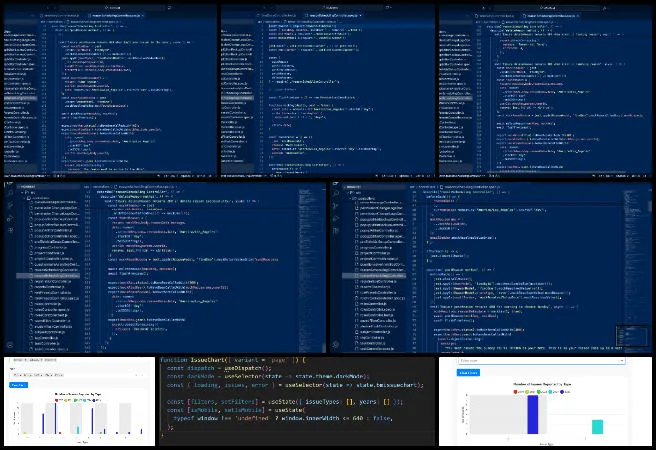
This week, Lin reviewed PR #1873 by checking the code, testing it on a local machine, and confirming that all tests passed, then reviewed weekly summaries, photos, and videos submitted by Alpha team members and handled routine management responsibilities for the Alpha Team. Casstiel continued work on the task to add a new card for the issue chart related to material consumption, tested new frontend logic on the local server, and added a new prop variable, variant, to address a rendering issue. During testing, it was identified that the graph needs to be placed inside the card component for proper functionality. Work continued toward resolving the existing task related to the multi-select filter solutions. See the Highest Good Society and Highest Good Network pages for more on how this contributed to DIY sustainable construction models. See the collage below to view the team’s work.
BINARY BRIGADE SOFTWARE DEVELOPMENT TEAM
The Binary Brigade Team, presenting their work on the Highest Good Network software, was managed by Amalesh Arivanan (Software Engineer) and included Taariq Mansurie (Full-Stack Developer), Aswin “Tony” Kanikairaj (Software Engineer), Ramsundar Konety Govindarajan (Software Engineer), Harsha Rudhraraju (Software Engineer), and Nikhil Routh (Software Engineer). The Highest Good Network software is our tool for managing and objectively measuring progress, ensuring that all contributions are tracked and aligned with our mission while modeling and developing DIY sustainable construction models. It supports social architecture, construction, production, and maintenance processes that contribute to open-source projects and resilient, sustainable ecosystems.
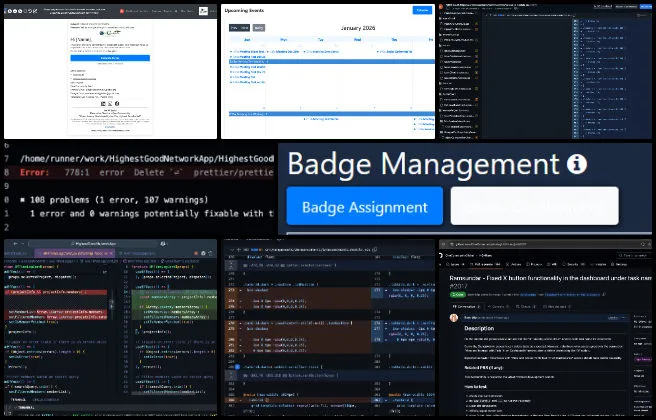
This week, Amalesh worked on “Phase 1 Bugs: Fix PR3940 and PR1676” by fixing dark mode styling issues on the Badge Management landing page, where text was unreadable or inconsistent. He validated the changes in both light and dark themes, documented results with screenshots and videos using the required naming conventions, tracked time in the HGN timer, and completed onboarding steps to keep access to tools and documentation. Aswin updated the Post-Event Feedback Follow-Up Email template preview UI by adding a clear subject line and preview text, inserting placeholders for event name and date, converting the survey link into a “Complete Survey” button with a “Takes less than 2 minutes” helper note, grouping secondary actions into an “Other options” section to reduce conflicting calls to action, keeping footer content concise while retaining legal language and adding an unsubscribe option, and improving styling for better scannability and accessibility. This progress contributes to developing DIY sustainable construction models.
Ramsundar fixed the Member Group Check-In search bug by adding safety checks to the member filtering logic to handle missing user fields and team name data. He skipped members without valid user data and filtered again before rendering to ensure only members with valid user IDs are shown. He updated empty-state messaging to distinguish between no matches and no assigned members and opened pull requests 2017 and 4760, which also include work related to the dashboard task deletion “X” button behavior. Taariq advanced the archived projects feature by fixing a blocking bug, rewriting parts of the implementation to stabilize undo and unarchive actions, validating the behavior, and submitting code for peer review. He also made progress on the filter color refresh work by fixing regressions in the team codes dropdown, resolving repeated merge conflicts while aligning changes across branches, switching between frontend and backend branches to address caching issues and coverage test failures, and keeping active branches synchronized for merge readiness. These updates support developing DIY sustainable construction models.
Nikhil completed his handover work by resolving conflicts in previous open pull requests and submitting them for review. He produced documentation for mapping CSS modules to the related components and their pull requests. Harshavarma expanded filtering support by adding day-level filtering alongside existing weekly and monthly views. He fixed edge cases where filter state updates caused inconsistencies between list and card views, added dark mode styling for filters, improved responsiveness so that filters, cards, and lists adapt across different screen sizes, implemented and tested Today, This Week, and This Month filters, including handling date boundaries, empty states, and immediate UI updates. He cleaned up filter-related code for better readability and maintainability and tested filters like applying, clearing, and switching to confirm stable rendering and predictable behavior in both light and dark modes. See the Highest Good Society and Highest Good Network pages for more information on how this works in developing DIY sustainable construction models. The collage below shows images of their work.
BLUE STEEL SOFTWARE DEVELOPMENT TEAM
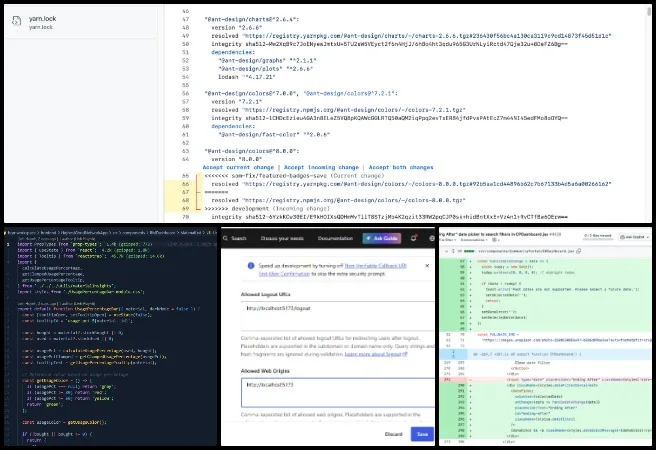
The Blue Steel Software Team, working on the Highest Good Network software, was managed by Divanshu Bakshi (Product Manager) and includes Linh Huynh (Software Engineer), Som Ramnani (Software Engineer), and Sheetal Mangate (Software Engineer). This week Som worked on PR #4428 by updating the “Ending After” date filter to use a modular CSS approach, refactoring styles into clearly scoped and reusable classes, and adjusting layout and spacing with flexbox to ensure proper alignment of the DatePicker. As part of the DIY sustainable construction models initiative, he focused on validating placeholder behavior between native date inputs and the DatePicker component, ensuring validation error messaging displayed correctly beneath the field, and also revisited PR #4215 related to saving featured badges on the profile page by resolving extensive merge conflicts caused by branch divergence. This involved addressing a large number of yarn.lock conflicts by resetting it to match the development branch, reviewing dependency differences, reconciling configuration changes, and aligning the branch with the latest development updates to restore build stability.
Linh focused on front-end enhancements for the BM Dashboard Materials page by implementing Materials Usage Insights and visual indicators to improve visibility into stock health and material consumption within the DIY sustainable construction models framework. This included reviewing requirements and acceptance criteria, analyzing the existing Materials table, and defining front-end calculation logic for stock health based on Available versus Bought and usage percentage based on Used versus Bought with edge case handling and value formatting. To enhance the user experience for DIY sustainable construction models, he added new table columns with color-coded stock health indicators, usage percentage progress bars, and explanatory tooltips, while also planning and scoping a summary panel above the table with aggregated metrics derived from the displayed dataset, validating layout behavior for responsiveness and dark mode, and preparing a front-end pull request.
Sheetal managed this week’s summary and worked on identity and access management integration by creating an Auth0 account, configuring a Single Page Application aligned with the existing Okta-based authentication approach, initiating authentication integration for the social media module through branch creation and management, resolving merge conflicts with the autoposter branch, beginning front-end integration of the Auth0Provider for React, attempting installation and configuration of the Auth0 React SDK, and investigating an undefined dependency issue that prevented the authentication setup from functioning as expected, supporting scalable platform foundations that align with data transparency and tooling needs used across DIY sustainable construction models. Supporting images of the related work are provided below.
CODE CRAFTERS SOFTWARE DEVELOPMENT TEAM
The Code Crafters Team, covering their work on the Highest Good Network software, was managed by Vivek Chandra Bengaluru Suresh (Software Engineer) and includes Ajay Naidu (Software Engineer), Akshith Kumar Reddy Balappagari Gnaneswara (Software Engineer – Full Stack), Bhanu Anish Akkineni (Software Engineer), Chaitanya Swaroop Kumar Allu (Software Engineer), Shreya Padaganur (Software Engineer) and Sphurthy Satish (Software Engineer). The Highest Good Network software manages and objectively measures progress in DIY sustainable construction models by coordinating social architecture, construction, production, and maintenance efforts. It pioneers a prototype solution engine for global challenges and enables scalable, long-term access to regenerative lifestyles worldwide.
This week, Ajay reviewed reviewer suggestions, implemented the requested updates, and fixed a routing issue that affected navigation flows while improving dark mode behavior across application modals. He applied a consistent dark theme on the weekly report page, corrected font colors for readability, and ensured inputs, dropdowns, and related controls render with proper contrast. He standardized styling for form elements within modals, addressed cases where theme variables were not applied, and verified hover, focus, and disabled states appear as expected. He checked that layout, spacing, and typography remain stable when switching themes and that interactions do not introduce visual shifts. He published updated branches for review, requested re-review where changes had been requested, and confirmed that the revisions align with existing patterns. He also validated that the changes work across common scenarios and that the code integrates with current components without regressions. These efforts reflect One Community’s goal of developing DIY sustainable construction models.
Akshith worked on Phase 3 improvement tasks, including adding fuzzy search and typo tolerance for event searches, implementing typo tolerance for type and location searches in the activity list, fixing radio button and checkbox alignment mismatches, and updating date selection in the search filter. He created a new utility function to handle typos in search queries and updated the community portal date filter to display events based on the selected date. He also made UI adjustments to align buttons and checkboxes according to the Figma design specifications. The progress shown here reflects continued advancement toward the DIY sustainable construction models through coordinated social architecture supported by documented actions.
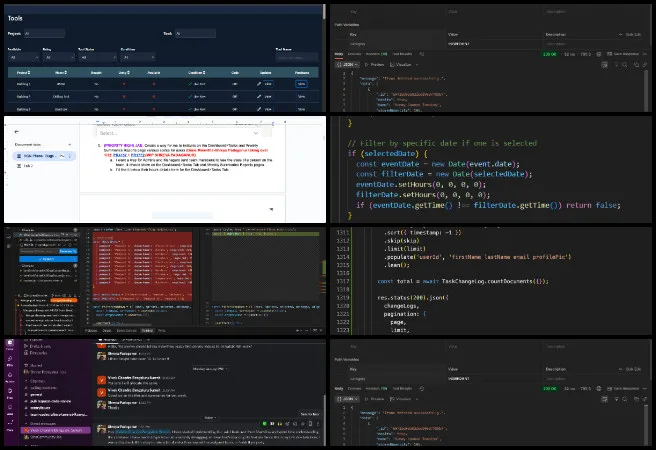
Bhanu worked on building API endpoints to add, update, and retrieve items from the kitchen inventory system. He created the KIInventoryItem model to support a new collection in the MongoDB database and implemented the required routes and endpoints for inventory operations. This included an endpoint to add new items to the inventory, endpoints to retrieve all items and retrieve items by category for display in the appropriate tabs, and an endpoint to retrieve preserved items by filtering ingredients with an expiry date greater than or equal to one year from the current date. He also implemented update endpoints to adjust stock based on usage, add new stock quantities, and update harvest-related details. He tested all endpoints with sample data using Postman to verify expected behavior and then raised a pull request to merge the working branch into the development branch. This progress supports One Community’s long-term goal of developing DIY sustainable construction models.
Chaitanya focused on advancing Phase 2 of the Workforce Skill-Gap dashboard within the Highest Good Network application. He reviewed the requirements and design specifications, set up the WorkforceSkillGap component structure, and implemented a Recharts-based bar chart within the Weekly Project Summary module. He defined the data model and aggregation logic to calculate required and available skill hours by construction trade and implemented useMemo-based filtering to ensure the chart updates dynamically based on selected projects and departments. On the frontend, he built a Department multi-select filter that includes worker types, an All toggle, checkbox-based selection, click-outside-to-close behavior, and styling aligned with the existing dashboard. On the backend, he designed APIs to support the chart’s data requirements and examined multiple data sources, including UserProfile, Teams, Tasks, and ExternalTeam, to determine the appropriate source of truth for construction trade availability; although ExternalTeam appears to be the most likely candidate, the final data mapping and validation are still pending due to unresolved ambiguity in the underlying data model. The progress shown here reflects continued advancement toward the DIY sustainable construction models through coordinated social architecture supported by documented actions.
Shreya continued work on the user state indicator feature across the Dashboard Tasks and Weekly Summaries Reports pages, focusing on both backend and frontend structure. The core architecture for the feature is in place, including initial logic for handling user state data and integrating it into the relevant views. Progress included implementing and refining the Summaries Reports page while aligning it with the Dashboard Tasks view to ensure consistent behavior. During implementation, issues were encountered connecting the frontend and backend codebases, particularly with state data loading and the state catalog not appearing as expected on the frontend, which has prevented the indicator from rendering for some users. A frontend execution error was identified during this phase, leading to a shift from feature expansion to debugging and issue isolation. That frontend error has since been resolved, allowing work to move back into active development. Investigation into the remaining state data loading issue is ongoing, as it continues to block full completion of the feature. Sphurthy addressed a font color styling issue in the Search Filters section on the All Events page. The section headings for Branches, Themes, and Categories appeared darker and bolder, while the selectable subtext like “Select branches,” “Select themes,” and “Select categories” appeared lighter. This reversed the intended visual hierarchy from the Figma design. The styling was updated so section headings use a lighter font color and the selectable text uses a darker, more prominent color. This change improves visual hierarchy, readability, and consistency with the Figma design specifications. The update affects only the UI presentation and does not change functionality. The progress shown demonstrates ongoing advancement toward DIY sustainable construction models through coordinated, well-documented social architecture.
Vivek Chandra requested additional time to continue work on a previously resolved task and subsequently asked for administrative updates to reflect the extended effort. The work remained focused on identifying and correcting a recurring issue, which involved modifying the controller logic and integrating it with the user interface. Despite these changes, the issue persisted. To gain clearer insight into the root cause, Vivek Chandra rewrote the entire set of models to improve clarity around the error and address potential structural issues contributing to the behavior. In parallel, he worked on integrating the frontend with the backend API endpoints, during which a blocking issue was encountered where frontend requests were not reaching the backend as expected, preventing full end-to-end functionality. These efforts help move One Community closer to developing DIY sustainable construction models. Visual examples from his work are presented below.
DEV DYNASTY SOFTWARE DEVELOPMENT TEAM
The Dev Dynasty Team’s summary, covering their work on the Highest Good Network software, was managed by Ashutosh Mishra (Software Engineer) and includes Adithya Cherukuri (Volunteer Software Engineer), Aditya Gambhir (Software Engineer), Deekshith Kumar Singirikonda (Developer), Neeraj Kondaveeti (Software Engineer), Sai Shravan Neelamsetty (Software Engineer), Sriamsh Reddy (Software Engineer) and Vikas Meneni (Software Engineer). The Highest Good Network software is how we’ll manage and objectively measure our processes for open sourcing a better world for us all through our social architecture, construction, production, and maintenance processes. This progress supports One Community in developing DIY sustainable construction models.
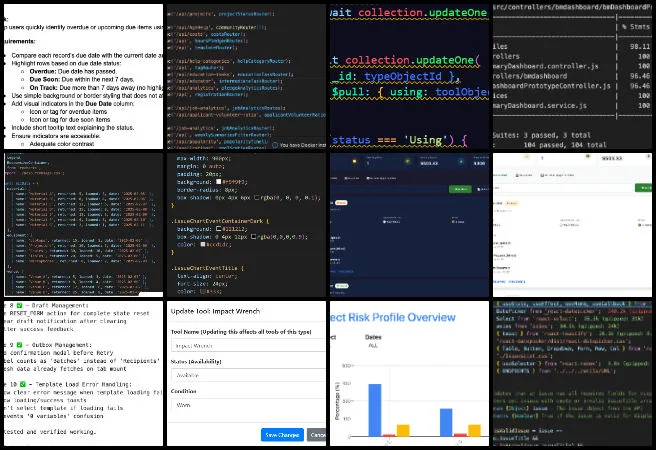
This week Adithya focused on the HGN Software Development project by finishing the Edit Tool feature and starting search and filtering for the Materials Table, resolving an API issue caused by a mismatch between the Mongoose model and the buildingInventoryTypes collection, refactoring the controller to target the correct collection, cleaning the codebase, documenting changes, and beginning analysis of the MaterialListView component to address missing project identifiers. Aditya resolved dashboard routing 404 errors, restructured MongoDB collections into summaryDashboardMetrics, implemented the generateInitialSnapshot function, integrated Sentry logging through a centralized logger, wrote 104 unit tests to reach 90 percent coverage, fixed a status enum and date type issue in buildingIssue.js, and updated frontend dashboard behavior, modals, notifications, and linter warnings. These efforts strengthen the foundation for developing DIY sustainable construction models.
Deekshith contributed React-based dashboard components for issue and resource visualization, preparing structured usage data, integrating Recharts, Bootstrap, theming, custom CSS, and Redux-based global state management through the IssueHeader component with routing, authentication, and project data handling. Neeraj enhanced the Resource Usage Monitoring page by adding due date classification logic, visual indicators, tooltips, accessibility considerations, and integrating existing CSV and Excel export functionality, with validation across data states and refresh scenarios. This progress supports scalable solutions for developing DIY sustainable construction models.
Shravan addressed multiple Email Management UI issues including search behavior during loading, template validation flow, save logic, error messaging, draft handling, confirmation dialogs, labeling clarity, and outbox behavior, testing all fixes locally and recording demonstrations while noting remaining navigation and modal issues. Sriamsh addressed pull request feedback, investigated a non-rendering cost breakdown donut chart in the Financials view, documented findings as a separate bug item, rewired the Project Risk Profile page to the correct route, and coordinated task scope, documentation, and time tracking. Vikas delivered the Orders and Purchase Orders landing page for the Kitchen Inventory Management project, implementing stat cards, tab navigation, searchable and sorted order lists, status-based actions, responsive layouts, scoped styling, and light and dark mode support aligned with branding. See the Highest Good Society and Highest Good Network pages for more on how this relates to our mission of developing DIY sustainable construction models. Explore some of the team’s work in the collage below.
LUCKY STAR SOFTWARE DEVELOPMENT TEAM
The Lucky Star Team’s summary, covering their work on the Highest Good Network, was managed by Keerthana Chitturi (System Administrator) and Sohail Uddin Syed (Software Engineer). The team includes contributions from Abhinav Tharamel Baiju (Software Engineer), Aryan Rachala (Software Engineer), Chirag Bellara (Software Engineer), Shashank Madan (Software Engineer), Shravya Kudlu (Software Development Engineer), Veda Bellam (Software Engineer), Venkataramanan Venkateswaran (Software Engineer) and Vinay Krishna (Software Engineer). Their work supports One Community’s goal of DIY sustainable construction models through cross-functional software development and ongoing system improvements.
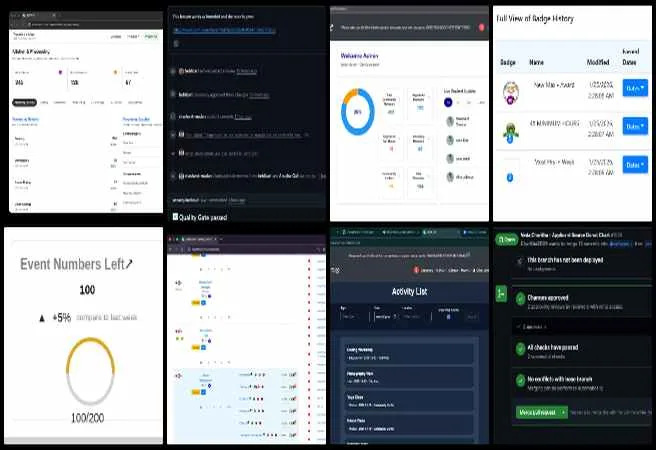
This week, Abhinav developed the landing page for the Kitchen Inventory Management Processing module and submitted a pull request. His work included integrating a CSS module, ensuring responsiveness, and supporting light and dark modes. He built a dashboard displaying weight totals for items canned, dehydrated, freeze-dried, and stored in cellar storage through the previous month, along with a section navbar and overview area showing processing methods, item counts, and monthly quantities. He also implemented a supply section listing inventory items by canning and storage type and applied earth-tone styling and large fonts to meet branding and accessibility requirements. This work contributes to DIY sustainable construction models.
Aryan worked on Phase 3 fixes within the Highest Good Network software, focusing on improving data display consistency and UI behavior. He addressed percentage calculation and display logic issues on the Activity Attendance page, fixed tooltip visibility problems, validated behavior across display modes, and corrected color rendering in dark mode. He also standardized date formatting on the Used Resources page by defining a consistent format and updating date-handling logic to ensure accurate rendering across views and timezones. This work contributes to DIY sustainable construction models. Chirag worked on completing the “Clear All” button styling fix on the Activities screen by updating styles, checking in the changes, and creating pull request 4737. He also updated the Activities logic to default to showing current and future events by adding a “Show Past Events” toggle and modifying the code to ensure compatibility with existing filters. This work contributes to DIY sustainable construction models. Shashank reviewed open pull requests to confirm required approvals and verify functionality, identifying one pull request with pending requested changes. He tested the related issue to determine its root cause and fixed an error in a previously submitted pull request by addressing review comments and resolving merge conflicts to restore the work to a usable state. This work contributes to DIY sustainable construction models.
Shravya worked on bug fixes related to issue 3370 by analyzing activity page theming behavior in light and dark modes and applying corrections across multiple files. She raised pull request 4756, resolved merge conflicts, and improved code readability. She also addressed issue 3824 by fixing one identified bug and validating expected behavior for a second issue, and worked on issue 3399 by resolving light and dark mode inconsistencies across its components. This work contributes to DIY sustainable construction models. Sohail refactored the badge achievement engine by updating pull request 1153 to replace callback-based logic with an asynchronous architecture using Mongoose. He addressed race conditions that caused duplicate badge counts, ensured tiered rewards correctly replaced lower-level achievements, implemented sequential asynchronous processing to maintain data integrity, and requested a task to address the HGN totals mismatch with the active volunteers count. This work contributes to DIY sustainable construction models.
Veda worked on the Listing and Bidding Dashboard by creating a line chart titled “Cancellation Impact on Vacancy” and reviewing task requirements to support data integration. She also worked on a donut chart titled “Sentiment Breakdown,” resolved mobile view visual issues, updated chart display behavior, and fixed storage and memory issues after pulling the latest development code. This work contributes to DIY sustainable construction models. Venkataramanan worked on frontend and backend fixes to improve usability and system behavior, including correcting interaction issues in the WBS edit task modal, fixing dropdown styling and alignment, resolving a loading error on the Team Locations page, updating button color states, adjusting icon positioning, correcting leaderboard text color, and ensuring infringement deletions persisted correctly in the database. This work contributes to DIY sustainable construction models.
Vinay worked on updating the Project Risk Profile Overview graph layout to match the expected visual format by addressing spacing, grouping, and structural issues. He aligned bar groupings, standardized axis scaling and labeling, refined legend placement and typography, improved filter and chart alignment, ensured color consistency across light and dark modes, and reviewed responsive behavior across device sizes. This work contributes to DIY sustainable construction models. See the Highest Good Society and Highest Good Network pages to learn more about how this work supports DIY sustainable construction models. See the collage below highlighting the team’s work for the week.
MOONFALL SOFTWARE DEVELOPMENT TEAM
The Moonfall Team’s summary, which covers their work on the Highest Good Network, was managed by Uha Kruthi (Software Engineer) and includes Aayush Shetty (Software Engineer), Alisha Walunj (Software Engineer), Sai Krishna (Software Engineer), Mani Shashank Marneni (Software Engineer), and Sudheesh Thuralkalmakki Dharmappa Gowda (Full Stack Developer). Their efforts support One Community by advancing the mission of DIY sustainable construction models through open-source collaboration, ecologically responsible innovation, and holistic global progress.
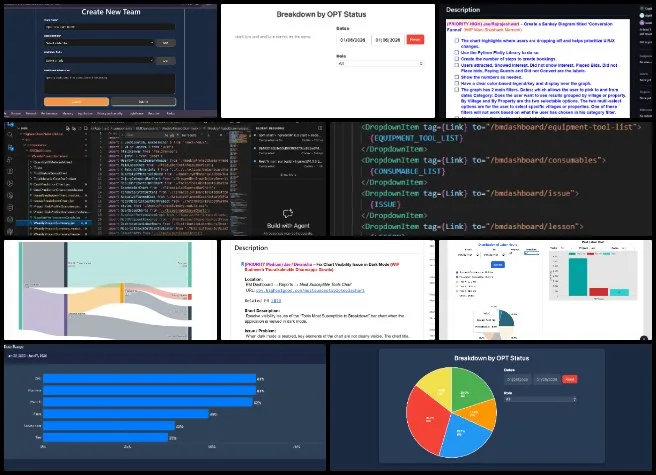
This week, Uha focused on resolving visibility and contrast issues in the Distribution of Labour Hours chart by fixing cases where text was not visible due to similar background and foreground colors in both light and dark modes, improving the readability of chart labels, legends, and headings, resolving the issue where the submit button text was not visible in light mode, and testing changes locally to ensure consistent usability. Sai worked on enhancing the main Header component by adding a new “Consumables” option to the Projects dropdown menu, routing it to the appropriate path, placing it in alignment with the existing menu structure, and ensuring consistency with dark mode styling and disabled state handling. Sudheesh progressed on Phase 2 chart visibility fixes in dark mode by identifying relocated files, reorganizing frontend styles into separate CSS files, implementing dark mode support, resolving related visibility issues, completing feature updates, pushing changes to the repository, and preparing the work for testing. These efforts strengthen the path toward DIY sustainable construction models by supporting accessible, well-structured, and reusable open source systems.
Aayush addressed multiple Phase 2 issues by analyzing the “Select Projects” dropdown redirection problem, verifying reproducibility, documenting findings, debugging the “Create New Team” page data loading issue, fixing form submission behavior, and validating solutions through local testing. Mani worked on a priority task to develop the “Conversion Funnel” Sankey Diagram by wiring interactive controls, implementing mock data logic, styling the chart with fixed layouts and dark mode support, improving responsiveness, removing unnecessary toolbars, and documenting the work in a pull request. Alisha focused on resolving reported issues in previously assigned tasks by debugging and fixing dark mode problems in Learner Knowledge Evolution views, addressing deployment failures, implementing requested changes, contributing to Posting Page Analytics with new visualizations and validations, improving error handling, resolving merge conflicts, and fixing user interface issues such as filter overflow and visibility problems across different scenarios. Visit the Highest Good Society and Highest Good Network pages for more on how this work supports DIY sustainable construction models through open-source development and globally accessible resources. The collage depicted below shows the team’s efforts for the week.
REACTONAUTS SOFTWARE DEVELOPMENT TEAM
The Reactonauts team summary was managed by Akshay Jayaram (Software Engineer) and Iteesha Vishalakshi Aswath (Technical Program Manager), and it includes Aseem Deshmukh (Software Developer), Diya Wadhwani (Software Developer), Kristin Dingchuan Hu (Software Engineer), Namitha Vijaykumar Pawar (Software Engineer), Peterson Rodrigues dos Santos (Full Stack Developer), Siva Putti (Software Engineer), and Sri Satya Venkatasai Siri Sudheeksha Vavila (Software Engineer). The Highest Good Network software helps manage and objectively measure progress by focusing on DIY sustainable construction models. It supports social architecture, construction, production, and maintenance processes to build sustainable and thriving ecosystems.
This week, Aseem updated PR4310 by improving the responsiveness of the expense chart through layout and styling changes to ExpenseBarChart.jsx and ExpectedVsActualBarChart.module.css, removing scroll behavior, separating the chart from the card structure, eliminating unused cards, pushing the updates to GitHub, and communicating progress to Jae. Diya resumed deactivation lifecycle work by verifying ownership of the Blue Square auto-drop item, investigating server errors related to the inactiveReason field, reviewing PR3600 for compatibility with new routes and schema and implementing a hotfix to ensure immediate deactivation behavior was consistent across the User Profile and status cell popup. She also worked on restructuring the state flow to reduce reload dependency, updating modal options for deactivation and reactivation, testing the changes, and raising PR2016 for an urgent login fix. The progress made this week contributes to our long-term goal of developing DIY sustainable construction models.
Kristin improved the Log Attendance page dark mode by refining styling for text, backgrounds, borders, and interactive elements to ensure proper contrast, and updated the JSX structure for the Drop-off rate and No-show rate insights sections so each analytics block could apply independent styling and behavior. This work supports developing DIY sustainable construction models through open source software.
Namitha resolved theme color visibility issues in the HGN Software Team Questionnaire Dashboard by adjusting text, icon, and button styles to maintain readability across light and dark modes, validating accessibility and consistency without changing existing layout or interaction patterns. Peterson enhanced the Projects page in PR4746 by adding a red toast notification to inform users when a filtered username search returns no results, improving user feedback and clarity. This work plays an important role in developing DIY sustainable construction models through coordinated, real-world implementation.
Siva advanced the Node 20 upgrade by updating configuration and resolving workflow merge conflicts, continued improving create-new-team functionality by fixing ESLint errors and preserving AddTeamPopup behavior in PR3658. He also resolved dashboard merge conflicts to retain a simplified CPDashboard layout and proper alignment of the Show Past Events button in PR4311, and ensured filter alignment consistency in PR4388. Siri Sudheeksha Vavila worked 20 hours on implementing dark mode styles for the HGN Skills page, iterating on file updates, troubleshooting errors encountered during pull request creation, and progressing toward completing and submitting the changes. See the Highest Good Network and Highest Good Society pages to learn more about how this work supports developing DIY sustainable construction models. See below for the picture collage of the work done by the Reactonauts team towards developing DIY sustainable construction models.
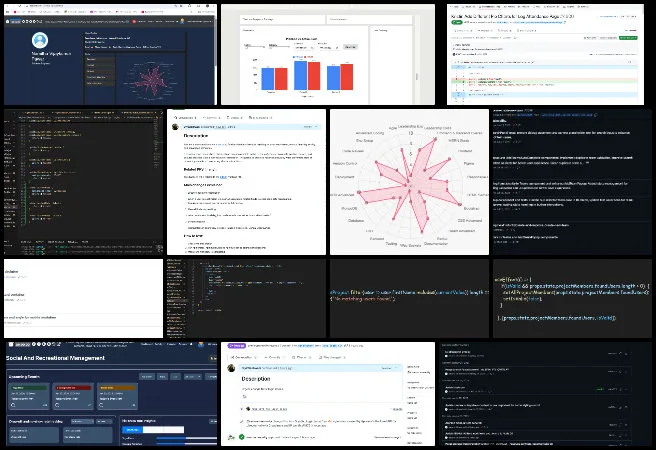
SKYE SOFTWARE DEVELOPMENT TEAM
The Skye Team’s summary, covering their work on the Highest Good Network, was managed by Sayantan Paul (Frontend Tester and Software Team Administrator) and Anthony Weathers (Software Engineer). The team includes Marcus Yi (Software Engineer) and Swathi Angadi (Software Engineer). The Highest Good Network software objectively tracks and manages progress, supporting social architecture, construction, production, and maintenance processes that foster sustainable and thriving ecosystems, while developing DIY sustainable construction models that can be replicated and improved through open collaboration.
This week, Anthony completed additional git merges and resolved merge conflicts for PR#3600 and PR#1447, updated the PR descriptions to provide clearer and more accurate testing steps and prepared them for review pending any remaining issues or approval for merging. He also reduced and refactored code related to the reordering task to improve efficiency and reviewed the associated functions to confirm the feature continued to operate as intended. In addition, he continued work on PR#3917 and PR#1668 by updating code, resolving merge conflicts, recording a video to document the process and clarify parts of the task that were adjusted based on received feedback. This progress reflects continued momentum in delivering DIY sustainable construction models through open, collaborative development.
Marcus rolled back prior commits that were interfering with the Facebook connection and focused on stabilizing the integration. He rewrote and clarified testing instructions to support validation of the pull request, continued adding finishing touches to the Facebook connect page and began preparing a demo video to aid testing and review, with the work tracked in PR#4714. This effort supports the growth of DIY sustainable construction models through consistent, actionable development practices.
Swathi modified backend logic for the edit functionality to store material update history and added a new collection to the schema to support inventory history tracking. She implemented both frontend and backend logic to view update history, fixed dark mode issues on the Materials and Consumable pages, resolved a dropdown issue on the Consumable page, added the add consumable functionality and enabled filtering on the Consumable page by both project and consumable. By addressing these challenges, the Skye team’s work reinforces long-term stability in stewardship tracking features and supports evolution of DIY sustainable construction models by strengthening scalable, transparent systems within the broader Highest Good Network (HGN) infrastructure.
See the Highest Good Society and Highest Good Network pages for more on how this contribution aligns with One Community’s goals by advancing DIY sustainable construction models within the Highest Good Network open source hub. See the collage below for the team’s work.
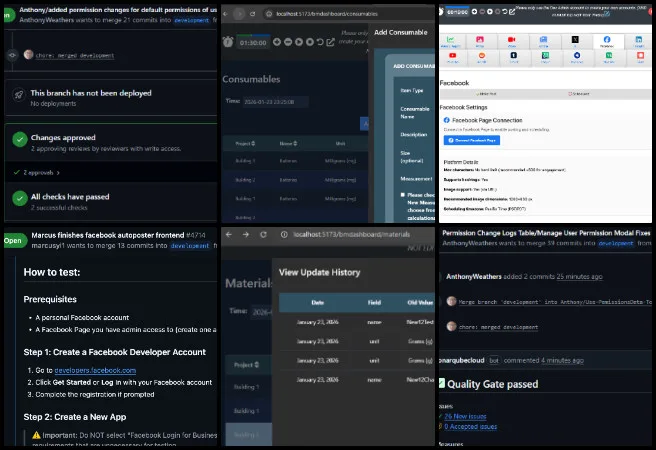
SOFTWARE PR REVIEW TEAM A-N
The PR Review Team’s summary for members with names starting A–N, managed by Neeharika Kamireddy (Data Analyst), highlights their contributions to the Highest Good Network software. This platform forms the foundation for measuring our results in developing DIY sustainable construction models. Active team members included Abdelmounaim Lallouache (Software Developer), Abhinav Tharamel Baiju (Software Engineer), Carl Bebli (Software Developer), Ganesh Gadicherla (Software Engineer), Julia Ha (Software Engineer), and Nathan Hoffman (Software Engineer). They supported the project by reviewing all pull requests shared this week. Learn more about how the Highest Good Network tracks progress toward developing DIY sustainable construction models in the Highest Good Network open source hub. This work supports developing DIY sustainable construction models. The collage below showcases a compilation of this team’s work.
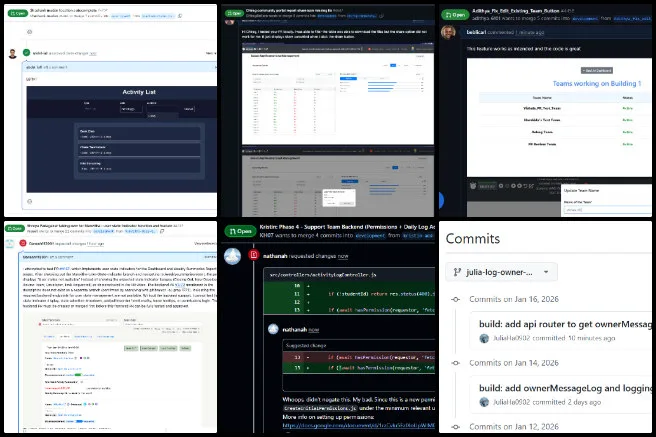
SOFTWARE PR REVIEW TEAM O-Z
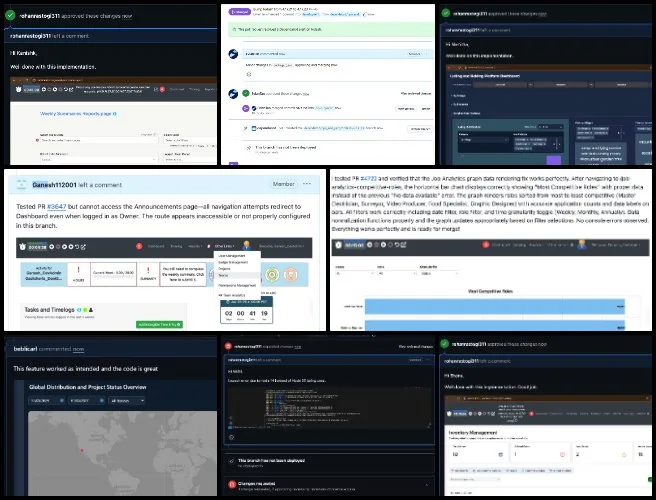
The PR Review Team’s summary, covering their work on the Highest Good Network software, was managed by Jaiwanth Reddy Adavalli (Software Project Manager). The Highest Good Network software is a foundation for measuring our results in developing DIY sustainable construction models. This week’s active members of this team were: Abdelmounaim Lallouache (Software Developer), Carl Bebli (Software Developer), Ganesh Gadicherla (Software Engineer), Nathan Hoffman (Software Engineer), Rohan Rastogi (Software Engineer), Sundar Machani (Software Engineer), and Yiyun Tan (Software Engineer). They reviewed all the Highest Good Network PRs (Pull Requests) shared in this week’s update. Learn more about how the Highest Good Network open source hub measures progress towards our goal of developing DIY sustainable construction models. The collage below shows a compilation of the work from this team.
AND WE PRODUCED THIS WEEKLY UPDATES BLOG – CLICK HERE TO SUBSCRIBE
FOLLOW ONE COMMUNITY’S PROGRESS (click icons for our pages)
INVESTOR PAGES
GET INVOLVED
DONATE | WAYS ANYONE CAN HELP | MEMBERSHIP
CLICK HERE FOR ALL PAST UPDATES