People-care Eco-communities – One Community Weekly Progress Update #676
At One Community, we are designing people-care eco-communities as an open, practical model for evolving sustainability worldwide. We integrate sustainable approaches to food, energy, housing, education, economics, and social architecture to support fulfilled living and global stewardship practices. Created by an all-volunteer team, everything we develop is open source and free-shared, including the complete process, so the model can become self-replicating. Our aim is a global collaboration of teacher/demonstration hubs dedicated to regenerating our planet and serving “The Highest Good of All“.
OUR MAIN OPEN SOURCE HUBS
Click on each icon to be taken to the corresponding Highest Good hub page.
One Community’s physical location will forward this movement as the first of many self-replicating teacher/demonstration communities, villages, and cities to be built around the world. This is the March 2, 2026 edition (#676) of our weekly progress update detailing our team’s development and accomplishments:
People-care Eco-communities
One Community Progress Update #676
DONATE | COLLABORATE | HELP WITH LARGE-SCALE FUNDING
CLICK HERE IF YOU’D LIKE TO RECEIVE AN EMAIL EACH WEEK WHEN WE RELEASE A NEW UPDATE
YOU CAN ALSO JOIN US THROUGH SOCIAL MEDIA


ONE COMMUNITY WEEKLY UPDATE DETAILS
HIGHEST GOOD HOUSING PROGRESS
One Community is designing people-care eco-communities through Highest Good housing that is artistic and beautiful, more affordable, more space efficient, lasts longer, DIY buildable, and constructed with healthy and sustainable materials:
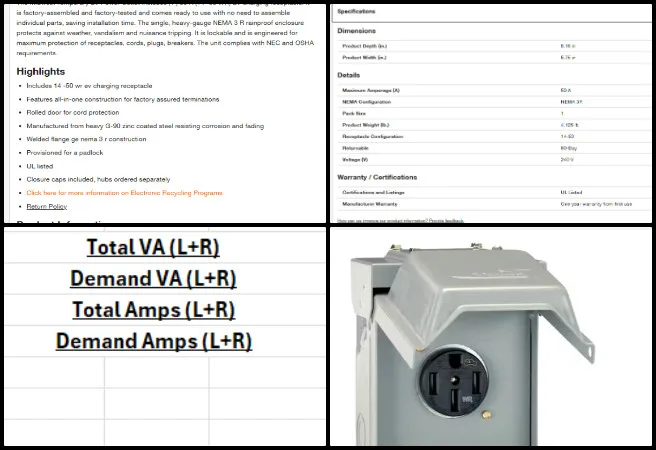
This week, Derrell Brown (Plumbing Designer) continued working on the Earthbag Village 4-dome home final MEP report and applied required revisions to align the final draft with the submitted comments and expectations. He advanced work on the electrical plans for the 4-Dome Home by revisiting the load analysis for the existing panel. With the addition of a 50-amp EV charger, Derrell identified that the initial electrical demand increased to above 200 amps. Based on this updated demand, he determined that the panel size would need to increase from a 200A panel to a 400A panel, which would result in a higher overall project cost. Derrell then researched relevant NEC articles to verify applicable demand factors and evaluate whether the calculated amperage could be reduced to minimize the total cost while maintaining code compliance. This work supports the infrastructure planning needed for people-care eco-communities by strengthening reliable and future-ready energy system design. See below for some of the pictures related to this work.
Fangting Xu (Interior Design Intern) continued working with ADA codes related to building connections for the ADA 3-dome cluster of the Earthbag Village. She focused on the ADA restroom and ADA shower room projects. Fangting discussed floor plan options for the ADA restroom with Jae and received prompt feedback. She then updated the ADA restroom floor plan and developed the construction documents. Additionally, she updated the ADA shower room floor plan based on Jae’s suggestions and feedback. This work supports the infrastructure planning needed for people-care eco-communities by strengthening inclusive and accessible architectural design. Review the latest updates in the images below.

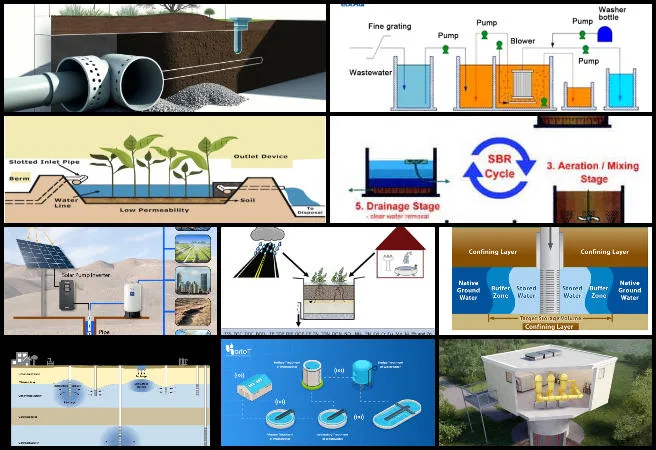
Sai Bhuvanesh Nandipati (Mechanical Engineer) continued working on the Earthbag Village by completing the development and organization of the Large Water Storage Solutions webpage content. He structured the Groundwater Supply and Recharge Systems section for pond integration, incorporating technical descriptions for solar-powered borewell systems, horizontal collector wells, managed aquifer recharge systems, subsurface French drains, and aquifer storage and recovery systems. Sai also finalized the Greywater Treatment and Reuse Systems section, detailing constructed wetlands, membrane bioreactors, sequencing batch reactors, hybrid biofiltration systems, and integrated smart greywater recycling plants for safe reuse and pond replenishment. The content was organized with figure references and formatted for direct webpage integration, ensuring consistency, technical clarity, and alignment with the overall water management framework, supporting the knowledge base needed to build resilient people-care eco-communities. See below for some of the pictures related to this work.
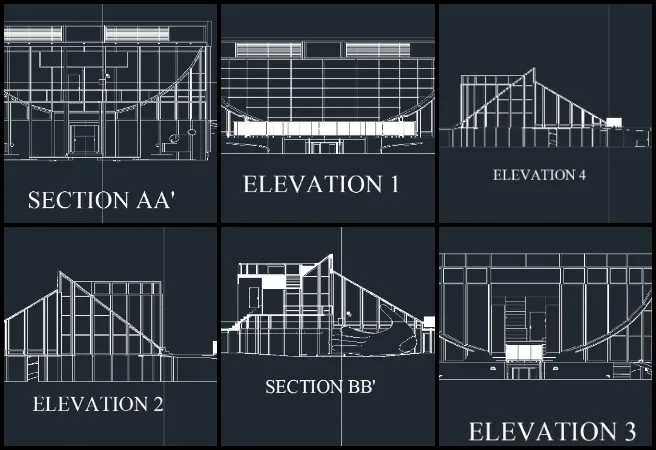
Vaishnav Sanjay Chavan (Architectural Project Manager) worked on the Earthbag Village by working on a range of drawing tasks related to the tropical atrium, including layout drawings, sections, and elevations. The site plan, ground floor plan, mezzanine floor plan, and roof plan were developed to support coordination across the overall drawing set. In addition, sections and elevations of the tropical atrium were created to represent vertical relationships, spatial organization, and key architectural elements. These drawings were prepared to maintain consistency across plans and align with the overall design intent of the project, contributing to the architectural planning of sustainable people-care eco-communities. Below, you’ll find some images of this work.
DUPLICABLE CITY CENTER PROGRESS
One Community is designing people-care eco-communities through a Duplicable and Sustainable City Center that is LEED Platinum certified/Sustainable, can feed 200 people at a time, provide laundry for over 300 people, is beautiful, spacious, and saves resources, money, and space:
This week, Akhil Shesham (Mechanical Engineer) continued working on the Duplicable City Center design. He focused on final recommendations and implemented changes to the elevator cost analysis sheets. He cleaned and organized the sheets to improve clarity and ensure all cost entries were accurate and properly aligned with the project data. Final edits were made to correct inconsistencies and update calculations where required. Akhil verified all product URLs again to confirm they were accurate and active. Separate PDF documents were generated for each component to ensure proper documentation and ease of reference. In addition, assembly instruction notes were added to support clearer understanding of component integration and installation steps, ensuring that all supporting documentation was complete and structured for review. Discover One Community’s open source Duplicable City Center, which is designing people-care eco-communities. See the visuals below for a closer look.

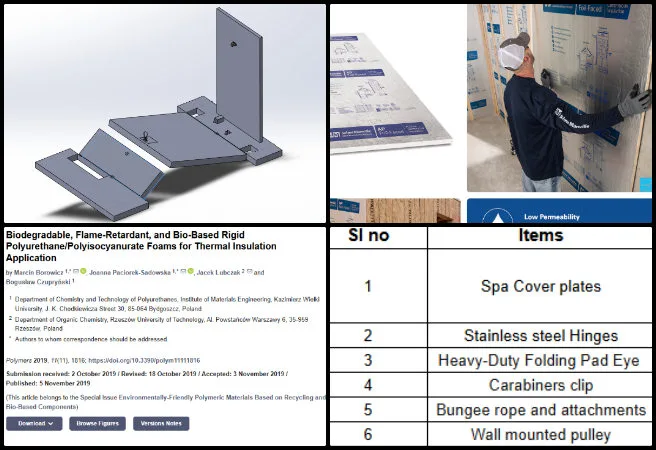
Bevan Chiu (Mechanical Engineer) continued his work finishing the City Center Eco-spa Designs. He worked on the CAD model to incorporate the composite decking on top of the joists. He revised the Bill of Materials to align with the updated model, including adjusting the part count for the unistrut frame and creating the corresponding drawings to match the revised quantities and components. In preparation for the final report, he created detailed drawings showing the foundation assembly dimensions to support documentation. Bevan also created an initial draft of DIY assembly instructions outlining the unistrut assembly process. This open source Duplicable City Center project is designing people-care eco-communities. For more details, refer to the image below.

Shivarama Krishna Revanuru (Mechanical Engineer) continued working on the Duplicable City Center design. He focused on cost analysis and preparation of the bill of materials (BOM), evaluating and selecting materials based on performance and cost. He analyzed thermal losses and the insulation capacity of the spa cover to assess heat retention and overall efficiency, comparing material options to determine their impact on insulation and manufacturing expenses. Shivarama also met with a teammate to review the report structure, refine technical content, and identify necessary revisions to ensure alignment with project objectives and data accuracy. This open source Duplicable City Center project is designing people-care eco-communities. The images below illustrate aspects of this work.
HIGHEST GOOD FOOD PROGRESS
One Community is designing people-care eco-communities through Highest Good food that is more diverse, more nutritious, locally grown and sustainable, and part of our open source botanical garden model to support and share bio-diversity:
This week, the core team continued working on the Master Tools, Equipment, and Materials/Supplies List for the Large-scale Garden, Botanical Garden, and other Highest Good Food components. They began reviewing and attaching the General Storage & Inventory (GSI) acronym to the necessary items in the document, applying the designation to numerous power tools, all chainsaw accessories, and related chainsaw items. Duplicate entries for a shop vacuum and a headlamp were also deleted from the list. The Highest Good Food initiative is a key component of One Community’s open source plans, focused on designing people-care eco-communities. Below are some images showcasing this work.

Chelsea Mariah Stellmach (Project Manager) focused working on the Transition Food Self-sufficiency food and inventory tracking software plans. She regularly monitored the document “HGN Phase 6: Food-Ingredient Inventory Procurement and Management Software” for developer communications. She assigned tasks, adjusted estimated hours where necessary, and tracked progress updates to ensure alignment with project timelines. Chelsea communicated her availability to developers to address questions and remove blockers as they arose, supporting ongoing workflow and task completion. This work contributes to designing people-care eco-communities, as shown in the images below.

Japneet Kour (Volunteer Architect) contributed to the Highest Good Food initiative. She made updates to the SketchUp file of Aquapini by adjusting plant elements, adding textures based on feedback, and updating the Lumion renders to reflect the required changes. These updates ensured that the visual materials aligned with the latest project direction and incorporated the revisions requested by the supervisor. This work contributes to designing people-care eco-communities, as shown in the images below.
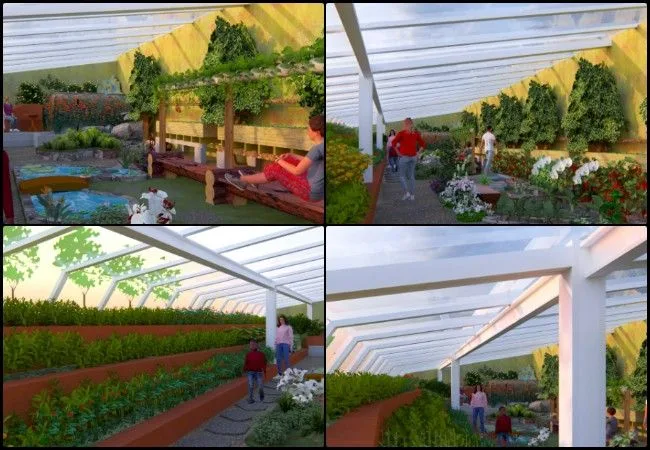
Jay Nair (BIM Designer) continued developing the Aquapini and Walipini Planting and Harvesting documents. He wrote detailed instructions for software developers to support the creation of a calculator for greenhouse lighting energy calculations. The documentation outlined the required inputs, calculation logic, and expected outputs, including how to handle zone-based data, fixture specifications, and seasonal adjustments. Jay also organized the instructions to align with the project’s standardized format so the calculator can be applied consistently across future greenhouse lighting scenarios. This work contributes to designing people-care eco-communities, as shown in the images below.

Nitin Parate (Architect) contributed to the Aquapini and Walipini renders and layout graphics. He worked on reviewing the drawings to identify which elements are relevant and which can be removed to keep the representation clear and focused. He refined details, graphics, and annotations to reduce unnecessary information and avoid visual clutter. Nitin also studied the types of components involved in the system to represent their functioning more accurately. These efforts ensured the drawings clearly explain how different parts function and connect while maintaining clarity and alignment with the overall design intent. This work contributes to designing people-care eco-communities, as shown in the images below.
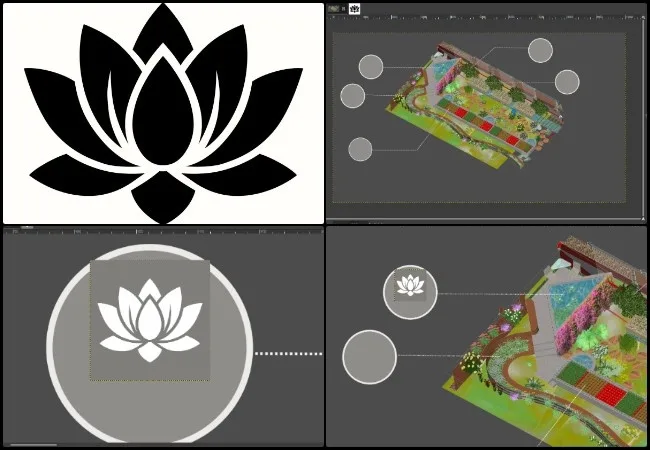
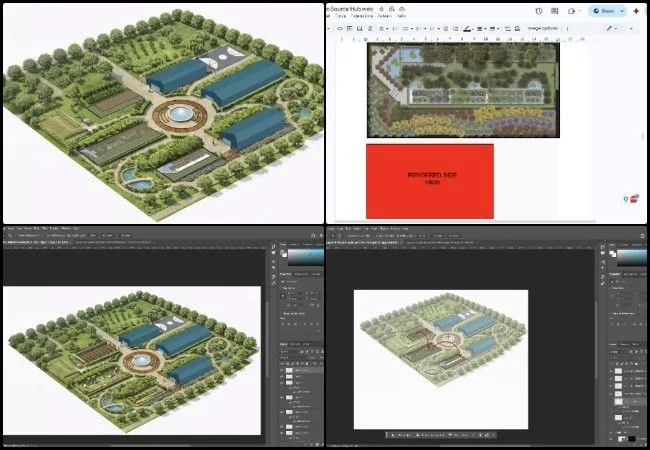
Shivangi Varma (Architectural Designer and Planner) continued the redesign of the Highest Good Food overall presentation. She worked on detailing the axonometric for the Differences diagram for the Open Source Hub and added landscape elements. She began incorporating additional pending Open Source Hub graphics and continued developing outstanding items, including structural and layout updates to the Differences diagram and revisions to the second iteration of the Differences diagram. This work contributes to designing people-care eco-communities, as shown in the images below.
HIGHEST GOOD ENERGY PROGRESS
One Community is designing people-care eco-communities through Highest Good energy that is more sustainable, resilient, supports self-sufficiency and includes solar, wind, hydro and more:
- Learn about the open source sustainable-energy foundations and People-care Eco-communities: Solar, Hydro, and Wind
- Explore our research into the most sustainable products and companies for saving water and energy: Insulation, Eco-laundry, Lightbulbs and Light Bulb Companies, Doors and Door Companies, Windows and Window Companies, Toilets, Faucets and Faucet Accessories, Urinals, and more.
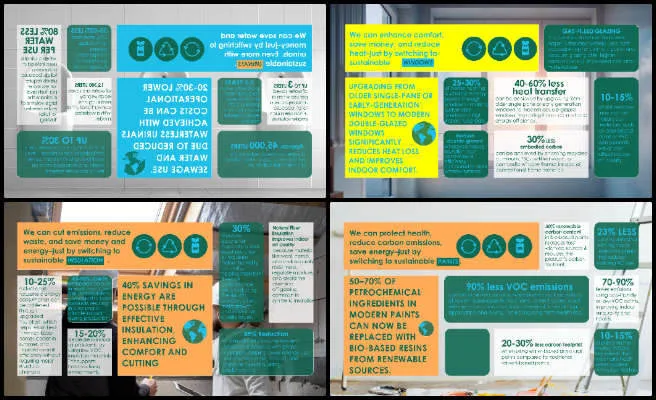
This week, the core team continued contributing to the Highest Good Energy initiative. They reviewed and forwarded feedback on the images for sustainable insulation, windows, lighting, paints, and urinals. They researched relevant statistics to incorporate into the images and sent several data suggestions for consideration. They also continued working on the cost summary for the food rollout phases, updating figures and organizing information to support planning and budgeting efforts. This work contributes to designing people-care eco-communities, as shown in the images below.

HIGHEST GOOD EDUCATION PROGRESS
One Community is making eco-living mainstream accessible through Highest Good education that is for all ages, applicable in any environment, adaptable to individual needs, far exceeds traditional education standards, and more fun for both the teachers and the students. This component of One Community is about 95% complete with only the Open Source School Licensing and Ultimate Classroom construction and assembly details remaining to be finished. We’ll report on the final two elements to be finished as we develop them.
With over 8 years of work invested in the process, the sections below are all complete until we move onto the property and continue the development and open sourcing process with teachers and students – a development process that is built directly into the structure of the education program and everything else we’re creating too:
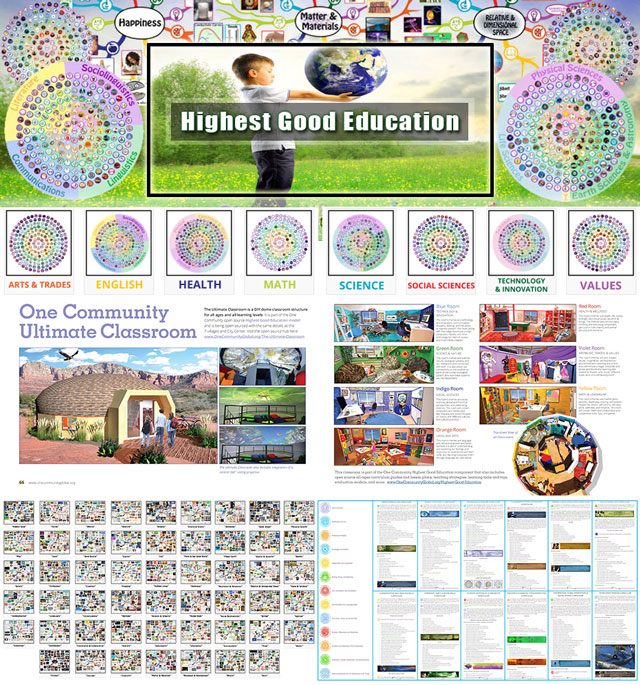
Highest Good Education: All Subjects | All Learning Levels | Any Age – Click image for the open source hub
HIGHEST GOOD SOCIETY PROGRESS
One Community is designing people-care eco-communities through a Highest Good society approach to living that is founded on fulfilled living, the study of meeting human needs, Community, and making a difference in the world:
This week, the core team completed over 42 hours managing volunteer work reviews, handling emails, overseeing social media accounts, supporting web development, and identifying and integrating bug fixes for the Highest Good Network. The team also interviewed and onboarded new volunteer team members. Additionally, they produced and integrated the video above, which highlights how designing people-care eco-communities serves as a foundational element of One Community’s broader mission. The following images showcase highlights of this work.

Jin Hua (Website, AdWords, and Analytics Administrator) continued to diagnose and restore our other 4 websites after they went down this past week. The issue was a captcha conflict with another of our security plugins. Our website is the foundation for sharing all our open source plans for designing people-care eco-communities. See below for images and The Highest Good Network page related to this website restoration work.

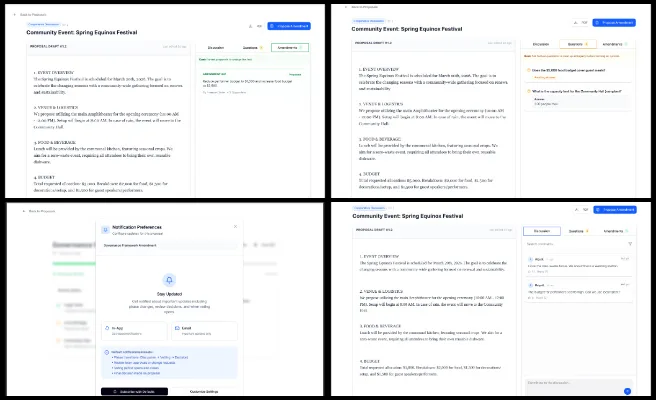
Pooja Kulkarni (UI/UX Designer) continued her work by advancing governance platform designs through enhanced proposal interaction flows and structured engagement experiences that improve clarity, participation, and transparency across collaborative decision-making processes on The Highest Good Network. She refined the Community Event proposal interface by strengthening the Discussion, Questions, and Amendments flows within the right-side engagement panel, clearly separating conversational comments, factual clarification questions, and formal text amendments with distinct visual states, badges, and status indicators such as “Awaiting Answer” and “Proposed” to clarify intent and action types. These efforts strengthen people-care eco-communities by improving system reliability and coordination.
Pooja also improved the proposal draft layout by establishing a clean two-column structure with version control indicators, last edited timestamps, and clearly defined primary actions including PDF download and “Propose Amendment,” making it easier for members to navigate between reviewing, engaging, and formally modifying proposals. In addition, she designed a Notification Preferences modal allowing users to subscribe to proposal updates through in-app or email notifications, outlining default triggers such as phase transitions, review decisions, voting windows, and final outcomes to reinforce accountability and informed participation. Across all updates, Pooja emphasized structured interaction states, visual consistency, and user control to support scalable governance participation. This work supports One Community’s efforts toward designing people-care eco-communities. See the images below that highlight key aspects of her work.
Prudhvi Marpina (Data Analyst) contributed to Highest Good Network software development and administrative initiatives in support of designing people-care eco-communities. He worked on Phase 5 governance by updating Deliverable 3 action item tables, refining deliverable item descriptions, and expanding action item details within the Phase 5 documentation to align with established formatting standards. He coordinated with the Figma developer to plan the next meeting and ensure consistency between documentation updates and interface planning. He also supported Phase 4 software management by reviewing all action items and pending GitHub pull requests, following up with developers on required updates, and revising review statuses to reflect current progress.
In marketing and promotion, Prudhvi managed BlueSky posting for the week, scheduled content for the upcoming week, and updated tracking tables within the Social Media Dashboard to maintain accurate reporting. Additionally, he supported OC administration by updating the weekly blog and providing feedback on the administration team’s work from the previous week. The following images showcase highlights of this work. This work supports the continued development of people-care eco-communities through open, collaborative progress.

Yagna Reddy Badvel (Data Analyst and Team Administrator) continued to support structured administrative and tracking operations on The Highest Good Network by performing detailed reviews and system refinements to maintain accuracy and workflow clarity. He reviewed the Phase 2 tracking sheets, including the “Materials, Equipment, Tools, and Project Tracking System” tab, validating task categorization, correcting incomplete entries, resolving dropdown inconsistencies, updating outdated statuses, and aligning task priorities with current progress. He standardized formatting and naming conventions, fixed structural and sorting issues, repaired broken or duplicate links, refined filtering logic, and improved overall layout for clearer tracking and reporting. In addition, Yagna reviewed Sai Keerthi’s weekend deliverables, assessed accuracy and consistency against project standards, and provided structured, actionable feedback to ensure alignment with established expectations. This work supports One Community’s efforts toward designing people-care eco-communities. The images below show some of his work.

Yulin Li (Graphic Designer) continued her work by contributing 20 hours of volunteer service focused on visual communication and coordination for The Highest Good Network software team. She revised infographics based on feedback to improve clarity, visual consistency, and alignment with One Community’s sustainability objectives. She also prepared and published a team collaboration announcement to support transparent communication across teams. In addition, Yulin maintained organized asset management through Dropbox and participated in weekly review discussions to support timely task completion. This work supports One Community’s efforts toward designing people-care eco-communities; see the Highest Good Society and the collage below for examples of their work.
ADMINISTRATION TEAM
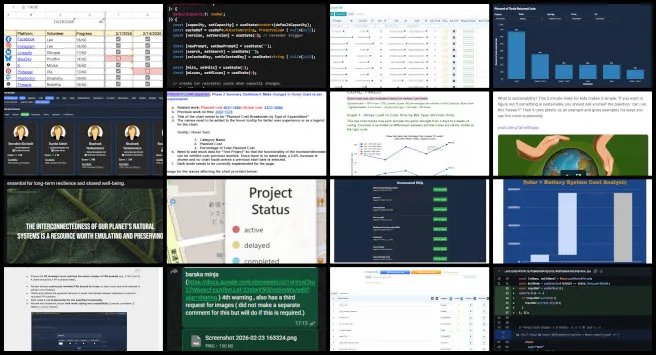
The Administration Team’s summary, which covers their work on the Highest Good Network, was managed by Prudhvi Marpina (Data Analyst) and includes Anusha Gali (Software Engineer), Ashutosh Mishra (Software Engineer), Keerthana Chitturi (System Administrator), Divanshu Bakshi (Team Admin), Hemanth Sai Venkata Srinivasa Kumar Nidamanuru (Administrative Assistant), Leo Lishin Shiu (Software Engineer), Manish Kanuri (Data Scientist), Mridul Bhushan (Volunteer Project Strategy Analyst and Team Administrator), Neeharika Kamireddy (Data Analyst), Olawunmi “Ola” Ijisesan (Administrative and Management Support), Priyanshi Sharma (Data Analyst and Team Administrator), Rachna Malav (Data Analyst), Rajeshwari Bhirud (Administrator), Rishitha Adepu (Administrator), Sai Keerthi Domakonda (System Administrator), Sayantan Paul (Frontend Tester and Software Team Administrator), Shameera Musthafa (Data Analyst), Shreya Shetty (Data Analyst), and Sudarshan Raju Chintalapati Venkata (Data Analyst). The Administration Team supports the Highest Good Network, a tool designed to track and measure progress while developing systems that contribute to people-care eco-communities. Through administrative support, documentation, testing, training, recruiting, analytics, and content management, the team helps advance this mission, aligning with One Community’s vision of building a replicable and sustainable future model.
This week, Anusha reviewed and tested frontend and backend pull requests for the Highest Good Network software, approving or requesting changes based on UI defects, functionality gaps, setup issues, and re-review findings while supporting cross-team communication and developer coordination. Ashutosh validated multiple API endpoints, optimized caching and interface behavior, refined document embedding workflows, and resolved merge conflicts to improve chatbot reliability and grounding accuracy. Divanshu published Mastodon updates, extracted engagement metrics using Python automation, updated dashboards, documented feature issues, and supported backlog and product coordination efforts. Keerthana reviewed administrative submissions for compliance, initiated CSS refactoring cleanup, and transitioned into the Corrections Administrator role to strengthen documentation standards. Together, these efforts support designing people-care eco-communities.
Leo compiled and formatted team summaries for the blog, created collages, validated Meta analytics extraction, and tested API functionality, while Manish tested and verified multiple frontend pull requests and supported coordination through documentation and workflow updates. Mridul managed WordPress publication for Blog #675, ensured SEO and formatting compliance, and maintained content continuity across X and LinkedIn analytics reporting. Hemanth conducted detailed frontend and backend pull request testing, documented filtering and UI issues, and supported administrative coordination and blog preparation. These coordinated activities strengthen collaboration, accountability, and system reliability in support of people-care eco-communities.
Neeharika assigned and tracked development tasks, tested pull requests, verified administrative documents, and reviewed team work to maintain progress alignment. Ola organized administrative workflows, prepared team folders, verified Pinterest scheduling, and closed feedback loops in the review process. Priyanshi conducted detailed dashboard and map testing, validated UI alignment and filter behavior, and documented rendering, dark mode, and data update issues for resolution. Rachna reviewed tasks, followed up on communications, assessed SEO pages, and coordinated a volunteer interview. This progress reinforces designing people-care eco-communities by keeping solutions organized, transparent, and actionable.
Rajeshwari advanced administrative blog responsibilities, tested endpoints, and implemented a hotfix within the user management workflow. Rishitha managed weekly blog compilation, SEO optimization, Threads engagement, and dashboard data updates using Python and Excel workflows. Sai Keerthi reviewed administrative submissions, tested and implemented a hotfix for the Assign Team feature, and created a related pull request. Sayantan tested scoring and ranking logic, reviewed multiple dashboards and pull requests, logged system improvement tasks, and validated reporting accuracy. Shameera coordinated PR review management, curated report visuals, and supported hiring interviews. Shreya refined Aircrete visualizations and optimized Google Ads performance. Sudarshan managed blog SEO updates, tested dashboards, documented issues, and created system enhancement tasks. To learn more about how this work supports designing people-care eco-communities, visit the Highest Good Society and Highest Good Network pages. Highlights of the team’s contributions are shown in the collage below.
HIGHEST GOOD NETWORK PROGRESS
 One Community is designing people-care eco-communities through open source Highest Good Network® software that is a web-based application for collaboration, time tracking, and objective data collection. The purpose of the Highest Good Network is to provide software for internal operations and external cooperation. It is being designed for global use in support of the different countries and communities replicating the One Community sustainable village models and related components.
- Learn about our open source community collaboration and management software and People-care Eco-communities: The Highest Good Network
This week, the core team tested Highest Good Network pull requests and confirmed 11 as fixed. This effort highlights One Community’s commitment to reinventing the sustainability industry. The outcome supports people-care eco-communities through documented and shareable innovation.
The following were not fixed: issues with hover text on the PR Review Team Analytics Dashboard PR Insights frontend, functionality to add, edit, and delete inventory types, gaps in the process for adding materials, and undefined search parameters in the Feedback page search function. In addition, 15 PRs could not be tested due to the absence of data on the Main branch, preventing validation of related frontend and backend updates. This work strengthens One Community’s mission of designing people-care eco-communities. Visit the Highest Good Society and the Highest Good Network pages, and view the collage below, to explore an overview of the team’s contributions and impact.

ALPHA SOFTWARE DEVELOPMENT TEAM
The Alpha Software Team, working on the Highest Good Network software, was managed by Lin Khant Htel (Frontend Software Developer). The team includes Linh Huynh (Software Engineer), Maithili Kalkar (Software Engineer), Som Ramnani (Software Engineer), and Casstiel Pi (Software Engineer). The Highest Good Network software is a key part of sustainable and free-shared eco-solutions. We are helping track and measure progress toward designing people-care eco-communities. The software supports social architecture, construction, production, and maintenance processes that contribute to the open source project and resilient ecosystems. Designed to be portable and scalable, the Highest Good Network software is well suited for off-grid and sustainable living communities. This project reflects One Community’s open source commitment to designing people-care eco-communities.
This week, Lin reviewed PR #1804 by examining the code and running tests on a local machine, confirming that all tests passed. He also checked Alpha team members’ weekly summaries, photos, and videos and handled team management responsibilities, including verifying submitted materials and supporting coordination activities related to ongoing development work. These activities contributed to progress toward designing people-care eco-communities.
Linh worked on the Weekly Company Summary Email recipient edit issue and identified backend validation rejecting edits when emails were not found in the userProfile collection along with frontend state not updating correctly after responses. The backend controller was updated to accept valid email formats, update assignedTo only when matching users existed, preserve existing assignments otherwise, and return a consistent assignment payload with duplicate conflicts handled as 409 responses. Frontend actions were updated to support multiple response shapes, reducers were modified to merge returned assignment data, and the popup save flow was adjusted to wait for updates before exiting edit mode. Unit tests were added for backend and frontend update paths, and manual verification confirmed add, delete, and update operations functioned correctly and reflected immediately in the interface and database. This effort supported designing people-care eco-communities.
Maithili opened backend pull request #2064 to address issues identified in pull request #1342 and submitted fixes for review, and worked on the related frontend pull request. She observed that some updates, including map changes on the Total Construction Summary page, were already present in the development branch while interactive dots were missing. She identified that the InteractiveMap component was not loading, investigated the root cause, and updated her forked repository branch to align frontend changes with backend fixes and resolve the rendering issue affecting the interactive map. These contributions aligned with designing people-care eco-communities.
Som revisited PR #4585 to resolve merge conflicts in ActivityComments.jsx caused by recent development branch updates, focusing on feedback filtering and sorting logic. The search functionality was updated to support case-insensitive partial matching against reviewer names and feedback text with normalized and trimmed search terms. Rating filters were integrated alongside search without conflicts, and sorting options such as “Oldest” and “Highest Rated” were maintained using the getTime helper to parse createdAt values safely. The data flow was verified to apply search, then filter, then sort consistently across scenarios. He also addressed dark mode text visibility issues by prioritizing upvote and downvote buttons and implementing conditional styling using Redux darkMode state, with testing completed in both light and dark modes to confirm readability and functionality. This investigation contributed to designing people-care eco-communities.
Casstiel worked on adding a supplier filter and an “All Suppliers” option but redirected focus based on a project lead’s request to resolve a dark mode issue affecting another developer’s work. The problem was traced to overly broad wildcard CSS rules overriding intended styles and creating display inconsistencies. CSS selectors were adjusted to limit their scope to the appropriate components, and after applying the changes, the application was tested on a local server where rendering behaved as expected without dark mode conflicts. See the Highest Good Society and Highest Good Network pages for more on how we are contributing to designing people-care eco-communities. See the collage below to view the team’s work.

BINARY BRIGADE SOFTWARE DEVELOPMENT TEAM
The Binary Brigade Team, which presented their work on the Highest Good Network software, was managed by Amalesh Arivanan (Software Engineer) and included Sourabh Bagde (Software Developer), Roshini Seelamsetty (Software Engineer), Ramsundar (Ram) Konety Govindarajan (Software Engineer), and Harsha Rudhraraju (Software Engineer). The Highest Good Network software is our tool for managing and objectively measuring progress, ensuring that all contributions are tracked and aligned with our mission of designing people-care eco-communities. It supports social architecture, construction, production, and maintenance processes that contribute to open-source projects and resilient, sustainable ecosystems.
This week, Amalesh investigated a browser-specific issue where the refresh button functioned correctly in Firefox but triggered a development-only error in Chrome, documented the findings with supporting images, reviewed feedback on pull request 4459 to determine that the reported blocker was caused by the reviewer’s inability to block the “timer-service” request in Chrome, added Firefox-based instructions while exploring a browser-agnostic method for blocking the request, resolved merge conflicts that had broken the feature, updated pull request 4459 so it is ready for re-review and merge, and confirmed that merge conflicts affecting pull request 4679 were also resolved and ready for re-review. Roshini continued work on the Deactivated Volunteers Count Not Getting Reflected with Time Filter issue, raised pull request 2067 for review, began analysis of a high-priority defect in the Volunteer Hours Distribution Chart under the Yagna module, where totals and visualization were incorrect, and progressed work on pull request 4913 by identifying and working through merge conflicts that were blocking integration.
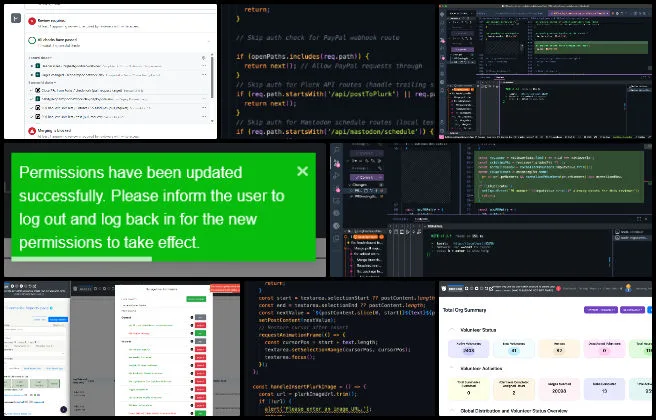
Sourabh implemented a Plurk-only image insertion feature in the Announcements composer by adding a dedicated image URL field and an Insert Image button that preserves cursor position and prevents unintended form submissions, wired scheduling models and routes under the /api namespace, configured middleware to allow schedule testing, set up a cron-based scheduler running every minute to parse scheduled date and time formats and execute posts at the correct time while removing successful Plurk schedules, and added Mastodon scheduling APIs with HTML parsing helpers to extract text and image sources, including base64 handling, along with GET, POST, and DELETE endpoints that support filtering, validation, and structured error handling. Harsha resolved merge conflicts with the development branch in pull request 4784, aligned the feature branch with the latest codebase, analyzed and fixed test failures introduced during the merge, corrected a yarn dependency issue affecting installation and builds, resumed work on filter-related defects to improve consistency and edge case handling, and began debugging a chart rendering problem affecting the six-month filter option by validating date range calculations, verifying backend responses, and inspecting data transformation logic before chart rendering to stabilize output across all filter selections.
Ram fixed duplicate PR number entry issues in the PR Review Team Analytics Dashboard by updating the Add PR modal to load each reviewer’s existing graded PRs, normalize PR numbers by removing whitespace, block duplicate submissions with clear error messaging, and handle missing data safely with consistent error styling across light and dark themes, implemented backend validation to normalize and reject duplicate PR numbers per reviewer instead of overwriting records, and added duplicate checks to the PR Grading Screen to prevent duplicate state entries, display and clear error messages correctly on input change, and ensure error visibility in dark mode. See the Highest Good Society and Highest Good Network pages for more information on how this works and on designing people-care eco-communities. The collage below shows images of their work.
CODE CRAFTERS SOFTWARE DEVELOPMENT TEAM
The Code Crafters Team’s summary, covering their work on the Highest Good Network software, was managed by Sphurthy Satish (Software Engineer). The team includes contributions from Akshith Kumar Reddy Balappagari Gnaneswara (Full-Stack Developer) and Shreya Padaganur (Software Engineer). Their work supports One Community’s mission of building people-care eco-communities, supporting cross-functional software development and continuous system enhancements.
This week, Akshith continued working on Phase 6 Kitchen Inventory Management by completing the backend API endpoints to add and store seeds, trees, bushes, and animals for the farm task. He developed the required controllers and routers to ensure the endpoints are accessible and tested all endpoints before raising a pull request. He also worked on Phase 3 Participation tasks, including fixing issues where the Create Event form allowed past dates and where the form displayed a previously entered event name. He resolved the related bugs and raised pull requests for these fixes, supporting the development of people-care eco-communities.
Shreya took over a new task and started implementation. She investigated a 404 error on the Educator Task Submissions page and identified that the frontend was pointing to the staging API instead of the local backend. She updated the environment configuration to use the local API endpoint and restarted the development server to route requests correctly for local integration testing. She verified full backend and frontend integration locally, tested JWT authentication, validated filtering by status, and confirmed proper response formatting. She implemented finished-task filtering in the educator task submissions API to return only completed and graded tasks, refactored status mapping, and adjusted late submission handling. She enhanced the backend endpoint by tightening response logic, improving query handling, and ensuring only relevant task states were exposed to the UI. She validated filtering behavior, grouping by class and task, and status display consistency through end-to-end local testing to ensure accurate and consistent rendering on the submissions overview page, in support of building people-care eco-communities.
Sphurthy worked on addressing a UI inconsistency on the “All Events” page related to typography within the event card details. She identified that the font sizes, weights, spacing, and visual hierarchy for the event title, date, time, and location text did not align with the approved Figma design specifications and varied across different cards. She updated the implementation to ensure that the typography strictly follows the defined font family, font size, font weight, and spacing standards outlined in Figma, ensuring uniform presentation across all event cards. This update improves visual consistency, maintains proper hierarchy, and aligns the page with the established design system without affecting existing functionality, supporting people-care eco-communities. Below is a collage highlighting the team’s work for the week.

DEV DYNASTY SOFTWARE DEVELOPMENT TEAM
The Dev Dynasty Team’s summary, covering their work on the Highest Good Network software, was managed by Deekshith Kumar Singirikonda (Developer) and includes Adithya Cherukuri (Volunteer Software Engineer), Aditya Gambhir (Software Engineer), Neeraj Kondaveeti (Software Engineer), Sai Shravan Neelamsetty (Software Engineer), Sriamsh Reddy (Software Engineer), and Vikas Meneni (Software Engineer). The Highest Good Network software is how we’ll manage and objectively measure our processes for open sourcing a better world for us all through our social architecture, construction, production, and maintenance processes. This progress supports One Community in designing people-care eco-communities.
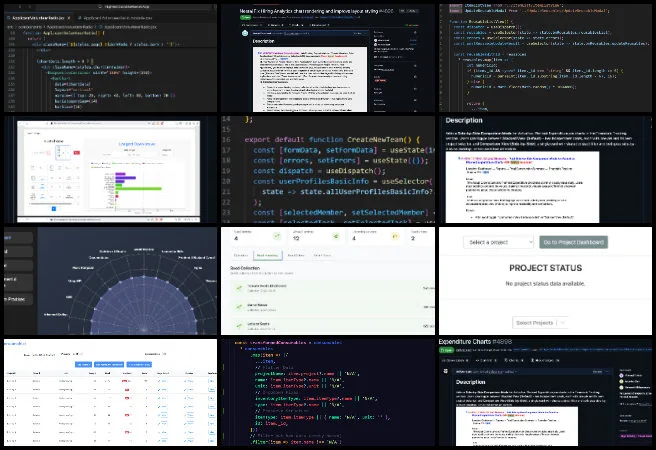
This week, Adithya focused on the HGN Software Development project by completing usability improvements to the Consumables Table, adding low-stock indicators, adjusting layout and alignment, generating test data with a MongoDB script, validating sorting and filtering behavior, preparing a pull request, and beginning inventory health indicator work for the Materials dashboard. Aditya enhanced the Building Management dashboard by adding comparison features, updating expenditure APIs, refactoring controllers with validation and async/await, removing legacy files, improving security with field destructuring and date checks, building reusable chart components, fixing layout and theme issues, and writing unit tests across multiple modules while resolving merge and build issues. These updates help maintain transparency and structured evolution within people-care eco-communities.
Deekshith developed and documented the ReusableListView component for synchronizing reusable inventory data with Redux and the backend and implemented the CreateNewTeam form component with structured state management, validation, and integration with Redux actions. This work helps demonstrate measurable advancement toward sustainable people-care eco-communities.
Neeraj improved the Job Posting Page Analytics chart by correcting axis labels, adding legends, implementing count and percentage toggles, validating behavior across filters and low-data scenarios, and starting work on an Export to CSV feature for the PR Review Team Analytics Dashboard. Shravan resolved extensive merge conflicts related to dark mode features across multiple HGN components, fixed CSS and selector issues, preserved newer functionality, ran formatting checks, opened updated pull requests, resolved additional conflicts, reviewed related submissions, and continued work on the recipes landing page. Sriamsh worked on Phase 2 enhancements by updating pull request documentation, addressing dark mode inconsistencies, rebasing and stabilizing Daily Equipment Log improvements, reimplementing parts of the feature on the latest branch, and advancing the Previous Logs Preview panel. Vikas continued Phase 6 Kitchen Inventory Management development by implementing the Seed Inventory section, building responsive and dark-mode-compatible components, adding sample inventory entries, integrating summary cards, and aligning styling with project-wide CSS module standards. See the Highest Good Society and Highest Good Network pages for more on how this relates to our mission of designing people-care eco-communities. Explore some of the team’s work in the collage below.
LUCKY STAR SOFTWARE DEVELOPMENT TEAM
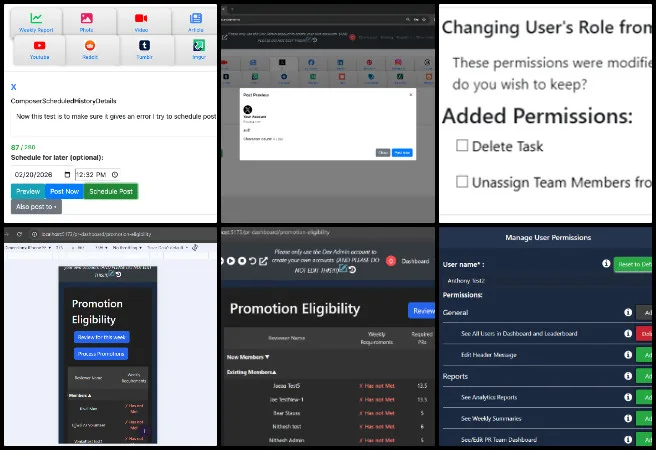
The Lucky Star Team’s summary, covering their work on the Highest Good Network, was managed by Hemanth Sai Venkata Srinivasa Kumar Nidamanuru (Administrative Assistant) and Sohail Uddin Syed (Software Engineer). The team includes contributions from Abhinav Tharamel Baiju (Software Engineer), Aryan Rachala (Software Engineer), Chirag Bellara (Software Engineer), Shravya Kudlu (Software Development Engineer), Veda Bellam (Software Engineer), Venkataramanan Venkateswaran (Software Engineer), and Vinay Krishna Murthy (Software Engineer). Their work supports One Community’s mission of building people-care eco-communities through cross-functional software development and ongoing system improvements.
This week, Abhinav worked on Phase 6 of the Kitchen Inventory Management project by developing backend API endpoints to support the calendar feature. He created an endpoint that retrieves events across the Garden, Orchard, Animals, and Kitchen modules based on selected month and year parameters, with a default option that returns current month data when no module filter is applied. He also implemented a module-specific filtering endpoint to return events within the given timeframe. The endpoints retrieve relevant activity types for each module, including planting, harvesting, culling, and processing events, enhancing cross-module visibility and strengthening coordinated system operations that support people-care eco-communities.
Aryan worked on Phase 2 of improving form guidance and validation messaging for the HGN Software Development project. He standardized visual indicators for required fields, including consistent asterisk placement and accessible color contrast. He implemented inline helper text within the Equipment Update form and refined front-end validation logic to display clear error messages when required fields are incomplete or when users attempt to navigate away without valid input. He adjusted styling, spacing, and alignment to maintain layout consistency and verified accessibility compliance and cross-browser functionality. These improvements strengthen user interaction standards and reinforce structured system practices that advance people-care eco-communities.
Chirag reviewed recent updates and opened a pull request to address the event card navigation issue. After discussing next steps with Jae, he created a new task to resolve the static registration screen bug. He implemented layout adjustments to correct event card alignment and refine the Activities grid interface. He also began adding logic to restrict registration for past events on the Calendar page and continues refining that functionality. These updates improve event workflow structure and platform coordination that contribute to people-care eco-communities.
Shravya worked on merging PR 4049 and PR 3926. For PR 4049, she addressed review feedback, fixed reported issues, and aligned the updates with the development branch. For PR 3926, she resolved merge conflicts across multiple files because the branch was created during a large CSS migration. To support the integration, she transferred her changes to a new branch and then applied the updated work back onto the current branch to stabilize it. She also worked on bugfix branch 4335 by reviewing 22 files and replacing mock data in a related file as part of a refactor that improves platform reliability and code consistency within people-care eco-communities, with some styling updates still pending.
Sohail resolved an issue where the Role Distribution chart displayed incomplete role data even though multiple roles existed in the system. He identified that the getRoleDistributionStats function in overviewReportHelper.js was filtering users by createdDate, which limited counts to users created within a selected time range and excluded roles without recent entries. He updated the buildMatch helper logic to remove the createdDate condition so the function now returns all active users while retaining date parameters for backward compatibility. He also added inline documentation to clarify the revised behavior, improving reporting accuracy and ensuring role distribution reflects organizational data across people-care eco-communities.
Veda worked on updates within the HGN Software Development project across the Listing and Bidding Dashboard and the PR Admin Dashboard. She created a donut chart titled Sentiment Breakdown and resolved Vite configuration issues by fixing errors and pushing updated changes for review. She synced with the latest development branch multiple times to remain aligned with ongoing updates and resolved merge conflicts related to earlier work. She continued development of the line chart titled Cancellation Impact on Vacancy by addressing integration issues after branch updates. She also converted CSS files to module-based CSS within the jobanalytics directory and resolved related configuration conflicts while preparing the pull request for review, improving dashboard consistency and data visibility in support of people-care eco-communities.
Venkataramanan handled several frontend corrections, interface adjustments, and reliability improvements across the HighestGoodNetworkApp and HGNRest repositories. He updated the dashboard summary background styling, removed a duplicate copy-to-clipboard icon, and corrected alignment issues for the “Show All,” “Ready for Review,” and “Submit for Review” buttons. He fixed the red checkbox interaction issue in Tasks and Timelogs, adjusted summary text alignment, refined timelog icon formatting, and corrected task name placement along with “Add Intangible Time” formatting. He also resolved leaderboard info icon text persistence through coordinated frontend and backend changes and addressed SonarQube reliability findings that were preventing merges, improving overall platform consistency across people-care eco-communities.
Vinay worked on resolving merge conflicts and failing tests for PRs #4526, #4475, #4399, #4543, #4545, and #4392 in the HighestGoodNetworkApp repository. The PRs were approved and pending merge, and he focused on pulling the latest code from the main branch, rebasing each branch, and addressing conflicts caused by recent updates. He fixed test failures to ensure continuous integration checks passed and validated that updated dependencies, shared components, and recent layout changes did not introduce regressions. He re-ran local and pipeline tests for each branch and notified maintainers after confirming that the PRs were ready for merge, reinforcing code reliability and coordinated development practices that strengthen people-care eco-communities. See the Highest Good Society and Highest Good Network pages to learn more about how this work supports people-care eco-communities. See the collage below highlighting the team’s work for the week.

MOONFALL SOFTWARE DEVELOPMENT TEAM
The Moonfall Team’s summary, which covers their work on the Highest Good Network, was managed by Uha Kruthi (Software Engineer) and includes Aayush Shetty (Software Engineer), Alisha Walunj (Software Engineer), Mani Shashank Marneni (Software Engineer), Sai Teja Kaasoju (Software Engineer), and Sudheesh Thuralkalmakki Dharmappa Gowda (Full Stack Developer). Their efforts support One Community by advancing the mission of people-care eco-communities through open-source collaboration, ecologically responsible innovation, and holistic global progress.
This week, Uha enhanced the interpretability and usability of the Most Susceptible Tools Chart in the BM Dashboard by implementing high-contrast hover tooltips for exact percentage visibility, adding quick-sort and Top N filters, introducing contextual info tooltips, applying adaptive font scaling, and ensuring accessibility consistency across light and dark themes. Sudheesh improved hover tooltip visibility on the Project Risk Graph in dark mode, resolved a Student Profile View visibility issue by correcting version control commits, fixed dark mode styling on the Supplier Performance Chart while addressing merge conflicts, reopened a structured pull request for clearer review of the risk graph enhancement, and integrated column-specific tooltips on the Daily Equipment Log page to strengthen user guidance. This work contributes to people-care eco-communities by strengthening the reliability, maintainability, and reuse of shared open-source infrastructure.
Alisha resolved the “Source of Applicants – 403 Forbidden Error” by identifying missing backend integration, updating the roles dropdown behavior, modifying the useEffect hook for proper data retrieval, configuring backend routes, and implementing reducers and constants for accurate state management. Aayush restored summary logging functionality by identifying backend submission failures across environments and implementing fixes, and continued Phase 3 development by building an Event Details popup on the Activity List page for detailed item interaction. These refinements improve reuse and accessibility, supporting people-care eco-communities.
Mani implemented a dashboard UI enhancement by constraining event titles to a single line with ellipsis, integrating hover tooltips for full title visibility, standardizing card dimensions within the grid layout, and validating behavior across browsers. Sai implemented the interactWithPauseUserButton permission across frontend and backend systems, updated conditional rendering and unit tests, resolved backend runtime errors caused by missing lifecycle email helper functions, rebuilt the backend to reflect updates, validated pause and resume workflows end-to-end, and prepared the changes for pull request submission to the development branch. Visit the Highest Good Society and Highest Good Network pages for more on how this work supports people-care eco-communities through open-source development and globally accessible resources. The collage below demonstrates the team’s work and achievements for the week.

REACTONAUTS SOFTWARE DEVELOPMENT TEAM
The Reactonauts team summary was managed by Diya Wadhwani (Software Developer) and Divanshu Bakshi (Product Manager), and it includes Aseem Deshmukh (Software Developer), Namitha Vijaykumar Pawar (Software Engineer), Sayali Sable (Software Engineer), Sri Satya Venkatasai Siri Sudheeksha Vavila (Software Engineer), and Suparshwa Patil (Software Engineer). This week, Aseem worked on updates related to PR 4354 and PR 4546, adding a missing chart component after a merge from the development branch for PR 4354 and creating a new branch associated with PR 4880 for PR 4546 that contained reverted changes from development and incorporated code from the original pull request. While pushing updates to github, he encountered duplicate key warnings related to the “unassign team members from tasks” element and made code adjustments to address the non-unique child component keys, though the warning persisted. He ensured the updates aligned with people-care eco-communities standards by maintaining system reliability for users and supporting stable feature enhancements.
Diya updated infringement sorting logic so the oldest infringement appears first and the latest appears last and raised PR #2053. She investigated a slack invite failure from the user profile page caused by a missing token error by tracing it to an incorrect controller mapping, coordinated to obtain required configuration details, rerouted the API to the slack controller, added the required workspace url configuration, verified the fix locally, and raised PR #2071. She also completed Reactonauts team management tasks by reviewing weekly summaries and related artifacts, compiling selected team images, moderating the team meeting, and posting a recap and follow-ups in slack, contributing to people-care eco-communities through improved collaboration workflows and structured communication.
Namitha addressed a UI/UX discrepancy on the “all events” page involving misalignment between the search filters and events cards sections by comparing the implementation against figma designs, analyzing layout structure, margin, padding, and flex and grid properties, identifying spacing and container constraint differences, and updating CSS classes and layout properties to remove excess vertical gaps and align both sections according to specifications. These improvements enhanced usability in alignment with people-care eco-communities expectations.
Sayali worked on eight tasks and pull requests for the HGN platform, including implementing bulk actions for managers with checkbox selection, a bulk action bar, confirmation modal, and redux dark mode support in PR #4887. She fixed permission, display, dark mode, and UX issues in the user state indicator task and resolved sonarcloud issues in frontend PR #4899 and backend PR #2074. She addressed quality gate failures in PRs #4907 and #4908 to unblock PR #4906, resolved a failing unit test and yarn.lock merge conflict in PR #4909, corrected a broken suggestion link in PR #4835, implemented task start date autofill in PR #4910, and resolved sonarcloud blockers in PR #4911. These updates strengthened platform stability and security in alignment with people-care eco-communities standards.
Sudheeksha logged 20 hours working on HGN software development tasks, focusing on the HGN questionnaire dashboard backend display user skill radar chart feature, resolving pull request conflicts, and addressing API-related errors in the phase 4 hours logging system, including POST request issues with the student tasks URL endpoint. Suparshwa resolved frontend code errors, improved user interface stability, fixed component functionality issues, configured CORS for cross-domain resource control, and integrated zod for schema validation to reduce security vulnerabilities. These enhancements contributed to a secure platform environment aligned with people-care eco-communities principles. Below is the collage showcasing the Reactonauts team’s work for the week.
SKYE SOFTWARE DEVELOPMENT TEAM
The Skye Team’s summary, covering their work on the Highest Good Network, was managed by Sayantan Paul (Frontend Tester and Software Team Administrator) and Anthony Weathers (Software Engineer). The team includes Marcus Yi (Software Engineer) and Swathi Angadi (Software Engineer). The Highest Good Network software is committed to designing people-care eco-communities by objectively tracking and managing progress across social architecture, construction, production, and maintenance processes, utilizing transparent, scalable systems that enhance accountability, coordination, and resilient ecosystems.
This week, Marcus finalized the OAuth implementation for X, completing the authorization flow and ensuring secure handling of access and refresh tokens. He refactored the posting service to improve modularity by separating provider-specific logic from the core posting workflow, enabling easier extension to additional platforms. He added unit tests for token exchange and posting logic, along with integration tests covering the end-to-end authentication and post execution flow. He also improved error handling across the service, addressing scenarios such as expired tokens, invalid authorization responses, and API rate limits, and implemented token refresh logic to maintain session continuity. This progress reflects continued momentum in shaping people-care eco-communities through open, collaborative development.
Swathi worked on implementing Dark Mode for the PR Team Analytics Dashboard and improved the page responsiveness to ensure consistent behavior across different screen sizes. She incorporated CSS Module styling within JSX to improve code organization and maintainability, remedied a bug that prevented navigation to the summary section when a reviewer’s name was clicked a second time and initiated a pull request for these changes. Swathi continued working on resolving merge conflicts and improving code coverage to address SonarQube issues related to the Materials and Consumable Page pull request. This effort acts as a catalyst in cultivating people-care eco-communities through consistent, actionable development practices.
Anthony confirmed that the backend PR originally created for PR#3917 was no longer necessary, as the confirmation modal functionality had already been implemented, rendering the backend changes redundant. On the frontend, he added conditional text to indicate whether the selected role matched the user’s current role or to display the role from which the user would be changed. He also implemented an info modal with explanatory text and planned to refine its placement and styling to ensure consistency across different screen sizes. Further, he responded to a review comment on PR#3600, addressed one of the raised points, and noted that certain issues were reproducible on the development testing site. For a separate dark mode concern, Anthony identified a partial workaround and proceeded with evaluating alternative methods to achieve a more complete resolution. By addressing these challenges, the Skye team’s work plays a significant role in designing people-care eco-communities by strengthening scalable, transparent systems within the broader Highest Good Network (HGN) infrastructure. See the Highest Good Society and Highest Good Network pages to learn more about how designing people-care eco-communities is central to One Community’s goals, demonstrated through transparent, collaborative innovation within the Highest Good Network open source hub. See the collage below for the team’s work.
SOFTWARE PR REVIEW TEAM A-N
The PR Review Team’s summary for members with names starting A–N, managed by Neeharika Kamireddy (Data Analyst), highlights their contributions to the Highest Good Network software. This platform forms the foundation for measuring our results in designing people-care eco-communities. Active team members included Abdelmounaim Lallouache (Software Developer), Carl Bebli (Software Developer), Julia Ha (Software Engineer), and Nathan Hoffman (Software Engineer). They supported the project by reviewing all pull requests shared this week. Learn more about how the Highest Good Network tracks progress toward designing people-care eco-communities in the Highest Good Network open source hub. The collage below showcases a compilation of this team’s work.

SOFTWARE PR REVIEW TEAM O-Z
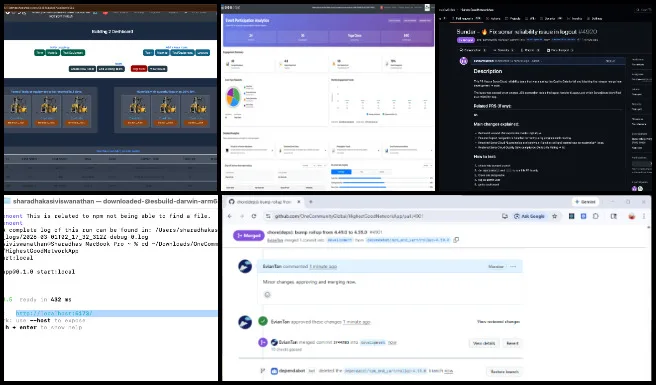
The PR Review Team’s summary for members with names starting with O–Z was managed by Shameera Musthafa (Data Analyst). The Highest Good Network is a foundation for measuring our results in designing people-care eco-communities. This week’s active members of this team were Rohan Rastogi (Software Engineer), Sundar Machani (Software Engineer), Sharadha Kasiviswanathan (Software Engineer), Vishnupriya Swaminathan (Software Engineer) and Yiyun Tan (Software Engineer). They reviewed all the Highest Good Network PRs (Pull Requests) shared in this week’s update. Learn more about how the Highest Good Network open-source hub measures progress towards our goal of designing people-care eco-communities. The collage below shows a compilation of the work from this team.
AND WE PRODUCED THIS WEEKLY UPDATES BLOG – CLICK HERE TO SUBSCRIBE
FOLLOW ONE COMMUNITY’S PROGRESS (click icons for our pages)
INVESTOR PAGES
OVERVIEW | LOCATION | FUNDING
GET INVOLVED
DONATE | WAYS ANYONE CAN HELP | MEMBERSHIP
CLICK HERE FOR ALL PAST UPDATES
Category: Basics of One Community, Community, One Community Tags: Highest Good housing, food forest, green living, resource based economy, Highest Good food, sustainable civilization building, permaculture, RBE, Highest Good society, creating global solutions, One Community Update, addressing climate change, Education for Life update, creating a new world paradigm, open source, grass roots sustainability, open source food, the betterment of society, non profit, self-sufficiency, ecological living, creating holistic transformational change, sustainable living, radical sustainability, solutions that create solutions, regenerative world building, open source sustainability, open source housing, One Community progress, Duplicable City Center Hub, global sustainability, open source design, Education For Life progress, better is possible, for the highest good of all, People-care Eco-communities, transforming the global environment, solution based thinking, sustainable community building, Earthbag Village, Highest Good education, one community, Permaculture Communities
 One Community