One Community
Global Game-changing Collaboratives – One Community Weekly Progress Update #694
At One Community, global game-changing collaboratives means open sourcing and free sharing sustainable solutions for food, energy, housing, education, economics, and social architecture that support fulfilled living and global stewardship practices. Created by an all-volunteer team for “The Highest Good of All,” we are evolving sustainability through a self-replicating model designed to create a global network of teacher/demonstration hubs dedicated to regenerating our planet and creating a world that works for everyone.
- Here’s our project overview
- Here’s our world-change methodology
- Here’s how this becomes self-replicating
- Here’s how we are open source and free-sharing all the do-it-yourself designs
OUR MAIN OPEN SOURCE HUBS
Click on each icon to be taken to the corresponding Highest Good hub page.
One Community’s physical location will forward this movement as the first of many self-replicating teacher/demonstration communities, villages, and cities to be built around the world. This is the July 6, 2026 edition (694) of our weekly progress update detailing our team’s development and accomplishments:
Global Game-changing Collaboratives
One Community Progress Update #694

DONATE | COLLABORATE | HELP WITH LARGE-SCALE FUNDING
CLICK HERE IF YOU’D LIKE TO RECEIVE AN EMAIL EACH WEEK WHEN WE RELEASE A NEW UPDATE
YOU CAN ALSO JOIN US THROUGH SOCIAL MEDIA


ONE COMMUNITY WEEKLY UPDATE DETAILS
HIGHEST GOOD HOUSING PROGRESS
One Community is developing global game-changing collaboratives through Highest Good housing that is artistic and beautiful, more affordable, more space efficient, lasts longer, DIY buildable, and constructed with healthy and sustainable materials:
- Learn about: Our Upcoming Crowdfunding Campaign
- Learn about the different village models: 7 Sustainable Village Models
- Visit the open source portals for the first two: Earthbag Village OS Hub | Straw Bale Village OS Hub
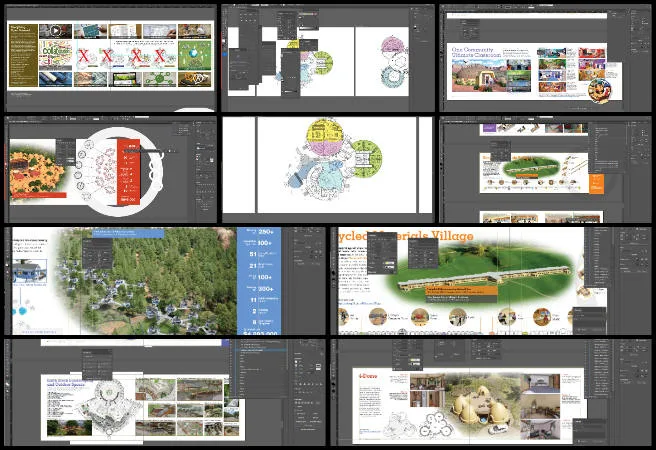
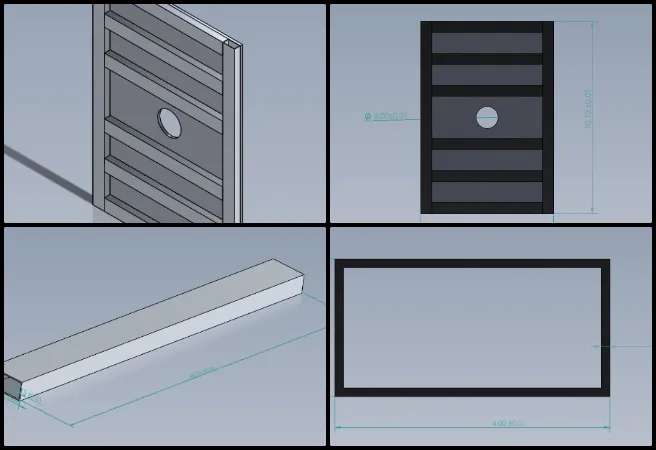
This week, Ayub Muhammad (Designer) updated the text and precise measurements within the designated boxes to ensure data accuracy for the 7 Sustainable Villag overview book. Additionally, he integrated correctly sized images into the layout to improve visual consistency and presentation. These updates enhanced the clarity of the documentation, ensuring that all specifications are accurate, easy to understand, and ready for the next phase of development. This work supports global game-changing collaboratives by strengthening the quality and usability of open-source design documentation. Below, you’ll find some images of this work.
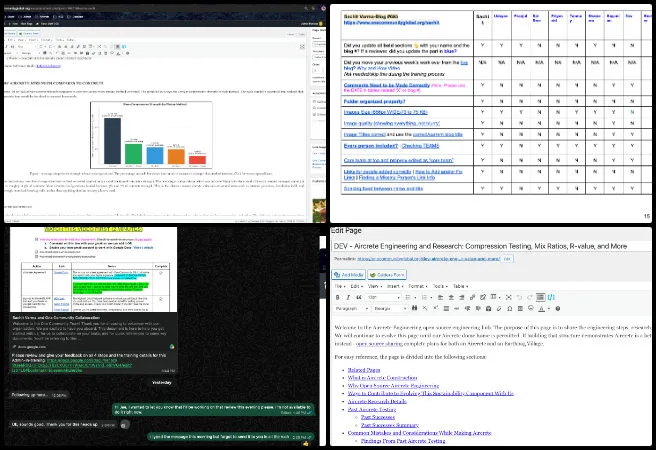
Devendranath Chowdary Maganti (Data Analyst) updated the Aircrete documentation by converting the complete report into a webpage and incorporating the latest content, revisions, and project updates to improve readability and organization. He ensured that the webpage reflected the current version of the documentation and made formatting adjustments to present the information clearly for online use. Devendranath also reviewed practice blogs submitted by fellow team members as part of the training process, provided feedback to help align their work with project guidelines, and supported the onboarding process by addressing review comments and answering questions related to the training tasks. His efforts support global game-changing collaboratives by making project knowledge more accessible while strengthening collaboration and volunteer training. Below, you’ll find some images of this work.
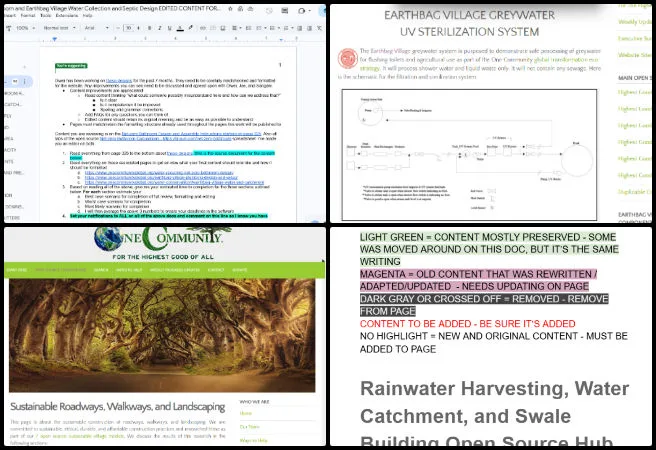
Sagar Chavan (Transportation Engineer) continued working on the Net-zero Bathroom and Earthbag Village Water Collection and Septic Design edited content. He reviewed the project instructions, source document, and related One Community reference pages to better understand the required editing, formatting, and website publishing expectations. Sagar reviewed and improved the report draft by correcting report issues, refining unclear sections, improving wording, and enhancing the overall organization and readability. He also reviewed the color-coding legend to determine which content needed to be preserved, rewritten, removed, or newly added. In addition, Sagar reviewed related Water Collection, Septic Design, Greywater, and Sustainable Roadways and Walkways reference pages to ensure that the edited report remained consistent with the overall One Community design approach. This work supports global game-changing collaboratives by improving the clarity, consistency, and accessibility of open-source sustainable water infrastructure documentation and moving the report closer to publication. See below for some of the pictures related to this work.
DUPLICABLE CITY CENTER PROGRESS
One Community is developing global game-changing collaboratives through a Duplicable and Sustainable City Center that is LEED Platinum certified/Sustainable, can feed 200 people at a time, provide laundry for over 300 people, is beautiful, spacious, and saves resources, money, and space:
- Learn about this building, its function and global game-changing collaboratives: Duplicable City Center Open Source Hub
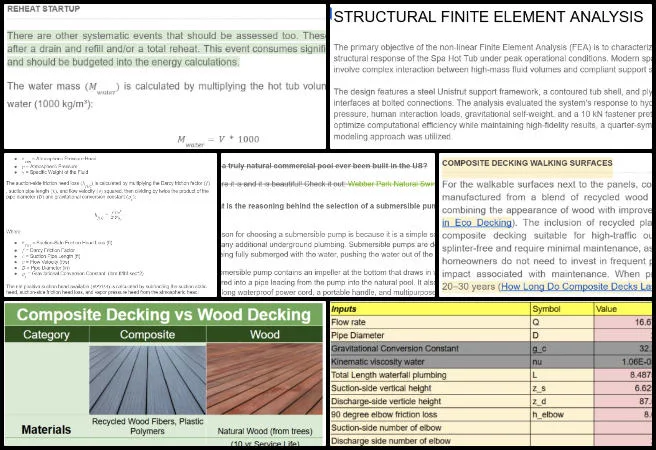
This week, Bevan Chiu (Mechanical Engineer) continued his work finishing the City Center Eco-spa Designs. He worked on the Natural Pool and Spa report based on team feedback. He simplified the table of contents, added mini tables of contents to each report section, converted equation images into written equations, updated the color coding of each calculator, and corrected report links. Bevan also created a comparison table evaluating composite and wood decking, developed an FAQ entry about submersible pumps, and transferred and reworded the content to improve clarity and simplify the information for readers. This open source Duplicable City Center project focuses on global game-changing collaboratives. For more details, refer to the image below.
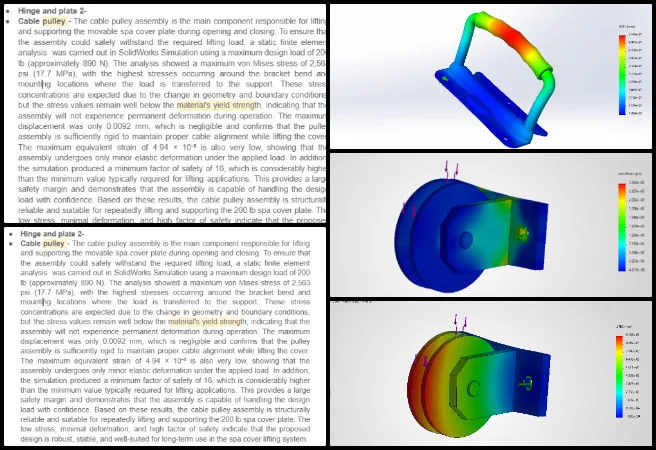
Shivarama Krishna Revanuru (Mechanical Engineer) continued working on the Duplicable City Center design. He focused on the report write-up for the finite element analysis (FEA) of the spa cover and incorporated edits suggested by JAE and team members. Shivarama proofread teammates’ sections, identified gaps, and made revisions where needed to improve consistency and completeness across the report. He also continued work on the finite element analysis of the weight loading on Plate 2 to support the structural evaluation of the spa cover design. This open source Duplicable City Center project is transforming the global game-changing collaboratives. The images below illustrate aspects of this work.
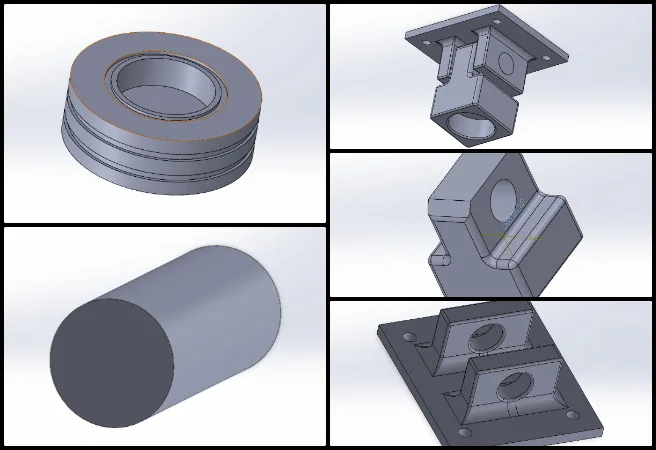
Nidish Reddy Koppula (Mechanical Engineer) continued working on the Duplicable City Center design, working on the Open Source Elevator CAD/FEA task for the 25-hour missing structural and mechanical components work block. He reviewed the available project materials, including research notes, cost analysis/BOM, handoff documentation, and elevator assembly files, then set up a clean working assembly from the available SolidWorks components so the assigned missing parts could be placed and checked in the current CAD environment. He used baseline components, including the shaft frame, elevator cabin frame, guide rails, base plate, landing frame, and door frame, while documenting interfaces that may require clarification before later FEA work, furthering One Community’s mission of global game-changing collaboratives.
Nidish also documented that the current model is being treated as a concept-level CAD/FEA assembly, with hydraulic jack details, cab-to-guide-rail interfaces, and final load paths requiring additional design guidance. He completed Model No. 13, the piston rod end and hydraulic jack-to-cab interface component, developing a rod-eye, clevis bracket, and pin connection concept with preliminary hand calculations for pin double shear and bearing stress, and started Model No. 15 by modeling the piston-end geometry. This open source Duplicable City Center project advances global game-changing collaboratives. For more details, refer to the image below.
Sri Vidya Sai Thumu (Mechanical Design Engineer) continued developing the City Center Eco-spa Designs. She reviewed and edited the City Center Hot Tub Design document, focusing on the plumbing access panel, structural FEA, custom cover, and flooring sections. Grammar and formatting were corrected, and comments were added to improve clarity, documentation, calculations, visual presentation, and DIY replicability. Work also continued on the spa tub flooring design in SOLIDWORKS 2025 by recreating the structural model because the original assembly was incompatible with the available software version. The floor panel was created, aluminum joists were modeled as separate parts, and the structural support frame was assembled using two long joists and six short joists. Project requirements for a non-welded, corrosion-resistant aluminum framing system were reviewed, and coordination with the project lead was completed to obtain a STEP file for continuing the design. This open source Duplicable City Center project focused on the global game-changing collaboratives. For more details, refer to the image below.
HIGHEST GOOD FOOD PROGRESS
One Community is developing global game-changing collaboratives through Highest Good food that is more diverse, more nutritious, locally grown and sustainable, and part of our open source botanical garden model to support and share bio-diversity:
- Learn about the structures and global game-changing collaboratives: Hoop House Hub | Aquapini & Walipini Open Source Hub
- See what we’ll be growing: Gardens & Hoop Houses | Large-scale Structures | Food Forest | TA
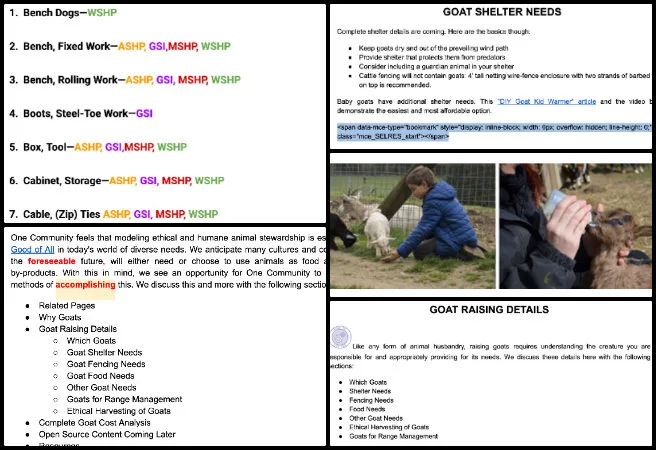
This week, the core team continued working on the Master Tools, Equipment, and Materials/Supplies List for the Large-scale Garden, Botanical Garden, and other Highest Good Food components, focusing on reviewing the Master Tools, Equipment, and Materials/Supplies documentation by performing edits and updating individual entity narratives. Work progressed on the shop compound layout and enlargement, and a review of the Goat documentation sourced from the website commenced. Additionally, the installation of corner post fencing by Pete B. was reviewed. Their efforts contribute to One Community’s mission of fostering global game-changing collaboratives discussion through open-source collaboration, ecologically responsible innovation, and a focus on long-term global development. The collage below portrays the team’s efforts and achievements for the week.
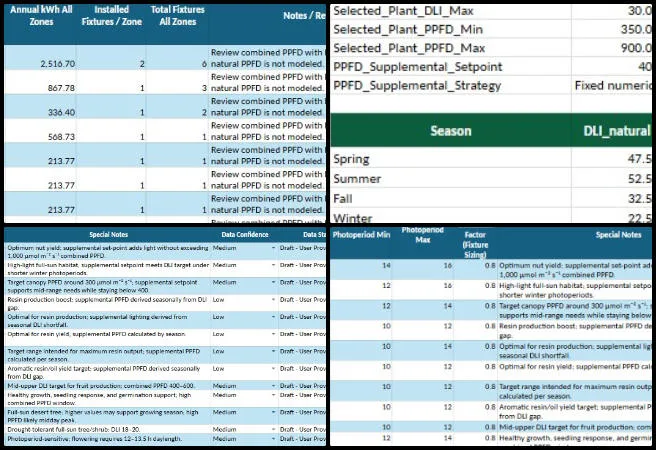
Jay Nair (BIM Designer) continued working on the Aquapini and Walipini Planting and Harvesting documents. He worked on the greenhouse lighting energy calculator by reviewing the data flow between the Master Plant Library, Multi-Zone Calculator, and Dashboard. The work focused on ensuring that plant data, lighting parameters, and calculation values are linked appropriately rather than manually entered. Jay also identified which fields should remain editable, including geometry, fixture selection, seasonal operating hours, far-red settings, and custom zone areas, while continuing to refine the overall calculator structure and project requirements. These updates improve the stability and adaptability of shared systems, supporting the broader goal of the global game-changing collaboratives. See the collage below portraying the work done this week.
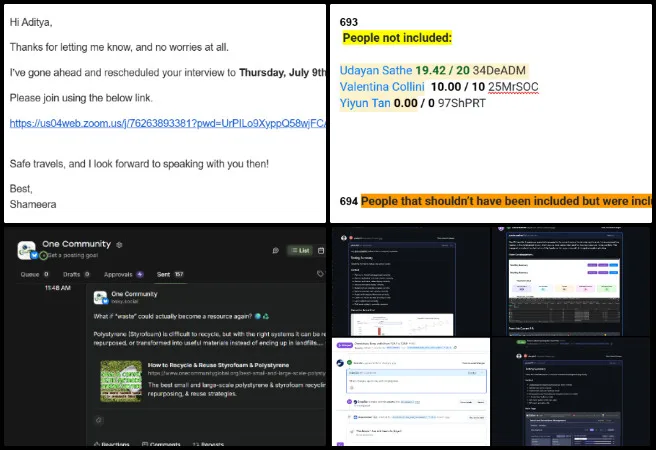
Shameera Musthafa (Data Analyst) continued supporting the OC Administration and the PR Review Team. She organized and categorized project images, created visual collages, and finalized blog-related content as part of PR review coordination, ensuring visual and written materials were properly curated and documented. She contributed to the Highest Good Energy report pages and related visualizations. Shameera managed the One Community Bluesky social media account by creating and publishing posts to share project updates and support outreach and engagement. She supported the hiring process by conducting interviews and evaluating candidates. She also conducted end-to-end testing of the PR Review Team Admin Dashboard, validated key workflows, identified issues, and documented results. This work plays a key role in One Community’s mission of global game-changing collaboratives. See below for images showcasing her work.
HIGHEST GOOD ENERGY PROGRESS
One Community is developing global game-changing collaboratives through Highest Good energy that is more sustainable, resilient, supports self-sufficiency and includes solar, wind, hydro and more:
- Learn about the open source sustainable-energy foundations: Solar, Hydro, and Wind
- Explore our research into the most sustainable products and companies for saving water and energy: Insulation, Eco-laundry, Lightbulbs and Light Bulb Companies, Doors and Door Companies, Windows and Window Companies, Toilets, Faucets and Faucet Accessories, Urinals, and more.
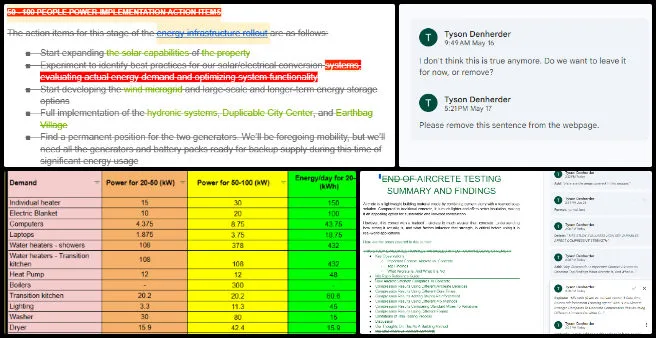
This week, the core team continued contributing to the Highest Good Energy initiative. They reviewed the hot tub solar system design document and provided feedback through both a recorded video and comments on the page. In addition, they completed the infrastructure cost analysis spreadsheets for Step 3 of the Highest Good Food rollout, as well as several individual sections for Step 2, including spreadsheets for chickens, goats, and the food forest. This work contributes to global game-changing collaboratives, as shown in the collage below.
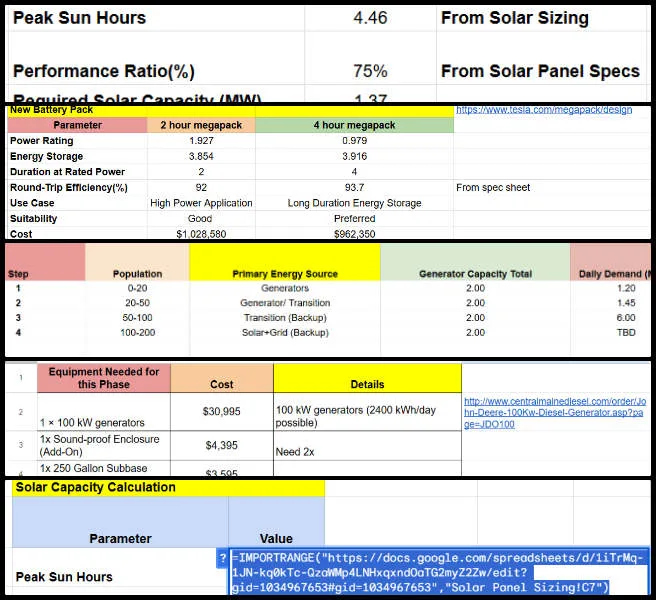
Rohan Pariakar (Operations and Supply Chain Analyst) continued working for the Highest Good Energy initiative, contributing to global game-changing collaboratives. He enhanced the community energy modeling framework by restructuring the equipment-level energy database, refining appliance specifications, operating schedules, manufacturer references, and establishing standardized equipment classifications using dropdown validation and automated conditional formatting. He reconciled inconsistencies between hourly load profiles, equipment summaries, and phase-level energy calculations, identified and corrected missing spreadsheet formulas that reduced projected diesel fuel consumption by approximately 4.3 gallons per day, and synchronized calculations across multiple worksheets using linked references.
Rohan also developed and validated the Phase 3 energy demand model by scaling component-level loads, created category-level summaries incorporating Equivalent Full-Load Hours, and evaluated equipment grouping methodologies to improve engineering analysis. He also reviewed generator operating strategies, battery storage integration, refueling capacity requirements, and photovoltaic system sizing, contributing to global game-changing collaboratives. See the collage below for highlights of this work.
HIGHEST GOOD EDUCATION PROGRESS
One Community is developing global game-changing collaboratives through Highest Good education that is for all ages, applicable in any environment, adaptable to individual needs, far exceeds traditional education standards, and more fun for both the teachers and the students. This component of One Community is about 95% complete with only the Open Source School Licensing and Ultimate Classroom construction and assembly details remaining to be finished. We’ll report on the final two elements to be finished as we develop them.
With over 8 years of work invested in the process, the sections below are all complete until we move onto the property and continue the development and open sourcing process with teachers and students – a development process that is built directly into the structure of the education program and everything else we’re creating too:
- Program Overview: Education Open Source Hub
- How the components work together in designing human orchestrated eco-abundance: How to use the Education for Life Program
- Lesson Plans for Life – Lesson Plans How-to
- Foundations of Outstanding Leaders, Teachers, and Communicators
- Curriculum for Life
- Teaching Strategies for Life
- Learning Tools and Toys for Life
- Evaluation and Evolution
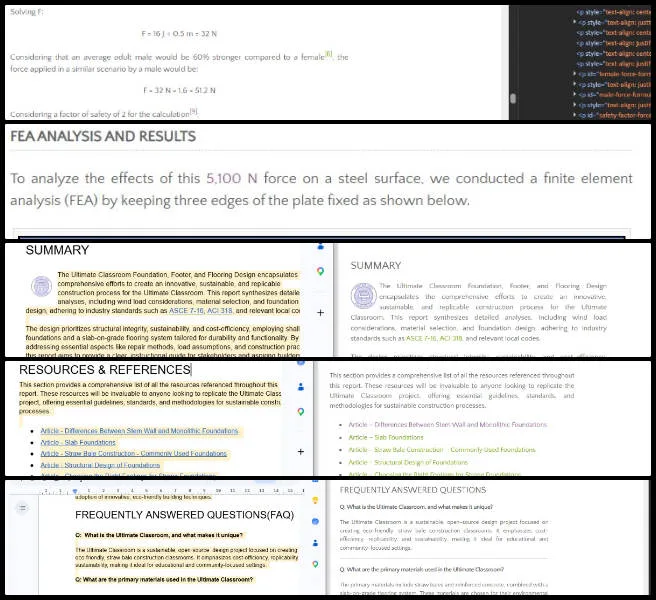
Rajeshwari Bhirud (Software Engineer) continued contributing to the Highest Good Education initiative as a Web Designer, contributing to global game-changing collaboratives by continuing the Ultimate Classroom Footer, Foundation, and Flooring Design and Engineering Report webpage. She completed and formatted multiple sections, including What Is the Ultimate Classroom, Why Open Source, Project Location, Energy Efficiency, Objectives, Regulatory Standards, Foundation Types, Footers, Regulatory Compliance, Flooring Design, Floor Insulation, AutoCAD Plans, Step-by-Step Tutorial, Safety Measures, Site Preparation, and Formwork/Reinforcement. Rajeshwari maintained proper WordPress blog formatting, added anchor links, structured headings, justified content, optimized SEO keywords, updated image alt text, and ensured images were properly placed and aligned. As SWE Admin for OC Administration, Rajeshwari also managed Blog #693 updates for the Binary Brigade and Dev Dynasty teams, further advancing global game-changing collaboratives. She reviewed team summaries, added comments in Google Docs, identified missing information, uploaded images, updated collages, and supported final review tracking for weekly progress documentation. See the collage below for highlights of this work.
HIGHEST GOOD SOCIETY PROGRESS
One Community is developing global game-changing collaboratives through a Highest Good society approach to living that is founded on fulfilled living, the study of meeting human needs, Community, and making a difference in the world:
- Read the Highest Good society overview: Highest Good Society
- Learn about the model for fulfilled living and sharing: A Day in the Life
- Learn about the 4 economic models: RBE | For-profit | Non-profit | Entrepreneurship
- Learn about our open source community collaboration and management software: The Highest Good Network
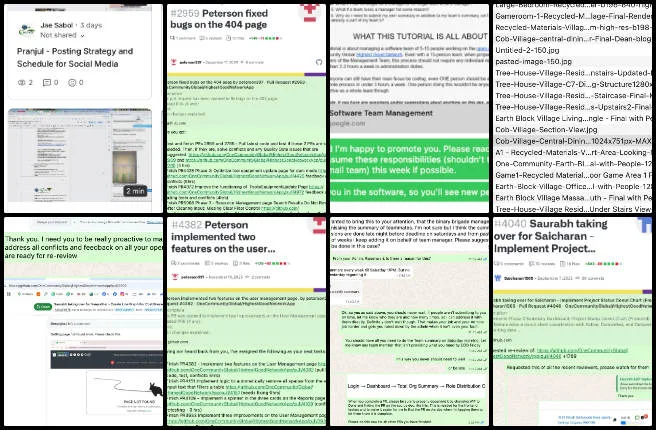
This week, the core team completed over 42 hours managing volunteer work reviews, handling emails, overseeing social media accounts, supporting web development, and identifying and integrating bug fixes for the Highest Good Network. They also interviewed and onboarded new volunteer team members. Additionally, they produced and integrated the video above, which highlights global game-changing collaboratives and serves as a foundational element of One Community’s broader mission. The following images showcase highlights of this work.
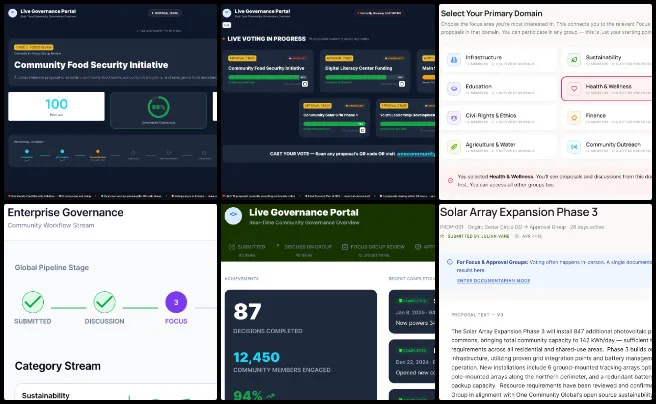
Pooja Kulkarni (UI/UX Designer) continued working on the Live Governance Portal public TV display mockup for One Community, focusing on how governance progress can be shown clearly on a wide screen for public viewing, contributing to global game-changing collaboratives. Pooja created and refined dashboard layouts for different governance stages, including Submitted and Focus Review, with real-time metrics, stage navigation, urgent items, participation data, domain-based progress, QR-based discussion access, and bottom ticker updates. She also explored how the design would appear in a physical public display setting, making sure the interface feels readable, organized, and useful for community members, visitors, and leadership reviewing live governance activity. See the collage below for highlights of this work.
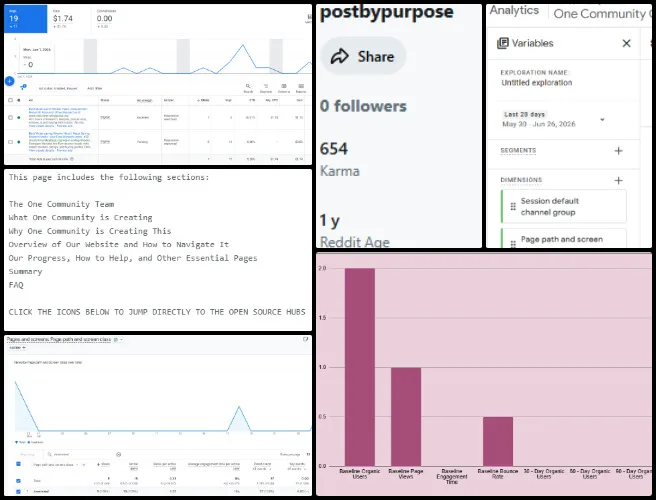
Adhya Rastogi (Business Analyst) continued contributing to the Highest Good Society team by expanding her knowledge of Google Ads bidding strategies, Google Analytics, and SEO optimization by studying training materials focused on bidding methods, website analytics, Rank Math, and blog optimization workflows to support ongoing marketing activities, contributing to global game-changing collaboratives. She continued Reddit engagement by contributing comments across relevant communities, monitoring discussion patterns, and maintaining consistent account activity through discussion-based participation. She also optimized the Highest Good Economies Google Ads campaign by updating keyword targeting, ad copy, campaign relevance, and budget allocation while reviewing campaign performance to identify factors affecting traffic.
Adhya continued end-to-end testing of the Total Organization Summary Dashboard by identifying and documenting a new bug, updating the bug tracking spreadsheet, refining the Root Cause Matrix, and organizing supporting documentation to maintain alignment between testing observations and reported issues, further advancing global game-changing collaboratives. In addition, Adhya completed SEO updates for the Overview page, documented content changes, improved SEO elements, updated the tracking spreadsheet, identified unresolved technical limitations, and shared the completed work for review and feedback. See the collage below for highlights of this work.
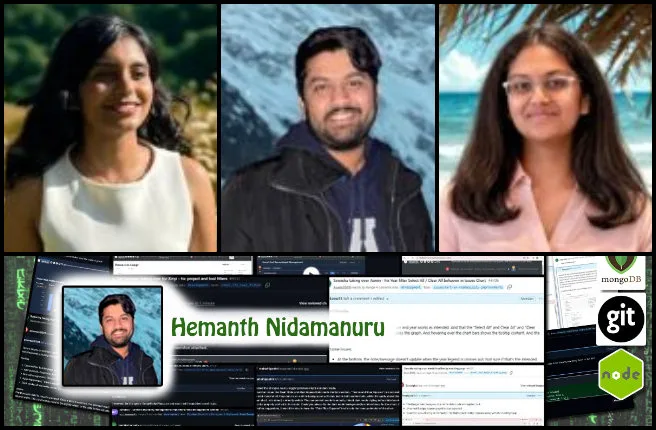
Valentina Collini (Designer) continued contributing to the Highest Good Society team by creating new biography images and announcement images for incoming volunteers, supporting global game-changing collaboratives. She also updated the website with information for new team members, ensuring that profiles and related content were properly integrated into the site. In addition, Valentina reviewed existing website content and corrected errors where needed, helping maintain the accuracy, consistency, and overall quality of the website. See the collage below for highlights of this work.
ADMINISTRATION TEAM
The Administration Team’s summary, which covers their work on the Highest Good Network, was managed by Devendranath Chowdary Maganti (Data Analyst) and includes Divanshu Bakshi (Team Admin), Leo Lishin Shiu (Software Engineer), Olawunmi “Ola” Ijisesan (Administrative and Management Support), Pranjul Garg (Business Analyst), Sai Sree Dongari (Data Analyst), Sayantan Paul (Frontend Tester and Software Team Administrator), Tanmay Nihal Harwani (Data Scientist), and Udayan Sathe (Financial Analyst). The Administration Team supports the Highest Good Network, a tool designed to track and measure progress while developing systems that contribute to developing global game-changing collaboratives. Through administrative support, documentation, testing, training, recruitment, analytics, and content management, the team helps advance this mission, aligning with One Community’s vision of building a replicable and sustainable future model.
This week, Divanshu tested and published four Mastodon updates, verified bug-related pull requests, documented action items, developed a Python script to prevent duplicate image postings, and updated the Weekly Mastodon Report using archived data. Leo reviewed weekly summaries from the 17LeDCC team, created collages, compiled the weekly blog, uploaded Facebook and Instagram data to the Social Media Dashboard, and scheduled social media posts. These testing, automation, content management, and social media coordination efforts contribute to developing global game-changing collaboratives.
Ola reviewed tasks submitted by the administration and pull request teams, updated weekly files, organized the Google Workspace to improve data management, and verified Pinterest analytics data accuracy. Pranjul monitored volunteer timelogs, identified logging errors, guided volunteers on corrections, updated system logs, scheduled Tumblr and Medium posts, gathered weekly team updates, and published the final blog on WordPress. These administrative, documentation, publishing, and data management efforts contribute to developing global game-changing collaboratives.
Sai Sree organized PR review images, created collages, finalized blog-related content, interviewed candidates, documented hiring feedback, completed frontend testing across multiple dashboard features, and reviewed Udayan’s training work. Sayantan managed administration activities including blog reviews, peer admin feedback, trainee guidance, warning tracking, and extensive HGN software testing across analytics, reporting, dashboard, and calendar modules while documenting usability issues and validating chart functionality, filtering behavior, dark mode support, and reporting accuracy. These testing, hiring, quality assurance, and administrative coordination efforts contribute to developing global game-changing collaboratives.
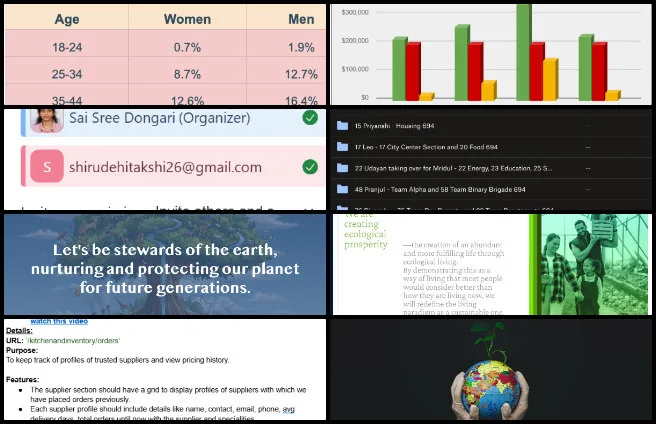
Tanmay continued bio administration by updating volunteer information, collecting missing details, merging multiple team blogs, completing SEO optimization, reviewing new admin work, managing Threads posts, updating the Social Media Master Dashboard, and maintaining volunteer tracking records. Udayan updated financial planning documents by correcting cash flow data, building Year 4 and Year 5 cash flow projections, creating quarterly revenue versus expenditure charts, analyzing health insurance cost impacts on future financial projections, and reviewing a new administrator’s training submission with detailed feedback on formatting and documentation standards. These administrative, financial planning, documentation, and coordination efforts contribute to developing global game-changing collaboratives. See the collage below for highlights of this week’s work.
HIGHEST GOOD NETWORK PROGRESS
 One Community is developing global game-changing collaboratives through open source Highest Good Network® software that is a web-based application for collaboration, time tracking, and objective data collection. The purpose of the Highest Good Network is to provide software for internal operations and external cooperation. It is being designed for global use in support of the different countries and communities replicating the One Community sustainable village models and related components.
- Learn about our open source community collaboration, management software and global game-changing collaboratives: The Highest Good Network
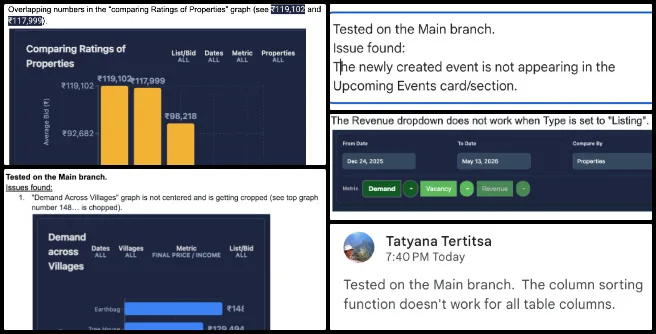
This week, the core team continued testing Highest Good Network pull requests on the Main branch, contributing to global game-changing collaboratives and confirmed that 20 pull requests were fixed. They also identified two pull requests that were not fixed during testing: Total Org Summary – Fix (PR #4777 for PR 4138) and Phase 6 – Kitchen Inventory Management – Connect the frontend of the inventory page with the backend (PR 5142 for PR 2166). See the collage below to view the team’s work.
ALPHA SOFTWARE DEVELOPMENT TEAM
The Alpha Team’s summary, covering their work on the Highest Good Network, was managed by Lin Khant Htel (Frontend Software Developer) and Pranjul Garg (Business Analyst) with a team consisting of Casstiel Pi (Software Engineer), Handika Harianto Ew Jong (Full Stack Software Developer), Sai Sandeep (Software Engineer), Som Ramnani (Junior Software Engineer) and Yingshu Wang (Software Engineer) supporting One Community’s mission of cross-functional software development and system improvements. This work advances the team’s objectives, ensuring that all completed tasks directly contribute to developing global game-changing collaboratives.
This week, Casstiel worked on updating the project summary page to improve usability. He reapplied design updates that included clear project labels, expand and collapse controls, a weekly comparison toggle, and section badges. He also fixed display errors for dark mode and mobile layouts, resolved code styling issues, and cleared up version control conflicts to keep the development branch current, showing the precision needed when developing global game-changing collaboratives.
Handika focused on both database and interface updates to build an application analytics feature. He created server endpoints to pull timeline and user role data, then used this data to build a multi-select filter for the dashboard. This setup allows users to compare system information across different teams easily. He also corrected visual bugs affecting icons in dark mode and cleaned up duplicate code logic, supporting the technical foundations required for developing global game-changing collaboratives. Sai completed updates to improve troubleshooting and filtering. He updated system access settings so the support team can view logs directly to resolve user issues faster. He also resolved interface display bugs across both light and dark display themes and repaired time-based filters so that switching between weekly, monthly, and yearly views works reliably, maximizing the efficiency of those developing global game-changing collaboratives.
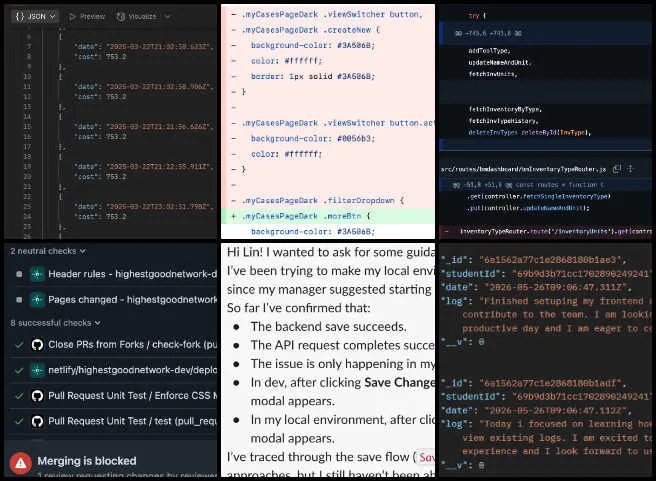
Som resolved code conflicts to fix visual layouts and page elements. He repaired an upcoming events list that had stopped showing data rows, ensuring the interface displays information correctly. He also built a new pop-up window and data flow for the kitchen and inventory page, making it seamless for users to add new items with clear form validation and helpful error messages, enhancing tools used in developing global game-changing collaboratives. Yingshu continued investigating an interface bug where updating profile hours caused unexpected page movement. She analyzed the data saving workflow, reviewed the pop-up window components, and tested the behavior across different web browsers, finding specific display differences between Chrome and Safari that will help pinpoint a solution next week. See the Highest Good Society and the Highest Good Network pages to learn more about how this work supports transforming the global sustainability discussion and developing global game-changing collaboratives. The collage below offers a visual representation of the team’s work for the week.
BINARY BRIGADE SOFTWARE DEVELOPMENT TEAM
The Team Brigade’s summary, covering their work on the Highest Good Network, was managed by Roshini Seelamsetty (Software Engineer) and Pranjul Garg (Business Analyst) with a team consisting of Amaan Syed (Volunteer Software Engineer), Mahitha Pasupuleti (Software Engineer), and Divya Sai Nagabhairu (Software Engineer). Roshini successfully coordinated the weekly summary workflow, ensuring all technical milestones align with the project’s goal of developing global game-changing collaboratives.
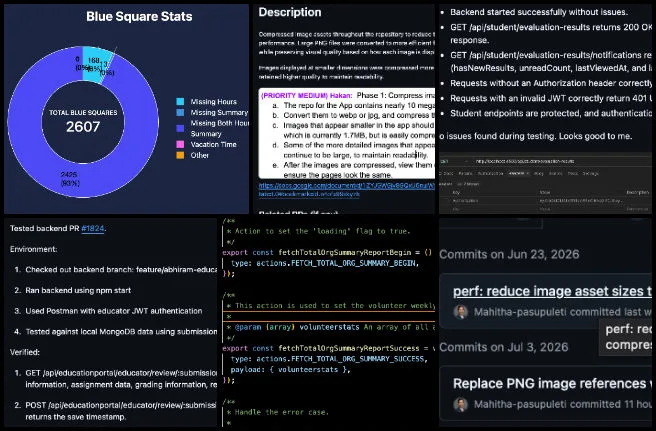
This week, Roshini managed the administrative duties for the week, examining development logs, verifying repository contributions, and auditing team media assets. This oversight maintains structural alignment across team branches, providing the steady leadership necessary when developing global game-changing collaboratives. Amaan balanced his week between cross-stack testing and interface development. He launched local environments to manually verify project charts, notification systems, and authentication flows via Postman, while also implementing profile toast notifications across light and dark modes. Additionally, Amaan aligned personal and admin link validation messaging and stabilized search state parameters within the project directory, directly advancing the interface precision required for developing global game-changing collaboratives.
Mahitha completed Phase 1 of the image optimization task by converting bulky PNG assets into streamlined WebP and JPG formats under PR #5365, significantly reducing repository size without sacrificing layout quality. She also audited the dashboard payload architecture, discovering that shifting task filtering to the backend could disrupt shared frontend states, and mapped out a server date tracking enhancement to isolate system dates from local tampering technical steps critical to developing global game-changing collaboratives. Divya overhauled the platform’s security infrastructure by replacing rigid, hardcoded permission checks with a flexible, route-based constant array. She upgraded the system’s core authorization helper to evaluate multiple permission values simultaneously, updated header navigation links, implemented an automatic access barrier on the dashboard for unauthorized users, and streamlined leaderboard logic by replacing nested conditional expressions with clean, readable role groupings, creating a reliable foundation for developing global game-changing collaboratives. The image below showcases some of the work completed.
DEV DYNASTY SOFTWARE DEVELOPMENT TEAM
The Dev Dynasty team summary, which covers their work on the Highest Good Network, was managed by Rithika Pai (Software Engineer), Divanshu Bakshi (Data Analyst), and includes Sireesha Kunchala (Software Engineer). This work supports global game-changing collaboratives by strengthening the systems, processes, and collaborative tools needed to make sustainable living more accessible and replicable worldwide.
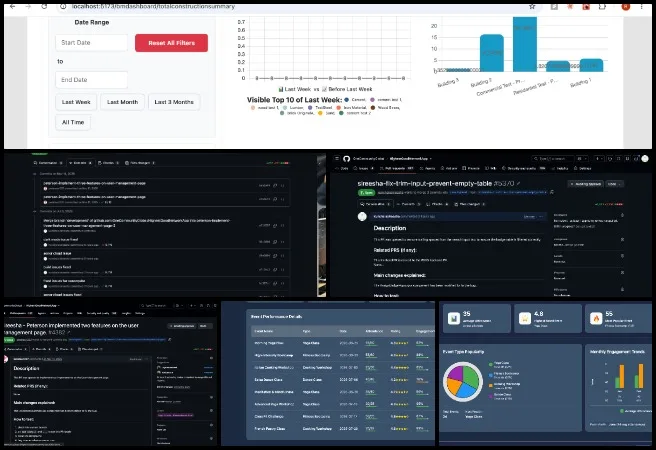
This week, Sireesha worked on HGN app development tasks and addressed multiple PRs. She merged the development branch into a feature branch, fixed a dark mode issue on a form, resolved sonarqube and sonarcloud security and code-quality flags, and corrected build errors. She also updated search input handling to remove trailing spaces and improve badge-table data filtering. These updates supported global game-changing collaboratives.
Rithika continued work on the building management dashboard by addressing reviewer feedback and resolving rebase conflicts across several PRs. For PR #4162, she rebased the event participation analytics landing page branch, resolved conflicts in participation.module.CSS, updated the engagement bar chart so both bar series use a shared maximum scale, added hover tooltips, and corrected the event performance table layout so attendance, rating, and engagement columns display correctly. For PR 4227, she removed sticky positioning from the progress bar pane to fix a layout shift in the comments and queries section and corrected the inline character-limit error message in dark mode. And for PR 4587 and backend PR 1957, Rithika fixed the material consumption grid layout, corrected dropdown selection logic for project and material type filters, updated tooltip quantity formatting to display whole numbers, improved backend fallback handling so x-axis labels do not show raw mongodb objectids for orphaned references, resolved responsive-layout empty space at mid-range screen sizes, and fixed four sonar qube duplicate CSS selector issues. These efforts support global game-changing collaboratives by enhancing clarity and accessibility.
She also rebased PR 4396 (reason of stoppage of tools), and PR 4800 (interactive open issues list) onto the latest development branch to resolve conflicts caused by upstream changes. This work supports global game-changing collaboratives by improving communication workflows and system effectiveness. To learn more about how this work supports creating a complete sustainability strategy, visit the Highest Good Society and the Highest Good Network pages. Below is the collage showcasing the Dev Dynasty team’s work for the week.
REACTONAUTS SOFTWARE DEVELOPMENT TEAM
The Reactonauts team summary, which covers their work on the Highest Good Network, was managed by Diya Wadhwani (Software Developer), Divanshu Bakshi (Data Analyst), Mahathi (Data Analyst), Abhishek Raghuraman (Software Engineer), and Amaresh Chaudhary Nara (Software Engineer), and includes Aseem Deshmukh (Software Developer). This work advances global game-changing collaboratives by improving the systems, processes, and collaborative tools that help make sustainable living more accessible and scalable worldwide.
This week, Diya fixed a blue square assignment issue in checkisnewuser by adding a missing day-of-week condition for users who started on Sunday or Monday, corrected greeting formats across nine auto-reply email templates, and raised PR #2261. She also managed Reactonauts team activities by reviewing summaries, images, and videos; verifying team work; managing meetings; recording missed time entries. She also did testing of a reported work breakdown structure navigation issue across development and production without reproducing it and documenting the blue square email system. This work helps expand global game-changing collaboratives through open-source sharing and transparency.
Mahathi analyzed requirements for production identity validation for dev account creation, reviewed related controllers, services, logs, and user-profile functionality, compared the implementation with client requirements, and created an implementation roadmap. She updated the user schema to support production-linked and legacy users, added identity-provider fields, reviewed login enforcement, audit logging, password hashing, email normalization, and immutable production-managed identity fields, and continued testing the new functionality. These updates help scale global game-changing collaboratives across teams and disciplines.
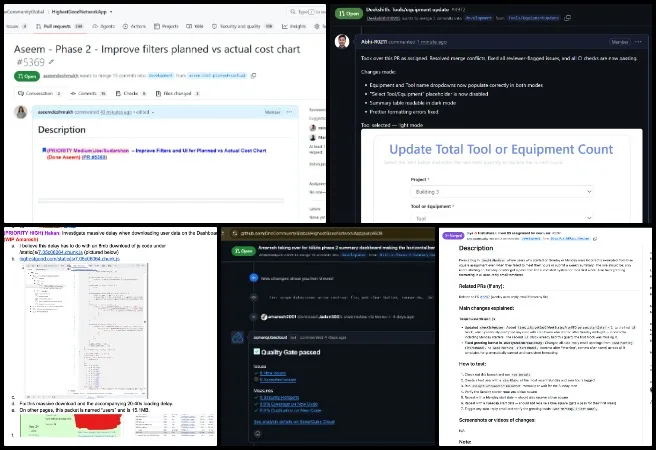
Abhishek worked on multiple HGN app frontend PRs. He resolved merge conflicts and fixed equipment dropdown behavior. He addressed dark mode readability, formatting errors, and filter reset and search functionality. Abhishek also corrected attendance calculation errors, chart and table contrast issues, accessibility violations, sonarqube code smells, and a missing CSS class on the reports people page furthering One Community’s mission of global game-changing collaboratives.
Amaresh fixed issue-tracking chart model references, date-picker contrast, and duplicate CSS file issues across frontend and backend PRs. He updated educator task-submission filters and status indicators and identified a backend merge issue and an existing badge-award regression. Amaresh also confirmed that an event popularity analytics page already existed on development and traced a dashboard delay to an oversized team-members endpoint supporting global game-changing collaboratives.
Aseem updated the graph UI and sizing. She merged development changes into the aseem-cost-plannedvsactual branch, created PR 5369, closed PR 4310 with an update comment, and submitted the new PR for review on the dashboard. This work supports transforming the global sustainability discussion by improving communication workflows and system effectiveness. To learn more about how this work supports creating a complete sustainability strategy, visit the Highest Good Society and the Highest Good Network pages. These efforts support global game-changing collaboratives by enhancing clarity and accessibility. Below is the collage showcasing the Reactonauts team’s work for the week.
SKYE SOFTWARE DEVELOPMENT TEAM
The Skye Team’s summary, covering their work on the Highest Good Network, was managed by Sayantan Paul (Frontend Tester and Software Team Administrator) and Anthony Weathers (Software Engineer). The team includes Jaden Wong (Software Engineer), Nirali Patel (Full Stack Developer), Purav Patel (Software Engineer) and Radia Ahmed (Software Engineer). Developing global game-changing collaboratives is a service commitment of the Highest Good Network software which is accomplished by objectively tracking and managing progress across social architecture, construction, production and maintenance processes, utilizing transparent, scalable systems that strengthen accountability, coordination and resilient ecosystems.
This week, Anthony resolved merge conflicts, Sonar issues for PR #5340 and committed styling updates for dark mode along with changes based on feedback from the stakeholder. He also investigated global CSS classes that were found to be affecting parts of the application, identified the PRs where the classes were introduced and proposed approaches for preserving the existing styling while transitioning the implementation to use module.css. Jaden worked on resolving merge conflicts for two open pull requests in the HighestGoodNetworkApp repository. For PR #3928, he rewrote the feature on top of the current Teams architecture because the original implementation was based on an outdated version of the file that had since been refactored. He also updated the styling approach to align with the migration from a standard CSS file to CSS Modules and resolved a SonarQube reliability issue involving state updates. For PR #3854, Jaden updated the implementation to work with CSS Modules after the original stylesheet no longer matched the current codebase and modified a failing test after the addition of a Spinner component caused duplicate “Loading…” text matches. These efforts contribute to global game-changing collaboratives by enhancing clarity and accessibility.
Nirali worked on PR #3374 related to the Bell Notification for Meetings feature by setting up, reviewing, and testing the existing implementation to understand its current functionality and identify issues before continuing development. During this work, she encountered multiple project-level errors that prevented the application from starting properly in the local development environment, making full testing of the feature impossible. Additionally, Nirali investigated the existing codebase, reviewed the meeting notification implementation, analyzed the startup errors to determine potential root causes and identified technical issues that must be resolved before further testing and development can continue. These updates drive global game-changing collaboratives by improving platform functionality, code quality and the reliability of collaborative tools within the Highest Good Network.
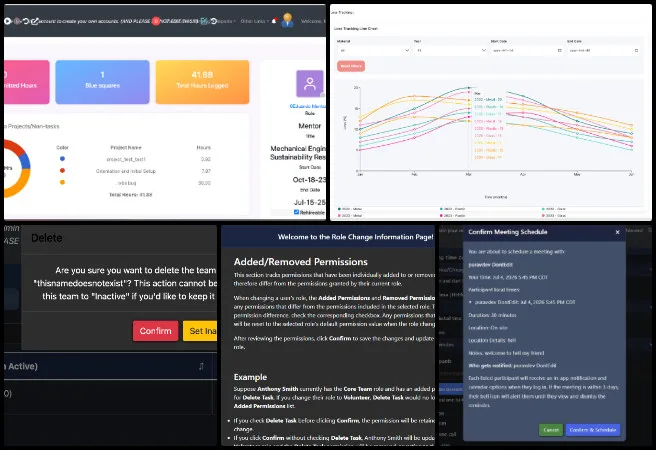
Radia focused on development tasks and bug fixes for PR #5016 involving the loss tracking line graph. She resolved a high-priority calendar issue by replacing the faulty native month input with a standard date picker and updated the filtering logic to correctly parse custom date ranges so the graph responds accurately to user-selected dates. She also restored the custom SVG calendar icons, improved input click accessibility, and fixed multiple Stylelint issues to ensure all Husky pre-commit hooks and automated tests passed successfully. To complete the work, Radia created a new pull request containing the isolated fixes and attached screenshot and video evidence confirming the functionality works correctly in both light and dark modes. This progress helps developing global game-changing collaboratives through small impactful actions leading to larger, lasting changes in ecosystems and social systems.
Purav worked on Frontend PR #3946 and Backend PR #1677 for the Meeting Bell Notification and Schedule Meeting feature. He implemented the meeting scheduling workflow, integrated unread meeting notifications into the application header, and developed a notification modal supporting meeting details, calendar invites, organizer information, timezone-aware displays, audio unlock handling, and navigation across multiple unread notifications. Additionally, Purav updated the Schedule Meeting page with dark mode support, improved confirmation and success modals, fixed TinyMCE notes behavior, and refined participant selection, layout handling, dropdowns, scrollbars, dismiss controls, and header rendering. He also migrated components to CSS modules, resolved SonarQube, ESLint, Stylelint, and pre-push hook issues, connected the frontend with the local backend, and prepared reviewer documentation with backend setup instructions and end-to-end testing steps for the meeting scheduling and notification workflow. Expanding global game-changing collaboratives through such collective development is a reflection of the progress being made by the members of this team. See the Highest Good Society and the Highest Good Network pages to learn more about how this work supports game-changing collaboratives through our open source hub. See the collage below for the team’s work.
SOFTWARE PR REVIEW TEAM A-N
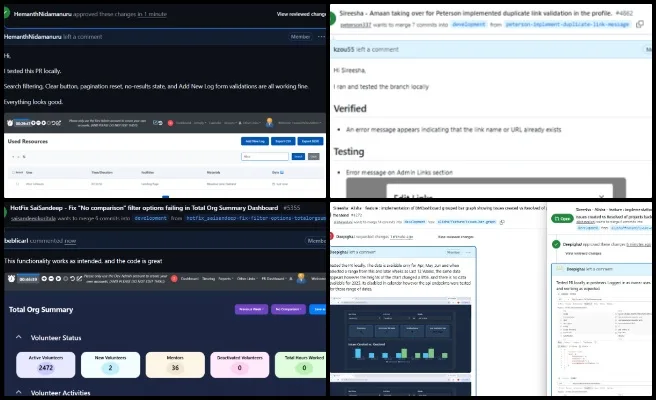
The PR Review Team’s summary for members with names starting with A–N was managed by Sai Sree Dongari (Data Analyst). The Highest Good Network is a foundation for measuring our results in developing global game-changing collaboratives. This week’s active members of this team were Carl Bebli (Software Developer), Deepigha Japamony (Software Engineer), Hemanth Nidamanuru (Data Engineer), and Ken Zou (Software Engineer). They reviewed all Highest Good Network PRs shared in this week’s update. Learn more about how the Highest Good Network open source hub measures progress toward developing global game-changing collaboratives. The collage below shows a compilation of this team’s work.
SOFTWARE PR REVIEW TEAM O-Z
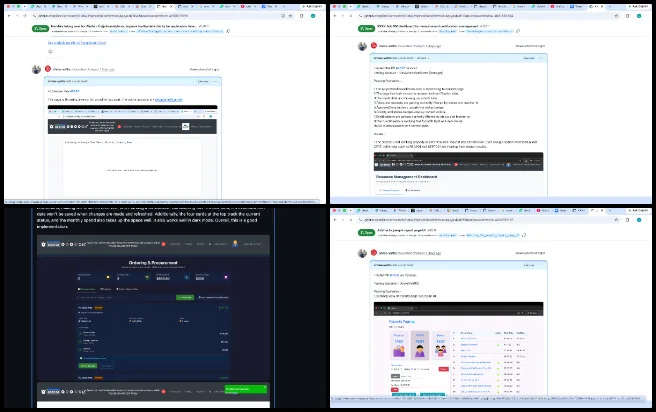
The PR Review Team’s summary for members with names starting with O–Z was managed by Shameera Musthafa (Data Analyst). The Highest Good Network is a foundation for measuring our results in global game-changing collaboratives. This week’s active members of this team were Shreevaths Karawal Satish Rao (Software Engineer) and Sundar Machani (Software Engineer). They reviewed all the Highest Good Network PRs (Pull Requests) shared in this week’s update. Learn more about how the Highest Good Network open-source hub measures progress towards our goal of global game-changing collaboratives. The collage below shows a compilation of the work from this team.
AND WE PRODUCED THIS WEEKLY UPDATES BLOG – CLICK HERE TO SUBSCRIBE
FOLLOW ONE COMMUNITY’S PROGRESS (click icons for our pages)
INVESTOR PAGES
GET INVOLVED
DONATE | WAYS ANYONE CAN HELP | MEMBERSHIP
CLICK HERE FOR ALL PAST UPDATES