One Community
Developing Global-Sustainability Systems – One Community Weekly Progress Update #699
At One Community, we are developing global-sustainability systems designed for a global audience seeking real, replicable change. Our all-volunteer team is building a self-replicating model that links solutions across food, energy, housing, education, economics, and social architecture into one working whole, meant to grow into a global network of teacher/demonstration hubs. We’re building all of it as open source and freely shared, because we’re doing this for “The Highest Good of All.”
- Here’s our project overview
- Here’s our world-change methodology
- Here’s how this becomes self-replicating
- Here’s how we are open source and free-sharing all the do-it-yourself designs
OUR MAIN OPEN SOURCE HUBS
Click on each icon to be taken to the corresponding Highest Good hub page.
One Community’s physical location will forward this movement as the first of many self-replicating teacher/demonstration communities, villages, and cities to be built around the world. This is the August 10, 2026 edition (#699) of our weekly progress update detailing our team’s development and accomplishments:
Developing Global-Sustainability Systems
One Community Progress Update #699

DONATE | COLLABORATE | HELP WITH LARGE-SCALE FUNDING
CLICK HERE IF YOU’D LIKE TO RECEIVE AN EMAIL EACH WEEK WHEN WE RELEASE A NEW UPDATE
YOU CAN ALSO JOIN US THROUGH SOCIAL MEDIA


ONE COMMUNITY WEEKLY UPDATE DETAILS
HIGHEST GOOD HOUSING PROGRESS
One Community is developing global-sustainability systems through Highest Good housing that is artistic and beautiful, more affordable, more space efficient, lasts longer, DIY buildable, and constructed with healthy and sustainable materials:
- Learn about: Our Upcoming Crowdfunding Campaign
- Learn about the different village models and developing global-sustainability systems: 7 Sustainable Village Models
- Visit the open source portals for the first two: Earthbag Village OS Hub | Straw Bale Village OS Hub
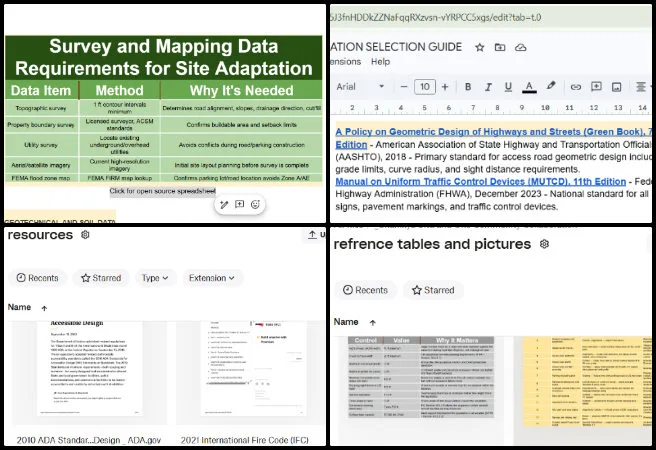
This week, Chanikya Sita (Civil/Transportation Engineer) finalized the Sustainable Roads and Sustainable Parking Lot Adaptation Guide and the Land Purchasing and Transportation Infrastructure Due Diligence document. He worked on applying the latest round of supervisor feedback to the sustainable roads and parking lot location selection guide. Updates included adding a mini table of contents with all major headings and subheadings in the title case at the top of the document. The storm event design standard was updated throughout the drainage section to reflect that thousand-year storm events are becoming more frequent due to climate change, and that designers should consider sizing drainage systems beyond the traditional 25-year minimum. Three video coming placeholders were added at key sections including site data collection, drainage design process, and CAD update sequence to indicate where tutorial videos will be produced during construction. AI generated image prompts were also developed for four locations throughout the document, depicting the site selection and due diligence process including soil boring, wetland delineation, road grade measurement, and FEMA flood zone map review, to make the document more visually appealing for web publication. This work supports developing global-sustainability systems by improving the accessibility, organization, and reliability of open source transportation and infrastructure resources. See below for some of the pictures related to this work.
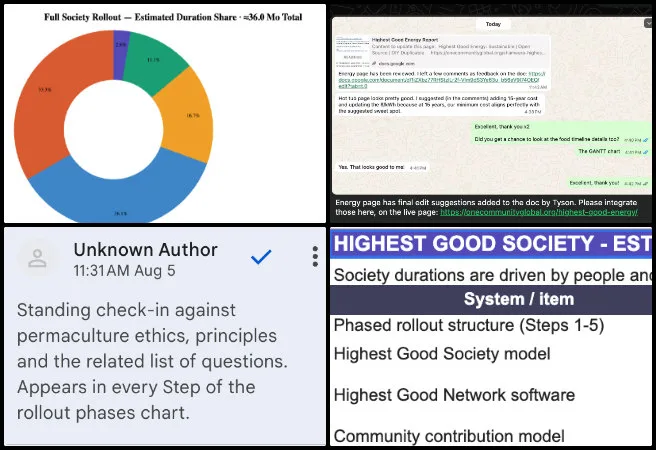
Devendranath Chowdary Maganti (Data Analyst) continued updating the Highest Good Energy web page by integrating new project work, revising existing content, and incorporating the latest updates into the page. He also reviewed the Highest Good Society materials and developed the timeline dashboard based on the available project information. He made further changes to the dashboard based on feedback from Jae, including updates to improve the organization and presentation of the timeline data. In addition, Devendranath continued completing regular Administration Team duties and supported related administrative activities. His efforts contribute to developing global-sustainability systems by making sustainability resources more accessible while strengthening collaboration, knowledge sharing, and volunteer development. Below, you’ll find some images of this work.
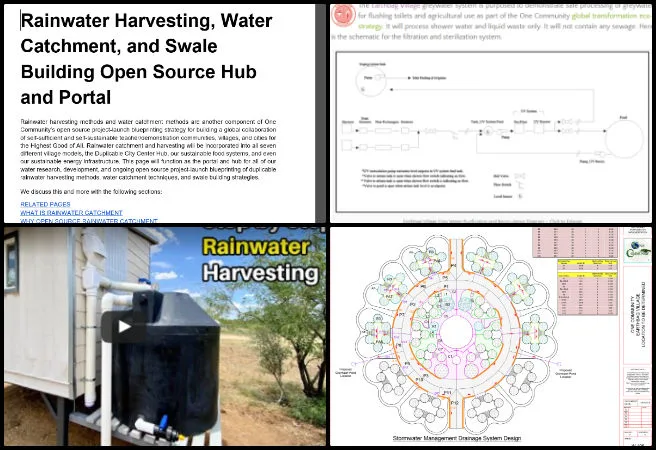
Sagar Chavan (Transportation Engineer) continued working on the Sustainable Roadways and Sustainable Parking Lot. He worked on integrating and finalizing the Earthbag Village stormwater and greywater system content. He reviewed the report formatting requirements, updated missing content for the Rainwater Harvesting, Water Catchment, and Swale Building page, and checked Yi-Ju’s latest water-harvesting report and the Earthbag Village Master Plan for consistency with the existing design. Sagar also worked on the Earthbag Village Greywater System page, added and organized the detailed stormwater cost analysis, and developed content for the tutorial on achieving maximum Stormwater Management LEED points. The work also included reviewing the existing stormwater design, hydraulic calculations, drainage information, and supporting project documentation while ensuring that the Earthbag Village design and layout remained unchanged. His work supports developing global-sustainability systems by strengthening practical, open source guidance for sustainable transportation and integrated water management systems. See below for some of the pictures related to this work.
DUPLICABLE CITY CENTER PROGRESS
One Community is developing global-sustainability systems through a Duplicable and Sustainable City Center that is LEED Platinum certified/Sustainable, can feed 200 people at a time, provide laundry for over 300 people, is beautiful, spacious, and saves resources, money, and space:
- Learn about this building, its function and developing global-sustainability systems: Duplicable City Center Open Source Hub
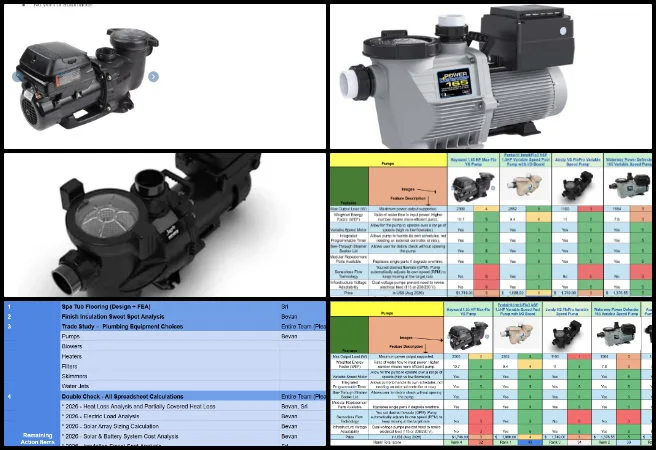
This week, Bevan Chiu (Mechanical Engineer) continued his work finishing the City Center Eco-spa Designs. He worked on the pump trade study for the plumbing equipment comparison to identify the most sustainable pump option. He researched several variable-speed pumps and evaluated factors including Weighted Energy Factor, sensorless flow technology, infrastructure voltage adaptability, and integrated programmable timer functions. He created a comparison matrix using a 0-to-5 scoring system for each evaluation factor and ranked the pumps based on their total scores. For the supporting documentation, Bevan prepared descriptions of the pump options, outlined their advantages and disadvantages, and wrote a conclusion explaining the comparison results and final pump selection. This open source Duplicable City Center project focuses on developing global-sustainability systems. For more details, refer to the image below.
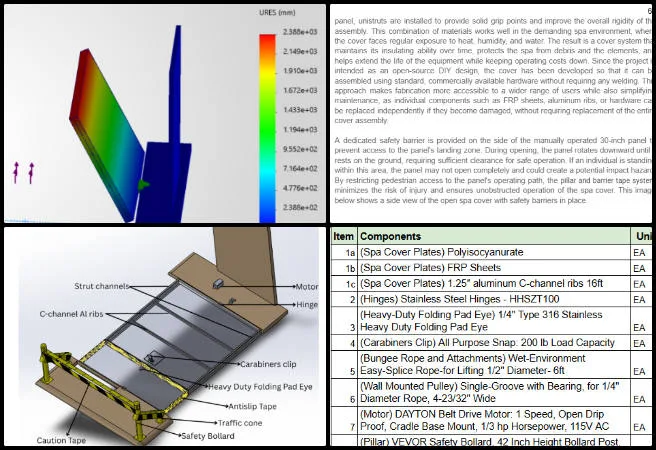
Shivarama Krishna Revanuru (Mechanical Engineer) continued working on the Duplicable City Center design. He focused on the heat capacity of the spa cover and the addition of a thermal blanket to the spa cover to reduce heat loss. He checked the boundary conditions for the thermal analysis and planned the approach for implementing the thermal blanket and evaluating its effect on heat loss. These tasks were based on the latest feedback provided by Jae. This open source Duplicable City Center project demonstrates developing global-sustainability systems. The images below illustrate aspects of this work.
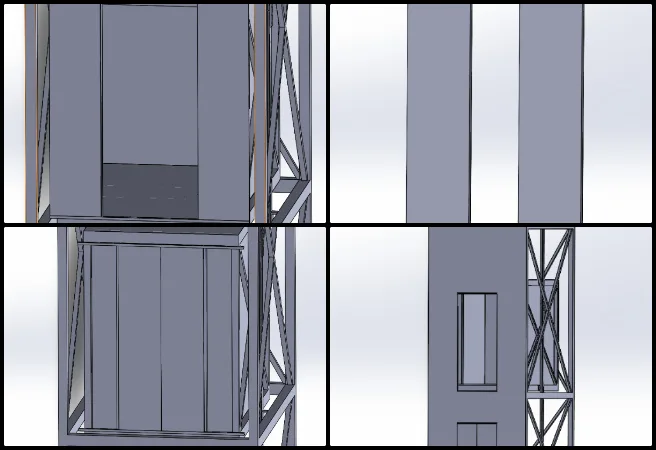
Nidish Reddy Koppula (Mechanical Engineer) continued working on the Duplicable City Center design. He worked on the hydraulic system layout, shaft enclosures, door systems, and final touchups for the elevator and lift shaft assembly. He updated the elevator model by adding and refining hydraulic components, completing enclosure-related details for the shaft, and continuing work on the lift cabin and shaft door systems. Nidish also made final model adjustments to improve the overall assembly representation for rendering. In addition, he began working on the digital movement rendering of the elevator to show the elevator motion within the shaft assembly. This open source Duplicable City Center project presents developing global-sustainability systems. For more details, refer to the image below.
HIGHEST GOOD FOOD PROGRESS
One Community is developing global-sustainability systems through Highest Good food that is more diverse, more nutritious, locally grown and sustainable, and part of our open source botanical garden model to support and share bio-diversity:
- Learn about the structures and developing global-sustainability systems: Hoop House Hub | Aquapini & Walipini Open Source Hub
- See what we’ll be growing: Gardens & Hoop Houses | Large-scale Structures | Food Forest | TA
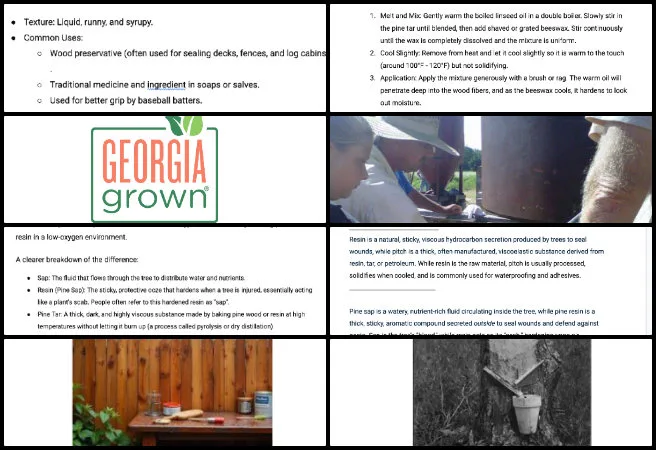
This week, the core team continued working on the Master Tools, Equipment, and Materials/Supplies List for the Large-scale Garden, Botanical Garden, and other Highest Good Food components, focusing on potential sources to supply real turpentine for the wood preservation of fence projects. Bulk quantities may be sourced but probably in other countries such as Brazil, Spain, and Portugal. The core team also utilized an AI assistant to search for potential property locations, though the process encountered repetitive querying and a lack of responses for the requested areas. Their efforts contribute to One Community’s mission of developing global-sustainability systems through open-source collaboration, ecologically responsible innovation, and a focus on long-term global development. The collage below portrays the team’s efforts and achievements for the week.
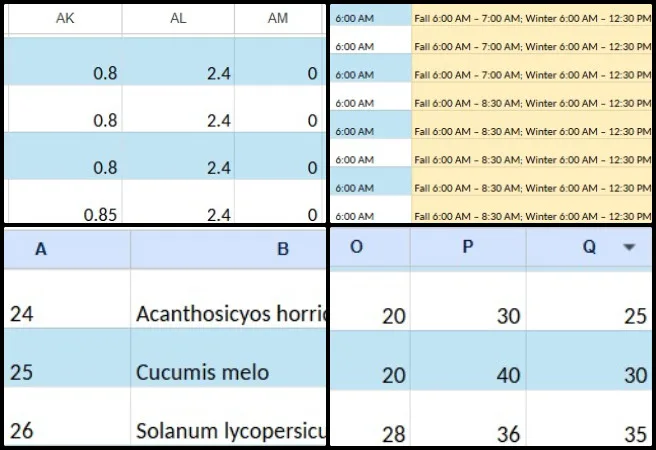
Jay Nair (BIM Designer) continued working on the Aquapini and Walipini Planting and Harvesting documents. He worked on developing the Google Sheets–based lighting energy calculator by refining the formulas and calculation logic to improve accuracy and usability. He updated values, optimized spreadsheet functions, and adjusted the calculation workflow to reduce manual input and simplify future greenhouse lighting energy calculations. The ongoing refinements support a more efficient, consistent, and scalable tool for analyzing lighting energy requirements. These updates improve the stability and adaptability of shared systems, supporting the broader goal of developing global-sustainability systems. See the collage below portraying the work done this week.
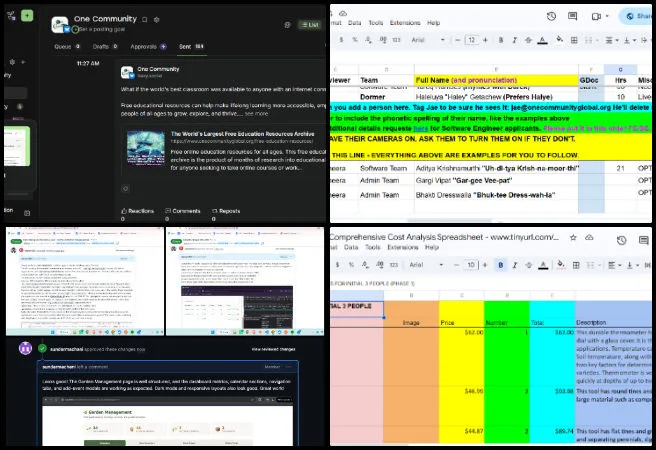
Shameera Musthafa (Data Analyst) continued working on the Highest Good Food initiative, supported OC Administration and the PR Review Team by coordinating PR review workflows, reviewing the work of both the Admin and PR teams, and providing feedback to ensure accuracy, clarity, and consistency across all deliverables. She organized and categorized project images, created visual collages, and finalized blog-related content as part of PR review coordination, ensuring that both visual and written materials were properly curated and documented. Additionally, she contributed to the Highest Good Food report pages and related visualizations. Shameera also managed the One Community Bluesky social media account, creating and publishing posts to help share project updates and increase outreach and engagement. In addition, she supported the hiring process by conducting interviews and evaluating candidates. This work plays a key role in developing global-sustainability systems. See below for images showcasing her work.
Navya Eeshani Boyapati (Web Designer) continued working on the Aquapini/Walipini planting page content. She completed Task 3: 280 Check Aquapini and Walipini Planting Page Content, SEO Optimize All Images by reviewing and updating the Aquapini and Walipini planting pages, correcting formatting and spacing issues, ensuring consistency with related pages, adding missing content from the provided documentation, checking for errors, and optimizing images with SEO-friendly alt text and keywords. She also started Task 4: 872 Open Source DIY Earth Dam Design & Construction Page Creation by reviewing the provided content, beginning webpage development, and preparing the page structure and formatting according to project requirements. See the collage below for a snapshot of this week’s work towards developing global-sustainability systems.
HIGHEST GOOD ENERGY PROGRESS
One Community is developing global-sustainability systems through Highest Good energy that is more sustainable, resilient, supports self-sufficiency and includes solar, wind, hydro and more:
- Learn about the open source sustainable-energy foundations and developing global-sustainability systems: Solar, Hydro, and Wind
- Explore our research into the most sustainable products and companies for saving water and energy: Insulation, Eco-laundry, Lightbulbs and Light Bulb Companies, Doors and Door Companies, Windows and Window Companies, Toilets, Faucets and Faucet Accessories, Urinals, and more.
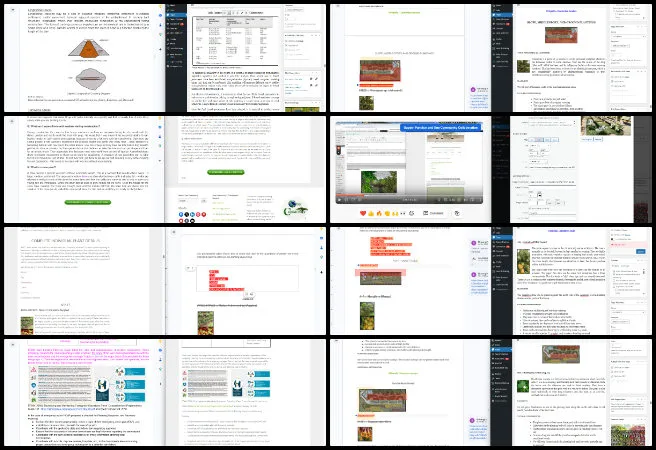
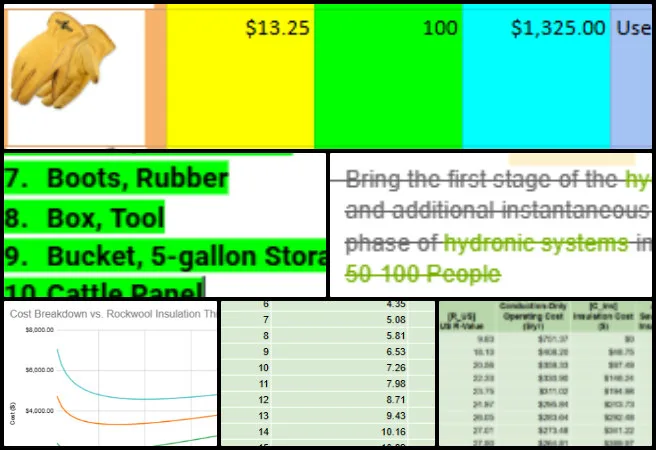
This week, the core team continued contributing to the Highest Good Energy initiative, part of One Community’s work developing global-sustainability systems. They communicated with the Highest Good Food team about ideas for charts illustrating the food infrastructure rollout. The team reviewed the Highest Good Food GANTT chart and updates to the Highest Good Energy page. They also reviewed the hot tub insulation section and provided feedback. In addition, the team continued working on the infrastructure cost analysis for the Highest Good Food rollout. See the collage below for a snapshot of their work this week.
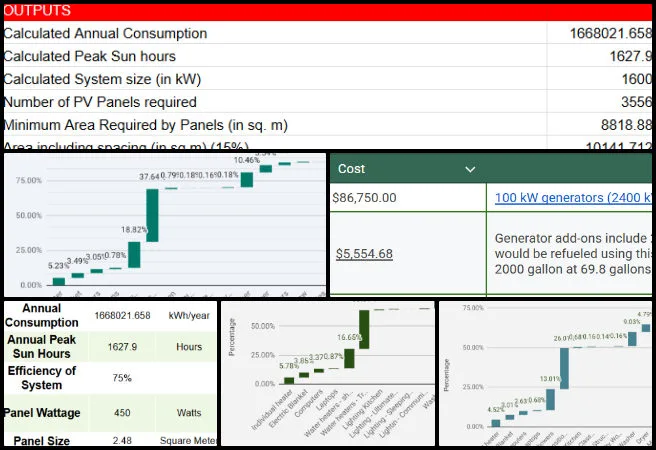
Rohan Pariakar (Operations and Supply Chain Analyst) continued working for the Highest Good Energy initiative, part of One Community’s broader work developing global-sustainability systems, and migrated the renewable energy planning and infrastructure analysis from the development workbook into the project’s primary engineering workbook. He transferred validated generator planning, solar sizing, procurement estimates, phase-based infrastructure planning, and energy demand analyses while preserving calculation integrity and updating cross-sheet references so dependent worksheets stayed synchronized. He also re-established links between the Hourly Energy Analysis, Phase Energy Summaries, Solar Sizing, Master Planning, and phase-specific infrastructure sheets so calculations propagate automatically across the workbook.
Rohan also recreated all analytical visualizations from scratch, including energy demand breakdowns, component cost distributions, and phase-level summary charts, referencing updated datasets so each dynamically reflects future revisions. He migrated the solar sizing model, including photovoltaic system sizing, installed capacity calculations, panel quantities, estimated energy generation, procurement recommendations, installation footprint calculations, battery sizing scenarios, and cost comparisons for renewable energy deployment. He updated generator infrastructure planning worksheets by transferring equipment selections, hardware requirements, fuel storage assumptions, battery storage integration, procurement estimates, and documentation links into the consolidated workbook. These improvements established a centralized planning environment integrating demand analysis, renewable sizing, procurement, and phased infrastructure deployment into one traceable engineering workflow, contributing to One Community’s mission of developing global-sustainability systems. See the collage below for highlights of his work.
HIGHEST GOOD EDUCATION PROGRESS
One Community is developing global-sustainability systems through Highest Good education that is for all ages, applicable in any environment, adaptable to individual needs, far exceeds traditional education standards, and more fun for both the teachers and the students. This component of One Community is about 95% complete with only the Open Source School Licensing and Ultimate Classroom construction and assembly details remaining to be finished.
With over 8 years of work invested in the process, the sections below are all complete until we move onto the property and continue the development and open sourcing process with teachers and students – a development process that is built directly into the structure of the education program and everything else we’re creating too:
- Program Overview: Education Open Source Hub
- How the components work together in designing human orchestrated eco-abundance and developing global-sustainability systems: How to use the Education for Life Program
- Lesson Plans for Life – Lesson Plans How-to
- Foundations of Outstanding Leaders, Teachers, and Communicators
- Curriculum for Life
- Teaching Strategies for Life
- Learning Tools and Toys for Life
- Evaluation and Evolution
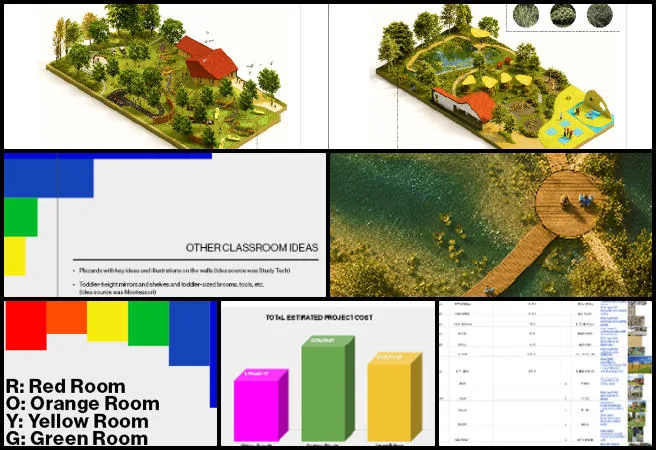
This week, Isaiah “Isa” Hernandez (Graphic Designer) continued working on the spreads for The Ultimate Classroom, and began integrating material from Jung Ah “Romey” Choi’s (Graphic Designer) book, which includes information about the external planning and general layout of the classroom. This project is developing global-sustainability systems, by incorporating this additional information into their version of the book, aiming for a logical narrative structure balancing between Romey’s and Isa’s content. See the collage below for his work this week.
HIGHEST GOOD SOCIETY PROGRESS
One Community is developing global-sustainability systems through a Highest Good society approach to living that is founded on fulfilled living, the study of meeting human needs, Community, and making a difference in the world:
- Read the Highest Good society overview: Highest Good Society
- Learn about the model for fulfilled living, sharing and developing global-sustainability systems: A Day in the Life
- Learn about the 4 economic models: RBE | For-profit | Non-profit | Entrepreneurship
- Learn about our open source community collaboration and management software: The Highest Good Network
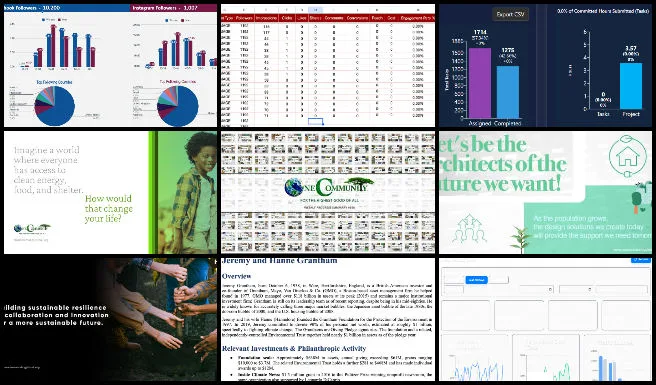
This week, the core team completed over 43 hours managing volunteer work reviews, handling emails, overseeing social media accounts, supporting web development, and identifying and integrating bug fixes for the Highest Good Network. They also interviewed and onboarded new volunteer team members. Additionally, they produced and integrated the video above about developing global-sustainability systems and how developing global-sustainability systems serves as a foundational element of One Community’s broader mission. The following images showcase their work.
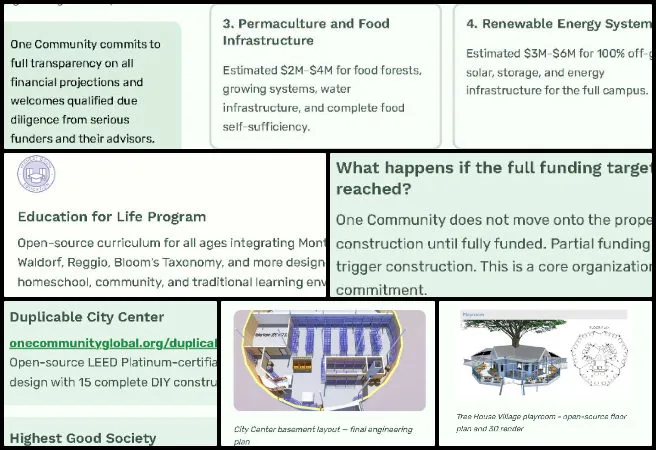
Pooja Kulkarni (UI/UX Designer) continued developing and refining One Community Global’s executive fundraising pitch deck by applying Jae’s feedback and reviewing the pitch deck references he shared. She created a shorter presentation version with 12 main slides and 3 appendix slides to make the story easier to follow and share with potential funder connections. She refined the problem statement, added a “Why Now” section, clarified the eight Highest Good systems, improved the replication model, and added sections for the project track record, seven village models, funding needs, financial model, team, accountability, and due diligence. Pooja also updated the funding language to show an approximately $40M target within a $30M-$50M projected range and kept the main call to action focused on qualified introductions to philanthropists, foundations, and family offices. She replaced long AI-style dashes with standard hyphens, used more One Community project images and renders, and prepared both shorter and longer deck versions for Jae to review before the next round of edits. See the collage below for snapshots of her work, which contributes to developing global-sustainability systems.
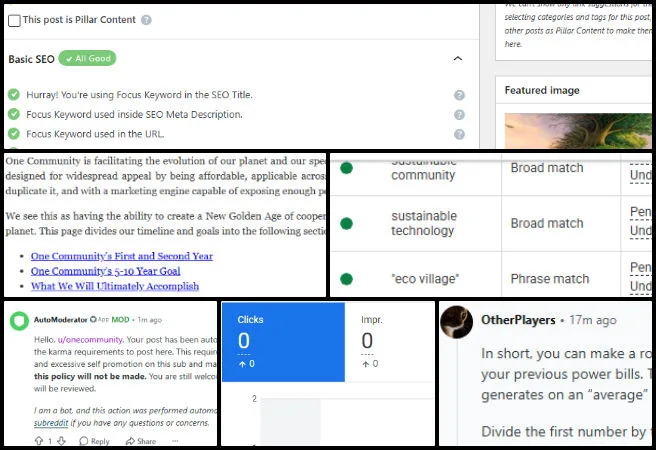
Adhya Rastogi (Business Analyst) continued Reddit engagement using the PostByPurpose and One Community accounts by creating a discussion post, responding to comments, and contributing to relevant community conversations while focusing on organic participation. She optimized Google Ads for the Overview and Solutions That Create Solutions pages by aligning keyword targeting, ad copy, negative keywords, and campaign settings with the corresponding SEO work and landing-page content. She also reviewed feedback on the First Five Years page, made the requested SEO and content adjustments, and rechecked the updated page. For the Methodology page, Adhya reviewed and improved keyword placement, headings, content structure, metadata, readability, internal linking, and search-intent alignment while maintaining the original messaging. She recorded baseline analytics for future performance tracking and updated the SEO tracking records with the completed work and optimization details. See the collage below for highlights of her work towards developing global-sustainability systems.
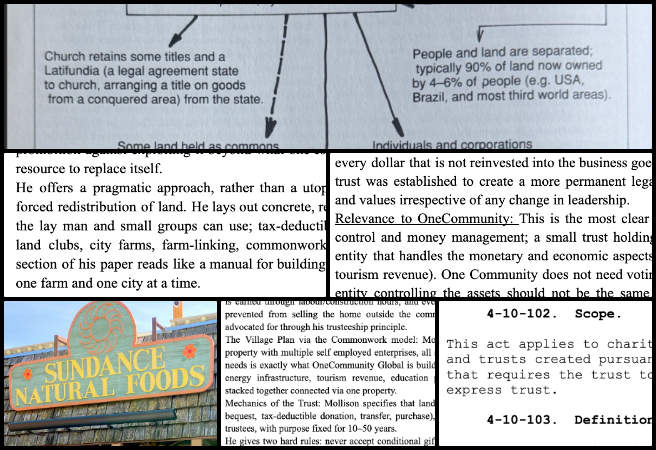
Anagha Sunil Bharadwaj (Legal Research and AI Policy Specialist) completed orientation and initial setup, then began work on the legal structure for perpetual property preservation and home shares for One Community. She read One Community’s five-year plan, global goals, eco-tourism revenue stream plans, and home shares structure, and read Bill Mollison’s arguments on land access from Permaculture: A Designers’ Manual. Anagha researched how Mollison’s theories on land trusteeship and commonwork systems apply to One Community’s goals towards developing global-sustainability systems, and identified specific points where his arguments do not transfer to One Community’s model. She researched US laws governing trusts and nonprofits to understand One Community’s existing legal structure before making recommendations. Anagha also reviewed case studies of perpetual purpose trusts such as Patagonia’s Perpetual Purpose Trust structure and examined additional case studies, including Organically Grown Company, Sundance Natural Foods, and The Walker Group, to understand how perpetual purpose trusts have been implemented at different organizational scales.
Additionally, Anagha researched jurisdictional differences in US trust law across five states with statutes supporting perpetual purpose trusts, and reviewed their enforceability provisions. Anagha began preliminary research into other legal structures applicable to the property preservation question, including conservation easements, title-holding nonprofit subsidiaries, community land trusts, and membership nonprofit structures with reserved powers. She documented the week’s research and continued developing the legal structure recommendation for One Community’s property preservation document to further the One Community’s mission of developing global-sustainability systems. See the collage below to see her week’s work.
ADMINISTRATION TEAM
The Administration Team’s summary, which covers their work on the Highest Good Network, was managed by Devendranath Chowdary Maganti (Data Analyst) and includes Leo Lishin Shiu (Software Engineer), Olawunmi “Ola” Ijisesan (Administrative and Management Support), Prathik Raju (Data Analyst), Sachit Varma (Business Operations & Cost Analyst), Sai Sree Dongari (Data Analyst), Tanmay Nihal Harwani (Data Scientist), and Yeshwanth Nanjegowda (Full-Stack Software Engineer). The Administration Team supports the Highest Good Network, a tool designed to track and measure progress while creating systems that support developing global-sustainability systems. Through administrative support, documentation, testing, training, recruitment, analytics, and content management, the team helps advance this mission, aligning with One Community’s vision of building a replicable and sustainable future model.
This week, Leo reviewed and compiled the 17 LeDCC, 15 LeHUS, and 20 LeFOD weekly summaries, created blog collages, met with the new Mastodon administrator to explain posting procedures and dashboard tracking, and reviewed social media insights while maintaining Facebook and Instagram analytics. Ola updated tracking dashboard performance metrics, maintained scheduled content accuracy, organized administrative documentation, reviewed operational routines, verified tracking data, and submitted the weekly report and images. These social media management and administrative organization efforts play a key role in developing global-sustainability systems.
Prathik tested sections of the Total Org Summary dashboard, documented chart display issues and volunteer location discrepancies between Dev and Production, managed Mastodon posts and analytics, refreshed the Social Media Master Dashboard, verified content, and reviewed Dev administrative work. He also reviewed Dev Dynasty submissions, corrected missing materials, updated the Blog #698 summary and collage, and maintained tracking records. Sachit restructured the funding matrix into a two-stage scoring system, created an association matrix, researched approximately fifteen funders, prepared prospect briefs, corrected profile information, evaluated lower-priority prospects, and aligned shared documents with spreadsheet data. These analytics, research, and evaluation activities further the goal of developing global-sustainability systems.
Sai Sree organized review images, created collages, finalized PR Admin Team blog content, reviewed candidate profiles and interview questions, completed four interviews, and recorded feedback. She also performed frontend testing across multiple PRs covering functionality, forms, modals, layouts, charts, filters, responsiveness, and dark mode, documented results, verified fixes, and assigned PRs for frontend and backend testing. Tanmay updated team bios, contacted members for missing summaries and photographs, consolidated content for the weekly blog, completed SEO adjustments, posted content on Threads, updated the Social Media Master Dashboard, and maintained tracking sheets and volunteer records. These quality assurance, content management, and administrative activities contribute to developing global-sustainability systems.
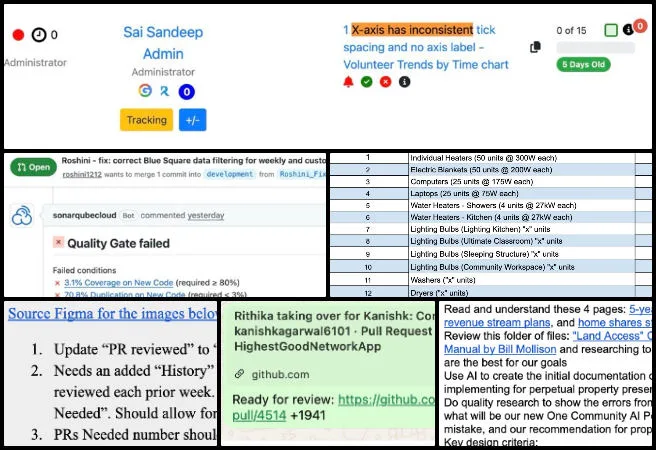
Yeshwanth reviewed documentation covering PR administration, analytics, application and job posting functionality, HGN Phase II materials, project tracking, and HGN Phase 6 food inventory management. He created 44 action items, addressed comments, removed outdated tasks, added and assigned new tasks, and communicated with team members about requirements and issues. He also reviewed Team Skye administrative work and submissions, identified missing materials, updated the Blog #698 summary and collage, corrected keyword and formatting issues, and updated tracking documents. These documentation, software planning, and workflow improvement activities align with the mission of developing global-sustainability systems. See the collage below for highlights of this week’s work.
HIGHEST GOOD NETWORK PROGRESS
 One Community is developing global-sustainability systems through open source Highest Good Network® software that is a web-based application for collaboration, time tracking, and objective data collection. The purpose of the Highest Good Network is to provide software for internal operations and external cooperation. It is being designed for global use in support of the different countries and communities replicating the One Community sustainable village models and related components.
- Learn about our open source community collaboration, management software and developing global-sustainability systems: The Highest Good Network
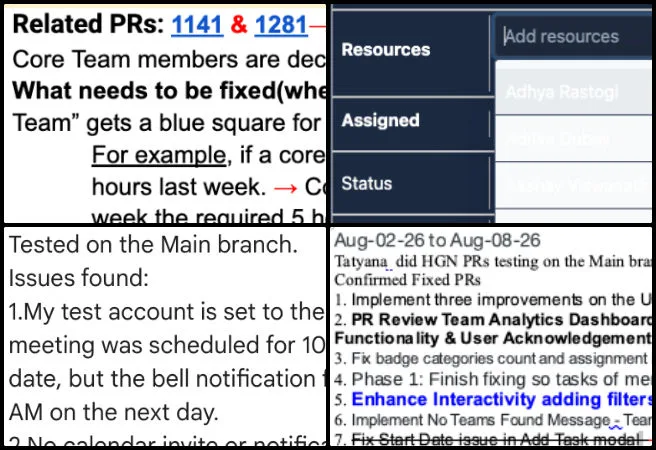
This week, the core team continued testing pull requests on the main branch for the Highest Good Network, a platform developing global-sustainability systems. They confirmed that 8 pull requests were fixed and identifying an issue with the Bell Notification for Meetings feature (PRs #3946 and #1677). The team was unable to test several pull requests because the required data was not available on the main branch, including Fix Dark Mode Display for Lesson List Page (PR #5372), Add Smart Insights and Predictive Utilization Analysis to the Utilization Chart (PRs #5073 and #2115), BM Dashboard – Fix “Reason of Stoppage of Tools” Data Loading Error (PRs #4396 and #1903), and Job Posting Page Analytics – Improve Tooltip Data Clarity for Application Time Chart (PR #5043). They also created a task to address an issue with the incorrect assignment of required hours when a Core Team volunteer did not complete their required hours and recorded Dark Mode issues on 2 pages. See the collage below to view the team’s work.
ALPHA SOFTWARE DEVELOPMENT TEAM
The Alpha Team’s summary, covering their work on the Highest Good Network, was managed by Lin Khant Htel (Frontend Software Developer) and Prathik Raju (Data Analyst) with a team consisting of Casstiel Pi (Software Engineer), Handika Harianto Ew Jong (Full Stack Developer), Maithili Kalkar (Software Engineer), Sai Sandeep (Software Engineer), Som Ramnani (Junior Software Engineer), and Yingshu Wang (Software Engineer) supporting One Community’s mission of cross-functional software development and system improvements. This work advances the team’s objectives, ensuring that all completed tasks directly contribute to developing global-sustainability systems.
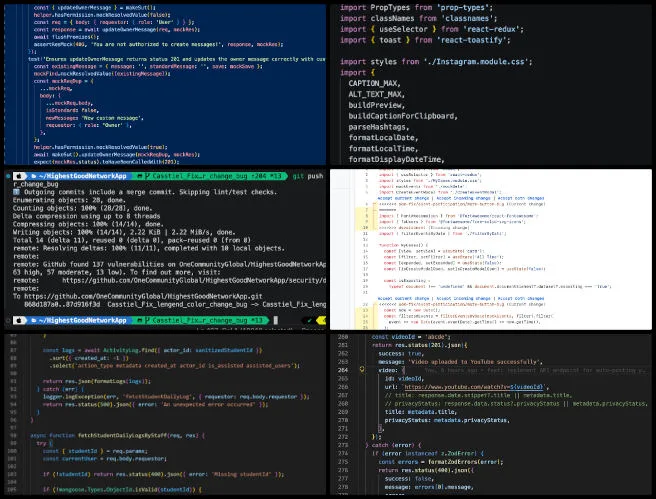
This week, Casstiel addressed feedback on the Injury Severity Chart by fixing data and rendering issues, maintaining consistent department labels and colors, restoring tooltip details, removing unwanted hover highlighting, correcting filter styling across light and dark modes, and resolving merge conflicts, while also analyzing the Purchase Request Form for possible improvements, work that supports developing global-sustainability systems. Handika updated PR #5405 by improving profile card sizing, empty states, chart and report layouts, dark mode styling, and task display, replacing the pie chart with a D3 implementation, and worked on backend PR #2300 by adding video upload support, file and metadata validation, and YouTube API integration, contributing to developing global-sustainability systems.
Maithili configured Instagram Professional and Threads accounts, tested the APIs with access tokens, created frontend and backend branches, and added the initial frontend implementation for the Instagram auto-poster, furthering the goal of developing global-sustainability systems. Sai finalized support team access to student logs in PR #2235 with JWT authentication, added session token expiration, updated unit tests, and worked on dark mode support for the interactive map, supporting developing global-sustainability systems. Som resolved merge conflicts in PR #5163 while preserving Upcoming Events filtering, expansion, and export behavior, and worked on PR #5435 by converting the scroll-to-top feature into a reusable component across multiple pages with dark mode, mobile, accessibility, and reduced-motion support, removing obsolete page-specific logic, and adding related tests, work that supports developing global-sustainability systems.
Yingshu continued investigating the Volunteer Time scrolling issue by reviewing modal, focus, and scroll behavior, updated the save workflow to preserve page and modal positions, prevented confirmation modal focus changes that caused page movement, reorganized the SaveButton implementation, and verified the changes with 13 related tests, ESLint checks, and a production build, advancing the team’s work toward developing global-sustainability systems. The collage below offers a visual representation of the team’s work for the week.
BINARY BRIGADE SOFTWARE DEVELOPMENT TEAM
The Team Binary Brigade’s summary, covering their work on the Highest Good Network, was managed by Roshini Seelamsetty (Software Engineer) and Prathik Raju (Data Analyst) with a team consisting of Amaan Syed (Volunteer Software Engineer), Mahitha Pasupuleti (Software Engineer), and Manoj Puttaswamy (Software Engineer). Roshini coordinated the weekly summary workflow, ensuring all technical milestones align with the project’s goal to contribute to developing global-sustainability systems.
This week, Amaan worked on multiple pull requests by reviewing feedback, updating implementations, verifying functionality, and addressing frontend and backend issues. His work included documenting investigation findings for PR #4063, updating dark mode behavior and reviewer responses for PR #4442, addressing People Report dark mode issues and validation for PR #4635, creating follow-up PR #5428 for light mode fixes, updating chart layouts, project filtering, calendar styling, and code quality findings for PR #4479, and restoring Reports page styling, updating dark mode text visibility, and resolving Stylelint findings for PR #4517, supporting the goal of developing global-sustainability systems.
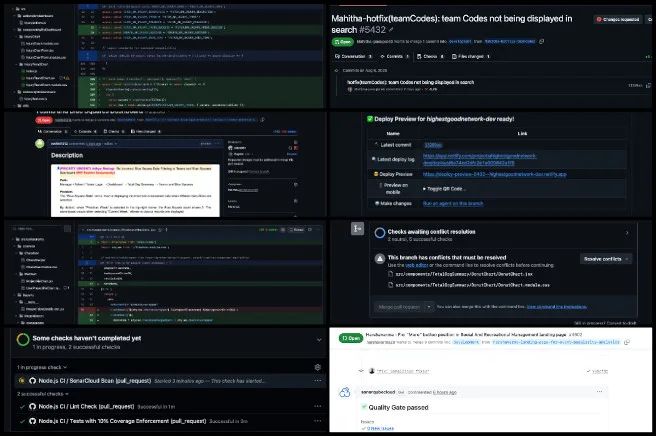
Mahitha worked on the Kitchen Inventory Management Phase 6 task by implementing the Seed Inventory section of the Garden Management page, displaying seed details, quantity information, viability percentages, and seed variety counts, while updating CSS modules, responsive layouts, and light and dark mode compatibility. She also worked on a Teams hotfix by reviewing team-code autocomplete behavior, API responses, loading states, and team-code integration with Teams components, contributing to developing global-sustainability systems.
Manoj worked across three pull requests, resolving merge conflicts and fixing SonarCloud issues in the frontend and backend. On the landing-page pull request, he resolved over thirty SonarCloud issues covering unused code, accessibility contrast, and duplicate styling, then merged with development, restoring dropped changes and consolidating two components that had diverged into separate versions, along with fixing a disconnected Cancel button. On a second frontend pull request, Manoj resolved conflicts without losing another contributor’s work and refactored a component to reduce complexity. On the backend pull request, he traced a failing security rating to an unvalidated input parameter and added the missing validation, work that advances developing global-sustainability systems.
Roshini worked on PR #5199 by implementing permission-based access for viewing the number of times time was added to a task and adding the permission under Project Management → Work Breakdown Structures → Tasks → Edit Task. She also resolved merge conflicts for PR #2298 related to Blue Square data filtering in the Teams and Blue Squares dashboard and began work on follow-up fixes for PR #5373 by reviewing issues related to Export PDF text visibility in dark mode and duplicate header rendering in the Total Org Summary dashboard, work that furthers developing global-sustainability systems. See the collage below for highlights of this week’s work.
DEV DYNASTY SOFTWARE DEVELOPMENT TEAM
The Dev Dynasty Team’s summary, covering their work on the Highest Good Network software, was managed by Yeshwanth Nanjegowda (Full-Stack Software Engineer) and Rithika Pai (Software Engineer). The team includes Akshay Viswanath (Software Engineer), Amaresh Chaudhary Nara (Software Engineer), Bosu Babu Bade (Software Developer), Mahathi Ganimisetti (Data Analyst), Shreevaths Karawal Satish Rao (Software Engineer), Sireesha Kunchala (Software Engineer), and Yuxuan Wang (Software Engineer). The Highest Good Network software supports developing global-sustainability systems by helping teams coordinate, manage, and measure collaborative work across sustainable operations, resource management, construction, production, maintenance, and community development.
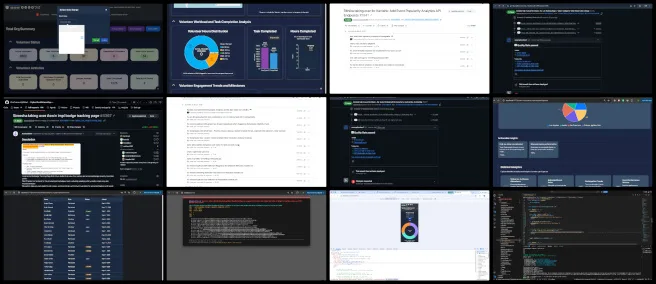
This week, Rithika continued work on the Event Popularity Analytics frontend and backend PRs by rebasing both branches, resolving route conflicts, fixing a NoSQL injection vulnerability, adding Jest tests that brought controller coverage to 94.49%, resolving duplicate CSS selectors and WCAG contrast issues, and reducing component cognitive complexity to meet SonarQube requirements. She also addressed reviewer feedback on the Material Cost Correlation Chart, corrected a dark-mode contrast issue and date-picker styling problem, reviewed the HGN Questionnaire Dashboard action items, and began work on the PR Grading Screen takeover contributing to One Community’s mission of developing global-sustainability systems.
Akshay completed dark-mode remediation across 10 pages and interface areas spanning 28 files, added theme support to the Top Reviewed PRs dashboard and Announcements Email tab, moved TSA Form color rules into a shared module, added a regression test for undefined CSS Module classes, and improved dark-mode behavior across Task Submissions, Event No-Shows, attendance components, the Edit Links modal, Booking page, Role Distribution chart, and User Profile tabs. He also traced several issues to missing theme wiring, dead CSS Module references, global CSS leakage, Bootstrap defaults, and hardcoded colors furthering One Community’s mission of developing global-sustainability systems. Amaresh addressed reviewer feedback across the learner knowledge evolution, Add Lost Time, and collaboration category filter pull requests. He fixed a missing studentId parameter, authentication timing issues, dark-mode color problems, a page layout collapse caused by an unhashed CSS class, a broken team-selection popup, lost test coverage, navigation gaps, and merge conflicts, while increasing backend new-code coverage from 61 percent to above the required 80 percent threshold.
Bosu worked on the Student Activity Log Timer and Event Reschedule Button features, correcting timer controls, validation, popup behavior, refresh recovery, elapsed-time tracking, Activity Log creation, dashboard integration, and modal positioning. He added frontend and backend regression tests, addressed SonarCloud reliability and coverage issues, registered a missing backend route that caused rescheduling 404 errors, improved frontend error handling, added endpoint tests, and verified the reschedule flow locally. Mahathi progressed work on Production Identity Validation, Job Analytics application validation, and the Event Engagement Members List. She resolved reviewer requests and merge conflicts, restored email and phone validations, added location and timezone validation, corrected a missing job application submission endpoint, improved Members List dark-mode readability and dropdown styling, preserved semantic status colors, cleaned duplicate imports and unnecessary code, updated React hook dependencies, and resolved a SonarCloud duplication issue by restructuring mock member data.
Shreevaths addressed dark-mode, chart, layout, and feature issues on PR #4040 by fixing the date-picker theme and navigation-arrow contrast, removing a remaining white strip in dark mode, correcting chart artifacts and clipping, replacing empty chart results with a no-data message, fixing overlap between the statistics panel and date filters, and adding a Reset button for filters and validation errors. Sireesha updated the Date Picker to use a single-month view on smaller screens and resolved SonarQube findings across BMDashboard components involving duplicate CSS, accessibility and contrast issues, array keys, missing button types, cognitive complexity, merge conflicts, unused code, and Stylelint color syntax.
Yuxuan continued work on the Volunteer Hours Distribution feature by improving mobile responsiveness, replacing image-based icons with Font Awesome icons for dark-mode support, refining scrolling, text wrapping, and layout spacing, integrating a backend date-range fix so Total Hours Worked reflects the selected reporting period, adding regression tests, and tracing a remaining discrepancy to a mismatch between committed-hours data and frontend labels rather than the date-range calculation. To learn more about how this work supports developing global-sustainability systems and creating a free-shared future, visit the Highest Good Society and the Highest Good Network free education resources page. These resources demonstrate how open-source collaboration, sustainable project management, and community-focused systems contribute to developing scalable solutions for global sustainability. See the collage below for highlights of this week’s work.
SKYE SOFTWARE DEVELOPMENT TEAM
Team Skye’s summary this week, covering their work on the Highest Good Network, was managed by Yeshwanth Nanjegowda (Software Engineer) and Anthony Weathers (Software Engineer), includes Jaden Wong (Software Engineer), Ken Zou (Software Engineer), Purav Patel (Software Engineer) and Swathi Angadi (Software Engineer). The Highest Good Network software supports developing global-sustainability systems by providing collaborative tools that help teams manage sustainable projects, track resources, improve operational efficiency, coordinate development efforts, and support scalable solutions for long-term environmental and community sustainability.
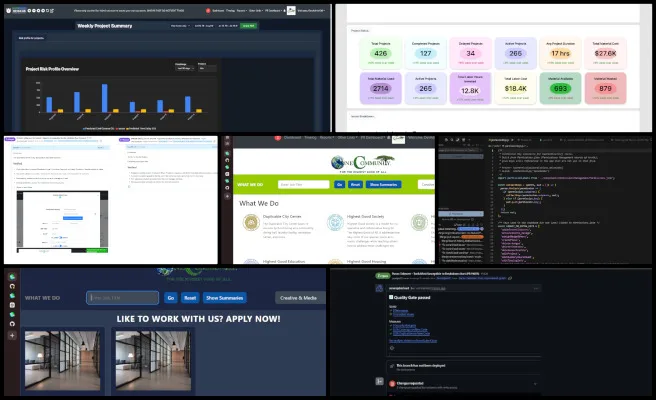
This week, Anthony continued work on the role-change logout notification hotfix by applying additional feedback, updating the role-change modal to save changes while displaying a success message, and refining the forced-logout header and related styling. He also reviewed the header layout, including the timer, message, image, and navigation links, addressed the issue preventing Administrators from editing individual user permissions in PR #3600, verified the fix, investigated a Git pull error caused by a branch name containing an invalid Windows filename character, and continued addressing merge conflicts and review comments for PRs #3600 and #1447 contributing to One Community’s mission of developing global-sustainability systems.
Jaden resolved 48 stylelint violations across nine CSS Module files associated with a dark-mode implementation, corrected selector specificity issues, replaced deprecated CSS properties and media queries, converted remaining inline styles to CSS Module classes, and addressed WCAG 2.1 AA contrast issues. He also resolved 25 SonarCloud findings involving unused variables, button types, unstable keys, mutating sort operations, cognitive complexity, and nested ternaries, removed approximately 190 unrelated files from the working branch, fixed an undefined API endpoint and chart field-name mismatch, removed unused CSS imports causing build failures, and verified that all 29 tests passed furthering One Community’s mission of developing global-sustainability systems.
Ken reviewed pull requests covering PR Review Team Analytics, the Tools Most Susceptible to Breakdown chart, Support Team backend functionality, the 404 page, Badge Management, Purchase Request Tools validation, Injury Severity charts, Badge Tracking, production identity validation, the Project Manager Dashboard, Supplier Performance Graph, messaging-page dark mode, Event Management, and related features. He verified functionality where applicable and identified issues involving dark-mode inconsistencies, responsive date-picker behavior, duplicate project names, filtering errors, and uploaded-media persistence. He also transitioned to the Software Engineer role, was assigned as a Manager-in-Training, and reviewed the HGN Software Team Management documentation. These updates help in developing global-sustainability systems across teams and disciplines.
Purav took over the unfinished permission constants work from PR #2052, reimplemented it on the latest development branch, and created PR #5431. He created centralized permission constants from Permissions.json and required legacy keys, exported them through constants.js, replaced hardcoded permission checks across multiple components, updated Header and route-level checks to use RoutePermissions, resolved merge conflicts in Header and User Management, converted additional hardcoded permission usage throughout the repository, verified that the constants continued to resolve to the existing permission strings, and re-reviewed PRs #5426, #2297, and #2284 based on reviewer feedback. This work helps in developing global-sustainability systems through open-source sharing and transparency.
Swathi resolved merge conflicts and rewrote the What We Do section using the latest development code to maintain compatibility with the current codebase. She also worked on the Promotion Eligibility pull request and investigated a visibility issue related to user permissions. See the Highest Good Society and Highest Good Network pages to learn more about how this work supports developing global-sustainability systems through collaborative project management, resource coordination, and open-source development. Visit the open source hub to explore additional tools, resources, and solutions. See the collage below for examples of the team’s work.
SOFTWARE PR REVIEW TEAM A-N
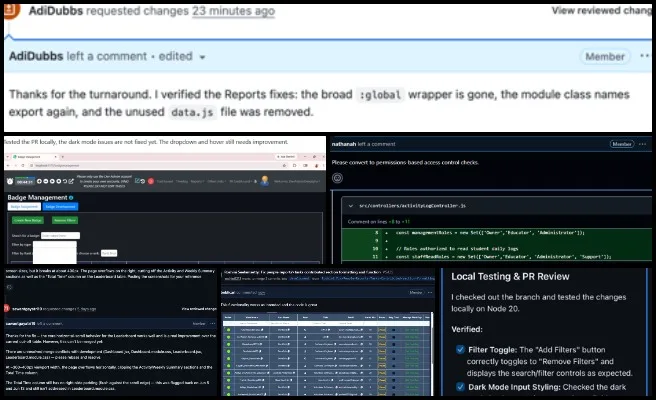
The PR Review Team’s summary for members with names starting with A–N was managed by Sai Sree Dongari (Data Analyst). The Highest Good Network is a foundation for measuring our results in developing global-sustainability systems. This week’s active members of this team were Aditya Dubey (Software Engineer), Ansh Shah (Software Engineer), Carl Bebli (Software Developer), Deepigha Japamony (Software Engineer), Gayatri Sawant (Software Engineer), Mallikharjuna Abhiram Mulpuri (Software Engineer) and Nathan Hoffman (Software Engineer). They reviewed all Highest Good Network PRs shared in this week’s update. Learn more about how the Highest Good Network open source hub measures progress toward developing global-sustainability systems. The collage below shows a compilation of this team’s work.
SOFTWARE PR REVIEW TEAM O-Z
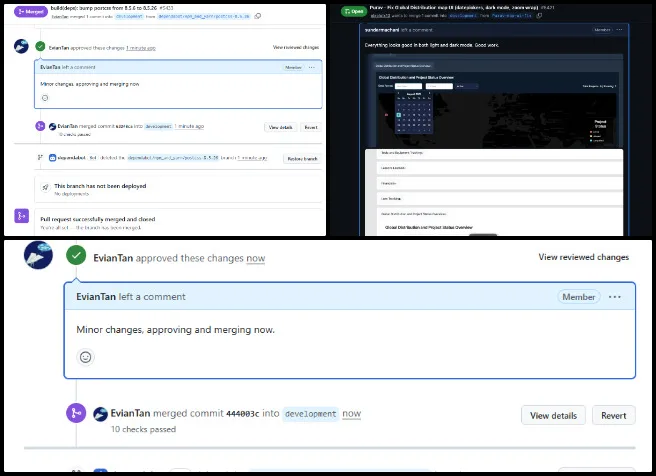
The PR Review Team’s summary for members with names starting with O–Z was managed by Shameera Musthafa (Data Analyst). The Highest Good Network is a foundation for measuring our results in developing global-sustainability systems. This week’s active members of this team were Sundar Machani (Software Engineer) and Yiyun Tan (Software Engineer). They reviewed all the Highest Good Network PRs (Pull Requests) shared in this week’s update. Learn more about how the Highest Good Network open-source hub measures progress towards our goal of developing global-sustainability systems. The collage below shows a compilation of the work from this team.
AND WE PRODUCED THIS WEEKLY UPDATES BLOG – CLICK HERE TO SUBSCRIBE
FOLLOW ONE COMMUNITY’S PROGRESS (click icons for our pages)
INVESTOR PAGES
GET INVOLVED
DONATE | WAYS ANYONE CAN HELP | MEMBERSHIP
CLICK HERE FOR ALL PAST UPDATES