One Community
Creating Better Sustainability – One Community Weekly Progress Update #706
One Community, an all-volunteer team, is creating better sustainability by rethinking how we approach food, energy, housing, education, economics, and social architecture. Rather than keeping our discoveries to ourselves, we’re open sourcing and freely sharing the complete process so it can be replicated anywhere on the planet. This self-replicating model is the foundation for a growing global collaboration of teacher/demonstration hubs, each one built for “The Highest Good of All.” Our goal isn’t just a better way of living for some. It’s regenerating our planet and creating a world that genuinely works for everyone.
- Here’s our project overview
- Here’s our world-change methodology
- Here’s how this becomes self-replicating
- Here’s how we are open source and free-sharing all the do-it-yourself designs
OUR MAIN OPEN SOURCE HUBS
Click on each icon to be taken to the corresponding Highest Good hub page.
One Community’s physical location will forward this movement as the first of many self-replicating teacher/demonstration communities, villages, and cities to be built around the world. This is the September 28, 2026 edition (#706) of our weekly progress update detailing our team’s development and accomplishments:
Creating Better Sustainability
One Community Progress Update #706

DONATE | COLLABORATE | HELP WITH LARGE-SCALE FUNDING
CLICK HERE IF YOU’D LIKE TO RECEIVE AN EMAIL EACH WEEK WHEN WE RELEASE A NEW UPDATE
YOU CAN ALSO JOIN US THROUGH SOCIAL MEDIA


ONE COMMUNITY WEEKLY UPDATE DETAILS
HIGHEST GOOD HOUSING PROGRESS
One Community is creating better sustainability through Highest Good housing that is artistic and beautiful, more affordable, more space efficient, lasts longer, DIY buildable, and constructed with healthy and sustainable materials:
- Learn about: Our Upcoming Crowdfunding Campaign
- Learn about the different village models and creating better sustainability: 7 Sustainable Village Models
- Visit the open source portals for the first two: Earthbag Village OS Hub | Straw Bale Village OS Hub
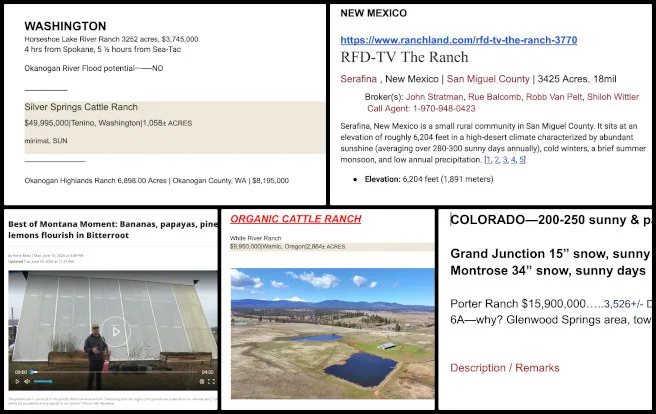
This week, the core team continued working on the Highest Good Housing component of property research. They continued research based on website criteria regarding potential property locations for the establishment of One Community, focusing primarily on central and southern Oregon as well as the Rogue River Valley. They also researched water rights and added related information to the site location document. See below for some of the pictures related to this work toward creating better sustainability. The collage below portrays the team’s efforts and achievements for the week.
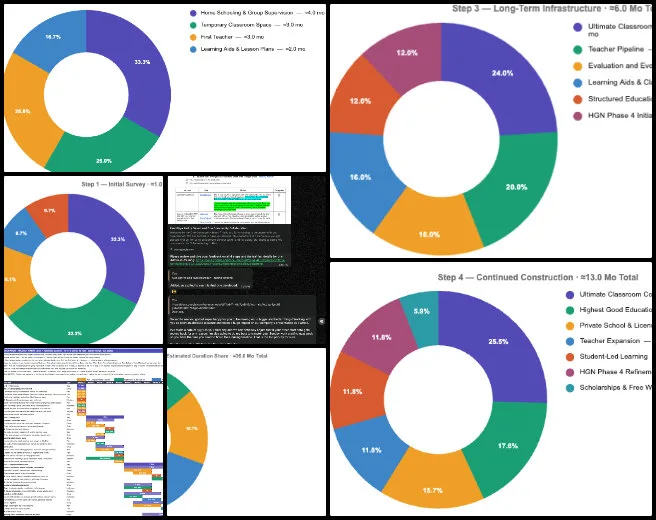
Devendranath Chowdary Maganti (Data Analyst) began working on the Highest Good Housing Implementation Timeline Data Analysis Dashboard and Visualizations by reviewing the Highest Good Housing web page to understand the project information and create a timeline tracker. He also worked on the Administration Team weekly blog, reviewed fellow teammates’ blogs, and made changes based on the feedback they provided on his work. See the collage below for weekly highlights of his work for creating better sustainability.
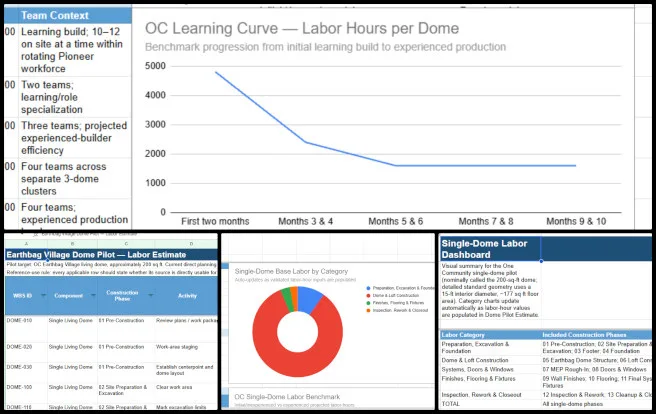
Rushikesh Tubaji (Industrial Engineer) continued contributing to Highest Good Housing by reviewing Jae’s feedback and updating the labor-analysis workbook to make the single-dome model easier to understand, review, and hand off. He added a START HERE tab and expanded the Dome Labor Dashboard with labor categories, readiness tracking, crew-size and duration scenarios, and learning-curve charts. He refined source-backed quantities for foundation, flooring, loft, and related dome activities, expanded the Productivity Library with additional published benchmarks and clearly labeled planning assumptions, and began populating activity-level labor rates, crew sizes, labor-hours, and durations for quantity-ready work. Rushikesh also updated the README Table of Contents, strengthened source traceability and summary views, and expanded the companion Methodology & Handoff Guide to document the estimating logic, current assumptions, and unresolved items. See the collage below for highlights of his work for creating better sustainability.
DUPLICABLE CITY CENTER PROGRESS
One Community is creating better sustainability through a Duplicable and Sustainable City Center that is LEED Platinum certified/Sustainable, can feed 200 people at a time, provide laundry for over 300 people, is beautiful, spacious, and saves resources, money, and space:
- Learn about this building, its function, and creating better sustainability: Duplicable City Center Open Source Hub
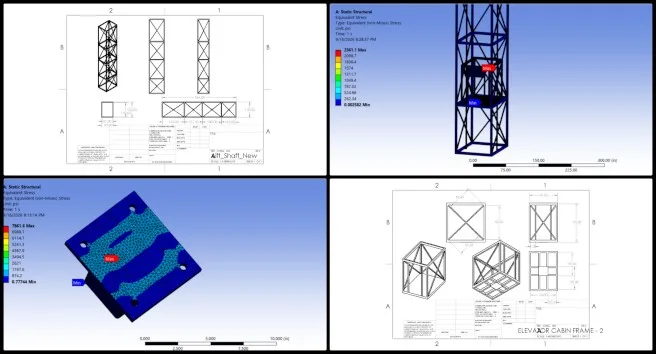
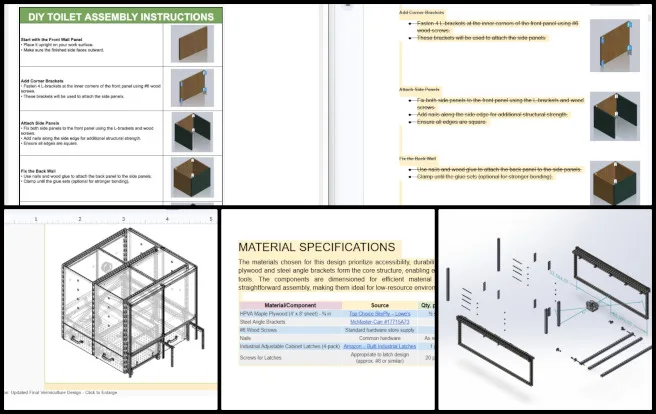
This week, Nidish Reddy Koppula (Mechanical Engineer) continued working on the Duplicable City Center design by working on the hydraulic elevator project report and related deliverable files. He addressed several files that had issues and made the necessary corrections to improve their usability and organization. He also verified the packaged project files by opening and checking them after packaging to confirm that the files loaded properly and that the included assemblies, documents, and supporting materials could be accessed without issues. This open source Duplicable City Center project contributes towards creating better sustainability. See the collage below for a snapshot of his work this week.
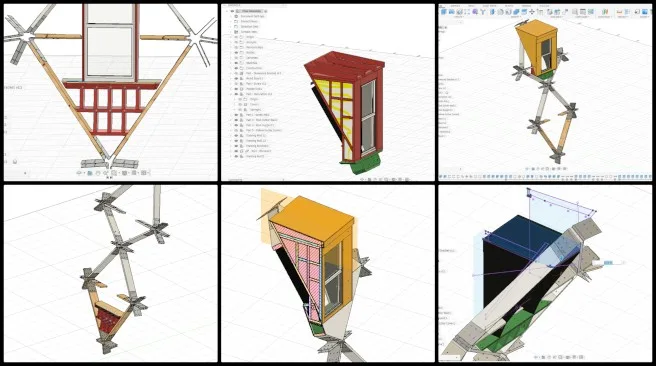
Mayank Thakur (Industrial designer) started working on the Duplicable City Center design. He went through all the project files to understand the scope of the work. He spent most of his time setting up the files and confirming he had what he needed to standardize the first and second floor dormer windows. Through this process, he found that the construction of the first and second floor dormer windows differs significantly rather than being similar as expected. Mayank is now working to identify which elements from the first floor dormer window can be applied to the second floor dormer window. This open source Duplicable City Center project contributes in creating better sustainability. See the collage below for a snapshot of his work this week.
HIGHEST GOOD FOOD PROGRESS
One Community is creating better sustainability through Highest Good food that is more diverse, more nutritious, locally grown and sustainable, and part of our open source botanical garden model to support and share bio-diversity:
- Learn about the structures and creating better sustainability: Hoop House Hub | Aquapini & Walipini Open Source Hub
- See what we’ll be growing: Gardens & Hoop Houses | Large-scale Structures | Food Forest | TA
This week, Navya Eeshani Boyapati (Web Designer) continued working on the Highest Good Food initiative through Task 962: Publishing the Sensor Selection for Chamber Gas Regulation and Vermiculture Storage Chamber Load and Handle Stress Evaluation Sections. She reviewed the provided technical content, organized and formatted the sections for publication, updated the webpage content and HTML formatting, checked links and layout, corrected formatting issues, and prepared the sections for publication according to project requirements. See below for some of the pictures related to this work toward creating better sustainability.
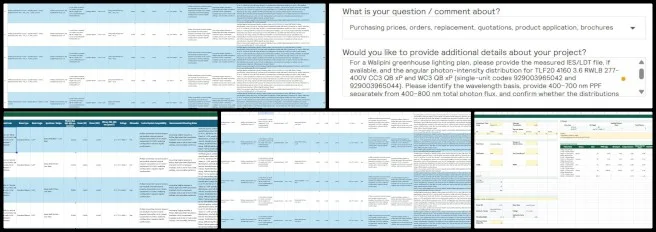
Jay Nair (BIM Designer) continued working on the Aquapini and Walipini Planting and Harvesting documents. He contacted Signify to request additional technical information related to the selected lighting fixture for Walipini 1. He updated the lighting energy documentation by marking the fixture counts, PPFD estimates, and energy totals as preliminary values, noting that the final uniformity target requires a canopy PAR lighting plan for validation. Jay also corrected the product sheet date and linked the official Signify product documentation to ensure the project references the latest available fixture information. These efforts improve the stability and adaptability of shared systems, supporting the broader goal of creating better sustainability. See the collage below portraying the work done this week.
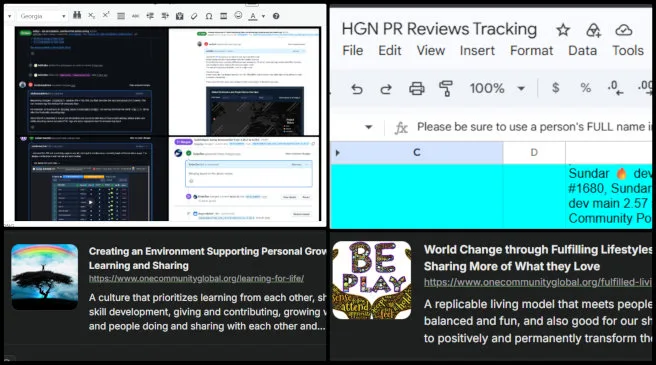
Shameera Musthafa (Data Analyst) continued working on the Highest Good Food report pages and related visualizations, managed the One Community Bluesky social media account by creating and publishing project updates, and supported the hiring process through interviews and candidate evaluations. She also continued supporting OC Administration and the PR Review Team by coordinating PR review workflows, reviewing work from the Admin and PR teams, and providing feedback for accuracy, clarity, and consistency. She organized and categorized project images, created visual collages, and finalized blog-related content as part of PR review coordination. See below for some of the pictures related to this work toward creating better sustainability.
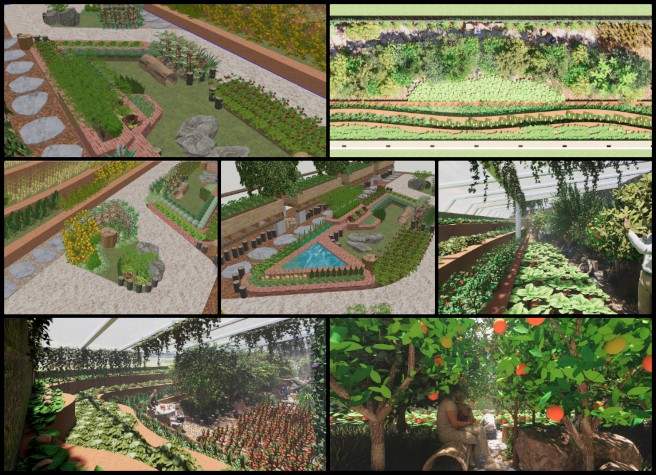
Zoey Zou (Landscape Architect) continued developing the Walipini #3 and Large-scale Aquapini projects. For Walipini 3, she revised the circulation and people-space design by adding smaller stone pathways through the central food forest, adjusting the tree canopy and surrounding planting, and distinguishing larger gathering areas along the primary circulation route from smaller seating nooks within the rear planting areas. She updated the written report to reflect the revised circulation, harvesting access, canopy, and seating strategy, and revised the AutoCAD plan by adding seating areas, rocks, tree-stump seating, and smaller pedestrian paths. She completed final renders for previously prepared placeholder views, produced and revised walkthrough videos based on feedback, and replaced placeholder images in the Google Docs report with final renders. She also tested a rendered top view for the planting plan and continued refining the AutoCAD drawing when the first top-view result was not clear enough. For the Large-scale Aquapini, Zoey continued developing the planting and people-space design by revising seating and circulation areas, replacing ornamental planting with productive species, adjusting plant combinations, heights, and textures, and refining log seating, rock seating, stepping stones, and smaller resting areas. This work plays a key role in creating better sustainability. See below for images showcasing her work.
HIGHEST GOOD ENERGY PROGRESS
One Community is creating better sustainability through Highest Good energy that is more sustainable, resilient, supports self-sufficiency and includes solar, wind, hydro, and more:
- Learn about the open source sustainable-energy foundations and creating better sustainability: Solar, Hydro, and Wind
- Explore our research into the most sustainable products and companies for saving water and energy: Insulation, Eco-laundry, Lightbulbs and Light Bulb Companies, Doors and Door Companies, Windows and Window Companies, Toilets, Faucets and Faucet Accessories, Urinals, and more.
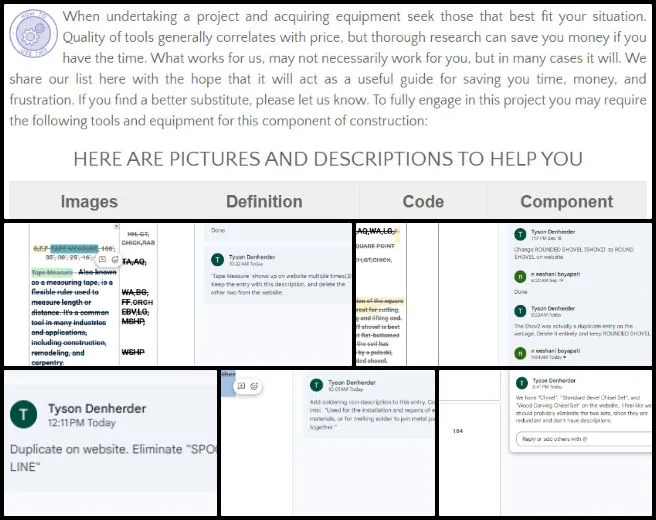
This week, the core team continued reviewing the Tools and Equipment for Open Source Construction page, contributing to One Community’s Highest Good Energy initiative. They searched for and identified duplicate entries and commented on them for correction. They also identified and commented on incorrect images, spelling errors, and errors in tool descriptions and locations. They completed the Tools section and began reviewing the Equipment section. See the image below for a glimpse of their work contributing to One Community’s mission of creating better sustainability.
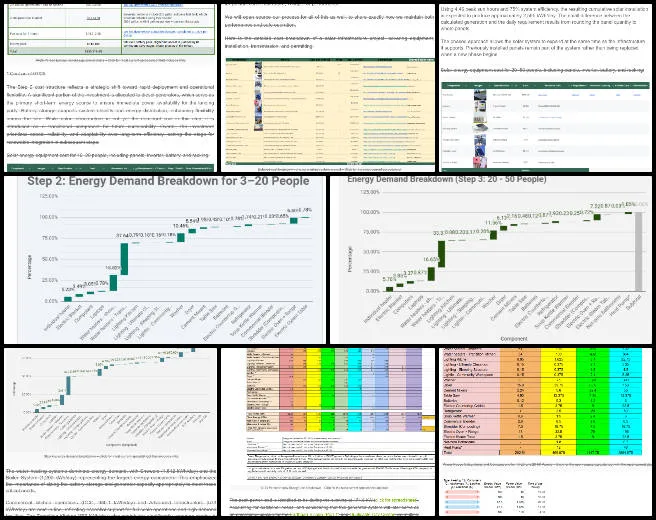
Rohan Pariakar (Operations and Supply Chain Analyst) continued reviewing the Highest Good Energy analysis report and its supporting spreadsheets for consistency, updating the phase energy-analysis tables, equipment-level calculations, totals, labels, and related visuals. He reviewed the Step 2, Step 3, and Step 4 energy-demand breakdowns and rechecked the category-level calculations for heating, computers, appliances, lighting, and machines against the corresponding phase totals, reconciling the reported daily energy requirements of 1,147.75 kWh/day for Step 2, 2,594.075 kWh/day for Step 3, and 6,642.45 kWh/day for Step 4 with the supporting equipment and category calculations. Rohan double-checked the solar calculations against the 4.46 peak sun hours, 75% system performance assumption, and 450 W panel rating, and confirmed the solar equipment cost tables matched panel quantities, installed capacity, and expected generation. He also reviewed the Step 5 energy inputs for major facilities, including DCC Kitchen, Manufacturing and Workshop, Advanced Infrastructure, Ultimate Classroom, and Straw Bale Village, to flag values needing further validation before final solar sizing, and checked report graphics and spreadsheet-linked visuals for formatting and loading issues. The images below provide examples of his work this week contributing to creating better sustainability.
HIGHEST GOOD EDUCATION PROGRESS
One Community is creating better sustainability through Highest Good education that is for all ages, applicable in any environment, adaptable to individual needs, far exceeds traditional education standards, and more fun for both the teachers and the students. This component of One Community is about 95% complete with only the Open Source School Licensing and Ultimate Classroom construction and assembly details remaining to be finished.
With over 8 years of work invested in the process, the sections below are all complete until we move onto the property and continue the development and open sourcing process with teachers and students – a development process that is built directly into the structure of the education program and everything else we’re creating too:
- Program Overview and creating better sustainability: Education Open Source Hub
- How the components work together in designing human orchestrated eco-abundance: How to use the Education for Life Program
- Lesson Plans for Life – Lesson Plans How-to
- Foundations of Outstanding Leaders, Teachers, and Communicators
- Curriculum for Life
- Teaching Strategies for Life
- Learning Tools and Toys for Life
- Evaluation and Evolution
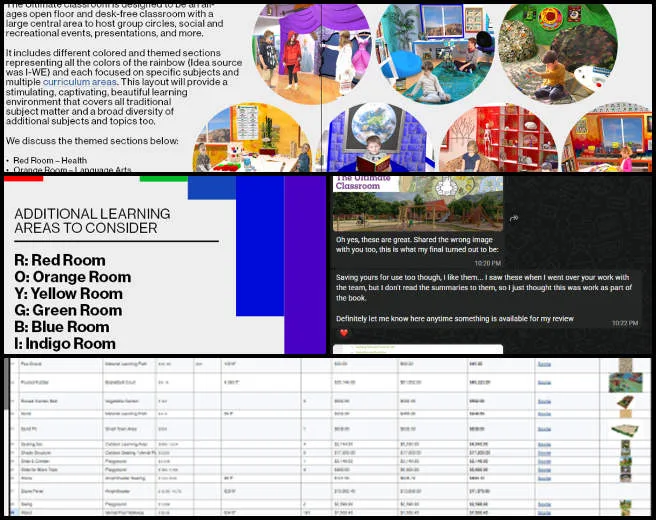
This week, Isaiah “Isa” Hernandez (Graphic Designer) focused on reusing previous renders for The Ultimate Classroom details spread, masking images and arranging them in a dynamic way. He also began redesigning the cost analysis section to improve readability and legibility within the book while maintaining the original graphics. Lastly, Isa refined the second-to-last page. See the collage below for highlights of his work towards creating better sustainability.
HIGHEST GOOD SOCIETY PROGRESS
One Community is creating better sustainability through a Highest Good society approach to living that is founded on fulfilled living, the study of meeting human needs, Community, and making a difference in the world:
- Read the Highest Good society overview and creating better sustainability: Highest Good Society
- Learn about the model for fulfilled living and sharing: A Day in the Life
- Learn about the 4 economic models: RBE | For-profit | Non-profit | Entrepreneurship
- Learn about our open source community collaboration and management software: The Highest Good Network
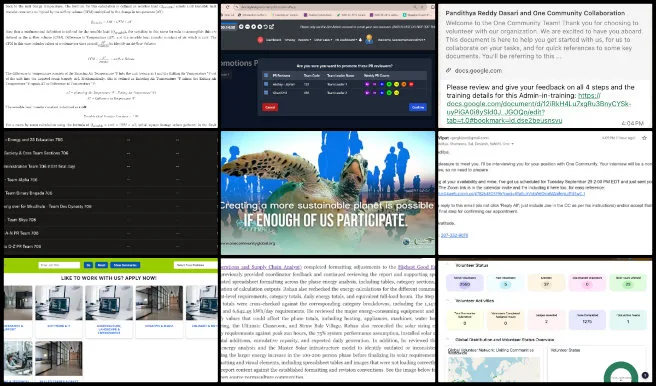
This week, the core team completed over 48 hours of work managing volunteer work reviews, handling emails, overseeing social media accounts, supporting web development, and identifying and integrating bug fixes for the Highest Good Network. They also interviewed and onboarded new volunteer team members. Additionally, they produced and integrated the video above about creating better sustainability. The video also explores how creating better sustainability serves as a foundational element of One Community’s broader mission. The following images showcase their work.
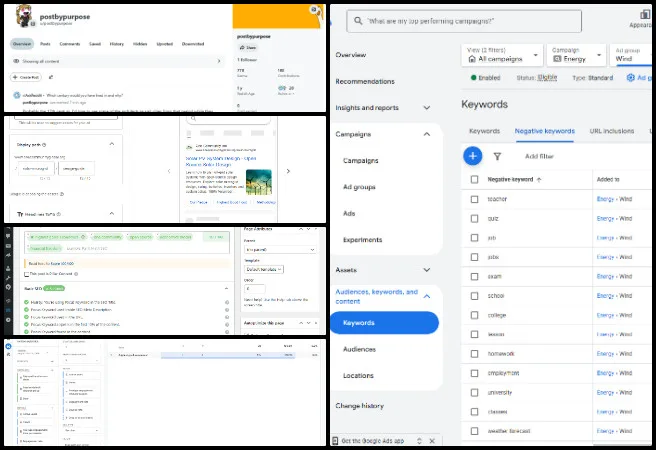
Adhya Rastogi (Business Analyst) continued updating the Google Ads Campaign Tracking Spreadsheet with current campaign, ad, and performance information and added traffic and measurement columns for ongoing monitoring. She completed SEO and AEO optimization for the Highest Good Economics webpage by refining content, keyword targeting, headings, metadata, internal linking, and search intent while incorporating relevant feedback and comparing donation pages for SEO and AEO alignment. Adhya also optimized existing Google Ads for the Grid-Tie Remote Energy Infrastructure, Solar Energy Microgrid, and Wind Energy pages by refining ad elements, keywords, messaging, and alignment with the corresponding landing pages and search intent. She continued Reddit activity through the PostByPurpose and One Community accounts by creating posts, participating in discussions, commenting, and responding to recent engagement. Adhya reviewed activity on both accounts to maintain consistent participation in relevant communities. She also prepared and submitted the weekly summary, documenting the week’s activities and progress for reporting. See the collage below for highlights of her work towards creating better sustainability.
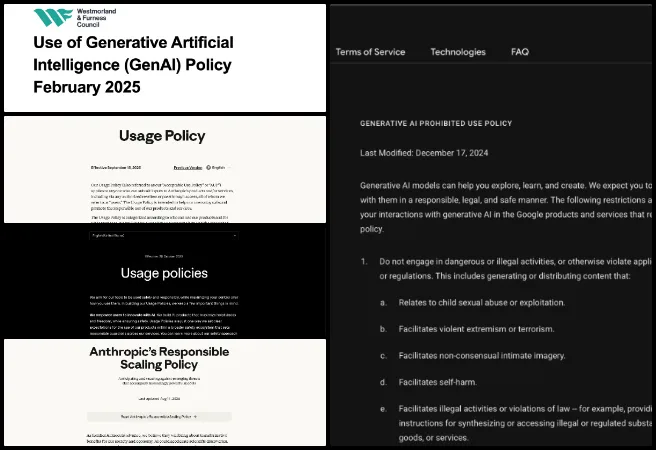
Anagha Sunil Bharadwaj (Legal Research and AI Policy Specialist) continued her research on perpetual purpose trusts across US jurisdictions and their practical implications. She began work on One Community AI Usage Policy project. Anagha researched Anthropic’s, Google’s, and OpenAI’s usage policies to compare how each structures rules for AI users, finding a common layered approach with universal prohibitions and added restrictions for higher-risk uses. She also began researching published AI policy templates for reference. Anagha studied state laws overlapping with workplace AI use, including Colorado, Illinois, California, and New York City requirements around employment-related AI decisions, discrimination protections, and bias audits. See the collage below for her week’s work, furthering One Community’s mission of creating better sustainability.
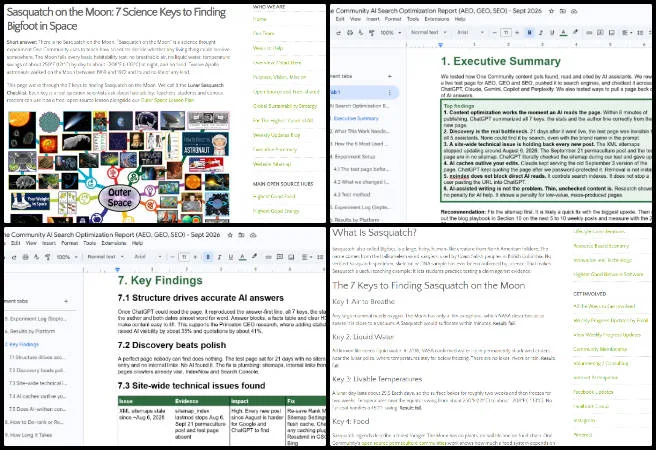
Devarsh Wali (Program Manager) continued supporting the weekly blog review process and Admin Team procedures. He continued developing the AEO and GEO optimization strategy by testing different approaches for improving blog visibility across multiple LLM search engines and tracking the results of those experiments. Devarsh added performance metrics and experiment findings to the report, compared different optimization methods and updated the document based on the observed results. He also worked on completing the AEO Optimization report draft and shared it with Jae for review and feedback. In addition, Devarsh supported One Community administration by reviewing work submitted by other Admin Team members and preparing the weekly blog draft for his assigned team. The images below provide examples of this week’s work towards creating better sustainability.
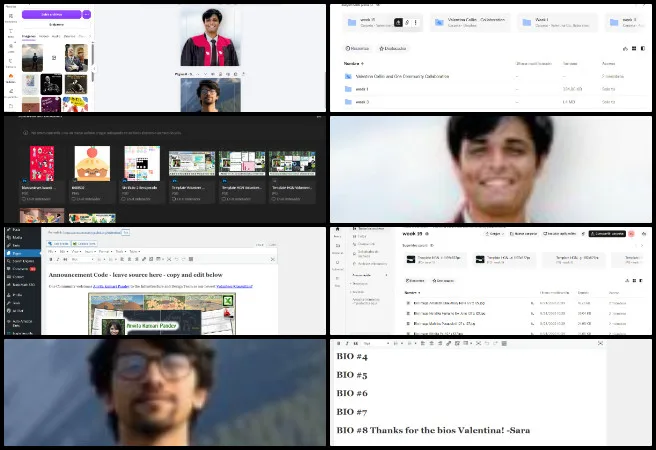
Valentina Collini (Designer) continued working on creating social media images to support One Community’s outreach efforts, designing graphics that align with the organization’s visual standards and effectively communicate its mission. She also reviewed and refined volunteer biographies, making corrections to improve accuracy, consistency, and overall presentation. In addition, Valentina carefully checked content for errors and implemented necessary updates, helping maintain the quality of both the website and promotional materials. Her work contributed to strengthening One Community’s online presence while ensuring that volunteer profiles and related content remained clear, professional, and up to date. She also worked on bios for new volunteers. Please see the collage below for her work this week towards creating better sustainability.
ADMINISTRATION TEAM
The Administration Team’s summary, which covers their work on the Highest Good Network, was managed by Devendranath Chowdary Maganti (Data Analyst) and includes Ashmita Pal (Data Analyst), Gargi Vipat (AI Engineer), Mrudhula Reddy Thummala (Administrative Assistant), Olawunmi “Ola” Ijisesan (Administrative and Management Support), Prathik Raju (Data Analyst), Sachit Varma (Business Operations & Cost Analyst), Sai Sree Dongari (Data Analyst), Shreyas Harish (Data Engineer), and Tanmay Nihal Harwani (Data Scientist). The Administration Team supports the Highest Good Network, a tool designed to track and measure progress while creating systems that support creating better sustainability. Through administrative support, documentation, testing, training, recruitment, analytics, and content management, the team helps advance this mission, aligning with One Community’s vision of building a replicable and sustainable future model.
This week, Ashmita tested multiple PRs on the Dev environment using the Basic Software Component testing process, verified reported changes and functionality, and reviewed related tasks, comments, and documentation for follow-up. She coordinated with team members regarding testing questions and task creation, reviewed available and unassigned tasks, assigned requested tasks and hours, reviewed Training Team work, provided feedback, and reviewed Tumblr documentation. Gargi participated in hiring interviews, continued reviewing correction submissions as a Correction Administrator, and provided feedback to admins in training. She also completed the AI bio and announcement image-generation tutorial, submitted it to Jae, incorporated feedback into quality-control guidance, prompts, team resources, and image requirements, and prepared the next testing phase across additional AI platforms. These testing, training, and workflow activities supported creating better sustainability.
Mrudhula completed Level 1 Software Product Testing for the Highest Good Network by testing PRs #5349 and #4479 on the development site, focusing on construction management features and recording results in the testing document. She also tested other open PRs to check existing workflows and documented her findings while reviewing administrative work submitted by other admins and providing feedback. Ola organized digital workspaces for the Administration and PR Review Teams by creating documentation folders, removing obsolete files, updating the project summary report, and uploading associated images. These software testing, documentation, and workspace organization activities furthered the goal of creating better sustainability.
Prathik completed Facebook and Instagram analytics, updated spreadsheets and audience metrics, reviewed volunteer time logs, provided feedback, and scheduled posts for the following week. He also tested the Job Form Builder, documented an issue with the default question set, reviewed Pandithya’s weekly blog training work, and completed weekly blog work for Team Binary Brigade with feedback to team members. Sachit reorganized the funding matrix into separate tabs for individual donors and foundations, restructured funder briefs to consolidate application information, reviewed scoring for foundation prospects, and validated ratings against funding requirements and accessibility. He also supported the onboarding of two new volunteers by reviewing their onboarding feedback and confirming their readiness to begin. These analytics, testing, funding research, and onboarding activities contributed to creating better sustainability.
Sai Sree organized review images, created collages, finalized PR Admin Team blog content, and completed frontend testing across page rendering, navigation, filtering, pagination, dark mode, charts, forms, announcements, financial tracking, reviewer selection, question flows, and project management. She also checked responsive behavior, styling consistency, data accuracy, and error handling, worked on advanced documentation, and updated the Social Media Master Dashboard. Shreyas continued developing the AI training manual for the Total Organization Summary, covering volunteer and global distribution sections, tested dashboard sections, assigned development and improvement tasks to volunteers, reviewed a new volunteer’s training progress, and prepared the Alpha Team weekly summary. These quality assurance, training, documentation, and dashboard activities aligned with creating better sustainability.
Tanmay updated existing bios, followed up on missing summaries and photographs, tracked outstanding information, prepared the weekly blog from multiple team blogs, and completed SEO updates before publication. He also posted on Threads, updated the Social Media Master Dashboard, maintained tracking sheets and volunteer records, reviewed a new admin’s initial work, provided feedback, checked PR titles and descriptions for inconsistencies, and completed final testing of merged PRs. These content management, social media, administrative, and software testing activities supported creating better sustainability. See the collage below for highlights of this week’s work.
HIGHEST GOOD NETWORK PROGRESS
 One Community is creating better sustainability through open source Highest Good Network® software that is a web-based application for collaboration, time tracking, and objective data collection. The purpose of the Highest Good Network is to provide software for internal operations and external cooperation. It is being designed for global use in support of the different countries and communities replicating the One Community sustainable village models and related components.
- Learn about our open source community collaboration, management software, and creating better sustainability: The Highest Good Network
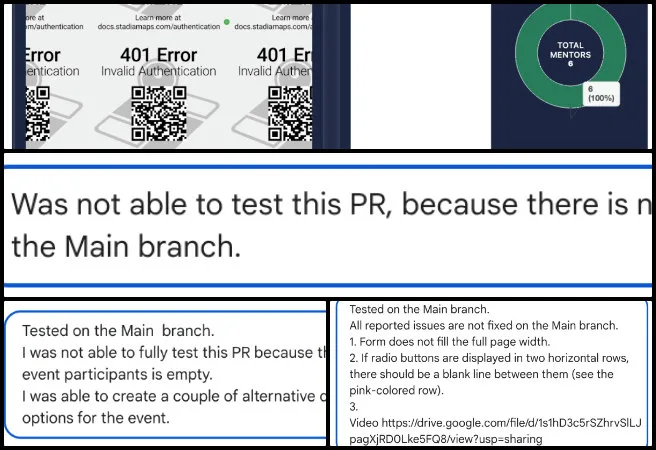
This week, the core team continued HGN PR testing on the Main branch for the Highest Good Network, a platform creating better sustainability, and confirmed 6 PRs as fixed. The following issues were not fixed: HGNForm layout issues (#3640); Phase 1 follow-up fixes for PRs #5305, including Dark Mode implementation for the Map tool (PR5438); the filter not finding users due to inner spaces (#4464); Global Distribution map UI issues involving date pickers, Dark Mode, zoom, and text wrapping (#5421 + #2272); and the Team Stats chart mixing up hours and volunteer counts on the Teams and Blue Squares Dashboard (#5441). They were also unable to fully test 10 PRs because there was no data available on the Main branch. See the collage below to view the team’s work.
ALPHA SOFTWARE DEVELOPMENT TEAM
The Alpha Team’s summary, covering their work on the Highest Good Network, was managed by Lin Khant Htel (Frontend Software Developer), with a team consisting of Devang Saraogi (Software Engineer), Maithili Kalkar (Software Engineer), Priyanka Ajit Mutha (Software Engineer), Som Ramnani (Junior Software Engineer), Sai Sandeep (Software Engineer), and Yingshu Wang (Software Engineer). Their work supported One Community’s mission of cross-functional software development and system improvements, helping advance open source permaculture communities.
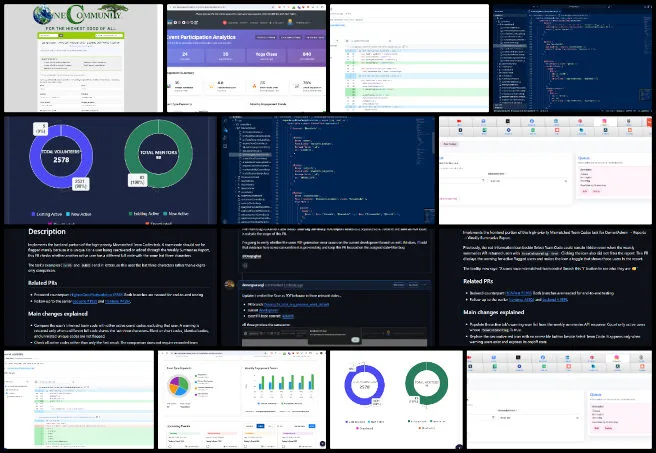
This week, Devang worked on multiple HGN software development tasks, including bug fixes, investigation, testing, and pull request reviews, fixing an issue where deactivated volunteer counts were not reflected correctly by the time filter and opening backend PR #2361, and addressing a UserProfile memory leak by adding async request cancellation and unmount cleanup before opening frontend PR #5575. He also investigated a Job Application duplicate-check issue that was no longer reproducible, and re-reviewed PRs #2312 and #5493 across desktop, mobile, and dark mode. Lin managed and reviewed the team summary covering Devang, Handika, Maithili, Sai Sandeep, Priyanka, Rithika, Som Ramnani, and Yingshu Wang, reviewed PR #2363, and checked Alpha team members’ weekly summaries, photos, and videos while sharing pending pull requests for team review, supporting the goal of creating better sustainability.
Maithili tested the Instagram autoposter code after fixing SonarCloud issues, finding that scheduled posts were not saving media along with the caption, removing unneeded alt text and location fields from the composer, identifying that media is not displayed in the post history view, and noting that uploaded files need to move from local storage to cloud storage; she also documented how to run the project locally. Priyanka worked on the Weekly Summaries Report team-code warning feature, updating the warning indicator, adding click-to-filter functionality, and revising mismatch detection, creating frontend PR #5586 and backend PR #2368, and addressed backend SonarCloud findings by validating user IDs before database queries and adding tests for invalid inputs, permissions, and inactive users; a task on six-month and yearly anniversaries remains pending clarification contributing to One Community’s mission of creating better sustainability.
Sai addressed UI alignment and data visualization issues, resolving x-axis label and tick spacing problems in PR #5451, aligning task board header labels in PR #5476, fixing container and height bugs on the Volunteer Status doughnut charts in PR #5553, and updating the Most Frequent Keywords diagram layout in PR #5583 to prevent overlapping bubbles in support of creating better sustainability.
Som restored the Save as PDF button on the Participation page in PR #5578, updating the print flow to include all matching events, adding loading feedback and duplicate-click prevention, improving print styling and accessibility, and fixing an issue that had cut off the PDF export after one page so that all 10 pages displayed correctly. Yingshu reviewed the Volunteer Time save workflow and button state management, disabling the Save button during requests and adding a synchronous lock to prevent duplicate submissions, with the implementation passing all 21 related tests, ESLint validation, Git diff checks, and the production build furthering One Community’s mission of creating better sustainability. See the collage below for highlights of this week’s work.
BINARY BRIGADE SOFTWARE DEVELOPMENT TEAM
The Team Binary Brigade’s summary, covering their work on the Highest Good Network, was managed by Prathik Raju (Data Analyst) with a team consisting of Aditya Krishnamurthi (Software Engineer), Amaan Syed (Software Engineer), Dhruv Topiwala (Full Stack Software Engineer), Mahitha Pasupuleti (Software Engineer), Ruthwik Hosadurga Madhusudhana (Software Engineer), and Shubham Jakhete (Software Engineer) supporting One Community’s mission of cross-functional software development and system improvements. This work advances the team’s objectives, ensuring that all completed tasks directly contribute to creating better sustainability.
This week, Aditya investigated Issue #37 on the PR Review Team Analytics Dashboard, tracing the Weekly PR Grading page’s duplicate reviewer entries to a missing date filter on the fetch call. He added a helper to normalize save and fetch requests to the current week, wired up the Review Week dropdown to re-fetch data with read-only rows for past weeks, and added a Remove Reviewer feature, with a backend delete endpoint remaining as the last step before the PR is raised, in support of creating better sustainability. Amaan continued work on the Total Construction Summary Project Status implementation, removing a duplicate card, adding proper handling for unavailable historical data, correcting a date-range off-by-one error, and resolving SonarCloud findings, then completed follow-up work on the Material Summary PR and addressed a Teams page responsiveness issue affecting table sizing, wrapping, and control layout across screen sizes, verifying all changes across themes and viewports, contributing to creating better sustainability.
Dhruv updated the blue square warning system so that the third occurrence triggers a yellow warning and subsequent occurrences trigger red, refactoring the warning controller into helper functions and adding logging and unit tests for the new behavior, and resolved SonarQube cognitive-complexity findings in the BadgeStatistics component with added test coverage, work that supports creating better sustainability. Mahitha implemented the Orchard Management feature for Phase 6 Kitchen Inventory Management, adding an Orders section with status tracking from ordered to shipped to delivered, a dynamic pending order count, and a Planting Schedule section for upcoming planting tasks, along with light and dark mode styling for the new sections, work that furthers creating better sustainability.
Ruthwik fixed undefined function calls causing crashes during timer operations, restricted date picker ranges when the year filter is active, resolved reviewer-reported access issues on two pull requests, tested five additional pull requests covering user search, dark mode formatting, and volunteer analytics charts, and corrected dark mode display inconsistencies across the rental tracking dashboard, advancing creating better sustainability. Shubham reviewed four pull requests across the frontend and backend, approving two and requesting changes on two after identifying implementation issues, then moved to the Development Team, where he fixed three logic issues affecting deactivated team members’ final week on the Weekly Summaries Report and restored the deployment refresh notice by adding version tracking and a new notice with dark-mode support, in support of creating better sustainability. The collage below offers a visual representation of the team’s work for the week.
DEV DYNASTY SOFTWARE DEVELOPMENT TEAM
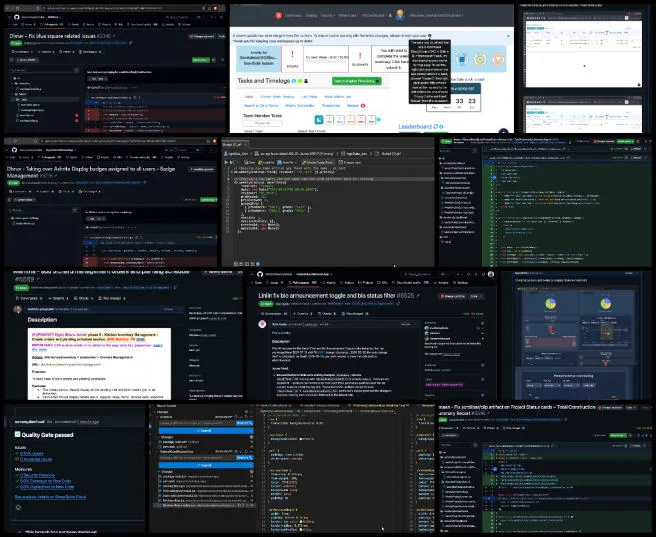
The Dev Dynasty Team’s summary, covering their work on the Highest Good Network, was managed by Aadit Trivedi (Software Engineer and Software Team Administrator) with a team consisting of Akshay Viswanath (Software Engineer), Amaresh Chaudhary Nara (Software Engineer), Ansh Shah (Software Engineer), Bosu Babu Bade (Software Developer), Gayatri Sawant (Software Engineer), Hemanth Varupula (Software Developer), Linlin Fan (Software Engineer), Mahalakshmi Mahadevan (Software Engineer), Mahathi Ganimisetti (Data Analyst), Shreevaths Karawal Satish Rao (Software Engineer), Shreyas Battula (Software Engineer), and Sireesha Kunchala (Software Engineer), supporting One Community’s mission of cross-functional software development and system improvements. This week, Akshay worked across five frontend and backend pull requests. On frontend PR #5440 he fixed overlapping radar chart labels in the Skills Overview, added three regression tests, and merged the latest development branch to resolve a Netlify preview failure. He opened backend PR #2370 so the Top Skills calculation prioritizes skills matching the selected filter, confirmed on PR #2321 that a reported Total Org Summary crash came from badge dates stored as date values, and replaced a mocked aggregation test on PR #2335 with an in-memory MongoDB test that detects the original hours calculation issue. Amaresh completed final review passes on three abandoned pull requests for the Weekly Project Summary and Global Distribution map features, contributing to creating better sustainability. On PR #5415 he fixed an Issue Tracking crash that also broke the Expand All and Share PDF actions, along with a Collapse All button, dark mode contrast, and duplicate charts in Financials Tracking. On PR #5330 he replaced a discontinued basemap provider with an Esri basemap plus a label layer, and on PR #5256 he fixed overlapping value labels on the cost prediction chart.
Ansh tested PR #5493 for the PR Grading Dashboard’s inline reviewer summary, covering grade updates, paired and single PR styling, new PR entries, and dark mode behavior. He also began a development site header configuration feature requested by Jae, designed to limit editing of the shared header to Owner-level users and to track previous changes to its content. Bosu resolved stale HGN Questionnaire eligibility data on PR #5449 by refetching eligibility when the Help modal reopens or the page becomes visible again, added focused tests that pass 10 of 10, and cleared a SonarCloud duplication failure by extracting shared test helpers. He also addressed reviewer feedback on the Phase 4 Student Daily Log, improving dark mode readability and responsive status badges and resolving conflicts in the routes and dependency files. Gayatri completed three tickets in support of creating better sustainability. For the Phase 4 Collaborative Lesson Plan workflow she built a new LessonPlanDraft backend with three endpoints and 15 passing unit tests, a four-step student wizard, and an educator review and approval view, and tested the full flow with student and educator accounts before opening backend PR #2366. She also fixed the doubled Years of Experience display on the HGN Questionnaire Dashboard with a regression test, and made the name and email fields on the HGN Form non-editable by correcting a faulty disabled condition.
Hemanth reviewed PR #5525 for the bio announcement toggle and status filter and worked on PR #4437, a bar graph of the most wasted materials, where he corrected the routing path causing a page-not-found error and fixed dark mode styling. Linlin advanced four frontend pull requests that all passed the SonarQube Quality Gate: PR #5517 restored the header’s user info row on narrow screens, PR #5525 improved the bio status filter’s tooltip, contrast, and alignment, PR #5524 added expand and collapse controls to the People Report card legends, and PR #5493 kept the missing image option in sync for inline grading summaries. Mahalakshmi reviewed Phase 4 PR #4432, identifying 404 errors on the timer’s play and reset buttons, and approved PR #4225 for the Student Daily Log and PR #4655 for the Daily Equipment Log preview panel after verifying their behavior, work that supports creating better sustainability.
Mahathi improved the Building Management Dashboard analytics by validating Supplier Performance results against backend responses, displaying project names instead of database identifiers, and adding backend validation for invalid project IDs. She also resolved filtering, date range, empty state, and chart stability issues in the Tools by Availability and Tools Stoppage analytics, testing in both light and dark modes. Shreevaths updated the Kitchen and Inventory supplier APIs on PR #2047 so a supplier can no longer be renamed to an existing supplier’s name, and restricted all five supplier endpoints to Owner and Administrator users without affecting the kitchen order routes. These backend and analytics improvements advance creating better sustainability.
Shreyas worked on Profile page team code validation, including active-code checks and case-insensitive matching, updated the title tile colors for active and changed team codes, and built the User Profile team creation workflow. He also replaced deprecated Axios CancelToken usage with AbortController and addressed accessibility findings in the team autocomplete. Sireesha fixed job listings where multiple Software Developer ads opened the same application form by passing a unique job ID through the routing and API layers, and stopped bid submission errors on the bidding page from crashing the screen by showing them inline. Their work contributes to creating better sustainability. The collage below offers a visual representation of the team’s work for the week.
SKYE SOFTWARE DEVELOPMENT TEAM
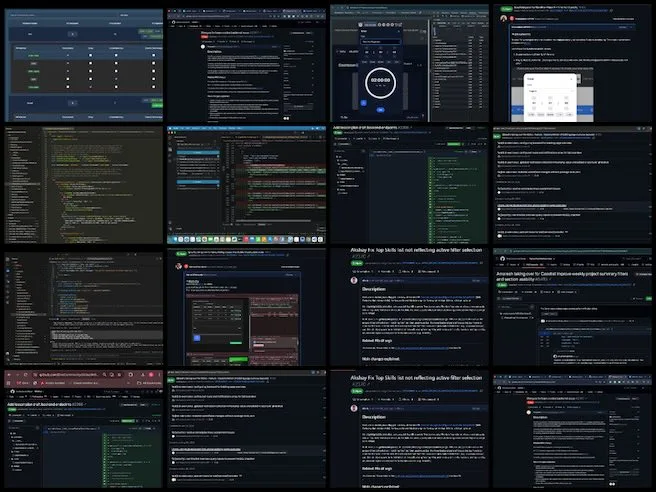
The Skye Team’s summary, covering their work on the Highest Good Network, was managed by Anthony Weathers (Software Engineer), with a team consisting of Jaden Wong (Software Engineer), Purav Patel (Software Engineer), and Swathi Angadi (Software Engineer), supporting One Community’s mission of cross-functional software development and system improvements. This work advances the team’s objectives, ensuring that completed tasks directly contribute to the work on creating better sustainability.
This week, Anthony continued work on the warning tracker hotfix by fixing order values for newly created trackers, adding tracker-specific descriptions to EditableInfoModal.jsx and verifying that descriptions could be edited, saved and displayed correctly. He also investigated the blue square issuing issue, created frontend PR #5588 and backend PR #2369 and resolved merge conflicts and reviewer feedback for PRs #3600 and #1447. Jaden opened PR #5563 to address dark mode issues on the Top Community Members page by removing conflicting CSS rules, standardizing table styling and moving inline styles into CSS Module classes. He also added error handling for failed data requests and verified the changes through ESLint, Stylelint, SonarQube and pre-commit checks, furthering One Community’s mission of creating better sustainability.
Purav continued Job Applications E2E testing and launch preparation across several frontend PRs, including testing, rebasing and updating PRs #5473, #5544, #5537, #5538, #5541 and #5536. His work included resolving deployment and merge issues, improving dark mode and contrast behavior, validating tooltips and file uploads, running related unit and production tests and approving completed PRs with QA notes. Swathi worked on SonarQube and Yarn-related issues, corrected CSS and CSS Module problems, resolved merge conflicts for the Edit to Reorder task, restored code lost during merging and fixed related build failures. These activities supported the work on creating better sustainability. Check the image collage below for a visual overview of the Skye Team’s work for the week.
SOFTWARE PR REVIEW TEAM A-N
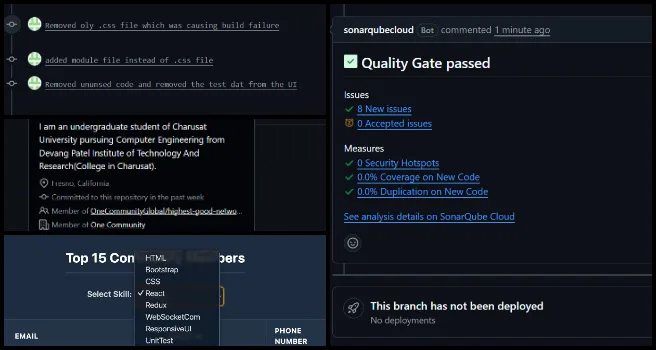
The PR Review Team’s summary for members with names starting with A–N was managed by Sai Sree Dongari (Data Analyst). The Highest Good Network is a foundation for measuring our results in creating better sustainability. This week’s active members of this team were Aadit Trivedi (Software Quality Assurance & Team Coordinator), Carl Bebli (Software Developer), Deepigha Japamony (Software Engineer), Isha Pawar (Software Engineer), Mahika Kakkad (Software Engineer), Mallikharjuna Abhiram Mulpuri (Software Engineer), Manav Kheni (Software Developer), and Nathan Hoffman(Software Engineer). They reviewed all Highest Good Network PRs shared in this week’s update. Learn more about how the Highest Good Network open source hub measures progress toward creating better sustainability. The collage below shows a compilation of this team’s work.
SOFTWARE PR REVIEW TEAM O-Z
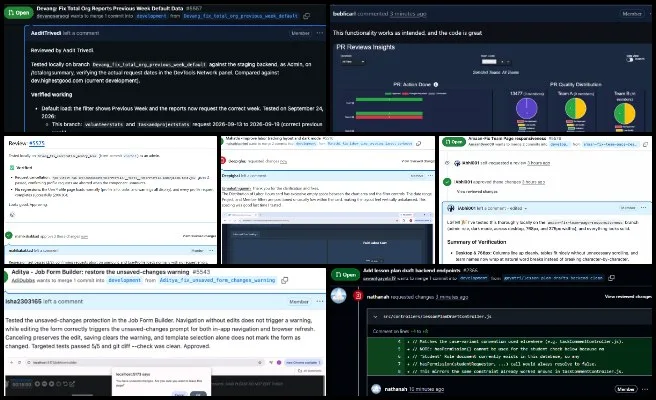
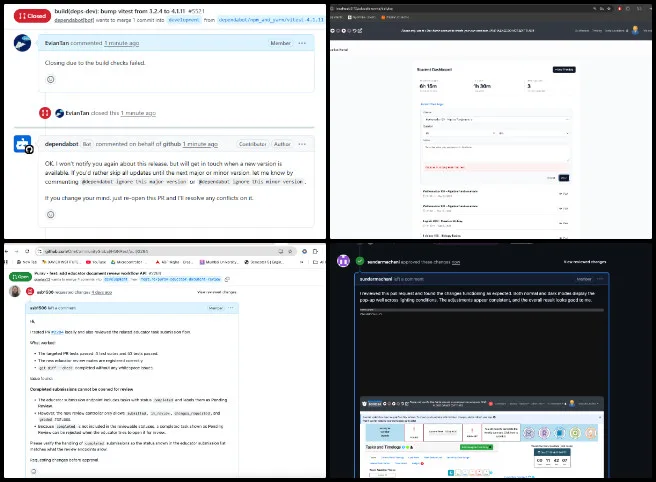
The PR Review Team’s summary for members with names starting with O – Z was managed by Shameera Musthafa (Data Analyst). The Highest Good Network Software is a foundation for measuring our results in creating better sustainability. This week’s active members of this team were Rahul Rubugunday (Software Engineer), Shreya Shailesh Bandodkar (Software Engineer), Sundar Machani (Software Engineer), and Yiyun Tan (Software Engineer). They reviewed all the Highest Good Network PRs (Pull Requests) shared in this week’s update. Learn more about how the Highest Good Network open-source hub measures progress towards our goal of creating better sustainability. The collage below shows a compilation of the work from this team.
AND WE PRODUCED THIS WEEKLY UPDATES BLOG – CLICK HERE TO SUBSCRIBE
FOLLOW ONE COMMUNITY’S PROGRESS (click icons for our pages)
INVESTOR PAGES
GET INVOLVED
DONATE | WAYS ANYONE CAN HELP | MEMBERSHIP
CLICK HERE FOR ALL PAST UPDATES