One Community
Open Source Sustainable Living and World Change – One Community Weekly Progress Update #686
At One Community, we are dedicated to fostering open source sustainable living and world change through an all-volunteer effort created for “The Highest Good of All.” Our self-replicating model integrates sustainable approaches to food, energy, housing, education, economics, and social architecture to support fulfilled living and global stewardship practices. Through open sourcing and free sharing the complete process, we are building a global network of teacher/demonstration hubs that empowers communities to regenerate our planet.
- Here’s our project overview
- Here’s our world-change methodology
- Here’s how this becomes self-replicating
- Here’s how we are open source and free-sharing all the do-it-yourself designs
OUR MAIN OPEN SOURCE HUBS
Click on each icon to be taken to the corresponding Highest Good hub page.
One Community’s physical location will forward this movement as the first of many self-replicating teacher/demonstration communities, villages, and cities to be built around the world. This is the May 11, 2026 edition (#686) of our weekly progress update detailing our team’s development and accomplishments:
Open Source Sustainable
Living and World Change
One Community Progress Update #686
DONATE | COLLABORATE | HELP WITH LARGE-SCALE FUNDING
CLICK HERE IF YOU’D LIKE TO RECEIVE AN EMAIL EACH WEEK WHEN WE RELEASE A NEW UPDATE
YOU CAN ALSO JOIN US THROUGH SOCIAL MEDIA


ONE COMMUNITY WEEKLY UPDATE DETAILS
HIGHEST GOOD HOUSING PROGRESS
One Community is fostering open source sustainable living and world change through Highest Good housing that is artistic and beautiful, more affordable, more space efficient, lasts longer, DIY buildable, and constructed with healthy and sustainable materials:
- Learn about: Our Upcoming Crowdfunding Campaign
- Learn about the different village models and open source sustainable living and world change: 7 Sustainable Village Models
- Visit the open source portals for the first two: Earthbag Village OS Hub | Straw Bale Village OS Hub
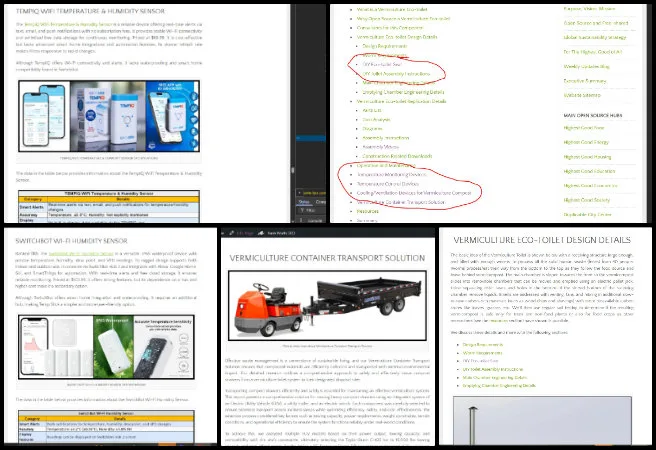
This week, Rajeshwari Bhirud (Software Engineer), working as a web designer, continued working on the Vermiculture Eco-toilet Design webpage. She improved the vermiculture blog by completing the Temperature Control Devices, Venting and Cooling, and Vermiculture Container Transport Solution sections. Rajeshwari also refined the webpage structure and formatting, organized images for better presentation, resolved layout issues, ensured links opened correctly, and continued enhancing the overall blog structure and user experience. Her work supports open source sustainable living and world change by improving the accessibility and usability of educational sustainability resources. Review the latest updates in the images below.
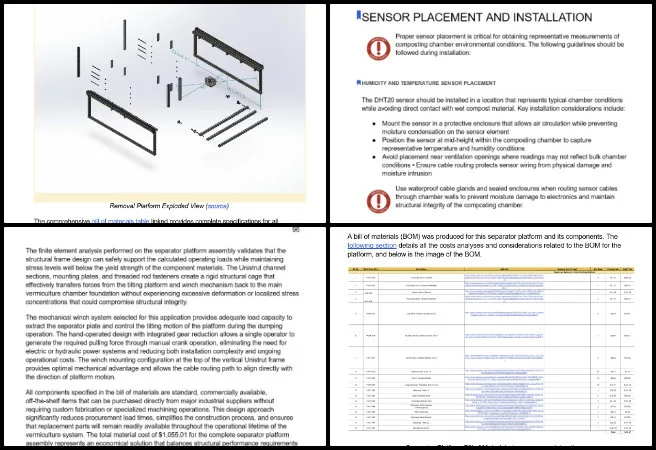
Rishi Chakrapani (Mechanical Engineer) continued working on the Vermiculture Toilet. He integrated feedback for the removal platform report through updates to the analysis, formatting, and supporting details. Rishi also conducted additional FEA iterations for the separator platform to further evaluate the structural response under the specified loading conditions and verify consistency across the results. Additional research was compiled for the sensor selection report, and the new information was incorporated into the existing documentation to expand the comparison and evaluation of the selected components. These efforts contribute to open source sustainable living and world change through continued refinement and validation of sustainable engineering systems. Below, you’ll find some images of this work.
DUPLICABLE CITY CENTER PROGRESS
One Community is fostering open source sustainable living and world change through a Duplicable and Sustainable City Center that is LEED Platinum certified/Sustainable, can feed 200 people at a time, provide laundry for over 300 people, is beautiful, spacious, and saves resources, money, and space:
- Learn about this building and its function and open source sustainable living and world change: Duplicable City Center Open Source Hub
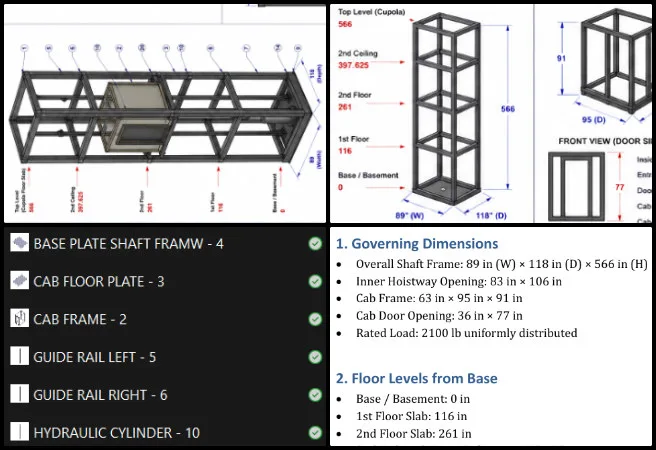
This week, Akhil Shesham (Mechanical Engineer) continued working on the hydraulic elevator project by creating models and developing design documentation for structural elements including the shaft frame, cab frame, guide rails, rail brackets, hydraulic cylinder, piston rod, and base plate. He created individual 3D component models in SolidWorks for these parts and prepared technical documentation with dimensioned drawings, component layouts, and preliminary boundary condition definitions to support future structural analysis and assembly integration. This open source Duplicable City Center project is fostering open source sustainable living and world change. For more information, check the image below.
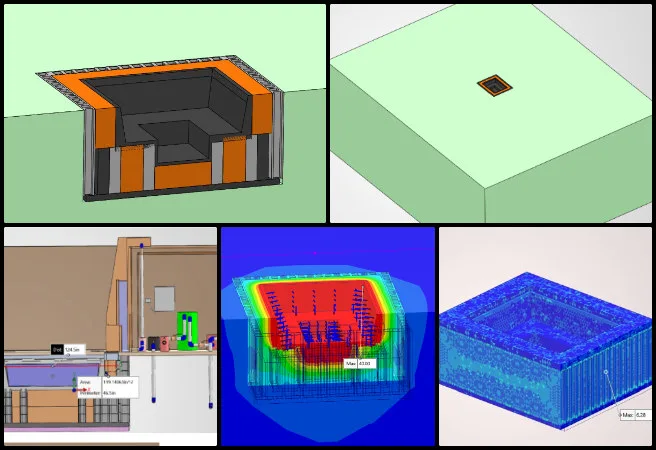
Bevan Chiu (Mechanical Engineer) continued his work finishing the City Center Eco-spa Designs. He worked on the tub cinderblock placement rationale and the initial thermal FEA model for insulation thickness analysis. He evaluated structural support, insulation space, user comfort, and mechanical room clearance to determine design constraints for the tub assembly. For the top section of the tub, he identified a maximum insulation thickness of 14.25 inches to maintain clearance with the mechanical room walls and alignment with the plumbing access panels and supporting joists. For the bottom section, he analyzed the relationship between insulation thickness, seat width, and tub depth. Bevan also created a simplified CAD model of the cinderblock layout, insulation, and tub frame based on the current design dimensions for use in the thermal FEA setup. In addition, he adjusted the mesh aspect ratio and applied temperature boundary conditions before completing an initial simulation run. This open source Duplicable City Center project is fostering open source sustainable living and world change. For more details, refer to the image below.
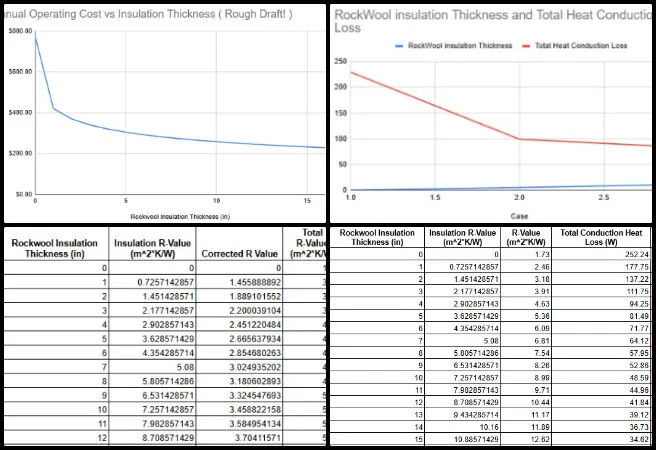
Kaartick Tamilarasan (Mechanical Engineer) continued working on the Duplicable City Center design. He focused on the thermal analysis of the hot tub beyond the initial finite element analysis data generated in Ansys. He reviewed the original hand calculations based on a one-dimensional composite wall model and compared them with the FEA results to evaluate differences at higher insulation thicknesses.Kaartick analyzed the effects of three-dimensional soil heat transfer, tapered tub geometry, and the inclusion of the cement layer on the thermal model results. Based on the available FEA data points, he developed a power-law correction model and compared the corrected calculations with the simulation results at multiple insulation thicknesses. He then applied the updated model across insulation thicknesses from zero to sixteen inches to evaluate the relationship between insulation thickness and estimated annual operating cost. Discover One Community’s open source Duplicable City Center, which is fostering open source sustainable living and world change. See the visuals below for a closer look.
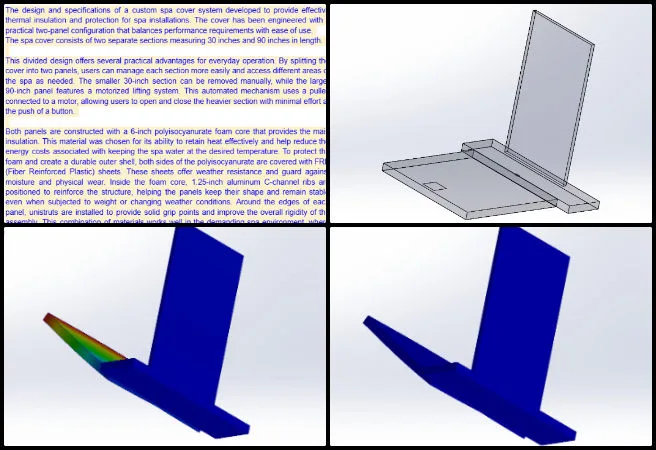
Shivarama Krishna Revanuru (Mechanical Engineer) continued working on the Duplicable City Center design. He focused on writing the project report by collecting relevant data and supporting documents. He updated the SPA cover CAD model based on feedback from teammates, including revisions to the design and related features. Shivarama also performed structural FEA checks on the SPA cover to analyze the design under loading conditions. This open source Duplicable City Center project is fostering open source sustainable living and world change. The images below illustrate aspects of this work.
HIGHEST GOOD FOOD PROGRESS
One Community is fostering open source sustainable living and world change through Highest Good food that is more diverse, more nutritious, locally grown and sustainable, and part of our open source botanical garden model to support and share bio-diversity:
- Learn about the structures and open source sustainable living and world change: Hoop House Hub | Aquapini & Walipini Open Source Hub
- See what we’ll be growing: Gardens & Hoop Houses | Large-scale Structures | Food Forest | TA
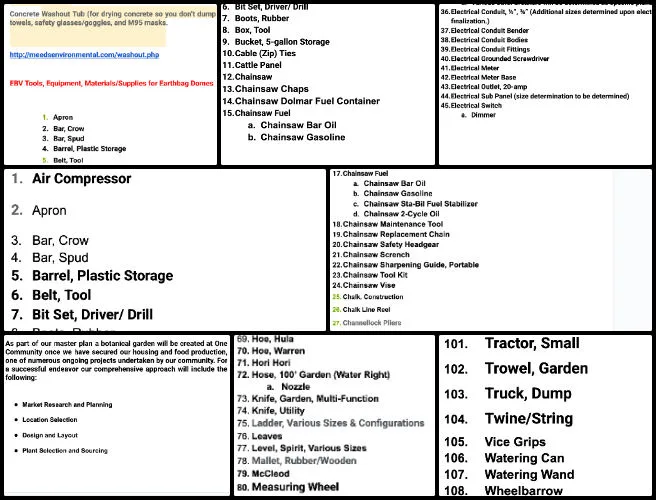
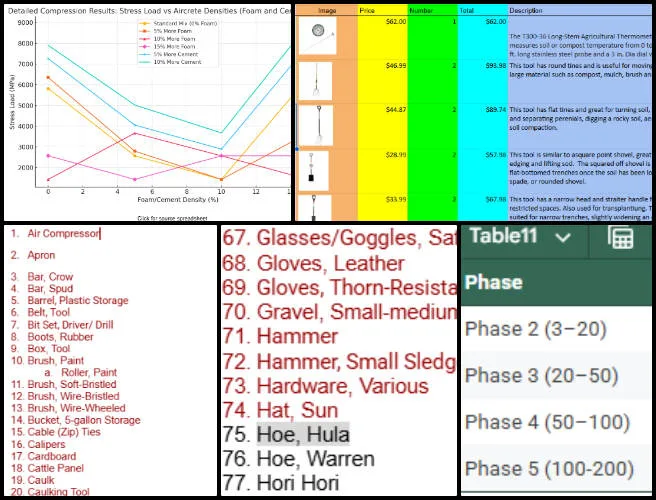
This week, the core team continued working on the Master Tools, Equipment, and Materials/Supplies List for the Large-scale Garden, Botanical Garden, and other Highest Good Food components. They reviewed documentation for the Aquapini, Botanical Garden, Chick, Earthbag Village, Energy, and Food Forest projects and alphabetized fencing entries throughout the document to align with the formatting used for other projects on the master Tools, Equipment, Materials/Supplies record. Their efforts contribute to One Community’s mission of open source sustainable living and world change through open-source collaboration, ecologically responsible innovation, and a focus on long-term global development. The collage below portrays the team’s efforts and achievements for the week.
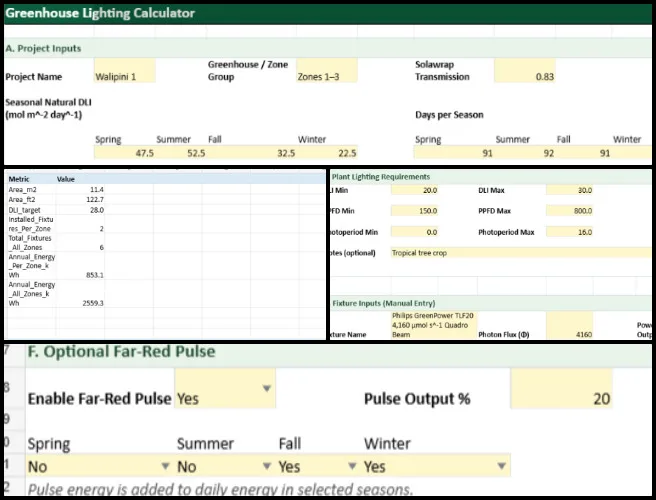
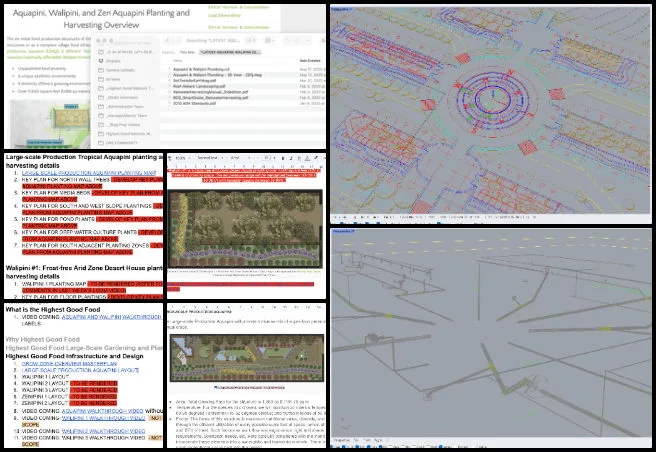
Jay Nair (BIM Designer) continued work on the Aquapini and Walipini Planting and Harvesting documents and created a lighting energy calculator using a spreadsheet to support greenhouse lighting analysis. He organized calculation formulas, structured input and output fields, and integrated lighting energy data into a format that allows for easier and more consistent calculations. The spreadsheet was designed to support future use across different greenhouse zones and lighting configurations. These updates improve the stability and adaptability of shared systems, supporting the broader goal of open source sustainable living and world change. See the collage below portraying the work done this week.
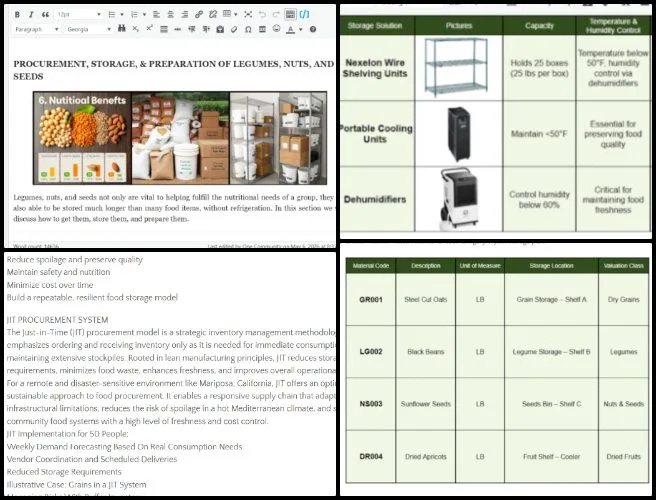
Prudhvi Marpina (Data Analyst) continued supporting the Highest Good Food website development, Highest Good Network software development, marketing, and administration activities. He worked on the Food Procurement and Storage page by updating the latest content and images, implementing SEO optimization for page images based on feedback, and making corrections requested during the review process. He also coordinated with Jae regarding updates and required modifications to the page content and structure. In addition, Prudhvi contributed to Phase 5 governance by updating Deliverable 3 action item descriptions in the Phase 5 document. He also supported OC administration by updating the weekly WordPress blog and providing feedback on the administration team’s work for the reporting period. This work supports One Community’s mission of open source sustainable living and world change. See below for images showcasing his work.
Shivangi Varma (Architectural Designer and Planner) continued working on the redesign of the Highest Good Food overall presentation. She resumed designing the ADA access based on input received and updated the set of diagrams for ADA access in response to the Loom video. Shivangi continued developing the diagram package for the Open Source Hub page, advanced other pending diagrams for the Open Source Hub page, and began integrating the diagram links into the overall Highest Good Food Infrastructure diagram list. This work supports One Community’s mission of open source sustainable living and world change. See below for images showcasing her work.
HIGHEST GOOD ENERGY PROGRESS
One Community is fostering open source sustainable living and world change through Highest Good energy that is more sustainable, resilient, supports self-sufficiency and includes solar, wind, hydro and more:
- Learn about the open source sustainable-energy foundations and open source sustainable living and world change: Solar, Hydro, and Wind
- Explore our research into the most sustainable products and companies for saving water and energy: Insulation, Eco-laundry, Lightbulbs and Light Bulb Companies, Doors and Door Companies, Windows and Window Companies, Toilets, Faucets and Faucet Accessories, Urinals, and more.
This week, the core team continued contributing to the Highest Good Energy initiative. They completed and verified links to data used for the energy needs and cost analysis summary graph. They then created a list of tools and equipment needed for the Phase 1 food infrastructure and started developing a spreadsheet to show the related cost analysis. The team also reviewed the Aircrete document based on feedback provided in the review video and added comments identifying two inconsistencies. This work contributes to open source sustainable living and world change, as shown in the collage below.
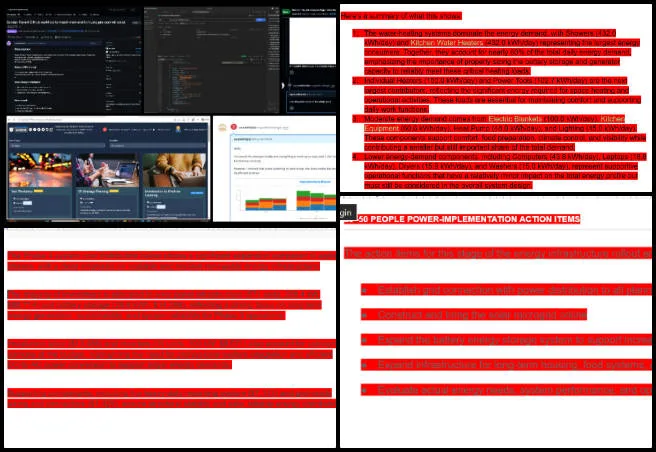
Shameera Musthafa (Data Analyst) continued contributing to the Highest Good Energy initiative. She supported OC Administration and the PR Review Team by coordinating PR review workflows, reviewing the work of both the Admin and PR teams, and providing feedback to ensure accuracy, clarity, and consistency across all deliverables. She organized and categorized project images, created visual collages, and finalized blog-related content as part of PR review coordination, ensuring that both visual and written materials were properly curated and documented. Additionally, Shameera contributed to the Highest Good Energy report pages and related visualizations. She also supported the hiring process by interviewing and evaluating candidates. This work plays a key role in open source sustainable living and world change. See below for images showcasing her work.
HIGHEST GOOD EDUCATION PROGRESS
One Community is fostering open source sustainable living and world change through Highest Good education that is for all ages, applicable in any environment, adaptable to individual needs, far exceeds traditional education standards, and more fun for both the teachers and the students. This component of One Community is about 95% complete with only the Open Source School Licensing and Ultimate Classroom construction and assembly details remaining to be finished. We’ll report on the final two elements to be finished as we develop them.
With over 8 years of work invested in the process, the sections below are all complete until we move onto the property and continue the development and open sourcing process with teachers and students – a development process that is built directly into the structure of the education program and everything else we’re creating too:
- Program Overview: Education Open Source Hub
- How the components work together in designing human orchestrated eco-abundance and open source sustainable living and world change: How to use the Education for Life Program
- Lesson Plans for Life – Lesson Plans How-to
- Foundations of Outstanding Leaders, Teachers, and Communicators
- Curriculum for Life
- Teaching Strategies for Life
- Learning Tools and Toys for Life
- Evaluation and Evolution
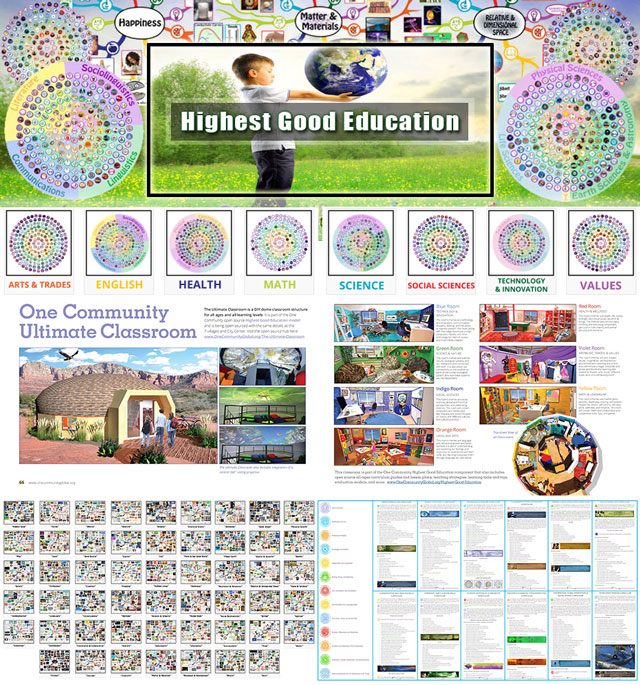
Highest Good Education: All Subjects | All Learning Levels | Any Age – Click image for the open source hub
HIGHEST GOOD SOCIETY PROGRESS
One Community is fostering open source sustainable living and world change through a Highest Good society approach to living that is founded on fulfilled living, the study of meeting human needs, Community, and making a difference in the world:
- Read the Highest Good society overview and open source sustainable living and world change: Highest Good Society
- Learn about the model for fulfilled living and sharing: A Day in the Life
- Learn about the 4 economic models: RBE | For-profit | Non-profit | Entrepreneurship
- Learn about our open source community collaboration and management software: The Highest Good Network
This week, core team completed over 45 hours managing volunteer work reviews, handling emails, overseeing social media accounts, supporting web development, and identifying and integrating bug fixes for the Highest Good Network. They also interviewed and onboarded new volunteer team members. Additionally, they produced and integrated the video above, which highlights how open source sustainable living and world change serves as a foundational element of One Community’s broader mission. The following images showcase highlights of this work.
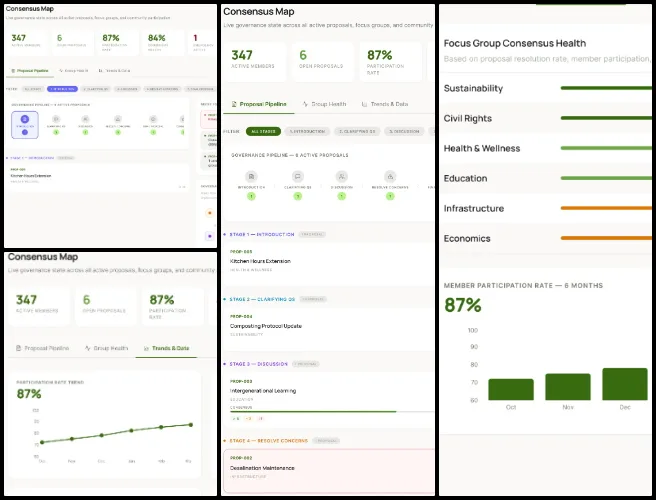
Pooja Kulkarni (UI/UX Designer) continued editing and refining content and design across governance dashboards, including the Community Outreach, Sustainability, Infrastructure, Education, and Health and Wellness modules, by improving layout clarity and consistency. She refined the Consensus Map and governance analytics experience for the One Community governance platform, updating the Proposal Pipeline, Group Health, and Trends & Data sections to improve information hierarchy, proposal-stage visibility, and community governance tracking. Pooja also worked on interactive filtering behaviors across governance stages including Introduction, Clarifying Questions, Discussion, Resolve Concerns, Final Proposal, and Consensus, while improving the visual presentation of active proposals, participation metrics, governance structure, and consensus indicators. She integrated governance health summaries, participation trends, focus group comparisons, and proposal statistics to support clearer public-facing reporting and transparency, and improved dashboard usability and stage-based navigation to align with the Total Org Governance Summary direction and stakeholder feedback. This work contributes to open source sustainable living and world change; the images below highlight key aspects of her work.
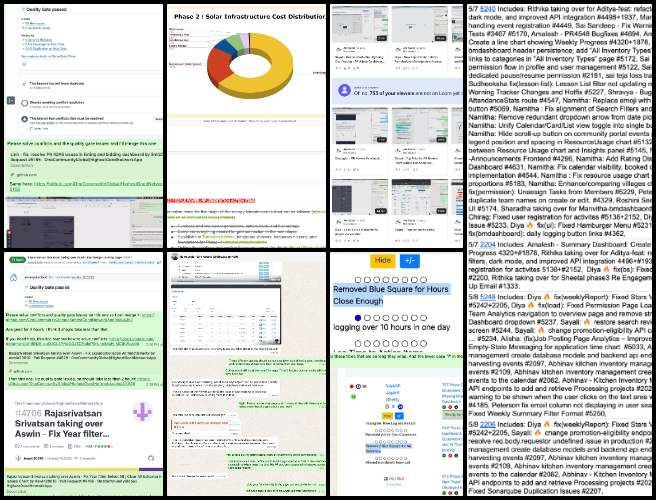
Valentina Collini (Designer) worked on learning and applying the web design workflow provided by the team while contributing to the development and organization of webpage content. She reviewed assigned materials, followed the tutorial process, and assisted with building and formatting pages according to project guidelines. She updated webpages by adding reviews, images, and properly structured content while ensuring consistency, clarity, and correct formatting throughout the pages. She also worked on organizing page layouts, reviewing content placement, and becoming more familiar with the website editor and publishing process. Valentina also focused on accuracy, attention to detail, and improving her understanding of the team’s workflow to help prepare pages for review and future publication. To learn more about how this work supports open source sustainable living and world change, visit the Highest Good Society and Highest Good Network pages. See the collage below to view her achievements this week.
Yagna Reddy Badvel (Data Analyst & Team Administrator) continued supporting administrative operations by reviewing team time logs for accuracy, identifying inconsistencies, and following up with users to ensure proper task-based logging and compliance with reporting guidelines. He also maintained the HGN Bugs & Features tracking sheet by verifying task statuses, priorities, and categorization, refining descriptions, correcting formatting and link issues, and organizing entries to support accurate tracking and efficient workflow management. These updates strengthen the stability and flexibility of shared systems, advancing the broader goal of open source sustainable living and world change. See the collage below portraying the work done this week.
ADMINISTRATION TEAM
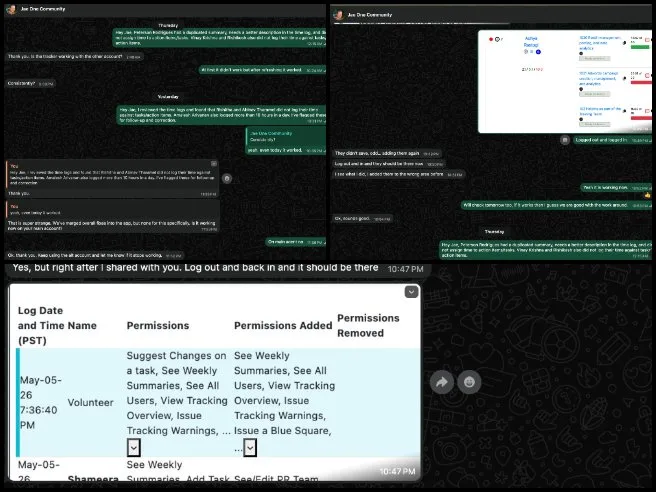
The Administration Team’s summary, which covers their work on the Highest Good Network, was managed by Prudhvi Marpina (Data Analyst) and includes Adhya Rastogi (Business Analyst), Hemanth Sai Venkata Srinivasa Kumar Nidamanuru (Administrative Assistant), Mridul Bhushan (Volunteer Project Strategy Analyst and Team Administrator), Olawunmi “Ola” Ijisesan (Administrative and Management Support), Priyanshi Sharma (Data Analyst and Team Administrator), Rishitha Adepu (Administrator), Sai Sree Dongari (Data Analyst), Sayantan Paul (Frontend Tester and Software Team Administrator), Shravya Chilukoori (Software Developer), and Tanmay Nihal Harwani (Data Scientist). The Administration Team supports the Highest Good Network, a tool designed to track and measure progress while developing systems that contribute to facilitating open source sustainable living and world change. Through administrative support, documentation, testing, training, recruitment, analytics, and content management, the team helps advance this mission, aligning with One Community’s vision of building a replicable and sustainable future model.
This week, Adhya worked on end-to-end dashboard testing, Reddit engagement, Google Ads optimization, and administrative support activities. Hemanth reviewed pull requests, validated functionality, and documented reproducible issues related to dropdown alignment and dashboard score visibility. Mridul managed LinkedIn and X/Twitter publishing, updated analytics dashboards, and prepared Blog #685 content for publication, while Ola reviewed Pinterest KPIs and optimized administrative workflows through improved organization and workspace management. These efforts contribute to improved system performance, communication, and operational efficiency in support of facilitating open source sustainable living and world change.
Priyanshi conducted detailed frontend testing and UI validation across multiple HGN dashboard sections, documenting usability concerns, responsiveness inconsistencies, and dark mode issues for further refinement. Rishitha managed content administration, SEO optimization, social media engagement, dashboard updates, and interview coordination activities using Python scripts and data tracking tools. Sai Sree organized PR review materials, contributed to dashboard testing workflows, coordinated issue tracking, and supported hiring activities through candidate interviews and feedback management. These coordinated activities strengthen collaboration, accountability, and system reliability in support of facilitating open source sustainable living and world change.
Sayantan handled administration responsibilities, coordinated software development tasks, and performed extensive dashboard and workflow testing across multiple PRs while identifying integration and UI-related issues for follow-up. Shravya supported weekly blog coordination activities and completed PR testing to validate functionality and confirm development requirements were met. Tanmay contributed through administrative support, dashboard testing, issue documentation, and task coordination to support ongoing improvements within the Total Organization Summary dashboard. To learn more about how this work supports facilitating open source sustainable living and world change, visit the Highest Good Society and Highest Good Network pages. Highlights of the team’s contributions are shown in the collage below.
HIGHEST GOOD NETWORK PROGRESS
 One Community is fostering open source sustainable living and world change through open source Highest Good Network® software that is a web-based application for collaboration, time tracking, and objective data collection. The purpose of the Highest Good Network is to provide software for internal operations and external cooperation. It is being designed for global use in support of the different countries and communities replicating the One Community sustainable village models and related components.
- Learn about our open source community collaboration and management software and open source sustainable living and world change: The Highest Good Network
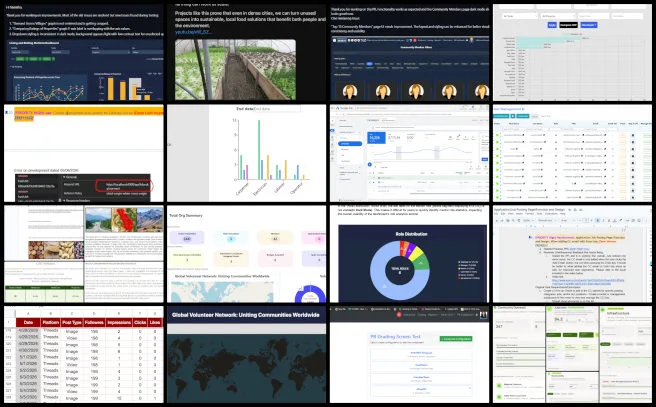
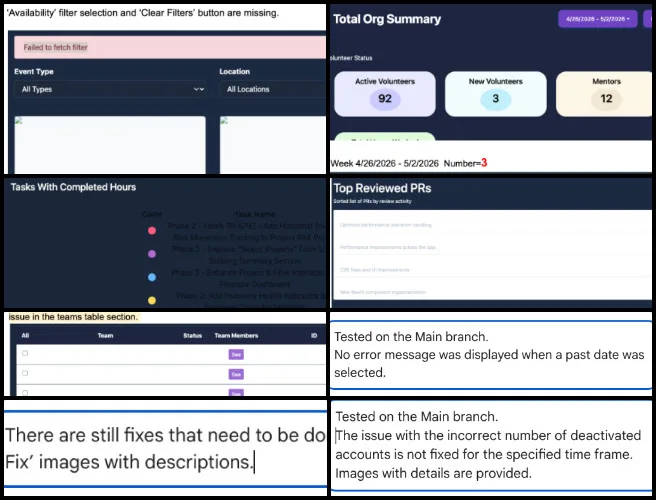
This week, the core team continued testing Highest Good Network pull requests. This effort highlights One Community’s commitment to reinventing the sustainability industry. They performed HGN PR testing on the main branch and confirmed 10 fixed PRs. They identified several PRs that were not fixed, including capacity-based event filters on the Event Database Design page, cleanup of the inventory types page, the missing “Ending After” date filter, UI responsiveness and dark mode implementation issues, and deactivated volunteer counts not being reflected correctly with the time filter. They were not able to test the PR related to enhancing validation, feedback, and action controls on Daily Equipment because there was no data on the main branch. They also reviewed the list of reported dark mode issues listed in their Google document, updated the document with details and images, removed fixed items from the list, and added seven new tasks related to dark mode issues. This work contributes to open source sustainable living and world change. See the Highest Good Society and Highest Good Network pages, and the collage below, for an overview of the team’s contributions.
ALPHA SOFTWARE DEVELOPMENT TEAM
The Alpha Software Team, working on the Highest Good Network software, was managed by Lin Khant Htel (Frontend Software Developer). The team includes Maithili Kalkar (Software Engineer), Som Ramnani (Software Engineer), Sai Sandeep Koritala (Software Engineer) and Casstiel Pi (Software Engineer). The Highest Good Network software is a key part of creating measurable global transformation. The software supports social architecture, construction, production, and maintenance processes that contribute to the open source project and resilient ecosystems. Designed to be portable and scalable, the Highest Good Network is ideal for off-grid and sustainable living communities, reflecting One Community’s open source commitment on fostering open source sustainable living and world change.
This week, Lin managed the team summary covering multiple contributors and tracked the progress of ongoing tasks during the week. Lin also reviewed PR #5238 by examining the code and running tests locally, with all tests passing without issues. In addition, Lin checked Alpha team members’ weekly summaries, photos, and videos as part of regular team management responsibilities. This work supported open source sustainable living and world change.
Casstiel investigated and fixed issues affecting the Planned vs Actual Costs Tracking section in the Weekly Project Summary dashboard. The work included tracing incorrect component rendering logic, identifying duplicated component instances across dashboard sections, restoring the missing projectId prop required for chart rendering, and correcting placeholder chart behavior. Additional debugging verified project-based rendering flow, validated chart loading behavior, and ensured that financial tracking components rendered correctly without duplication. Merge conflicts and linting issues were also resolved while syncing the feature branch with the latest development branch, and this work aligned with open source sustainable living and world change.
Maithili started working on the Reddit auto-poster based on the existing MySpace and Slashdot auto-poster implementation. She completed the frontend work and continued backend development for the feature. During development, she found that the Slashdot implementation did not include backend support and planned to confirm the requirement with Jae. She also encountered cross-origin policy issues and ESLint errors while testing the feature and continued working on resolving them. These tasks contributed to open source sustainable living and world change.
Sai made code refinements in PR 1898 by refactoring JWT authentication logic and updating the controller and middleware to provide the Support role with secure access to key endpoints. He also implemented a logging mechanism to track Support user activities for improved oversight and monitoring. In PR 4589, he enhanced event filtering logic to improve tracking accuracy for drop-off and no-show scenarios and created a reusable filterByDate function to support cleaner and more maintainable code. These updates supported open source sustainable living and world change.
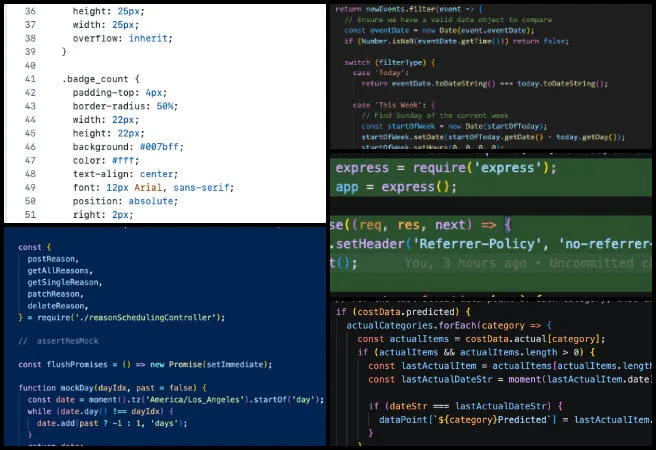
Som finished PR #5189 by adding missing column headers for Upcoming Events in the Participation route list view to improve readability and structure. He also updated related CSS based on SonarCloud feedback by removing a duplicate dark-mode selector and adjusting button colors to improve text contrast accessibility. In addition, he resolved yarn.lock conflicts, updated the PR description, and revisited PR #4215 to resolve merge issues related to badge styling changes. These changes aligned with open source sustainable living and world change. See the collage below to view the team’s work.
BINARY BRIGADE SOFTWARE DEVELOPMENT TEAM
The Binary Brigade Team, which presented their work on the Highest Good Network software, was managed by Amalesh Arivanan (Software Engineer) and included Manoj Puttaswamy (Software Engineer), Alisha Walunj (Software Engineer), Roshini Seelamsetty (Software Engineer), Ramsundar (Ram) Konety Govindarajan (Software Engineer), and Harsha Rudhraraju (Software Engineer). The Highest Good Network software is our tool for managing and objectively measuring progress, ensuring that all contributions are tracked and aligned with our mission of fostering open source sustainable living and world change. It supports social architecture, construction, production, and maintenance processes that contribute to open-source projects and resilient, sustainable ecosystems.
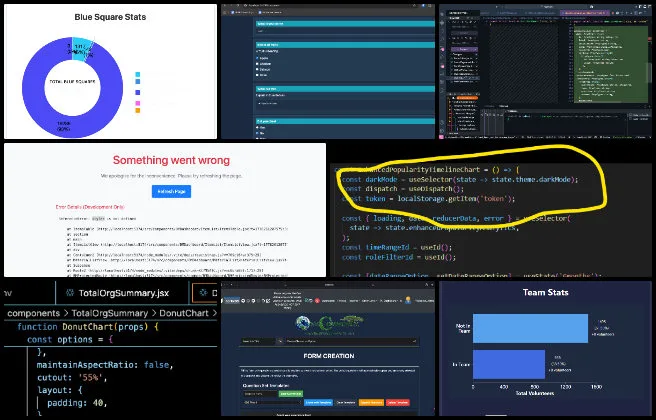
This week, Amalesh reworked the refresh timer logic related to timer functionality and implemented a hotfix for the timer refresh feature in pull request 5243, updated the implementation to address reported issues, verified feature behavior after the changes, worked on additional improvements for the bug addressed in pull request 4694, and reworked the incorrect team filter logic in pull request 4866 to improve behavior and accuracy. Harshavarma analyzed issues related to the 3-month, 6-month, and 1-year filters, identified that graph data was loading from a mock file instead of the backend, and started implementing Redux to fetch analytics data dynamically from the backend. These efforts support open source sustainable living and world change by enhancing clarity and accessibility.
He added reducers, constants, and actions for backend data mapping and state management, reorganized the codebase by separating filter logic, graph rendering logic, and backend fetching functionality into different files, added Redux files for enhanced popularity analytics data and related roles, integrated them into the existing state management flow, debugged API response handling and state update sequencing issues during integration testing, and reviewed the filter workflow to ensure correct backend requests for date range selections. Manoj continued work on the resource request form by resolving dark mode issues related to date input placeholders, upload box text, country code placeholder text, and error message visibility through scoped CSS module classes and explicit styling overrides. He also fixed a bug where the success banner remained visible after a failed resubmission, created pull request 4333 for review, worked on dark mode fixes for the BMDashboard, reported a related bug, and started work on the All Inventory page by adding embedded links in category titles while preserving the existing layout. This week’s progress advances open source sustainable living and world change across multiple project areas.
Ram resolved merge conflicts and review suggestions for pull requests 4554 and 5131, updated Inventory Types functionality to address SonarCloud security suggestions through safe case-insensitive exact matching and normalized input spacing, reviewed UI and backend endpoint changes related to a missing Add button issue, shared a recorded video with Jae for confirmation, and reworked the admin and owner timer submission issue by adding a guard in updateTimeEntries to skip Redux state refresh when the submitted entry’s personId does not match the currently displayed user, resulting in pull request 5245. Roshini worked on fixing Blue Square Stats donut chart interactivity and data display issues in the Total Org Summary section of the dashboard for Manager, Admin, and Tester logins. The work included removing zero-value categories, such as Vacation Time at 0%, from the chart until data becomes available, ensuring the chart updates dynamically when new data is populated, improving text label placement, visibility, contrast, and legibility across chart segments, and adding hover functionality to display segment information during interaction. After completing the updates, pull request 5236 was raised, and the functionality was verified in both dark and light modes. These updates strengthen open source sustainable living and world change by improving consistency and organization.
Alisha worked on the Job Form Builder Page issue, where form creation elements were not visible for the admin account by fixing form input field alignments and styling. She worked on handling form state behavior for actions such as clone template, delete template, clear template, and append template through button interactions. She also configured routeaccess for owners to allow viewing forms during creation and fixed the fetch job endpoint call on the Job Form Builder page to retrieve jobs when the Go button is clicked. See the Highest Good Society and the Highest Good Network pages for more on how this supports fostering open source sustainable living and world change. Highlights of the team’s contributions are shown in the collage below.
CODE CRAFTERS SOFTWARE DEVELOPMENT TEAM
The Code Crafters Team’s summary, covering their work on the Highest Good Network software, was managed by Sphurthy Satish (Software Engineer). The team includes contributions from Akshith Kumar Reddy Balappagari Gnaneswara (Full-Stack Developer), and Sphurthy Satish (Software Engineer). Their work contributes to One Community’s mission of open source sustainable living and world change through collaborative software development and continuous system improvements.
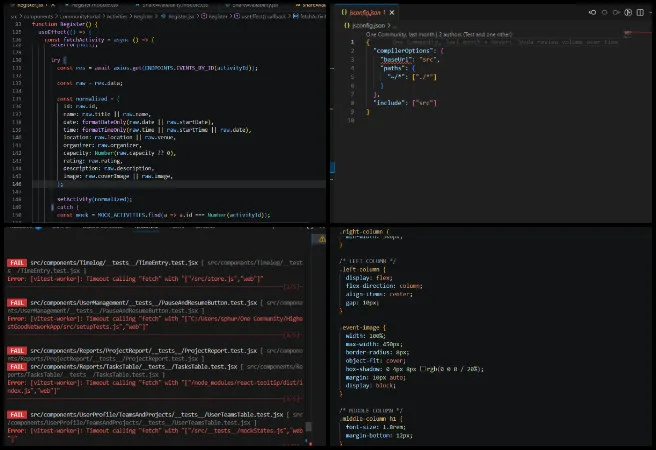
This week, Akshith continued working on resolving merge conflicts across multiple tasks. He worked on the Phase 3 task to add typo tolerance for type and location search in the Activity List, where he resolved the conflicts, tested the changes, and pushed the updated code to the branch. He also fixed and completed conflict resolution for tasks 4730 and 4770 after testing the related updates. In addition, he worked on the Phase 3 task to add the missing Share Availability option to events in the Registration Status page, where he refactored parts of the codebase and updated utility functions to ensure the implementation met SonarQube requirements. These updates facilitate the progression of high-priority tasks toward final approval and deployment for open source sustainable living and world change.
Sphurthy worked on the Dashboard task related to the Event Card Date display issue in the Community Portal application. The work focused on updating the event card UI to include the year in the displayed event date instead of showing only the day and month. The task involved reviewing the existing date formatting logic, identifying the required UI and data display updates, and implementing changes to improve clarity for events from past and future years. The work remains in progress while updates and validation continue for the expected date display format. By finalizing these adjustments, he maintained data consistency and layout stability for open source sustainable living and world change. All updates were resubmitted for verification to ensure the issues were fully resolved. To learn more about how this work supports open source sustainable living and world change, visit the Highest Good Society and Highest Good Network pages. The collage below showcases the team’s accomplishments for the week.
DEV DYNASTY SOFTWARE DEVELOPMENT TEAM
The Dev Dynasty Team’s summary, covering their work on the Highest Good Network software, was managed by Shravya Chilukoori (Administrative Software Engineer) and Neeraj Kondaveeti (Software Engineer). The team includes Adithya Cherukuri (Volunteer Software Engineer), Deekshith Kumar Singirikonda (Developer), and Rithika Pai (Software Engineer). The Highest Good Network software helps manage and objectively measure processes that support open source sustainable living and world change through social architecture, construction, production, and maintenance systems.
This week, Neeraj contributed to the open source sustainable living and world change software project by updating the Application/Job Posting page and application template form functionality. This work enabled users to fill, save, and submit applications, implemented PDF-only resume upload validation, stored applicant and job details in the database, added email confirmation and CC functionality, supported dark mode and mobile responsiveness, fixed layout and form behavior issues including oversized logo scaling and dropdown formatting, separated first and last name fields, added applicant type selection options, restricted volunteer hour inputs to numeric values, implemented a calendar picker for desired start date selection, removed duplicated questions, and updated search behavior so listing results only appear after filters are applied in support of the open source sustainable living and world change platform.
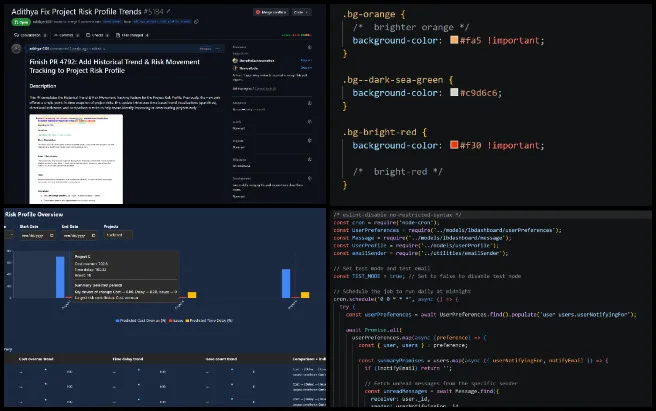
Adithya worked on historical trend and risk movement tracking for the project risk profile. He created helper functions for risk delta calculations, implemented directional indicators for increasing, decreasing, and stable project risks, extracted tooltip functionality into a standalone component to address SonarCloud reliability requirements, updated hover states to display risk contributors and drivers of change, resolved custom date filter issues by cleaning filtering arrays and adding start and end date inputs, updated CSS modules for dark mode tooltip and dropdown visibility, removed redundant state variables, verified responsiveness across devices, and reviewed uploaded images as part of supporting the open source sustainable living and world change software development initiative.
Rithika contributed to the open source sustainable living and world change software platform by working on multiple pull requests for the One Community HGN application. She rebased and resolved merge conflicts across frontend and backend PRs, improved chart components like the Lessons Learned bar chart and Material Cost Correlation Chart, and addressed SonarQube and stylelint issues. Her work included adding PropTypes validation, removing unused imports, extracting helper functions, and fixing CSS and logic issues such as contrast problems and nested ternaries. These updates improved code quality and stability, reduced SonarQube issues to zero, and ensured successful CI passes and stable merges across related pull requests.
Deekshith worked on application styling and backend notification improvements by updating CSS classes for accordion toggles, dashboard buttons, leaderboard sections, and reusable background color styles to improve UI consistency. He also enhanced the dailyMessageEmailNotification.js cron job by checking user notification preferences, fetching unread messages, generating HTML email summaries with timestamps and message content, sending notifications to users or test email accounts when test mode is enabled, and adding error handling and logging for scheduled job failures for the open source sustainable living and world change platform. The screenshots below relate to this work.
LUCKY STAR SOFTWARE DEVELOPMENT TEAM
The Lucky Star Team’s summary, covering their work on the Highest Good Network, was managed by Tanmay Nihal Harwani (Data Scientist) and Sohail Uddin Syed (Software Engineer). The team includes contributions from Aayush Shetty (Software Engineer), Chirag Bellara (Software Engineer), Shravya Kudlu (Software Development Engineer), Veda Bellam (Software Engineer), and Vinay Krishna (Software Engineer). Their work supports One Community’s mission of fostering open source sustainable living and world change through cross-functional software development and ongoing system improvements.
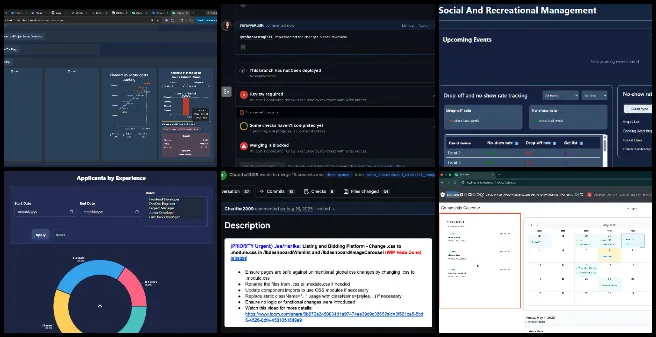
This week, Aayush worked on multiple Phase 2 and Phase 3 tasks within the HGN Software Development project by resolving SonarQube failures and merge conflicts related to the Tools and Equipment Tracking dashboard missing graph issue, documenting the completed work with screenshots and video, fixing the Insights Time Filter dropdown resizing bug, resolving merge conflicts in the feature branch, creating pull requests for the updates, and addressing the Resource Usage Time Filter dropdown width issue by implementing fixes, testing locally, and pushing the updates after resolving conflicts from the development branch. This work supported the One Community’s mission of fostering open source sustainable living and world change through continued platform stability and feature development.
Chirag completed the Community Calendar events display issue fix by updating the API endpoint to return all events for the Calendar screen, organizing the UI display of events, fixing the Calendar Events list to show all events for the selected date, updating the modal to allow navigation to the registration screen, creating pull request 2198 for API updates and pull request 5241 for UI changes, and analyzing and updating the latest news section to display events dynamically instead of relying on hard-coded data contributing to One Community’s mission of fostering open source sustainable living and world change.
Shravya focused on resolving backend SonarQube issues by addressing HTTP request validation and security concerns, re-reviewing previous merges, fixing failing test cases, and completing two pending tasks. Sohail enhanced the Experience analytics donut chart component by updating the charting logic for consistent data display, adding numerical labels inside donut segments using LabelList, implementing custom rendering for labels and percentages outside the chart with connector lines, creating a contrast color utility for text readability, memoizing visible segments to exclude zero-value entries, updating CSS to prevent clipping of labels and lines, and preserving all existing hover interactions, tooltips, filters, and theme-aware styling, furthering One Community’s mission of fostering open source sustainable living and world change through improved platform functionality.
Veda worked on multiple tasks within the HighestGoodNetworkApp project by resolving merge conflicts, addressing review comments, updating styling structures in the Listing and Bidding Platform, fixing issues in the Image Carousel branch, resolving conflicts related to migrating .css files to .module.css in Wishlist and ImageCarousel components, preparing related pull requests for review, and resolving merge conflicts related to permissions for creating different question sets in the Application and Job Posting Page functionality, contributing to fostering open source sustainable living and world change.
Vinay K worked on a Phase 2 task to enhance Planned vs Actual cost visibility in the Financials Dashboard by improving visualization logic to highlight cost variance and budget overruns for selected projects, addressing limitations in manual interpretation of financial differences, and continuing to refine and validate the visualization across datasets. See the Highest Good Society and the Highest Good Network pages to learn more about how this work supports fostering open source sustainable living and world change. Look at the collage below to view the team’s work for the week.
REACTONAUTS SOFTWARE DEVELOPMENT TEAM
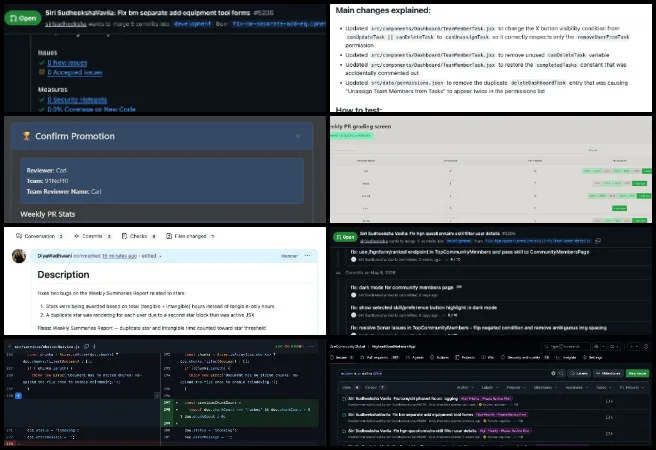
The Reactonauts team summary, which covers their work on the Highest Good Network, was managed by Diya Wadhwani (Software Developer) and Sayantan Paul (Frontend Tester and Software Team Administrator) and includes Aseem Deshmukh (Software Developer), Nirali Patel (Full Stack Developer), Sayali Sable (Software Engineer), Sri Satya Venkatasai Siri Sudheeksha Vavila (Software Engineer), and Suparshwa Patil (Software Engineer). This effort supports fostering open source sustainable living and world change through organized and structured workflows that strengthen component development for sustainable evolution.
This week, Aseem worked on Phase 2 improvements for the Financials Dashboard by fixing errors related to color mapping updates, adjusting the materials pie chart for color compatibility and consistency, adding tooltip explanations for planned costs, and making additional UI updates in the financials section. Diya fixed the “Unassign Team Members from Tasks” permission issue on the Dashboard, corrected Header hamburger menu behavior for narrow screens, updated weekly summary star calculations to use tangible-only time, resolved Netlify build failures related to navbar changes, fixed a race condition involving manual and cron-assigned Blue Squares, reviewed an outdated pull request and recommended closure, fixed a runtime crash on the Permissions Management page caused by an incorrect CSS module import, reorganized filter toggles on the Weekly Summaries Report page, improved the Owner Message image upload flow, and addressed backend SonarQube Quality Gate failures through security and code quality fixes. Through such collective actions the team members drive open source sustainable living and world change.
Nirali updated User Management to clear temporary edited user data after saving, handled edit mode state changes, prevented crashes caused by undefined editUser values, reviewed dark mode alignment issues, and continued work on the Volunteer Hours Reporting feature by implementing frontend reporting updates and backend APIs for committed hours calculations, filtering, grouping, and reporting support. She also began work on fixes related to Core Team members with more than five blue squares by reviewing carryover logic and related email calculations. This work supports open source sustainable living and world change through scalable and replicable solutions.
Sayali worked on multiple hotfixes and restorations, including fixing the Promotion Eligibility table loading issue by updating endpoint behavior, restoring missing promotion controls and persistence on the Promotion Confirmation Display Box, correcting navigation issues in the PR Dashboard dropdown, restoring the Search Reviewers feature on the Weekly PR Grading Screen, fixing reviewer-reported issues including authorization and loading errors, continuing work on Email Management UI fixes, and performing end-to-end PR review testing across multiple dashboard features. These efforts support open source sustainable living and world change through collaborative and scalable development.
Siri Sudheeksha Vavila worked on fixing Daily Logging Button Links in the BMDashboard, resolving issues in the “Create Team” redirect flow, updating separate inputs for tools and equipment with dark mode and UI improvements, and continuing work on the HGN Questionnaire Dashboard to address missing user details and layout issues related to skill filters and top community member displays. Suparshwa Patil worked on improving and stabilizing the HGN chatbot and upload page by performing end-to-end chatbot testing, fixing identified bugs, writing test cases, creating a pull request for the updates, improving upload page functionality, debugging development errors, and refactoring the codebase after stabilizing the new changes. These initiatives help drive open source sustainable living and world change through coordinated, mission-focused development. Below is the collage showcasing the Reactonauts team’s work for the week.
SKYE SOFTWARE DEVELOPMENT TEAM
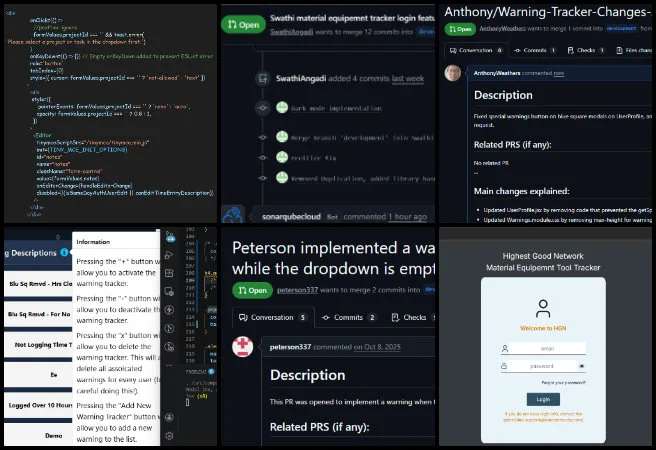
The Skye Team’s summary, covering their work on the Highest Good Network, was managed by Sayantan Paul (Frontend Tester and Software Team Administrator) and Anthony Weathers (Software Engineer). The team includes Peterson Rodrigues dos Santos (Full-Stack Developer) and Swathi Angadi (Software Engineer). The Highest Good Network software is committed to fostering open source sustainable living and world change by objectively tracking and managing progress across social architecture, construction, production, and maintenance processes, utilizing transparent, scalable systems that strengthen accountability, coordination, and resilient ecosystems.
This week, Anthony investigated issues related to the warning trackers, restoring the special warning buttons for blue squares through a hotfix in PR #5211 while requesting additional details to address problems with the warning icons. He also began implementing requested changes related to the warning list and completed one of the requested changes. Swathi worked on Dark Mode implementation with a focus on CSS updates and styling changes, added a Caps Lock detection feature to notify users during login input, tested the functionality end to end including edge cases, resolved merge conflicts, raised a pull request, captured videos and screenshots for documentation, and worked on resolving SonarQube duplication issues, which are still in progress. This progress contributes towards open source sustainable living and world change through small impactful actions leading to larger, lasting changes in ecosystems and social systems.
Peterson resolved conflicts in a pull request related to the “Add Tangible Time Entry” modal. The pull request implements a toast notification that appears when the user clicks the “Notes” text area without first selecting an option in the “Project/Task” dropdown. The toast informs the user that a project or task must be selected before notes can be entered. Peterson resolved conflicts in this pull request and in additional pull requests currently under testing. See the Highest Good Society and the Highest Good Network pages to learn more about how the development of open source sustainable living and world change is central to One Community’s goals, demonstrated through transparent, collaborative innovation within the Highest Good Network open source hub. See the collage below for the team’s work.
SOFTWARE PR REVIEW TEAM A-N
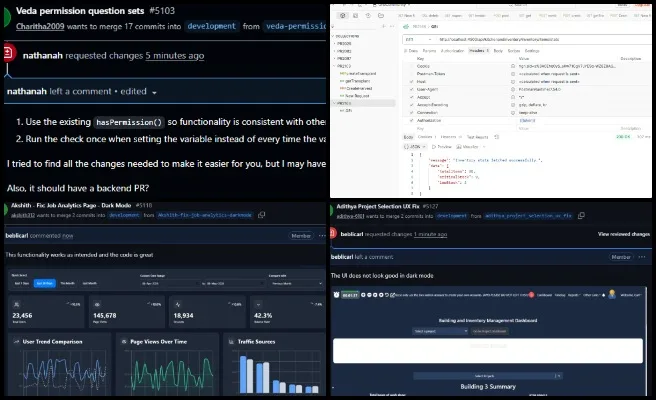
The PR Review Team’s summary for members with names starting with A–N was managed by Sai Sree Dongari (Data Analyst). The Highest Good Network is a foundation for measuring our results in fostering open source sustainable living and world change. This week’s active members of this team were Carl Bebli (Software Developer), Deepigha Japamony (Software Engineer), and Nathan Hoffman (Software Engineer). They reviewed all Highest Good Network PRs shared in this week’s update. Learn more about how the Highest Good Network open source hub measures progress toward fostering open source sustainable living and world change. The collage below shows a compilation of this team’s work.
SOFTWARE PR REVIEW TEAM O-Z
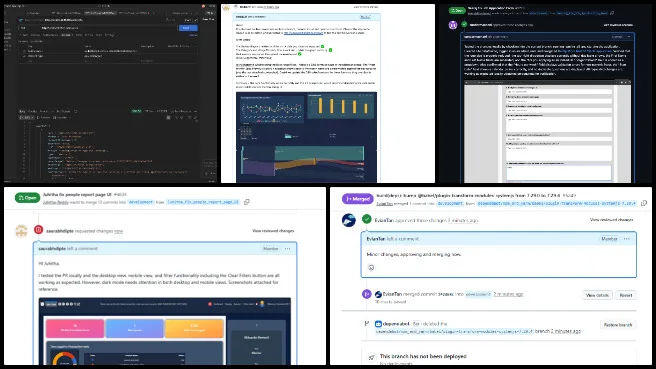
The PR Review Team’s summary for members with names starting with O–Z was managed by Shameera Musthafa (Data Analyst). The Highest Good Network is a foundation for measuring our results in open source sustainable living and world change. This week’s active members of this team were Radia Ahmed (Software Engineer), Saurabh Jayant Dipte (Software Engineer), Sireesha Kunchala (Software Engineer), Sundar Machani (Software Engineer), and Yiyun Tan (Software Engineer). They reviewed all the Highest Good Network PRs (Pull Requests) shared in this week’s update. Learn more about how the Highest Good Network open-source hub measures progress towards our goal of open source sustainable living and world change. The collage below shows a compilation of the work from this team.
AND WE PRODUCED THIS WEEKLY UPDATES BLOG – CLICK HERE TO SUBSCRIBE
FOLLOW ONE COMMUNITY’S PROGRESS (click icons for our pages)
INVESTOR PAGES
GET INVOLVED
DONATE | WAYS ANYONE CAN HELP | MEMBERSHIP
CLICK HERE FOR ALL PAST UPDATES