One Community
How to Jumpstart Global Regeneration – One Community Weekly Progress Update #713
At One Community, we are illustrating how to jumpstart global regeneration through the work of a dedicated all-volunteer team. We are developing sustainable approaches to food, energy, housing, education, economics, social architecture, and fulfilled living, while evolving global stewardship practices for every community we serve. All of it is open source and freely shared, giving the world access to the complete process. As our model begins to replicate itself, it will fuel a collaboration of teacher/demonstration hubs, building a world that works for everyone and honoring “The Highest Good of All.“
- Here’s our project overview
- Here’s our world-change methodology
- Here’s how this becomes self-replicating
- Here’s how we are open source and free-sharing all the do-it-yourself designs
OUR MAIN OPEN SOURCE HUBS
Click on each icon to be taken to the corresponding Highest Good hub page.
One Community’s physical location will forward this movement as the first of many self-replicating teacher/demonstration communities, villages, and cities to be built around the world. This is the November 16, 2026 edition (#713) of our weekly progress update detailing our team’s development and accomplishments:
How to Jumpstart Global Regeneration
One Community Progress Update #713
Video coming soon
DONATE | COLLABORATE | HELP WITH LARGE-SCALE FUNDING
CLICK HERE IF YOU’D LIKE TO RECEIVE AN EMAIL EACH WEEK WHEN WE RELEASE A NEW UPDATE
YOU CAN ALSO JOIN US THROUGH SOCIAL MEDIA


ONE COMMUNITY WEEKLY UPDATE DETAILS
HIGHEST GOOD HOUSING PROGRESS
One Community is illustrating how to jumpstart global regeneration through Highest Good housing that is artistic and beautiful, more affordable, more space efficient, lasts longer, DIY buildable, and constructed with healthy and sustainable materials:
- Learn about: Our Upcoming Crowdfunding Campaign
- Learn about the different village models and how to jumpstart global regeneration: 7 Sustainable Village Models
- Visit the open source portals for the first two: Earthbag Village OS Hub | Straw Bale Village OS Hub
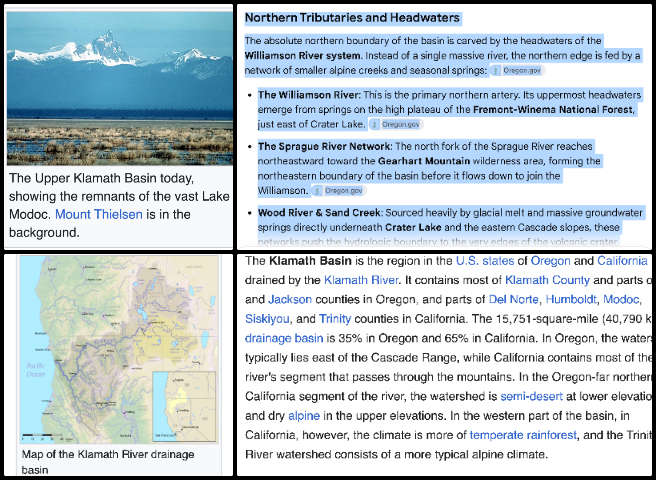
This week, the core team continued working on the Highest Good Housing component of property research. They completed and submitted the fencing update on the goat page and continued research on potential project location sites. Further investigation examined Klamath Basin boundaries and their differences from the Little Deschutes River, focusing on flat divides across a porous plateau of volcanic rock and pumice, where snowmelt and spring water seep into the aquifer rather than forming deep stream channels. The investigation also explored factors related to excess midge issues in the Klamath Basin. Additionally, they reviewed several properties in California and traced back a lead broker handling one of those listings to Montana. The images below highlight this property research, supporting One Community’s work on how to jumpstart global regeneration.
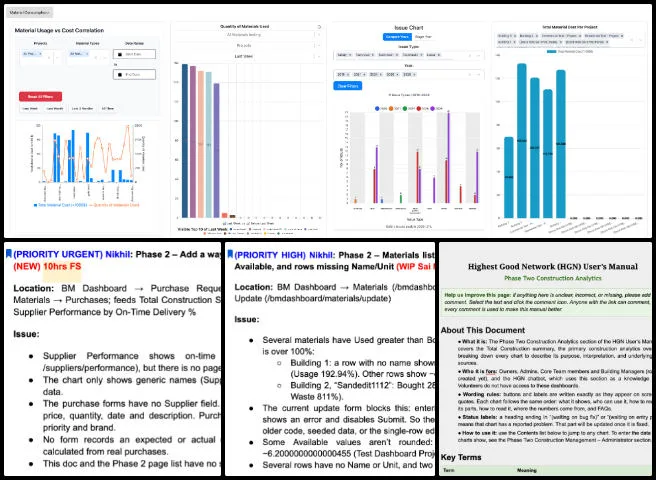
Bhaskar Nikhil Sunkara (Data Analyst) completed Sunday Administration work for blog #712, provided feedback to 10 volunteers, and prepared their blog summaries and collage. Following Jae’s feedback, he searched the Phase II document for existing reports, tested the Phase II dashboards to identify and verify issues, and then wrote 12 bug reports with screenshots, reproduction steps, and hour estimates. These included issues with the Quantity of Materials Used project filter, mismatched material costs between two charts, and tools that could not be checked out. Developers picked up all 10 bugs from his first two batches, with one bug fixed. Nikhil also wrote five urgent action items for missing data-entry pages covering injuries, suppliers, labor pay rates, planned budgets, and project locations, contributing to One Community’s mission of illustrating how to jumpstart global regeneration.
In addition, Nikhil retested charts marked as completed and reported two that were still missing. He began writing the Phase Two Construction Analytics section of the Highest Good Network User’s Manual, covering the Total Construction Summary and its 15 sections, Quantity of Materials Used, Total Material Cost Per Project, and Lessons Learnt. As part of the Training Team, he also reviewed the work of three new admins completing their admin training. The images below highlight his Administration, software testing, documentation, supporting One Community’s work on how to jumpstart global regeneration.
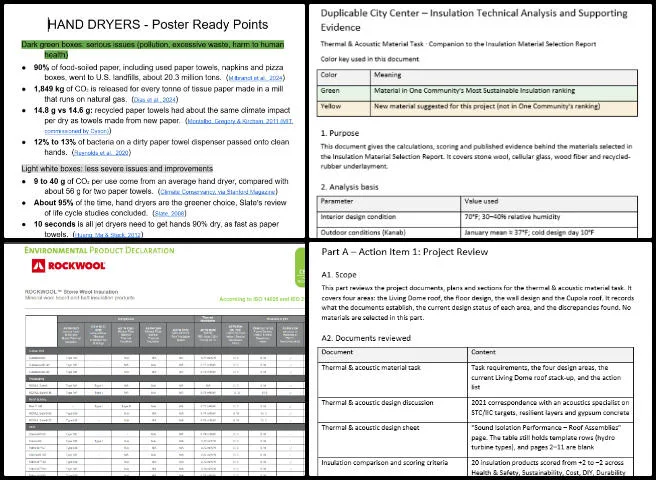
Fnu Bhargav Madhu (Civil Engineer) continued working on reference documents for One Community’s Most Sustainable Materials series, covering faucets, hand dryers, doors, lightbulbs, urinals, and non-recyclables. He edited and cross-checked One Community’s website information, then revised his work based on supervisor feedback. Bhargav then began researching thermal and acoustic insulation requirements for the Duplicable City Center, reviewing project documents, drawings, and existing roof and wall designs. He prepared a review report and compared One Community’s 20 ranked insulation materials and added options against fire safety, climate, and acoustic needs. Stone wool, the highest-ranked material in One Community’s research, was the best overall choice for roofs, walls, and floors, while cellular glass suited the walkable patio roof for its load-bearing capacity and water resistance, furthering One Community’s mission of illustrating how to jumpstart global regeneration.
Bhargav also developed comparison tables, layer-by-layer assembly configurations, and a technical analysis of eight insulation materials, supported by research papers, manufacturer data, and test results. The images below highlight his sustainable-materials research and documentation work, supporting One Community’s work on how to jumpstart global regeneration.
DUPLICABLE CITY CENTER PROGRESS
One Community is illustrating how to jumpstart global regeneration through a Duplicable and Sustainable City Center that is LEED Platinum certified/Sustainable, can feed 200 people at a time, provide laundry for over 300 people, is beautiful, spacious, and saves resources, money, and space:
- Learn about this building, its function, and how to jumpstart global regeneration: Duplicable City Center Open Source Hub
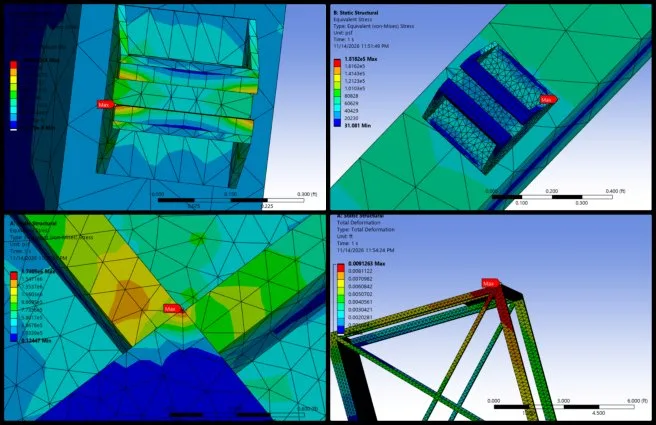
This week, Nidish Reddy Koppula (Mechanical Engineer) continued working on the Duplicable City Center design. He evaluated critical stress regions in the elevator cabin and performed a mesh refinement study to assess the behavior of localized stress peaks. The overall structural response remained within acceptable limits, while some localized high-stress regions were identified as expected stress singularities associated with geometric or modeling idealizations. He compared the stress behavior across different mesh refinements to distinguish these localized effects from the surrounding structural response. Nidish also started working on the elevator guide rails and began evaluating their design and structural requirements. This open source Duplicable City Center project contributes to illustrating how to jumpstart global regeneration. The collage below shows his work for this week.
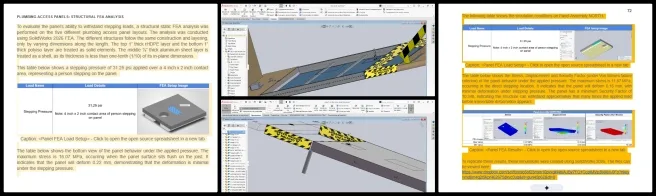
Angel Axel Pérez Asiain (Mechanical Engineer) continued working on the Duplicable City Center design by selecting a cover for the Sustainable Spa. He worked on the CAD documentation of the Access Panels for the Hot Tub project, ensuring that the models were properly documented. He also researched different methods of thermal insulation for spas, focusing on suitable approaches for the spa cover design. Additionally, he investigated how to model in CAD the hanging component intended to remain in direct contact with the water as part of the spa cover assembly. He developed several prototypes in SolidWorks to explore different geometries and evaluate their feasibility within the proposed design. This open source Duplicable City Center project supports illustrating how to jumpstart global regeneration. The images below show his work.
HIGHEST GOOD FOOD PROGRESS
One Community is illustrating how to jumpstart global regeneration through Highest Good food that is more diverse, more nutritious, locally grown and sustainable, and part of our open source botanical garden model to support and share bio-diversity:
- Learn about the structures and how to jumpstart global regeneration: Hoop House Hub | Aquapini & Walipini Open Source Hub
- See what we’ll be growing: Gardens & Hoop Houses | Large-scale Structures | Food Forest | Tropical Atrium
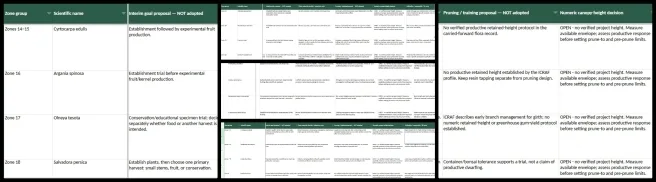
Jay Nair (BIM Designer) continued assisting with the Highest Good Food initiatives and Aquapini and Walipini Planting and Harvesting systems. He researched and documented plant-specific lighting requirements, pruning practices, growth characteristics, pollination needs, and expected canopy heights for the Walipini 1 greenhouse zones, supporting One Community’s work in illustrating how to jumpstart global regeneration. His research focused on improving fixture-to-canopy distance estimates and refining the greenhouse lighting energy calculator based on individual crop requirements. Jay also provided data to help determine supplemental lighting needs and optimize energy use across different plant zones, supporting the ongoing development and validation of Walipini 1 lighting calculations. See the collage below for examples of his work.
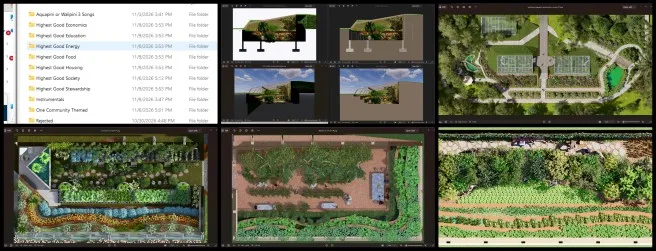
Zoey Zou (Landscape Architect) continued working on the Aquapini and Walipini #3 visualization projects and completed the remaining music review and organization tasks for One Community, supporting its mission of illustrating how to jumpstart global regeneration. She reviewed additional music tracks and alternate versions, checked lyrics, separated instrumental tracks, identified duplicates, and organized songs by theme and quality level, including Epic, Pretty Good, Good, and Good but Heavy. She also refined music categories to distinguish One Community-wide themes from specific topics such as Highest Good Society, Stewardship, Food, and Education. For the Aquapini and Walipini visualization work, Zoey installed and troubleshot Lumion Pro to access the original rendering files and produced multiple top-down render options with different lighting conditions for the Aquapini, Walipini, and Zenapini models. She created a top-down render for Walipini 3 and revised the Southwest Aquapini and Walipini views as separate renders. In addition, she began developing a workflow for section and elevation drawings by testing a Walipini 1 section view, evaluating Lumion’s clipping limitations, and exploring the use of SketchUp, AutoCAD, and Photoshop to create clearer planting sections and supporting project graphics. See the collage below for examples of her rendering and visualization work.
HIGHEST GOOD ENERGY PROGRESS
One Community is illustrating how to jumpstart global regeneration through Highest Good energy that is more sustainable, resilient, supports self-sufficiency and includes solar, wind, hydro, and more:
- Learn about the open source sustainable-energy foundations and how to jumpstart global regeneration: Solar, Hydro, and Wind
- Explore our research into the most sustainable products and companies for saving water and energy: Insulation, Eco-laundry, Lightbulbs and Light Bulb Companies, Doors and Door Companies, Windows and Window Companies, Toilets, Faucets and Faucet Accessories, Urinals, and more.
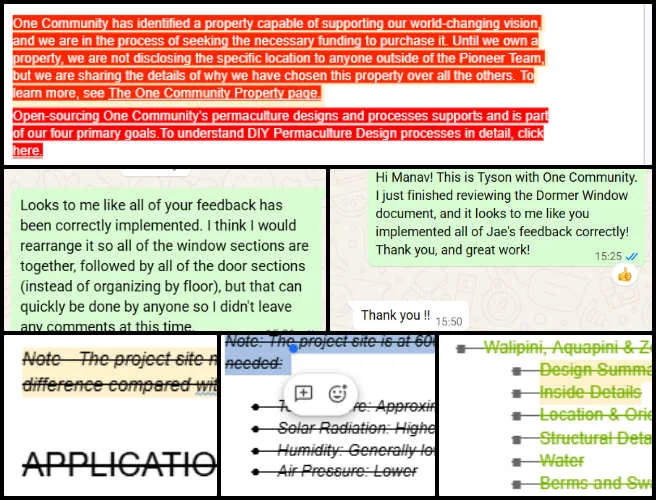
This week, the core team reviewed the First and Second Floor Dormer Windows document and suggested a few changes to the order of the content for the Highest Good Energy initiative, part of One Community’s work. They also reviewed two Aquapini/Walipini webpages covering Lighting, Shading, Thermal Mass Research, and Open Source Hub for formatting, consistency, and accuracy. The team provided feedback and recommendations by adding comments to the corresponding documents. Additionally, they checked the Hydro Energy Infrastructure page but found that it had not yet been updated. See the image below for highlights of their work illustrating how to jumpstart global regeneration.
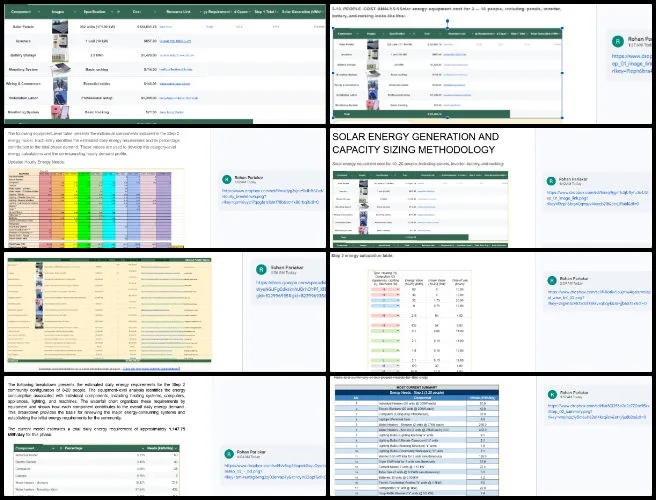
Rohan Pariakar (Operations and Supply Chain Analyst) continued revising the Highest Good Energy infrastructure report by updating its formatting, presentation, and linking structure to improve consistency and make the supporting calculations and source spreadsheets easier to access. He replaced the linked Google Sheets tables in the report with linked pictures to maintain consistent formatting and prevent changes to the source spreadsheets from affecting the report layout. To organize these images, he created a new shared folder specifically for storing the linked report images and added a folder link for convenient access, contributing to One Community’s mission of illustrating how to jumpstart global regeneration.
Rohan also added links to the supporting spreadsheets so that readers can access the underlying calculations, equipment details, and resource references. The report images were connected to the specific spreadsheet cell ranges represented by each table, ensuring that the displayed information could be traced back to its corresponding source data. This included the Step 1 solar infrastructure estimates, Step 2 energy-demand breakdown, updated hourly energy-use table, equipment-level energy calculations, and phase-level energy summaries. He also reviewed the placement, sizing, and formatting of the inserted images, captions, and source links throughout the report. The collage below shows some of his work illustrating how to jumpstart global regeneration.
HIGHEST GOOD EDUCATION PROGRESS
One Community is illustrating how to jumpstart global regeneration through Highest Good education that is for all ages, applicable in any environment, adaptable to individual needs, far exceeds traditional education standards, and more fun for both the teachers and the students. This component of One Community is about 95% complete with only the Open Source School Licensing and Ultimate Classroom construction and assembly details remaining to be finished.
With over 8 years of work invested in the process, the sections below are all complete until we move onto the property and continue the development and open sourcing process with teachers and students – a development process that is built directly into the structure of the education program and everything else we’re creating too:
- Program Overview: Education Open Source Hub
- How the components work together in designing human orchestrated eco-abundance and how to jumpstart global regeneration: How to use the Education for Life Program
- Lesson Plans for Life – Lesson Plans How-to
- Foundations of Outstanding Leaders, Teachers, and Communicators
- Curriculum for Life
- Teaching Strategies for Life
- Learning Tools and Toys for Life
- Evaluation and Evolution
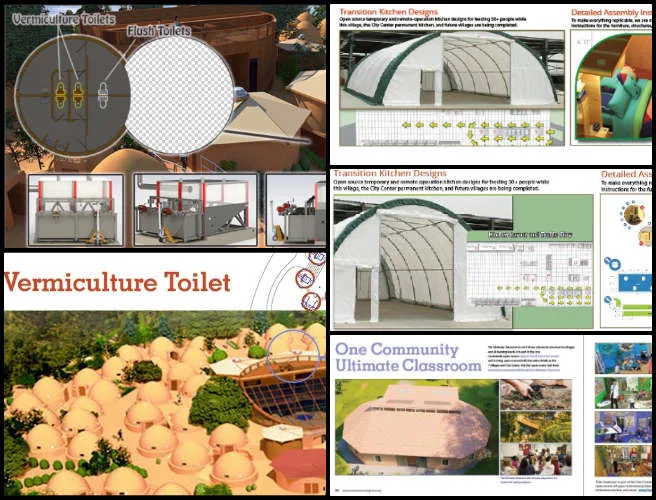
This week, Isaiah “Isa” Hernandez (Graphic Designer) resumed design work on The Ultimate Classroom book after spending the previous week discussing assets and future assignments with Jae. The logged time included those discussions alongside current design work and revisions. Isa updated pages for the 7 Villages book, prepared images for replacement with newer graphics, and received final updates for The Ultimate Classroom book. The images below show some of his work illustrating how to jumpstart global regeneration.
HIGHEST GOOD SOCIETY PROGRESS
One Community is illustrating how to jumpstart global regeneration through a Highest Good society approach to living that is founded on fulfilled living, the study of meeting human needs, Community, and making a difference in the world:
- Read the Highest Good society overview and how to jumpstart global regeneration: Highest Good Society
- Learn about the model for fulfilled living and sharing: A Day in the Life
- Learn about the 4 economic models: RBE | For-profit | Non-profit | Entrepreneurship
- Learn about our open source community collaboration and management software: The Highest Good Network
This week, the core team completed over 47 hours of work managing volunteer work reviews, handling emails, overseeing social media accounts, supporting web development, and identifying and integrating bug fixes for the Highest Good Network. They also interviewed and onboarded new volunteer team members. Additionally, they produced and integrated the video above, illustrating how to jumpstart global regeneration and demonstrating how this concept supports One Community’s broader mission. The following images showcase their work.
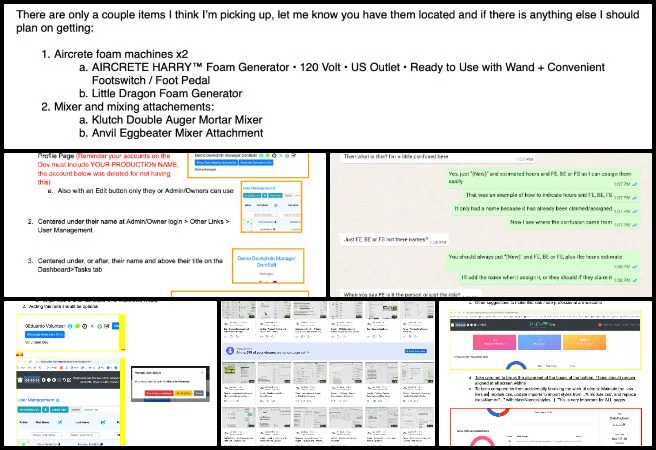
Anagha Sunil Bharadwaj (Legal Research and AI Policy Specialist) continued her research on perpetual purpose trusts across US jurisdictions and their practical implications. She worked on version 0.4 of the One Community AI Usage Policy, checked GitHub’s documentation on how long it keeps data and updated the GitHub entry in the tool register to match. Anagha researched outside feedback channels, how to handle vendor changes and how to retire a tool, along with copyright and licensing rules for AI-generated work, and mapped these areas to the NIST AI Risk Management Framework. She also rechecked recent state AI laws in California, Colorado, and Illinois, built a table to measure how well the policy works, and retested the Quick Reference against sample scenarios. Further, Anagha wrote new clauses on vendor changes, retiring tools, intellectual property, outside concerns and measures. The findings, sources, version history and open items were put together in a research note saved in the AI Policy folder. See the collage below for her week’s work, furthering One Community’s mission of illustrating how to jumpstart global regeneration by giving people what they want for the Highest Good Network.
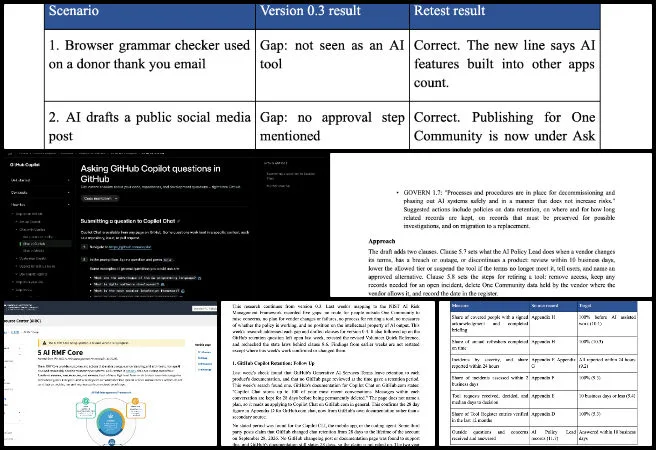
Devarsh Wali (Program Manager) continued supporting the weekly blog review process, Admin Team procedures, and Highest Good Network software development. He also continued advancing the AI optimization report by running multiple AI prompt tests and experimenting with different techniques across several AI providers as part of Phase 4. Devarsh documented the results, compared the impact of different approaches and continued refining the report based on the findings. He also supported the software team by reviewing their work and updating the weekly blog with team progress. In addition, Devarsh supported the hiring team by interviewing candidates for the software team and documenting their feedback. The images below provide examples of his week’s work towards illustrating how to jumpstart global regeneration.
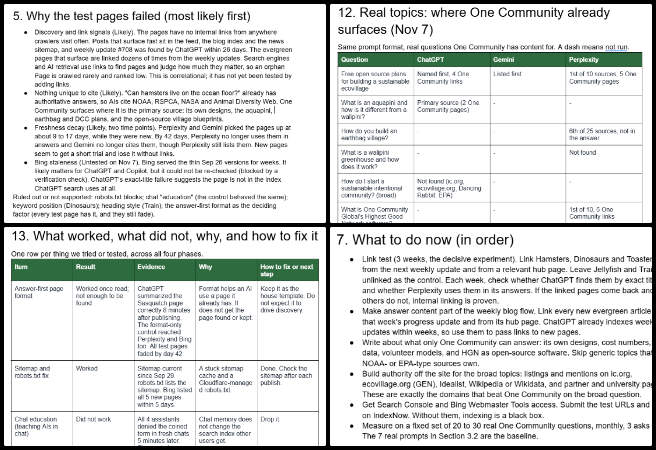
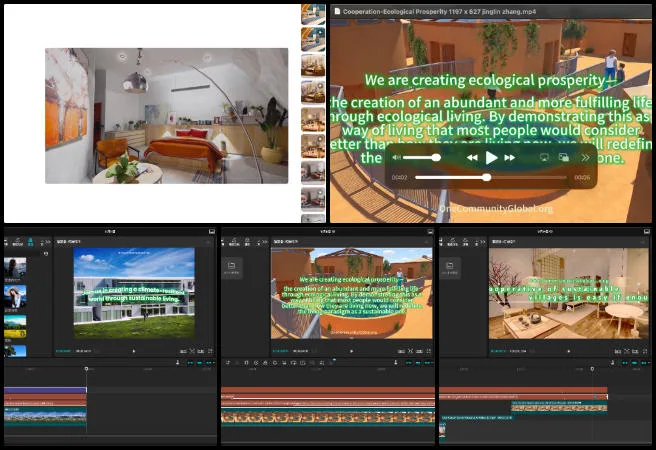
Jinglin Zhang (Graphic Designer) continued working on AI video generation and content creation. She converted more existing images into short AI-generated video clips, focusing on the city center room masters images. Additionally, Jinglin created animated versions of more than ten images, and added motion to the existing visual assets. She also produced additional short-form videos combining text and animated visuals for social media platforms, including Facebook, TikTok and Instagram. See the collage below for her work towards illustrating how to jumpstart global regeneration for the Highest Good Network.
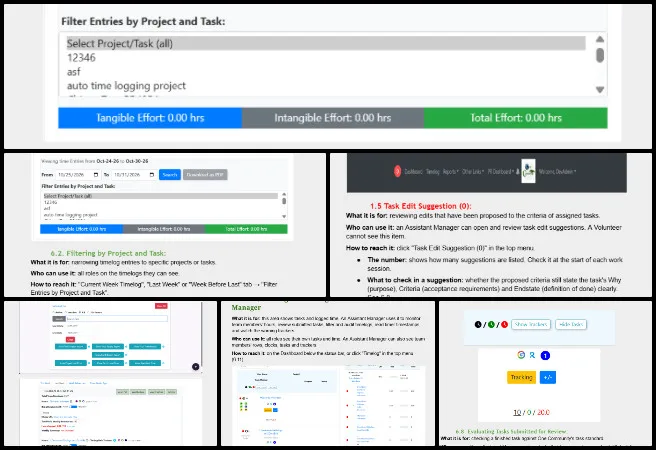
Sethuraman Karunanithi (Industrial Engineer) continued working on the Volunteer section of the Highest Good Network. He focused primarily on the Manager section of the Highest Good Network (HGN) User’s Manual, documenting the Dashboard, Reports, User Management, Projects, Teams, and Schedule Meeting features, and adding guidance on member profiles. Sethuraman described the User Management row and role icons, the symbols and filters in Weekly Summaries reports, and the Project menu controls. He also clarified which areas Managers can access and where restricted links lead. The section contains 25 pages and 29 screenshots, with personal contact details and other members’ names blurred. While testing the Dev site, Sethuraman found that the Teams Edit button does not open and PR Promotions does not display pending promotions. See the collage below for his work toward illustrating how to jumpstart global regeneration.
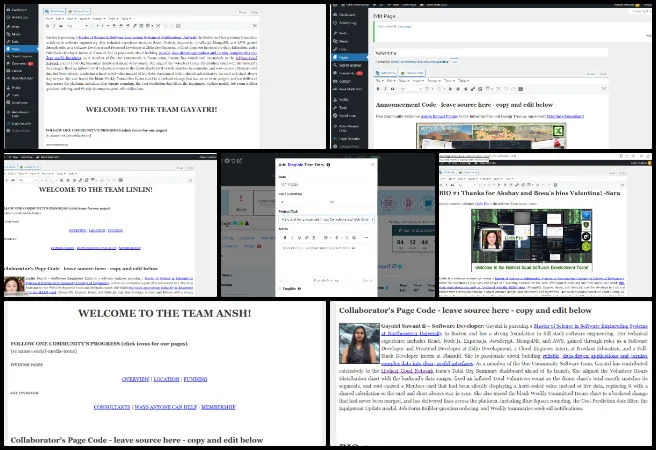
Valentina Collini (Graphic Designer) continued creating branded social media graphics aligned with One Community’s visual standards to support outreach and communicate its mission. She also worked on reviewing and refining volunteer biographies, making corrections to improve accuracy, consistency, and overall presentation. In addition, Valentina carefully checked content for errors and implemented necessary updates, helping maintain the quality of both the website and promotional materials. Her work contributed to strengthening One Community’s online presence while supporting the organization’s mission of illustrating how to jumpstart global regeneration. See the images below for her week’s work towards the Highest Good Network.
ADMINISTRATION TEAM
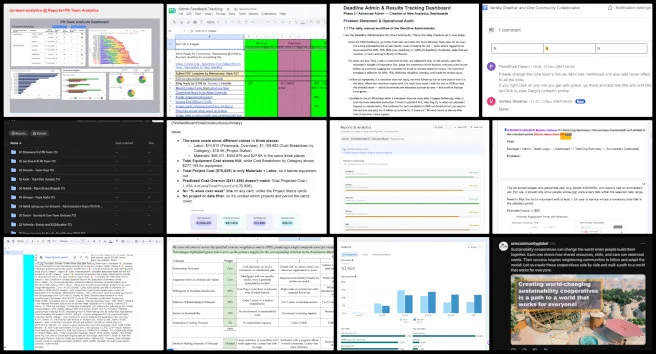
This week, the Administration Team’s summary, covering their work on the Highest Good Network, was managed by Nikhil Sunkara (Data Analyst) and includes Ashmita Pal (Data Analyst), Fnu Rukmangada “Ruku” (Administrative Assistant), Gargi Vipat (AI Engineer), Olawunmi “Ola” Ijisesan (Administrative and Management Support), Pandithya Reddy Dasari (Business Analyst), Prathik Raju (Data Analyst), Sachit Varma (Business Operations & Cost Analyst), Sai Sree Dongari (Data Analyst), Shreyas Harish (Data Engineer), and Tanmay Nihal Harwani (Data Scientist). The Administration Team supports the Highest Good Network, a tool designed to track and measure progress in illustrating how to jumpstart global regeneration. The team handles administrative support, documentation, testing, training, analytics, and content management.
Ashmita reviewed task requests, assigned hours, and checked basic software documents for task details. She reviewed team members’ blog work and tested the Kitchen Reports export buttons, Job Application form matching, Project Status cards, and Teams page layout. She also created Tumblr content, including a post on Highest Good Housing. Ruku worked on the Deadline Admin and Results Tracking Dashboard by documenting its requirements and building a Figma wireframe with filters, number cards, a task roster, and charts. Alongside the dashboard work, she completed daily Deadline Administrator duties and reviewed Admins in Training against the Step 4 checklist. Their Highest Good Network work helps illustrate how to jumpstart global regeneration.
Gargi worked as a Corrections Administrator by reviewing administrators’ work, providing feedback, and checking revised submissions for required corrections. As part of the Training Team, she reviewed all four training steps for multiple administrators and provided feedback on changes needed to meet the requirements. Ola organized the administrative and PR review teams using Google Workspace. She created weekly folder structures to maintain team documentation and support task management and collaboration. Their administration and training work shows how to jumpstart global regeneration through ongoing team processes.
Pandithya updated the PR Analytics Dashboard manual with documentation changes and supporting images. She tested PRs #5586, #5666, #5532, and #5617, added requested HGN tasks, checked team documents for pending requests, provided feedback on Step 4 work from Nithin, Surya, and Vartika, and reviewed administrators’ comments on volunteer documents, furthering One Community’s mission of illustrating how to jumpstart global regeneration.
Prathik tested Total Construction Summary dashboard features and charts and logged three bugs related to financial data, chart displays, filters, and project information. His other work included reviewing volunteer time logs, completing Facebook and Instagram analytics and scheduling, providing training feedback to three new volunteers, preparing the Team Binary Brigade blog, and reviewing Shameera’s work. These testing, training, and administration activities are an example of how to jumpstart global regeneration.
Sachit ranked potential funders by rescoring individual prospects, reviewing borderline cases, adding a final ranking, and documenting the ranking criteria. He then developed a grading rubric for contacts connected to funders, updated the association matrix, expanded contact research for the top funder, and reviewed contact lists for other prospects. Sai Sree organized PR review images and team collages, finalized blog content, provided training feedback, and worked on advanced PR documentation. Her software testing covered dashboard layouts, navigation flows, data visualizations, village selection, and display compatibility. Their research, documentation, and software work supports the effort of illustrating how to jumpstart global regeneration.
Shreyas tested sections of the Total Organization Summary dashboard and worked on its AI training manual, covering the volunteer and global distribution sections. His other tasks included assigning HGN development work, checking pull requests and reporting one issue, and preparing the Alpha Team’s blog #712 summary and collage. Tanmay updated nine bios, followed up on missing summaries and photographs, and compiled content for blog #712 with SEO updates. He managed Threads content and social media tracking, provided screening feedback to three new administrators, checked titles and descriptions for inconsistencies, and performed final testing of merged PRs. Their open source, training, and software work provides another example of how to jumpstart global regeneration. The collage below shows this team’s work.
HIGHEST GOOD NETWORK PROGRESS
 One Community is illustrating how to jumpstart global regeneration through open source Highest Good Network® software that is a web-based application for collaboration, time tracking, and objective data collection. The purpose of the Highest Good Network is to provide software for internal operations and external cooperation. It is being designed for global use in support of the different countries and communities replicating the One Community sustainable village models and related components.
- Learn about our open source community collaboration, management software, and how to jumpstart global regeneration: The Highest Good Network
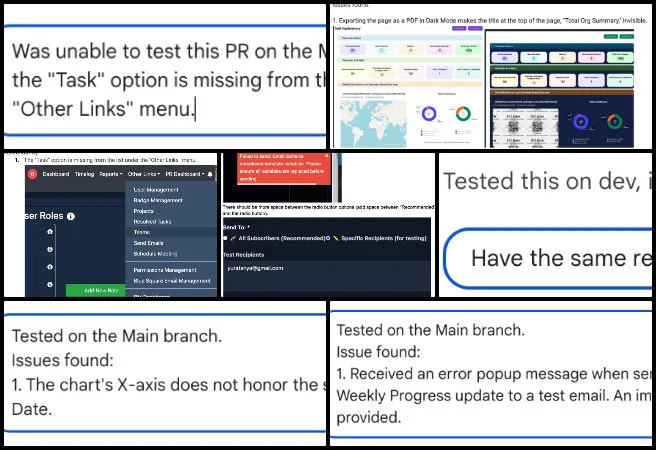
This week, the core team continued HGN PR testing on the main branch for the Highest Good Network, a platform illustrating how to jumpstart global regeneration, and confirmed 8 PRs as fixed. The following PRs were not fixed: PR #4797 and PR #2031, Create a Tracking System for Resolved and Closed Tasks; PR #5597, Fix Weekly Team Summaries Page Showing Expired Team Codes; PR #5655, Finish E2E Test and Launch Blog Publishing and Mailing Component; PR #5632, Total Org Summary: Color-Coded Sections for the Weekly Update PDF/Screenshot; PR #5630, PR Review Team Analytics Dashboard – PR Count Consistency, Freezing Logic, and Dark Mode; and PR #5532, Application/Job Posting Page – Fix Issues in the Date Filter in the Planned vs. Actual Cost Tracking Chart in Financial Tracking. They were also unable to test four PRs because the required data were not available on the main branch. See the collage below to view their week’s work.
ALPHA SOFTWARE DEVELOPMENT TEAM
The Alpha Team’s summary, covering their work on the Highest Good Network, was managed by Lin Khant Htel (Frontend Software Developer) with a team consisting of Deepigha Japamony (Software Engineer), Priyanka Ajit Mutha (Software Engineer), Sai Sandeep (Software Engineer), and Som Ramnani (Junior Software Engineer). Their work supported One Community’s mission of cross-functional software development and system improvements, illustrating how to jumpstart global regeneration.
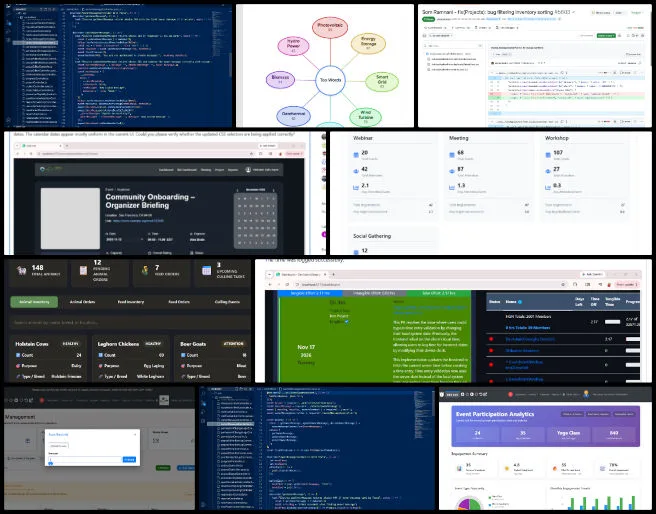
This week, Lin managed and reviewed the team summary, reviewed PR #5319 by checking the code and running tests locally, checked Alpha Team members’ weekly summaries, photos, and videos, and shared pending pull requests for review. Deepigha submitted hotfix PR #5855 to fix village filter selection and navigation across LB Dashboard pages. The village dropdown now stays in sync with the URL during navigation, page refreshes, and browser Back and Forward actions, and switching between village pages no longer adds extra browser history entries. She also replaced the top bar on the Village Details page with the shared LB Dashboard Header so users can switch villages from that page, and kept the logo, card, and header visible during loading, error, and not-found states. The frontend-only PR passed the SonarQube Quality Gate with no new issues. She also reviewed three pull requests, approving PR #5437 after confirming fixes to chart overlap and label readability, and requesting changes on PR #5390 because time could still be logged for a future date without an error message, and on PR #3468 because available calendar dates were still not highlighted in dark mode, contributing to One Community’s mission of illustrating how to jumpstart global regeneration.
Priyanka reviewed and tested the Social and Recreational Management and Event Participation Analytics pages across several pull requests, checking event displays, calendars, card and list views, PDF export, analytics sections, dark mode, and frontend-backend integration. She documented missing components and identified API and Stylelint issues. She then fixed mobile layout issues in Event Type Popularity, Monthly Engagement Trends, and Drop-off and No-show Rate Tracking, verified the changes on mobile and desktop, and raised a frontend pull request with all four focused tests passing, furthering One Community’s mission of illustrating how to jumpstart global regeneration.
Sai fixed a minikeywords rendering issue in PR #5822 to prevent clipping and layout shifts, and worked on PR #5791 to add dark mode support to the kitchen and animal inventory modules by updating color palettes, theme settings, and component styling. Som resolved frontend merge conflicts in PR #5603 while keeping inventory sorting, search, filters, and recent test fixes, with 106 focused tests and ESLint checks passing, and updated the PR description with setup and testing steps. He also worked on PR #5824 to add barcode scanning to Kitchen Inventory, allowing users to scan or manually enter a barcode, search across all inventory categories, and open Update Item, Reorder, or Add Item with the barcode prefilled, aligning with One Community’s mission of illustrating how to jumpstart global regeneration.
Som also fixed the Update Item modal so it stays open and shows the API error when a deletion fails, added tests for barcode validation, inventory matching, and camera cleanup, and tested the scanner with a simulated camera feed in light and dark modes at desktop and tablet widths before updating the pull request with testing details and screenshots, supporting One Community’s mission of illustrating how to jumpstart global regeneration. See the collage below for highlights of this week’s work.
BINARY BRIGADE SOFTWARE DEVELOPMENT TEAM
The Team Binary Brigade’s summary, covering their work on the Highest Good Network, was managed by Vartika Shekhar (Product Engineer) with a team consisting of Aarya Amit Shah (Software Engineer), Aditya Krishnamurthi (Software Engineer), Aditya Varun Dhayapulay (Software Engineer), Alekya Jogini (Software Engineer), Amaan Syed (Software Engineer), Anushka Dwivedi (Software Engineer), Dhruv Topiwala (Full Stack Software Engineer), Mahika Kakkad (Software Engineer), Mahitha Pasupuleti (Software Engineer), Niket Pathak (Software Engineer), Prajwal Gangadhar Melinamane (Software Engineer), Revathi Srinivasan (Software Engineer), Rohit Srikanth (Software Engineer), Roshini Seelamsetty (Software Engineer), Shreya Shailesh Bandodkar (Software Engineer), Shubham Jakhete (Software Engineer), and Snehita Kandula (Software Engineer), supporting One Community’s work on software development and system improvements. These contributions are part of One Community’s broader efforts to demonstrate how to jumpstart global regeneration through open-source collaboration and technology..
This week, Aarya implemented unsaved permission change summaries, corrected default role behavior, and submitted PRs #5838, #5839, and #5847. He also added missing permissions and updated permission descriptions. Aditya Krishnamurthi fixed dark mode styling in the Survey and Feedback Form, corrected Material Usage Record popup behavior, added tests, and began implementing attendance confirmation functionality. Aditya Varun improved timer splitting, fixed Job Form Builder issues, resolved merge conflicts, and submitted Phase 3 changes covering login access, location suggestions, accessibility, and Community Calendar stability, contributing to One Community’s mission of illustrating how to jumpstart global regeneration.
Alekya updated Phase 2 Total Construction Summary dashboard charts, default section visibility, responsive labels, and dark mode date inputs, while reviewing changes integrating actual project data. Amaan addressed reviewer feedback on Support Portal PRs #5673 and #2434, adding authorization checks and fixing SonarCloud issues. He also improved Student Viewing Evaluation Results in PR #5819, implemented backend evaluation calculations and transaction handling, verified 95 backend tests, and documented Lesson Plan Builder issues, supporting One Community’s mission of illustrating how to jumpstart global regeneration.
Anushka added backend tests for date calculations, project aggregation, error handling, and MongoDB transactions, resolved merge conflicts, and updated the task tracker. Dhruv reviewed Software Team Questionnaire Dashboard PRs involving incomplete questionnaire indicators and worked on a Closing Out indicator for blue square emails. Mahika improved timer save retries, preserved unsaved time entries, added validation and tests, and implemented an intangible time entry popup. Mahitha developed Skills Questionnaire completion tracking, API functionality, access restrictions, reminders, and tests while continuing Kitchen and Inventory dashboard improvements. Niket improved Global Distribution Map clustering, responsiveness, and theme styling, and enhanced the Supplier Performance Chart with configurable targets, threshold colors, tooltips, and administrator controls, furthering One Community’s mission of illustrating how to jumpstart global regeneration.
Prajwal fixed duplicate project names in the Injury Severity chart and clipped charts in Tools and Equipment Tracking. He also resolved Participation page merge conflicts, corrected Upcoming Events calendar filtering, added demographics-based No-show Rate Insights, and addressed SonarCloud issues. Revathi added Show More and Show Less controls, dark mode styling, and PDF export to Upcoming Events and improved People Report card layouts. Rohit fixed issue descriptions and project names in chart tooltips through PRs #5796 and #2477, addressed reviewer feedback, and tested the Listing and Bidding Platform Analytics Dashboard, identifying inconsistent Winning Bid chart values. Roshini resolved merge conflicts in PRs #2358 and #5567 concerning missing task-completed data and continued addressing conflicts in PR #5779 involving inconsistent Financials Tracking charts. These efforts support One Community’s mission of illustrating how to jumpstart global regeneration.
Shreya tested questionnaire indicators, Skills Overview functionality, Help Requests, weekly summary submission indicators, and questionnaire access restrictions across multiple PRs. She also reviewed related backend changes and prepared her local environment for integration testing. Shubham corrected Teams page member counts and status indicators, implemented rental and low-stock dashboard actions, and developed backend rental management functionality. Snehita tested Blog Publishing and Mailing workflows, including email delivery, outbox actions, and unsubscribe functionality, prepared configuration documentation, and fixed Consumables calculations and unit tests. These software improvements contribute to One Community’s efforts to demonstrate how to jumpstart global regeneration through open-source technology and collaboration. The collage below shows the team’s work for the week.
DEV DYNASTY SOFTWARE DEVELOPMENT TEAM
The Dev Dynasty Team’s summary, covering their work on the Highest Good Network, was managed by Aadit Trivedi (Software Engineer and Software Team Administrator) with a team consisting of Aakash Vidiyala (Software Engineer), Akshay Viswanath (Software Engineer), Amaresh Chaudhary Nara (Software Engineer), Ansh Shah (Software Engineer), Bosu Babu Bade (Software Developer), Gayatri Sawant (Software Engineer), Hemanth Varupula (Software Developer), Linlin Fan (Software Engineer), Mahalakshmi Mahadevan (Software Engineer), Mahathi Ganimisetti (Data Analyst), Sai Manojna Velagala (Software Engineer), Shreevaths Karawal Satish Rao (Software Engineer), Sireesha Kunchala (Software Engineer), Sripriya Srikanth (Software Engineer), and Yuxuan Wang (Software Engineer), supporting One Community’s mission of illustrating how to jumpstart global regeneration.
This week, Aakash posted 18 pull request reviews and re-reviews across 15 pull requests, approving 9, requesting changes on 5, and splitting 4 frontend and backend pairs where one side was approved and the other needed changes, and while the dev API returned errors, he ran the backend locally against the dev database with writes blocked so the shared data was never changed. Akshay fixed the Building Management dashboard tool charts so they read the same records as the Tools List, adding a shared helper that gives each tool one status, adding an Available bar to the Tools by Availability chart, and rewriting the controller tests to run on an in-memory database. He also fixed the Tool Check In/Out page showing no tools by restoring the missing schema fields, with a test confirming the tools are returned, showing how to jumpstart global regeneration.
Amaresh resolved merge conflicts and the CI failures they surfaced on PRs #5415 and #5470, fixing stale permissions tests and removing leaky global style selectors while keeping a new view toggle, and answered a reviewer question on PR #5256. On PR #5574, he traced a mismatch in PR review counts between the grading screen and the Promotion Eligibility dashboard to stale state, fixed the weekly eligibility calculation, added regression tests, and moved more than thirty unrelated style cleanups into their own pull request, supporting how to jumpstart global regeneration.
Ansh updated the timer submission hotfix based on reviewer feedback so the remaining countdown time is kept after a user logs their work, resolved SonarQube issues and merge conflicts with all 69 automated tests passing, and began work on missing profile pictures in the Community Calendar’s Latest News section. Bosu built Decision-Ready KPI Cards with Trends and Smart Alerts for the Building and Inventory Management Dashboard, covering eight metrics including hours, materials and equipment cost, waste, rentals, and stock health, with dark mode, accessible tooltips, trend sparklines, alerts, saved filters in the page address, View Details links, and PDF and PNG export, backed by 91 passing backend tests, furthering One Community’s mission of illustrating how to jumpstart global regeneration.
Gayatri completed three Community Portal tasks, adding icons and screen-reader labels to the No-show Rate Insights filters in PR #5817, adding the logged-in user’s profile picture to the Participation page header with a default fallback and three component tests in PR #5818, and making the Community Calendar’s Latest News timestamps refresh every minute with a tested helper in PR #5780, showing how to jumpstart global regeneration.
Hemanth continued PR #4338, which prevents users from selecting past dates in the calendar and shows a notification when they try, and investigated SonarQube failure logs for the PM Educator Training Dashboard. Linlin fixed a 404 error in the Injury chart in PR #5833 while restoring the Most Wasted Materials chart with dark mode support, built the Most Expensive Open Issues bar chart with project and date filters in PR #5856, and updated backend PR #2497 to filter and sort those issues by cost, and she also prepared the team’s weekly summary, supporting how to jumpstart global regeneration.
Mahalakshmi checked each PR Review Team Dashboard task against GitHub, tested the merged features on the dev site and found that missing test data leaves the Promotion Eligibility, grading, and PR Insights pages empty, added a final status tab to the team tracker listing the PRs blocking go-live, and confirmed that backend PR #2464 merges cleanly after its rebase. Mahathi investigated how cloning, appending, and clearing templates in the Job Form Builder affect existing questions, added a Restore Original feature to recover the original questions, and improved validation and state handling between saved and active form data, furtheringOne Community’s mission of illustrating how to jumpstart global regeneration.
Sai Manojna added clear indicators for inconsistent material inventory records, strengthened backend stock validation and purchase approval accounting, improved the LB Dashboard messaging interface in light and dark mode and on mobile, and added Aggregate and Tasks views with drill-down and task-level percentages to the Paid Labor Cost report. Shreevaths connected the tool and equipment inventory update form to the backend so counts, including zero, save for each project and item, with validation, a confirmation popup, error handling that keeps entries, update history, protection against conflicting updates, and backend regression tests. These improvements support how to jumpstart global regeneration.
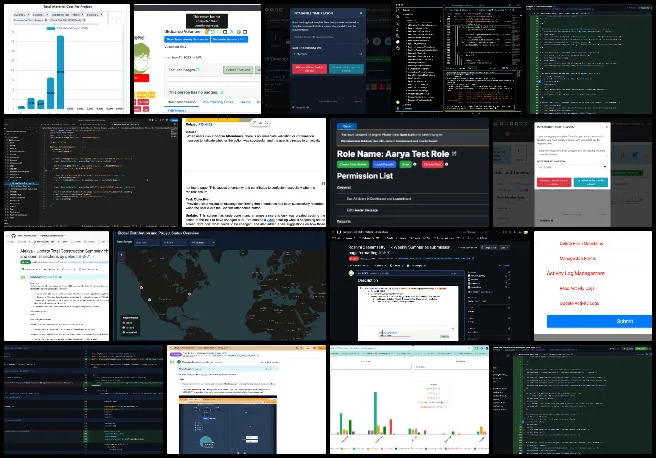
Sireesha started the Listing and Bidding end-to-end testing and launch task, mapping its frontend routes and backend endpoints, identifying overlapping open pull requests, and drafting a 60-hour plan, and prepared PRs #5702 and #5792 for merging, adding a weekly summary status badge to user cards. Sripriya moved from the PR Review Team to the Dev Team and added a notes option to the status dot on the Profile and User Management pages with note history, fixed the dark mode tiles on the Global Volunteer Network map, gave each year and material its own color and line style in the Loss Tracking chart, and made the Quantity of Materials Used chart follow the Projects filter. Yuxuan resolved merge conflicts and SonarQube issues on the Update Tool or Equipment Status form, improved its image display and success alerts, and implemented multi-select filters and tag auto-suggest. Their work shows how to jumpstart global regeneration. The following images showcase their work.
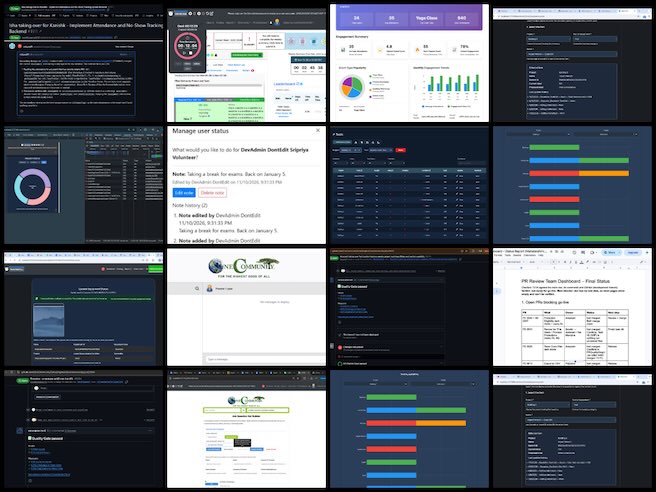
SKYE SOFTWARE DEVELOPMENT TEAM
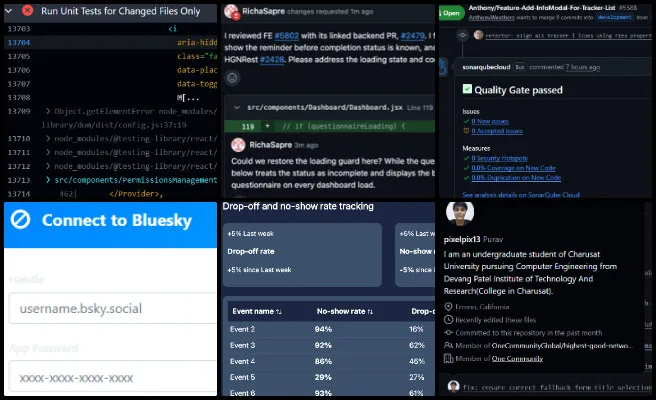
The Skye Team’s summary, covering their work on the Highest Good Network, was managed by Anthony Weathers (Software Engineer) and includes Jaden Wong (Software Engineer), Ken Zou (Software Engineer), Purav Patel (Software Engineer), Richa Sapre (Software Developer) and Swathi Angadi (Software Engineer). This work advances the team’s objectives and supports One Community’s mission of illustrating how to jumpstart global regeneration.
This week, Anthony continued addressing review feedback for PRs #5588 and #2369 related to the warning tracker hotfix, finalizing backend changes, handling migration edge cases, updating default description behavior, and adding tests. He also finalized the information icon alignment, updated frontend PR documentation and screenshots, addressed SonarQube issues for PR #3600, and improved HGNForm radio button layouts while recording a demonstration video and requesting feedback. Additionally, he met with Ken Zou to discuss his progress and current tasks, contributing to One Community’s mission of illustrating how to jumpstart global regeneration.
Jaden worked on two fixes for the Community Portal Participation report. For PR #5785, he corrected No-show Rate Insights styling by fixing a CSS module mismatch and applying WCAG-compliant colors for light and dark modes. For PR #5831, he fixed sorting in the Drop-off and No-show Rate tracking table, added tests for ascending and descending sorting, confirmed all five tests passed, and prepared screenshots and a walkthrough video. These contributions support the broader vision of how to jumpstart global regeneration through continuous software improvements, collaboration, accessibility, and the development of reliable solutions that benefit people and communities.
Ken addressed review feedback on PR #5513 by updating the Bluesky API endpoint, synchronizing the branch with development, and adding JWT authorization headers. He improved light- and dark-mode styling across the Bluesky component and Announcements social media tabs, updated the API routes to use JWT authentication middleware, and submitted the backend changes separately in PR #2496. Testing covered account management, text and image posts, and authentication, including verifying that unauthenticated requests receive a 401 response, contributing to One Community’s mission of illustrating how to jumpstart global regeneration.
Purav contributed 20 hours to the Job Applications Component across frontend PR #5680 and backend PR #2420, focusing on testing, hotfixes, and email notifications. He implemented applicant confirmation email templates, updated backend tests, enabled live email delivery through OAuth and SMTP fallback, and configured notification recipients. On the frontend, he resolved CI failures, improved dark-mode alert styling, synchronized the Apply fallback title with the active form, and updated job form matching tests. These contributions support the broader vision of how to jumpstart global regeneration through improved application security, reliable communication, accessible design, and user-focused software solutions that benefit people and communities.
Richa reviewed frontend PRs #5802 and #5788 and backend PRs #2479 and #2474, identifying issues involving questionnaire loading, dashboard access, timer behavior, and unrelated changes. She also audited job-form records against the Ad Replies PDF, identified outdated job titles and required question updates, and verified the backup of 15 affected forms. After identifying Job Form Builder limitations that prevented safe database updates, she prepared a handoff document for Purav detailing affected records, backup information, and remaining tasks, furthering One Community’s mission of illustrating how to jumpstart global regeneration.
Swathi worked on resolving merge conflicts after pulling the latest changes from the development branch. After resolving the conflicts, she tested the affected functionality to ensure everything was working as expected before pushing the changes. She also investigated failing test cases and identified a missing PR related to the task. In addition, Swathi worked on addressing newly identified SonarQube issues and making the necessary code changes to resolve them. These collective contributions support the broader vision of how to jumpstart global regeneration through software development, quality assurance, improved security, accessible design, and reliable solutions that benefit people and communities. Check the image collage below for a visual overview of the Skye Team’s work for the week.
SOFTWARE PR REVIEW TEAM A-N
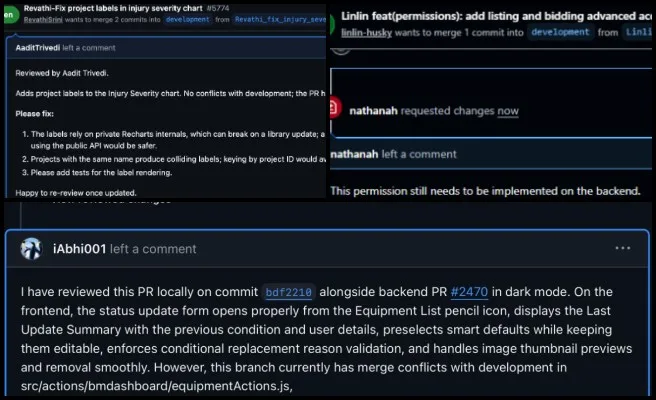
The PR Review Team’s summary for members with names starting with A–N was managed by Sai Sree Dongari (Data Analyst). The Highest Good Network is a foundation for measuring our results in illustrating how to jumpstart global regeneration. This week’s active members of this team were Aadit Trivedi (Software Quality Assurance & Team Coordinator), Mallikharjuna Abhiram Mulpuri (Software Engineer), and Nathan Hoffman (Software Engineer). They reviewed all Highest Good Network PRs shared in this week’s update. Learn more about how the Highest Good Network open source hub measures progress toward illustrating how to jumpstart global regeneration. The collage below shows a compilation of this team’s work.
SOFTWARE PR REVIEW TEAM O-Z
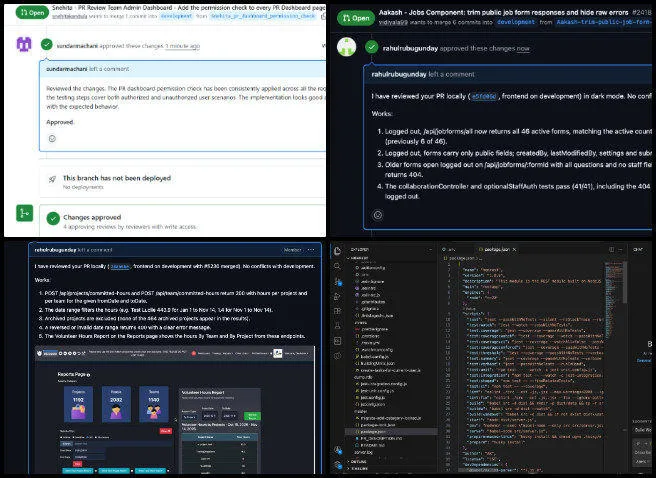
The PR Review Team’s summary for members with names starting with O–Z was managed by Shameera Musthafa (Data Analyst). The Highest Good Network Software is a foundation for measuring our results in how to jumpstart global regeneration. This week’s active members of this team were Rahul Rubugunday (Software Engineer), Sheetal Kumar (Software Engineer) and Sundar Machani (Software Engineer). They reviewed all the Highest Good Network PRs (Pull Requests) shared in this week’s update. Learn more about how the Highest Good Network open-source hub measures progress towards our goal of how to jumpstart global regeneration. The collage below shows a compilation of the work from this team.
AND WE PRODUCED THIS WEEKLY UPDATE – CLICK HERE TO SUBSCRIBE
FOLLOW ONE COMMUNITY’S PROGRESS (click icons for our pages)
INVESTOR PAGES
GET INVOLVED
DONATE | WAYS ANYONE CAN HELP | MEMBERSHIP
CLICK HERE FOR ALL PAST UPDATES