One Community
A Complete Sustainability Strategy – One Community Weekly Progress Update #684
Creating a complete sustainability strategy is our approach to evolving sustainability through an open source, all-volunteer effort dedicated to “The Highest Good of All.” We are developing and free-sharing a self-replicating model that integrates sustainable approaches to food, energy, housing, education, economics, and social architecture to support fulfilled living and global stewardship practices. Through a global network of teacher/demonstration hubs, we aim to regenerate our planet and create a world that works for everyone.
- Here’s our project overview
- Here’s our world-change methodology
- Here’s how this becomes self-replicating
- Here’s how we are open source and free-sharing all the do-it-yourself designs
OUR MAIN OPEN SOURCE HUBS
Click on each icon to be taken to the corresponding Highest Good hub page.
One Community’s physical location will forward this movement as the first of many self-replicating teacher/demonstration communities, villages, and cities to be built around the world. This is the April 27, 2026 edition (#684) of our weekly progress update detailing our team’s development and accomplishments:
A Complete Sustainability Strategy
One Community Progress Update #684

DONATE | COLLABORATE | HELP WITH LARGE-SCALE FUNDING
CLICK HERE IF YOU’D LIKE TO RECEIVE AN EMAIL EACH WEEK WHEN WE RELEASE A NEW UPDATE
YOU CAN ALSO JOIN US THROUGH SOCIAL MEDIA


ONE COMMUNITY WEEKLY UPDATE DETAILS
HIGHEST GOOD HOUSING PROGRESS
One Community is creating a complete sustainability strategy through Highest Good housing that is artistic and beautiful, more affordable, more space efficient, lasts longer, DIY buildable, and constructed with healthy and sustainable materials:
- Learn about: Our Upcoming Crowdfunding Campaign
- Learn about the different village models and a complete sustainability strategy: 7 Sustainable Village Models
- Visit the open source portals for the first two: Earthbag Village OS Hub | Straw Bale Village OS Hub
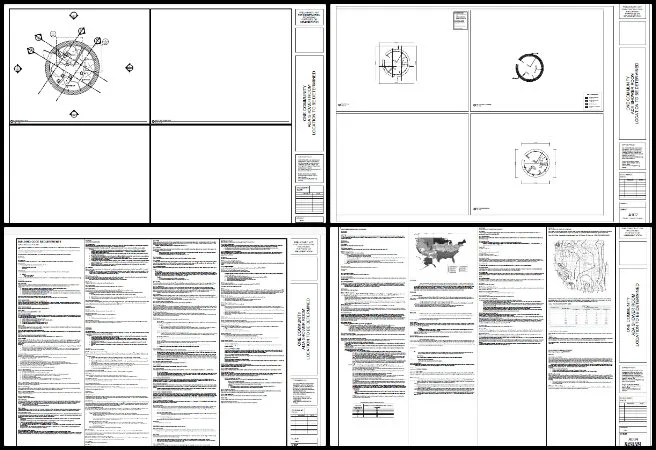
This week, Fangting Xu (Interior Design Intern) continued working on ADA code requirements related to building connections for the 3-dome cluster of the Earthbag Village. She updated the technical construction documents for the ADA shower rooms in accordance with the feedback provided by Jae. Fangting revised the drawing sheets to identify and remove all dome-specific components and loft details that were irrelevant to the requirements of the current building. She resolved formatting issues to improve clarity and corrected overlapping drawing elements within the document set, contributing to a complete sustainability strategy through accurate and accessible design documentation. Review the latest updates in the images below.
DUPLICABLE CITY CENTER PROGRESS
One Community is creating a complete sustainability strategy through a Duplicable and Sustainable City Center that is LEED Platinum certified/Sustainable, can feed 200 people at a time, provide laundry for over 300 people, is beautiful, spacious, and saves resources, money, and space:
- Learn about this building and its function and a complete sustainability strategy: Duplicable City Center Open Source Hub
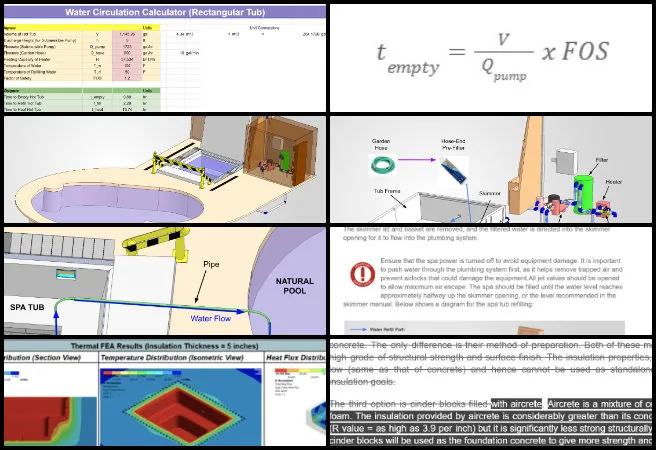
This week, Bevan Chiu (Mechanical Engineer) continued his work finishing the City Center Eco-spa Designs. He worked on researching and integrating the refill method of the spa tub into the report, including the use of a garden hose as the fresh water source, a hose pre-filter to remove debris, and routing water into the plumbing system before entering the tub to reduce the risk of air locks and equipment damage. He performed calculations to estimate the time required to drain and refill the tub. In addition, Bevan refined report content, diagrams, and tables based on team feedback to improve clarity. This open source Duplicable City Center project is creating a complete sustainability strategy. For more details, refer to the image below.
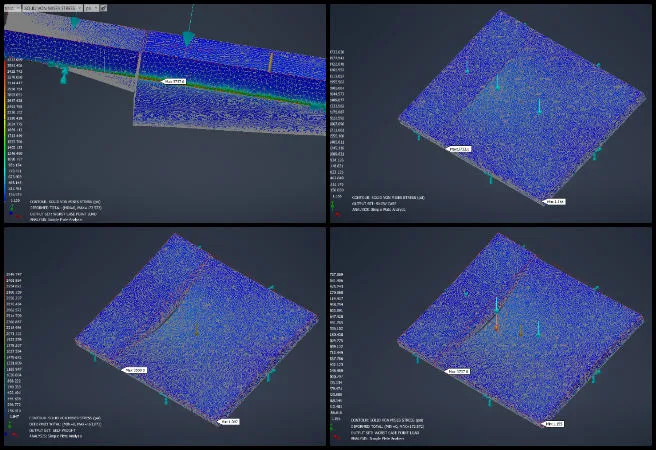
Kaartick Tamilarasan (Mechanical Engineer) continued working on the Duplicable City Center design. He focused on the spa design document and provided comments and suggested changes through highlights in the shared document. He also performed a preliminary structural Finite Element Analysis (FEA) on the spa cover design using Autodesk Inventor Nastran to evaluate structural performance under operational loading conditions. The cover was modeled as a single solid flat panel measuring 127.63 inches by 103.63 inches by 6 inches, constructed from rigid polyurethane foam with a Young’s Modulus of 400 psi, Poisson’s Ratio of 0.25, and a compressive strength of 30 psi. The model applied simply supported boundary conditions along all four perimeter edges, constraining vertical translation while allowing rotation at the supports. This work project plays a key role in a complete sustainability strategy.
Three load subcases were evaluated: self-weight only using a gravitational acceleration of 386.4 in/s², self-weight combined with a uniform snow pressure of 0.139 psi, and a combined case including self-weight, snow pressure, and a 250 lb human point load over a 4 inch by 8 inch contact area at the center of the panel. The analysis returned maximum Von Mises stresses of 3,550 psi, 3,733 psi, and 3,737 psi for the three subcases, with peak values occurring as localized concentrations at the perimeter support edges due to stress singularities associated with tetrahedral solid element modeling. Maximum deformations of 163.872 inches and 172.572 inches were recorded for the self-weight and combined loading subcases, indicating that the rigid polyurethane foam panel lacks sufficient bending stiffness to span the full opening. Discover One Community’s open source Duplicable City Center, which is creating a complete sustainability strategy. See the visuals below for a closer look.
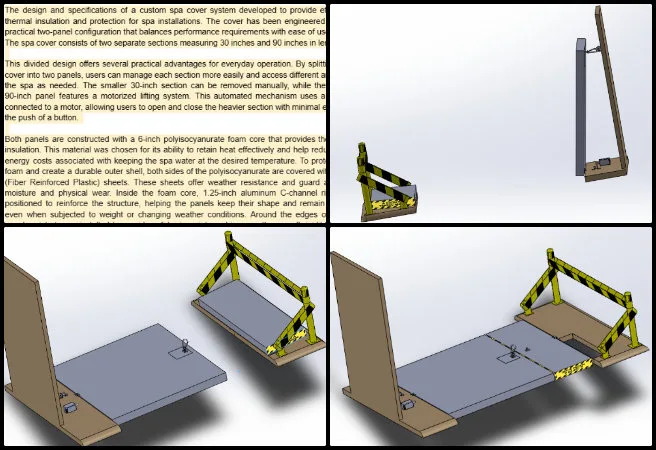
Shivarama Krishna Revanuru (Mechanical Engineer) continued working on the Duplicable City Center design. He focused on drafting a report by gathering relevant data, organizing supporting documents, and structuring the content to align with project requirements. He revised the report based on updated requirements and feedback from Jae and team members to improve clarity and accuracy. Shivarama also participated in finite element analysis related to heat loss evaluation, where different conditions were considered to assess thermal behavior and support the findings documented in the report. This open source Duplicable City Center project is creating a complete sustainability strategy. The images below illustrate aspects of this work.
HIGHEST GOOD FOOD PROGRESS
One Community is creating a complete sustainability strategy through Highest Good food that is more diverse, more nutritious, locally grown and sustainable, and part of our open source botanical garden model to support and share bio-diversity:
- Learn about the structures and a complete sustainability strategy: Hoop House Hub | Aquapini & Walipini Open Source Hub
- See what we’ll be growing: Gardens & Hoop Houses | Large-scale Structures | Food Forest | TA
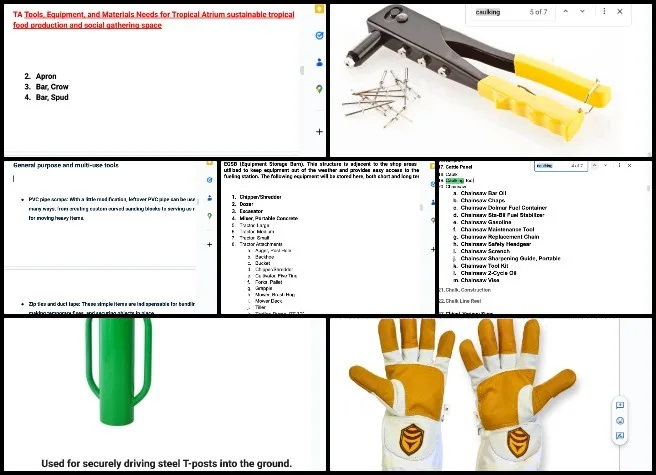
This week, the core team continued working on the Master Tools, Equipment, and Materials/Supplies List for the Large-scale Garden, Botanical Garden, and other Highest Good Food components, completed the review of the APY and AQ entries and initiated the Botanical Garden project review, making updates to the chainsaw entries. They added a T-post driver to the documentation for use in fencing projects and updated the designation for the caulking gun to a caulking tool. All updates were integrated into the Master list and corresponding project documents to maintain alignment across components. Their efforts contribute to One Community’s mission of a complete sustainability strategy through open-source collaboration, ecologically responsible innovation, and a focus on long-term global development. The collage displayed below portrays the team’s efforts and achievements for the week.
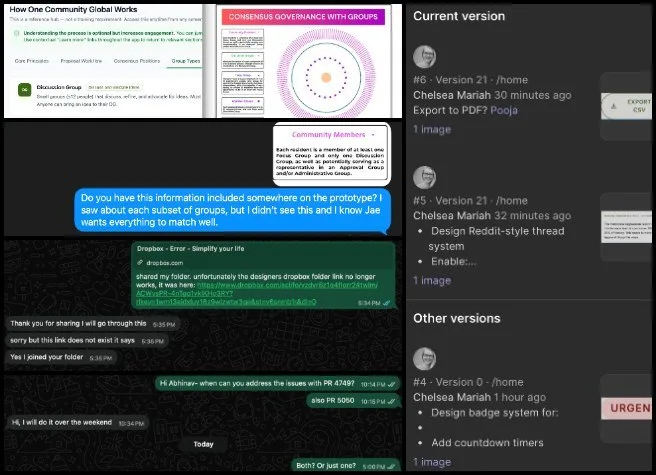
Chelsea Mariah Stellmach (Project Manager) continued work on the Transition Food Self-sufficiency food and inventory tracking software plans. She worked on two projects by collaborating with Sayantan and the development team to merge and test the Kitchen Inventory software, sharing Figma files, and communicating to support progress. She followed up with Pooja on the Governance project and created an itemized task list to clarify next steps based on Jae’s feedback. Chelsea also added comments in Figma to identify discrepancies and support alignment across the team. These contributions support a complete sustainability strategy by strengthening both technical execution and design alignment across the platform. See the collage below for this week’s progress.
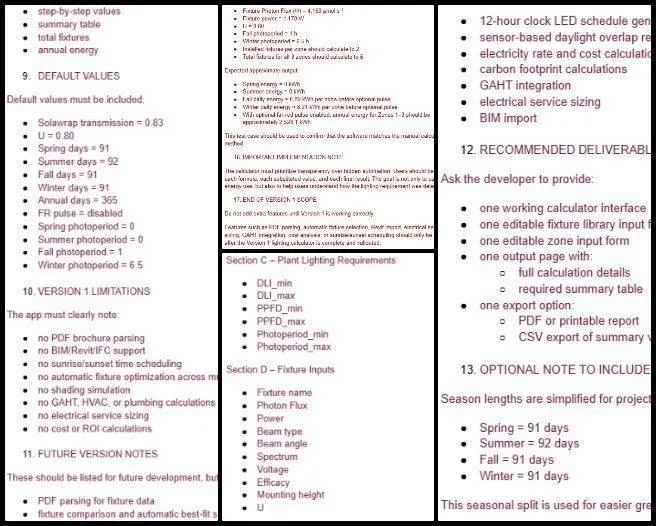
Jay Nair (BIM Designer) continued work on the Aquapini and Walipini Planting and Harvesting documents. He continued working on the Developer Handoff Document for the greenhouse lighting calculator software by refining project requirements, expanding calculation procedures, and clarifying system inputs and outputs. Jay also improved the structure and usability of the document so it can serve as a clear reference during the software build process. These updates improve the stability and adaptability of shared systems, supporting the broader goal of a complete sustainability strategy. See the collage below portraying the work done this week.
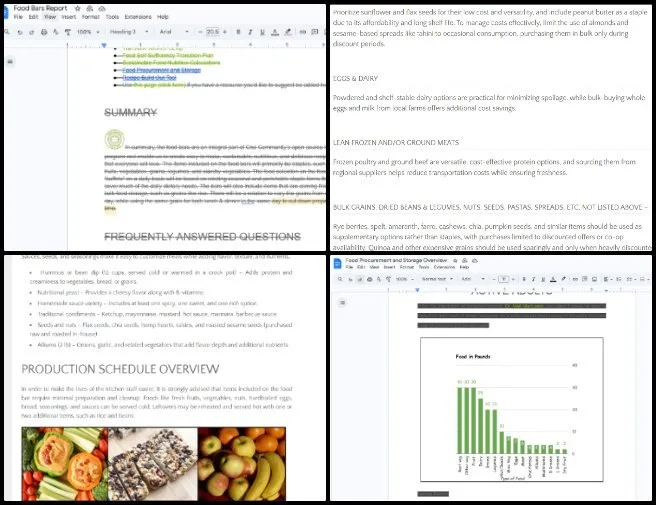
Prudhvi Marpina (Data Analyst) continued supporting the Highest Good Food website development, Highest Good Network software development, marketing, and administration activities. He supported Highest Good Food website development, Highest Good Network software development, marketing, and administration activities. Prudhvi also updated the Food Procurement and Storage page in WordPress using the latest data and corrections from the source document, contributed to Phase 5 governance by adding action items and writing descriptions, updated BlueSky analytics in data visualization sheets and the Social Media Master Dashboard, and supported administration by updating the weekly blog and providing feedback on team work. This work supports One Community’s mission of a complete sustainability strategy. See below for images showcasing his work.
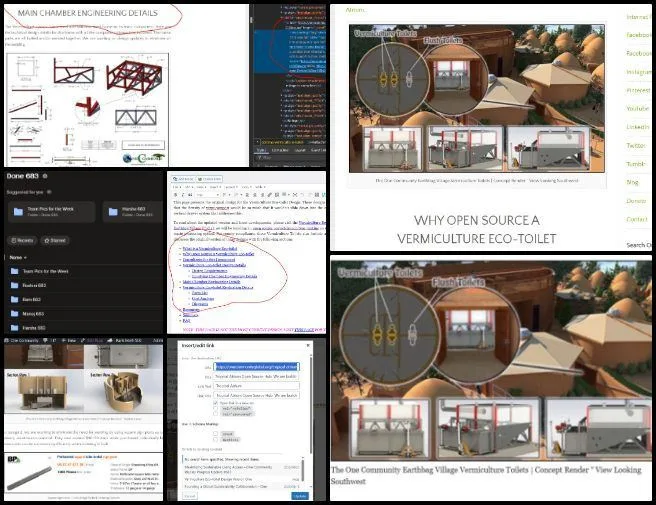
Rajeshwari Bhirud (Administrator) continued working on the Highest Good Food initiative. She worked on OC Administration by completing blog #683, reviewing summaries, tracking feedback, and maintaining documentation updates. Rajeshwari also worked as a web designer on the Vermiculture Eco-toilet Design Version One blog by applying feedback revisions, updating layout and images, optimizing SEO, refining headers, cleaning content, verifying links, and ensuring image functionality and presentation elements were properly formatted. These updates improve the stability and adaptability of shared systems, supporting the broader goal of a complete sustainability strategy. See below for images showcasing her work.
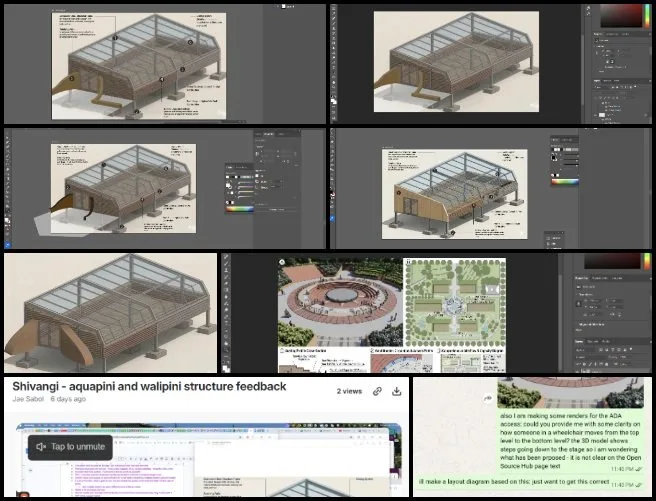
Shivangi Varma (Architectural Designer and Planner) continued working on the redesign of the Highest Good Food overall presentation. She incorporated Loom feedback into the Highest Good Food structural details, revised the ADA access diagram set for submission, and began detailing remaining graphics for the Open Source Hub page. Shivangi also finalized the structural section, axon, and details and submitted them for review. This work supports One Community’s mission of a complete sustainability strategy. See below for images showcasing her work.
HIGHEST GOOD ENERGY PROGRESS
One Community is creating a complete sustainability strategy through Highest Good energy that is more sustainable, resilient, supports self-sufficiency and includes solar, wind, hydro and more:
- Learn about the open source sustainable-energy foundations and a complete sustainability strategy: Solar, Hydro, and Wind
- Explore our research into the most sustainable products and companies for saving water and energy: Insulation, Eco-laundry, Lightbulbs and Light Bulb Companies, Doors and Door Companies, Windows and Window Companies, Toilets, Faucets and Faucet Accessories, Urinals, and more.
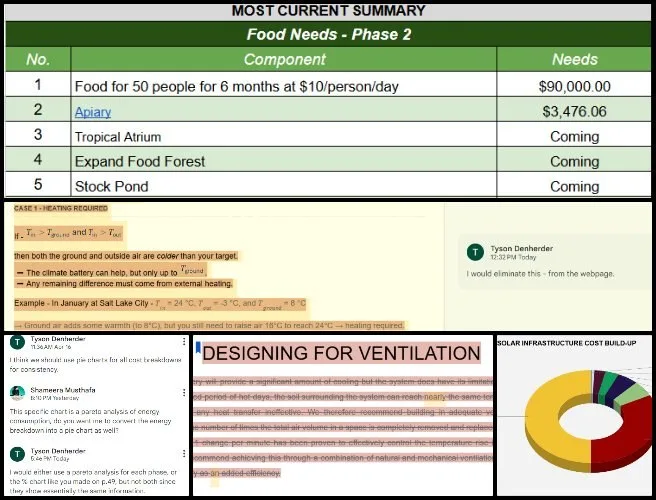
This week, the core team continued contributing to the Highest Good Energy initiative. They completed their review of the Highest Good Energy images added to the page, met with the Highest Good Food team to discuss equipment needs for different phases, and began reviewing the Climate Battery page to address feedback and improve clarity. The team also made suggestions for adjustments and estimated additional time required to complete the review. This work contributes to a complete sustainability strategy, as shown in the images below.
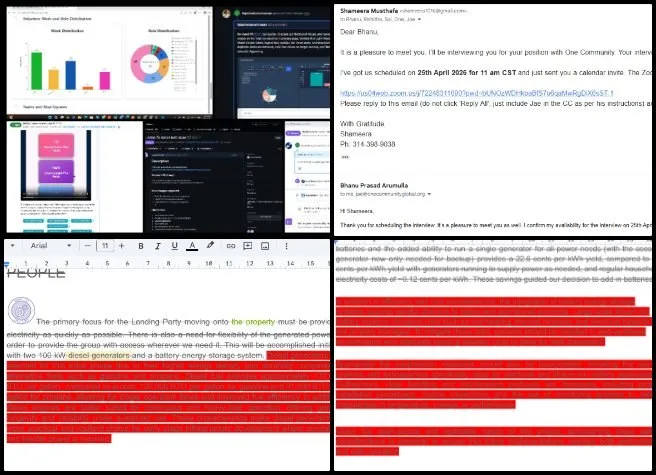
Shameera Musthafa (Data Analyst) contributed to the Highest Good Energy initiative. She supported OC Administration and the PR Review Team by coordinating PR workflows, reviewing team deliverables, and providing feedback to ensure accuracy and consistency. Shameera also organized and categorized project images, created visual collages, finalized blog-related content, contributed to Highest Good Energy report pages and visualizations, and supported hiring by conducting interviews and evaluating candidates. This work project plays a key role in a complete sustainability strategy. See below for images showcasing her work.
HIGHEST GOOD EDUCATION PROGRESS
One Community is creating a complete sustainability strategy through Highest Good education that is for all ages, applicable in any environment, adaptable to individual needs, far exceeds traditional education standards, and more fun for both the teachers and the students. This component of One Community is about 95% complete with only the Open Source School Licensing and Ultimate Classroom construction and assembly details remaining to be finished. We’ll report on the final two elements to be finished as we develop them.
With over 8 years of work invested in the process, the sections below are all complete until we move onto the property and continue the development and open sourcing process with teachers and students – a development process that is built directly into the structure of the education program and everything else we’re creating too:
- Program Overview: Education Open Source Hub
- How the components work together in designing human orchestrated eco-abundance and a complete sustainability strategy: How to use the Education for Life Program
- Lesson Plans for Life – Lesson Plans How-to
- Foundations of Outstanding Leaders, Teachers, and Communicators
- Curriculum for Life
- Teaching Strategies for Life
- Learning Tools and Toys for Life
- Evaluation and Evolution
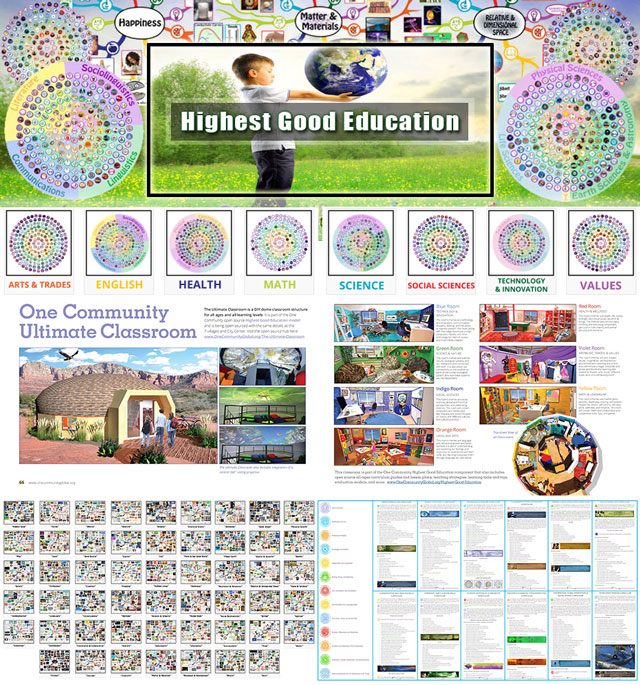
Highest Good Education: All Subjects | All Learning Levels | Any Age – Click image for the open source hub
HIGHEST GOOD SOCIETY PROGRESS
One Community is creating a complete sustainability strategy through a Highest Good society approach to living that is founded on fulfilled living, the study of meeting human needs, Community, and making a difference in the world:
- Read the Highest Good society overview and a complete sustainability strategy: Highest Good Society
- Learn about the model for fulfilled living and sharing: A Day in the Life
- Learn about the 4 economic models: RBE | For-profit | Non-profit | Entrepreneurship
- Learn about our open source community collaboration and management software: The Highest Good Network
This week, the core team completed over 43 hours managing volunteer work reviews, handling emails, overseeing social media accounts, supporting web development, and identifying and integrating bug fixes for the Highest Good Network. The team also interviewed and onboarded new volunteer team members. Additionally, they produced and integrated the video above, which highlights how creating a complete sustainability strategy serves as a foundational element of One Community’s broader mission. The following images showcase highlights of this work.
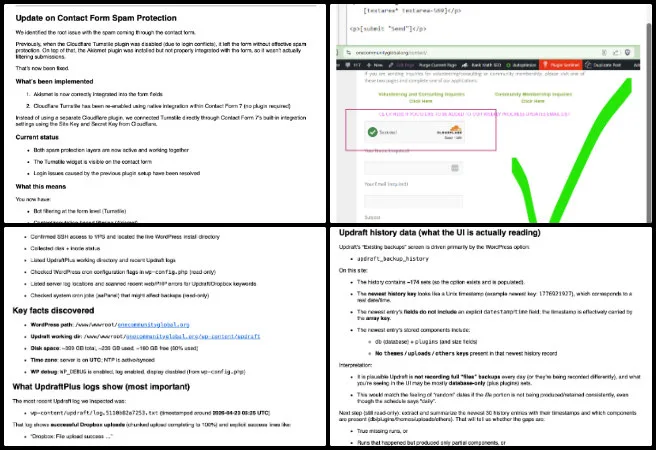
Jin Hua (Website, AdWords, and Analytics Administrator) helped diagnose and fix a captcha vulnerability and an issue with our backups. Our website is the foundation for sharing all our open source plans for creating a complete sustainability strategy. See below for images and Highest Good Network page related to this website restoration work.
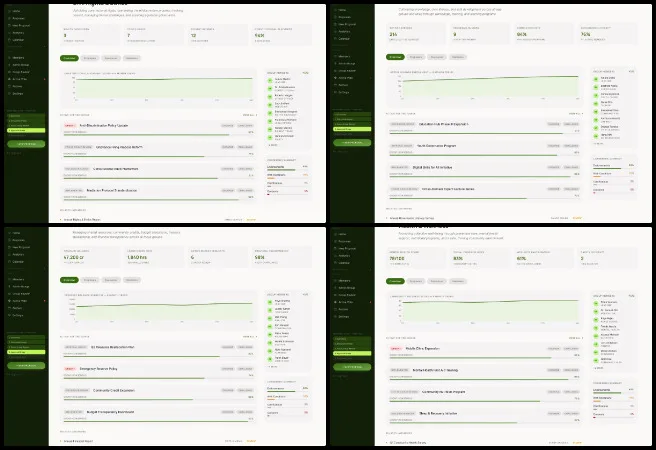
Pooja Kulkarni (UI/UX Designer) continued her work by advancing the Governance Platform experience on the Highest Good Network through designing and refining focus group dashboards across domains such as Education and Health & Wellness to improve clarity, usability, and consistency. She structured these dashboards to present key metrics, including participation rates, program activity, completion rates, and overall community health, in a clear and accessible manner. She focused on organizing complex data into intuitive sections, such as active initiatives, group consensus levels, member participation, and related programs, enabling users to quickly understand the status and progress of each focus area. She also emphasized transparency by incorporating real-time consensus indicators, voting actions, and engagement summaries. Additionally, Pooja ensured consistency in layout, visual hierarchy, and interaction patterns across different focus group views, creating a cohesive experience while adapting content to each domain. Her work emphasized readability, intuitive navigation, and structured data presentation, improving overall decision-making efficiency within the platform. Overall, her contributions strengthened usability and data clarity, enhancing the platform’s effectiveness in supporting governance processes. This work contributes to creating a complete sustainability strategy; the images below highlight key aspects of her work.
ADMINISTRATION TEAM
The Administration Team’s summary, which covers their work on the Highest Good Network, was managed by Prudhvi Marpina (Data Analyst) and includes Adhya Rastogi (Business Analyst), Divanshu Bakshi (Team Admin), Hemanth Sai Venkata Srinivasa Kumar Nidamanuru (Administrative Assistant), Leo Lishin Shiu (Software Engineer), Manish Kanuri (Data Scientist), Mridul Bhushan (Volunteer Project Strategy Analyst and Team Administrator), Olawunmi “Ola” Ijisesan (Administrative and Management Support), Priyanshi Sharma (Data Analyst and Team Administrator), Rishitha Adepu (Administrator), Sai Keerthi Domakonda (System Administrator), Sai Sree Dongari (Data Analyst), Sayantan Paul (Frontend Tester and Software Team Administrator), Shravya Chilukoori (Software Developer), Shreya Shetty (Data Analyst), and Sudarshan Raju Chintalapati Venkata (Data Analyst). The Administration Team supports the Highest Good Network, a tool designed to track and measure progress while developing systems that contribute to creating a complete sustainability strategy. Through administrative support, documentation, testing, training, recruitment, analytics, and content management, the team helps advance this mission, aligning with One Community’s vision of building a replicable and sustainable future model.
This week, Adhya worked on marketing and promotion tasks, including Google Ads optimization and Reddit engagement, while supporting administrative activities. Divanshu maintained Mastodon updates, identified system issues, and developed automation scripts to improve posting accuracy and reporting. Hemanth conducted pull request testing, validated functionality, coordinated reviews, and documented reproducible issues. These efforts contribute to improved system performance, communication, and operational efficiency in support of creating a complete sustainability strategy.
Leo compiled team summaries, finalized data pipeline processes, and ensured consistency across blog updates. Manish completed PR reviews, supported blog coordination, and ensured contributor acknowledgment accuracy. Mridul managed social media publishing, updated analytics dashboards, and prepared blog content for publication. Ola organized scheduling, updated administrative workflows, and maintained structured team operations. These coordinated activities strengthen collaboration, accountability, and system reliability in support of creating a complete sustainability strategy.
Priyanshi conducted detailed dashboard testing, identified UI inconsistencies, and documented improvements for follow-up. Rishitha managed content administration, social media engagement, and dashboard updates using Python and Excel. Sai Keerthi performed Dev pull request testing, validated feature functionality, and reviewed administrative submissions. Sai Sree coordinated dashboard contributions, PR review activities, and hiring support, while Sayantan managed blog preparation, testing workflows, and system issue tracking. Shravya completed blog compilation and PR validation processes, Shreya optimized visualizations and campaign performance, and Sudarshan managed SEO updates, testing, and system improvements. To learn more about how this work supports creating a complete sustainability strategy, visit the Highest Good Society and Highest Good Network pages. Highlights of the team’s contributions are shown in the collage below.
HIGHEST GOOD NETWORK PROGRESS
 One Community is creating a complete sustainability strategy through open source Highest Good Network® software that is a web-based application for collaboration, time tracking, and objective data collection. The purpose of the Highest Good Network is to provide software for internal operations and external cooperation. It is being designed for global use in support of the different countries and communities replicating the One Community sustainable village models and related components.
- Learn about our open source community collaboration and management software and a complete sustainability strategy: The Highest Good Network
This week, the core team tested Highest Good Network pull requests and confirmed 11 as fixed. This effort highlights One Community’s commitment to reinventing the sustainability industry.
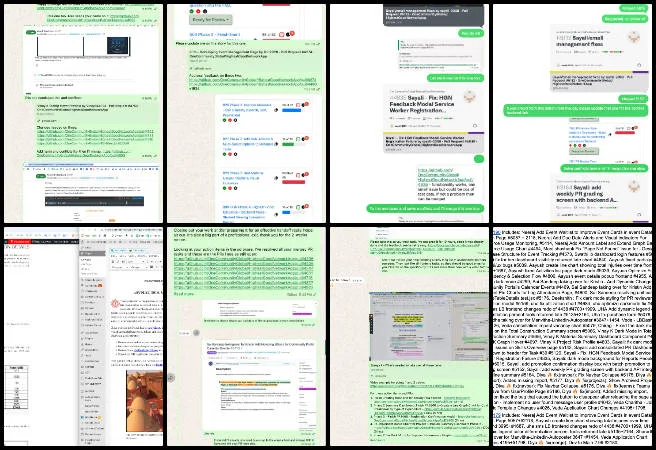
The following were not fixed: issues with showing inactive users in the correct final week window, improvements to the Daily Equipment Log user experience, creation of donut charts for candidate experience and educational level, addition of an info tooltip for PR action definitions, correction of Total Org Reports date filter defaults, indication of user states on the Dashboard Tasks and Weekly Summaries Reports pages, addition of Preview Form functionality, resolution of Phase 1 bugs, inclusion of a Clear Template action, and making non-month dates transparent on the Calendar page. In addition, one PR could not be tested due to the absence of data on the main branch, specifically the feature for showing the number of team members next to team names in the PR Action Done bar charts. This work contributes to creating a complete sustainability strategy. See the Highest Good Society and the Highest Good Network pages, and the collage below, for an overview of the team’s contributions.

ALPHA SOFTWARE DEVELOPMENT TEAM
The Alpha Software Team, working on the Highest Good Network software, was managed by Lin Khant Htel (Frontend Software Developer). The team includes Linh Huynh (Software Engineer), Maithili Kalkar (Software Engineer), Som Ramnani (Software Engineer), Sai Sandeep Koritala (Software Engineer) and Casstiel Pi (Software Engineer). The Highest Good Network software is a key part of creating measurable global transformation. The software supports social architecture, construction, production, and maintenance processes that contribute to the open source project and resilient ecosystems. Designed to be portable and scalable, the Highest Good Network is ideal for off-grid and sustainable living communities, reflecting One Community’s open source commitment to creating a complete sustainability strategy.
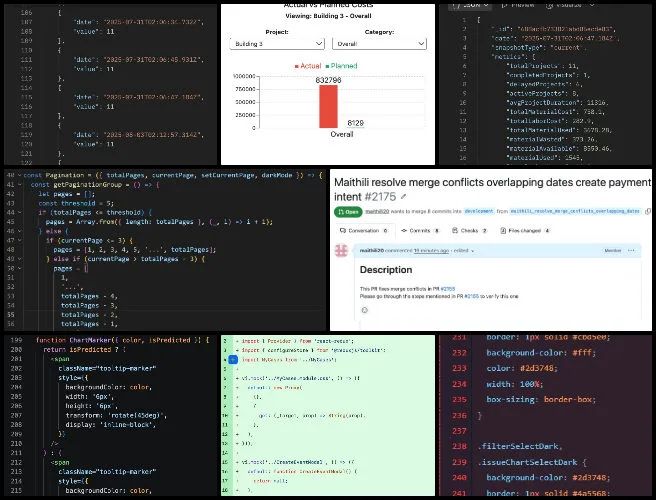
This week, Lin reviewed PR #1927 by examining the code and running tests on a local machine and confirmed that all tests passed without issues. Lin also checked the Alpha team members’ weekly summaries, photos, and videos and handled Alpha team management tasks throughout the week, ensuring that all updates were reviewed and tracked properly. This work was recorded as part of a complete sustainability strategy. Casstiel finished the feature to improve chart label readability in dark mode by making several UI adjustments. The updates included changing label, axis, and tooltip colors for better contrast, refining alignment and spacing for improved readability, and fixing a dropdown styling issue where elements were not visible in dark mode. During local setup, development was delayed by a MongoDB Atlas error caused by the current IP address not being whitelisted, which was resolved by updating the connection through MongoDB Compass and restoring local access. After final testing in the local environment, a pull request was created for review, and the work aligned with a complete sustainability strategy.
Linh worked on fixes for the Listing and Bidding Dashboard under PR 4246 and addressed multiple UI and state management issues affecting user interaction. The issue where “View Grading Rubric” required two clicks to close was resolved by removing duplicate modal rendering and ensuring a single source of control between components. Dropdown selection issues affecting the pie chart were corrected by aligning option values with filter logic and applying functional state updates. Additional improvements were made to pie chart label visibility, spacing, and theme handling, and these updates were included as part of a complete sustainability strategy. Maithili continued working on the frontend interface for the Reddit Auto Poster feature, which included a basic UI for creating Reddit text and link posts, scheduling posts, and managing scheduled jobs such as viewing and cancelling them. The component was placed under the Announcements section for testing purposes while implementation issues were being addressed and refined. A pull request was raised to fix a dark mode issue caused by a global CSS rule overriding icon colors, and this work was part of a complete sustainability strategy.
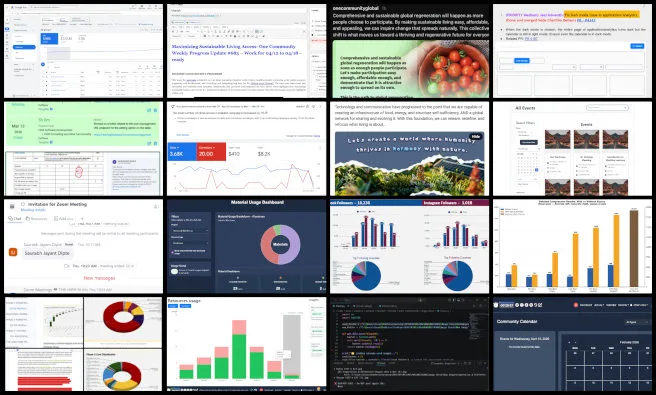
Sai implemented a time-frame filter for upcoming events in PR 4589, allowing users to sort events by today, week, month, or year while maintaining UI consistency across light and dark modes in the No Show and Drop Off sections. In PR 4600, he refined the calculation logic for attendance and no-show breakdowns and fixed a responsive design issue to keep the header visible across different devices and screen sizes. In PR 4675, he added search, pagination, and sorting on mock data with dark mode support, and these updates were tracked under a complete sustainability strategy. Som worked on finishing PR #5124 by implementing and styling a floating scroll-to-top button in the ResourceUsage component to improve usability and navigation. He created a reusable scrollButton class for consistent styling and updated scroll detection logic to ensure the button appeared based on the user’s scroll position. He also worked on PR #5163 to fix an issue where the More button did not appear under the This Week filter by updating filter logic and mock data, and these changes were included in a complete sustainability strategy. To learn more about how this work supports creating a complete sustainability strategy, visit the Highest Good Society and Highest Good Network pages. See the collage below to view the team’s work.
BINARY BRIGADE SOFTWARE DEVELOPMENT TEAM
The Binary Brigade Team, which presented their work on the Highest Good Network software, was managed by Amalesh Arivanan (Software Engineer) and included Roshini Seelamsetty (Software Engineer), Manoj Puttaswamy (Software Engineer), Alisha Walunj (Software Engineer), and Harsha Rudhraraju (Software Engineer). The Highest Good Network software is our tool for managing and objectively measuring progress, ensuring that all contributions are tracked and aligned with our mission of creating a complete sustainability strategy. It supports social architecture, construction, production, and maintenance processes that contribute to open-source projects and resilient, sustainable ecosystems.
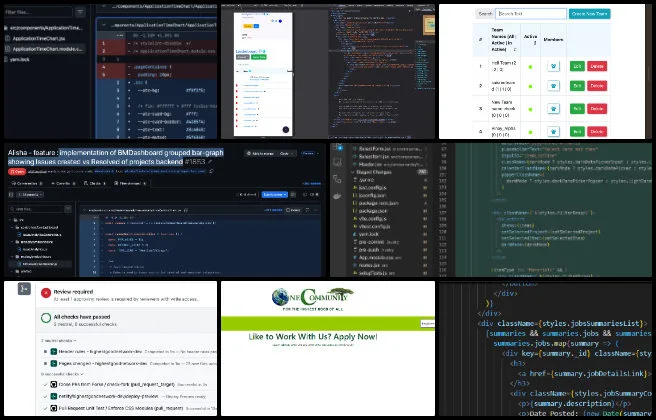
This week, Amalesh worked on debugging the leaderboard appearance on smaller screens by identifying issues with responsiveness and horizontal scrolling, tracing the cause of the layout not adapting correctly, and implementing fixes in pull request 4836 while resolving conflicting issues affecting scrolling behavior, including related challenges in pull request 4694, and continuing to investigate inconsistencies in how the leaderboard renders across different screen sizes to improve usability on mobile devices. Roshini completed work on Teams UI updates for admin and owner profiles by improving responsiveness of top cards at 768px and below, adjusting font sizes for the Team Names column at 575px and below, and reviewing dark mode requirements, while continuing work on a high-priority task to implement configurable permission logic for viewing how many times a task has been extended by replacing default Admin/Owner-only access with a permission-based system under Permissions Management in Project Management and Work Breakdown Structures, including required frontend and backend updates. This work was recorded as part of a complete sustainability strategy.
Alisha improved filter feedback and empty-state messaging for the application time chart by addressing dark mode issues, completing testing, and updating the pull request after resolving merge conflicts during rebasing, worked on implementing a pie chart for applicant breakdown by reason of volunteering by addressing review comments and validating that data updates correctly with date changes, and resolved merge conflicts related to the BMDashboard grouped bar graph showing issues created versus resolved for backend projects. Harshavarma fixed improperly formatted reviews by identifying that raw HTML stored in the database was causing UI rendering issues, removing affected summaries, implementing backend logic to clean and standardize stored data, mapping cleaned data to the summaries UI, creating a dedicated branch to isolate the changes, improving UI layout, spacing, and text rendering for better readability, enhancing responsiveness for different screen sizes, and validating integration with edge case handling for missing or partially formatted summaries. These contributions strengthen system stability, analytics accuracy, and feature consistency across the platform, creating a complete sustainability strategy.
Manoj resolved merge conflicts and prepared two pull requests for review by creating a fresh branch from the latest development branch, cherry-picking commits, excluding conflicting dark mode fixes, and manually resolving conflicts while preserving BMDashboard navigation logic and the All Inventory Types dropdown, restoring package files and dependencies for the utilization chart pull request, fixing chart component conflicts including registration, filtered data logic, and label color handling, resolving CI issues caused by missing imports, and postponing dark mode fixes to a separate task due to conflicts, while also fixing bugs in a resource request form including submit handling, date validation to block past dates and sync fields, correcting stylesheet references, resetting file input behavior, and updating CSS for missing classes, input width, overflow handling, text area reset rules, and scoped dark mode styles. This work contributes to a complete sustainability strategy. See the Highest Good Society and the Highest Good Network pages for more on how this supports in creating a complete sustainability strategy. Highlights of the team’s contributions are shown in the collage below.
CODE CRAFTERS SOFTWARE DEVELOPMENT TEAM
The Code Crafters Team’s summary, covering their work on the Highest Good Network software, was managed by Sai Keerthi Domakonda (Software Engineer) and Sphurthy Satish (Software Engineer). The team includes contributions from Akshith Kumar Reddy Balappagari Gnaneswara (Full-Stack Developer), Mani Shashank Marneni (Software Engineer), Sai Teja Kaasoju (Software Engineer), Yu Yan (Software Engineer), and Shreya Padaganur (Software Engineer). Their work contributes to One Community’s mission of a complete sustainability strategy through collaborative software development and continuous system improvements.
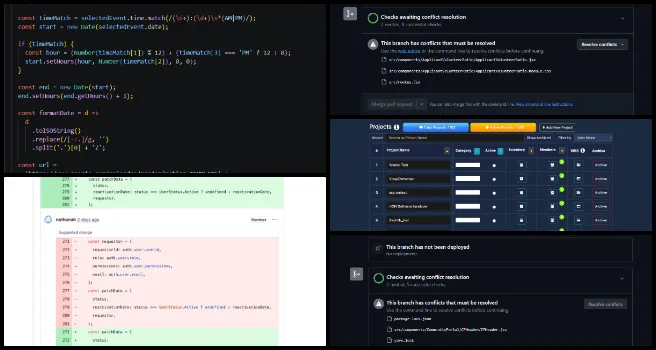
This week, Akshith continued working on Phase 3 to complete PR4676 related to the “Register for Event” and “Add to Calendar” buttons in the event popup. He implemented the functionality for the register button, enabling users to register for an event and receive a toast message confirming the action. He also added logic to prevent duplicate registrations by displaying an appropriate message when a user is already registered. In addition, Akshith worked on the PR Review Team Analytics Dashboard task to implement dark mode, where he resolved conflicting styles and reorganized the CSS files to meet eslint standards. He tested the changes and raised pull requests for both tasks in support of a complete sustainability strategy. Mani worked on resolving merge conflicts and implementing requested changes across multiple active pull requests to ensure successful integration with the main codebase. This effort included updating Pull Requests 4634, 5023, 5099, 4376, 4942, 4871, 4705, and 4449. He focused on addressing feedback from code reviews, reconciling divergent code branches, and verifying that all functional requirements and styling standards remained intact after the merges. By finalizing these adjustments, Mani maintained data consistency and layout stability across various dashboard components and reporting features. These updates facilitate the progression of high-priority tasks toward final approval and deployment for a complete sustainability strategy.
Sai worked on two pull requests in the HighestGoodNetworkApp repository. For PR #5122, he fixed the pause/resume permission flow across the profile and user management sections, addressing reviewer feedback, resolving merge conflicts with the development branch, and correcting failing tests to bring the PR to a mergeable state. For PR #5016, which adds a loss tracking line graph feature, he similarly addressed outstanding reviewer comments, resolved conflicts, and fixed failing test cases. Both PRs were updated and the open task was submitted for a complete sustainability strategy. Shreya worked on multiple HGN Software Development tasks. She resolved a SonarCloud security issue blocking backend PR #1799 for the Educator Task Submissions UI, where a potential NoSQL injection was flagged; after trying several approaches without resolution, she collaborated with a teammate to identify the fix, allowing both PR #1799 and frontend PR #4207 to pass all checks. She continued implementing dark mode updates across the Projects and User Management pages, reviewed PRs #4797 and #2031 related to task tracking, and identified fixes for hardcoded pagination limits and error handling issues. She also resolved a CI error, corrected UI inconsistencies, and fixed multiple stylelint issues so that pre-commit checks pass for supporting a complete sustainability strategy.
Sphurthy worked on a low-priority dashboard UI enhancement to replace the existing “Clear Date Filter” button with direct select and deselect behavior for the date filter. The task focused on improving filter interactions by removing the separate button, which occupied unnecessary space and did not align with common filtering patterns. She updated the date filter to function like a checkbox or radio-style control, allowing users to apply the filter when selected and remove it when unselected without requiring an additional clearing action. The changes were aimed at improving space usage, simplifying the interface, and creating more consistent user interaction within the dashboard for a complete sustainability strategy. Yu’s primary focus was on addressing outstanding code review feedback. All pull requests that were flagged for re-review were updated with the necessary corrections. The changes included resolving logic errors, refactoring code for better readability, and ensuring alignment with current project standards. Once the updates were applied, the requests were resubmitted for verification to ensure the issues were fully resolved for a complete sustainability strategy. To learn more about how this work supports creating a complete sustainability strategy, visit the Highest Good Society and Highest Good Network pages. The collage below showcases the team’s accomplishments for the week.
DEV DYNASTY SOFTWARE DEVELOPMENT TEAM
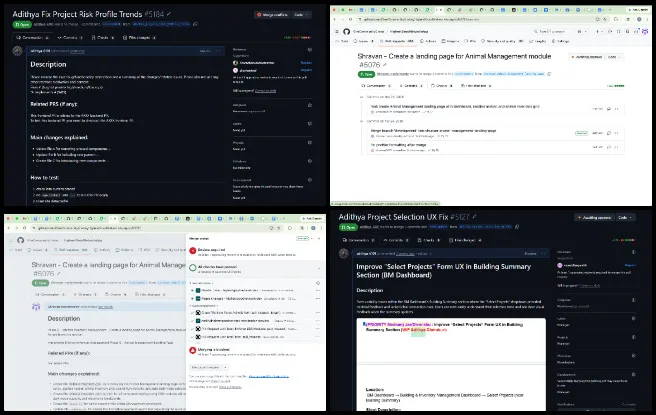
The Dev Dynasty Team’s summary, covering their work on the Highest Good Network software, was managed by Shravya Chilukoori (Administrative Software Engineer) and Neeraj Kondaveeti (Software Engineer). The Team includes Adithya Cherukuri (Volunteer Software Engineer), Sai Shravan Neelamsetty (Software Engineer), Deekshith Kumar Singirikonda (Developer). The team made progress on HGN development tasks as part of a complete sustainability strategy with a focus on feature updates, UI fixes, and resolving integration issues.
This week, Neeraj resolved merge conflicts across multiple pull requests related to search event filters and event status indicators as part of a complete sustainability strategy, aligning branches with the latest development updates, supporting PR merges, and working on enhancements to the application and job posting page including form handling, PDF resume uploads, email notifications, database storage, and addressing UI issues such as dropdown formatting, input validation, date picker integration, layout fixes, and duplicate field removal.
Adithya improved the project selection interface by testing edge cases such as page refresh and dark mode transitions, performing code cleanup, removing temporary comments, and adding JSDoc documentation, while progressing on historical risk tracking under a complete sustainability strategy by analyzing feedback, addressing SonarCloud issues, setting up the risk profile component structure, resolving routing conflicts by reordering protected routes, and verifying backend API connectivity.
Sai Shravan worked on multiple pull requests within a complete sustainability strategy by fixing dark mode inconsistencies in the Blue Square modal through UI updates across inputs and text areas, updating a date formatting utility to handle ISO timestamps, modifying test cases, and resolving merge conflicts after syncing with the development branch, along with fixing syntax issues affecting CI builds, resolving routing conflicts between Animal Management and Orchard Management features, addressing SonarCloud issues by adding PropTypes and correcting dataset handling, and submitting updates for review. To learn more about how this work supports creating a complete sustainability strategy, visit the Highest Good Society and Highest Good Network pages. The pictures below offer a visual representation of this work.
LUCKY STAR SOFTWARE DEVELOPMENT TEAM
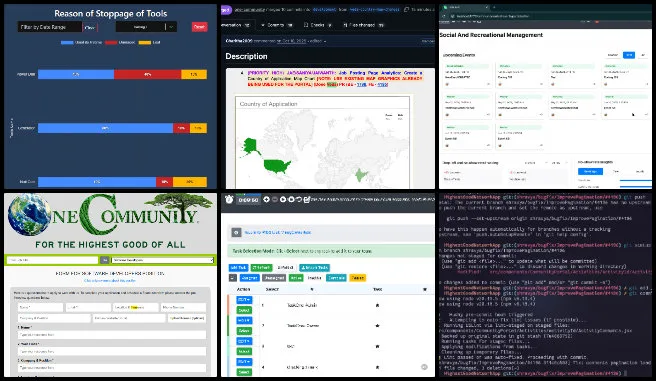
The Lucky Star Team’s summary, covering their work on the Highest Good Network, was managed by Tanmay Nihal Harwani (Data Scientist) and Sohail Uddin Syed (Software Engineer). The team includes contributions from Aayush Shetty (Software Engineer), Chirag Bellara (Software Engineer), Shravya Kudlu (Software Development Engineer), Veda Bellam (Software Engineer), and Vinay Krishna (Software Engineer). Their work supports One Community’s mission of a complete sustainability strategy through cross-functional software development and ongoing system improvements.
This week Aayush worked on Phase 3 report related UI issues and ongoing Phase 2 updates within the HGN Software Development project by reviewing requirements and analyzing code for dropdown width inconsistencies in resource usage and insights time filter components, identifying relevant HTML elements, resolving merge conflicts, and preparing fixes, while also updating the Tools and Equipment Tracking dashboard by addressing pull request comments related to graph color and tooltip behavior and testing the changes locally. This work supported One Community’s mission of creating a complete sustainability strategy through continued platform stability and feature development. Chirag completed the Create New Event bug fix by updating the GET events API to return all events by default unless pagination parameters are provided, creating pull request 2176, updating the UI to dynamically reload when a new event is created, removing mock data, ensuring actual database values are displayed, adding updated filtering, and implementing a more or less toggle on the Participation screen, followed by creating pull request 5182. This work was aligned with creating a complete sustainability strategy.
Shravya completed the pagination ticket by resolving comment duplication issues, improving performance, enabling display of two replies, updating total count behavior to accumulate instead of reload, and reviewing and modifying pull requests based on feedback while also working on small merge requests, contributing to One Community’s mission of creating a complete sustainability strategy. Sohail updated the job application page by marking required fields with an asterisk, configuring form submission with a post request and appropriate feedback handling, updating the dropdown menu to use backend job positions with fuzzy matching for template selection, binding job details to an informational element with conditional visibility, and customizing frontend rendering for a specific application type question, furthering One Community’s mission of creating a complete sustainability strategy through cleaner code and improved platform functionality.
Veda worked on frontend and UI updates across analytics, application pages, and platform styling by resolving conflicts in the Country of Application map chart feature, addressing UI issues in application templates, preparing updates for review, and resolving styling conflicts in the Listing and Bidding Platform while migrating components to a module-based structure and fixing dropdown and link issues contributing to creating a complete sustainability strategy. Vinay worked on enhancing the Create New Team form in the Building Management Dashboard by adding required field indicators, inline validation, bulk add and remove functionality, helper text, improved visual hierarchy, disabled submission until completion of mandatory fields, confirmation messages, and ongoing integration of task assignment flows with project and WBS structures while refining functionality. See the Highest Good Society and the Highest Good Network pages to learn more about how this work supports creating a complete sustainability strategy. Look at the collage below to view the team’s work for the week.
REACTONAUTS SOFTWARE DEVELOPMENT TEAM
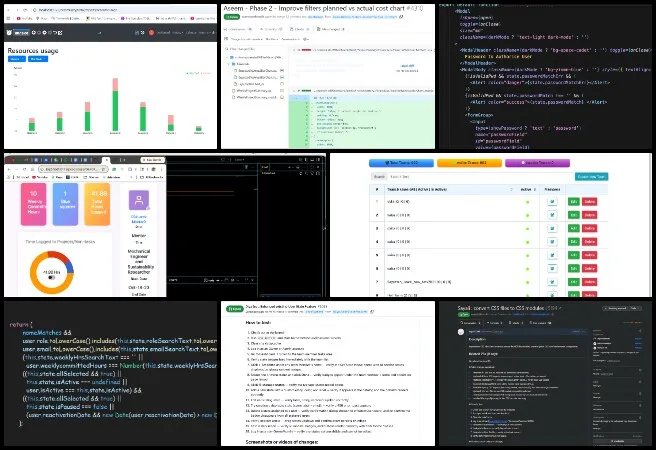
The Reactonauts team summary, which covers their work on the Highest Good Network, was managed by Diya Wadhwani (Software Developer) and Divanshu Bakshi (Data Analyst) and it includes Aseem Deshmukh (Software Developer), Namitha Vijaykumar Pawar (Software Engineer), Sayali Sable (Software Engineer), Sri Satya Venkatasai Siri Sudheeksha Vavila (Software Engineer), Peterson Rodrigues dos Santos (Full-Stack Developer), Nirali Patel (Full Stack Developer), and Suparshwa Patil (Software Engineer). This effort supports maximizing sustainable living access through organized workflows and structured processes that strengthen component development for sustainable evolution. These updates play a key role in a complete sustainability strategy.
This week, Aseem worked on PR 4659 by tracing recent code merges to identify why the map was missing after merge, addressed PR 4546 feedback related to dark mode compatibility, investigated an error in hourspledgedchart.jsx, and created the aseem-costchart-planned branch to rewrite the planned versus actual cost chart code in the financials section while avoiding merge conflicts, supporting a complete sustainability strategy through more stable project workflows.
Diya fixed sonarqube quality gate blockers for the backend dev to main 2.99 release by correcting jobscontroller.test.js, adding a missing .lean() in resetjobsfilters, replacing unsafe error logging in bmconsumablecontroller.js, and refactoring reset scripts with a shared helper in scriptutil.js. She also added archived project viewing and reversing through a showarchived toggle, fixed project archive filtering and modal labels, corrected team assignment autosave on the user profile teams tab, improved navbar responsiveness with a new layout and hamburger menu, and fixed timer popout icon styling, contributing to a complete sustainability strategy through cleaner releases and improved user access.
Namitha worked on the resource usage bar chart by comparing the UI with the Figma design, identifying issues with grid spacing, y-axis scaling, and chart proportions, updating chart settings and layout properties, and testing responsiveness across screen sizes, with PR #5183 still pending final design confirmation, supporting a complete sustainability strategy through better data visualization and resource tracking. Nirali worked on reporting tasks and a production hotfix by addressing reports > people responsiveness issues linked to PR3802 and PR3737, adding total logged volunteer hours for selected periods across projects, teams, and people, improving the date range format and report layouts, adding pagination to project, people, team, and detailed summary reports, updating fixed-width table designs, and restoring the summary hours layout through CSS changes, supporting a complete sustainability strategy through clearer reporting and operational visibility.
Peterson resolved conflicts in PR #3860 for the user management page, where the show filter was not updating the user table correctly, and also resolved conflicts in other pull requests under testing, contributing to a complete sustainability strategy by improving user management reliability. Sayali completed urgent HGN frontend hotfixes by replacing a hardcoded localhost url in helpmodal.jsx with a constants-based endpoint, improving network error handling, fixing dark mode text visibility on selected skills profile buttons, and correcting the PR grading screen reviewer count by passing the right props. She also worked on CSS Modules conversion by renaming more than 50 CSS files, updating imports across more than 70 files, converting classname usage through node.js scripts, resolving merge conflicts, fixing third-party CSS import issues, restoring googledoc, correcting failing vitest tests, and addressing PR #5112 changes related to url preview link colors and merge conflicts, supporting a complete sustainability strategy through improved frontend maintainability.
Sudheeksha worked 20 hours on HGN software development tasks, mainly phase 2 fixes for the create team redirect issue, where she updated createteam.jsx, drafted and raised the PR, fixed sonar gate issues, crosschecked components, and then worked on adding separate inputs for tools and equipment, contributing to a complete sustainability strategy through improved team creation and resource input workflows. Suparshwa tested chatbot updates after integration with the original application, checked existing and new functionality, performed regression testing, and added backend test cases to improve coverage, supporting a complete sustainability strategy through stronger chatbot stability and backend validation. To learn more about how this work supports creating a complete sustainability strategy, visit the Highest Good Society and Highest Good Network pages. Below is the collage showcasing the Reactonauts team’s work for the week.
SKYE SOFTWARE DEVELOPMENT TEAM
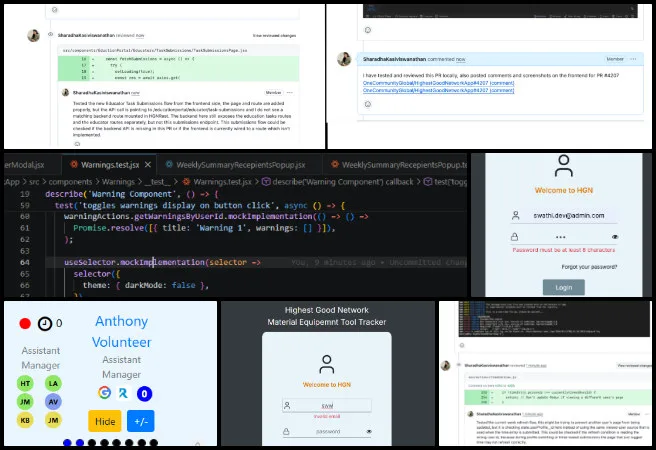
The Skye Team’s summary, covering their work on the Highest Good Network, was managed by Sayantan Paul (Frontend Tester and Software Team Administrator) and Anthony Weathers (Software Engineer). The team includes Sharadha Kasiviswanathan (Software Engineer) and Swathi Angadi (Software Engineer). The Highest Good Network software is committed to creating a complete sustainability strategy by objectively tracking and managing progress across social architecture, construction, production, and maintenance processes, using transparent, scalable systems that strengthen accountability, coordination, and resilient ecosystems.
This week, Anthony focused on CSS updates for dark mode, applying styling changes to relevant elements and adding them to PR #5146 to align with the associated features. He also made code updates to PR #5146 and PR #2167 to address issues flagged by SonarCloud, and successfully pushing changes for PR #2167. While attempting to push new changes for PR #5146, he encountered an error and attempted several fixes but has not yet resolved the issue so far. Swathi worked on the login page for the Material Equipment Tool Tracker. She added accessibility features, implemented inline key validation, and handled error message display. She also added a configurable contact admin email, improved backend error display handling and included logic to provide relevant information for unauthorized access scenarios. This progress contributes towards creating a complete sustainability strategy through small impactful actions leading to larger, lasting changes in ecosystems and social systems.
Sharadha worked on resolving merge conflicts and fixing failing tests for Frontend pull request PR #3510, which focused on implementing the HGN Phase II: Lesson Submit Form, including form input handling, validation, and submission workflow. She ensured the functionality works correctly by testing locally, fixing issues affecting the submission process, and verifying UI behavior and data flow. After addressing all conflicts and test failures, Sharadha prepared the PR for immediate merge in alignment with project requirements and PR Review guidelines. See the Highest Good Society and the Highest Good Network pages to learn more about how creating a complete sustainability strategy is central to One Community’s goals, demonstrated through transparent, collaborative innovation within the Highest Good Network open source hub. See the collage below for the team’s work.
SOFTWARE PR REVIEW TEAM A-N
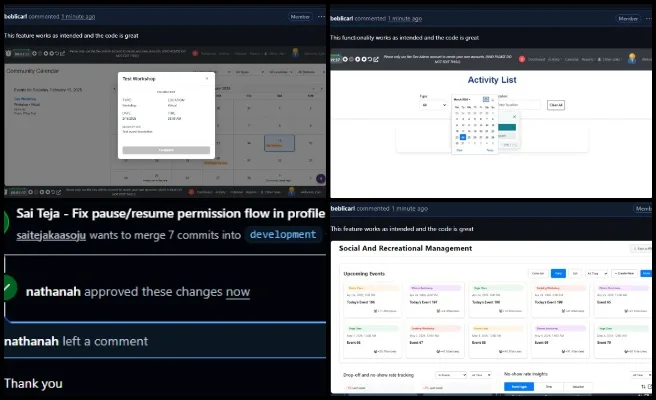
The PR Review Team’s summary for members with names starting with A–N was managed by Sai Sree Dongari (Data Analyst). The Highest Good Network is a foundation for measuring our results in creating a complete sustainability strategy. This week’s active members of this team were Carl Bebli (Software Developer), and Nathan Hoffman (Software Engineer). They reviewed all Highest Good Network PRs shared in this week’s update. Learn more about how the Highest Good Network open source hub measures progress toward creating a complete sustainability strategy. The collage below shows a compilation of this team’s work.
SOFTWARE PR REVIEW TEAM O-Z
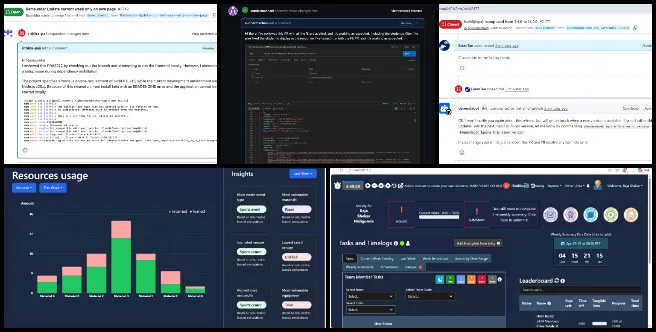
The PR Review Team’s summary for members with names starting with O–Z was managed by Shameera Musthafa (Data Analyst). The Highest Good Network is a foundation for measuring our results in a complete sustainability strategy. This week’s active members of this team were Raja Shekar Nidigonda (Software Engineer), Rithika Pai (Software Engineer), Sidhartha Rapolu (Software Developer), Sundar Machani (Software Engineer), and Yiyun Tan (Software Engineer). They reviewed all the Highest Good Network PRs (Pull Requests) shared in this week’s update. Learn more about how the Highest Good Network open-source hub measures progress towards our goal of a complete sustainability strategy. The collage below shows a compilation of the work from this team.
AND WE PRODUCED THIS WEEKLY UPDATES BLOG – CLICK HERE TO SUBSCRIBE
FOLLOW ONE COMMUNITY’S PROGRESS (click icons for our pages)
INVESTOR PAGES
GET INVOLVED
DONATE | WAYS ANYONE CAN HELP | MEMBERSHIP
CLICK HERE FOR ALL PAST UPDATES