One Community
Transforming the Global Sustainability Discussion – One Community Weekly Progress Update #693
At One Community, transforming the global sustainability discussion means open sourcing and free sharing evolving solutions for food, energy, housing, education, economics, and social architecture that support fulfilled living and global stewardship practices. Created by an all-volunteer team for “The Highest Good of All,” our self-replicating model is designed to help create a global collaboration of teacher/demonstration hubs focused on regenerating our planet and creating a world that works for everyone.
- Here’s our project overview
- Here’s our world-change methodology
- Here’s how this becomes self-replicating
- Here’s how we are open source and free-sharing all the do-it-yourself designs
OUR MAIN OPEN SOURCE HUBS
Click on each icon to be taken to the corresponding Highest Good hub page.
One Community’s physical location will forward this movement as the first of many self-replicating teacher/demonstration communities, villages, and cities to be built around the world. This is the June 29, 2026 edition (#693) of our weekly progress update detailing our team’s development and accomplishments:
Transforming the Global Sustainability Discussion
One Community Progress Update #693

DONATE | COLLABORATE | HELP WITH LARGE-SCALE FUNDING
CLICK HERE IF YOU’D LIKE TO RECEIVE AN EMAIL EACH WEEK WHEN WE RELEASE A NEW UPDATE
YOU CAN ALSO JOIN US THROUGH SOCIAL MEDIA


ONE COMMUNITY WEEKLY UPDATE DETAILS
HIGHEST GOOD HOUSING PROGRESS
One Community is transforming the global sustainability discussion through Highest Good housing that is artistic and beautiful, more affordable, more space efficient, lasts longer, DIY buildable, and constructed with healthy and sustainable materials:
- Learn about: Our Upcoming Crowdfunding Campaign
- Learn about the different village models and transforming the global sustainability discussion : 7 Sustainable Village Models
- Visit the open source portals for the first two: Earthbag Village OS Hub | Straw Bale Village OS Hub
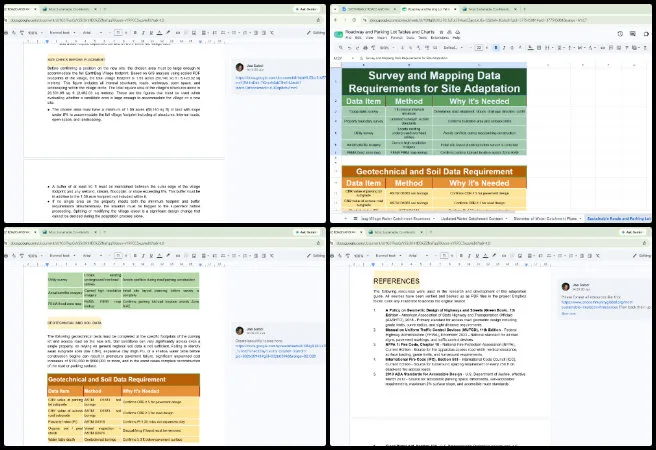
This week, Chanikya Sita (Volunteer Civil/Transportation Engineer) continued working on applying supervisor feedback to the Sustainable Roads and Parking Lot Adaptation Guide. Updates included revising the heading structure throughout the document, rewriting section titles to make them more specific, adding introductory paragraphs between all headings and subheadings, revising the Village Layout Repositioning section to clarify that the village orientation remains fixed while only its position changes at the new site, updating the Size Check section with the accurate Earthbag Village footprint of 1.59 acres (69,140 square feet) based on GIS analysis, adding a passive solar orientation bullet point to the Orientation Rules section. This work helps in transforming the global sustainability discussion across multiple project areas.
Chanikya also worked on replacing all em dashes with standard hyphens, converting inline bullet characters into properly formatted bulleted lists, reformatting the References section to match One Community standards, and preparing placement instructions for the web designer to integrate the content into the Sustainable Roadways and Walkways webpage. This work contributes to transforming the global sustainability discussion by creating clear, standardized guidance for replicable sustainable infrastructure planning. See below for some of the pictures related to this work.
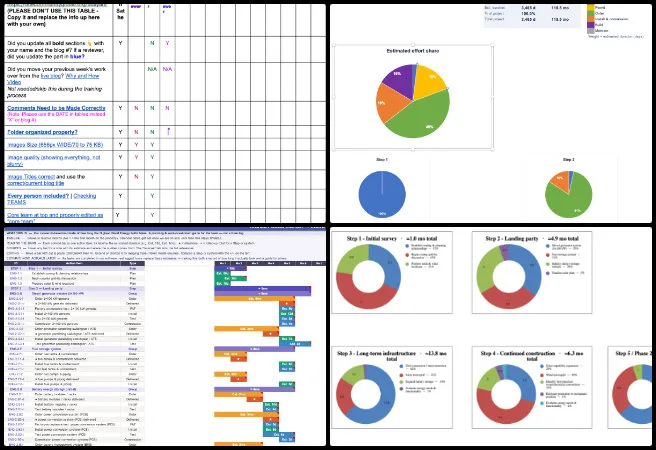
Devendranath Chowdary Maganti (Administrative Assistant) continued working on the Highest Good Network Tracker by incorporating feedback from Jae and updating the initial draft to create a more user-friendly, investor-ready presentation. He refined the layout, added new features, and revised existing content to improve the clarity and organization of the tracker. Devendranath also reviewed training work submitted by new team members, provided feedback on their practice blogs to help them meet project requirements, and supported the onboarding process by addressing reviewer comments and questions. In addition, he assisted with Administration Team tasks and other administrative responsibilities as needed. His work supports transforming the global sustainability discussion by improving collaboration tools and making project information more accessible and actionable. Below, you’ll find some images of this work.
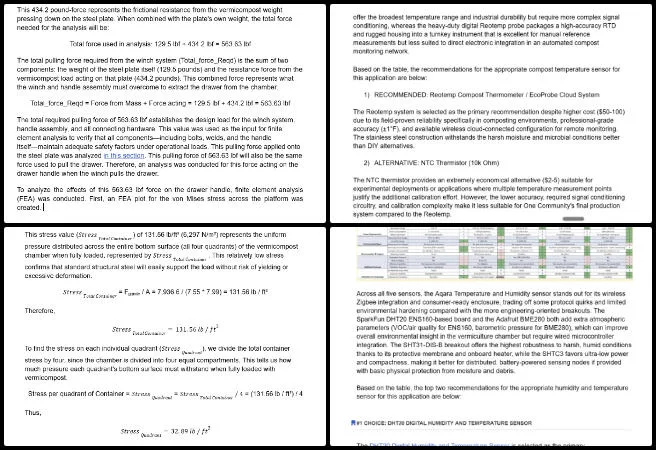
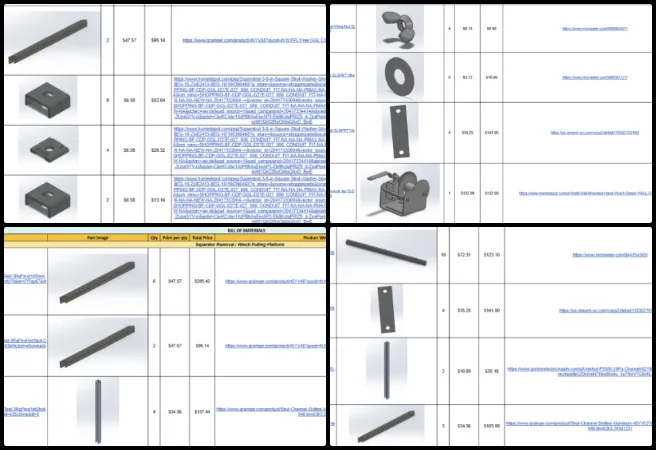
Rishi Chakrapani (Mechanical Engineer) continued working on the Vermiculture Toilet. He updated the Bill of Materials for the Vermiculture Separator Removal Platform report to reflect the latest design and component information. Additional content was added to both the Removal Platform report and the Sensor Selection report based on Jae’s feedback, with revisions made to improve the technical documentation and supporting explanations. Rishi also proofread the Removal Platform report to identify and correct errors before submitting it for review. His efforts contribute to transforming the global sustainability discussion by strengthening the quality and accessibility of open-source engineering documentation. Below, you’ll find some images of this work.
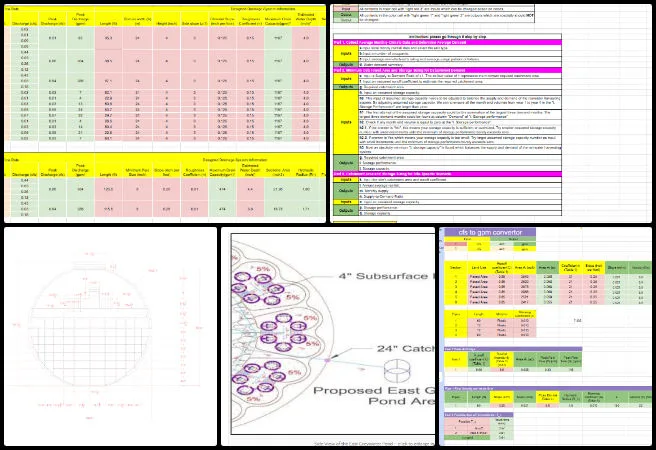
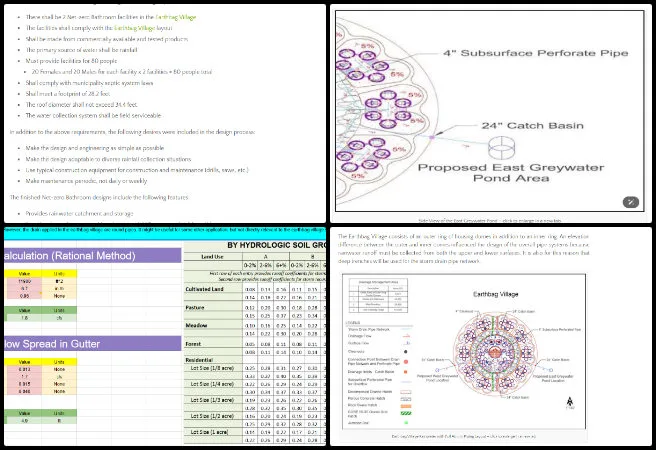
Sagar Chavan (Transportation Engineer) continued working on the Earthbag Village stormwater management and rainwater harvesting documentation by reviewing the stormwater management plan, pipe layout, catch basin locations, greywater pond connections, and related drainage flow information. He reviewed the existing runoff calculation sheet and noted that one section was based on rectangular drain channel dimensions, while the Earthbag Village design uses round storm drains and subsurface perforated pipes, making that portion less directly applicable to the current design. Sagar also reviewed the Net-Zero Bathroom requirements and features to better understand how rainfall, rainwater catchment, storage, and water-saving fixtures support the overall village water system. He connected the calculation notes, site drainage layout, pipe network details, and bathroom water-use information to the LEED stormwater management tutorial and cost analysis documentation. His work supports transforming the global sustainability discussion by advancing practical knowledge of integrated water management and resilient community infrastructure. See below for some of the pictures related to this work.
DUPLICABLE CITY CENTER PROGRESS
One Community is transforming the global sustainability discussion through a Duplicable and Sustainable City Center that is LEED Platinum certified/Sustainable, can feed 200 people at a time, provide laundry for over 300 people, is beautiful, spacious, and saves resources, money, and space:
- Learn about this building, its function and transforming the global sustainability discussion: Duplicable City Center Open Source Hub
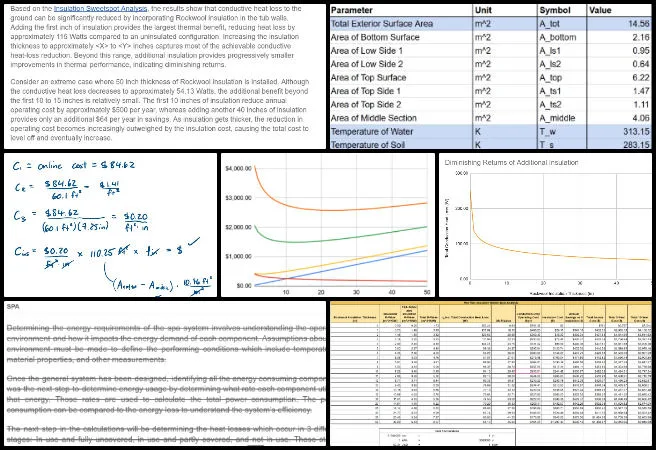
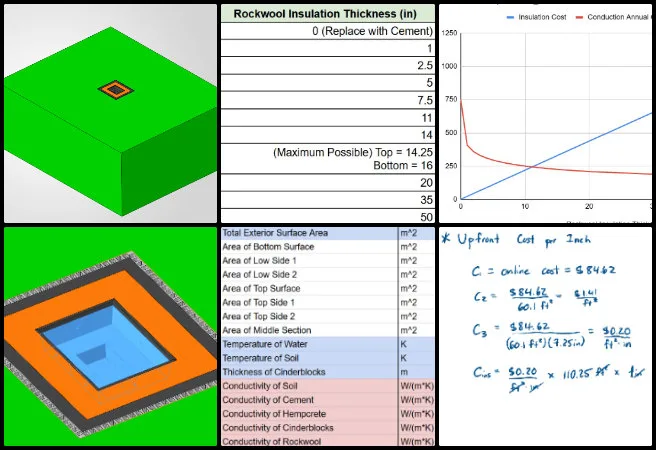
This week, Bevan Chiu (Mechanical Engineer) continued his work finishing the City Center Eco-spa Designs. He worked on the insulation sweet spot analysis and final report for the website. He refined the heat loss and operating cost calculations to evaluate insulation thicknesses up to 50 inches. He also completed a cost analysis and updated the cost breakdown graph to include one-year, five-year, and ten-year total costs for both insulation and operating energy, providing additional information to support selection of the insulation sweet spot. For the final report, Bevan revised the transitions and content in the Energy Requirement Calculation section to align with the current calculation methods. He also began incorporating the insulation sweet spot rationale and increased the emphasis on the insulated spa cover within the Thermal Simulation Conclusion. This open source Duplicable City Center project focuses on transforming the global sustainability discussion. For more details, refer to the image below.
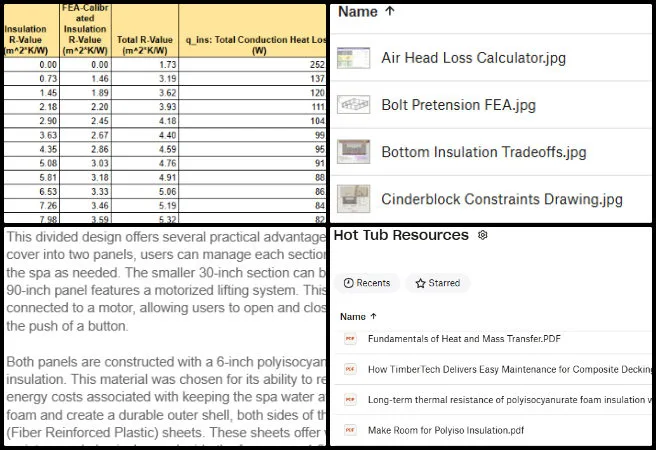
Shivarama Krishna Revanuru (Mechanical Engineer) continued working on the Duplicable City Center design. He focused on writing the report and preparing the section on the finite element analysis (FEA) of the spa cover. Team members’ report sections were proofread to identify and address any missing information or gaps in the content. Initial work also began on evaluating the heat loss capacity of the spa cover, including the development of the related analysis and supporting calculations. This open source Duplicable City Center project transforming the global sustainability discussion. The images below illustrate aspects of this work.
HIGHEST GOOD FOOD PROGRESS
One Community is transforming the global sustainability discussion through Highest Good food that is more diverse, more nutritious, locally grown and sustainable, and part of our open source botanical garden model to support and share bio-diversity:
- Learn about the structures and transforming the global sustainability discussion: Hoop House Hub | Aquapini & Walipini Open Source Hub
- See what we’ll be growing: Gardens & Hoop Houses | Large-scale Structures | Food Forest | TA
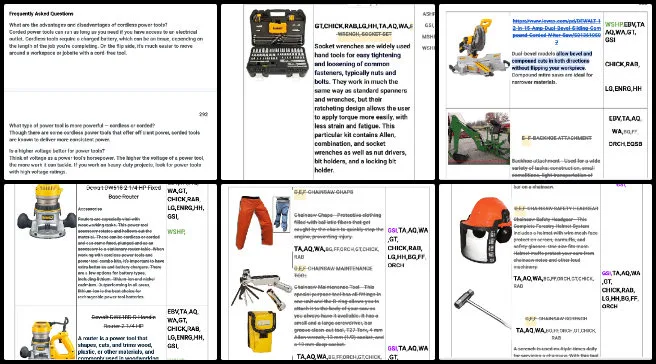
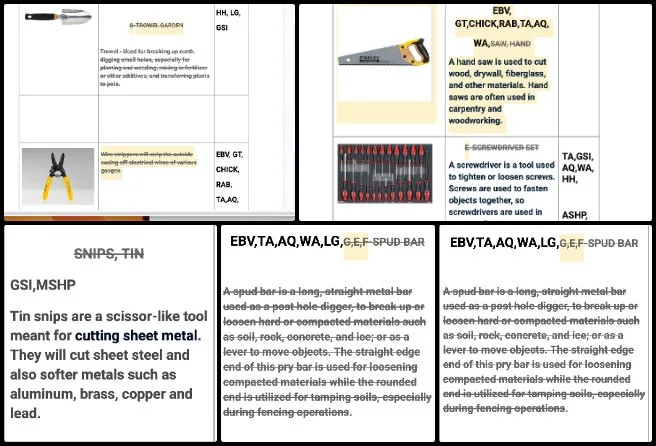
This week, the core team continued working on the Master Tools, Equipment, and Materials/Supplies List for the Large-scale Garden, Botanical Garden, and other Highest Good Food components, focusing on electrical, gardening, composting, and fencing project entities. They included the acronyms GSI, EQSB, ASHP, MSHP, and WSHP wherever it was appropriate. This work applied primarily to the GSI and WSHP documents, where many of the entities will be stored before being assigned to specific One Community projects. Their efforts contribute to One Community’s mission of transforming the global sustainability discussion through open-source collaboration, ecologically responsible innovation, and a focus on long-term global development. The collage below portrays the team’s efforts and achievements for the week.
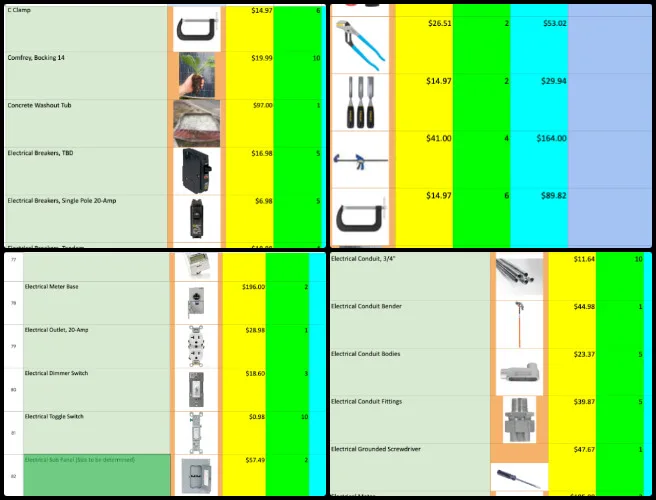
Chelsea Mariah Stellmach (Project Manager) continued her work on several One Community projects, including the phased rollout, kitchen inventory software build, and governance software design mockup. This week was Chelsea’s final week with the organization, and she worked on the pricing sheet for Phase 3 equipment. The efforts included completing rows with missing information, transferring applicable details from the Phase 2 equipment pricing sheet, and researching new information for items that did not have existing data. These contributions support transforming the global sustainability discussion by strengthening both technical execution and design alignment across the platform. See the collage below for this week’s progress.
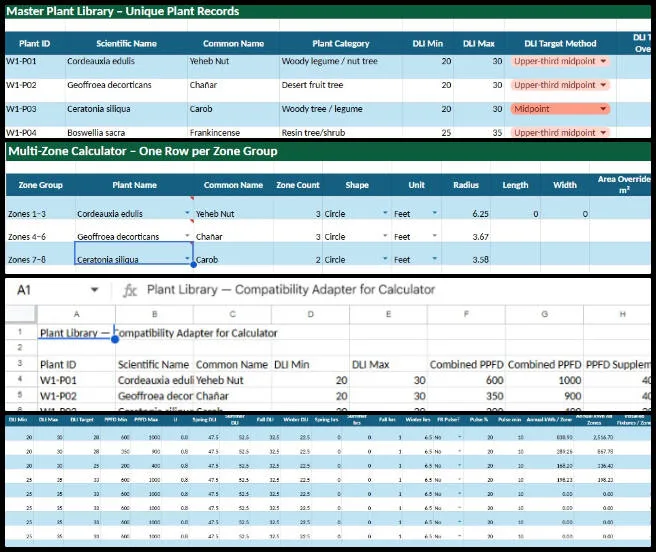
Jay Nair (BIM Designer) continued working on the Aquapini and Walipini Planting and Harvesting documents. He worked on completing the remaining zone areas for the Walipini 1 greenhouse and verified the geometry of all zones against the project plans to ensure accuracy. He also confirmed the lighting fixture selection for each zone and reviewed the seasonal photoperiod values used in the lighting energy calculations, ensuring the data aligned with the project requirements and supported consistent results within the lighting energy calculator. These updates improve the stability and adaptability of shared systems, supporting the broader goal of transforming the global sustainability discussion. See the collage below portraying the work done this week.
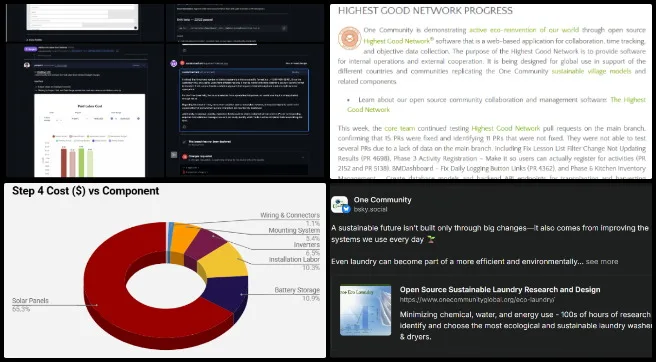
Shameera Musthafa (Data Analyst) recently joined the Highest Good Food initiative and continued supporting OC Administration and the PR Review Team by coordinating PR review workflows, reviewing the work of both the Admin and PR teams, and providing feedback to ensure accuracy, clarity, and consistency across all deliverables. She organized and categorized project images, created visual collages, and finalized blog-related content as part of PR review coordination, ensuring that both visual and written materials were properly curated and documented. These technical updates advance the team’s objectives, ensuring that all completed tasks directly contribute to transforming the global sustainability discussion.
Additionally, Shameera contributed to the Highest Good Energy report pages and related visualizations. She also managed the One Community Bluesky social media account, creating and publishing posts to help share project updates and increase outreach and engagement. In addition, she supported the hiring process by conducting interviews and evaluating candidates. She also conducted end-to-end testing of the PR Review Team Admin Dashboard, validating key workflows, identifying issues, documenting results, and helping ensure the dashboard functioned as intended. This work plays a key role in transforming the global sustainability discussion. See below for images showcasing her work.
HIGHEST GOOD ENERGY PROGRESS
One Community is transforming the global sustainability discussion through Highest Good energy that is more sustainable, resilient, supports self-sufficiency and includes solar, wind, hydro and more:
- Learn about the open source sustainable-energy foundations and transforming the global sustainability discussion: Solar, Hydro, and Wind
- Explore our research into the most sustainable products and companies for saving water and energy: Insulation, Eco-laundry, Lightbulbs and Light Bulb Companies, Doors and Door Companies, Windows and Window Companies, Toilets, Faucets and Faucet Accessories, Urinals, and more.
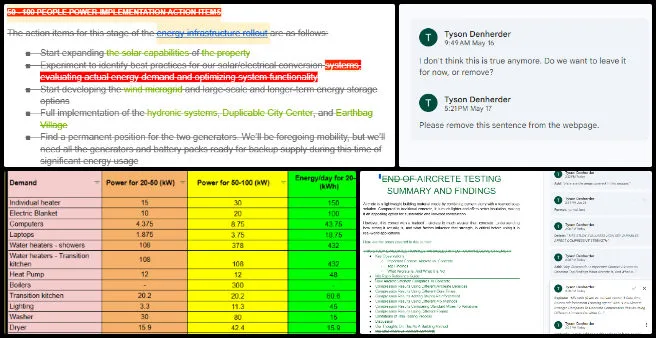
This week, the core team continued contributing to the Highest Good Energy initiative. They reviewed the Food Procurement and Storage page, the Highest Good Energy page, and the Summary section of the Aircrete document, providing feedback on each to improve formatting, consistency, and readability. They also continued work on the food rollout steps cost analysis and developed visual suggestions for the Highest Good Food page to support the presentation of the information. This work contributes to transforming the global sustainability discussion, as shown in the collage below.
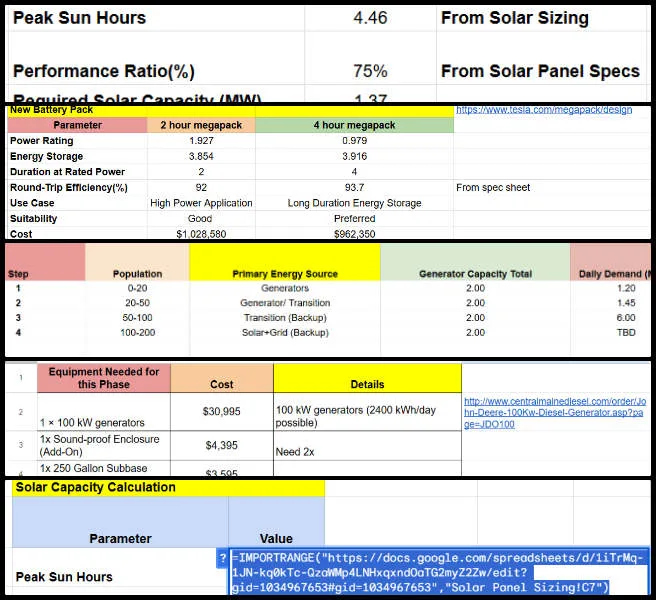
Rohan Pariakar (Operations and Supply Chain Analyst) continued working for the Highest Good Energy initiative. He focused on evaluating the transition from temporary generator-based power generation to a solar-powered energy system by integrating generator, solar, battery, and cost analyses into a phased implementation model. He compared existing project spreadsheets to establish daily energy demand, installed solar capacity, expected solar generation, peak sun hours, system performance ratio, and battery storage assumptions, and used selected solar module specifications to verify the project’s solar sizing calculations. Multiple worksheets were cross-referenced to identify inconsistencies between the 0–20 and 20–50 person energy demand models, with differences documented for management clarification before the analysis was extended to later population phases. These efforts support transforming the global sustainability discussion by enhancing clarity and accessibility.
Rohan also expanded the project workbook by updating equipment costs for one- and two-generator configurations, incorporating revised monthly fuel operating costs, adding a consolidated solar capacity calculation summary, evaluating Tesla Megapack storage configurations against projected solar generation and community demand, and creating a phased energy transition table linking population growth, primary energy sources, daily energy demand, installed solar capacity, expected solar generation, projected excess energy, and generator requirements. The feasibility of linking calculations between separate Google Sheets workbooks using dynamic references was also assessed to support automatic updates as source calculations are revised. These updates help scale the topic of transforming the global sustainability discussion across teams and disciplines. See below for images showcasing his work.
HIGHEST GOOD EDUCATION PROGRESS
One Community is transforming the global sustainability discussion through Highest Good education that is for all ages, applicable in any environment, adaptable to individual needs, far exceeds traditional education standards, and more fun for both the teachers and the students. This component of One Community is about 95% complete with only the Open Source School Licensing and Ultimate Classroom construction and assembly details remaining to be finished. We’ll report on the final two elements to be finished as we develop them.
With over 8 years of work invested in the process, the sections below are all complete until we move onto the property and continue the development and open sourcing process with teachers and students – a development process that is built directly into the structure of the education program and everything else we’re creating too:
- Program Overview and transforming the global sustainability discussion: Education Open Source Hub
- How the components work together in designing human orchestrated eco-abundance: How to use the Education for Life Program
- Lesson Plans for Life – Lesson Plans How-to
- Foundations of Outstanding Leaders, Teachers, and Communicators
- Curriculum for Life
- Teaching Strategies for Life
- Learning Tools and Toys for Life
- Evaluation and Evolution
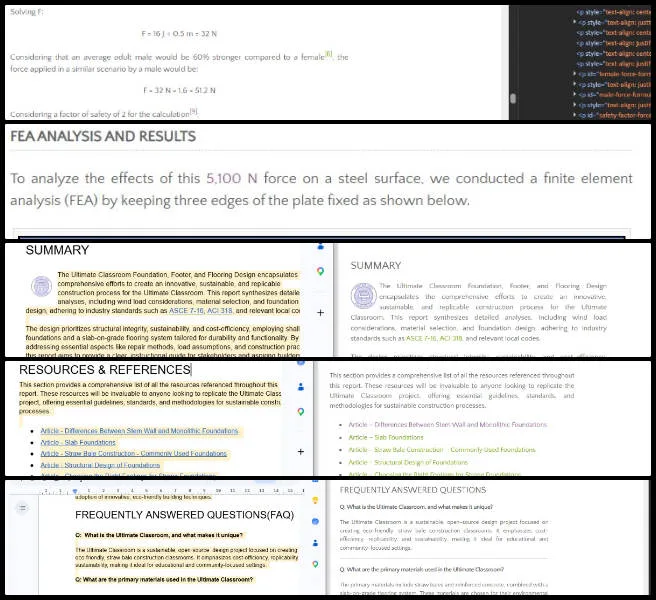
Rajeshwari Bhirud (Software Engineer) recently joined the Highest Good Education team and began working as both a Web Designer and Software Administrator, completing the Vermiculture Eco-Toilet Design blog with SEO-optimized images, proper redirects to Google Sheets and documents, and accurate formula links across calculation sections. In her Software Administrator role, she reviewed the work of the Binary Brigade and Dev Dynasty software teams, added summaries to Step 2 documents and Blog #692, commented on team members’ updates, uploaded images, maintained collages, and updated Step 4 tracking, furthering One Community’s mission of transforming the global sustainability discussion through improved platform functionality.
Rajeshwari also began editing the Ultimate Classroom Footer, Foundation, and Flooring Design report, structuring researched content for future review. Her efforts support transforming the global sustainability discussion by strengthening the quality and accessibility of open-source engineering documentation. Below, you’ll find some images of this work.
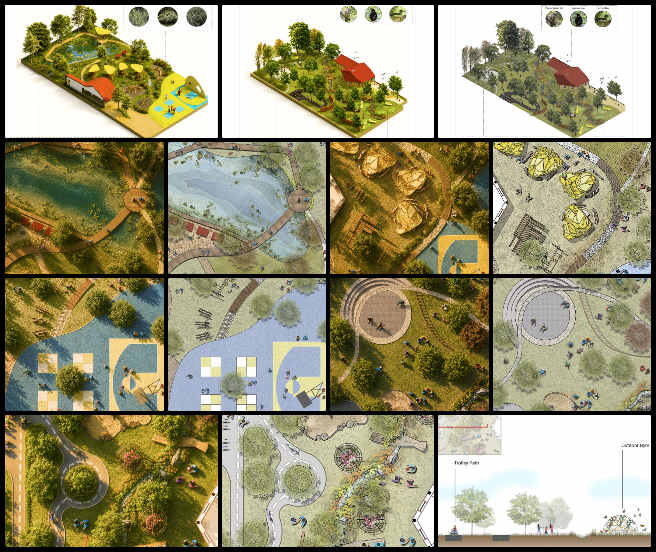
Jung Ah “Romey” Choi (Graphic Designer) continued contributing to the Highest Good Education initiative and completed the design work for the Ultimate Classroom PUBHTML5 version by converting existing 2D illustrations into 3D photorealistic images, finalizing the title design and page numbering, and preparing the layouts for digital publication. The completed pages were reviewed to ensure visual consistency and readiness for the PUBHTML5 format before delivery. These updates strengthen the stability and flexibility of shared systems, advancing the broader goal of transforming the global sustainability discussion. See the collage below portraying the work done this week.
HIGHEST GOOD SOCIETY PROGRESS
One Community is transforming the global sustainability discussion through a Highest Good society approach to living that is founded on fulfilled living, the study of meeting human needs, Community, and making a difference in the world:
- Read the Highest Good society overview and transforming the global sustainability discussion: Highest Good Society
- Learn about the model for fulfilled living and sharing: A Day in the Life
- Learn about the 4 economic models: RBE | For-profit | Non-profit | Entrepreneurship
- Learn about our open source community collaboration and management software: The Highest Good Network
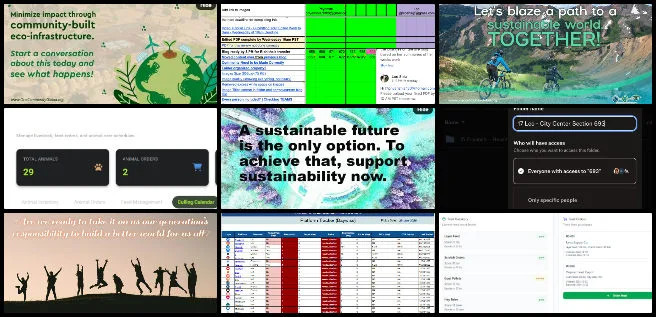
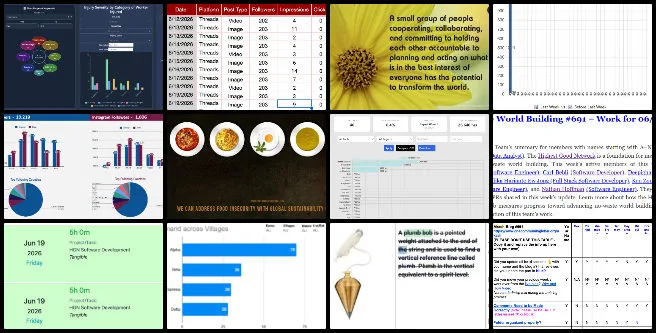
This week, the core team completed over 37 hours managing volunteer work reviews, handling emails, overseeing social media accounts, supporting web development, and identifying and integrating bug fixes for the Highest Good Network. They also interviewed and onboarded new volunteer team members. Additionally, they produced and integrated the video above, which highlights how making an active eco-reinvention of our world serves as a foundational element of One Community’s broader mission of transforming the global sustainability discussion. The following images showcase highlights of this work.
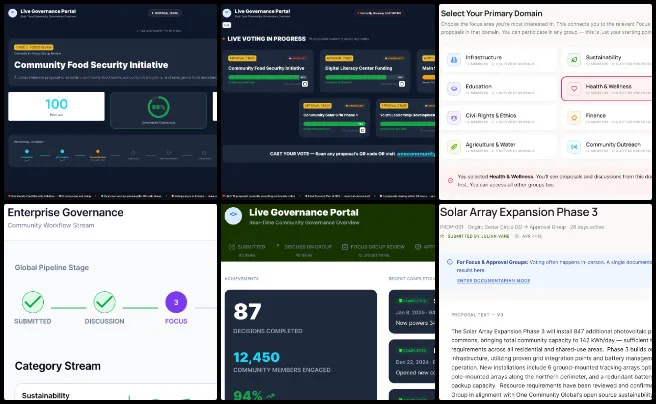
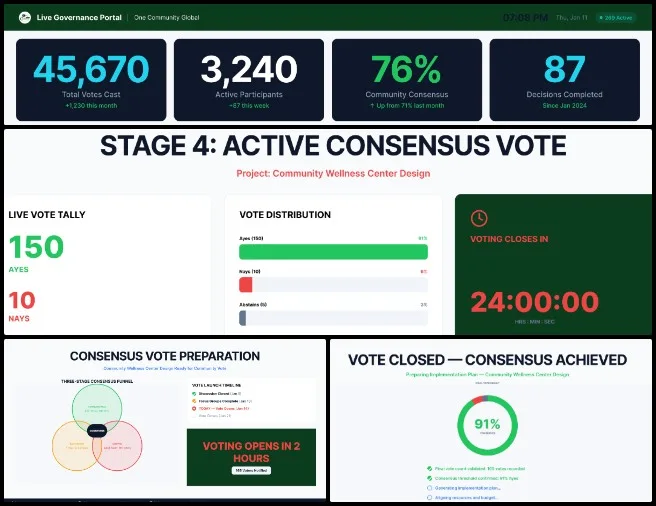
Pooja Kulkarni (UI/UX Designer) continued her work on refining the governance platform screens, including the approval group proposal view, group selection orientation flow, group and role explanation screens, live governance portal displays, live voting view, and proposal detail view. She focused on making the group structure clearer, improving stage-based navigation, simplifying proposal status information, and creating public-facing dashboard views that summarize governance activity, voting progress, urgent items, and community impact. This work contributes to transforming the global sustainability discussion; the images below highlight key aspects of her work.
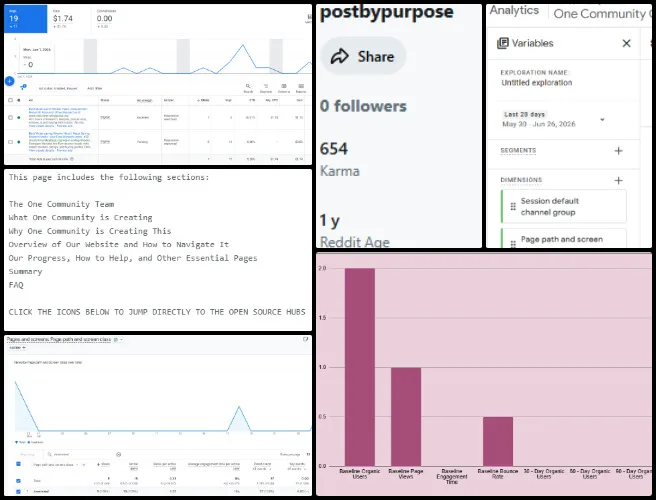
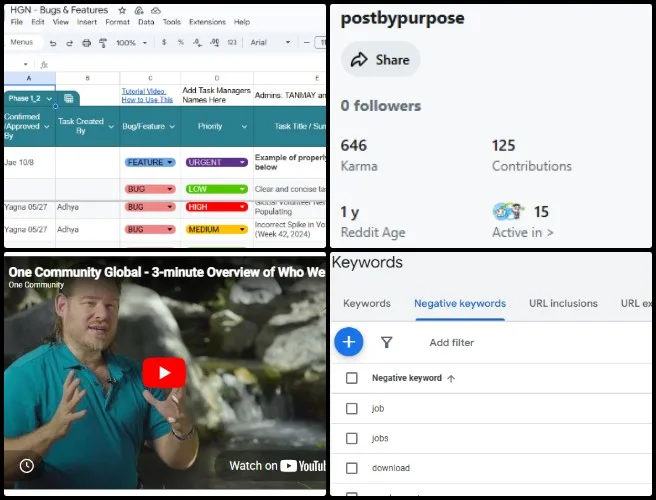
Adhya Rastogi (Business Analyst) continued contributing to the Highest Good Society team by optimizing a Google Ads campaign by reviewing and cleaning up more than 300 redundant and overlapping keywords, adding new targeted and negative keywords, updating headlines and descriptions, adjusting bidding settings, and applying relevant optimization recommendations to improve campaign structure and targeting. She continued SEO work by reviewing documentation, training materials, and tracking resources, creating a baseline analytics framework using Google Analytics, updating the SEO tracking spreadsheet, researching methods for comparing original and optimized webpage content, and sharing the completed framework and findings for feedback. She also maintained Reddit engagement by contributing comments across relevant communities, publishing a discussion post, participating in follow-up conversations, and monitoring engagement patterns to better understand audience interests. These enhancements contribute to transforming the global sustainability discussion by improving data accessibility, analytics, and inventory management capabilities.
Adhya also revalidated the Total Organization Summary Dashboard, identified and documented new bugs related to dashboard functionality and data inconsistencies, reviewed previously reported issues, updated their tracking status, and shared the latest testing observations with the core team. These efforts contribute to transforming the global sustainability discussion by providing accessible infrastructure planning and due diligence resources that support informed development decisions. Please see the collage below to view her efforts put forth this week.
ADMINISTRATION TEAM
The Administration Team’s summary, which covers their work on the Highest Good Network, was managed by Devendranath Chowdary Maganti (Data Analyst) and includes Divanshu Bakshi (Team Admin), Leo Lishin Shiu (Software Engineer), Mridul Bhushan (Volunteer Project Strategy Analyst and Team Administrator), Olawunmi “Ola” Ijisesan (Administrative and Management Support), Pranjul Garg (Business Analyst), Sai Sree Dongari (Data Analyst), Sayantan Paul (Frontend Tester and Software Team Administrator), and Tanmay Nihal Harwani (Data Scientist). The Administration Team supports the Highest Good Network, a tool designed to track and measure progress while developing systems that contribute to transforming the global sustainability discussion. Through administrative support, documentation, testing, training, recruitment, analytics, and content management, the team helps advance this mission, aligning with One Community’s vision of building a replicable and sustainable future model.
This week, Divanshu tested and published four Mastodon updates, verified bug-related pull requests, documented action items, developed a Python script to prevent duplicate image postings, and updated the Weekly Mastodon Report using archived data. Leo reviewed weekly 17LeDCC team summaries, compiled the weekly blog, created collages, resolved a Facebook pipeline issue caused by Meta documentation changes, uploaded Facebook and Instagram insights to the dashboard, and scheduled social media posts. These testing, automation, content management, and social media coordination efforts contribute to transforming the global sustainability discussion.
Mridul finalized Blog #692 summaries across multiple teams, reviewed formatting, grammar, and guideline compliance, managed Twitter/X and LinkedIn content, completed weekend analytics tasks, and reviewed Udayan’s dry run work while providing recommendations. Ola monitored the social media KPI dashboard, reviewed Pinterest analytics performance data, updated daily administrative and pull request files, and organized the team’s digital workspace to support efficient administrative workflows. These administrative, analytics, documentation, and communication efforts contribute to transforming the global sustainability discussion.
Pranjul monitored volunteer timelogs, corrected logging issues, tracked volunteer activities, issued warnings when necessary, managed Tumblr and Medium updates, gathered weekly project information, and published the final WordPress blog. Sai Sree organized PR review images, created collages, finalized blog-related content, interviewed candidates, documented hiring feedback, completed frontend testing across multiple dashboard features, and reviewed Udayan’s training progress. These publishing, hiring, testing, and administrative efforts contribute to transforming the global sustainability discussion.
Sayantan managed administration activities including blog reviews, peer admin feedback, trainee guidance, and warning tracking while testing multiple HGN modules covering reports, dashboards, inventory, participation, listing and bidding, dark mode, activity logs, and UI migrations, documenting issues and assigning follow-up tasks where needed. Tanmay managed bio administration by updating volunteer information, following up on missing bios and photos, merged multiple team blogs into a single weekly blog, optimized blog content for SEO, reviewed new admin screening work, created Threads posts, updated the Social Media Master Dashboard, and maintained related tracking records. These software testing, content management, SEO, documentation, and administrative coordination efforts contribute to transforming the global sustainability discussion. See the collage below for highlights of this week’s work.
HIGHEST GOOD NETWORK PROGRESS
 One Community is transforming the global sustainability discussion through open source Highest Good Network® software that is a web-based application for collaboration, time tracking, and objective data collection. The purpose of the Highest Good Network is to provide software for internal operations and external cooperation. It is being designed for global use in support of the different countries and communities replicating the One Community sustainable village models and related components.
- Learn about our open source community collaboration and management software: The Highest Good Network
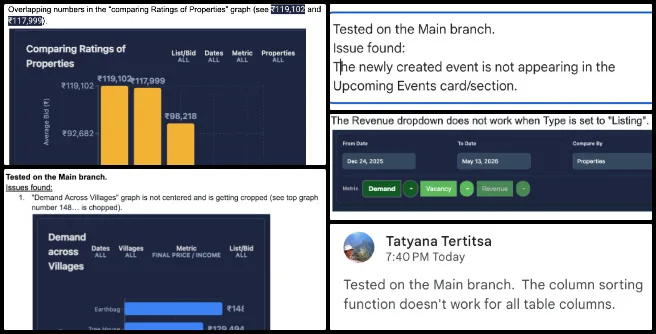
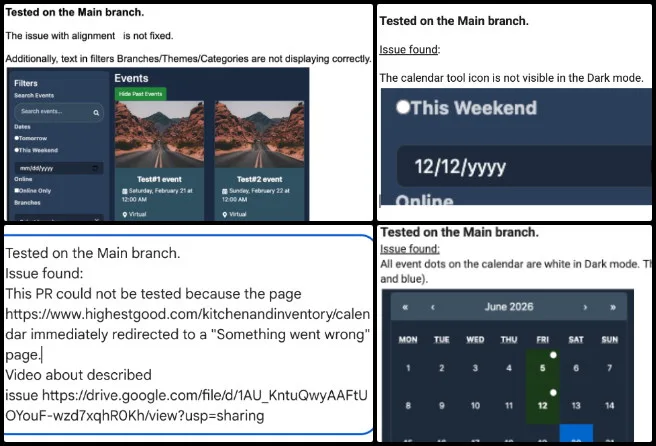
This week, the core team continued testing Highest Good Network pull requests on the main branch, confirming that 10 pull requests were fixed and identifying that another 10 were not. They were also unable to test several pull requests because the required data was not available on the Main branch; these included adding a new bar chart card to the Lessons Learned section on the Total Construction Summary page, fixing the search error in Member Group Check In, adding separate inputs for tools and equipment, fixing the Cancel and Submit button functionality on the Daily Equipment Log, and enhancing the Cost Breakdown by Category donut chart interaction and user interface. These updates formed part of ongoing efforts focused on transforming the global sustainability discussion. See the collage below to view the team’s work.
ALPHA SOFTWARE DEVELOPMENT TEAM
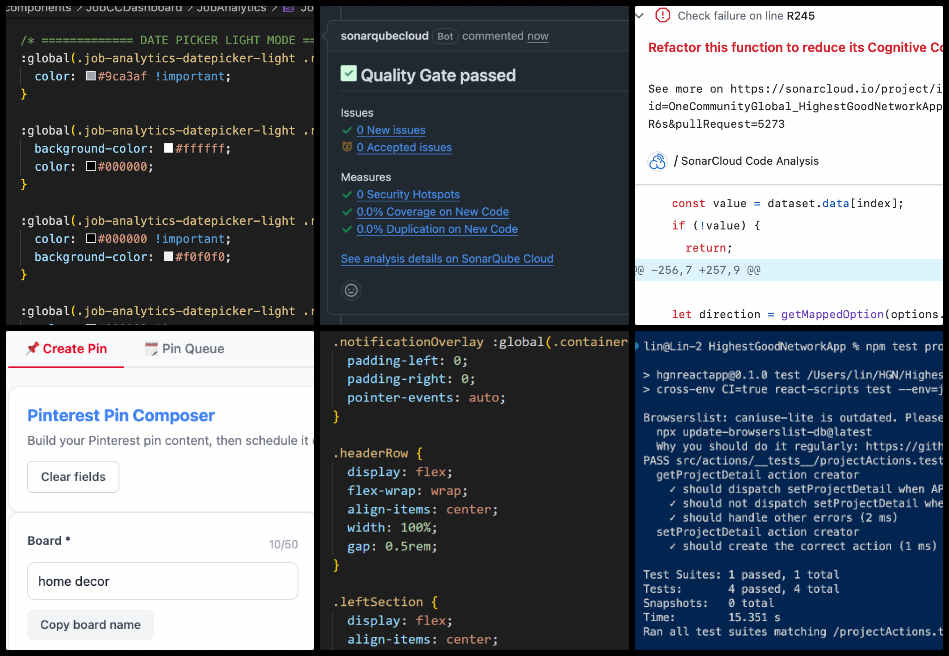
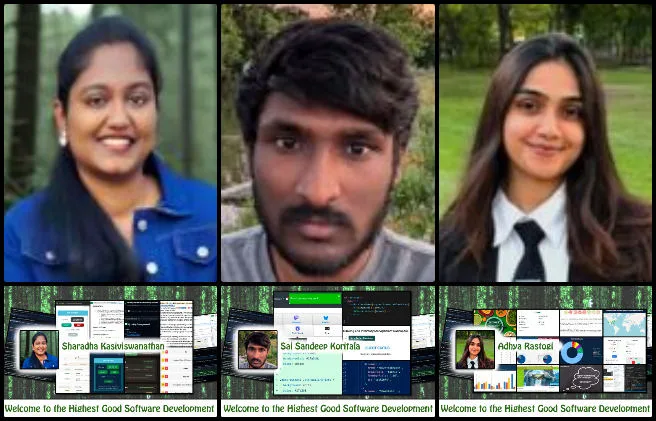
The Alpha Team’s summary, covering their work on the Highest Good Network, was managed by Lin Khant Htel (Frontend Software Developer) and Pranjul Garg (Business Analyst) with a team consisting of Casstiel Pi (Software Engineer), Handika Harianto Ew Jong, Maithili Kalkar (Software Engineer), Sai Sandeep (Software Engineer), Som Ramnani (Junior Software Engineer), and Yingshu Wang (Software Engineer) supporting One Community’s mission of cross-functional software development and system improvements. This work advances the team’s objectives, ensuring that all completed tasks directly contribute to transforming the global sustainability discussion.
Casstiel worked on the Weekly Project Summary usability task by correcting the target URL, reviewing the component structure, and implementing modifications including project labels, expand and collapse controls, comparison toggle features, section badges, empty-state messaging, and interface updates for dark and light modes. Maithili continued development on the Pinterest Auto Poster feature by creating frontend components following the established platform design patterns. These technical updates advance the team’s objectives, transforming the global sustainability discussion.
Handika reviewed multiple pull requests and provided detailed functionality feedback, approving pull request 5095 after verifying mobile display fixes, and approving backend pull requests 2019 and 2145. Conversely, he requested revisions on frontend pull requests 4978 and 4736 due to package merge conflicts and layout shifts, and requested revisions on pull requests 4836, 1709, 5306, 4738, 4680, and 2178 to address scrolling bugs, broken links, disconnected service files, layout display problems, and database saving errors. Sai updated pull request 4385 to correct navigation redirection errors on the Log Issues and View Issues pages, and modified pull request 4537 to add resource filtering by project and tool name, filter selection persistence, reset options, and light and dark mode style updates. These enhancements contribute to transforming the global sustainability discussion by improving system reporting.
Som resolved merge conflicts across pull requests #5163, #4987, and #5189 to preserve filtering, pagination, list view, and export features, and updated tests to match component changes. Yingshu investigated Task 1191 regarding profile hours updates causing page jumps by reproducing the issue across local and development environments, and reviewed Task 1190 by creating a development branch and beginning implementation work for date selection controls within the Contributors Report interface. See the Highest Good Society and the Highest Good Network pages to learn more about how this work supports the transforming the global sustainability discussion. The collage below offers a visual representation of the team’s work for the week.
BINARY BRIGADE SOFTWARE DEVELOPMENT TEAM
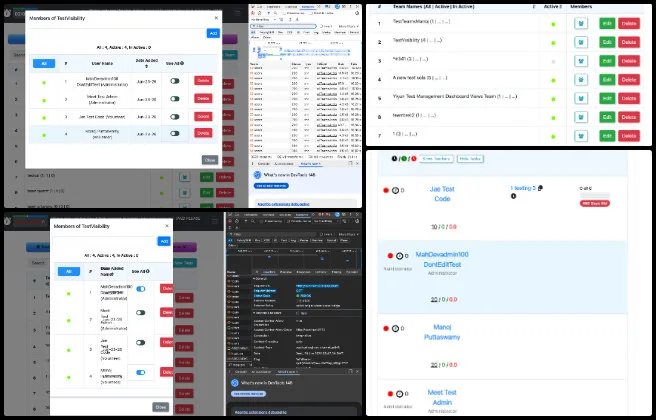
The Binary Brigade Team, which presented their work on the Highest Good Network software, was managed by Roshini Seelamsetty (Software Engineer) and included Manoj Puttaswamy (Software Engineer). The Highest Good Network software is our tool for managing and objectively measuring progress, ensuring that all contributions are tracked and aligned with our mission of transforming the global sustainability discussion. It supports social architecture, construction, production, and maintenance processes that contribute to open-source projects and resilient, sustainable ecosystems.
This week, Manoj worked on the HighestGoodNetworkApp Teams page, fixing issues related to the “See All” toggle visibility feature and resolving a 30-second page load problem. He corrected backend team aggregation logic that was dropping members with different team codes, updated the visibility function to modify only the selected user’s profile, fixed frontend visibility state mapping issues, prevented toggle state resets across modal opens and closes, and eliminated visibility toggle flashing during data loading. This week’s work continues transforming the global sustainability discussion with focused and iterative enhancements. Manoj also resolved a failed API call caused by a stale identifier, removed an eager data fetch that triggered thousands of unnecessary requests, stabilized member count display during background refreshes, and implemented a role-based visibility override for Owner, Administrator, and Core Team users while preserving toggle state behavior in the admin interface. See the Highest Good Society and the Highest Good Network pages for more on how this supports transforming the global sustainability discussion. Highlights of the team’s contributions are shown in the collage below.
DEV DYNASTY SOFTWARE DEVELOPMENT TEAM
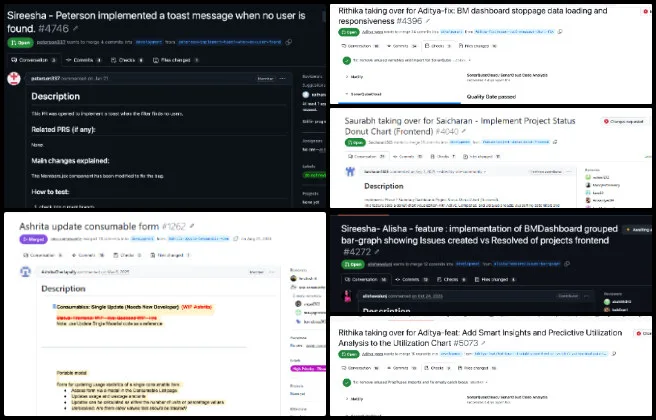
The Dev Dynasty Team’s summary, covering their work on the Highest Good Network software, was managed by Rithika Pai (Software Engineer). The team includes Sireesha Kunchala (Software Engineer) and Saurabh Jayant Dipte (Software Engineer). The Highest Good Network software helps manage and objectively measure processes by transforming the global sustainability discussion through social architecture, construction, production, and maintenance systems.
This week, Sireesha corrected a duplicate link validation issue in the user profile editing modal by expanding the logic to check for matching URLs in a case-insensitive manner, preventing duplicate links from being saved under different names, resolved SonarQube quality gate issues and code smells in the dashboard bar-graph components, patched a server crash related to an object identification failure on the issue model by rearranging static routes and introducing strict parameter validation in the Express router, and verified functionality for empty user search state notifications furthering One Community’s mission of transforming the global sustainability discussion.
Saurabh worked on resolving merge conflicts for two pull requests related to the Project Status Donut Chart feature, identified a duplicate controller issue on the backend where two separate implementations of the project status endpoint existed, and updated the router to point to the correct controller. Hence, the API response includes the window field with startDate and endDate, and resolved a yarn. Lock conflict on the frontend, fixed missing file errors for messagingConstants.js, userPreferenceActions.js, and userPreferenceConstants.js, fixed a missing import for the ProjectStatus component in routes.jsx that was causing a runtime error, and addressed two SonarCloud contrast warnings in ProjectStatus.module.css by darkening the button background color. This work supports transforming the global sustainability discussion through open-source sharing and transparency.
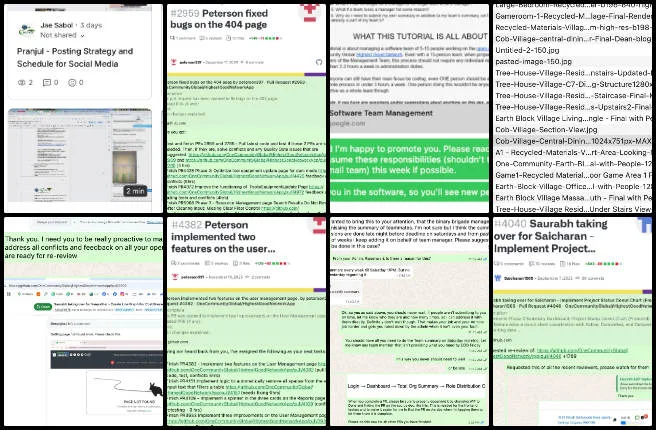
Rithika rebased backend PR #1903 onto development, resolving multiple rounds of conflicts in bmToolStoppageReasonController.js across validation, caching, error handling, and refactor commits, inlining date parsing helpers after discovering a missing utility file, and ensuring all backend tests passed; rebased frontend PR #4396, resolving a yarn.lock conflict, fixing stylelint errors across four CSS files, including unclosed media query blocks, renaming ToolStatusDonutChart.css to .module.css to pass the CSS Modules enforcement check, and resolving SonarQube code smells, including unused variables and an unused import; rebased all remaining Week 10 frontend and backend branches onto development, resolving package-lock.json and yarn.lock conflicts, skipping release revert commits, and fixing a leftover conflict marker in toolUtilizationController.js; and rebased frontend PR #4587 onto development, resolving conflicts across multiple CSS and JS files and fixing duplicate CSS selectors and unclosed blocks that were causing a Netlify build failure. These ongoing improvements align with the organization’s focus on transforming the global sustainability discussion through open-source software development. See below for some of the pictures.
LUCKY STAR SOFTWARE DEVELOPMENT TEAM
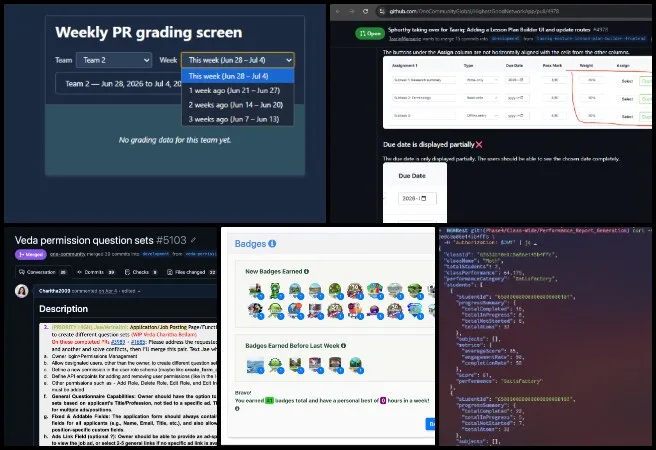
The Lucky Star Team’s summary, covering their work on the Highest Good Network, was managed by Divanshu Bakshi (Data Analyst), and Sohail Uddin Syed (Software Engineer). The team includes contributions from Veda Bellam (Software Engineer), Sphurthy Satish (Software Engineer), Mahitha (Software Engineer), and Shravya Kudlu (Software Development Engineer). Their work supports One Community’s mission of transforming the global sustainability discussion through cross-functional software development and ongoing system improvements.
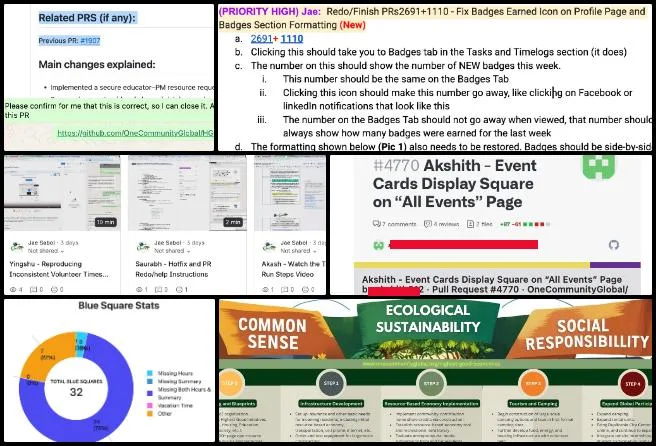
This week, Mahitha completed the badge notification and formatting task by updating the new badges earned and badges from previous week functionality, supporting transforming the global sustainability discussion through improved platform tracking and user visibility. She ensured notification counts and badge displays matched the required behavior, tested the changes, and submitted PR #5356. She also investigated the dashboard data download issue by testing dashboard reloads, examining APIs involved in dashboard loading, tracing inactive task data, and creating a development branch for a fix. In addition, she worked on repository image optimization by converting PNG files to web format, updating image references, modifying 114 files, documenting the work, and testing image rendering after the changes.
Shravya worked on multiple pull requests by resolving dark mode and app delivery issues, addressing reviewer feedback, adding testing explanations for seeded database requirements, assisting reviewers with mongodb role-related issues through documentation and video demonstrations, resolving merge conflicts, and preparing several pull requests for merge or re-review. Sohail continued work on the PR grading feature across the frontend and backend by resolving team identifier mismatches, updating schemas, controllers, indexes, and API endpoints, performing mongodb migrations, adding reviewer deletion functionality, fixing duplicate record creation, implementing route access controls, replacing mock data with live data handling, adding save and validation features, enabling team and week selection functionality, updating dashboard integrations, and writing twenty-two tests covering success, error, and edge-case scenarios, contributing to transforming the global sustainability discussion through stronger review and reporting systems.
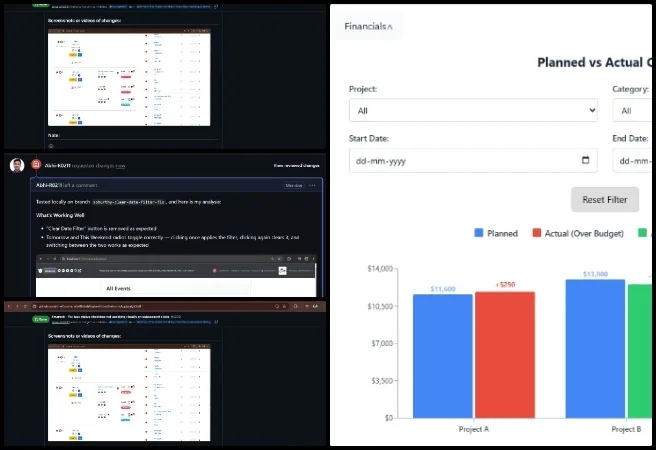
Sphurthy focused on resolving conflicts in previously submitted pull requests, addressing reviewer feedback, coordinating with team members, incorporating updates, resolving outstanding comments, and progressing pending pull request work items, supporting transforming the global sustainability discussion through improved development workflow continuity. Veda continued work on the job application listing page from the user perspective by resolving merge conflicts, updating the UI branch to remain aligned with the latest codebase, identifying and reporting duplicate value issues in the application form, reviewing affected components, and preparing the implementation for continued review and development. To learn more about how this work supports creating a complete sustainability strategy, visit the Highest Good Society and the Highest Good Network pages. Below is the collage showcasing the Lucky Star team’s work for the week.
REACTONAUTS SOFTWARE DEVELOPMENT TEAM
The Reactonauts team summary, which covers their work on the Highest Good Network, was managed by Diya Wadhwani (Software Developer), Divanshu Bakshi (Data Analyst), Abhishek Raghuraman (Software Engineer), and Amaresh Chaudhary Nara (Software Engineer), and includes Aseem Deshmukh (Software Developer). This work supports transforming the global sustainability discussion by strengthening the systems, processes, and collaborative tools needed to make sustainable living more accessible and replicable worldwide.
This week, Abhishek reviewed PRs #5188, #5207, #5208, #5259, and #5276 in the HGN app frontend repository. He verified features related to tracking systems, event card details, date filter fixes, and graph updates. He also investigated long-open PRs #2765, #2959, and #4425 and confirmed through local testing that their changes were already present in the development branch, making the pull requests no longer necessary. In the case of PR #4425, he verified that dark mode support for the dashboard equipment update page was already functioning correctly in the development branch, supporting efforts focused on transforming the global sustainability discussion through platform improvements and maintenance. Aseem worked on the planned vs. actual costs feature by adding a reset filter button, improving dark mode compatibility for the planned vs. actual costs graph and related controls, and merging the latest development branch updates to maintain alignment with the current codebase. These updates support transforming the global sustainability discussion by improving usability and accessibility of project data visualizations.
Amaresh worked across PRs #5358, #1780, #5077, #2135, #3973, and #1613 in both frontend and backend repositories. He fixed a task status checkbox update issue by improving follow-up state handling, added validation for rental date fields to prevent invalid inputs, and addressed reviewer feedback. He also took over frontend and backend work for job posting category filter issues, resolving merge conflicts, fixing code quality concerns, improving security validations, reducing code complexity, and correcting dark mode display issues. In addition, he worked on the listing and bidding dashboard registration page feature by adding dark mode support, resolving routing conflicts, fixing formatting issues, addressing backend merge conflicts, updating registration routes, correcting CI-related package dependencies, fixing integration tests, removing debug code, and resolving a SQL injection vulnerability. This work contributes to transforming the global sustainability discussion through improved application reliability and security.
Diya continued work on the Blue Square system by fixing issues affecting weekly auto-reply emails, including variable scope errors, timezone mismatches, email priority handling, duplicate email prevention, and configuration consistency, and raised PR #2257. She also investigated Gmail email-threading issues, implemented header-based email threading using the existing email thread infrastructure, connected infringement and auto-reply emails to a shared thread structure, and raised PR #2259, with final live validation pending. This work supports transforming the global sustainability discussion by improving communication workflows and system effectiveness. To learn more about how this work supports creating a complete sustainability strategy, visit the Highest Good Society and the Highest Good Network pages. Below is the collage showcasing the Reactonauts team’s work for the week.
SKYE SOFTWARE DEVELOPMENT TEAM
The Skye Team’s summary, covering their work on the Highest Good Network, was managed by Sayantan Paul (Frontend Tester and Software Team Administrator) and Anthony Weathers (Software Engineer). The team includes Jaden Wong (Software Engineer), Nirali Patel (Full Stack Developer), Radia Ahmed (Software Engineer), and Swathi Angadi (Software Engineer). Transforming the global sustainability discussion is a service commitment of the Highest Good Network software which is accomplished by objectively tracking and managing progress across social architecture, construction, production and maintenance processes, utilizing transparent, scalable systems that strengthen accountability, coordination and resilient ecosystems.
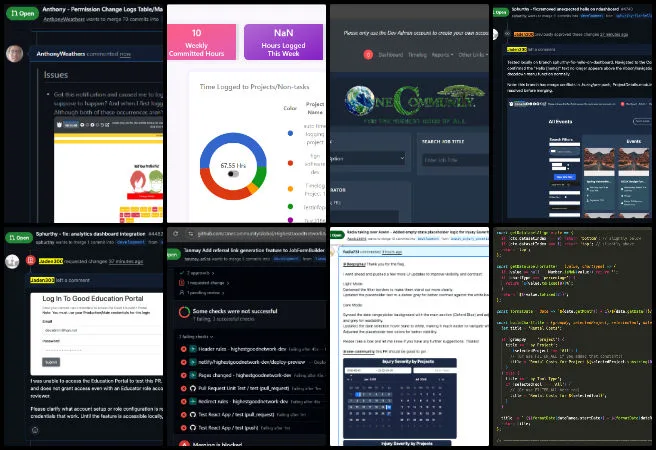
This week, Jaden reviewed pull requests covering multiple features and bug fixes. He requested changes for PR 5136 due to dark mode contrast issues on the Projects, User Management and Reports pages; PR 4482 because the Education Portal login was inaccessible for testing; PR 5165 because pie chart tooltip text was not visible in dark mode; PR 4937 because page scrolling was broken; and PR 4815 due to failing CI checks, SonarQube duplication, failing unit tests, deployment failures, merge conflicts and unresolved functional issues. He approved PR 4826 after verifying inventory type editing, deleting, toast notifications, list refresh, dark mode and overall functionality, approved PR 4740 after confirming removal of unintended dashboard text without affecting the header and approved PR 4608 after validating the implementation and dark mode behavior. These efforts support transforming the global sustainability discussion by enhancing clarity and accessibility.
Nirali implemented backend APIs for Volunteer Hours Reporting, including committed volunteer hour calculations from task estimated hours, aggregation across WBS items, teams and projects and date-range filtering based on task start and due dates to support volunteer, team and project reporting. These updates contribute towards transforming the global sustainability discussion by improving platform functionality, code quality and the reliability of collaborative tools within the Highest Good Network.
Radia worked on PR 5354, PR 4616 and PR 5016 by refactoring the RentalChart component to reduce complexity, resolving merge conflicts, fixing linting issues, improving dark mode contrast for calendar and dropdown elements, refining input styling and spacing, applying CSS module updates and beginning implementation of the calendar feature for PR 5016. Swathi updated an older branch with the latest development changes, resolved merge conflicts and related issues while preserving functionality, pushed the updates, verified functionality and began addressing ongoing CI/CD integration errors. This progress helps transforming the global sustainability discussion through small impactful actions leading to larger, lasting changes in ecosystems and social systems.
Anthony incorporated updates from PR 4635, reviewed feedback for potential impacts, addressed reported issues and continued work on responsive layouts for the People Report page on smaller screens. He shared review videos with the stakeholder, applied feedback to resolve styling issues, prepared PR 5340 for review, investigated reviewer feedback on another task, fixed an edge case preventing change logs from being created for users receiving their first role change, pushed updates for PR 1447 and completed an additional git merge for PR 3600 that partially resolved another reported issue. Transforming the global sustainability discussion through such collaborative development is a reflection of the progress being made by the members of this team. See the Highest Good Society and the Highest Good Network pages to learn more about how this work supports transforming the global sustainability discussion through our open source hub. See the collage below for the team’s work.
SOFTWARE PR REVIEW TEAM A-N
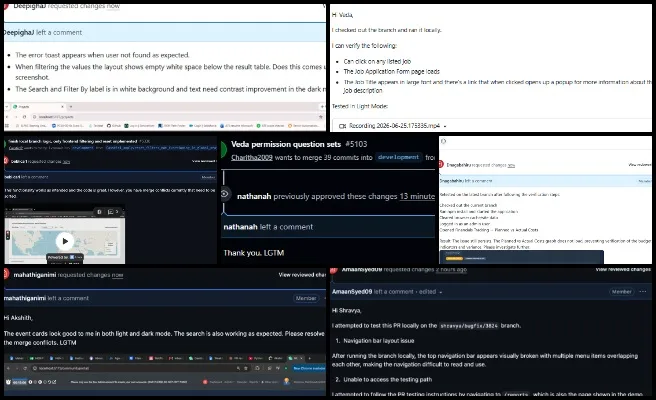
The PR Review Team’s summary for members with names starting with A–N was managed by Sai Sree Dongari (Data Analyst). The Highest Good Network is a foundation for measuring our results in transforming the global sustainability discussion. This week’s active members of this team were Amaan Syed (Volunteer Software Engineer), Carl Bebli (Software Developer), Deepigha Japamony (Software Engineer), Divya Sai Nagabhairu (Software Engineer), Ken Zou (Software Engineer), Mahathi (Data Analyst), and Nathan Hoffman (Software Engineer). They reviewed all Highest Good Network PRs shared in this week’s update. Learn more about how the Highest Good Network open source hub measures progress toward transforming the global sustainability discussion. The collage below shows a compilation of this team’s work.
SOFTWARE PR REVIEW TEAM O-Z
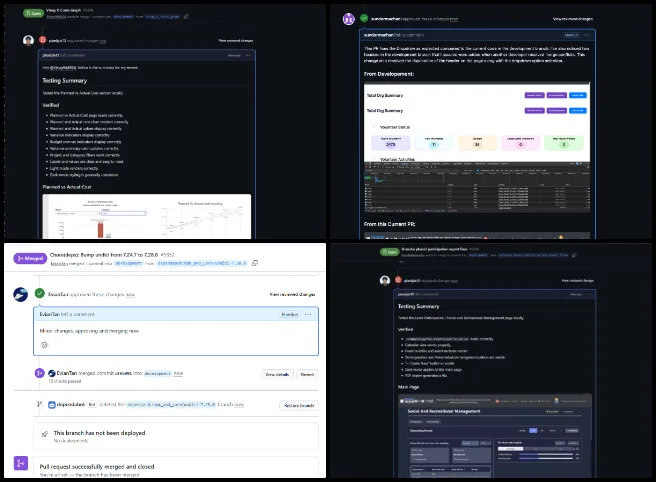
The PR Review Team’s summary for members with names starting with O–Z was managed by Shameera Musthafa (Data Analyst). The Highest Good Network is a foundation for measuring our results in transforming the global sustainability discussion. This week’s active members of this team were were Purav Patel (Software Engineer), Sundar Machani (Software Engineer), and Yiyun Tan (Software Engineer). They reviewed all the Highest Good Network PRs (Pull Requests) shared in this week’s update. Learn more about how the Highest Good Network open-source hub measures progress towards our goal of transforming the global sustainability discussion. The collage below shows a compilation of the work from this team.
AND WE PRODUCED THIS WEEKLY UPDATES BLOG – CLICK HERE TO SUBSCRIBE
FOLLOW ONE COMMUNITY’S PROGRESS (click icons for our pages)
INVESTOR PAGES
GET INVOLVED
Active Eco-reinvention of Our World – One Community Weekly Progress Update #692
One Community is an all-volunteer team engaged in the active eco-reinvention of our world. We develop open source, free-shared models for sustainable food, energy, housing, education, economics, and social architecture to support fulfilled living and global stewardship. Our self-replicating framework will grow into a worldwide collaboration of teacher/demonstration hubs, regenerating our planet and evolving sustainability for everyone. Everything we create is freely shared in service of “The Highest Good of All.”
- Here’s our project overview
- Here’s our world-change methodology
- Here’s how this becomes self-replicating
- Here’s how we are open source and free-sharing all the do-it-yourself designs
OUR MAIN OPEN SOURCE HUBS
Click on each icon to be taken to the corresponding Highest Good hub page.
One Community’s physical location will forward this movement as the first of many self-replicating teacher/demonstration communities, villages, and cities to be built around the world. This is the June 22, 2026 edition (#692 of our weekly progress update detailing our team’s development and accomplishments:
Active Eco-reinvention of Our World
One Community Progress Update #692

DONATE | COLLABORATE | HELP WITH LARGE-SCALE FUNDING
CLICK HERE IF YOU’D LIKE TO RECEIVE AN EMAIL EACH WEEK WHEN WE RELEASE A NEW UPDATE
YOU CAN ALSO JOIN US THROUGH SOCIAL MEDIA
ONE COMMUNITY WEEKLY UPDATE DETAILS
HIGHEST GOOD HOUSING PROGRESS
One Community is demonstrating active eco-reinvention of our world through Highest Good housing that is artistic and beautiful, more affordable, more space efficient, lasts longer, DIY buildable, and constructed with healthy and sustainable materials:
- Learn about: Our Upcoming Crowdfunding Campaign
- Learn about the different village models and active eco-reinvention of our world: 7 Sustainable Village Models
- Visit the open source portals for the first two: Earthbag Village OS Hub | Straw Bale Village OS Hub
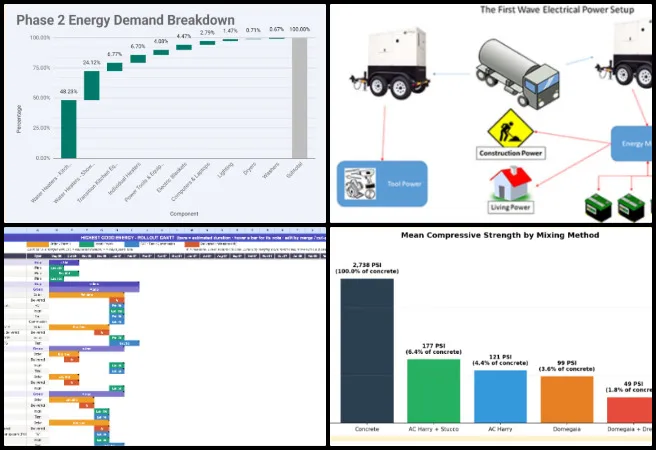
This week, Devendranath Chowdary Maganti (Administrative Assistant) worked on the Highest Good Network Tracker, making updates and revisions following the acceptance of the first draft by Jae. He implemented requested changes, added new features, and refined existing functionality based on feedback and project requirements. Devendranath also supported team members through training and onboarding reviews, provided feedback where needed, and helped ensure that onboarding tasks and related documentation met project expectations. In addition, he communicated with team members regarding review comments and supported administrative activities as needed. His efforts contribute to active eco-reinvention of our world by improving collaboration systems and supporting efficient project management processes. Below, you’ll find some images of this work.
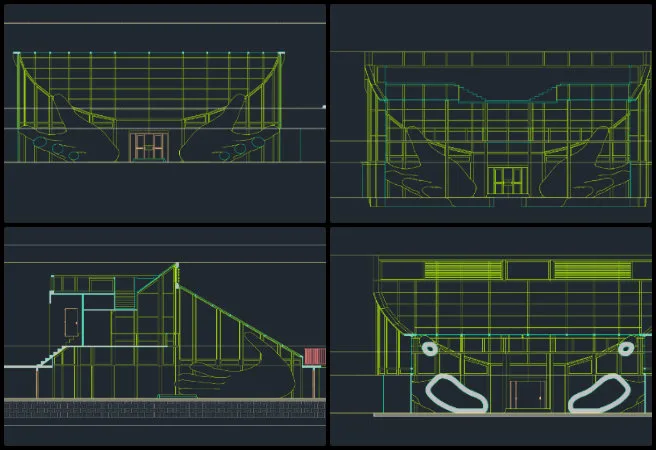
Gaurang Pawar (Architectural Designer) focused on developing and refining key building sections this week while coordinating closely with Michaela’s drawings and the four-dome structure to ensure architectural accuracy. Multiple technical sections were generated directly from the SketchUp model, including a cross-section cut perpendicular to the model axis to analyze spatial relationships and a longitudinal section taken from the rear of the structure to highlight the stairs extending to the roof level supporting the active eco-reinvention of our world.
Because the initial vector exports from the 3D model contained fragmented and broken lines, significant effort was dedicated to drafting quality control. Gaurang cleaned and redrew the exported geometry to create clear, continuous, and professional linework. Once the geometry was corrected and verified against the reference drawings, the finalized sections were imported into layout space for proper scaling, formatting, and presentation. This work supports active eco-reinvention of our world through the creation of accurate and replicable architectural documentation. Review the latest updates in the images below.
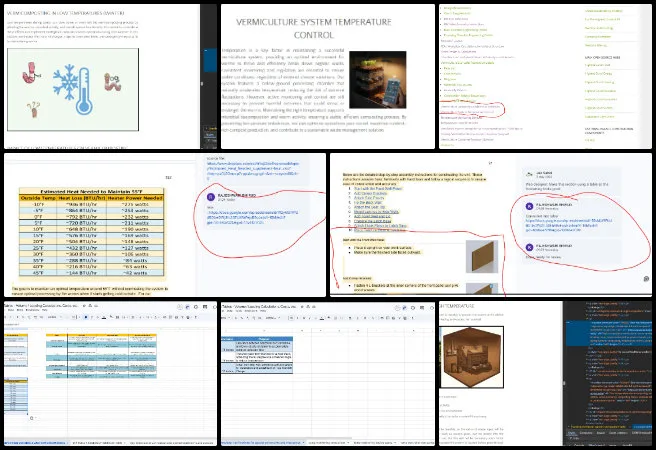
Rajeshwari Bhirud (Software Engineer), working as a web designer, continued focusing on the Vermiculture Eco-Toilet Design webpage. She completed low- and high-temperature vermiculture content, updated the Operating Conditions and Schedule section, and revised Excel tables, links, formatting, and notes for smooth blog integration. She also fixed redirections in the Slider Design and Calculations section, added temperature control content, optimized images, and maintained styling consistency throughout. FEA/Analytical Calculations for the Unistrut Structure were added as a redirection from the structural layout portion of the vermiculture blog, along with supporting tables in both the webpage and the associated Excel sheet. In addition, Rajeshwari added summaries to the Step 2 document and Blog #691 for the Binary Brigade team, commented on all team members’ documents, uploaded images to the Dropbox folder, updated the Step 4 table for final review, and maintained SEO-optimized images and the team collage. Her efforts support active eco-reinvention of our world by strengthening the quality and accessibility of open-source engineering documentation. Below, you’ll find some images of this work.
Rishi Chakrapani (Mechanical Engineer) continued working on the Vermiculture Toilet. He incorporated Jae’s most recent feedback into both reports through updates to the content, formatting, and supporting details. The Bill of Materials was revised to reflect the latest information, and the CAD images were improved to provide clearer visual references within the documentation. In addition, the project files stored in Dropbox were reorganized and cleaned up to improve accessibility and make it easier to locate and manage the associated files and resources. His efforts support active eco-reinvention of our world by strengthening the quality and accessibility of open-source engineering documentation. Below, you’ll find some images of this work.
Sagar Chavan (Transportation Engineer) worked on the Earthbag Village stormwater management and rainwater harvesting documentation by reviewing the stormwater management plan, pipe layout, catch basin locations, greywater pond connections, and related drainage flow information. He reviewed the existing runoff calculation sheet and noted that one section was based on rectangular drain channel dimensions, while the Earthbag Village design uses round storm drains and subsurface perforated pipes, making that portion less directly applicable to the current design. This week’s progress advances active eco-reinvention of our world across multiple project areas.
Sagar also reviewed the Net-Zero Bathroom requirements and features to better understand how rainfall, rainwater catchment, storage, and water-saving fixtures support the overall village water system. He connected the calculation notes, site drainage layout, pipe network details, and bathroom water-use information to the LEED stormwater management tutorial and cost analysis documentation. This work contributes to active eco-reinvention of our world by supporting integrated water management strategies and sustainable infrastructure planning. See below for some of the pictures related to this work.
DUPLICABLE CITY CENTER PROGRESS
One Community is demonstrating active eco-reinvention of our world through a Duplicable and Sustainable City Center that is LEED Platinum certified/Sustainable, can feed 200 people at a time, provide laundry for over 300 people, is beautiful, spacious, and saves resources, money, and space:
- Learn about this building, its function, and active eco-reinvention of our world: Duplicable City Center Open Source Hub
This week, Bevan Chiu (Mechanical Engineer) continued his work finishing the City Center Eco-spa Designs. He worked on the outdoor FEA insulation sweet spot model to evaluate the effectiveness of Rockwool insulation thicknesses beyond the indoor 16-inch limit. The work included updating the geometry and mesh settings and computing the heat loss for insulation thicknesses of 20 inches, 35 inches, and 50 inches using FEA. He also began a cost-benefit analysis of the insulation options by estimating the upfront material cost of Rockwool insulation at different thicknesses and comparing these values with the corresponding conduction-related operating costs. In addition, he developed a graph to support the insulation sweet spot analysis and illustrate the relationship between insulation thickness, upfront cost, and operating cost savings. This open source Duplicable City Center project focuses on the active eco-reinvention of our world. For more details, refer to the image below.
HIGHEST GOOD FOOD PROGRESS
One Community is demonstrating active eco-reinvention of our world through Highest Good food that is more diverse, more nutritious, locally grown and sustainable, and part of our open source botanical garden model to support and share bio-diversity:
- Learn about the structures and active eco-reinvention of our world: Hoop House Hub | Aquapini & Walipini Open Source Hub
- See what we’ll be growing: Gardens & Hoop Houses | Large-scale Structures | Food Forest | TA
This week, the core team continued working on the Master Tools, Equipment, and Materials/Supplies List for the Large-scale Garden, Botanical Garden, and other Highest Good Food components, focusing on electrical, gardening, composting, and fencing project entities. They added an exhaust fan to the spray booth to extract air and discharge it above the roof on the leeward side, directing odors away from the windows of the ASHP and WSHP work areas. They then added the GSI acronym to all entities where the TEMS would be stored. Their efforts contribute to One Community’s mission of active eco-reinvention of our world through open-source collaboration, ecologically responsible innovation, and a focus on long-term global development. The collage below portrays the team’s efforts and achievements for the week.
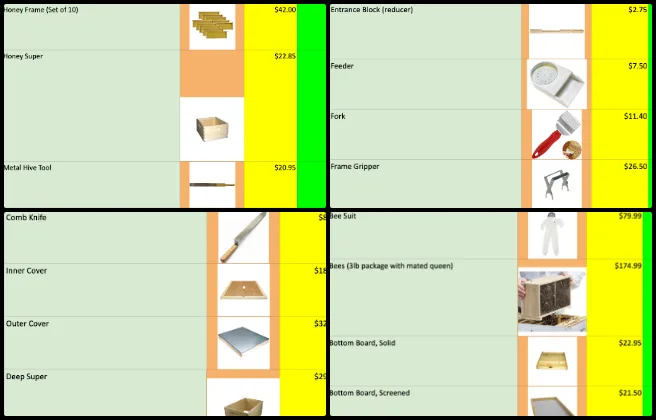
Chelsea Mariah Stellmach (Project Manager) continued her work on several One Community projects, including the phased rollout, kitchen inventory software build, and governance software design mockup. She completed the rollout equipment pricing for Phase 2 and collaborated with Tyson to begin equipment pricing for Phase 3. Her work included researching, documenting, and adding equipment and supply items related to beekeeping and other sustainable farming practices to support Phase 3 planning and implementation efforts. These contributions support active eco-reinvention of our world by strengthening both technical execution and design alignment across the platform. See the collage below for this week’s progress.
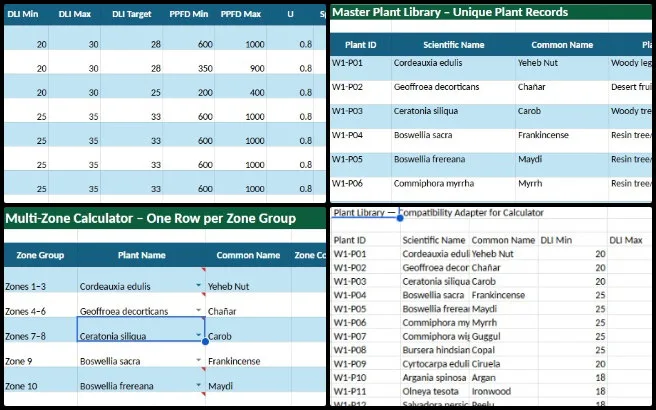
Jay Nair (BIM Designer) continued working on the Aquapini and Walipini Planting and Harvesting documents. He focused on creating a plant library to support the greenhouse lighting energy calculator. The work involved compiling plant-specific lighting requirements, including relevant growth and lighting parameters, and organizing the information into a structured format for use within the calculator. The plant library was built to improve consistency, reduce manual data entry, and support more accurate lighting energy calculations for greenhouse projects. These updates improve the stability and adaptability of shared systems, supporting the broader goal of active eco-reinvention of our world. See the collage below portraying the work done this week.
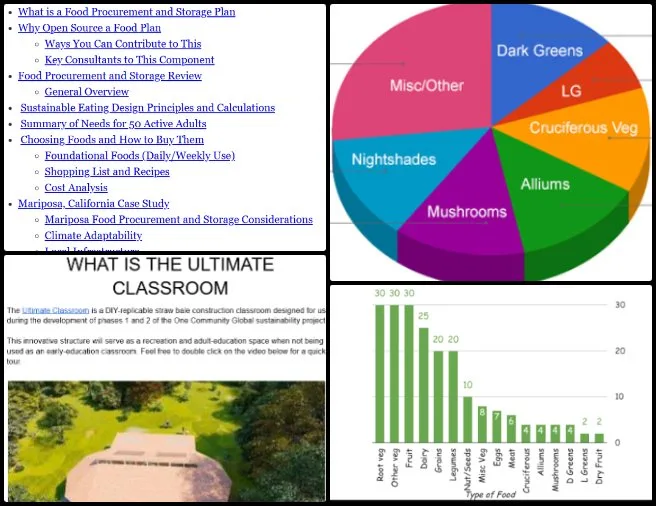
Prudhvi Marpina (Data Analyst) continued supporting work across Highest Good Food and Highest Good Education, Highest Good Network, marketing, and administration activities. He worked on the Food Procurement and Storage page by implementing final corrections based on feedback from Jae and Tyson, updating content, refining page elements, and making the necessary WordPress changes to prepare the page for completion. This work helps expand active eco-reinvention of our world through open-source sharing and transparency.
On the Ultimate Classroom Footer, Foundation, and Flooring Design and Engineering page, Prudhvi transferred content from the source document, designed new sections, applied formatting updates, and improved the overall page structure in WordPress. He also supported Phase 5 governance by updating action items, expanding action item descriptions, and making related updates to the Figma requirements and project documentation. This work supports One Community’s mission of active eco-reinvention of our world. See below for images showcasing his work.
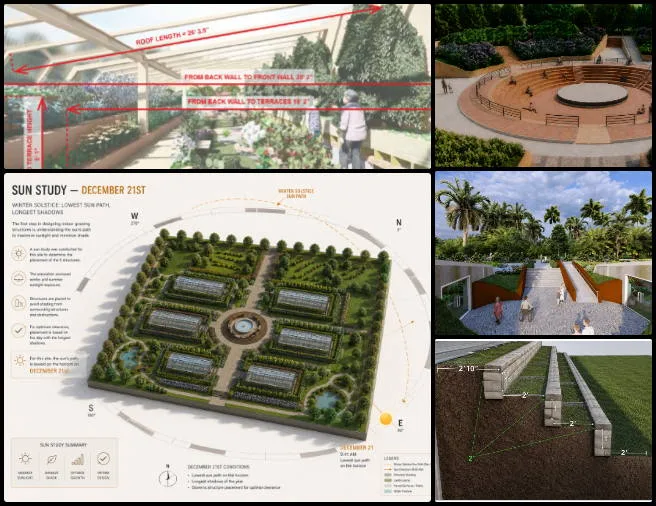
Shivangi Varma (Architectural Designer and Planner) continued working on the redesign of the Highest Good Food overall presentation. She shared the final pending Open Source Hub diagrams for review, completed the 3D and render for ADA access, and finalized the ADA access diagram for the Open Source Hub page. She also completed the sun study diagrams for the Open Source Hub pages and prepared the related graphics for review as part of the remaining OSH deliverables. This work supports One Community’s mission of active eco-reinvention of our world. See below for images showcasing her work.
HIGHEST GOOD ENERGY PROGRESS
One Community is demonstrating active eco-reinvention of our world through Highest Good energy that is more sustainable, resilient, supports self-sufficiency and includes solar, wind, hydro and more:
- Learn about the open source sustainable-energy foundations and active eco-reinvention of our world: Solar, Hydro, and Wind
- Explore our research into the most sustainable products and companies for saving water and energy: Insulation, Eco-laundry, Lightbulbs and Light Bulb Companies, Doors and Door Companies, Windows and Window Companies, Toilets, Faucets and Faucet Accessories, Urinals, and more.
This week, the core team continued contributing to the Highest Good Energy initiative. They completed the review of the Food Procurement and Storage webpage and provided feedback on updates to the table of contents and the addition of links. They watched the feedback video for the Aircrete Summary document and began reviewing it with initial feedback, then started reviewing the Hot Tub Solar System Design document and noted that much of the previously provided feedback had not yet been incorporated. This work contributes to active eco-reinvention of our world, as shown in the collage below.
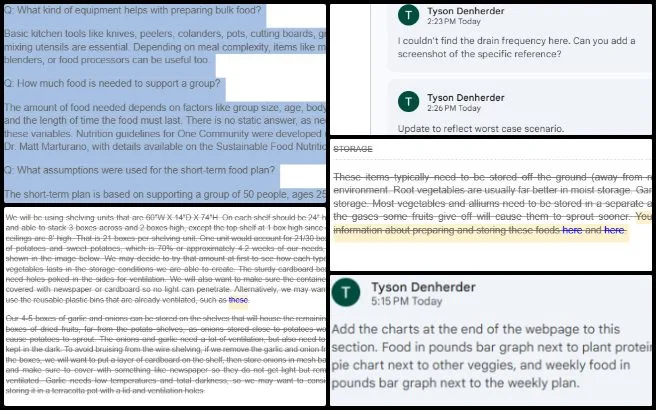
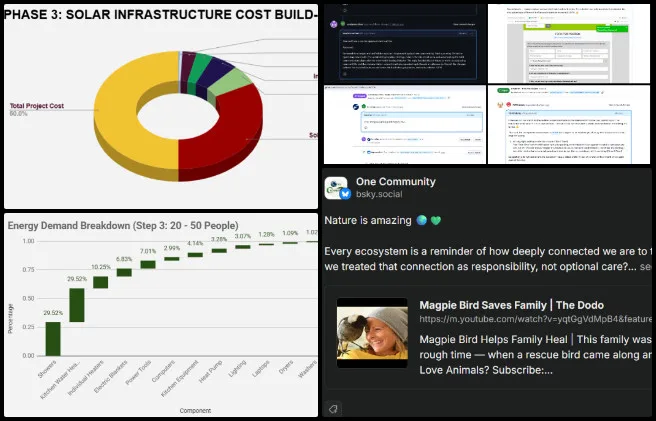
Shameera Musthafa (Data Analyst) continued contributing to the Highest Good Energy initiative while also supporting OC Administration and the PR Review Team by coordinating PR review workflows, checking the work of both the Admin and PR teams, and providing feedback to improve accuracy, clarity, and consistency across deliverables. As part of PR review coordination, she organized and categorized project images, created visual collages, and finalized blog-related content so the visual and written materials were properly prepared and documented. This week’s work continues active eco-reinvention of our world with focused and iterative enhancements.
Shameera also contributed to the Highest Good Energy report pages and related visualizations while managing the One Community Bluesky social media account by creating and publishing posts to share project updates and support outreach and engagement. She supported the hiring process by interviewing and evaluating candidates. She also completed end-to-end testing of the PR Review Team Admin Dashboard by validating key workflows, identifying issues, documenting results, and helping confirm that the dashboard functioned as intended. This work plays a key role in the active eco-reinvention of our world. See below for images showcasing her work.
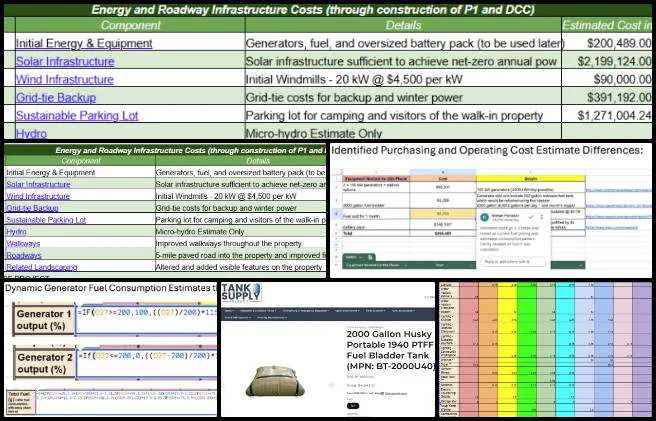
Rohan Pariakar (Operations and Supply Chain Analyst) recently joined the team and began contributing to the Highest Good Energy initiative. He analyzed generator loading assumptions to check whether the existing energy model applied the documented reserve-margin methodology consistently, reviewing equipment power requirements, operating schedules, and daily consumption patterns for the 3–20 person phase. He recalculated generator output percentages using demand-based calculations and a 15% reserve margin, replacing manually assigned loading values where applicable, then evaluated fuel-consumption estimates against manufacturer data and developed a dynamic methodology that links fuel usage directly to generator loading conditions. Comparing generator-only and battery-assisted scenarios, Rohan assessed differences in fuel consumption, operating costs, and infrastructure requirements, and examined existing assumptions for diesel fuel pricing, generator procurement costs, battery storage, and equipment specifications to flag areas needing validation. These updates formed part of ongoing efforts focused on active eco-reinvention of our world.
Rohan also tested battery-storage assumptions against available commercial systems, explored phased expansion scenarios for larger population ranges, and reviewed the project energy infrastructure budgets across generators, battery storage, solar, and wind to clarify how renewable generation, backup generation, and grid interconnection relate and to identify information still needed to validate long-term energy and storage assumptions. These updates help scale active eco-reinvention of our world across teams and disciplines. See below for images showcasing his work.
HIGHEST GOOD EDUCATION PROGRESS
One Community is demonstrating active eco-reinvention of our world through Highest Good education that is for all ages, applicable in any environment, adaptable to individual needs, far exceeds traditional education standards, and more fun for both the teachers and the students. This component of One Community is about 95% complete with only the Open Source School Licensing and Ultimate Classroom construction and assembly details remaining to be finished. We’ll report on the final two elements to be finished as we develop them.
With over 8 years of work invested in the process, the sections below are all complete until we move onto the property and continue the development and open sourcing process with teachers and students – a development process that is built directly into the structure of the education program and everything else we’re creating too:
- Program Overview: Education Open Source Hub
- How the components work together in designing human orchestrated eco-abundance and active eco-reinvention of our world: How to use the Education for Life Program
- Lesson Plans for Life – Lesson Plans How-to
- Foundations of Outstanding Leaders, Teachers, and Communicators
- Curriculum for Life
- Teaching Strategies for Life
- Learning Tools and Toys for Life
- Evaluation and Evolution
Jung Ah “Romey” Choi (Graphic Designer) recently joined the team and began redesigning the book from the ground up to align with the PubHTML5 format and the user experience requirements. The original 2D book cover was reworked into a more realistic 3D visual concept, and the design of Chapters 1–3 was completed across 16 pages. These updates strengthen the stability and flexibility of shared systems, advancing the broader goal of active eco-reinvention of our world. See the collage below portraying the work done this week.
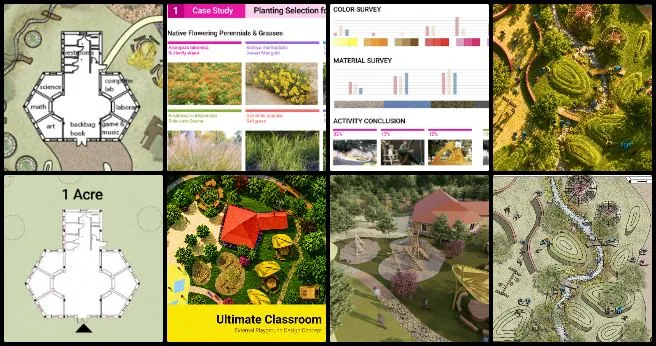
HIGHEST GOOD SOCIETY PROGRESS
One Community is demonstrating active eco-reinvention of our world through a Highest Good society approach to living that is founded on fulfilled living, the study of meeting human needs, Community, and making a difference in the world:
- Read the Highest Good society overview and active eco-reinvention of our world: Highest Good Society
- Learn about the model for fulfilled living and sharing: A Day in the Life
- Learn about the 4 economic models: RBE | For-profit | Non-profit | Entrepreneurship
- Learn about our open source community collaboration and management software: The Highest Good Network
This week, the core team completed 42 hours managing volunteer work reviews, handling emails, overseeing social media accounts, supporting web development, and identifying and integrating bug fixes for the Highest Good Network. They also interviewed and onboarded new volunteer team members. Additionally, they produced and integrated the video above, which highlights how making an active eco-reinvention of our world serves as a foundational element of One Community’s broader mission. The following images showcase highlights of this work.
Adhya Rastogi (Business Analyst) recently joined the Highest Good Society team and began working on Google Ads optimization by updating keyword targeting, adding relevant search terms, refining negative keywords, and revising ad copy for an omnivore potato recipes campaign to improve alignment between search intent and landing page content. She reviewed Google Ads recommendations and applied the changes that matched campaign objectives. In HGN Software Development, she continued validation testing of the Total Organization Summary Dashboard, verified the status of previously reported bugs, cross-checked findings against the bug-tracking spreadsheet, and updated issue statuses based on current results.
Adhya’s SEO work on the Overview page covered keyword opportunities, metadata, content structure, and Rank Math recommendations, with findings documented and SEO-focused content updates prepared while awaiting clarification on specific implementation details. For Marketing and Promotion, she maintained Reddit engagement through discussion-based participation and monitored community interactions to track engagement trends, and she completed administrative work including reviewing volunteer submissions, providing feedback, organizing documentation, editing blog content, creating the weekly collage, updating tracking records, and verifying weekly deliverables. These efforts contribute to active eco-reinvention of our world by providing accessible infrastructure planning and due diligence resources that support informed and sustainable development decisions. Please see the collage below to view her efforts put forth this week.
Pooja Kulkarni (UI/UX Designer) continued designing and refining multiple variations of the Highest Good Network Total Organization Governance Summary dashboard to support public reporting, executive visibility, and governance analytics. She refined the structure of the KPI section, performance trends, governance health overview, transparency record, and key initiatives section to make the dashboard easier to scan, and built hover-based popups and tooltips to explain charts, metrics, group statuses, and data points without adding too much text to the page. This work contributes to active eco-reinvention of our world; the images below highlight key aspects of her work.
Valentina Collini (Designer) continued creating designs that support no-waste world building by contributing to the One Community website, creating new biography images and announcement images for incoming volunteers. She updated the site with information for new team members, integrated their profiles and related content, and reviewed existing website content to correct errors where needed. To learn more about how this work supports active eco-reinvention of our world, visit the Highest Good Society and Highest Good Network pages. See the collage below to view her achievements this week.
ADMINISTRATION TEAM
The Administration Team’s summary, which covers their work on the Highest Good Network, was managed by Devendranath Chowdary Maganti (Data Analyst) and includes Akash Hadagali Persetti (Software Engineer), Divanshu Bakshi (Team Admin), Leo Lishin Shiu (Software Engineer), Mridul Bhushan (Volunteer Project Strategy Analyst and Team Administrator), Pranjul Garg (Business Analyst), Priyanshi Sharma (Data Analyst and Team Administrator), Sai Sree Dongari (Data Analyst), Sayantan Paul (Frontend Tester and Software Team Administrator), and Tanmay Nihal Harwani (Data Scientist). The Administration Team supports the Highest Good Network, a tool designed to track and measure progress while developing systems that contribute to demonstrating active eco-reinvention of our world. Through administrative support, documentation, testing, training, recruitment, analytics, and content management, the team helps advance this mission, aligning with One Community’s vision of building a replicable and sustainable future model.
This week, Akash completed the Admin Team training process by reviewing training videos, documentation, weekly volunteer review procedures, blog preparation requirements, image organization workflows, and summary submission processes. He gathered feedback from eight Admin Team members, addressed the comments received, completed onboarding tasks, and practiced administrative workflows according to documented requirements. Divanshu tested and published four Mastodon updates, verified bug-related pull requests, documented action items, developed a Python script to prevent duplicate image postings, and updated the Weekly Mastodon Report using archived data. These onboarding, testing, automation, and content management efforts contribute to demonstrating active eco-reinvention of our world.
Leo reviewed weekly reports from the 17LeDCC team, compiled content into a weekly blog, created collages, analyzed Facebook and Instagram data, updated dashboard insights, and scheduled social media posts. Mridul finalized Blog #691 summaries across multiple teams, reviewed formatting and guideline compliance, evaluated a trainee administrator’s work, managed Twitter/X and LinkedIn content, and completed weekend analytics tasks. These communication, analytics, and administrative coordination efforts contribute to demonstrating active eco-reinvention of our world.
Pranjul monitored volunteer timelogs, tracked activities, issued warnings, supported onboarding for a new administrator, provided operational guidance, and continued development work on the Earth Village blog. Priyanshi completed frontend QA testing and post-CSS migration validation across dashboard modules, verified charts, filters, dark mode compatibility, responsiveness, and UI stability, and documented layout improvement opportunities while confirming core functionality remained operational. These administrative, development, and quality assurance efforts contribute to demonstrating active eco-reinvention of our world.
Sai Sree organized PR review images, created collages, finalized blog-related content, completed candidate interviews, documented hiring feedback, and performed frontend testing across multiple HGN phases and dashboard modules. Sayantan managed administration responsibilities including blog reviews, peer admin feedback, warning tracking, and team guidance while testing frontend and backend pull requests related to dashboards, analytics, notifications, calendars, inventory, bidding systems, and reporting features, documenting issues and creating follow-up tasks where needed. These testing, hiring, planning, and administrative efforts contribute to demonstrating active eco-reinvention of our world.
Tanmay created weekly blogs and collages, reviewed summaries and media submissions, evaluated screening blogs, participated in orientations for new administrative responsibilities, supported social media posting on Threads, updated the Social Media Master Dashboard, and maintained volunteer tracker records. These administrative, documentation, and coordination activities contribute to demonstrating active eco-reinvention of our world. See the collage below for highlights of this week’s work.
HIGHEST GOOD NETWORK PROGRESS
One Community is demonstrating active eco-reinvention of our world through open source Highest Good Network® software that is a web-based application for collaboration, time tracking, and objective data collection. The purpose of the Highest Good Network is to provide software for internal operations and external cooperation. It is being designed for global use in support of the different countries and communities replicating the One Community sustainable village models and related components.
- Learn about our open source community collaboration and management software: The Highest Good Network
This week, the core team continued testing Highest Good Network pull requests on the main branch, confirming that 15 PRs were fixed and identifying 11 PRs that were not fixed. They were not able to test several PRs due to a lack of data on the main branch, including Fix Lesson List Filter Change Not Updating Results (PR 4698), Phase 3 Activity Registration – Make it so users can actually register for activities (PR 2152 and PR 5138), BMDashboard – Fix Daily Logging Button Links (PR 4362), and Phase 6 Kitchen Inventory Management – Create database models and backend API endpoints for transplanting and harvesting events (PR 2097). In addition to testing, they created a new task for the Phase 2 Summary Dashboard, which involves copying four buttons created in Action Item 3 and placing them in the financials category, with the button text corresponding to the appropriate backend. These updates formed part of ongoing efforts focused on active eco-reinvention of our world. See the collage below to view the team’s work.
ALPHA SOFTWARE DEVELOPMENT TEAM
The Alpha Team’s summary, covering their work on the Highest Good Network, was managed by Lin Khant Htel (Frontend Software Developer) and Pranjul Garg (Business Analyst) with a team consisting of Casstiel Pi (Software Engineer), Maithili Kalkar (Software Engineer), Sai Sandeep (Software Engineer), Som Ramnani (Junior Software Engineer) and Yingshu Wang (Software Engineer) supporting One Community’s mission of cross-functional software development and system improvements. This work advance the team’s objectives, ensuring that all completed tasks directly contribute to the active eco-reinvention of our world.
Casstiel worked on the Weekly Project Summary task by correcting the target URL, reviewing the component structure, and implementing modifications including project labels, expand and collapse controls, comparison toggle features, section badges, empty-state messaging, and interface updates for dark and light modes. Maithili continued development on the Pinterest Auto Poster feature by creating frontend components following the established platform design patterns. These technical updates advance the team’s objectives, ensuring that all completed tasks directly contribute to the active eco-reinvention of our world.
Sai updated pull request 4385 to correct navigation redirection errors on the Log Issues and View Issues pages, and modified pull request 4537 to add resource filtering by project and tool name, filter selection persistence, reset options, and light and dark mode style updates. Som resolved merge conflicts across pull requests #5163, #4987, and #5189 to preserve filtering, pagination, list view, and export features, and updated tests to match component changes. These efforts support active eco-reinvention of our world by enhancing clarity and accessibility.
Yingshu investigated Task 1191 regarding profile hours updates causing page jumps by reproducing the issue across local and development environments, documenting observations to support further analysis, and submitting the findings to the development channel. Yingshu also reviewed Task 1190 by analyzing historical pull requests, evaluating chart comparison requirements, creating a development branch, and beginning implementation work for date selection controls within the Contributors Report interface. See the Highest Good Society and the Highest Good Network pages to learn more about how this work supports the active eco-reinvention of our world. The collage below offers a visual representation of the team’s work for the week.
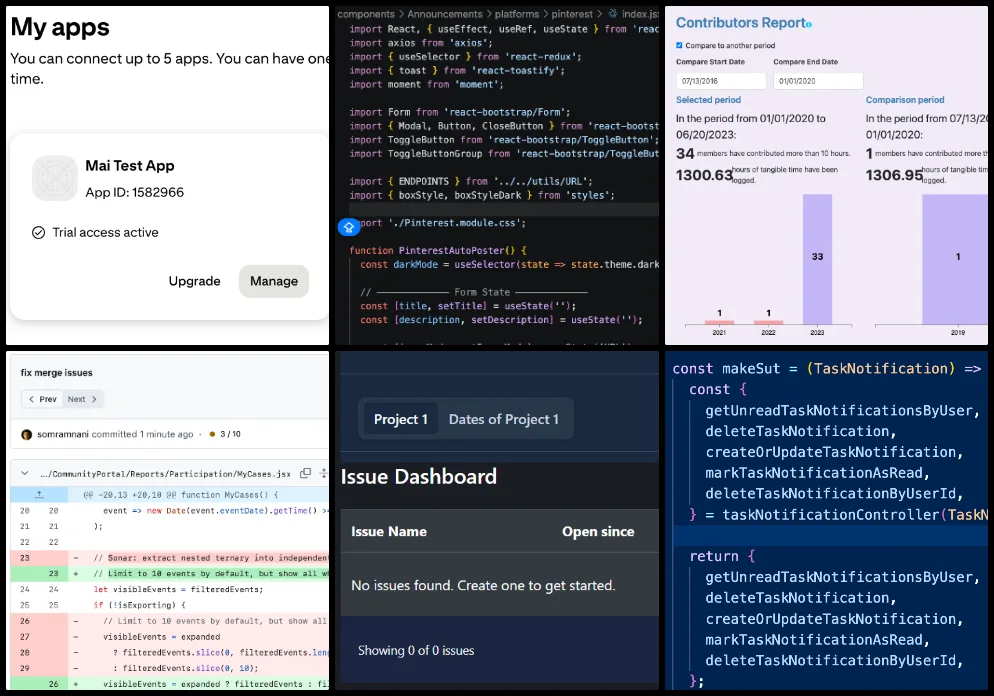
BINARY BRIGADE SOFTWARE DEVELOPMENT TEAM
The Binary Brigade Team, which presented their work on the Highest Good Network software, was managed by Roshini Seelamsetty (Software Engineer) and included Manoj Puttaswamy (Software Engineer). The Highest Good Network software is our tool for managing and objectively measuring progress, ensuring that all contributions are tracked and aligned with our mission of demonstrating active eco-reinvention of our world. It supports social architecture, construction, production, and maintenance processes that contribute to open-source projects and resilient, sustainable ecosystems.
This week, Roshini worked on fixing issues in the Blue Square Stats dashboard. She completed work on the Blue Square Stats donut chart by removing zero-value categories from the display, implementing dynamic updates for categories when data becomes available, improving text label placement and visibility for better readability, and adding hover functionality to provide segment information during user interaction. She also investigated and continued working on an issue affecting Blue Square data filtering in the Teams and Blue Square’s dashboard, where weekly filters and specific custom date ranges were displaying incorrect counts or no data. Her work focused on analyzing the filtering and date range calculation logic to identify the cause of inconsistent Blue Square statistics and reporting across dashboard views furthering One Community’s mission of demonstrating active eco-reinvention of our world through improved platform functionality.
Manoj worked on the BM Dashboard component of the Highest Good Network project, focusing on inventory-related enhancements, dark mode improvements, and task visibility issues. He created a new standalone Units of Measurement page within the BM Dashboard, including the required navigation structure, integration with existing inventory categories, and routing updates to make the page accessible throughout the application. He also addressed calendar UI issues in dark mode, resolving display and styling inconsistencies that affected usability. In addition, he fixed several dark mode bugs across inventory pages, including issues related to component styling, text visibility, and theme consistency, ensuring that inventory interfaces displayed correctly under dark mode settings. This week’s progress advances active eco-reinvention of our world across multiple project areas.
Alongside these improvements, he began working on a task visibility issue where member tasks become hidden when the teams toggle is enabled. This work involved investigating the current filtering and visibility logic, analyzing how team-based controls interact with task rendering, identifying conditions that cause tasks to be excluded from view, and implementing initial changes toward ensuring that member tasks remain visible when appropriate contributing to One Community’s mission of demonstrating active eco-reinvention of our world. See the Highest Good Society and the Highest Good Network pages for more on how this supports demonstrating active eco-reinvention of our world. Highlights of the team’s contributions are shown in the collage below.
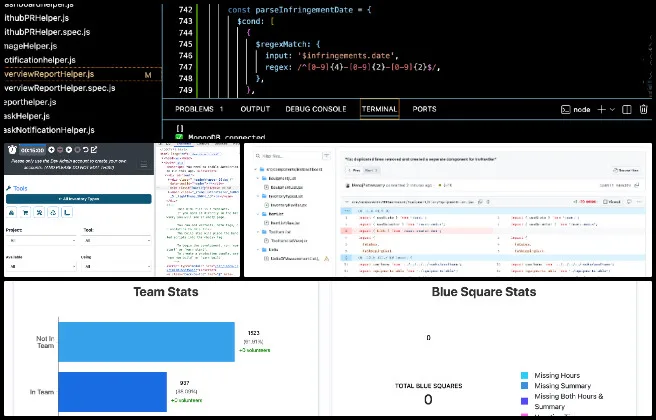
DEV DYNASTY SOFTWARE DEVELOPMENT TEAM
The Dev Dynasty Team’s summary, covering their work on the Highest Good Network software, was managed by Rithika Pai (Software Engineer). The team includes Saurabh Jayant Dipte (Software Engineer). The Highest Good Network software helps manage and objectively measure processes by demonstrating active eco-reinvention of our world through social architecture, construction, production, and maintenance systems.
This week, Saurabh worked on PR #4511 to provide a hotfix. Previous changes had introduced errors on the main screen that affected the dark mode implementation across the webpage. Saurabh created a new pull request to address the dark mode issue. He also continued work on PR #4511, which required resolving merge conflicts and fixing errors related to missing imports and exports, including a missing prop in the ItemsTable component and a missing styles import that had been causing the materials list page to crash. Saurabh identified that an inline unit input field on the inventory types page lacked proper validation and replaced it with a dropdown sourced from the existing list of valid units. After merging in the latest changes from the development branch, he resolved a duplicate prop issue introduced during the merge and addressed SonarCloud warnings related to missing prop-type validation on the ItemsTable component. He also worked through environment issues affecting local development, including WSL storage and dependency installation problems, before retesting the fixes and pushing the updated code for review. This work supports One Community’s mission of demonstrating active eco-reinvention of our world.
Rithika worked on PR #4227 (Task Comments Frontend) and PR #4162 (Event Participation Analytics Landing Page). For PR #4227, she rebased the branch onto development and fixed dark mode styling issues flagged in review, including missing dark mode classes on the chart card, progress card, and progress bar elements. For PR #4162, she rebased the branch onto development through several rounds of conflicts, merging in new dashboard components while preserving more mature functionality that had been independently added to development in the meantime, such as PDF export and an organizer dropdown. She resolved all SonarQube issues flagged on the PR, including unused imports, nested ternary expressions, array index keys, duplicate CSS selectors, and contrast ratio failures, and confirmed the page renders correctly in both light and dark mode across all sub-pages. These ongoing improvements align with the organization’s focus on demonstrating active eco-reinvention of our world through open-source software development. See below for some of the pictures.
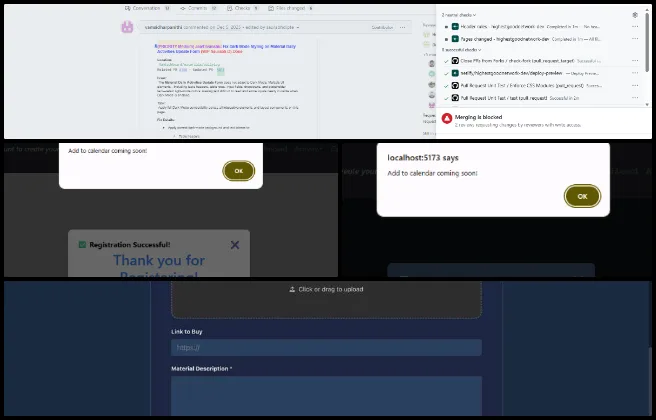
LUCKY STAR SOFTWARE DEVELOPMENT TEAM
The Lucky Star Team’s summary, covering their work on the Highest Good Network, was managed by Divanshu Bakshi (Data Analyst), and Sohail Uddin Syed (Software Engineer). The team includes contributions from Veda Bellam (Software Engineer), Sphurthy Satish (Software Engineer), Mahitha (Software Engineer), Akshith Kumar Reddy Balappagari Gnaneswara (Software Engineer – Full Stack) and Shravya Kudlu (Software Development Engineer). Their work supports One Community’s mission of no-waste world building through cross-functional software development and ongoing system improvements.
This week, Veda worked on enhancements to the Highest Good Network application’s job posting and application workflows, supporting the active eco-reinvention of our world through improved platform processes. She implemented permission updates for creating different question sets, refined frontend functionality for permission requests, resolved merge conflicts, addressed code review feedback, updated UI and backend components, and continued work on the job application listing page by resolving backend and user interface issues while integrating changes across branches. Sphurthy focused on resolving merge conflicts and quality gate issues across multiple pull requests, preparing pull requests for merge and reviewer evaluation, and creating testing and hotfix demonstration videos to support validation. Sohail completed tasks 1164 and 1020 by raising their pull requests, consolidated remaining open pull requests before account closure, fixed issues preventing access to the PR grading screen in development by resolving routing, API parameter, and response mismatch problems, coordinated a final meeting with the admin team, and investigated issues affecting the promotional eligibility page in development.
Shravya resolved merge conflicts, addressed reviewer comments across multiple pull requests in both the Highest Good Network app and HGN rest repositories, resolved a sonar qube blocker, updated eight pull requests for re-review or merge, and completed the kitchen inventory feature for review, contributing to the active eco-reinvention of our world through system improvements. Mahitha tested multiple frontend and backend pull requests, approved PRs after validating expected functionality, reported issues requiring fixes in others, submitted PR #2251 to improve email validation and user profile update handling, documented testing instructions, and began work on PRs #2691 and #1110 related to profile badges. Akshith worked on multiple UI and UX enhancements by addressing review comments, refactoring implementations, resolving merge conflicts, updating pagination for the activity list, improving event card numeric indicators, adding event icons to activity list page event names, and aligning event card styling and layout changes with the latest development codebase. To learn more about how this work supports creating a complete sustainability strategy, visit the Highest Good Society and the Highest Good Network pages. Below is the collage showcasing the Lucky Star team’s work for the week.
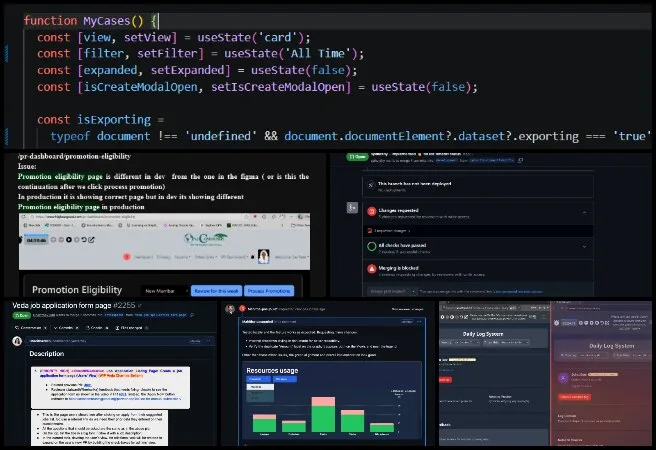
REACTONAUTS SOFTWARE DEVELOPMENT TEAM
The Reactonauts team summary, which covers their work on the Highest Good Network, was managed by Diya Wadhwani (Software Developer), Divanshu Bakshi (Data Analyst), and Amaresh Chaudhary Nara (Software Engineer), and includes Aseem Deshmukh (Software Developer). This work supports active eco-reinvention of our world by strengthening the systems, processes, and collaborative tools needed to make sustainable living more accessible and replicable worldwide.
This week, Amaresh worked across five pull requests in the HGN codebase, supporting the active eco-reinvention of our world through code quality, security, and platform improvements. In PR #1927, he resolved backend merge conflicts, removed obsolete functions, and aligned the branch with the development codebase. In PR #4476, he resolved frontend merge conflicts, fixed a blank page issue, added loading, error, and no-data states, applied dark mode styling to d3 charts, resolved stylelint issues, improved tab text wrapping, and updated tooltip behavior. In PR #2256, he implemented two backend API endpoints for the building management dashboard to retrieve the longest open building issues and the most expensive injury issues with project and date filters. In PR #4608, he built the corresponding frontend views with horizontal bar charts, project filters, date range selection, dynamic axis scaling, label truncation, fallback issue labels, and resolved sonar cloud issues.
Aseem resolved a development merge conflict in the actualbarchart.module.css file on the aseem-cost-planned vs actual branch, verified the changes, and merged the latest updates from the development branch, contributing to the active eco-reinvention of our world through improved cost-tracking reliability. Diya continued the blue square system overhaul by fixing the resend blue square emails only for last week function in PR #2250, correcting model references, field names, projections, helper functions, and validating the email flow locally. She implemented the monday grace period for weekly summary submissions in frontend PR #5345, allowing eligible monday submissions to be saved for the previous week while updating blue square status and warning records. She also resolved weekly sunday cron failures by moving weekly company summary email inside the sunday execution guard and updated delete blue square after year to archive expired infringements for active users while cleaning up inactive user records. To learn more about how this work supports creating a complete sustainability strategy, visit the Highest Good Society and the Highest Good Network pages. Below is the collage showcasing the Reactonauts team’s work for the week.
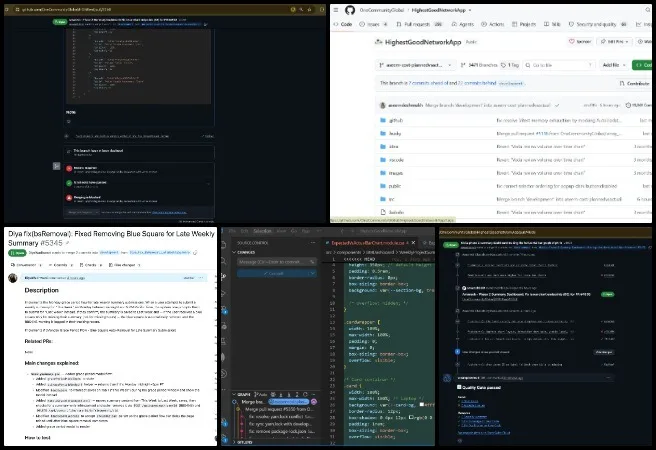
SKYE SOFTWARE DEVELOPMENT TEAM
The Skye Team’s summary, covering their work on the Highest Good Network, was managed by Sayantan Paul (Frontend Tester and Software Team Administrator) and Anthony Weathers (Software Engineer). The team includes Jaden Wong (Software Engineer), Nirali Patel (Full Stack Developer), Peterson Rodrigues dos Santos (Full-Stack Developer) and Swathi Angadi (Software Engineer). Demonstration of active eco-reinvention of our world is a service commitment of the Highest Good Network software which is accomplished by objectively tracking and managing progress across social architecture, construction, production, and maintenance processes, utilizing transparent, scalable systems that strengthen accountability, coordination, and resilient ecosystems.
This week, Anthony resolved merge conflicts for PR #5146 and PR #2167, allowing both PRs to be merged. He also addressed most of the Sonar issues identified in PR #5340 while resolving a merge conflict and removing commented code that was no longer in use. Jaden worked on five pull requests across the Highest Good Network application. For PR #4274, he extracted JSX blocks into module-level components to resolve a SonarQube cognitive complexity issue in the Most Frequent Keywords widget and added PropTypes for the new components. For PR #4846, Jaden fixed unused imports, accessibility issues, and missing PropTypes across multiple components. For PR #5107, he built the Garden Management landing page with dashboard metric cards, calendar grids with functional add-event modals, dark mode support, and responsive design. For PR #4124, he fixed village dropdown navigation, dark mode styling, and empty-state handling on the LBDashboard bidding page. For PR #4785, Jaden resolved a case-sensitive import issue causing Linux CI failures, fixed a WCAG contrast issue, and addressed reviewer feedback for the wishlist feature. These updates contribute to active eco-reinvention of our world by improving platform functionality, code quality, and the reliability of collaborative tools within the Highest Good Network.
Nirali implemented backend APIs for Volunteer Hours Reporting to support team and project reporting. Her work included calculating committed volunteer hours from task estimated hours, aggregating data across related WBS items, teams, and projects, and adding date-range filtering based on task start and due dates. These APIs provide support for volunteer, team, and project hours reports and establish the backend foundation for date-based reporting functionality. Peterson resolved conflicts in a pull request that fixes a bug on the Projects page related to project search results. The update adds a message to inform users when no matching projects are found, replacing the previous behavior where the table became empty with no feedback displayed. He resolved the conflicts to keep the pull request updated and ready for testing and future merging. This progress helps advancing active eco-reinvention of our world through small impactful actions leading to larger, lasting changes in ecosystems and social systems.
Swathi spent most of her time fixing SonarQube issues and resolving a yarn file issue. After completing the fixes and raising a pull request, she began work on the Application/Job Posting task to address PR #4500 related to the Referral Link Requirement. She reviewed changes from two pull requests, identified missing code, examined the existing implementation, analyzed the expected functionality based on the requirements, and spent time understanding the code flow and implementation details in preparation for development. Demonstrating active eco-reinvention of our world through such collaborative development is a reflection of the progress being made by the members of this team. See the Highest Good Society and the Highest Good Network pages to learn more about how this work supports no-waste world building through our open source hub. See the collage below for the team’s work.
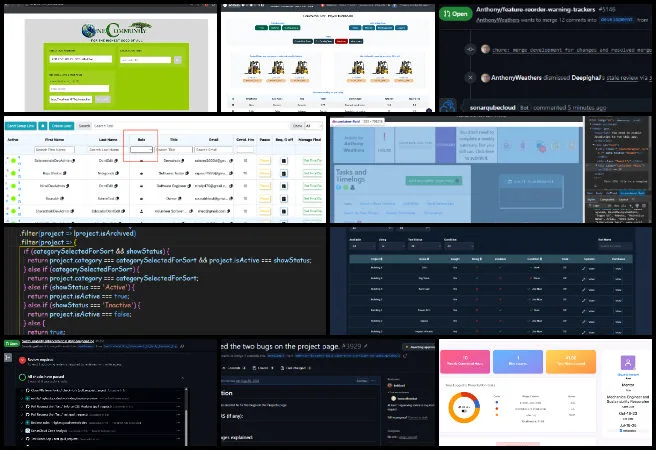
SOFTWARE PR REVIEW TEAM A-N
The PR Review Team’s summary for members with names starting with A–N was managed by Sai Sree Dongari (Data Analyst). The Highest Good Network is a foundation for measuring our results in demonstrating active eco-reinvention of our world. This week’s active members of this team were Abhishek Raghuraman (Software Engineer), Amaan Syed (Volunteer Software Engineer), Carl Bebli (Software Developer), Deepigha Japamony (Software Engineer), Divya Sai Nagabhairu (Software Engineer), Handika Harianto Ew Jong (Full Stack Software Developer), Hemanth Nidamanuru (Administrative Assistant), Ken Zou (Software Engineer), Mahathi (Data Analyst), and Nathan Hoffman (Software Engineer). They reviewed all Highest Good Network PRs shared in this week’s update. Learn more about how the Highest Good Network open source hub measures progress toward demonstrating active eco-reinvention of our world. The collage below shows a compilation of this team’s work.
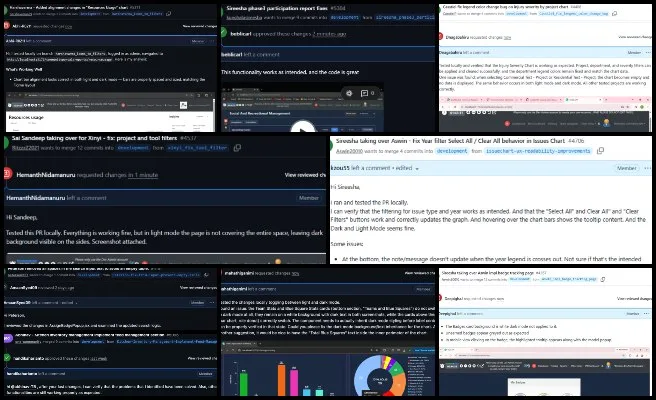
SOFTWARE PR REVIEW TEAM O-Z
The PR Review Team’s summary for members with names starting with O–Z was managed by Shameera Musthafa (Data Analyst). The Highest Good Network is a foundation for measuring our results in active eco-reinvention of our world. This week’s active members of this team were Purav Patel (Software Engineer) and Sundar Machani (Software Engineer). They reviewed all the Highest Good Network PRs (Pull Requests) shared in this week’s update. Learn more about how the Highest Good Network open-source hub measures progress towards our goal of active eco-reinvention of our world. The collage below shows a compilation of the work from this team.
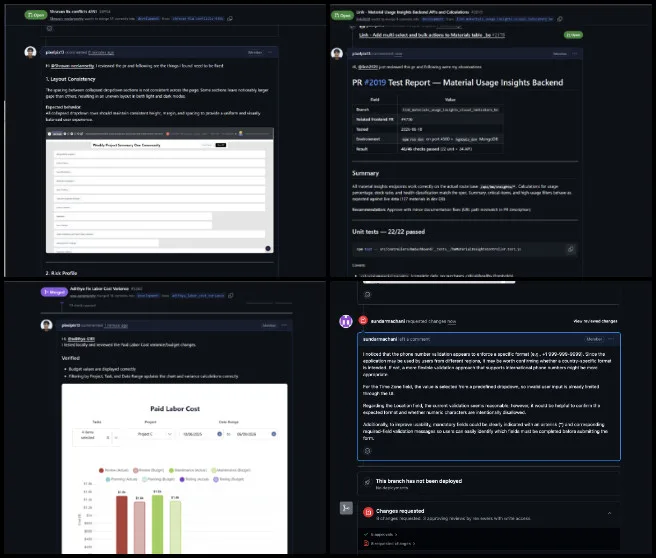
AND WE PRODUCED THIS WEEKLY UPDATES BLOG – CLICK HERE TO SUBSCRIBE
FOLLOW ONE COMMUNITY’S PROGRESS (click icons for our pages)
INVESTOR PAGES
GET INVOLVED
No-waste World Building – One Community Weekly Progress Update #691
At One Community, our mission centers on no-waste world building as we open source and free-share a self-replicating model for sustainable food, energy, housing, education, economics, and social architecture. Created by an all-volunteer team, we are developing global stewardship practices and teacher/demonstration hubs designed to evolve sustainability and support fulfilled living. By transparently sharing the complete process, we are working to regenerate our planet and create a world that works for everyone, all in service of “The Highest Good of All.”
- Here’s our project overview
- Here’s our world-change methodology
- Here’s how this becomes self-replicating
- Here’s how we are open source and free-sharing all the do-it-yourself designs
OUR MAIN OPEN SOURCE HUBS
Click on each icon to be taken to the corresponding Highest Good hub page.
One Community’s physical location will forward this movement as the first of many self-replicating teacher/demonstration communities, villages, and cities to be built around the world. This is the June 15, 2026 edition (#691) of our weekly progress update detailing our team’s development and accomplishments:
No-waste World Building
One Community Progress Update #691

DONATE | COLLABORATE | HELP WITH LARGE-SCALE FUNDING
CLICK HERE IF YOU’D LIKE TO RECEIVE AN EMAIL EACH WEEK WHEN WE RELEASE A NEW UPDATE
YOU CAN ALSO JOIN US THROUGH SOCIAL MEDIA
ONE COMMUNITY WEEKLY UPDATE DETAILS
HIGHEST GOOD HOUSING PROGRESS
One Community is advancing no-waste world building through Highest Good housing that is artistic and beautiful, more affordable, more space efficient, lasts longer, DIY buildable, and constructed with healthy and sustainable materials:
- Learn about: Our Upcoming Crowdfunding Campaign
- Learn about the different village models and no-waste world building: 7 Sustainable Village Models
- Visit the open source portals for the first two: Earthbag Village OS Hub | Straw Bale Village OS Hub
This week, Chanikya Sita (Volunteer Civil/Transportation Engineer) continued working on the Sustainable Parking Lot Construction Guide AutoCAD sheets. He also conducted research for Task 862 covering considerations related to land purchasing and transportation infrastructure due diligence. This included reviewing and documenting official U.S. design standards such as AASHTO, MUTCD, NFPA 1, IFC, ADA requirements, Clean Water Act Section 404, FEMA flood zone requirements, and ASTM geotechnical testing standards. The research findings were compiled into a formatted document covering legal due diligence, fire apparatus access requirements, road geometric design standards, ADA accessibility requirements, environmental and wetland regulations, geotechnical soil requirements, and a pre-purchase due diligence cost estimate table. This work supports no-waste world building by providing accessible infrastructure planning and due diligence resources that promote efficient, sustainable, and well-informed development decisions. See below for some of the pictures related to this work.
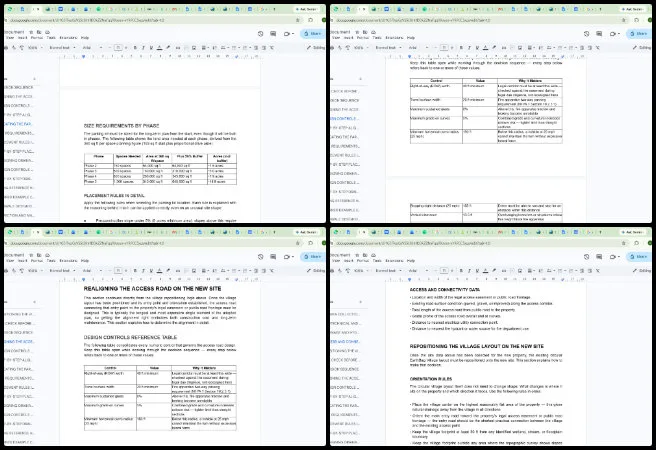
Devendranath Chowdary Maganti (Administrative Assistant) continued working on Aircrete documentation by improving existing summary graphs and incorporating new findings into the report document to enhance the presentation and interpretation of project data. He reviewed the Aircrete process, testing scenarios, and supporting datasets to ensure the visualizations accurately reflected the available information. He also organized and analyzed spreadsheet data to create additional graphical representations, summary tables, and explanatory content highlighting key metrics and observations. In addition, he reviewed the Highest Good Energy report and presentation slides to gather ideas and requirements for developing a visualization dashboard and to better understand effective methods for presenting project data to different audiences. Devendranath also supported the Administration Team and assisted with related administrative responsibilities as needed. His efforts support no-waste world building by improving how sustainable construction and energy data are organized, communicated, and understood. Below, you’ll find some images of this work.
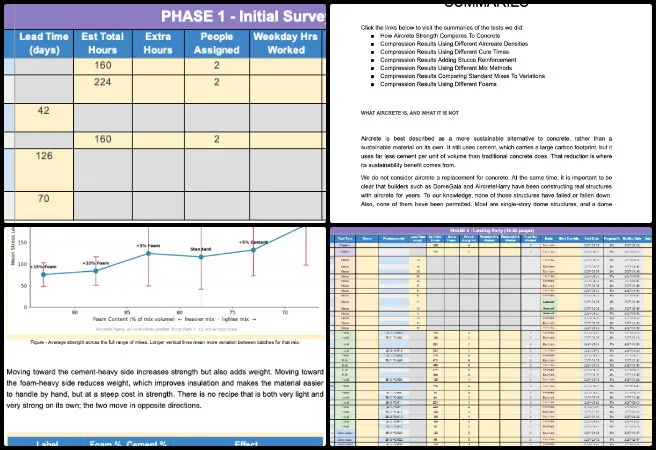
Sagar Chavan (Transportation Engineer) worked on WBS #2.1.12.1 for the Earthbag Village Stormwater Management LEED Points and Cost Analysis Details and Tutorial. He reviewed the Earthbag Village area plan, including the total cluster area, internal and external cluster areas, path area, living dome areas, bathroom areas, and atrium area. He also reviewed the pipe length table for the drainage network and compared it with the water catchment and drainage material expense sheet, including PVC pipe, perforated pipe, porous asphalt, catch basins, and related quantity/cost information. In addition, Sagar checked the Natural Greywater Cleansing System page to understand how the drainage and water-use information connects with the broader Earthbag Village water management approach. This work supports no-waste world building by helping evaluate sustainable stormwater management strategies, resource-efficient infrastructure planning, and integrated water reuse systems for resilient community development. See below for some of the pictures related to this work.
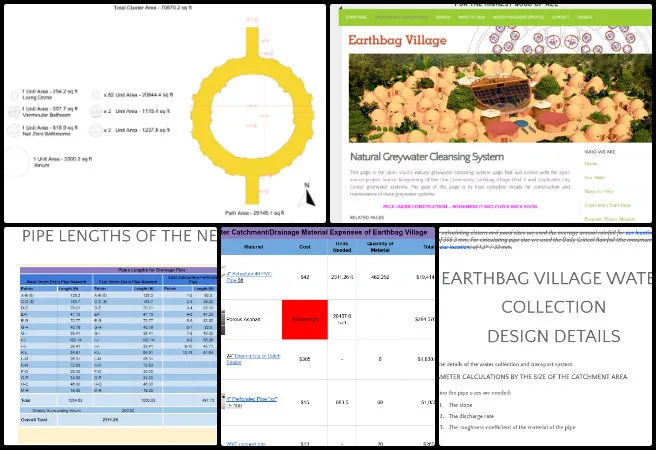
DUPLICABLE CITY CENTER PROGRESS
One Community is advancing no-waste world building through a Duplicable and Sustainable City Center that is LEED Platinum certified/Sustainable, can feed 200 people at a time, provide laundry for over 300 people, is beautiful, spacious, and saves resources, money, and space:
- Learn about this building and its function and no-waste world building: Duplicable City Center Open Source Hub
This week, Bevan Chiu (Mechanical Engineer) continued his work finishing the City Center Eco-spa Designs. He worked on refining the final report, insulation sweet spot analysis, and DIY assembly instructions. He updated the assembly instructions by revising the step sequence, incorporating images, and integrating the content into the final report. Additional updates to the hot tub report included adding introductory text for each section heading, inserting tables for the panel FEA results, and identifying areas where supporting video content would improve clarity. For the insulation sweet spot analysis, Bevan began developing an FEA model for the outdoor scenario to evaluate insulation values beyond the indoor analysis range. He completed a simulation for 1-inch insulation and verified the results against hand calculations. He also revised the thermal simulation report to include additional details related to the spa cover and added a writeup to support insulation sweet spot recommendations. This open source Duplicable City Center project focuses on no-waste world building. For more details, refer to the image below.
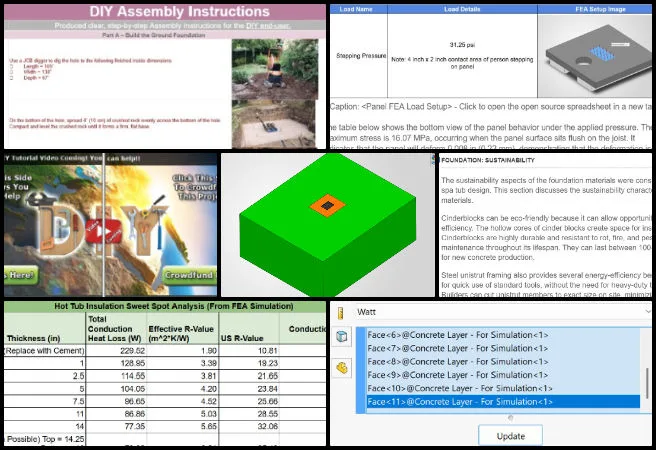
Shivarama Krishna Revanuru (Mechanical Engineer) continued working on the Duplicable City Center design. He focused on preparing the report by completing written content, attaching images, and making minor corrections. Minor updates were made to the spa cover CAD model, and the FEA and thermal analyses were modified to reflect updated conditions and feedback received from teammates. Images and PDF files were organized and uploaded to the appropriate Dropbox locations for report documentation. Collaboration with teammates also continued on the thermal analysis of the spa cover project. This open source Duplicable City Center project represents no-waste world building. The images below illustrate aspects of this work.
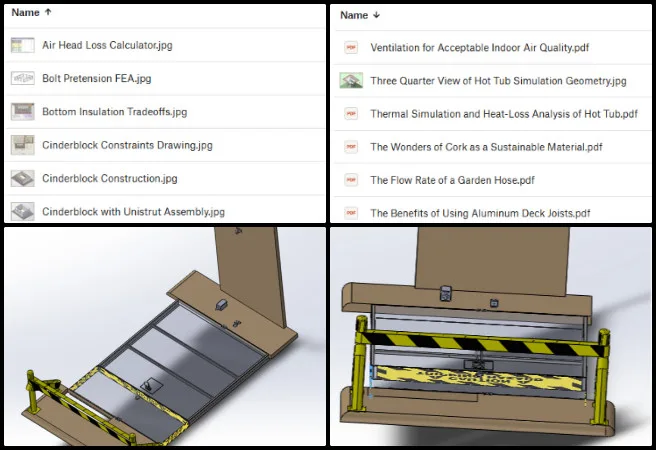
HIGHEST GOOD FOOD PROGRESS
One Community is advancing no-waste world building through Highest Good food that is more diverse, more nutritious, locally grown and sustainable, and part of our open source botanical garden model to support and share bio-diversity:
- Learn about the structures and no-waste world building: Hoop House Hub | Aquapini & Walipini Open Source Hub
- See what we’ll be growing: Gardens & Hoop Houses | Large-scale Structures | Food Forest | TA
This week, the core team continued working on the Master Tools, Equipment, and Materials/Supplies List for the Large-scale Garden, Botanical Garden, and other Highest Good Food components, focusing on electrical, gardening, composting, and fencing project entities. They replaced paragraphs for numerous entries with more detailed information regarding the usage of tools, equipment, materials, and supplies. They also incorporated additional acronyms into many of the entries that were originally established at the project’s inception. Their efforts contribute to One Community’s mission of no-waste world building through open-source collaboration, ecologically responsible innovation, and a focus on long-term global development. The collage below portrays the team’s efforts and achievements for the week.
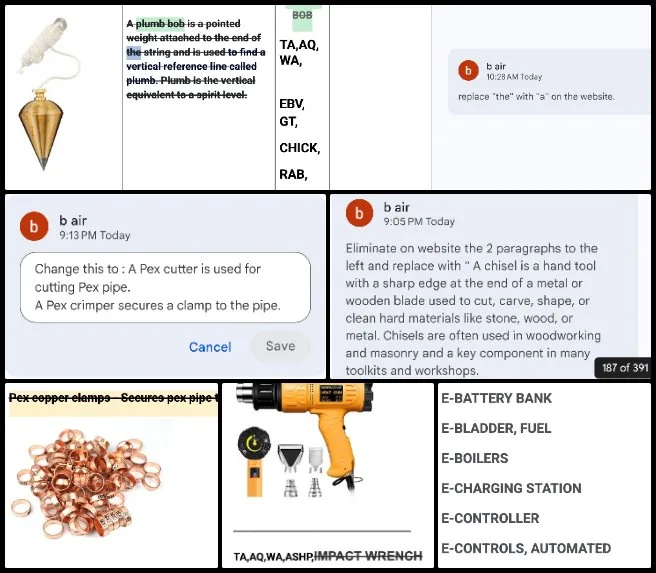
Chelsea Mariah Stellmach (Project Manager) continued her work on several One Community projects, including the phased rollout, kitchen inventory software build, and governance software design mockup. She coordinated with HG community members as part of her transition out of the organization to address outstanding items and ensure information was passed along as needed. Chelsea also completed the Phase 2 rollout specifics pricing spreadsheet, including pictures, links, descriptions and comments where applicable, pricing information, and quantity details for all listed items. These contributions support no-waste world building by strengthening both technical execution and design alignment across the platform. See the collage below for this week’s progress.
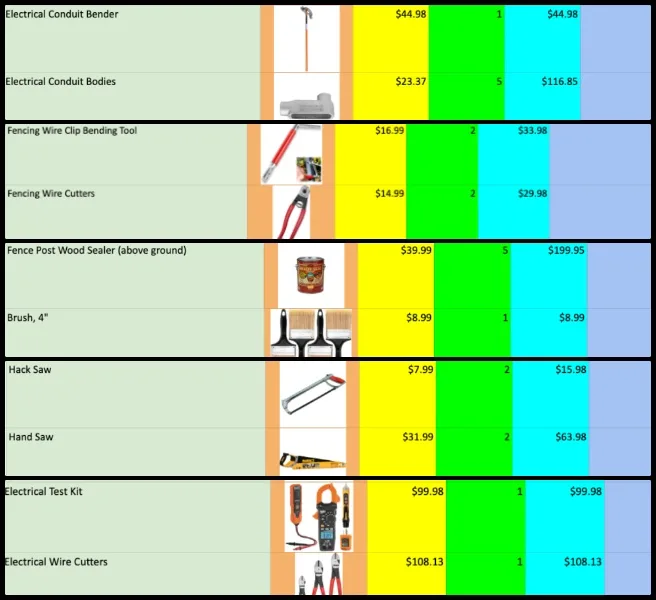
Jay Nair (BIM Designer) continued working on the Aquapini and Walipini Planting and Harvesting documents. He entered plant and lighting fixture data into the spreadsheet-based lighting energy calculator to support the verification of energy requirements for Walipini 1. Jay also organized plant-specific lighting parameters, fixture performance data, and calculation inputs to ensure the spreadsheet accurately reflects the greenhouse design. Efforts were made to improve data consistency and support reliable energy calculations across the different zones within the greenhouse. These updates improve the stability and adaptability of shared systems, supporting the broader goal of no-waste world building. See the collage below portraying the work done this week.
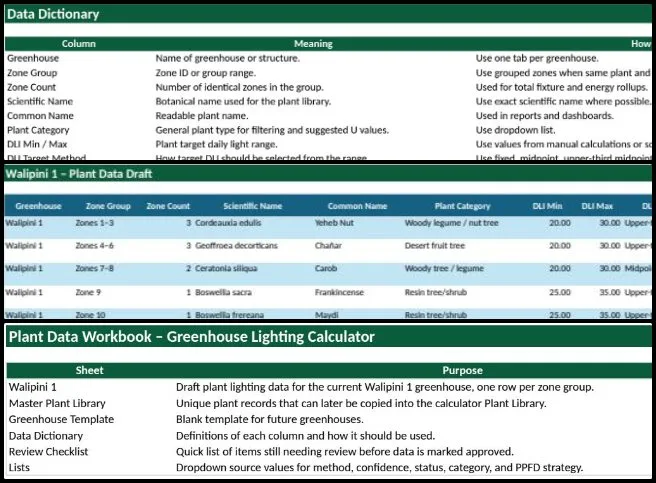
Shivangi Varma (Architectural Designer and Planner) continued working on the redesign of the Highest Good Food overall presentation. She prepared the pending diagrams for final review, including the remaining Open Source Hub graphics. She continued finalizing the ADA access drawing set and began refining the sun study diagram with additional details. Shivangi also organized the graphics for submission and advanced the overall HGF graphic set toward review. This work supports One Community’s mission of no-waste world building. See below for images showcasing her work.
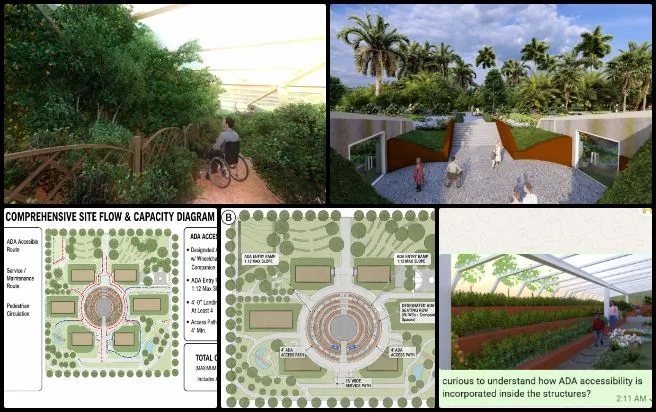
Prudhvi Marpina (Data Analyst) continued supported work across Highest Good Food and Highest Good Education, Highest Good Network, marketing, and administration activities. He focused on the Food Procurement and Storage page by implementing content corrections, adding supporting text before tables and figures where needed, addressing review feedback, and making final updates before the page was submitted for additional review. He also began work on the Ultimate Classroom Footer, Foundation, and Flooring Design and Engineering page by reviewing project requirements, analyzing the source document, and making initial updates to the WordPress page based on the provided instructions. In addition, Prudhvi contributed to Phase 5 governance by updating action items, refining project documentation, reviewing Figma designs, and providing feedback on design elements. This work supports One Community’s mission of no-waste world building. See below for images showcasing his work.
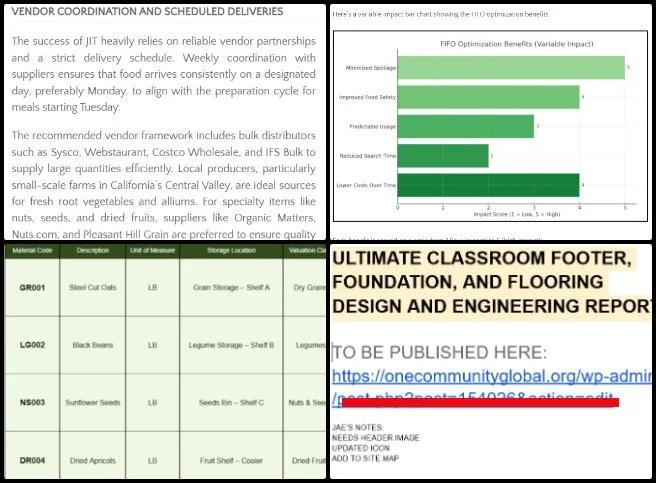
HIGHEST GOOD ENERGY PROGRESS
One Community is advancing no-waste world building through Highest Good energy that is more sustainable, resilient, supports self-sufficiency and includes solar, wind, hydro and more:
- Learn about the open source sustainable-energy foundations and no-waste world building: Solar, Hydro, and Wind
- Explore our research into the most sustainable products and companies for saving water and energy: Insulation, Eco-laundry, Lightbulbs and Light Bulb Companies, Doors and Door Companies, Windows and Window Companies, Toilets, Faucets and Faucet Accessories, Urinals, and more.
This week, the core team continued contributing to the Highest Good Energy initiative. They identified and added links and cost information for tools and equipment needed for Phase 2 of the food infrastructure. They also reviewed the Food Procurement and Storage Overview webpage, comparing it to the source document used for the website updates. During this review, the team discovered sections of the table of contents where headings should be added or removed and provided feedback to improve consistency between the webpage and the source document. This work contributes to no-waste world building, as shown in the collage below.
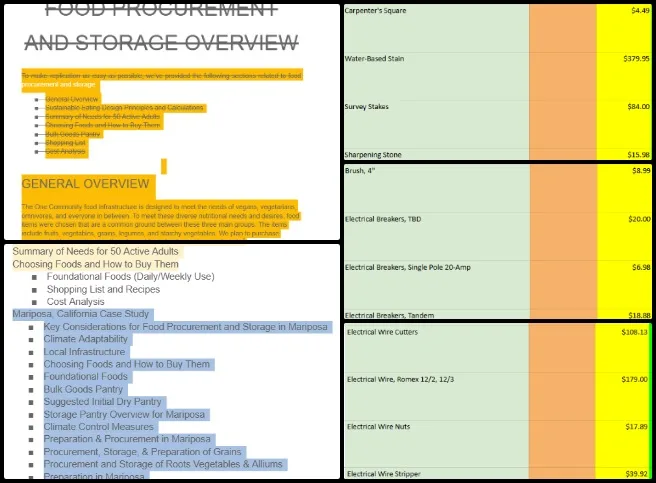
Shameera Musthafa (Data Analyst) continued contributing to the Highest Good Energy initiative while also supporting OC Administration and the PR Review Team. Her work included organizing and categorizing project images, creating visual collages, and finalizing blog-related content as part of PR review coordination, helping ensure that both visual and written materials were properly curated and documented. Shameera also contributed to the Highest Good Energy report pages and related visualizations, managed the One Community Bluesky social media account by creating and publishing posts to share project updates and increase outreach, supported the hiring process by interviewing and evaluating candidates, and carried out end-to-end testing of the PR Review Team Admin Dashboard by validating key workflows, identifying issues, and documenting results. This work plays a key role in no-waste world building. See below for images showcasing her work.
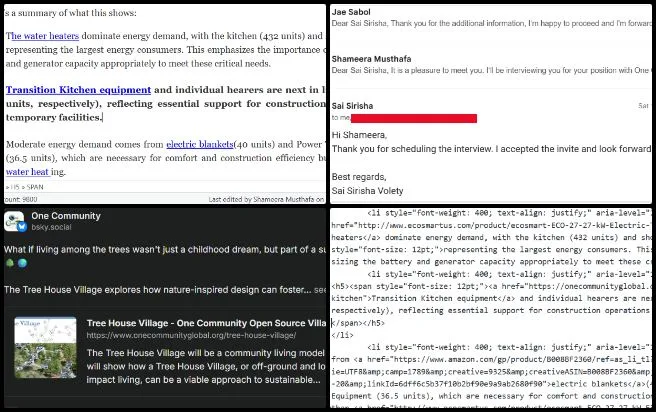
HIGHEST GOOD EDUCATION PROGRESS
One Community is advancing no-waste world building through Highest Good education that is for all ages, applicable in any environment, adaptable to individual needs, far exceeds traditional education standards, and more fun for both the teachers and the students. This component of One Community is about 95% complete with only the Open Source School Licensing and Ultimate Classroom construction and assembly details remaining to be finished. We’ll report on the final two elements to be finished as we develop them.
With over 8 years of work invested in the process, the sections below are all complete until we move on to the property and continue the development and open sourcing process with teachers and students – a development process that is built directly into the structure of the education program and everything else we’re creating too:
- Program Overview: Education Open Source Hub
- How the components work together in designing human orchestrated eco-abundance and no-waste world building: How to use the Education for Life Program
- Lesson Plans for Life – Lesson Plans How-to
- Foundations of Outstanding Leaders, Teachers, and Communicators
- Curriculum for Life
- Teaching Strategies for Life
- Learning Tools and Toys for Life
- Evaluation and Evolution
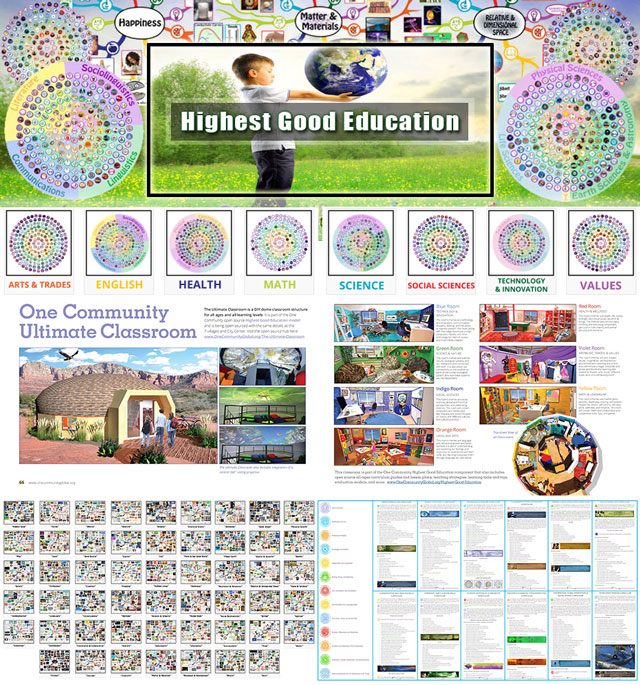
Highest Good Education: All Subjects | All Learning Levels | Any Age – Click image for the open source hub
HIGHEST GOOD SOCIETY PROGRESS
One Community is advancing no-waste world building through a Highest Good society approach to living that is founded on fulfilled living, the study of meeting human needs, Community, and making a difference in the world:
- Read the Highest Good society overview: Highest Good Society
- Learn about the model for fulfilled living and sharing and no-waste world building: A Day in the Life
- Learn about the 4 economic models: RBE | For-profit | Non-profit | Entrepreneurship
- Learn about our open source community collaboration and management software: The Highest Good Network
This week, the core team completed over 45 hours managing volunteer work reviews, handling emails, overseeing social media accounts, supporting web development, and identifying and integrating bug fixes for the Highest Good Network. They also interviewed and onboarded new volunteer team members. Additionally, the team produced and integrated the video above, which highlights how making a no-waste world building serves as a foundational element of One Community’s broader mission. The following images showcase highlights of this work.
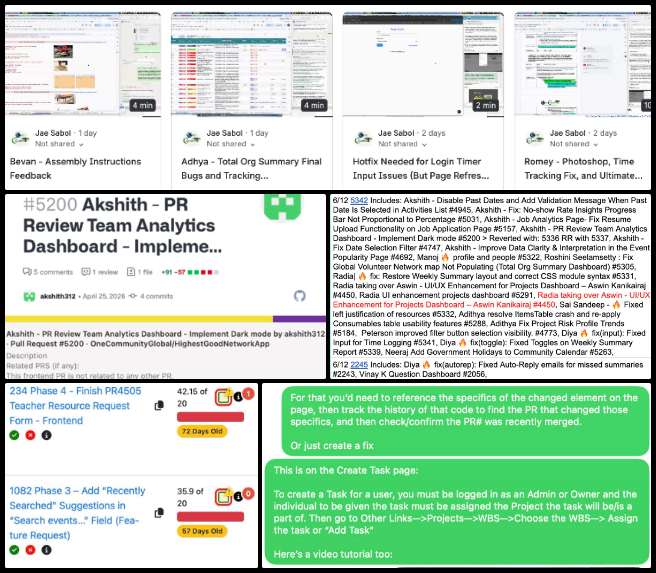
Pooja Kulkarni (UI/UX Designer) continued designing and refining multiple variations of the Highest Good Network Total Organization Governance Summary dashboard to support public reporting, executive visibility, and governance analytics. She improved layout consistency, information hierarchy, and scalability across several governance modules while keeping the interface readable despite high information density. Her work included refining proposal pipeline flow sections, governance performance analytics, member consensus health modules, and community engagement overview screens through layout iterations focused on readability, spacing, chart organization, and visual grouping. Pooja also redesigned the live public display governance screen into a rotating large-screen overview rather than a proposal-detail interface, creating new mockups for the Submitted, Discussion Group, and Approval Group stages with stage-based summaries, urgency panels, participation metrics, proposal velocity tracking, category breakdowns, and improved public visibility. This work plays a key role in no-waste world building.
Additional updates included color-coded governance stages, dashboard card systems, proposal tracking modules, KPI visualizations, focus group analytics, and accessibility-oriented spacing and hierarchy improvements, along with continued alignment of public-facing and internal governance dashboards into a more unified and scalable design. Pooja identified further refinement areas related to responsive scalability, accessibility for dense data screens, interaction consistency between modules, and simpler governance analytics for improved public readability. This work contributes to no-waste world building; the images below highlight key aspects of her work.
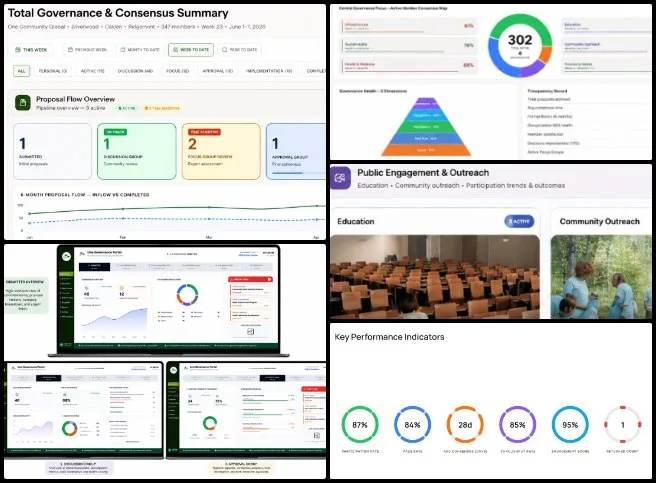
Valentina Collini (Designer) continued creating designs that support no-waste world building by contributing to the One Community website. Her work included creating new biography images and announcement images for incoming volunteers, updating the website with information for new team members, and ensuring that profiles and related content were properly integrated into the site. Valentina also reviewed existing website content and corrected errors where needed, helping maintain the accuracy, consistency, and overall quality of the website. To learn more about how this work supports no-waste world building, visit the Highest Good Society and Highest Good Network pages. See the collage below to view her achievements this week.
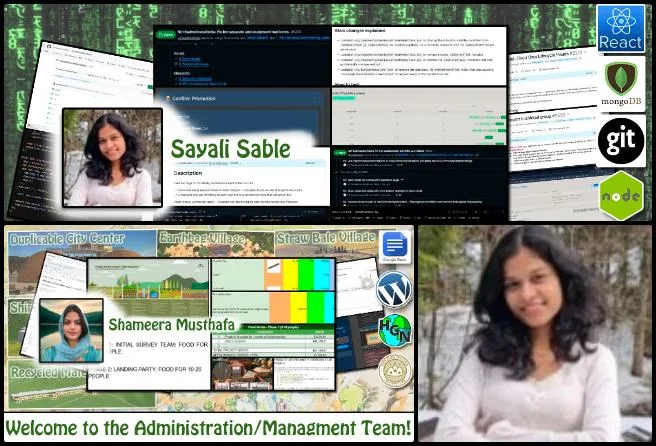
ADMINISTRATION TEAM
The Administration Team’s summary, which covers their work on the Highest Good Network, was managed by Devendranath Chowdary Maganti (Data Analyst) and includes Adhya Rastogi (Business Analyst), Divanshu Bakshi (Team Admin), Hemanth Sai Venkata Srinivasa Kumar Nidamanuru (Administrative Assistant), Leo Lishin Shiu (Software Engineer), Mridul Bhushan (Volunteer Project Strategy Analyst and Team Administrator), Pranjul Garg (Business Analyst), Priyanshi Sharma (Data Analyst and Team Administrator), Rishitha Adepu (Administrator), Sai Sree Dongari (Data Analyst), Sayantan Paul (Frontend Tester and Software Team Administrator), and Tanmay Nihal Harwani (Data Scientist). The Administration Team supports the Highest Good Network, a tool designed to track and measure progress while developing systems that contribute to advancing no-waste world building. Through administrative support, documentation, testing, training, recruitment, analytics, and content management, the team helps advance this mission, aligning with One Community’s vision of building a replicable and sustainable future model.
This week, Adhya worked on end-to-end testing and documentation for the Total Organization Summary Dashboard, finalized the HGN Bugs and Features Spreadsheet with improved traceability, and created a Root Cause Analysis Matrix mapping dashboard components and dependencies. She also researched SEO best practices, prepared an SEO optimization proposal, and optimized Google Ads through keyword refinement and targeting adjustments. Administratively, Adhya reviewed submissions, maintained tracking records, edited blog content, and created the weekly collage. These efforts contribute to advancing no-waste world building through improved system structure, traceability, and optimization workflows.
Divanshu tested and published four Mastodon updates while ensuring compliance with formatting standards, hashtag guidelines, and posting procedures. He tested multiple PRs related to reported bugs, validated fixes, and documented action items in tracking systems and the HGN Bugs I document. He also developed a Python script to detect and prevent duplicate image postings, improving posting accuracy and content consistency. In addition, he completed routine data extraction from the Mastodon archive and updated the Weekly Mastodon Report. Hemanth tested 23 pull requests across dashboards, reports, forms, inventory, analytics, and UI components in both light and dark modes. He approved valid PRs and documented issues such as tooltip visibility problems, layout cropping, contrast inconsistencies, incorrect event month displays, invalid form inputs, graph readability issues, and Windows setup errors. These testing, automation, and QA efforts contribute to advancing no-waste world building by improving reliability, usability, and system stability.
Leo reviewed the 17LeDCC weekly summaries, compiled them into the blog format, created collages, analyzed Facebook and Instagram data, loaded insights into dashboards, and scheduled weekly social media posts. Mridul completed Blog #690 administrative review by validating structure, grammar, formatting, pronoun consistency, and guideline compliance across multiple teams. He also managed Twitter/X and LinkedIn posting activities and performed weekend analytics tasks. These coordination and content management efforts contribute to advancing no-waste world building by improving communication structure and organizational consistency.
Pranjul completed administrative training by publishing the blog Cooperatively Solving Global Problems #690, reviewing team outputs for errors, and managing volunteer time logs with tracking and warnings. She also contributed to Earth Village blog maintenance and ensured publishing guideline compliance. Priyanshi completed frontend QA testing across multiple HGN modules including Lessons Learned, Tools & Equipment Tracking, Financials Tracking, Injury Trends, and dark mode functionality. She validated charts, filters, API responses, UI consistency, and error handling while documenting issues such as unexpected mind map behavior, 404 errors, dark mode loading failure, and spacing inconsistencies. These administrative and QA testing efforts contribute to advancing no-waste world building by improving operational compliance and software reliability.
Rishitha handled blog consolidation, SEO optimization for WordPress, bio updates, Threads content management, dashboard updates, and volunteer tracker maintenance using Python and Excel workflows. These QA and administrative efforts contribute to advancing no-waste world building by improving usability, accessibility, and structured data management. Sai Sree organized PR review materials, created collages, tested multiple PR areas across HGN phases and platforms, and held interviews while documenting hiring feedback. These coordination and recruitment efforts contribute to advancing no-waste world building by supporting team growth and platform development.
Sayantan handled OC administration, peer reviews, escalation management, and HGN system testing across forms, dashboards, event analytics, and inventory workflows, while also researching Phase 6 Kitchen Inventory systems and identifying missing routes and backend dependencies. These testing, administrative, and system design efforts contribute to advancing no-waste world building by improving software structure, workflow reliability, and development planning. Tanmay worked on weekly blog preparation, collage creation, HGN Skills Dashboard testing, Total Organization Summary Dashboard validation, issue tracking, and cross-admin review of submitted content for accuracy and consistency. These coordination and dashboard testing efforts contribute to advancing no-waste world building by improving reporting reliability and system-wide collaboration. See the collage below for highlights of this week’s work.
HIGHEST GOOD NETWORK PROGRESS
One Community is advancing no-waste world building through open source Highest Good Network® software that is a web-based application for collaboration, time tracking, and objective data collection. The purpose of the Highest Good Network is to provide software for internal operations and external cooperation. It is being designed for global use in support of the different countries and communities replicating the One Community sustainable village models and related components.
- Learn about our open source community collaboration and management software: The Highest Good Network
This week, the core team continued testing Highest Good Network pull requests on the Main branch and confirmed fixes for Activity Registration – Unable to Get to the Registration Screen for Activities (PR 4970), selected skill button text color in Dark Mode (PR 5202), Add Column Sorting Controls to the Used Resources Page (PR 4675), Create a Bar Chart Titled “Winning Bid vs Average Bid” (PR 4634), Fix Warnings in PeopleTableDetails Unit Tests (PRs 3467 and 5170), Fix Attendance and Completion Percentage Calculations in the Log Attendance Page (PR 5294), fix the incorrect function of assigning a new badge (PR 5223), and create the “Interact with Pause User Button” permission (PRs 5122 and 2161). They also tested additional pull requests and identified 10 that were not fixed. In addition, they were unable to test replace hardcoded API URL with ENDPOINTS and improve network error (PR 5201), Fix for Grouped-Bar Graph Paid Labor Cost (PRs 4496 and 1937), and Redo PR4828 – Improve Consumables Table Usability and Visual Clarity (PR 5288) because the required data was not available on the Main branch. These updates formed part of ongoing efforts focused on no-waste world building. See the collage below to view the team’s work.
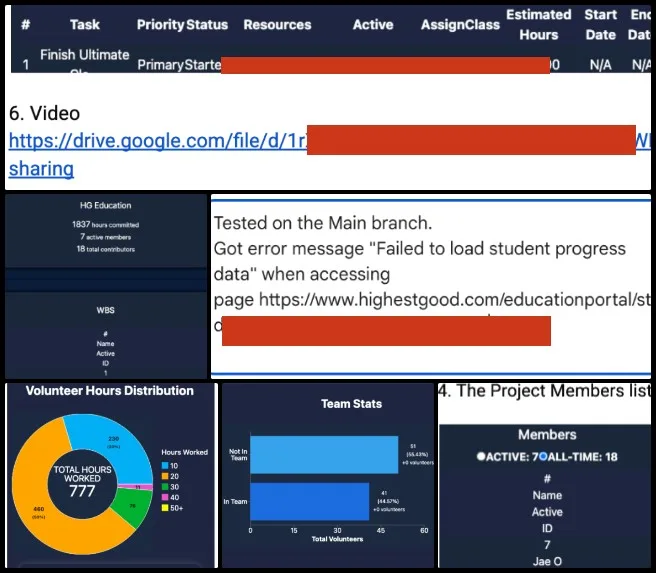
ALPHA SOFTWARE DEVELOPMENT TEAM
The Alpha Software Team, working on the Highest Good Network software, was managed by Lin Khant Htel (Frontend Software Developer). The team includes Maithili Kalkar (Software Engineer), Som Ramnani (Software Engineer), Sai Sandeep Koritala (Software Engineer), and Casstiel Pi (Software Engineer). The Highest Good Network software is a key part of creating measurable global transformation. The software supports social architecture, construction, production, and maintenance processes that contribute to the open source project and resilient ecosystems. Designed to be portable and scalable, the Highest Good Network is ideal for off-grid and sustainable living communities, reflecting One Community’s open source commitment to advancing no-waste world building.
This week, Lin managed the team summary covering multiple contributors and tracked progress across ongoing tasks and pull requests during the week. He also reviewed PR #2235 by examining the code and running tests locally, with all tests passing without issues. In addition, he checked Alpha team members’ weekly summaries, photos, and videos as part of team management responsibilities, and these activities remained aligned with the goals of no-waste world building. Casstiel reviewed the Weekly Project Summary usability task and found that the ticket contained an incorrect URL that led to a page that did not exist. After locating the correct page and related files, he examined the existing implementation and identified several areas for improvement within the current section-based layout. These included default project and date selections, clearer summary labels, expand and collapse controls, improved section headers, empty-state messaging, comparison options, and loading indicators. He also identified component-level data consistency considerations that related to no-waste world building by ensuring displayed information remained aligned with selected filters.
Maithili completed work on the email sending feature and finalized the related pull request. The work included fixing issues with comma-separated email addresses, resolving test failures, and confirming that all tests passed. She also investigated email delivery issues and identified problems related to OAuth token generation and authentication processes. In addition, Maithili worked on debugging and development tasks for the Pinterest auto-poster feature, with these efforts contributing to no-waste world building through improved communication and automation capabilities. Sai worked on several enhancements focused on user experience and interface functionality. In PR 5332, he corrected resource alignment issues within the task assignment process to improve page layout and usability. In PR 4537, he implemented a multi-select form with dual search capabilities based on project names and tool names, added persistence for active filters across page refreshes, and introduced a reset feature to clear applied filters. He also refined styling for light and dark modes and incorporated error handling, with this work reflecting the principles of no-waste world building.
Som worked on PR #5338 to address SonarQube Cloud review feedback in the Email Management flow. He updated CSS files to improve accessibility and resolve contrast warnings while maintaining consistent styling across interface elements. Som also refactored validation logic into shared helper functions to reduce duplication and improve maintainability. Additional updates included moving YouTube URL validation into a dedicated helper and replacing thrown object literals with Error instances while preserving existing functionality. Since the original pull request had already been merged, he created a new pull request to continue addressing the remaining review items connected to no-waste world building. See the collage below to view the team’s work.
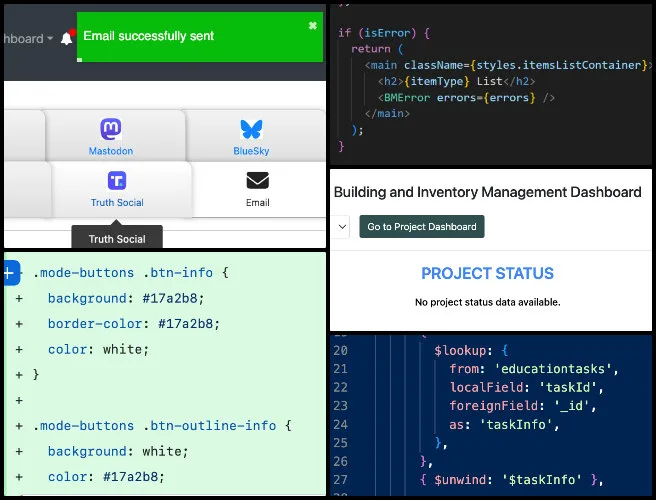
BINARY BRIGADE SOFTWARE DEVELOPMENT TEAM
The Binary Brigade Team, which presented their work on the Highest Good Network software, was managed by Roshini Seelamsetty (Software Engineer), and included Harsha Rudhraraju (Software Engineer), and Manoj Puttaswamy (Software Engineer). The Highest Good Network software is our tool for managing and objectively measuring progress, ensuring that all contributions are tracked and aligned with our mission of advancing no-waste world building. It supports social architecture, construction, production, and maintenance processes that contribute to open-source projects and resilient, sustainable ecosystems.
This week, Harsha focused on resolving merge conflicts and working through a backlog of pending pull requests. Merge conflicts in PRs 4699, 5102, and 2151 were resolved, followed by the remaining PRs with outstanding conflicts. After clearing merge conflicts, he worked on fixing errors identified in multiple pull requests, with several issues resolved and the remaining items in progress. Harsha also began addressing quality gate issues to ensure code compliance before merging and worked on change requests raised during reviews by incorporating reviewer feedback into the relevant pull requests. Manoj worked on stabilizing the BMDashboard by resolving multiple dark mode and UI issues across inventory pages, header dropdowns, and datepickers. He also implemented a new standalone Unit of Measurement page, integrated it into application routing and navigation, and linked it across all inventory category pages. See the Highest Good Society and the Highest Good Network pages for more on how this supports advancing no-waste world building. Highlights of the team’s contributions are shown in the collage below.
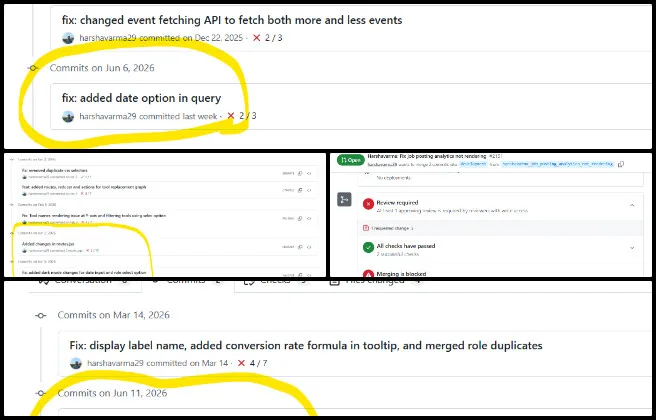
DEV DYNASTY SOFTWARE DEVELOPMENT TEAM
The Dev Dynasty Team’s summary, covering their work on the Highest Good Network software, was managed by Shravya Chilukoori (Administrative Software Engineer) and Rithika Pai (Software Engineer). The team includes Adithya Cherukuri (Volunteer Software Engineer), Neeraj Kondaveeti (Software Engineer), Saurabh Jayant Dipte (Software Engineer), and Sireesha Kunchala (Software Engineer). The Highest Good Network software helps manage and objectively measure processes by no-waste world building through social architecture, construction, production, and maintenance systems.
This week, Adithya developed and finalized a cost variance trend graph feature for the financials dashboard, building the component and core data logic to group cost tracking metrics by date, constructing a bar chart interface with a zero-dollar reference line to separate budget savings from overruns, integrating project, category, and date filters, resolving a timezone error in the date picker, and verifying the implementation across dark mode and edge cases before pushing and documenting the pull request. This effort contributes to no-waste world building through improved financial analysis and project tracking capabilities.
Rithika worked on paired frontend and backend pull requests for the Building Management Dashboard, completing PRs #4797 and #2031 for the resolved and closed task tracking feature by rebasing both branches, resolving conflicts across multiple files, fixing SonarQube issues including missing PropTypes and unused imports, then working on PRs #4898 and #2073 for the side-by-side comparison mode for expenditure charts by resolving conflicts across multiple components, fixing 18 SonarQube issues, and beginning PRs #4800 and #2032 for the interactive open issues list by adding missing API routes and regenerating the package lock file. These updates support the broader objective of no-waste world building by improving data visibility and decision-making tools.
Sireesha resolved merge conflicts across several branches, standardized package management by removing redundant lockfiles, fixed a runtime crash in the LessonCard component, implemented dark mode CSS for the Injury Severity dashboard, added MongoDB ObjectId validation on the backend, and resolved a SonarCloud pipeline failure. This work advances the collaborative infrastructure needed for no-waste world building. Saurabh resolved merge conflicts across more than 20 files for PRs #3906 and #1357 covering a cost breakdown line graph, addressed SonarCloud issues including duplicate imports, CSS contrast violations, PropTypes validation, cognitive complexity, and deprecated color syntax, and continued work on PRs #4653, #1982, #3405, and #4479. His contributions help strengthen the software systems used for no-waste world building.
Neeraj resolved merge conflicts across multiple pull requests, refactored code to address formatting and CSS module compliance issues, and maintained several previously submitted pull requests related to the Resource Management Dashboard, Participation Page, Inventory Search, Resource Usage export, Demand Across Villages graph, Collaboration Job Listing filters, and the Listing and Bidding Platform village filter and navigation fixes. These ongoing improvements align with the organization’s focus on no-waste world building through open-source software development. See below for some of the pictures.
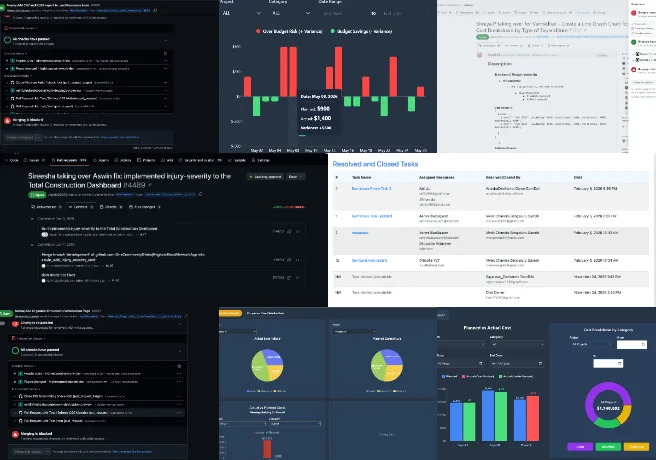
LUCKY STAR SOFTWARE DEVELOPMENT TEAM
The Lucky Star Team’s summary, covering their work on the Highest Good Network, was managed by Tanmay Nihal Harwani (Data Scientist) and Sohail Uddin Syed (Software Engineer). The team includes contributions from Veda Bellam (Software Engineer) and Shravya Kudlu (Software Development Engineer). Their work supports One Community’s mission of no-waste world building through cross-functional software development and ongoing system improvements.
This week, Shravya worked on completing a merge request by addressing reviewer comments, adding dark mode support, removing unnecessary buttons, fixing various UI issues, resolving SonarQube-identified vulnerabilities, addressing defects discovered during testing, conducting validation to ensure functionality and prevent regressions, and updating documentation to accurately reflect the implemented changes furthering One Community’s mission of advancing no-waste world building through improved platform functionality.
Sohail investigated and resolved a broken frontend route where the PR grading screen was inaccessible due to missing router registration, verified backend API functionality, registered the route using the existing container, updated the container to fetch live grading data, fixed API request issues caused by a missing team query parameter, implemented a client-side data transformation layer to align frontend expectations with backend response formats, corrected grading value mismatches, added a team switcher dropdown that dynamically loads available teams and refreshes grading data based on selection, created new actions for grading and configuration management, and developed 38 unit and container tests covering success cases, failures, fallback behavior, team switching, and edge cases contributing to One Community’s mission of advancing no-waste world building.
Veda worked on two HGN Software Development initiatives: the job application listing page and the permission-based question sets functionality. She resolved frontend and backend merge conflicts across multiple branches, addressed review feedback, fixed development issues, and updated the job application listing page and job application form from the user perspective to bring the pull request to a review-ready state. She also worked on frontend and backend updates for the permission-based question sets feature by implementing and refining permission-related functionality, resolving branch conflicts, addressing reported issues, coordinating updates across application and backend repositories, and preparing the related pull requests for review. See the Highest Good Society and the Highest Good Network pages to learn more about how this work supports no-waste world building. Look at the collage below to view the team’s work for the week.
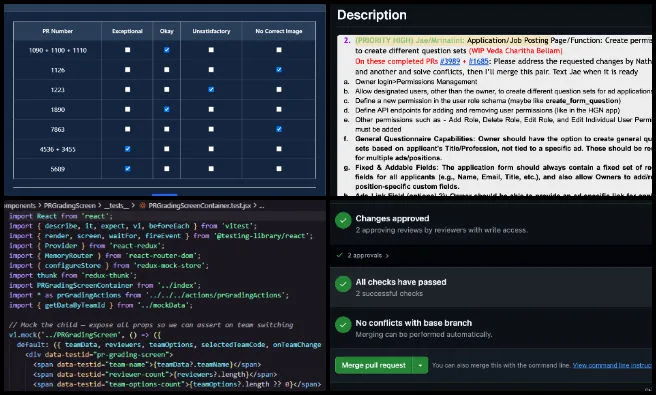
REACTONAUTS SOFTWARE DEVELOPMENT TEAM
The Reactonauts team summary, which covers their work on the Highest Good Network, was managed by Diya Wadhwani (Software Developer), Divanshu Bakshi (Data Analyst), and Amaresh Chaudhary Nara (Software Engineer), and includes Aseem Deshmukh (Software Developer). This work supports no-waste world building by strengthening the systems, processes, and collaborative tools needed to make sustainable living more accessible and replicable worldwide.
This week, Amaresh worked across five pull requests in the HGN codebase, supporting no-waste world building through code quality, security, and platform improvements. He fixed a SQL injection vulnerability in PR 1780 by validating and sanitizing the listing ID parameter and added a missing bookings.js model file to resolve a lint error. In PR 1934, he updated the submissions endpoint to return only completed and graded task statuses by default when no status parameter is provided. In PR 4486, he resolved merge conflicts, fixed a prettier lint error, added dark mode styles to task submission components, and addressed multiple sonar cloud warnings in student dashboard.jsx. In PR 4476, he resolved merge conflicts with the development branch across several files. In PR 1927, he resolved a merge conflict in startup routes while retaining route registrations from both branches and noted the need to remove an accidental file.
Aseem worked on PR #4354 and updated predictionchart.module.css by modifying layout-related selectors to improve the positioning, alignment, and presentation of chart filters while maintaining consistency with the existing design, contributing to no-waste world building through improved data visualization. Diya completed Reactonauts team management responsibilities by reviewing weekly summaries, images, videos, and team work-time entries for the current and previous week. She restored three 4 AM Sunday auto-reply email functions and templates lost during a merge conflict, corrected weekly summary logic, fixed array indexing issues, tested the workflow, and raised backend PR 2243. Diya also restored the bio announcement tri-state toggle on the weekly summaries report page by fixing imports, CSS module bindings, click behavior, animations, layering, accessibility attributes, and filter toggle styling, and raised frontend PR #5339. In addition, she resolved a production-only MCE editor issue in the time entry notes modal by implementing an editor key state to force clean remounting after reopening the modal and raised frontend PR #5341. To learn more about how this work supports creating a complete sustainability strategy, visit the Highest Good Society and the Highest Good Network pages. Below is the collage showcasing the Reactonauts team’s work for the week.
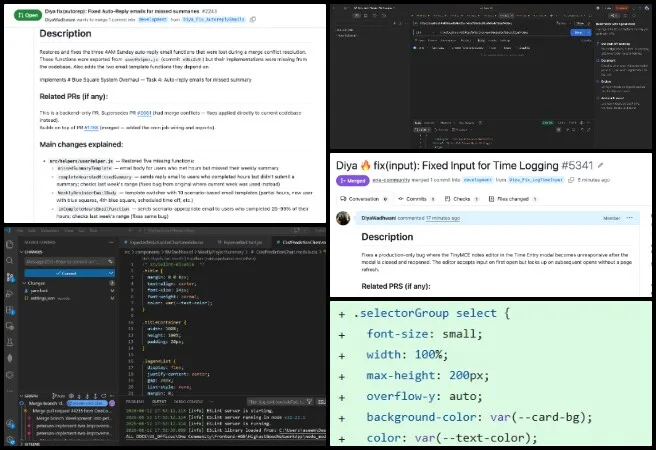
SKYE SOFTWARE DEVELOPMENT TEAM
The Skye Team’s summary, covering their work on the Highest Good Network, was managed by Sayantan Paul (Frontend Tester and Software Team Administrator) and Anthony Weathers (Software Engineer). The team includes Jaden Wong (Software Engineer), Nirali Patel (Full Stack Developer), Peterson Rodrigues dos Santos (Full-Stack Developer) and Swathi Angadi (Software Engineer). Advancing no-waste world building is a service commitment of the Highest Good Network software which is accomplished by objectively tracking and managing progress across social architecture, construction, production, and maintenance processes, utilizing transparent, scalable systems that strengthen accountability, coordination, and resilient ecosystems.
This week, Anthony began work on a solution for the Create a People Report feature to support cases where users have more than 20 tasks. He reworked portions of the layout for smaller screen sizes in preparation for the overall design, while identifying other areas that require further investigation. He also created PR #5340 and made progress toward completing the task but encountered Sonar issues and a merge conflict that need to be resolved, along with additional details before the work is marked ready for review. Nirali worked on implementing backend support for the Volunteer Hours Reporting feature by developing new APIs to retrieve committed hours data for both Teams and Projects. She implemented logic to calculate committed hours using task estimated hours and aggregate data across related WBS items, projects, and teams. Nirali also added date range filtering based on task scheduling dates to support flexible report generation, providing backend support for Volunteer Hours Reports, Team Hours Reports, Project Hours Reports, and other date-based reporting features. These updates contribute towards no-waste world building by enhancing documentation quality.
Jaden worked across five pull requests in the One Community Highest Good Network app. He resolved 91 SonarQube quality gate issues across 10 files in the Garden Management and Kitchen Inventory pull request by addressing async and Promise patterns, nested ternaries, missing PropTypes, global object usage, WCAG contrast issues, and unused imports. He also extracted the add-event modal into a separate component to reduce complexity and connected add buttons to the modal based on review feedback. On the User Management pull request, Jaden resolved a visibility issue caused by the branch not being pushed to the remote repository and fixed a dark mode CSS specificity issue affecting hover behavior. On the Village Dropdown Filter pull request, he resolved merge conflicts from a branch that was significantly behind development, fixed a SonarQube reliability issue related to non-serializable Redux state, and verified the village list rendered correctly using a fallback dataset. On the Wishlist frontend and backend pull requests, Jaden merged development changes, resolved conflicts while preserving existing wishlist functionality, and fixed a case-sensitivity issue in import paths that caused test failures and build issues in Linux-based environments. This progress helps advancing no-waste world building through small impactful actions leading to larger, lasting changes in ecosystems and social systems.
Peterson resolved conflicts in a pull request for the User Profile page related to PR #5022, which adds vertical scrolling support to allow users to access profile content extending beyond the visible screen area. The update ensures a scrollbar appears when necessary so users can view all profile information. He also resolved conflicts in additional pull requests currently under testing. Swathi worked on improving the empty state and user guidance for the Daily Equipment Log Form by implementing the requested enhancements and making the necessary UI changes. She tested the updates to verify functionality and user experience, pushed the changes, raised a pull request, and captured videos and screenshots for documentation. Promoting no-waste world building through such collaborative development is a reflection of the progress being made by the members of this team. See the Highest Good Society and the Highest Good Network pages to learn more about how this work supports no-waste world building through our open source hub. See the collage below for the team’s work.
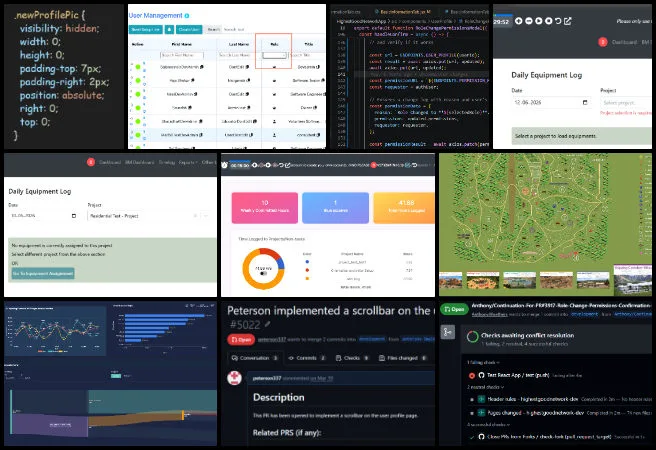
SOFTWARE PR REVIEW TEAM A-N
The PR Review Team’s summary for members with names starting with A–N was managed by Sai Sree Dongari (Data Analyst). The Highest Good Network is a foundation for measuring our results in advancing no-waste world building. This week’s active members of this team were Abhishek Raghuraman (Software Engineer), Carl Bebli (Software Developer), Deepigha Japamony (Software Engineer), Handika Harianto Ew Jong (Full Stack Software Developer), Ken Zou (Software Engineer), Mahitha (Software Engineer), and Nathan Hoffman (Software Engineer). They reviewed all Highest Good Network PRs shared in this week’s update. Learn more about how the Highest Good Network open source hub measures progress toward advancing no-waste world building. The collage below shows a compilation of this team’s work.
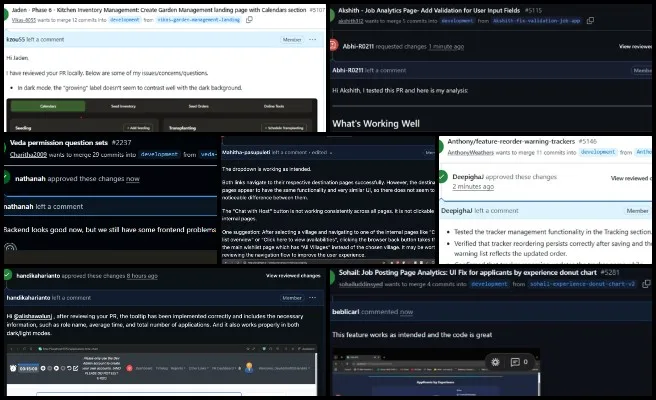
SOFTWARE PR REVIEW TEAM O-Z
The PR Review Team’s summary for members with names starting with O–Z was managed by Shameera Musthafa (Data Analyst). The Highest Good Network is a foundation for measuring our results in no-waste world building. This week’s active members of this team were Sundar Machani (Software Engineer), Yingshu Wang (Software Engineer) and Yiyun Tan (Software Engineer). They reviewed all the Highest Good Network PRs (Pull Requests) shared in this week’s update. Learn more about how the Highest Good Network open-source hub measures progress towards our goal of no-waste world building. The collage below shows a compilation of the work from this team.
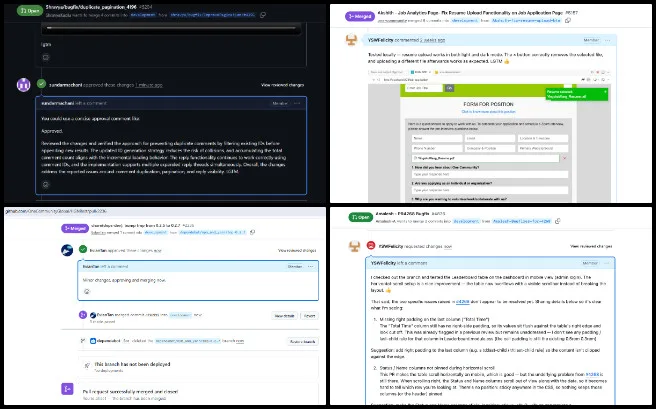
AND WE PRODUCED THIS WEEKLY UPDATES BLOG – CLICK HERE TO SUBSCRIBE
FOLLOW ONE COMMUNITY’S PROGRESS (click icons for our pages)
INVESTOR PAGES
GET INVOLVED
One Community Welcomes Sayali Sable to the Software Development Team!
One Community welcomes Sayali Sable to the Software Team as our newest Volunteer/Consultant!
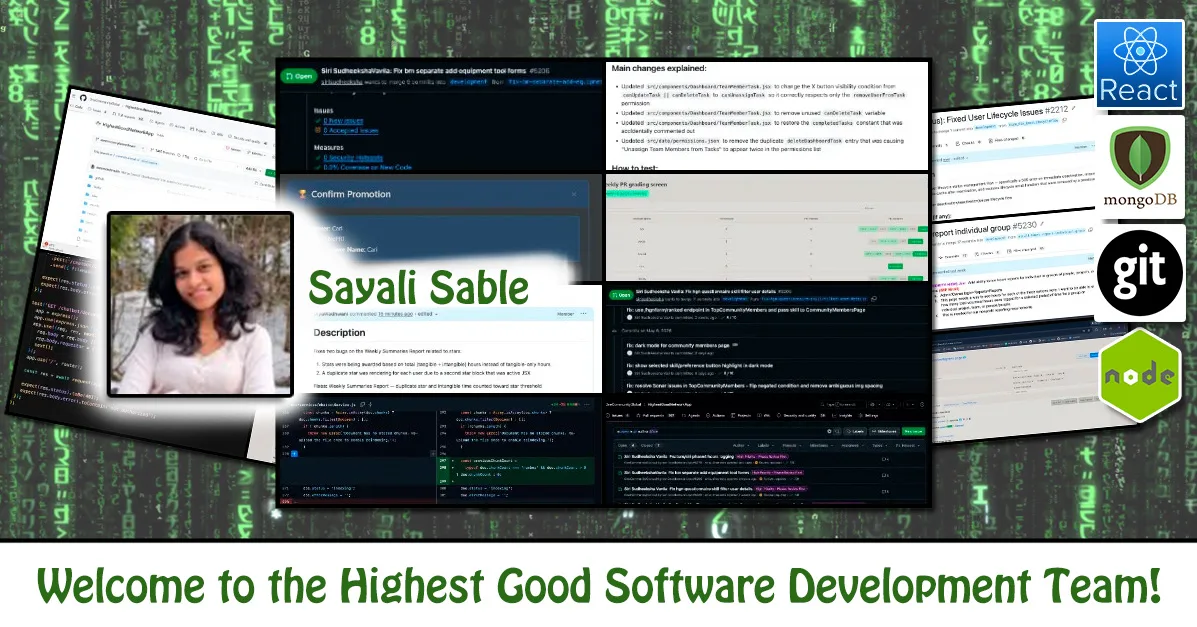
Sayali is a graduate student pursuing a Master’s in Information Systems, with a strong foundation in full-stack web development using React, Node.js, and REST APIs. She is passionate about building clean, maintainable software and believes in the power of open-source collaboration to create meaningful, positive change in the world. While a member of the One Community Software Team, Sayali delivered 30+ pull requests across 16 weeks of contributions to the Highest Good Network (HGN) application. Her work has included building a real-time profile filtering system, a PR grading dashboard with dynamic test configuration and promotion confirmation workflows, a user state indicator system, a complete email management system replacing MailChimp, and bell notification milestones. She has also implemented full dark mode support across multiple components, optimized dashboard performance using parallel API calls and server-side caching, resolved critical SonarCloud security issues, and conducted thorough code reviews across 20+ peer PRs spanning frontend, backend, and API testing.
WELCOME TO THE TEAM SAYALI!
FOLLOW ONE COMMUNITY’S PROGRESS (click icons for our pages)
INVESTOR PAGES
GET INVOLVED
One Community Welcomes Sai Keerthi Domakonda to the Software Development Team!
One Community welcomes Sai Keerthi Domakonda to the Software Team as our newest Volunteer/Consultant!
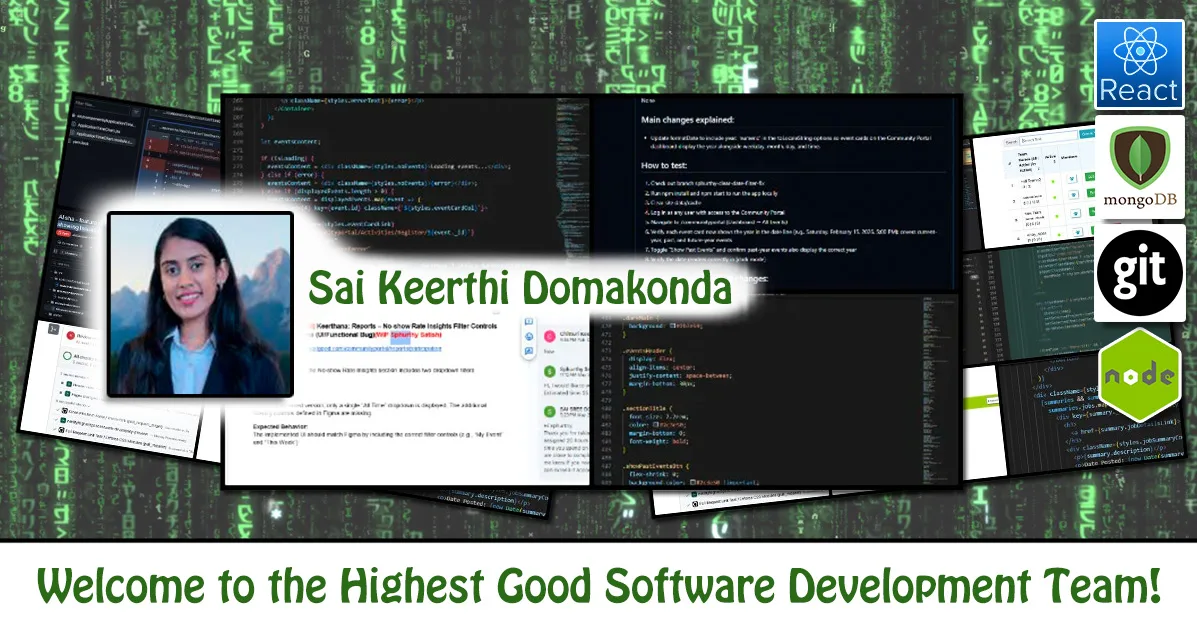
Sai Keerthi holds a Master’s degree in Computer Science from Purdue University and a Bachelor’s degree in Computer Science Engineering from Ace Engineering College. She previously worked at ValueLabs as a software developer, where she supported enterprise applications by coordinating migrations, troubleshooting issues, executing tests, and ensuring reliable system performance for end users. In her role on One Community’s Highest Good Network team, Sai Keerthi served as a System Administrator and Frontend Tester for the Code Crafters Software Development Team. She was also responsible for documentation governance, maintaining summary quality control, and managing feedback workflows, ensuring functionality aligned with design standards, and contributing to smooth and reliable software deployments across the platform.
WELCOME TO THE TEAM SAI KEERTHI!
FOLLOW ONE COMMUNITY’S PROGRESS (click icons for our pages)
INVESTOR PAGES
GET INVOLVED
One Community Welcomes Manoj Puttaswamy to the Software Development Team!
One Community welcomes Manoj Puttaswamy to the Software Team as our newest Volunteer/Consultant!
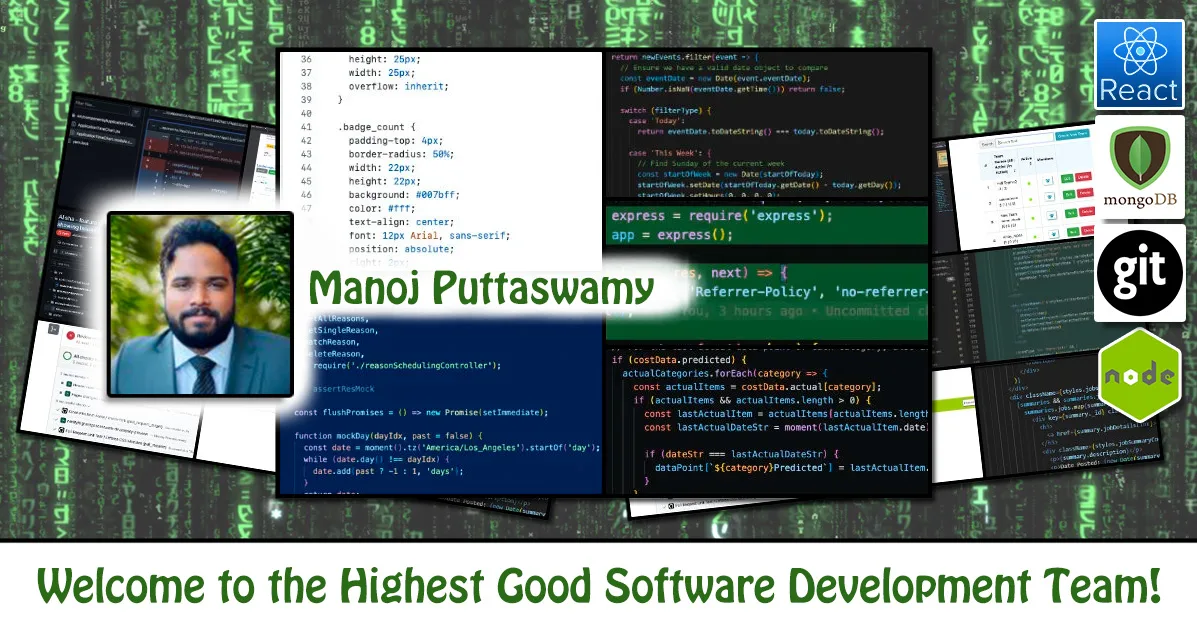
Manoj is a Software Engineer with over 4 years of experience building scalable backend systems and cloud-native applications. He holds a Master of Science in Computer Science from DePaul University and brings hands-on expertise across the full stack, from designing event-driven workflow platforms and secure multi-tenant REST APIs to building React-based frontends and LLM-powered integrations. His professional background spans roles at ServiceNow and Accenture, where he delivered high-throughput systems and led database migrations. As a member of the One Community team, Manoj has contributed to the BMDashboard feature of the Highest Good Network App, building and refining frontend components in React including a utilization chart, implementing dark mode support with scoped CSS fixes, resolving CI pipeline issues, and delivering a series of bug fixes and UI improvements to support the project’s mission of sustainable, open source community development.
WELCOME TO THE TEAM MANOJ!
FOLLOW ONE COMMUNITY’S PROGRESS (click icons for our pages)
INVESTOR PAGES
GET INVOLVED
One Community Welcomes Shameera Musthafa to the Administration Team!
One Community welcomes Shameera Musthafa to the Administration Team as our newest Volunteer/Consultant!
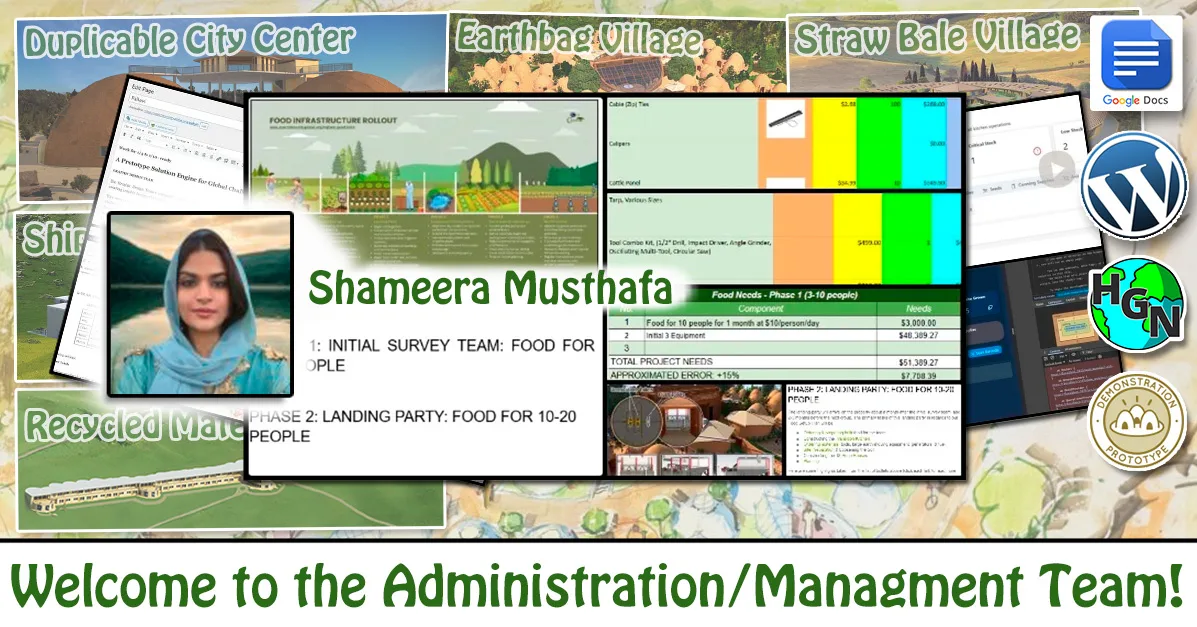
Shameera has experience in data analysis, visualization, and reporting, with a focus on translating complex datasets into clear and actionable insights. She believes in leveraging data to improve decision-making, optimize resource use, and contribute to sustainable and scalable solutions. She has demonstrated success creating data-driven reports and visualizations that support effective communication and informed decision-making for both technical and non-technical audiences. As a member of the One Community team, Shameera has contributed to the development of the Highest Good Energy report by creating data visualizations and supporting written content that communicate cost structures, energy demand patterns, and system scalability across multiple phases of the project. Her work includes designing charts such as cost breakdowns, cumulative analyses, and energy demand comparisons, as well as refining technical sections to improve clarity and completeness, with an emphasis on accuracy and effective communication of data.
WELCOME TO THE TEAM SHAMEERA!
FOLLOW ONE COMMUNITY’S PROGRESS (click icons for our pages)
INVESTOR PAGES
GET INVOLVED
Cooperatively Solving Global Problems – One Community Weekly Progress Update #690
Cooperatively solving global problems is at the heart of everything we are building at One Community. As an all-volunteer organization working for “The Highest Good of All,” we are open sourcing and free sharing a self-replicating model that integrates sustainable food, energy, housing, education, economics, and social architecture. Through global stewardship practices and a focus on fulfilled living, we are evolving sustainability and creating collaborative teacher/demonstration hubs to help regenerate our planet and build a world that works for everyone.
- Here’s our project overview
- Here’s our world-change methodology
- Here’s how this becomes self-replicating
- Here’s how we are open source and free-sharing all the do-it-yourself designs
OUR MAIN OPEN SOURCE HUBS
Click on each icon to be taken to the corresponding Highest Good hub page.
One Community’s physical location will forward this movement as the first of many self-replicating teacher/demonstration communities, villages, and cities to be built around the world. This is the June 8, 2026 edition (#690) of our weekly progress update detailing our team’s development and accomplishments:
Cooperatively Solving Global Problems
One Community Progress Update #690

DONATE | COLLABORATE | HELP WITH LARGE-SCALE FUNDING
CLICK HERE IF YOU’D LIKE TO RECEIVE AN EMAIL EACH WEEK WHEN WE RELEASE A NEW UPDATE
YOU CAN ALSO JOIN US THROUGH SOCIAL MEDIA
ONE COMMUNITY WEEKLY UPDATE DETAILS
HIGHEST GOOD HOUSING PROGRESS
One Community is cooperatively solving global problems through Highest Good housing that is artistic and beautiful, more affordable, more space efficient, lasts longer, DIY buildable, and constructed with healthy and sustainable materials:
- Learn about: Our Upcoming Crowdfunding Campaign
- Learn about the different village models and cooperatively solving global problems: 7 Sustainable Village Models
- Visit the open source portals for the first two: Earthbag Village OS Hub | Straw Bale Village OS Hub
This week, Chanikya Sita (Volunteer Civil/Transportation Engineer) continued working on the Sustainable Parking Lot Construction Guide AutoCAD sheets. He also conducted research for Task 862 covering land purchasing and transportation infrastructure due diligence considerations. This included reviewing and documenting official U.S. design standards such as AASHTO, MUTCD, NFPA 1, IFC, ADA requirements, Clean Water Act Section 404, FEMA flood zone requirements, and ASTM geotechnical testing standards. The research findings were compiled into a formatted document covering legal due diligence, fire apparatus access requirements, road geometric design standards, ADA accessibility requirements, environmental and wetland regulations, geotechnical soil requirements, and a pre-purchase due diligence cost estimate table. This work contributes to cooperatively solving global problems by providing accessible infrastructure planning and due diligence resources that support informed and sustainable development decisions. See below for some of the pictures related to this work.
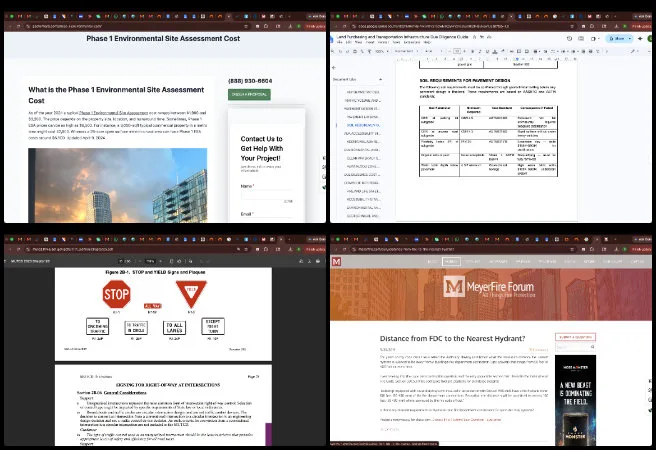
Devendranath Chowdary Maganti (Administrative Assistant) continued working on Aircrete documentation by improving existing summary graphs and incorporating new findings into the report document to enhance the presentation and interpretation of project data. He reviewed the Aircrete process, testing scenarios, and supporting datasets to ensure the visualizations accurately reflected the available information. He also organized and analyzed data from spreadsheets to create additional graphical representations, summary tables, and explanatory content for key metrics and observations. In addition, he reviewed the Highest Good Energy report and presentation slides to gather ideas and requirements for developing a visualization dashboard and to better understand effective methods for presenting project data to different audiences. He also supported Administration Team tasks and assisted with related administrative responsibilities as needed. His efforts support cooperatively solving global problems by improving how sustainable construction and energy data are organized, communicated, and understood. Below, you’ll find some images of this work.
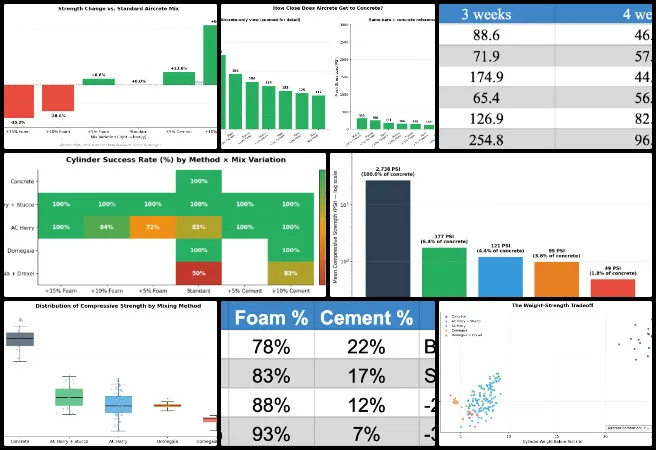
Rajeshwari Bhirud (Software Engineer), working as a web designer, continued focusing on the Vermiculture Eco-toilet Design webpage. She configured interactive image collages that redirect users to detailed source documentation, improving site navigation and user experience. She ensured proper image formatting, responsiveness, and consistency across all related pages. Additionally, Rajeshwari finalized detailed documentation for the Vermiculture Composting project, including the Slider Design and Calculations section, Structural Layout tables, and Devices tables. She consolidated all project-related Excel sheets into the primary blog tracking spreadsheet to maintain a single, centralized source of information. She also verified that all images were properly logged and included accurate redirection links, ensuring seamless access to supporting documentation and resources. Her work supports cooperatively solving global problems by improving access to organized, open-source sustainability knowledge and technical resources. Review the most recent work in the images below.
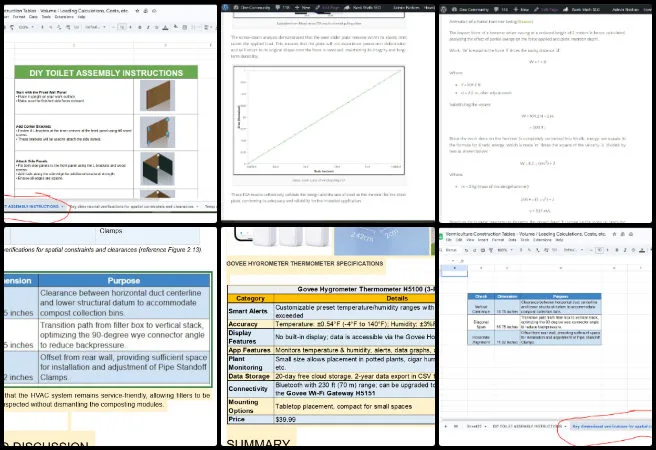
Rishi Chakrapani (Mechanical Engineer) continued working on the Vermiculture Toilet. He completed the sensor selection report and proofread it to improve clarity, accuracy, and organization while ensuring that sufficient research and supporting information were included. The separator platform loading and calculations cost analysis was also completed, and appropriate images for all listed parts were added to the documentation to provide clear visual references and improve the overall presentation of the report. His contributions support cooperatively solving global problems through the development of well-documented, open-source engineering solutions for sustainable sanitation systems. Below, you’ll find some images of this work.
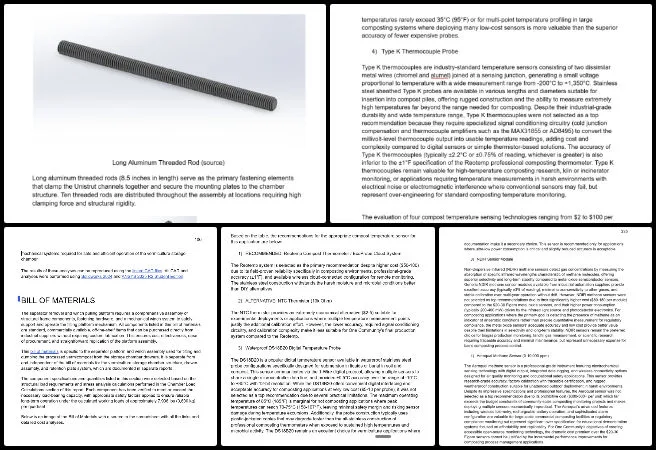
DUPLICABLE CITY CENTER PROGRESS
One Community is cooperatively solving global problems through a Duplicable and Sustainable City Center that is LEED Platinum certified/Sustainable, can feed 200 people at a time, provide laundry for over 300 people, is beautiful, spacious, and saves resources, money, and space:
- Learn about this building and its function and cooperatively solving global problems: Duplicable City Center Open Source Hub
This week, Bevan Chiu (Mechanical Engineer) continued his work finishing the City Center Eco-spa Designs. He worked on updating the thermal FEA analysis supporting the insulation sweet spot study and final report. For the thermal FEA analysis, he calculated conductive heat loss from simulation results to determine R-values and estimated operating costs for various insulation thicknesses. He updated the insulation sweet spot discussion and relocated it to the Thermal FEA section of the report. He also prepared a preliminary Energy Requirements Conclusion covering operating conditions with the spa cover fully open, partially open, and closed. In addition, he incorporated the updated bill of materials into the report and made related revisions to maintain consistency with the latest results. This open source Duplicable City Center project focused on cooperatively solving global problems. For more details, refer to the image below.
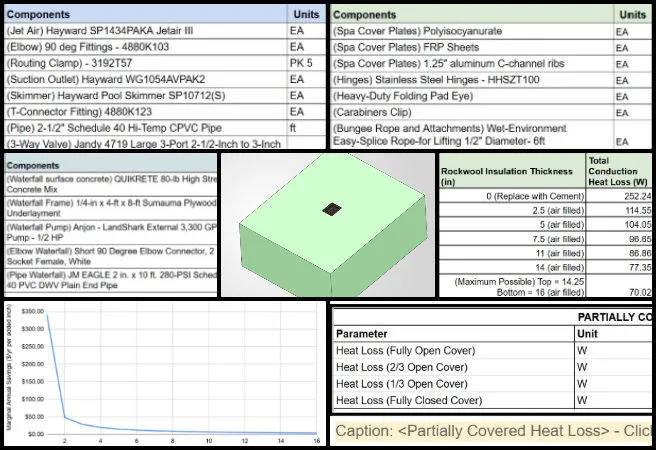
Shivarama Krishna Revanuru (Mechanical Engineer) continued working on the Duplicable City Center design. He focused on preparing the project report by adding images and making minor corrections. Minor updates were made to the SPA cover CAD model, and the FEA and thermal analyses were modified based on updated conditions and feedback received from teammates. Collaboration with team members continued on the thermal analysis aspects of the SPA project, including discussions and updates related to the analysis results and modeling approach. This open source Duplicable City Center project is cooperatively solving global problems. The images below illustrate aspects of this work.
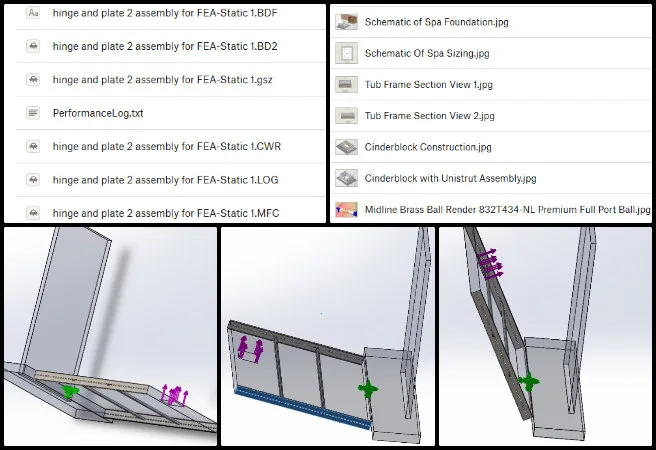
HIGHEST GOOD FOOD PROGRESS
One Community is cooperatively solving global problems through Highest Good food that is more diverse, more nutritious, locally grown and sustainable, and part of our open source botanical garden model to support and share bio-diversity:
- Learn about the structures and cooperatively solving global problems: Hoop House Hub | Aquapini & Walipini Open Source Hub
- See what we’ll be growing: Gardens & Hoop Houses | Large-scale Structures | Food Forest | TA
This week, the core team continued working on the Master Tools, Equipment, and Materials/Supplies List for the Large-scale Garden, Botanical Garden, and other Highest Good Food components, focusing on electrical, gardening, composting, and fencing project entities. They updated edits and comments regarding tool replacement options. Jin, a former Pioneer from a decade ago, joined the Monday Night Call, and the team was pleased to reconnect with him. Their efforts contribute to One Community’s mission of cooperatively solving global problems through open-source collaboration, ecologically responsible innovation, and a focus on long-term global development. The collage below portrays the team’s efforts and achievements for the week.
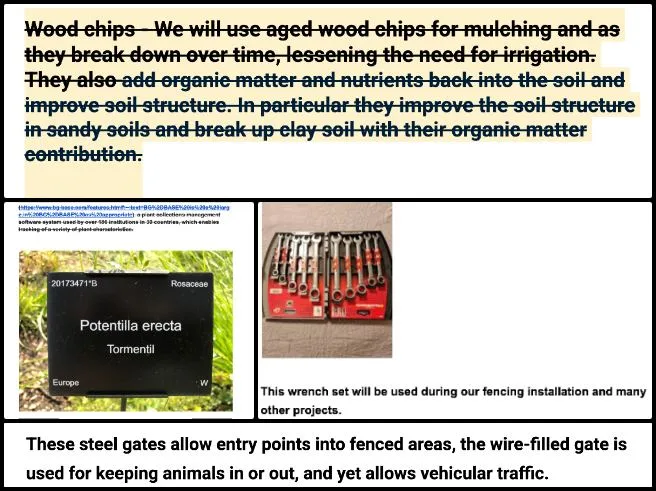
Chelsea Mariah Stellmach (Project Manager) continued her work on several One Community projects, including the phased rollout, kitchen inventory software build, and governance software design mockup. She focused on bringing these efforts closer to completion by addressing outstanding tasks and updating project materials. Chelsea also added links and photos to the rollout spreadsheet to improve its organization and move it toward a finished state. These contributions support cooperatively solving global problems by strengthening both technical execution and design alignment across the platform. See the collage below for this week’s progress.
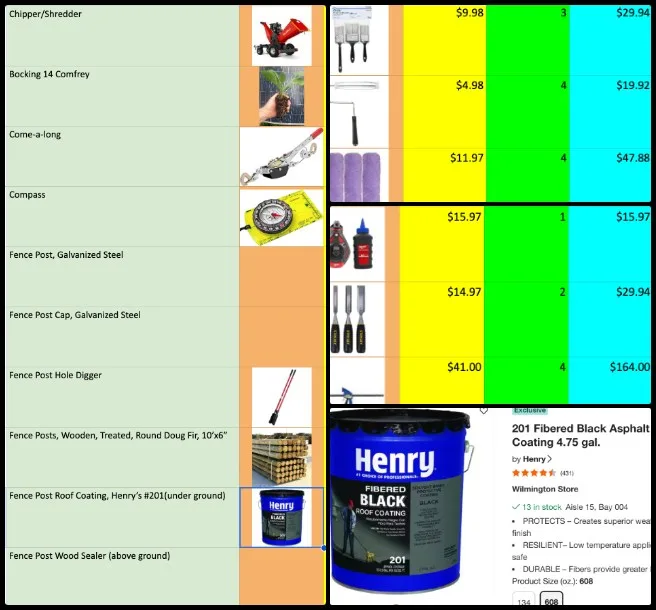
Jay Nair (BIM Designer) continued work on the Aquapini and Walipini Planting and Harvesting documents and tested the spreadsheet-based lighting energy calculator to verify the results for greenhouse applications. The testing process involved comparing calculation outputs with existing Walipini 1 lighting energy data and identifying areas requiring adjustments. In parallel, he continued building the Plant Library for Walipini 1 by compiling plant-specific data needed for the calculator, ensuring the information can be used to support future lighting energy calculations and plant growth analysis. These updates improve the stability and adaptability of shared systems, supporting the broader goal of cooperatively solving global problems. See the collage below portraying the work done this week.
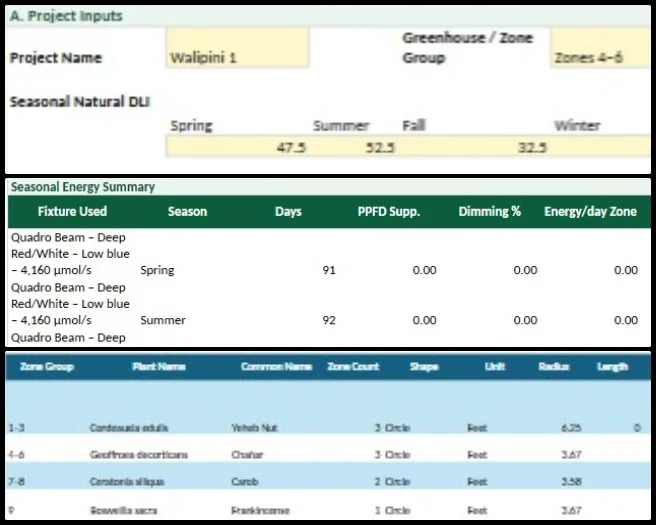
Prudhvi Marpina (Data Analyst) continued supporting the Highest Good Food website development, Highest Good Network software development, marketing, and administration activities. He worked on the Food Procurement and Storage page by implementing corrections to content, images, and page formatting based on review feedback, and updated the WordPress page to reflect the latest revisions. He also contributed to Phase 5 governance by updating action items across multiple deliverables, refining action item tables, writing detailed descriptions, and making adjustments to documentation to align with project requirements. In addition, he reviewed the progress of related Figma designs and coordinated documentation updates to ensure consistency between design planning and development deliverables. This work supports One Community’s mission of cooperatively solving global problems. See below for images showcasing his work.
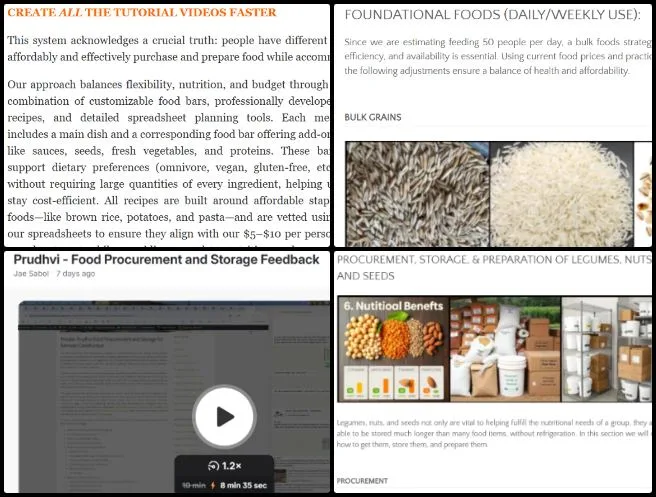
Shivangi Varma (Architectural Designer and Planner) continued working on the redesign of the Highest Good Food overall presentation. She advanced the ADA access diagram set toward final review, continued editing the pending Highest Good Food diagrams, and further developed the sun study diagrams. She also finalized the dimensioned landscape renders for the Open Source Hub page pending graphics and prepared them for submission for review. This work supports One Community’s mission of cooperatively solving global problems. See below for images showcasing her work.
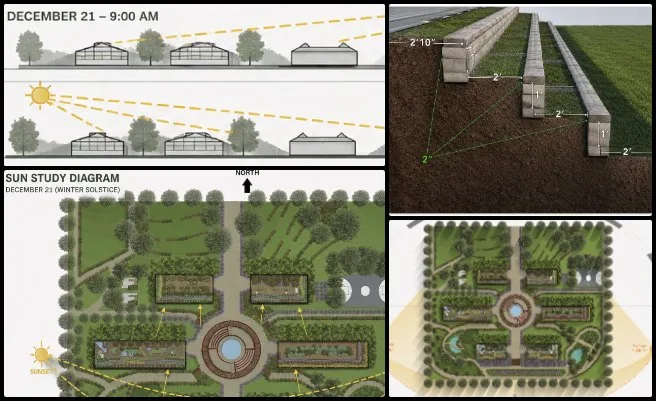
HIGHEST GOOD ENERGY PROGRESS
One Community is cooperatively solving global problems through Highest Good energy that is more sustainable, resilient, supports self-sufficiency and includes solar, wind, hydro and more:
- Learn about the open source sustainable-energy foundations and cooperatively solving global problems: Solar, Hydro, and Wind
- Explore our research into the most sustainable products and companies for saving water and energy: Insulation, Eco-laundry, Lightbulbs and Light Bulb Companies, Doors and Door Companies, Windows and Window Companies, Toilets, Faucets and Faucet Accessories, Urinals, and more.
This week, the core team continued contributing to the Highest Good Energy initiative. They integrated rollout phase information from the Philo page and food infrastructure documents into the updated food infrastructure page and made edits to improve consistency across the content. They also continued researching pricing information and sources for tools and equipment required for Phase 2 food infrastructure rollout projects to support updates to the cost analysis for the food infrastructure phases. This work contributes to cooperatively solving global problems, as shown in the collage below.
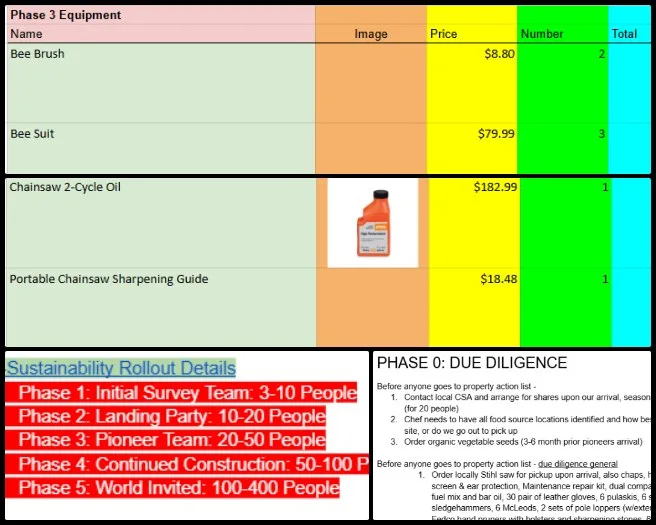
Shameera Musthafa (Data Analyst) continued contributing to the Highest Good Energy initiative. She supported OC Administration and the PR Review Team by coordinating PR review workflows, reviewing Admin and PR team work, and providing feedback to improve accuracy, clarity, and consistency across deliverables. Project images were organized and categorized, visual collages were created, and blog-related content was finalized as part of PR review coordination. Her work also included contributing to the Highest Good Energy report pages and related visualizations, managing the One Community Bluesky social media account through project update posts, supporting the hiring process by interviewing and evaluating candidates, and completing end-to-end testing of the PR Review Team Admin Dashboard by validating workflows, identifying issues, and documenting results. This work plays a key role in cooperatively solving global problems. See below for images showcasing her work.
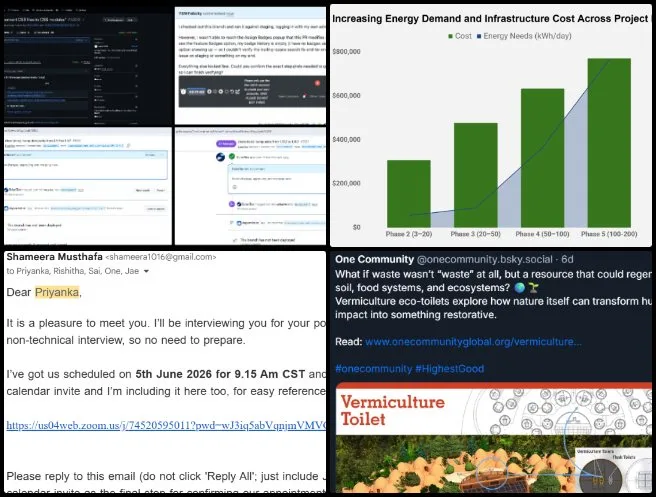
HIGHEST GOOD EDUCATION PROGRESS
One Community is cooperatively solving global problems through Highest Good education that is for all ages, applicable in any environment, adaptable to individual needs, far exceeds traditional education standards, and more fun for both the teachers and the students. This component of One Community is about 95% complete with only the Open Source School Licensing and Ultimate Classroom construction and assembly details remaining to be finished. We’ll report on the final two elements to be finished as we develop them.
With over 8 years of work invested in the process, the sections below are all complete until we move onto the property and continue the development and open sourcing process with teachers and students – a development process that is built directly into the structure of the education program and everything else we’re creating too:
- Program Overview: Education Open Source Hub
- How the components work together in designing human orchestrated eco-abundance and cooperatively solving global problems: How to use the Education for Life Program
- Lesson Plans for Life – Lesson Plans How-to
- Foundations of Outstanding Leaders, Teachers, and Communicators
- Curriculum for Life
- Teaching Strategies for Life
- Learning Tools and Toys for Life
- Evaluation and Evolution
Highest Good Education: All Subjects | All Learning Levels | Any Age – Click image for the open source hub
HIGHEST GOOD SOCIETY PROGRESS
One Community is cooperatively solving global problems through a Highest Good society approach to living that is founded on fulfilled living, the study of meeting human needs, Community, and making a difference in the world:
- Read the Highest Good society overview and cooperatively solving global problems: Highest Good Society
- Learn about the model for fulfilled living and sharing: A Day in the Life
- Learn about the 4 economic models: RBE | For-profit | Non-profit | Entrepreneurship
- Learn about our open source community collaboration and management software: The Highest Good Network
This week, the core team completed 44 hours managing volunteer work reviews, handling emails, overseeing social media accounts, supporting web development, and identifying and integrating bug fixes for the Highest Good Network. They also interviewed and onboarded new volunteer team members. Additionally, they produced and integrated the video above, which highlights how making a sustainable life accessible to everyone serves as a foundational element of One Community’s broader mission. The following images showcase highlights of this work. These updates strengthen cooperatively solving global problems by improving consistency and organization.
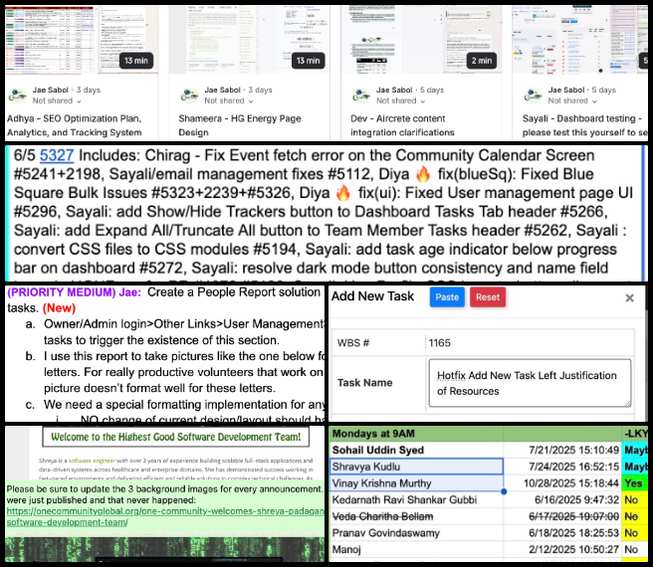
Pooja Kulkarni (UI/UX Designer) continued designing and refining multiple variations of the Highest Good Network Total Organization Governance Summary dashboard to support public reporting, executive visibility, and governance analytics. Her focus was on presenting complex governance, proposal, and consensus data in a clear, organized, and user-friendly way. She explored different layouts for the proposal pipeline, active proposals, participation metrics, governance health indicators, approval ratios, domain highlights, and transparency records. Through these variations, she experimented with visual hierarchy, spacing, card-based layouts, charts, navigation structure, and dashboard readability. A key focus of her work was simplifying large-scale community governance information into a clean product experience that supports transparency, collaboration, and better decision-making. She also continued refining the visual system and information architecture so the dashboard feels more consistent, accessible, and aligned with One Community Global’s mission of sustainability and community-centered participation. This work contributes to cooperatively solving global problems; the images below highlight key aspects of her work.
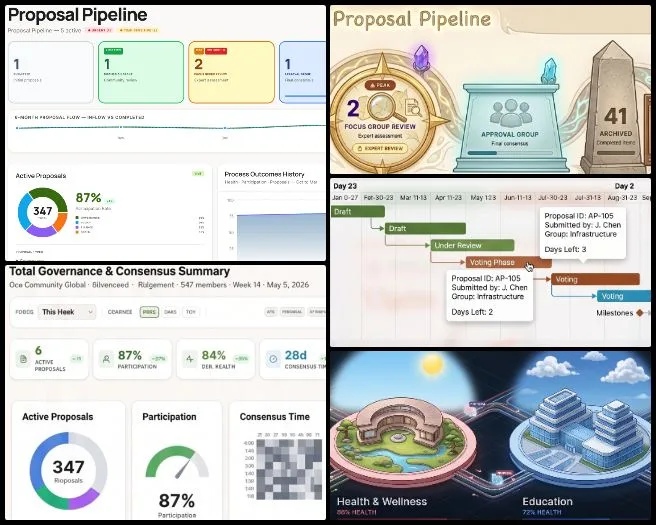
Valentina Collini (Designer) continued creating designs that support establishing the global eco-renaissance. She focused on website development and content updates for One Community. Her work included creating new team biographies and announcement images while ensuring all content followed organizational standards and formatting requirements. Existing bios and announcement images were also reviewed and corrected to improve accuracy, consistency, and presentation across the website. Additionally, feedback from team leaders was implemented, image details were verified, and published content was refined to maintain quality and professionalism throughout the site. To learn more about how this work supports cooperatively solving global problems, visit the Highest Good Society and Highest Good Network pages. See the collage below to view her achievements this week.
ADMINISTRATION TEAM
The Administration Team’s summary, which covers their work on the Highest Good Network, was managed by Devendranath Chowdary Maganti (Data Analyst) and includes Adhya Rastogi (Business Analyst), Divanshu Bakshi (Team Admin), Hemanth Sai Venkata Srinivasa Kumar Nidamanuru (Administrative Assistant), Leo Lishin Shiu (Software Engineer), Mridul Bhushan (Volunteer Project Strategy Analyst and Team Administrator), Olawunmi “Ola” Ijisesan (Administrative and Management Support), Pranjul Garg (Business Analyst), Priyanshi Sharma (Data Analyst and Team Administrator), Rishitha Adepu (Administrator), Sai Sree Dongari (Data Analyst), Sayantan Paul (Frontend Tester and Software Team Administrator), Shravya Chilukoori (Software Developer), and Tanmay Nihal Harwani (Data Scientist). The Administration Team supports the Highest Good Network, a tool designed to track and measure progress while developing systems that contribute to cooperatively solving global problems. Through administrative support, documentation, testing, training, recruitment, analytics, and content management, the team helps advance this mission, aligning with One Community’s vision of building a replicable and sustainable future model.
This week, Adhya worked on end-to-end testing of the Total Organization Summary Dashboard by validating dashboard components, charts, reporting behavior, and data consistency across multiple sections. She tested volunteer activity tracking, status metrics, maps, charts, and reporting features using test accounts and documented findings, discrepancies, and potential issues for further investigation. She also updated the HGN Bugs and Features tracking spreadsheet by organizing and documenting 13 identified issues to improve tracking and follow-up. In addition, she reviewed testing feedback, participated in discussions regarding testing priorities, and prepared detailed updates on dashboard functionality. Alongside software testing, she worked on Google Ads optimization by refining keywords, improving ad copy, implementing negative keywords, and reviewing campaign performance. She also continued Reddit engagement activities through discussion-based participation and monitoring engagement patterns. As part of her administrative responsibilities, she reviewed volunteer submissions, provided feedback, organized documentation, assisted with blog updates, created team collages, reviewed administrative work, and evaluated an Admin-in-Training’s progress and submitted materials. These testing, analytics, and administrative efforts contribute to cooperatively solving global problems by improving system reliability, data accuracy, and operational coordination.
Divanshu reviewed, tested, and published four Mastodon updates while ensuring alignment with formatting standards, hashtag guidelines, and posting procedures. He tested PR-related bug reports, validated expected behavior, and documented two action items in tracking systems and the HGN Bugs I document. He also developed a Python script to prevent duplicate image postings, improving posting accuracy and workflow efficiency. In addition, he completed routine Mastodon archive data extraction and updated the Weekly Mastodon Report. Hemanth tested 28 pull requests in a local environment across dashboards, analytics, forms, inventory, reports, charts, timers, filters, and UI components in both light and dark modes. He approved valid PRs and documented reproducible issues including filter inconsistencies, chart rendering errors, dropdown misalignments, dark mode styling defects, and backend-to-frontend data mismatches. These testing, automation, and quality assurance efforts contribute to cooperatively solving global problems by strengthening platform stability and user experience.
Leo compiled the 17LeDCC team summary and created collages for each team member for the weekly blog. He reviewed social media raw data loaded by other administrators, loaded Facebook and Instagram insights into dashboards, and scheduled weekly posts for planned publication. Mridul completed One Community administrative work for Blog #689 by reviewing and finalizing weekly summaries across multiple teams, ensuring consistency in structure, grammar, formatting, and guideline compliance. He also reviewed a dry run submission, provided corrective feedback, and finalized recommendations, while continuing Twitter/X and LinkedIn moderation and weekend analytics tasks. These content management and coordination efforts contribute to cooperatively solving global problems by improving communication systems and organizational alignment.
Ola audited social media dashboards for data accuracy, verified scheduled image links, organized digital workspace folders, and compiled weekly task and reporting documentation. Pranjul completed administrative training by publishing the Blog Post Sustainable Human Support Webs #688, auditing team outputs to identify errors, researching publishing workflows for Tumblr and Medium, and reviewing operational documentation as part of timelog onboarding. These administrative, auditing, and workflow development efforts contribute to cooperatively solving global problems by improving system organization and publishing consistency.
Priyanshi completed frontend QA testing and usability validation for the Lessons Learned Add page in the HGN platform, verifying form rendering, dropdown behavior, tag management, file uploads, button visibility, dark mode compatibility, and responsiveness. She confirmed correct input handling and identified UI improvements related to contrast, spacing, and layout efficiency for further refinement under PR #3510. Rishitha managed blog consolidation, SEO optimization, bio updates, Threads content management, dashboard updates, and volunteer tracker maintenance using Python and Excel workflows. These QA and administrative efforts contribute to cooperatively solving global problems by improving accessibility, usability, and data management systems.
Sai Sree organized PR review materials, created collages, tested PR dashboards in development environments, and held interviews while documenting hiring feedback. Sayantan handled OC administration tasks, PR reviews, bug tracking, senior admin feedback management, and software planning for user management and inventory systems, including backend and frontend integration research and testing of calendar, event, and dashboard workflows. These administrative, testing, and system design efforts contribute to cooperatively solving global problems by improving software structure, governance, and workflow efficiency.
Shravya tested multiple PRs in the development environment, reviewed team progress, provided feedback, and supported weekly blog coordination by organizing and editing submitted content. Tanmay managed Total Organization Summary Dashboard testing, prepared collages, created the weekly blog, updated tracking sheets, assigned tasks for identified issues, and ensured consistency across administrative deliverables. These testing, coordination, and dashboard management efforts contribute to cooperatively solving global problems by improving reporting accuracy and team collaboration. See the collage below for highlights of this week’s work.
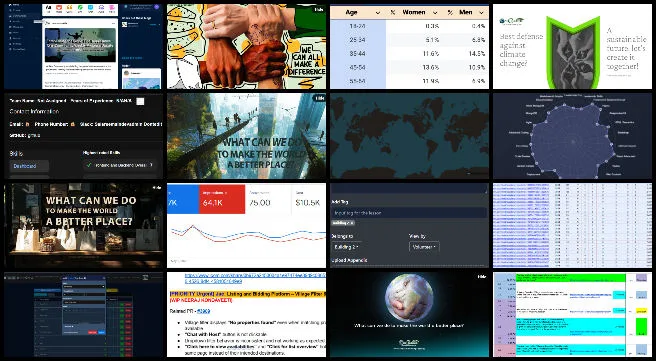
HIGHEST GOOD NETWORK PROGRESS
One Community is cooperatively solving global problems through open source Highest Good Network® software that is a web-based application for collaboration, time tracking, and objective data collection. The purpose of the Highest Good Network is to provide software for internal operations and external cooperation. It is being designed for global use in support of the different countries and communities replicating the One Community sustainable village models and related components.
- Learn about our open source community collaboration and management software: The Highest Good Network
This week, the core team continued testing Highest Good Network pull requests. They tested HGN pull requests on the Main branch and confirmed 13 fixed PRs. The items identified as not fixed were Dashboard Search Filters Dropdown Misalignment UI Bug PR 4942, Educator Task Submissions UI Implementation #4207, Create appropriate auto-poster for Bluesky Social 3645+1452, Improve Materials Table Usability Search Sort Pagination #4648, Fix Create New Team Page Not Displayed Error PR #4813, Total Hours Worked Not Matching Leaderboard PR2066, Add Info Tooltip for Drop-off and No-show Rates Table in the Participation Page PR 4622, Phase 3 Missing Apply and Clear Buttons in Search Filters Section PR4729, and Align Event Details UI to Standard Event Page Layout in Registration Status Page PR4665. Additionally, three PRs could not be tested due to the absence of data on the Main branch. This effort highlights One Community’s commitment to cooperatively solving global problems. See the Highest Good Society and Highest Good Network pages, and the collage below, for an overview of the team’s contributions.
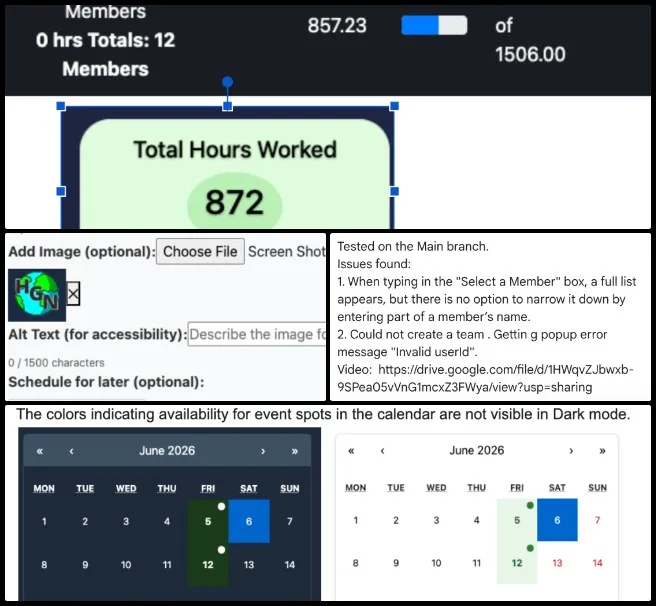
ALPHA SOFTWARE DEVELOPMENT TEAM
The Alpha Software Team, working on the Highest Good Network software, was managed by Lin Khant Htel (Frontend Software Developer). The team includes Maithili Kalkar (Software Engineer), Som Ramnani (Software Engineer), Sai Sandeep Koritala (Software Engineer), and Casstiel Pi (Software Engineer). The Highest Good Network software is a key part of creating measurable global transformation. The software supports social architecture, construction, production, and maintenance processes that contribute to the open source project and resilient ecosystems. Designed to be portable and scalable, the Highest Good Network is ideal for off-grid and sustainable living communities, reflecting One Community’s open source commitment to cooperatively solving global problems.
This week, Lin managed the team summary, reviewed PR #5238 by examining the code and running tests locally, and confirmed that all tests passed. He also checked Alpha team members’ weekly summaries, photos, and videos as part of regular team management responsibilities. These activities remained aligned with the team’s efforts toward cooperatively solving global problems while maintaining visibility into ongoing development work and project progress.
Casstiel worked on the Apply and Reset filter issue in the Global Distribution and Project Status Overview section of the BM Dashboard Total Construction Summary page. He reviewed the existing frontend implementation and found that the component did not contain dedicated Apply or Reset button logic, while the related code only retrieved the complete project and location dataset without backend filtering. He implemented a frontend-based solution by adding Apply and Reset handlers, updating filtering behavior, restoring the full dataset when needed, refreshing map markers, and updating project counts. He also evaluated scalability concerns and documented considerations related to cooperatively solving global problems through efficient data management.
Maithili completed work on the email sending feature, including a fix for handling comma-separated email addresses to improve parsing and delivery to multiple recipients. A pull request was created for the changes, and all associated tests passed. She also continued investigating email delivery failures by examining authentication and configuration inconsistencies within the email service. Her analysis focused on determining whether SMTP configuration or OAuth-based authentication was the appropriate approach, with the work contributing to cooperatively solving global problems through improved communication reliability.
Sai focused on enhancing the volunteer work hour distribution chart in PR 2238. He resolved a backend issue to ensure that weekly committed hours were fetched and filtered only for active organization members. Using the updated data, he integrated backend and frontend changes to implement the distribution chart through a doughnut chart visualization. He also refactored parts of the frontend architecture to accommodate the updated API payload structure and performed validation checks to maintain application stability, with these improvements relating to cooperatively solving global problems.
Som resolved merge conflicts in PR #4215 for Badges.jsx by cleaning up conflicting imports, preserving the current BadgeReport structure, and retaining the newer CSS module styling. He corrected a stylesheet import, removed conflict markers, staged the resolved file, and verified the changes through targeted testing. He also worked on PR #5324 for Email Management by addressing SonarCloud issues, refactoring JSX rendering logic, and reducing the complexity of form validation through helper functions. These updates formed part of ongoing efforts focused on cooperatively solving global problems. See the collage below to view the team’s work.
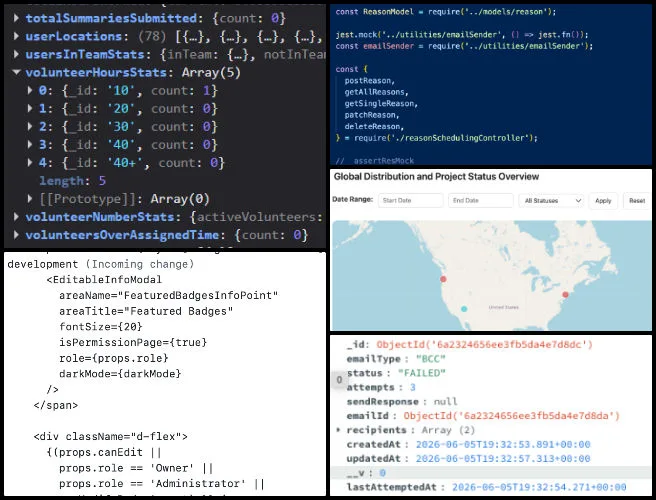
BINARY BRIGADE SOFTWARE DEVELOPMENT TEAM
The Binary Brigade Team, which presented their work on the Highest Good Network software, was managed by Roshini Seelamsetty (Software Engineer) and included Harsha Rudhraraju (Software Engineer). The Highest Good Network software is our tool for managing and objectively measuring progress, ensuring that all contributions are tracked and aligned with our mission of cooperatively solving global problems. It supports social architecture, construction, production, and maintenance processes that contribute to open-source projects and resilient, sustainable ecosystems.
This week, Harsha worked on resolving merge conflicts, reviewing pull requests, and addressing dark mode UI issues. He resolved merge conflicts in PRs 2057, 5311, 4602, and 2037, reviewed test failures, synchronized branches with the latest codebase changes, updated styling for date selection options and other UI components to improve consistency across light and dark themes, fixed issues related to the “More” option button, introduced shared styling to reduce code duplication, addressed review feedback, and continued work on merge conflicts and review comments in PRs 4815 and 1968. Roshini worked on fixing mentor label text visibility issues in the Role Distribution chart on the Total Org Summary Dashboard by updating frontend behavior to improve label visibility and reduce overlap in dark mode, while also investigating backend date range alignment issues affecting the chart data. She also worked on fixing incorrect Blue Square data filtering in the Teams and Blue Squares dashboard by analyzing and updating both frontend and backend logic related to weekly and custom date range filtering, where dashboard counts were displaying inconsistent results. In addition, she completed changes for the Global Volunteer Network map issue in the Total Org Summary Dashboard under PR #5305 by implementing updates that restored map population functionality. See the Highest Good Society and the Highest Good Network pages for more on how this supports cooperatively solving global problems. Highlights of the team’s contributions are shown in the collage below.
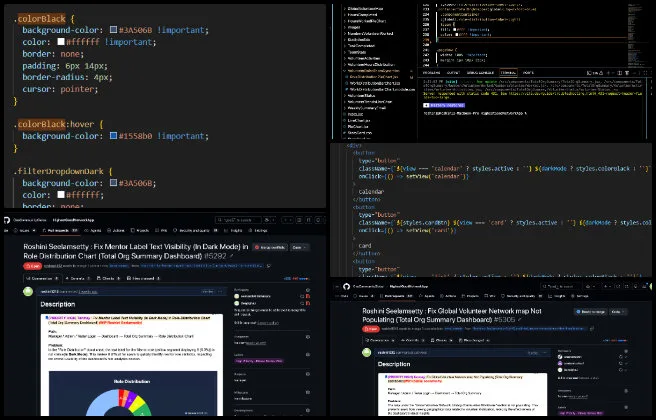
CODE CRAFTERS SOFTWARE DEVELOPMENT TEAM
The Code Crafters Team’s summary, covering their work on the Highest Good Network, was managed by Pranjul Garg (Business Analyst) and Sphurthy Satish (Software Engineer), and included Akshith Kumar Reddy Balappagari Gnaneswara (Software Engineer – Full Stack) supporting One Community’s mission of cross-functional software development and system improvements. This work supports cooperatively solving global problems by improving data accessibility, analytics, and tracking functionality.
This week, Akshith updated the Activities List for Phase 3 task 4592 to add a validation message for past dates, resolving merge conflicts and fixing SonarQube issues. For the Phase 3 Reports task, he corrected the no-show rate insights progress bar to make it proportional to the percentage, addressing related conflicts and SonarQube issues across tasks 4692 and 4723. He also updated the CSS file on the Job Analytics Page to repair the resume upload functionality and added input field validation to the specific application page template form, resolving associated merge conflicts and SonarQube issues. These enhancements contribute to cooperatively solving global problems by improving system reporting and database precision.
Sphurthy updated the Team Member Tasks review workflow to fix an issue where the Review button became disabled for all viewers when a task owner was on time off. She removed the styling that applied reduced opacity and disabled pointer events to the button wrapper, and configured the system to pass the time-off value directly to the ReviewButton component. The ReviewButton component was updated to accept this property and restrict the disabled state specifically to a candidate’s own “Submit for Review” action when the task is unsubmitted. Her implementation uses the native disabled attribute and an explanatory tooltip to prevent keyboard bypass while maintaining reviewer access to dropdown actions. She verified the changes by testing that users on time off cannot submit their own tasks, reviewers retain access to review actions for submitted tasks, keyboard interactions do not bypass the disabled state, future scheduled time off does not block submissions, and the interface displays in dark mode. These workflow updates contribute to cooperatively solving global problems by optimizing administrative access, team visibility, and platform management capabilities. See the Highest Good Society and the Highest Good Network pages to learn more about how this work supports cooperatively solving global problems. The collage below offers a visual representation of the team’s work for the week.
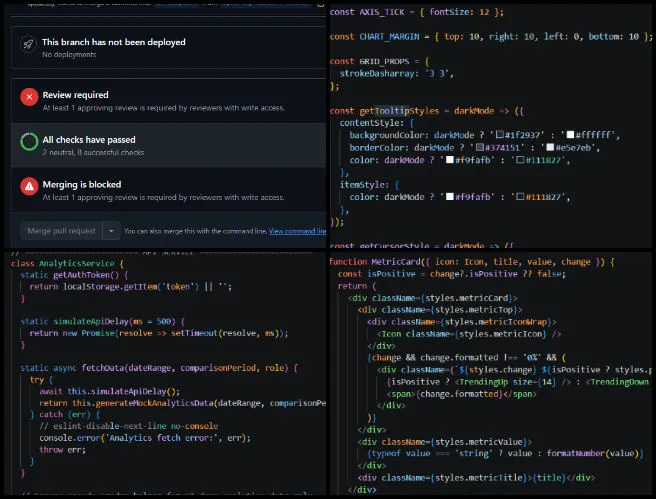
DEV DYNASTY SOFTWARE DEVELOPMENT TEAM
The Dev Dynasty Team’s summary, covering their work on the Highest Good Network, was managed by Tanmay Nihal Harwani (Data Scientist) and Neeraj Kondaveeti (Software Engineer). The team includes Adithya Cherukuri (Volunteer Software Engineer), Rithika Pai (Software Engineer), and Sireesha Kunchala (Software Engineer). Their work supports One Community’s mission of cooperatively solving global problems through cross-functional software development and ongoing system improvements.
This week, Adithya worked on enhancements to the Planned versus Actual Cost graph within the HGN Software Development project by adding a custom hover tooltip that displays planned cost, actual cost, and variance percentage, implementing conditional formatting to highlight over-budget projects in red and under-budget projects in green, updating dark mode styling to improve tooltip readability across themes, testing the chart with various project and date filters, adjusting axis spacing, submitting the pull request for review, addressing SonarQube code quality issues, verifying functionality across themes, and reviewing uploaded images. This work contributes to One Community’s mission of cooperatively solving global problems through improved resource tracking and operational analysis capabilities.
Neeraj completed the Kitchen Inventory Management Phase 6 task by implementing inventory search functionality, connecting the search bar and search state to rendering logic, adding case-insensitive item filtering, updating tab views to display matching inventory items, resetting search input when switching tabs, conditionally displaying the clear button, hiding preserved stock notifications during active searches, adding a no-results message, updating CSS modules to support the new state and dark mode compatibility, and validating behavior across inventory categories. He also began work on the Listing and Bidding Platform Village Filter and Navigation Fixes task by investigating village filter matching issues, restoring Chat with Host functionality, correcting dropdown filter behavior, validating routing for availability and overview links, ensuring proper navigation, and testing related workflows. These enhancements contribute to cooperatively solving global problems by improving data accessibility, analytics, and inventory management capabilities.
Rithika worked on multiple frontend and backend pull requests for the BM Dashboard by rebasing branches onto development, resolving merge conflicts across numerous frontend and backend files, fixing CI test failures, addressing Netlify build issues, resolving SonarQube findings, and bringing issue counts to zero for the Smart Insights and Predictive Utilization Analysis task. She also completed rebasing and conflict resolution work for the Network Failure Handling and Upload Status Feedback task, addressed backend conflicts and frontend SonarQube issues through code optimizations, and resolved extensive merge conflicts and post-rebase build failures for the Reason of Stoppage of Tools fix across several dashboard components and stylesheets contributing to One Community’s mission of cooperatively solving global problems.
Sireesha focused on resolving front-end issues and codebase discrepancies across tasks 4683, 4706, and 4742 by addressing CSS styling conflicts, fixing layout alignment bugs, resolving complex Git merge conflicts, improving repository stability, and updating user interface layouts to align with design specifications while maintaining consistency across components. See the Highest Good Society and the Highest Good Network pages to learn more about how this work supports Cooperatively Solving Global Problems. The collage below offers a visual representation of the team’s work for the week.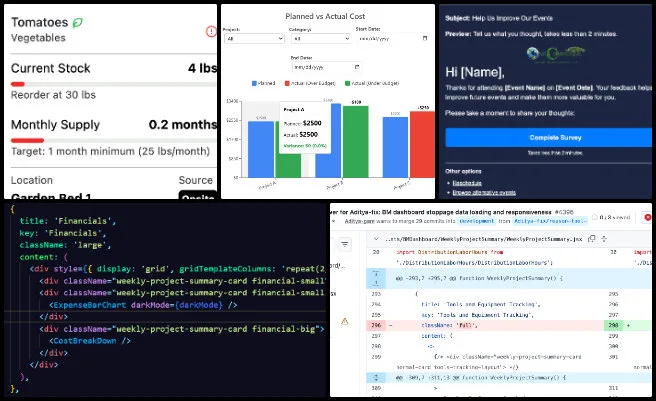
LUCKY STAR SOFTWARE DEVELOPMENT TEAM
The Lucky Star Team’s summary, covering their work on the Highest Good Network, was managed by Tanmay Nihal Harwani (Data Scientist). The team includes contributions from Veda Bellam (Software Engineer) and Shravya Kudlu (Software Development Engineer). Their work supports One Community’s mission of cooperatively solving global problems through cross-functional software development and ongoing system improvements.
This week, Shravya worked on completing test cases for PR #1874 by adding coverage for various scenarios within the ActivityLogController, addressing SonarQube quality gate errors related to the pull request, and investigating blockers affecting the required quality checks. She also contributed to the Kitchen Inventory project by creating components and adding styles to support the user interface, furthering One Community’s mission of cooperatively solving global problems through improved platform functionality.
Veda focused on two Highest Good Network software development tasks, including updating backend permission controls for the Application and Job Posting Page permission feature by adding a permissions configuration that restricts question set creation to owners and administrators by default while allowing additional access through the user interface, addressing related UI inconsistencies and bugs to align functionality with the updated permission model, and preparing the feature for review. She also continued work on the Listing and Bidding Platform by resolving conflicts in the ImageCarousel branch, addressing outstanding issues, completing the migration from .css to .module.css within the Wishlist and ImageCarousel components, and reviewing and merging the completed changes into the codebase. See the Highest Good Society and the Highest Good Network pages to learn more about how this work supports cooperatively solving global problems. Look at the collage below to view the team’s work for the week.
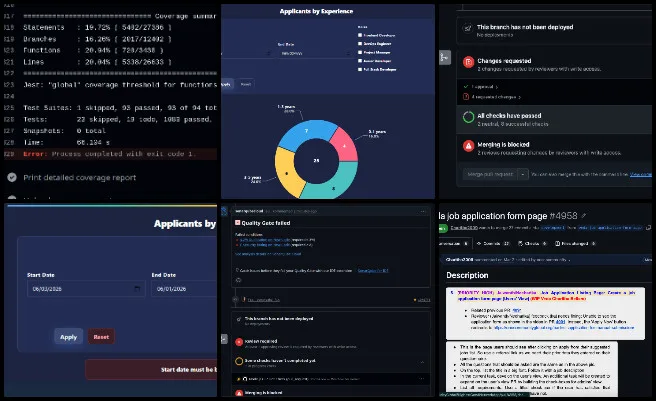
REACTONAUTS SOFTWARE DEVELOPMENT TEAM
The Reactonauts team summary, which covers their work on the Highest Good Network, was managed by Diya Wadhwani (Software Developer), and Divanshu Bakshi (Data Analyst), and it includes Aseem Deshmukh (Software Developer). This work supports cooperatively solving global problems by improving organized workflows structured processes and reliable systems that help make sustainable living more accessible to everyone.
This week, Aseem worked on PR 4310 by updating the expensebarchart.jsx component, modifying the card wrapper and error message return statement, merging the latest development branch changes into her feature branch, adjusting the container width and height to improve the chart layout, and fixing issues related to the filter functionality while supporting the goal of cooperatively solving global problems.
Diya implemented blue square overhaul updates by adding a reasontype field to the time off request schema with vacation time and other options, updating backend controllers to validate and store the new field, and adding a dropdown to schedulereasonmodal.jsx with correct payload handling and light mode styling. She also investigated a cron job issue affecting blue square records by tracing race conditions involving record save operations in processUserForBlueSquare and putUserProfile. She fixed a project assignment visibility issue by adding the missing projects field to the userprofile schema, updated assignProjectToUsers to store active assignments in projects while keeping permanent records in projecthistory, and ensured unassign actions removed entries only from active assignments. In addition, Diya resolved SonarQube quality gate issues in bluesquareemailmanagement.jsx by adding missing PropTypes for role and permission data structures while contributing to cooperatively solving global problems. To learn more about how this work supports creating a complete sustainability strategy, visit the Highest Good Society and the Highest Good Network pages. Below is the collage showcasing the Reactonauts team’s work for the week.
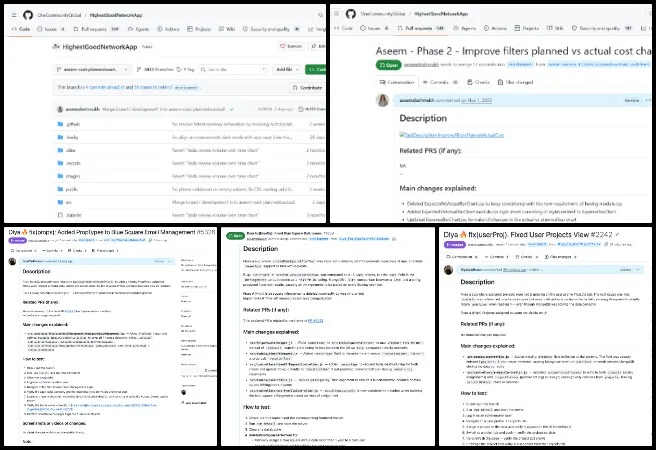
SKYE SOFTWARE DEVELOPMENT TEAM
The Skye Team’s summary, covering their work on the Highest Good Network, was managed by Sayantan Paul (Frontend Tester and Software Team Administrator) and Anthony Weathers (Software Engineer). The team includes Jaden Wong (Software Engineer), Nirali Patel (Full Stack Developer), Peterson Rodrigues dos Santos (Full-Stack Developer) and Swathi Angadi (Software Engineer). Cooperatively solving global problems is a service commitment of the Highest Good Network software which is accomplished by objectively tracking and managing progress across social architecture, construction, production, and maintenance processes, utilizing transparent, scalable systems that strengthen accountability, coordination, and resilient ecosystems.
This week, Anthony resolved merge conflicts for PR #3600 and reworked CSS styling to ensure classes were being accessed correctly. He also performed additional testing to verify that PR #3600 and its associated backend functionality were working as expected, then informed the stakeholder that the PR was ready for review again. Jaden performed QA testing on the Garden Management module by validating routing, dashboard cards, calendar sections, event cards, and navigation tabs, and confirmed overall stability and requirement completion. He also implemented a User Management section within the Listing and Bidding Platform Dashboard, adding a table that displays registered users across five fields using static mock data structured for future API integration. The section follows the existing dashboard design patterns, includes dark mode support and empty-state handling, and excludes edit, delete, search, and pagination functionality. In addition, Jaden reviewed PR #5311, PR #5281, and PR #5288, requesting changes after identifying functional and dark mode issues. These updates contribute to cooperatively solving global problems by enhancing documentation quality.
Nirali tested and reviewed the Bell Notification for Meetings feature by validating meeting scheduling, notification delivery, calendar invite behavior, and bell alert functionality. She documented known bugs, identified potential frontend improvements, and found a performance slowdown when switching accounts that requires further investigation. Due to the size of the pull request and its changes to the Header component, she recommended additional testing by another software engineer before merging. Peterson resolved conflicts in a pull request that implements a user interface improvement on the Projects page. The update modifies the filter buttons used for project membership management, so their background colors change when selected, providing clear visual feedback about the active filter. He resolved the conflicts to keep the pull request updated and ready for testing and future merging. This progress contributes towards cooperatively solving global problems through small impactful actions leading to larger, lasting changes in ecosystems and social systems.
Swathi worked on Dark Mode implementation for the TimeLog interface in the BMDashboard by updating styles and ensuring a consistent appearance across components. She also reworked the tab display feature in the WhatWeDo section to improve structure and usability, raised a pull request for both tasks, and began work on improving the empty state and user guidance for the Daily Equipment Log Form by reviewing current behavior and identifying areas for better clarity and user support. Cooperatively solving global problems through such collaborative development is a reflection of the progress being made by the members of this team. See the Highest Good Society and the Highest Good Network pages to learn more about how this work supports cooperatively solving global problems through our open source hub. See the collage below for the team’s work.
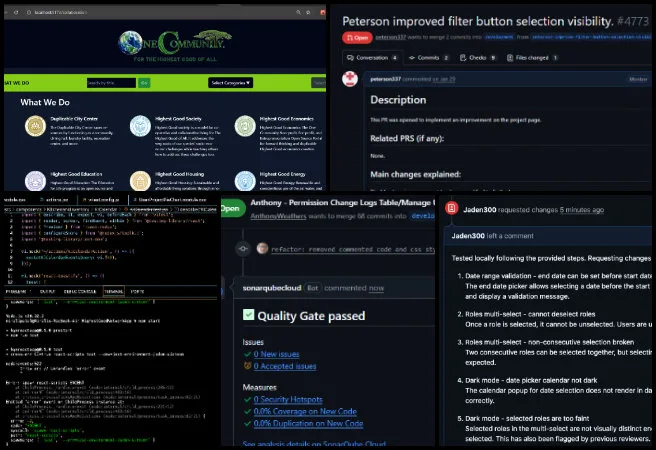
SOFTWARE PR REVIEW TEAM A-N
The PR Review Team’s summary for members with names starting with A–N was managed by Sai Sree Dongari (Data Analyst). The Highest Good Network is a foundation for measuring our results in cooperatively solving global problems. This week’s active members of this team were Amaresh Chaudhary Nara (Software Engineer), Carl Bebli (Software Developer), Deepigha Japamony (Software Engineer), Mahitha (Software Engineer), and Nathan Hoffman (Software Engineer). They reviewed all Highest Good Network PRs shared in this week’s update. Learn more about how the Highest Good Network open source hub measures progress toward cooperatively solving global problems. The collage below shows a compilation of this team’s work.
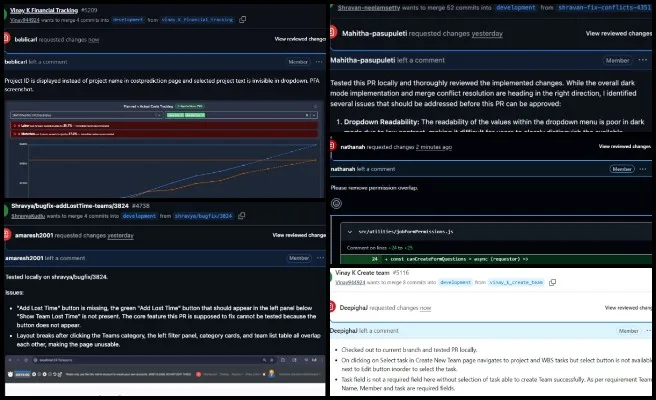
SOFTWARE PR REVIEW TEAM O-Z
The PR Review Team’s summary for members with names starting with O–Z was managed by Shameera Musthafa (Data Analyst). The Highest Good Network is a foundation for measuring our results in cooperatively solving global problems. This week’s active members of this team were Sundar Machani (Software Engineer) and Yiyun Tan (Software Engineer). They reviewed all the Highest Good Network PRs (Pull Requests) shared in this week’s update. Learn more about how the Highest Good Network open-source hub measures progress towards our goal of cooperatively solving global problems. The collage below shows a compilation of the work from this team.
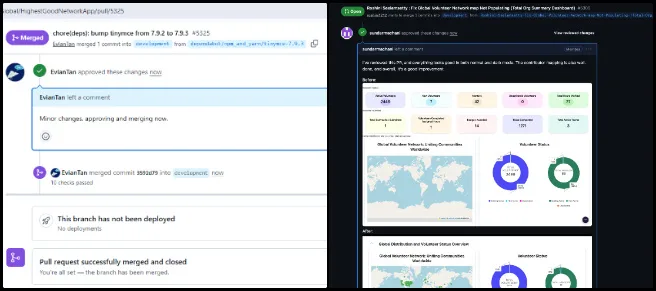
AND WE PRODUCED THIS WEEKLY UPDATES BLOG – CLICK HERE TO SUBSCRIBE
FOLLOW ONE COMMUNITY’S PROGRESS (click icons for our pages)
INVESTOR PAGES
GET INVOLVED
One Community Welcomes Roshini Seelamsetty to the Software Development Team!
One Community welcomes Roshini Seelamsetty to the Software Team as our newest Volunteer/Consultant!
Roshini is a software engineer with strong experience in full-stack development, data-driven applications, and AI research. She has worked extensively with technologies such as Java, Spring Boot, SQL, React, and JavaScript, while also contributing to enterprise-level systems, REST API development, and machine learning pipelines. Roshini holds a Master’s degree in Computer Science from Purdue University and has prior experience as a Packaged App Developer at Accenture and a Full Stack Engineer at DeepLoop. She has demonstrated success developing scalable applications, resolving complex technical issues, and improving system performance through collaborative software engineering practices. As a member of the One Community software team, Roshini has contributed to the Highest Good Network project by resolving critical data integrity issues in the Hours Completed/Tasks Report, fixing the Total Active Teams metric to reflect only teams with logged volunteer hours, correcting the Total Org Reports date filter default, redesigning the Volunteer Hours Distribution Chart for accurate visualization, and implementing task-extension permission logic and Teams UI responsive design improvements.
WELCOME TO THE TEAM ROSHINI!
FOLLOW ONE COMMUNITY’S PROGRESS (click icons for our pages)
INVESTOR PAGES
GET INVOLVED
CONSULTANTS | WAYS ANYONE CAN HELP | MEMBERSHIP
One Community Welcomes Maithili Kalkar to the Software Development Team!
One Community welcomes Maithili Kalkar to the Software Team as our newest Volunteer/Consultant!
Maithili has over 6 years of experience building scalable backend systems using ASP.NET Core, C#, and microservices architecture. She brings strong expertise in cloud platforms like Azure and AWS, along with tools such as RabbitMQ, SQL Server, and Docker to build reliable and high-availability applications. Maithili believes in writing clean, maintainable code and continuously improving systems to deliver efficient and impactful solutions. She has demonstrated success developing scalable software systems, resolving complex technical challenges, and supporting collaborative development through code reviews and system optimization. As a member of the One Community team, Maithili has contributed to the development of the Highest Good Network software by implementing a booking hold system to prevent overlapping reservations using a MongoDB TTL-based expiry mechanism, adding conflict validation during payment intent creation, resolving merge conflicts in the interactive map feature of the BMDashboard, and reviewing more than 20 pull requests to maintain code quality and consistency.
WELCOME TO THE TEAM MAITHILI!
FOLLOW ONE COMMUNITY’S PROGRESS (click icons for our pages)