One Community
One Community Welcomes Alisha Walunj to the Software Development Team!
One Community welcomes Alisha Walunj to the Software Development Team as our newest Volunteer/Consultant!
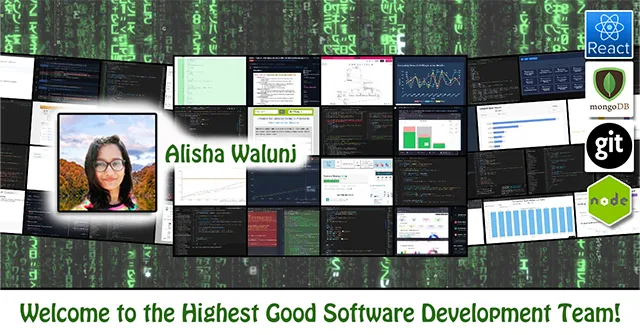
Alisha is a skilled full-stack developer with expertise in React, Spring Boot, and cloud-based application design. As a member of the One Community team, she has contributed to key initiatives on the Highest Good Network software, such as project versioning upgrades, including Node.js updates, and resolving linting issues to enhance code quality and maintainability. She has also implemented dropdown filters to improve search functionality for a listing and bidding platform, developed a detailed view page with image carousels and integrated map displays, and configured application routing for seamless navigation.
WELCOME TO THE TEAM ALISHA!
FOLLOW ONE COMMUNITY’S PROGRESS (click icons for our pages)


INVESTOR PAGES
GET INVOLVED
Sustainable and Free-shared Eco-solutions – One Community Weekly Progress Update #656
At One Community, we are demonstrating sustainable and free-shared eco-solutions that make evolving sustainability practical, replicable, and accessible to all. Our all-volunteer team integrates sustainable approaches to food, energy, housing, education, economics, social architecture, and fulfilled living into a model for global stewardship. By sharing every plan and process freely, we inspire a global network of teacher/demonstration hubs, regenerating the planet and building a world that works for all—for The Highest Good of All.
- Here’s our project overview
- Here’s our world-change methodology
- Here’s how this becomes self-replicating
- Here’s how we are open source and free-sharing all the do-it-yourself designs
OUR MAIN OPEN SOURCE HUBS
Click on each icon to be taken to the corresponding Highest Good hub page.
One Community’s physical location will forward this movement as the first of many self-replicating teacher/demonstration communities, villages, and cities to be built around the world. This is the October 13, 2025 edition (#656) of our weekly progress update detailing our team’s development and accomplishments:
Sustainable and Free-shared Eco-solutions
One Community Progress Update #656
DONATE | COLLABORATE | HELP WITH LARGE-SCALE FUNDING
CLICK HERE IF YOU’D LIKE TO RECEIVE AN EMAIL EACH WEEK WHEN WE RELEASE A NEW UPDATE
YOU CAN ALSO JOIN US THROUGH SOCIAL MEDIA
ONE COMMUNITY WEEKLY UPDATE DETAILS
HIGHEST GOOD HOUSING PROGRESS
One Community is demonstrating sustainable and free-shared eco-solutions through Highest Good housing that is artistic and beautiful, more affordable, more space efficient, lasts longer, DIY buildable, and constructed with healthy and sustainable materials:
- Learn about: Our Upcoming Crowdfunding Campaign
- Learn about the different village models: 7 Sustainable Village Models
- Visit the open source portals for the first two: Earthbag Village OS Hub | Straw Bale Village OS Hub
This week, Ajay Adithiya Kumar Elancheliyan Tamilalagi (Mechanical Engineer) continued developing the ventilation system design for the Earthbag Village. The full bill of materials for the HVAC system was completed, but some components had to be redesigned because certain items previously included were either unavailable or too expensive. The updated design focused on identifying durable, cost-effective alternatives that meet performance requirements. With the revised bill of materials finalized, the next step is to proceed with the CFD simulation phase, contributing to One Community’s designs for sustainable and free-shared eco-solutions. One Community’s open source designs for sustainable and free-shared eco-solutions begin with the Earthbag Village, the first of seven planned villages providing housing. See below for images related to this work.

Ananya Ranganatha (Architect and Project Engineer) continued working on the plans for the Tropical Atrium. This week, she worked on the first-floor dimension plan and the wall type diagram. While working on these tasks, she noticed that the current drawings contained several unjoined lines and cluttered layers, which affected their overall clarity and accuracy. To address this, she began refining and organizing the drawings to establish a cleaner and more reliable base. As the first of seven planned villages, the Earthbag Village provides the initial housing within One Community’s open source designs for sustainable and free-shared eco-solutions. See the work in the collage below.
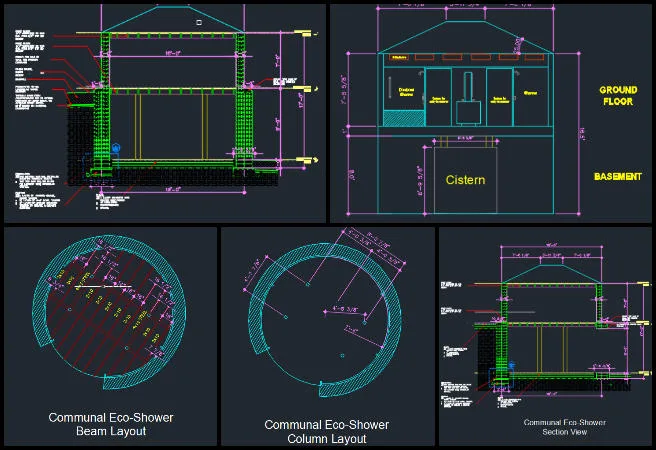
Baraka Minja (Civil and Environmental Engineer Pr. Eng.) continued working on the Vermiculture Toilet drawings. This week, he focused on the structural drawings for the communal shower, updating the floor plan to include column supports. He added beam details and dimensions and incorporated these updates into the beam layout plan. Baraka also modified the sectional views to align with the new structural elements, and he is in the process of adding elevation drawings to reflect the changes, helping strengthen One Community’s open source designs for sustainable and free-shared eco-solutions. The latest structural updates can be seen in this week’s compilation.
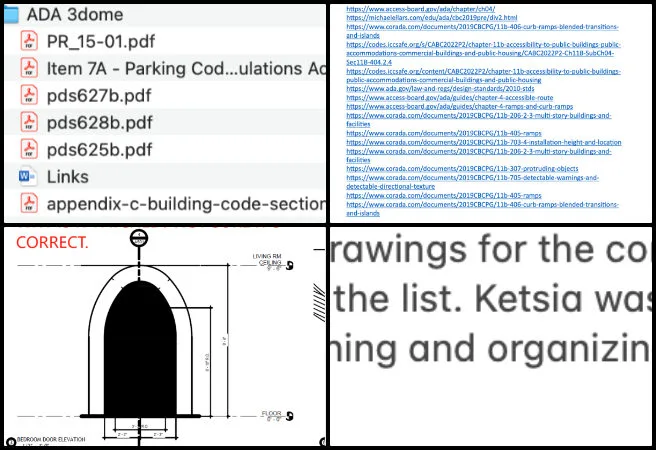
Fangting Xu (Interior Design Intern) continued working with ADA codes related to building connections for the Earthbag Village to ensure compliance with accessibility standards. She researched code requirements for the three-dome cluster design to support project development aligned with One Community’s mission of sustainable and free-shared eco-solutions. She also reviewed Ketsia’s work, using the reference materials shared by Jae, and provided constructive feedback. One Community’s open source designs for sustainable and free-shared eco-solutions begin with the Earthbag Village, the first of seven planned villages providing housing. See below for some of the pictures related to this work.
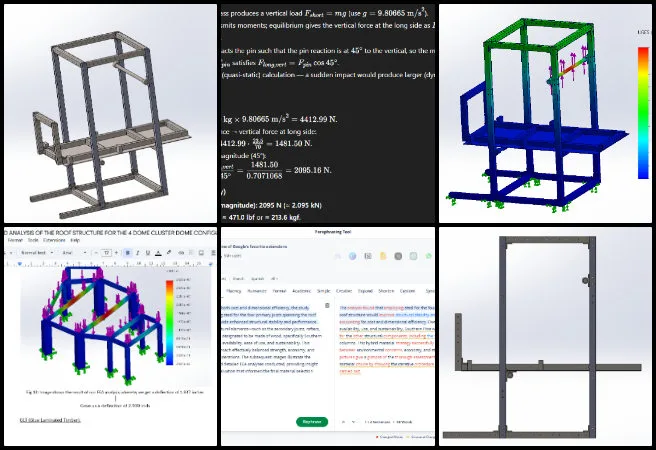
Karthik Pillai (Mechanical Engineer) continued working on the Vermiculture Toilet, advancing two major efforts: the four-dome cluster roof design and the waste dumping mechanism. For the four-dome cluster roof, he focused on finalizing the project report by incorporating detailed design data, analysis results, and construction considerations. After receiving initial feedback from Jae, he revised the report to address comments on structural detailing and documentation format before resubmitting it for further review. In parallel, Karthik analyzed the waste dumping mechanism, specifically evaluating the impact force generated when the platform strikes the limiting pin. He performed calculations and simulations to assess the structural response under loading conditions and confirmed that the resulting deflection value remained within the acceptable safety range, verifying that the design is structurally sound. As the first of seven planned villages, the Earthbag Village provides the initial housing within One Community’s open source designs for sustainable and free-shared eco-solutions. The related visuals are shown below.
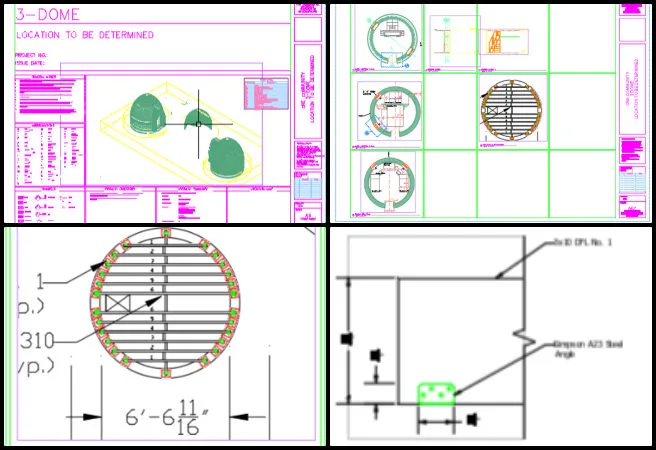
Ketsia Kayembe (Civil Engineer) continued working on the 3-Dome Cluster AutoCAD Earthbag Village plans. She incorporated feedback into the drawings and added details for the Murphy Bed furniture page and loft, including the furniture layout. She adjusted dimensions to ensure accuracy and modified the distances between the domes in the 3-D view on the cover sheet. Ketsia also added the necessary details for both the Murphy bed and loft bed in the updated drawings. She participated in a meeting with Fangting and the team to review progress and address questions, continuing their efforts in support of One Community’s open source designs for sustainable and free-shared eco-solutions. Below, you’ll find some images of this work.
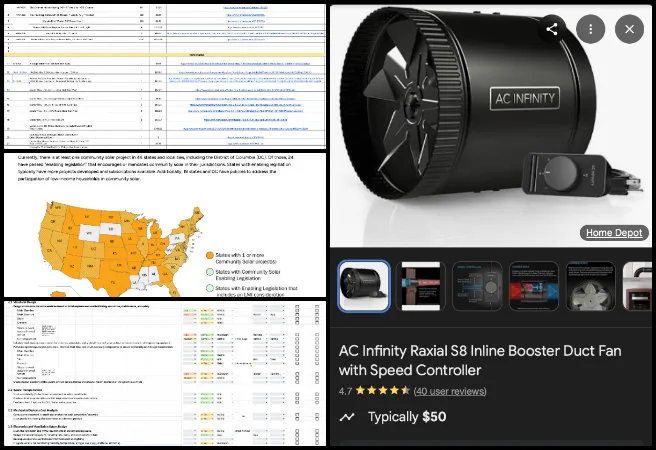
Malhar Solanki (Mechanical Engineer) continued working on the Earthbag Village, discussing management topics and task progress, including challenges encountered in completing assigned work. He began reviewing power options for the structure, focusing on renewable sources. The duct design and filter specifications for the exhaust system were finalized, and he assisted Ajay in preparing the bill of materials for the system. It was observed that the current list of components is relatively expensive, so alternative, more cost-effective options will be explored as part of One Community’s designs for sustainable and free-shared eco-solutions. The Earthbag Village, the first of seven planned villages, serves as the initial housing component within One Community’s open source framework for sustainable and free-shared eco-solutions. Review the latest HVAC updates in the images below.
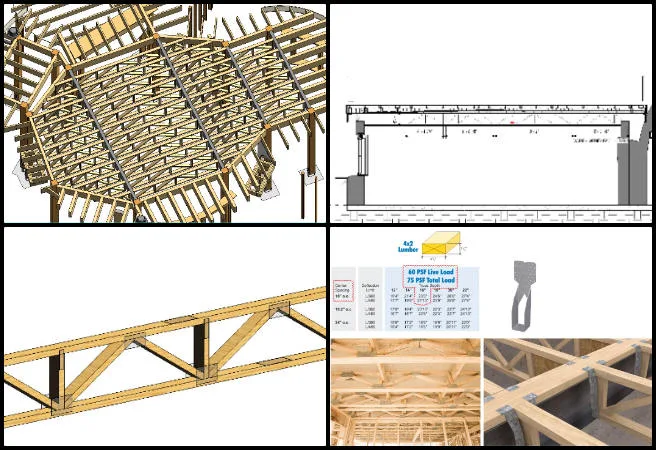
Michaela Silva (Architect) continued developing details in the construction documents for the Earthbag Village. She evaluated options for installing the drywall ceiling, which must be attached every 16 inches on center. The existing joist framing is spaced at 16 inches on center, but a secondary braced frame would be needed to lower the ceiling height to 9 feet, 6 inches above the finished floor. Michaela modeled an alternative using roof trusses instead of wood joists to achieve the required structural depth while providing space above the ceiling for mechanical lines and power. The Earthbag Village, the first of seven planned villages, serves as the initial housing component within One Community’s open source framework for sustainable and free-shared eco-solutions. Check out the construction detail visuals below.
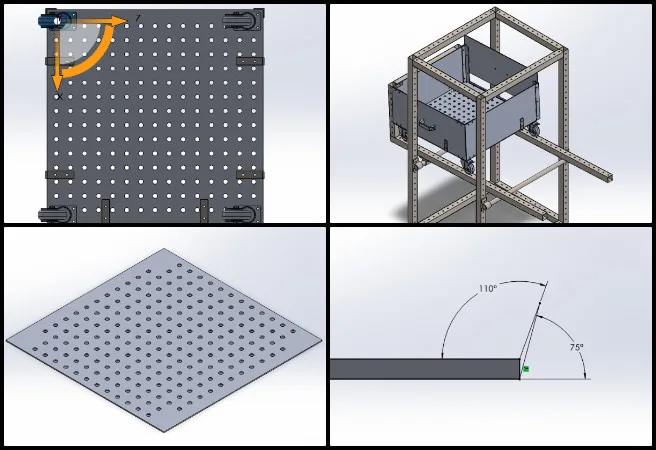
Rahul Kulkarni (Mechanical Engineer) continued working on the Vermiculture Toilet wastewater channel CAD design, focusing on compiling all design modifications and preparing for project handoff. He continued compiling the final design ideas and initiated a report to formalize the drawer modification and wastewater drainage concepts. Analyses were performed on both the drawer modification and drainage approach to evaluate functionality and integration. He clarified the deliverables related to the drawer and wastewater drainage for the handoff process. Based on team discussions, the final drainage design was completed by adding a chamfer and increasing the number of holes to improve flow and performance, further advancing One Community’s designs for sustainable and free-shared eco-solutions. The Earthbag Village, the first of seven planned villages, serves as the initial housing component within One Community’s open source framework for sustainable and free-shared eco-solutions. Below are visuals highlighting this work.
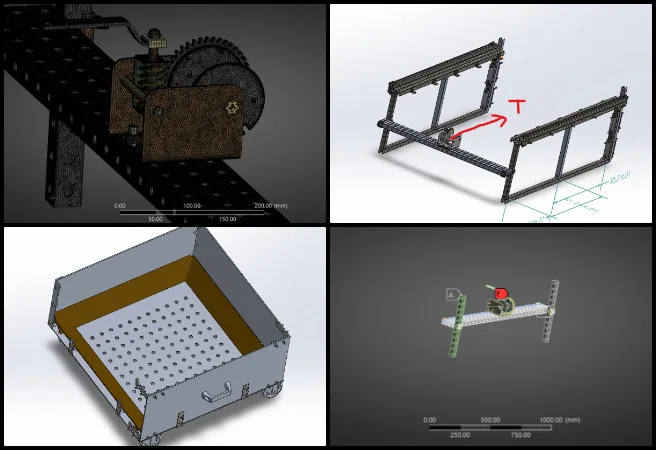
Rishi Chakrapani (Mechanical Engineer) continued working on the Vermiculture Toilet, completing calculations for the winch and performing an FEA to verify the results and assess whether the bolts could withstand the impact of the pulling force. Due to limitations with the ANSYS student version, a simplified FEA was conducted, focusing on the bolts under shear loading, which confirmed that the design is adequate when using SAE Grade 5 steel for the bolt material. In addition to the analysis, research was carried out to identify cost-effective sensors suitable for integration into the waste system to monitor humidity, temperature, and methane/ammonia levels. The Earthbag Village, the first of seven planned villages, serves as the initial housing component within One Community’s open source framework for sustainable and free-shared eco-solutions. See below for some of the pictures related to this work.
DUPLICABLE CITY CENTER PROGRESS
One Community is demonstrating sustainable and free-shared eco-solutions through a Duplicable and Sustainable City Center that is LEED Platinum certified/Sustainable, can feed 200 people at a time, provide laundry for over 300 people, is beautiful, spacious, and saves resources, money, and space:
- Learn about this building and it’s function: Duplicable City Center Open Source Hub
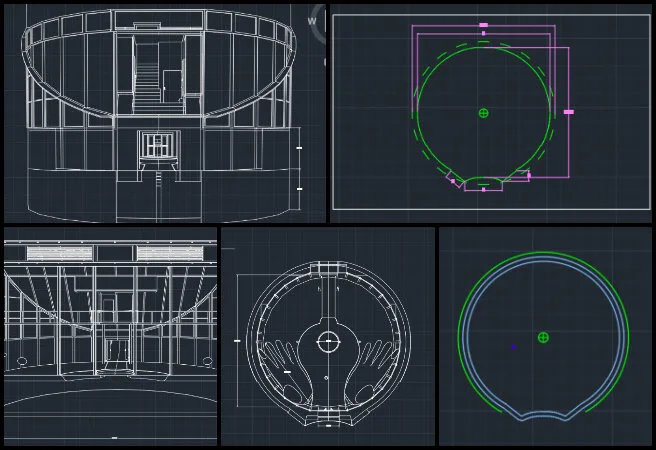
This week, Andrew Tzu-Chien (Industrial Designer) continued working on the Duplicable City Center Dormer second-floor window. He researched relevant United States building safety codes and reviewed how they apply to the current design. Andrew simplified presentation slides to share with teammates, focusing on key points of his research and identifying specific problem areas that require further attention or clarification. This open source Duplicable City Center project demonstrates sustainable and free-shared eco-solutions. For more details, refer to the image below.
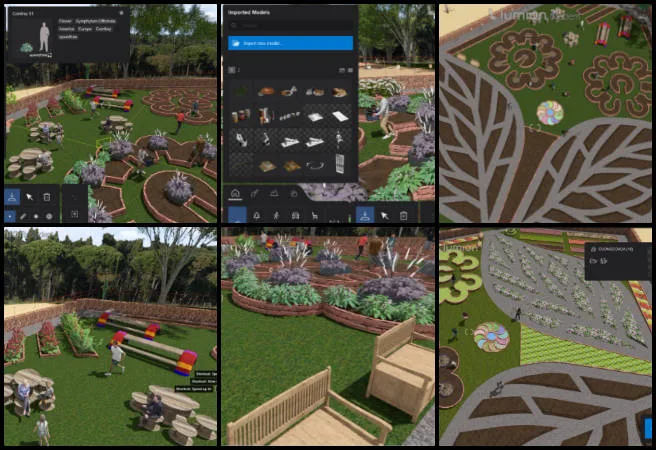
Anjana Reddy (Architectural Designer) continued work on the Duplicable City Center by focusing on the landscape planting component, specifically the NW polyculture gardening area renders. The final planting plan was reviewed and applied to update the landscape model, incorporating the polyculture concept to organize plant groupings. Adjustments were made to align the layout with the plan, and one section of the area was developed in detail. Progress was made toward completing this portion of the design and moving the renders closer to finalization. This open source Duplicable City Center project contributes to developing sustainable and free-shared eco-solutions. Explore the landscape visuals in the image below.
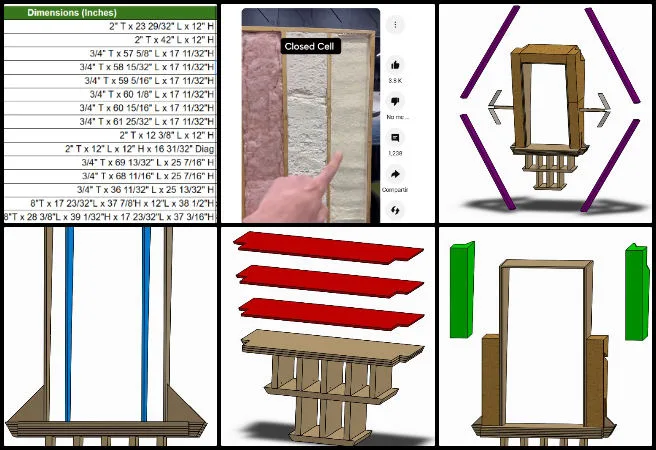
Ariana Gutierrez (Industrial Designer) continued working on the Duplicable City Center presentation by improving formatting details and reviewing assembly tools for clarity and consistency. She enhanced the color coding in the assembly instructions, converted all measurements to the metric system to support international use, and began research on insulation systems, specifically focusing on support structures to improve the design. This open source Duplicable City Center project demonstrates sustainable and free-shared eco-solutions. See the presentation updates and research highlights below.
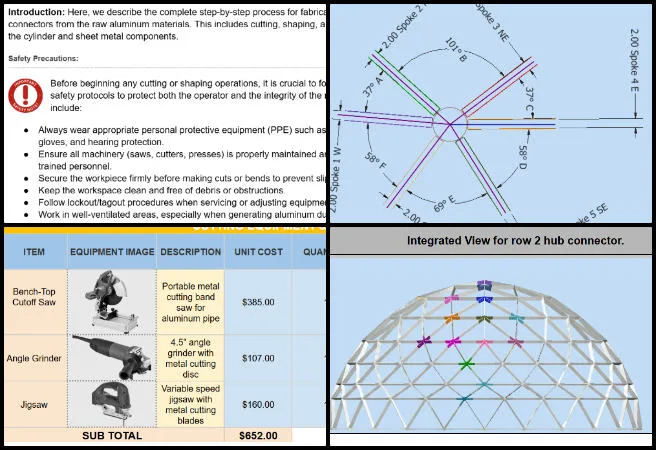
Ayushman Dutta (Mechanical Engineer) continued working on the Duplicable City Center by finishing updates to the cost analysis sheet and implementing all necessary changes. He reviewed the assembly instruction document created by Nupur and Nikhil to verify step-by-step usability. Ayushman created the FEA analysis comparison document, comparing row 2 and row 3 results and developing assumptions based on the findings. He worked on feedback from the team regarding the manufacturing process report formatting and implemented all requested revisions. This open source Duplicable City Center project demonstrates sustainable and free-shared eco-solutions. Review the connector analysis visuals below for more details.
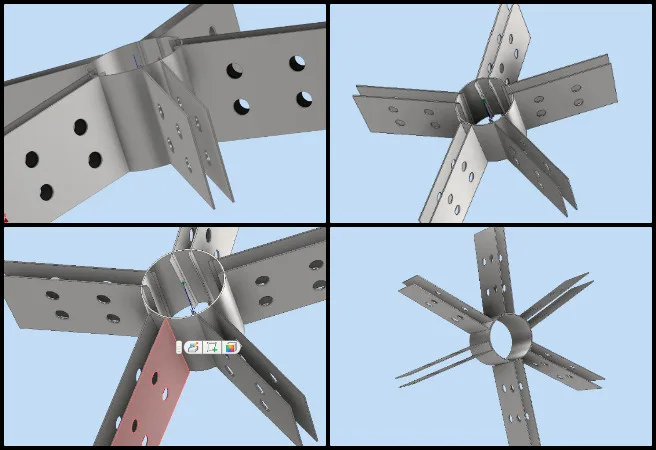
Nikhil Bharadwaj (Mechanical Engineer) continued working on the Duplicable City Center dome assembly by completing the design for the row 4 hub connector and sharing it with Koushik to update the dome assembly with the new component. He began work on the row 5 hub connector, ensuring design consistency with previous rows while addressing structural and assembly considerations unique to this section. Nikhil provided team training on the hub connector design process, recorded the session for future reference, and clarified questions related to design intent and workflow. He distributed updated assembly instructions to collect feedback and confirm team alignment. One Community’s open source Duplicable City Center is an example of sustainable and free-shared eco-solutions. The visuals below highlight his assembly progress this week.
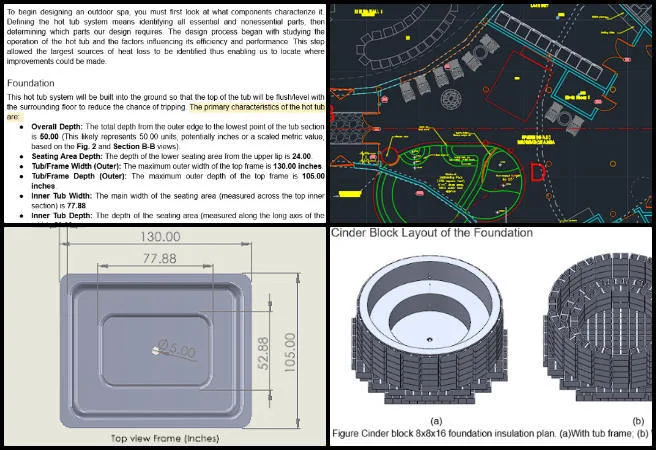
Sandesh Kumawat (Mechanical Engineer) continued working on the City Center Natural Pool and Eco-spa Designs for the Duplicable City Center by documenting the design per Jae’s feedback video, reorganizing project notes, and adding labeled CAD images, drawing views, and explicit dimensions for the tub, cover plates, hinges, and support frames. He updated change statements in the design log to reflect model edits, part renames, and drawing revisions, and aligned dimensions between the AutoCAD site layout and the SolidWorks assembly. Sandesh also created drawing sheets for each major component with section views, callouts, and a brief spec block so reviewers could trace updates. He prepared structural durability simulations by defining initial load cases (panel self-weight, user load, boundary supports, and hardware reaction points), confirmed units and materials, and recorded modeling assumptions and version history in the documentation package. Discover One Community’s open source Duplicable City Center, which exemplifies sustainable and free-shared eco-solutions. See the visuals below for a closer look.
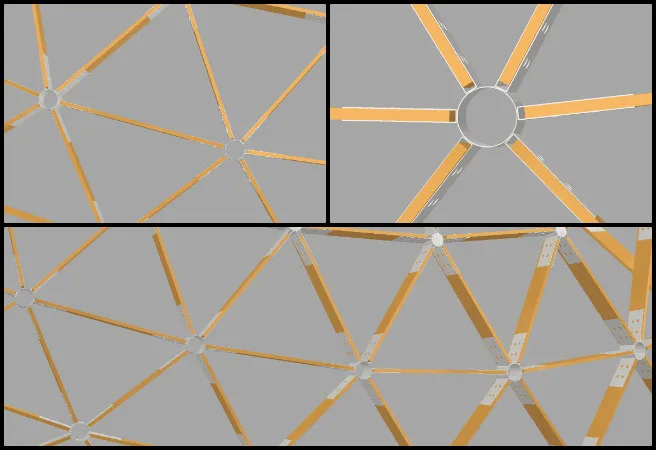
Shreyas Nagaraj (Design Engineer) continued working on the Duplicable City Center by completing initial project setup, holding introductory meetings, and finalizing modifications to the dome’s hub connectors and beams by trimming geometry. He researched design requirements for the dome’s cladding, analyzing Rockwool insulation for fire and moisture resistance to support DIY goals and optimize thermal performance. This open source Duplicable City Center project exemplifies sustainable and free-shared eco-solutions. For more details, refer to the image below.
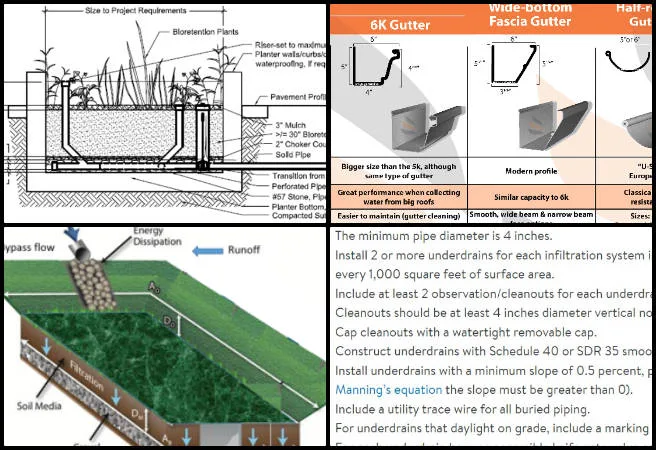
Vineela Reddy Pippera Badguna (Mechanical Engineer) continued contributing to the Duplicable City Center and Earthbag Village by reviewing time-of-concentration calculations for the greywater system design. She updated the floor-wise downspout layout and routing to improve greywater flow toward the main collection pond. Vineela revisited the Earthbag Village greywater documentation for clarity on system integration and researched bioretention design criteria suitable for incorporation into the City Center project. Additionally, she examined different gutter types to accommodate the revised rainwater catchment plan and identified appropriate gutter systems for the cupola roof. This open source Duplicable City Center project contributes to sustainable and free-shared eco-solutions. See the updated rainwater catchment data and design visuals below.
HIGHEST GOOD FOOD PROGRESS
One Community is demonstrating sustainable and free-shared eco-solutions through Highest Good food that is more diverse, more nutritious, locally grown and sustainable, and part of our open source botanical garden model to support and share bio-diversity:
- Learn about the structures: Hoop House Hub | Aquapini & Walipini Open Source Hub
- See what we’ll be growing: Gardens & Hoop Houses | Large-scale Structures | Food Forest | TA
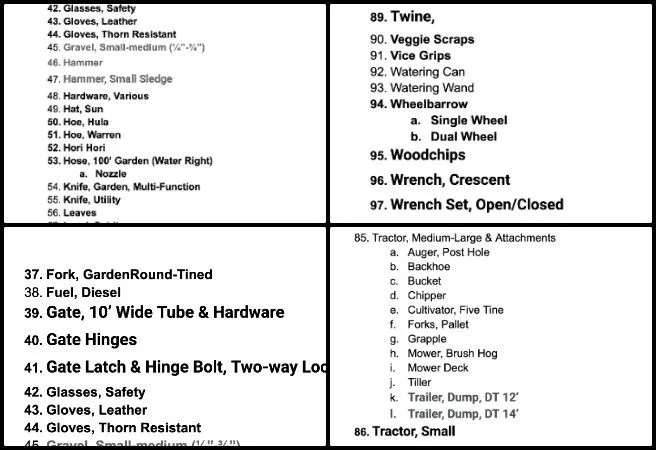
This week, the core team continued working on the Master Tools, Equipment, and Materials and Supplies List for the Large Garden and Botanical Garden. The team began comparing tool lists for individual projects, starting with the Botanical Garden project. Some entries from this project were created prior to the Master List and were subsequently added to the Master Tools, Equipment, Materials/Supplies List. Additionally, a list was created of tools, equipment, materials, and supplies that are on numerous project lists but will be maintained and stored in the shop due to infrequent use. The Highest Good Food initiative is a key component of One Community’s open source plans, focused on sustainable and free-shared eco-solutions, and exemplifies the organization’s commitment through innovative design and implementation. Below are some images showcasing this work.
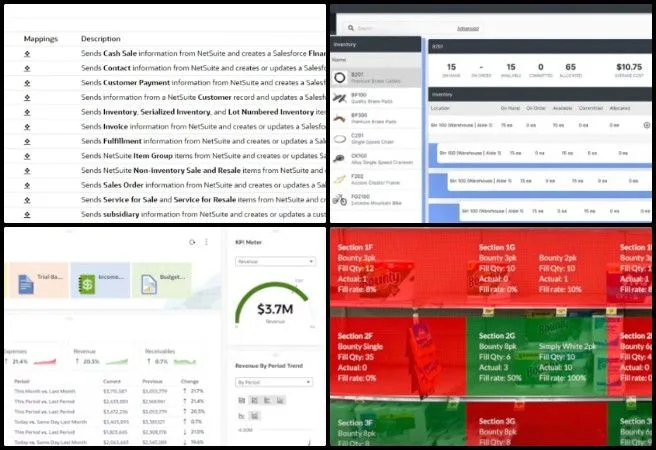
Chelsea Mariah Stellmach (Project Manager) continued her work on the Transition Food Self-sufficiency Plan. She advanced research on open source inventory management software to guide the development of a custom system for the Highest Good Transition Kitchen. Chelsea evaluated leading platforms including Odoo, ERPNext, and OpenBoxes, identifying their potential to meet project goals for sustainability, automation, and resilience. Through her analysis, Chelsea determined that ERP-based systems such as Odoo and ERPNext offer the best scalability, supplier management, and data integration features needed for Mariposa’s complex supply chain. Her findings provide a clear direction for software engineers and UX/UI designers to begin building an adaptable, efficient inventory system aligned with the project’s operational and environmental objectives. As an essential aspect of One Community’s open source goals, the Highest Good Food initiative supports sustainable and free-shared eco-solutions. The following images provide a view of her contributions.
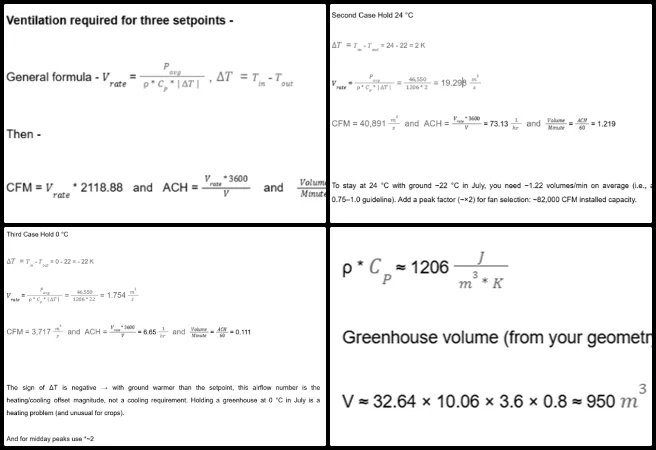
Dirgh Patel (Mechanical Engineer) continued assisting with the Climate Battery design updates. He updated the detailed explanation comparing the greenhouse’s total and highest monthly heat gains by side and converted those values into the equivalent number of 2-ton air conditioning units to simplify communication of results. Dirgh added calculations for maintaining the greenhouse’s internal temperature, including air properties, volume, and power. He calculated ventilation requirements for three configurations to maintain internal temperatures of 30 °C, 24 °C, and 0 °C for the month of July, covering parameters such as volumetric flow rate, cubic feet per minute (CFM), air changes per hour (ACH), and volumetric rate per minute. He edited and refined the report sections related to total heat gain from all sides across all months and revised the portions detailing air properties, volume, and power requirements. Dirgh also incorporated a clear explanation of the “volume per minute” concept used to maintain temperature control within the greenhouse. One Community’s open source mission is powerfully reflected in the Highest Good Food initiative, which is focused on sustainable and free-shared eco-solutions. See the images below to review this week’s updates.
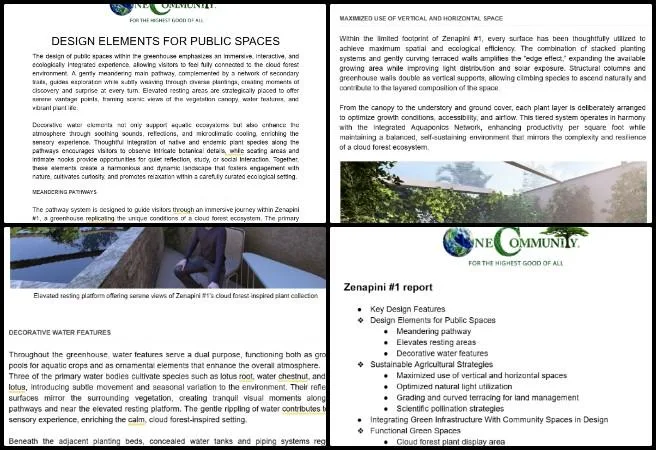
Gayatri Pandkar (Architect) continued contributing to the Highest Good Food initiative. She worked on completing the detailed report for the Zenapini 1 structure, adding descriptions of individual spaces and other structural features. Gayatri also included a legend and a conclusion section to finalize the document. In addition, she began preparing the next report, focusing on the southeast and southwest structures by reviewing drawings and organizing reference materials for documentation. The Highest Good Food initiative is a key part of One Community’s open source platform, focused on sustainable and participatory development while supporting sustainable and free-shared eco-solutions. Visual examples from her work are presented below.
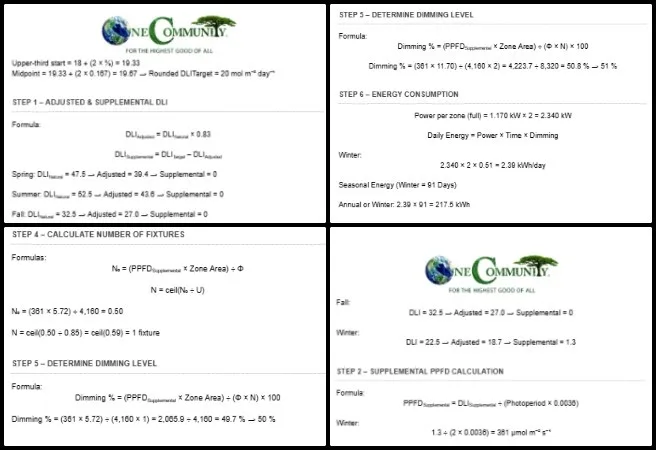
Jay Nair (BIM Designer) continued on Aquapini and Walipini Planting and Harvesting documents. He worked on standardizing the document related to the Walipini 1 greenhouse project, ensuring consistency in layout, formatting, and structure according to established standards. Jay also updated the lighting energy calculations to reflect the latest fixture specifications, aligning the data and methodology with current project requirements for accuracy and clarity. The Highest Good Food initiative is a key part of One Community’s open source platform, focused on sustainable and participatory development while supporting sustainable and free-shared eco-solutions. See below for pictures related to this work.
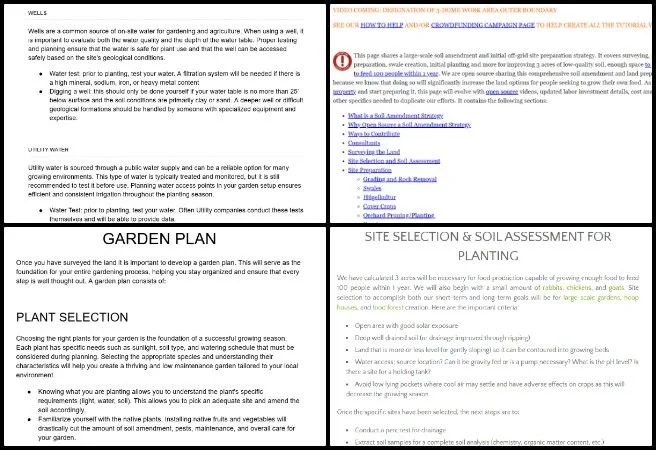
Keerthi Reddy Gavinolla (Software Developer) continued working on the Highest Good Food page. She updated the City Center Team Blog #655. After editing the Soil Amendment and Initial Off-grid Site Preparation document, she implemented the updated sections into the website. Keerthi edited the formatting, adjusted images and videos, added links where needed, improved spacing, and refined headings and bullet points for consistency. She also completed her admin work for the week. Built on One Community’s open source foundation, the Highest Good Food initiative is dedicated to sustainable and free-shared eco-solutions, empowering communities through self-sustaining systems. Visual examples of her work are shown below.
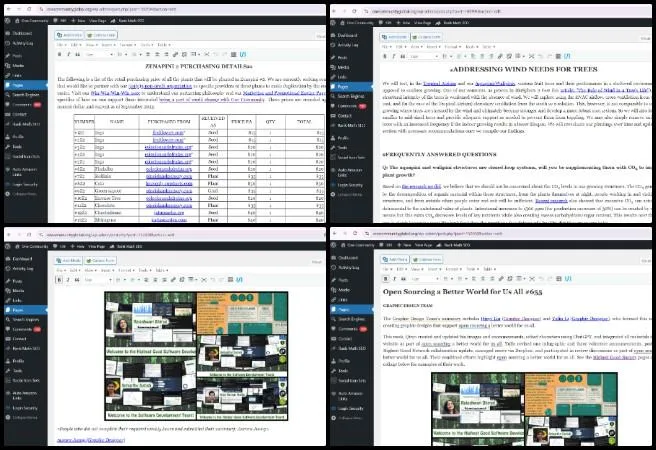
Pallavi Deshmukh (Software Engineer) continued working on the Aquapini and Walipini Planting and Harvesting pages. She created new content for blog 655 and collaborated with her teammates by reviewing input and integrating feedback to maintain a clear and consistent final version. After applying Jae’s recommendations, Pallavi integrated the Zenapini #2 content provided by Silin. She then updated the Walipini #2 page by incorporating Junyi Shi’s contributions, revising text, links, and images to align with current project requirements. In alignment with One Community’s open source objectives, the Highest Good Food project integrates the concept of sustainable and free-shared eco-solutions into a larger vision of regenerative living. Her contributions are highlighted in the collage below.
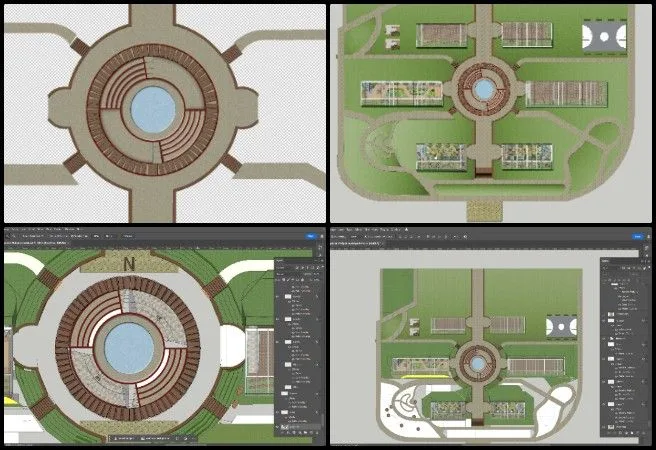
Shivangi Varma (Volunteer Architectural Designer And Planner) continued contributing to the Highest Good Food initiative. She worked on developing and completing the first draft of the Highest Good Food Infrastructure master plan using Illustrator and Photoshop, incorporating textures, materials, line weights, and layouts for the site landscape, central pond, amphitheatre, and the six individual structures of Aquapini, Zenipini, and Walipini as per the autocad files shared with her. The Highest Good Food initiative plays a leading role in One Community’s open source platform by promoting sustainable and participatory development focused on sustainable and free-shared eco-solutions. Below are visuals highlighting this work.
HIGHEST GOOD ENERGY PROGRESS
One Community is demonstrating sustainable and free-shared eco-solutions through Highest Good energy that is more sustainable, resilient, supports self-sufficiency and includes solar, wind, hydro and more:
- Learn about the open source sustainable-energy foundations: Solar, Hydro, and Wind
- Explore our research into the most sustainable products and companies for saving water and energy: Insulation, Eco-laundry, Lightbulbs and Light Bulb Companies, Doors and Door Companies, Windows and Window Companies, Toilets, Faucets and Faucet Accessories, Urinals, and more.
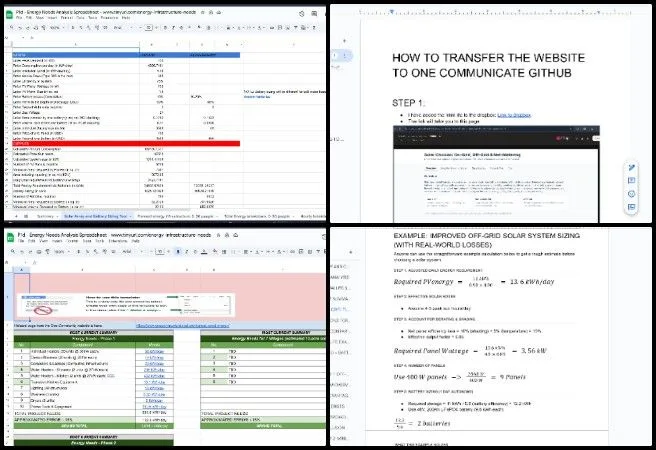
This week, the core team contributed to the Highest Good Energy initiative. The team finished taking screenshots of tables and graphs, added the images to a Dropbox folder, and shared the folder link in the Solar Energy Microgrid document. The core team reviewed the document and the calculator tool more closely and provided suggestions to Shravan for improving usability. They made a copy of the spreadsheet containing the calculator tool and began implementing the suggested edits to evaluate their feasibility. The Highest Good Energy initiative plays a leading role in One Community’s open source platform by promoting sustainable and participatory development focused on sustainable and free-shared eco-solutions. Below are images related to this project.
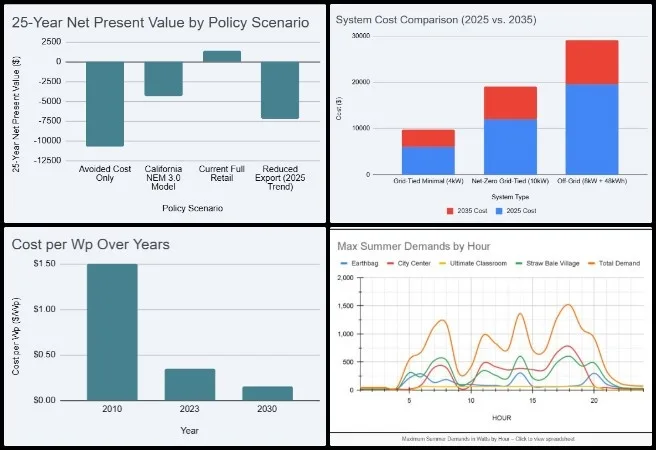
Shravan Murlidharan (Electrical Engineer) continued supporting the Highest Good Energy initiative by focusing on two key areas related to the One Community Solar project. His work centered on analyzing the Energy Need spreadsheet and organizing the cost analysis for the project. This involved reviewing energy consumption patterns, categorizing different load types, and identifying areas where energy demand could be optimized. Cost data related to equipment, installation, and maintenance were structured to align with projected system requirements. Preliminary calculations were performed to compare various energy system configurations and assess their feasibility based on efficiency and budget considerations. The spreadsheet was organized to improve clarity, ensuring that future updates and data entries could be completed systematically and accurately. One Community’s open source mission is powerfully reflected in the Highest Good Energy initiative, which supports sustainable and free-shared eco-solutions as a model for global impact. The following visuals illustrate Shravan’s contributions.
HIGHEST GOOD EDUCATION PROGRESS
One Community is demonstrating sustainable and free-shared eco-solutions through Highest Good education that is for all ages, applicable in any environment, adaptable to individual needs, far exceeds traditional education standards, and more fun for both the teachers and the students. This component of One Community is about 95% complete with only the Open Source School Licensing and Ultimate Classroom construction and assembly details remaining to be finished. With over 8 years of work invested in the process, the sections below are all complete until we move onto the property and continue the development and open sourcing process with teachers and students – a development process that is built directly into the structure of the education program and everything else we’re creating too:
- Program Overview: Education Open Source Hub
- How the components work together in designing human orchestrated eco-abundance: How to use the Education for Life Program
- Lesson Plans for Life – Lesson Plans How-to
- Foundations of Outstanding Leaders, Teachers, and Communicators
- Curriculum for Life
- Teaching Strategies for Life
- Learning Tools and Toys for Life
- Evaluation and Evolution
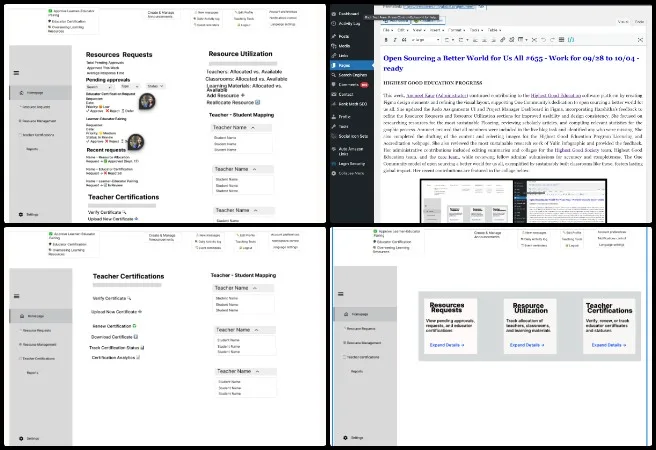
This week, Anuneet Kaur (Administrator) continued contributing to the Highest Good Education software platform by updating the Project Manager Dashboard in Figma, incorporating Harshitha’s feedback to refine the Resource Requests, Teacher Certificates, and Resource Utilization sections for improved usability and design consistency. She focused on researching resources for the most sustainable flooring, reviewing scholarly articles, and compiling relevant statistics for the graphic process. She ensured that all members were included in the live blog task and identified anyone who was missing. Anuneet also completed and published the Highest Good Education Program Licensing and Accreditation webpage, and she began work on the Vegan Rice recipe webpage. Additionally, she reviewed Yulin’s infographic on the most sustainable research work and provided feedback. She fulfilled administrative responsibilities by editing summaries and collages for the Highest Good Society team, Highest Good Education, and core teams, and reviewed fellow admin submissions for completeness and accuracy. The One Community model of sustainable and free-shared eco-solutions, exemplified by sustainably built classrooms like these, fosters lasting global impact. Her recent contributions are featured in the collage below.
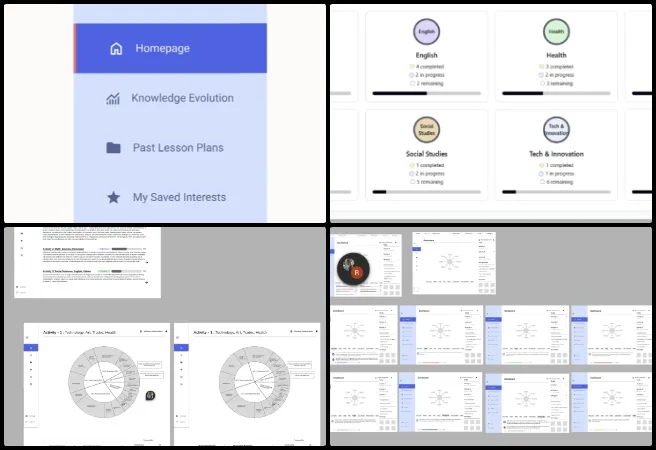
Ravi Kumar Sripathi (Software Engineer) continued developing the Highest Good Education software platform by refining the announcements page, implementing updates aimed at improving usability and clarity for educators. The primary focus was on enhancing the functionality related to creating, managing, and viewing announcements. A dialogue box feature was designed to enable educators to select specific students, groups, learning team members, or particular courses and classes when sending announcements, allowing for more precise communication. Work was also completed to clearly distinguish between saved drafts and scheduled announcements after the corresponding button actions are performed, helping users identify the status of each announcement. In addition, an expanded view for past announcements was designed to resemble the preview interface from the “Create Announcements” section, providing a consistent layout for reviewing previously published content. These updates aim to improve workflow efficiency, minimize confusion, and support easier access to both current and past announcements within the platform. Overall, they strengthened both the functionality and user experience of the platform, enhancing the One Community model of sustainable and free-shared eco-solutions. Below are images related to his work.
HIGHEST GOOD SOCIETY PROGRESS
One Community is demonstrating sustainable and free-shared eco-solutions through a Highest Good society approach to living that is founded on fulfilled living, the study of meeting human needs, Community, and making a difference in the world:
- Read the Highest Good society overview: Highest Good Society
- Learn about the model for fulfilled living and sharing: A Day in the Life
- Learn about the 4 economic models: RBE | For-profit | Non-profit | Entrepreneurship
- Learn about our open source community collaboration and management software: The Highest Good Network
This week, the core team completed over 58 hours managing volunteer work reviews, handling emails, overseeing social media accounts, supporting web development, identifying new bugs, integrating bug fixes for the Highest Good Network software, and interviewing and onboarding new volunteer team members. They also produced and integrated the video above, highlighting how sustainable and free-shared eco-solutions serve as the foundation of One Community’s broader mission. The following images showcase highlights of this work.
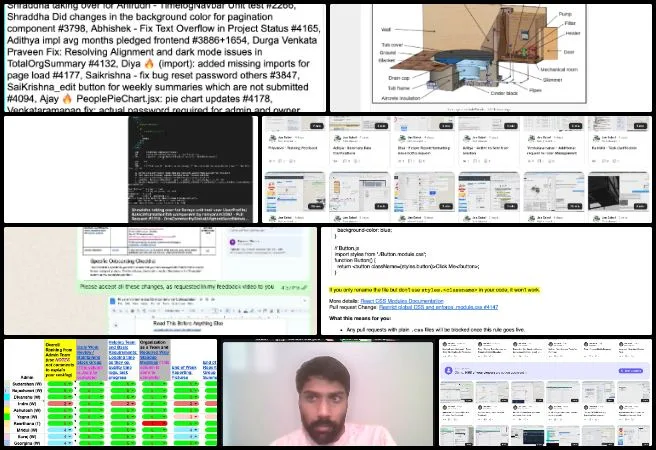
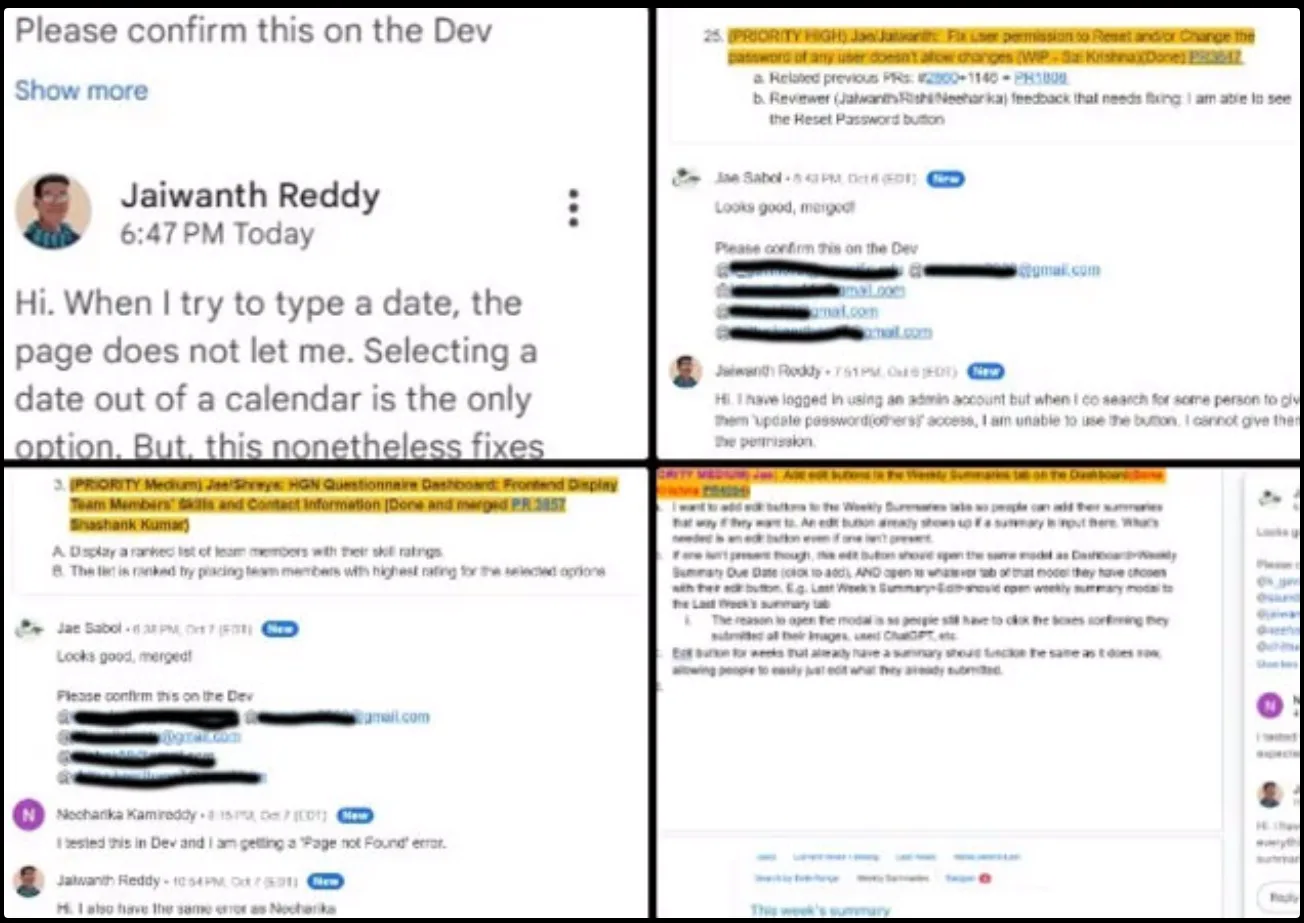
Jaiwanth Reddy Adavalli (Project Manager) continued developing the Job Applicants page and key components of the Highest Good Network working on tracking updates in the software team management documents to assign and track the status of tasks. He also tested multiple pull requests in the Highest Good Network software. As a member of the pull request review team, he reviewed submissions from the volunteer team assigned to him. This work supports One Community’s commitment to sustainable and free-shared eco-solutions. The images below highlight his contributions.
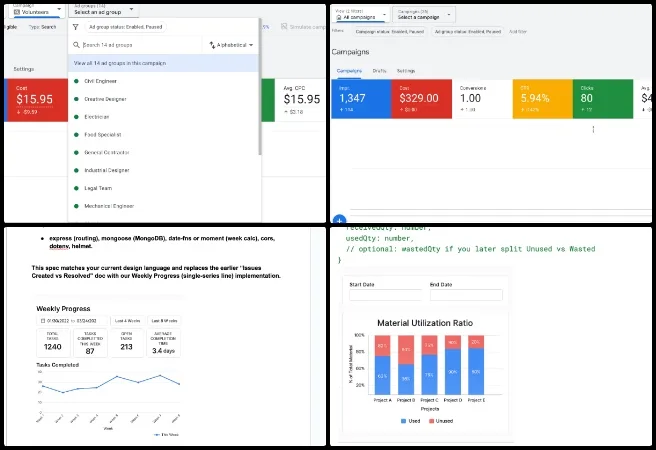
Rajrajeshwari Gangadhar Sangolli (Data Analyst) continued working on Google Ads management and strategy evolution of the Highest Good Network. She summarized contributions from 11 volunteers and reviewed four PRs, adding one suggestion and one task. She coordinated with Sudarshan to determine next steps for new charts and upcoming tasks. Rajrajeshwari completed the weekly analysis of Google Ads data, identifying the best-performing ads and campaigns while examining factors that influenced performance changes. She applied three Google recommendations, identified and reactivated a paused campaign after reviewing Jae’s video, and verified its related links. She reviewed over 30 ads, assessed ad strength for the newly launched volunteer campaign, and cross-checked the completion of Priyanshu’s assigned tasks. Rajrajeshwari also created two additional tasks and corresponding charts for the development team to enhance data tracking and dashboard clarity. She reviewed the existing dashboard and designed new charts to improve visualization and understanding. Additional work included creating charts for upcoming tasks scheduled for Monday and adding a task to optimize dark mode. This project supports One Community’s commitment to demonstrating sustainable and free-shared eco-solutions. The images below highlight key aspects of her work.
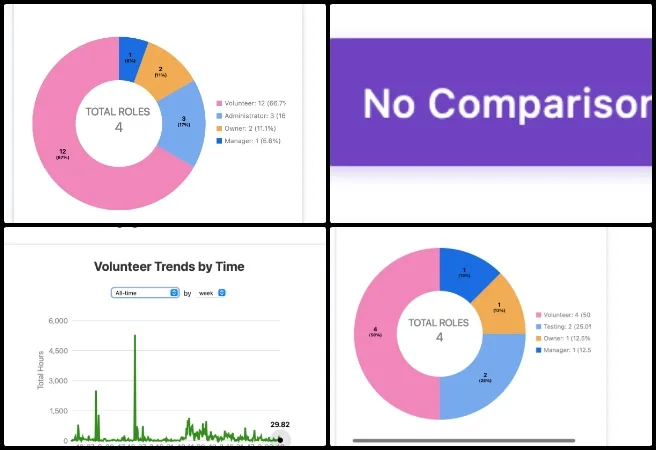
Yagna Reddy Badvel (Data Analyst and Team Administrator) continued working on the Summary Dashboards and Weekly Report page on the Highest Good Network. He focused on validating key components of the Total Org Summary dashboard under HGN Software Development. He verified the Volunteer Trends Line Chart (Xinyi PR1751) and Role Distribution Pie Chart (Abhishek Srikanth PR4125 + PR1757), confirming that both charts display accurate data across multiple date ranges and that the date filter logic functions properly. He also tested the Anniversary Celebrated Component (Xinyi PR1770 + PR4153) and the Task Completed Chart, noting that while both modules display correctly, full validation is not possible without access to the underlying datasets. Suggestions were provided to include detailed export or summary views to enable ground-truth verification. In addition, Yagna reviewed all four Admin Training Steps for an Admin-in-training, ensuring proper understanding of formatting, feedback flow, and publishing structure, and completed the weekly administrative review to maintain reporting consistency. This work supports One Community’s commitment to sustainable and free-shared eco-solutions. The images below highlight his contributions.
ADMINISTRATION TEAM
The Administration Team’s summary, which covers their work on the Highest Good Network, was managed by Prudhvi Marpina (Data Analyst) and includes Ashutosh Mishra (Software Engineer), Divanshu Bakshi (Team Admin), Georgina George (Business Intelligence Analyst), Indra Anuraag Gade (Software Engineer and Team Administrator), Keerthana Chitturi (System Administrator), Mridul Bhushan (Volunteer Project Strategy Analyst and Team Administrator), Neeharika Kamireddy (Data Analyst), Olawunmi “Ola” Ijisesan (Administrative and Management Support), Olimpia Borgohain (Data Analyst and Team Administrator), Rachna Malav (Data Analyst), Rajeshwari Bhirud (Administrator), Rishi Sundara (Quality Control Engineer and Team Administrator), Rishitha Adepu (Administrator), Sai Suraj Matta Veera Venkata (Business Data Analyst), Samhitha Are (Administrator), and Sudarshan Raju Chintalapati Venkata (Data Analyst). The Administration Team supports the Highest Good Network, a tool designed to manage and objectively measure progress while building open source solutions for global sustainability. Through administrative support, documentation, testing, training, recruiting, analytics, and content management, the team directly contributes to the development of sustainable and free-shared eco-solutions, aligning with One Community’s mission to build a replicable and sustainable future model.
This week, Ashutosh completed the weekly blog creation for the Dev Dynasty Team and developed a front-end proof of concept for the chatbot with dark and light mode features, Pinecone integration, and TypeScript safety checks. Divanshu created and posted Mastodon content, prepared detailed Phase-2 frontend issue tickets with documentation, and organized social media materials for future use. Georgina refined the Reddit engagement insights and visuals and provided feedback on admin training work. This effort contributes to One Community’s commitment to sustainable and free-shared eco-solutions. Indra finalized the X/Twitter Analytics Dashboard, validated all components, fixed errors, updated documentation, and created a performance report while reviewing Blog 655 and training feedback. Keerthana reviewed team submissions, updated Step-2 and Step-4 documents, prepared the weekly blog, and continued testing in Phases 1–3 for functionality verification. Mridul reviewed and refined individual summaries for formatting, compiled the Moonfall Team blog with SEO updates, validated multiple pull requests, and reviewed admin training work. This work supports One Community’s mission to develop sustainable and free-shared eco-solutions. Neeharika managed task assignments, followed up on contributor progress, tested PRs, completed admin duties, and conducted an interview. Ola updated administrative files, organized documentation spaces, monitored progress sheets, and supervised PR-review managers. Olimpia managed One Community’s LinkedIn presence with scheduled daily posts, suitable hashtags, and senior-admin monitoring of volunteer tasks. These contributions align with One Community’s vision for sustainable and free-shared eco-solutions.
Rachna revisited previous tasks and communications, reviewed older emails, and explored One Community webpages for updates. Rajeshwari worked as Administrator for Blog #655, reviewed summaries and feedback, edited the WordPress private blog with Binary Brigade content, completed the HGN questionnaire, and tested bmdashboard development features. This work helps further One Community’s goal of creating sustainable and free-shared eco-solutions. Rishi reviewed the HGN 1 bugs document, followed up with contributors, labeled high-priority PRs, merged individual blogs into Blog #655, and completed SEO tasks. Rishitha conducted interviews with multiple candidates, supported blog reviews, managed bio updates, and maintained social media engagement on Threads. Sai Suraj handled analytics and content management for Facebook and Instagram, updated dashboards, scheduled posts, managed SEO updates, and organized team images for publication. Samhitha worked on Phase-3 testing, refined project documentation, updated progress notes, and proposed improvements for process efficiency. Sudarshan managed the Alpha Software Team blogs, reviewed and tested Phase-2 pull requests, validated dashboards, coordinated meetings, and provided feedback to the admin-in-training. To learn more about how this work contributes to One Community’s vision of sustainable and free-shared eco-solutions, visit the Highest Good Society and Highest Good Network pages. Highlights of the team’s contributions are shared in the collage below.
GRAPHIC DESIGN TEAM
The Graphic Design Team’s summary includes Qinyi Liu (Graphic Designer) and Yulin Li (Graphic Designer), who focused this week on creating graphic designs that support sustainable and free-shared eco-solutions.
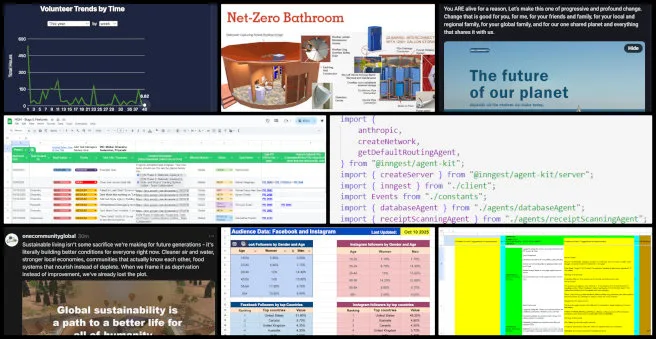
This week, Qinyi updated posters, designed a logo, added a biography image and announcement to the website, and corrected prior content errors to support sustainable and free-shared eco-solutions. Yulin refined infographics, shared the Highest Good Network update, and managed assets via Dropbox to support sustainable and free-shared eco-solutions. Their combined efforts highlight sustainable and free-shared eco-solutions. See the Highest Good Society pages and the collage below for examples of their work.
HIGHEST GOOD NETWORK PROGRESS
 One Community is demonstrating sustainable and free-shared eco-solutions through open source Highest Good Network® software that is a web-based application for collaboration, time tracking, and objective data collection. The purpose of the Highest Good Network is to provide software for internal operations and external cooperation. It is being designed for global use in support of the different countries and communities replicating the One Community sustainable village models and related components.
- Learn about our open source community collaboration and management software: The Highest Good Network
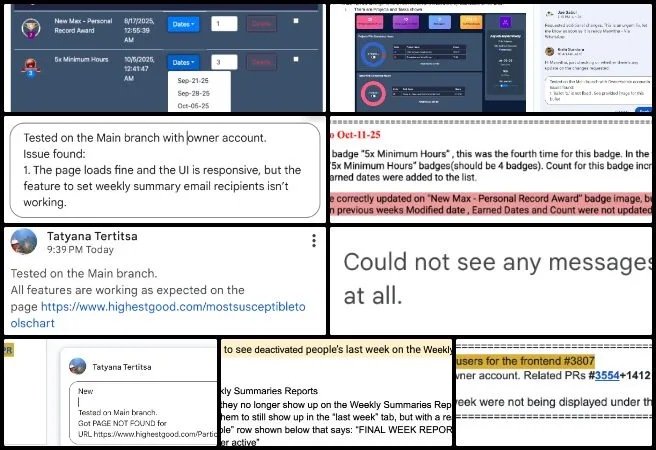
This week, the core team tested HGN PRs and confirmed several fixed PRs, including Phase 3 – Finish/Fix Track Estimated Event Value (#4022), the one-day difference in end dates between the User Management and Reports pages (#3157), layout correction of the Total Org Summary page (#3803), saving edits after using quick setup buttons (#3656), and Phase 3 Error Handling (#3043). This effort highlights One Community’s commitment to sustainable and free-shared eco-solutions. They also verified fixes for the Phase 2 Summary Dashboard with a horizontal bar graph titled “Tools Most Susceptible to Breakdown” (#3810+1601), font color and text alignment in the Role “i” icon popup (#3806), active QST retrieval and team tab refresh (#3652+1456), the Timelog issue by updating Timelog.jsx (#2843), and bolder task icons for team members (#3825). Items not fixed included issues with displaying the Contributors Report (#3958), inactive users in weekly summaries (#3554+1412, #3807), formatting in the People Report (#3670), weekly summary emails for admins (#3671+1478), logging virtual vs. in-person attendance (Phase 3, #3194), and the Phase 2 Summary Dashboard bar graph titled “Most Wasted Materials” (#3809+1600). Additionally, they reviewed assigned badges for “Tester One” and logged seven hours testing the “New Max” badge. See the Highest Good Society and Highest Good Network pages for more on how this work strengthens sustainable and free-shared eco-solutions.
ALPHA SOFTWARE DEVELOPMENT TEAM
This week, The summary for the Alpha Team was managed by Lin Khant Htel (Frontend Software Developer), the team includes Carlos Martinez (Software Developer), Nikita Kolla (Full Stack Developer), Nick Hujarski (Software Engineer) and Meron Qelati (Software Engineer). The Highest Good Network is a key part of sustainable and free-shared eco-solutions, helping track and measure progress toward creating a sustainable world. The software supports social architecture, construction, production, and maintenance processes that contribute to the open source project and resilient ecosystems. Designed to be portable and scalable, the Highest Good Network software is well suited for off-grid and sustainable living communities. This project reflects One Community’s open source commitment to advancing sustainable and free-shared eco-solutions.
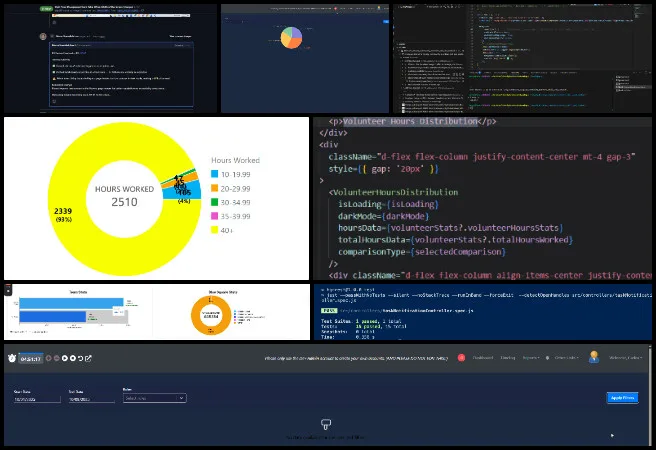
Lin managed the Alpha Team summary. Carlos worked on the donut chart for visualizing applicant work experience, integrating earlier front-end updates from Pranav and adjusting them to prevent application issues. He improved the interface by modifying the date picker to function as a single date range picker instead of two components and implemented a spinning loader to indicate data retrieval and processing. This work aligns with One Community’s purpose of promoting sustainable and free-shared eco-solutions. Lin reviewed PR #1764, checked the code, tested it locally, verified that all 15 test cases passed, reviewed weekly summaries, photos, and videos submitted by Alpha Team members, and handled team management responsibilities. Meron reviewed PR #4167 by clearing site data and cache, logging in as an admin user, and verifying functionality against the demo video. He noted an accessibility issue with the dark mode header on the Reports page and suggested improving contrast. Meron also completed Step 1 of the HGN Questionnaire Dashboard after installing Node 14 to match the project version, reviewed PR #3581 with over 500 file changes, fixed conflicts, analyzed the feature scope involving top-ranked community members and related UI elements, and created a clean branch based on the latest development to isolate relevant files for verification. This effort represents One Community’s continued focus on sustainable and free-shared eco-solutions.
Nikita worked on the “Total Org Summary: Fix stats accuracy (NEW)” task, investigating inconsistencies between the Total Org Summary and Reports pages by analyzing backend logic and examining discrepancies in time allocation and related data fields. Nick reviewed the routes to locate the blueSquareStats endpoint and used Postman to test responses, identifying that the infringements data lacked a type field needed for grouping and counting. He evaluated whether this field should be added to the database, analyzed how to validate and pass date inputs to the component, and prepared the returned data for integration with the donut chart. See the Highest Good Society and Highest Good Network pages for more on how this contributed to the idea of sustainable and free-shared eco-solutions. See the collage below to view the team’s work.
BINARY BRIGADE SOFTWARE DEVELOPMENT TEAM
The Binary Brigade Team’s summary, presenting their work on the Highest Good Network software, was managed by Nikhil Routh (Software Engineer) and included Deep Shah (Software Engineer), Kanishk Agarwal (Software Engineer), Ramsundar Konety Govindarajan (Software Engineer), Harsha Rudhraraju (Software Engineer), Sourabh Bagde (Software Developer), Srushti Patel (Software Developer), Xinyi Zhou (Developer), Taariq Mansurie (Full Stack Developer), Amalesh Arivanan (Software Engineer), and Rohit Mamidi (Software Engineer). The Highest Good Network software is our tool for managing and objectively measuring progress, ensuring that all contributions are tracked, aligned with our mission, and demonstrating sustainable and free-shared eco-solutions.
This week, Amalesh implemented the “Replicate Task” functionality, allowing admins and owners to duplicate tasks and assign them to multiple individuals listed as Resources. Each individual now receives their own copy of the task, with all hours and details replicated without affecting existing shared task behavior. He added a confirmation modal to prompt users before replication, implemented backend support under PR 1796, tested the feature, and documented the work with screenshots and videos uploaded to the shared Dropbox folder. He also deep-reviewed multiple PRs assigned by Jae before starting a new task related to the HGN Questionnaire Dashboard, analyzing components through Google Docs and Figma references, identifying necessary updates, and implementing filtering, search, and skill-based filtering functionalities. After completing implementation, he adjusted CSS layouts, fixed linting issues, and tested frontend changes before pushing updates. This work represents One Community’s continued focus on sustainable and free-shared eco-solutions. Harsha worked on the “Jobs Hits and Applications” bar graph under Job Analytics, creating a dummy backend API, integrating role-based filters, converting the layout from horizontal to vertical for better readability, improving responsiveness, adjusting axis labels, repositioning legends, and setting up reducers, actions, and constants for state management, along with configuring routing and URL paths for independent frontend testing.
Kanishk continued work on Phase 4 of the Task Comments feature for the Education Portal, developing the CommentBox and CommentList components with dark mode and mobile responsiveness, implementing a toast notification system with custom hooks, and resolving merge conflicts from previous pull requests. Nikhil migrated legacy CSS files to CSS Modules across the Community Portal, BM Dashboard, and Teams components, updating imports and JSX references, addressing report issues in PR 4119, tracking CSS-to-Module migration progress, reviewing PR 3768, and overseeing task delegation across the team. Ram refined the permissions for the profile page plus button, modifying the system so only teammates with explicit access can manage GitHub, Dropbox, Slack, and Sentry permissions, separating role and permission checks, introducing a new permission called “HGN People +/- Setup,” and implementing the frontend and backend updates in PRs 4202 and 1803. Rohit documented the badge validation workflow, enhanced automation scripts to simulate time- and event-driven conditions, handled edge cases, and created reusable frameworks to improve consistency and reduce manual checks. This effort highlights One Community’s commitment to sustainable and free-shared eco-solutions.
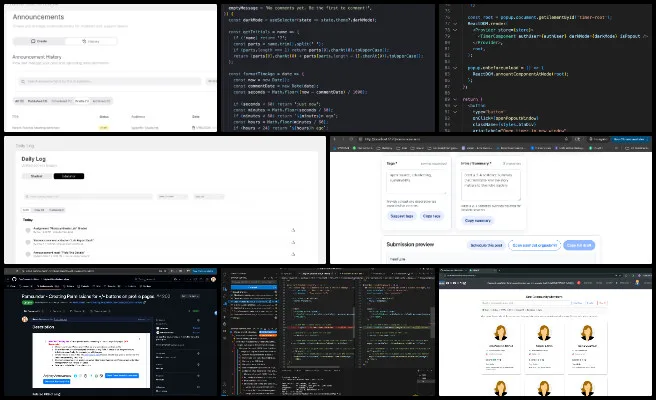
Sourabh continued improving the Slashdot module, developing new features for scheduled posting, adding tabbed navigation for task organization, and refining the “Suggest Dept” logic for better department recommendations. Srushti addressed feedback from her previous Figma task by creating additional Announcements screens and began designing Daily Logs for Educators, Logs Summary, and Daily Summary for Students. Taariq refined the frontend UI for the Lesson Plan Builder and Assignment modules in Phase 4, enhancing responsive layouts, styling, and backend integration readiness, while fixing issues with filters, archived projects, and Node version compatibility. Xinyi resolved an issue in the Badges Awarded component by fixing date formatting and enabling current-day selection, corrected inconsistencies in the Weekly Summaries Report “Over Hours” filter, and reviewed several pull requests from other contributors. See the Highest Good Society and Highest Good Network pages for more about how this relates to demonstrating sustainable and free-shared eco-solutions. The collage below shows images of their work.
BLUE STEEL SOFTWARE DEVELOPMENT TEAM
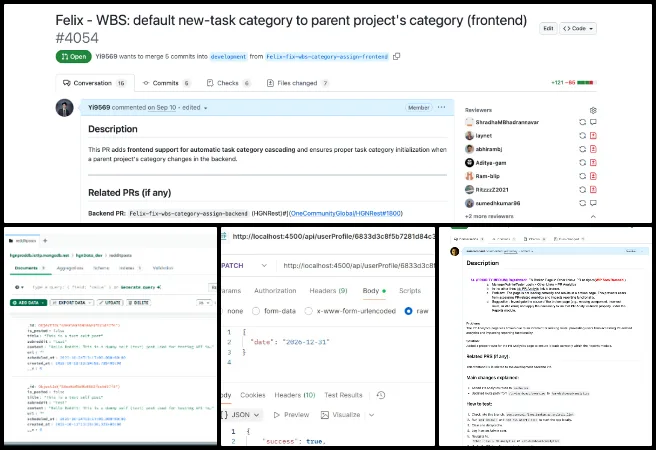
The Blue Steel Software Team, working on the Highest Good Network software, was managed by Divanshu Bakshi (Product Manager) and includes Linh Huynh (Software Engineer), Felix Huang (Software Engineer), Som Ramnani (Software Engineer), Humemah Khalid (Software Engineer/Backend Developer), and Sheetal Mangate (Software Engineer). This week, the team worked on various development and testing tasks within the HighestGoodNetwork project. Felix focused on resolving issues with WBS categories and dashboard alignment, implementing a hotfix to ensure categories were assigned correctly on refreshed pages, revising business logic for consistency, and submitting paired frontend and backend pull requests to support sustainable and free-shared eco-solutions. He also began addressing text alignment issues on the dashboard after page refresh. Som identified and corrected routing issues that caused the PR Analytics link to fail by updating route definitions, adding a new PR Analytics route in route.jsx, and creating pull requests for review. He also removed unintended file changes introduced by Prettier and lock file updates and is now addressing issues with selecting and saving Featured Badges.
Humemah concentrated on pull request #2210, completing and fixing unit tests for the BasicInformationTab component by resolving JSX parsing errors, converting Jest mocks to Vitest format, and ensuring all tests executed correctly to validate component rendering. Linh initiated the structure for the new Event Management Page (Organizer View) feature by setting up a new branch, organizing the frontend folder hierarchy, adding placeholder components, configuring routes, and validating layout rendering through test runs to align the framework with the existing frontend environment. Sheetal integrated a new UI into the Reddit autoposter module, created a REST endpoint for retrieving scheduled Reddit posts, and completed the scheduling functionality, with ongoing work focused on the image upload process using OAuth 2.0 and the post listing view with status indicators. A team meeting was held on Tuesday to review active tasks, identify blockers, and coordinate next steps. This effort continues to support One Community’s mission of sustainable and free-shared eco-solutions. The collage below shows images of their work.
CODE CRAFTERS SOFTWARE DEVELOPMENT TEAM
The Code Crafters Team, covering their work on the Highest Good Network software, was managed by Sai Shekhar Reddy Moola (Software Engineer) and includes Ajay Naidu (Software Engineer), Akshith Kumar Reddy Balappagari Gnaneswara (Software Engineer – Full Stack), Chaitanya Swaroop Kumar Allu (Software Engineer), Hemanth Chimakurthi, Juhitha Reddy Penumalli (Software Engineer), Rahul Bagul (Software Engineer), Sphurthy Satish (Software Engineer), and Vivek Chandra (Software Engineer). The Highest Good Network software is how we’ll manage and objectively measure our process for establishing abundant community systems through our social architecture, construction, production, and maintenance efforts, while supporting widespread and lasting eco-lifestyle access. This initiative reflects One Community’s commitment to sustainable and free-shared eco-solutions, creating clear pathways toward a more regenerative, collaborative, and thriving future for everyone.
This week, Ajay resolved merge conflicts in the yarn.lock file, addressed failing pre-checks during a branch push, and re-pushed the branch for PR-4119. He restored chart configurations in PeopleReport.jsx, refined section layouts, fixed theme-related display issues, and ensured reporting views behaved as expected across components. He also resolved failed test cases associated with the PR-4178 request workflow and confirmed that the branch status was clear for review. This effort focused on stabilizing the build pipeline, aligning UI layout and styling, and restoring expected behavior for reporting views across affected components and branches, playing a key role in One Community’s advancement of sustainable and free-shared eco-solutions. Akshith continued Phase 4 of the Lesson Plan Database, developing models for student tasks, atoms, and strategies while aligning existing models with new structural requirements, and creating and testing mock data scripts to verify schema relationships and database integrity. Chaitanya enhanced the frontend for the Email Announcements feature by designing interface pages that support both predefined templates and plain-text messages, improving error handling in GitHub access management, introducing insights into user-service relationships, and refining UI layouts for consistency across modules.
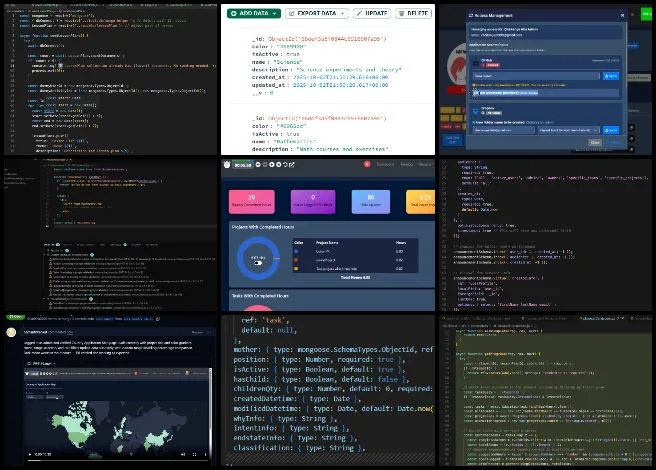
Hemanth validated multiple pull requests to ensure functionality, UI consistency, and stable dark mode support across various modules, including PRs #1783, #4175, #4168, #4170, #4171, #4191, #4195, and #4197, focusing on edit flows, dashboard graph updates, CSV export functionality, and accurate data visualization. PR #4200 was also checked for the removal of outdated sections and proper alignment without breaking responsiveness. Juhitha worked on multiple development tasks within the HGN Software Development project, primarily under Phase 4 of the Summary Dashboard. She created and integrated frontend components for the Task Progress Indicator and Status Updates, configured routers and APIs in Postman for testing, developed a new route for the Student Education Portal, and contributed to APIs for the stacked bar graph tracking tool costs. Rahul completed the integration of SonarQube with the OneCommunity GitHub organization, identifying a race condition issue related to PUT vs. PATCH API calls. Sai Moola worked on Phase 4 – Announcements Backend, designing the database schema, developing controller files with GET and POST endpoints, and testing them via Postman. Sphurthy implemented a backend API for bulk task assignment in the lesson plan system, adding validation logic, configurable deadline calculations, and transactional safety, while testing live data and resolving schema mismatches. Vivek refined and expanded seeder scripts for the Education Portal, generating realistic interrelated data, testing scripts across multiple collections, and collaborating on database structure requirements. Together, these contributions strengthen One Community’s mission and commitment to sustainable and free-shared eco-solutions. See below for pictures of the team’s work.
DEV DYNASTY SOFTWARE DEVELOPMENT TEAM
The Dev Dynasty Team’s summary, covering their work on the Highest Good Network software, was managed by Prem Vora (Software Developer) and includes Adithya Cherukuri (Volunteer Software Engineer), Aditya Gambhir (Software Engineer), Deekshith Kumar Singirikonda (Developer), Manvitha Yeeli (Software Engineer), Mohan Satya Ram Sara (Software Engineer), Nahiyan Ahmed (Full Stack Software Developer), and Neeraj Kondaveeti (Software Engineer). The Highest Good Network software is how we’ll manage and objectively measure our processes for sustainable and free-shared eco-solutions through social architecture, construction, production, and maintenance processes. This progress supports One Community in demonstrating sustainable and free-shared eco-solutions.
This week, Nahiyan reviewed PR 4200, identified an issue with the rehireable checkbox in dark mode caused by a replaced prop, and provided detailed feedback with recommended corrections to maintain consistent UI behavior, supporting One Community’s open source approach to sustainable and free-shared eco-solutions. Aditya implemented fixes for the volunteer statistics dashboard, improving data accuracy by resolving double-counting issues through enhanced filtering and aggregation logic, debugging data source mismatches in the Total Org Summary dashboard, and submitting PRs 1790, 1794, and 4191 for weekly summary and donut chart enhancements. Adithya focused on backend and frontend development for the Phase 2 Summary Dashboard, implementing the /api/injuries/distribution endpoint with filtering and aggregation, integrating it with a donut chart visualization, refining chart visuals and filters, and ensuring consistent and accurate data flow across components. Deekshith strengthened backend functionality for the wishlist and no-show analytics modules by implementing CRUD operations with secure ownership validation, organizing routing for efficient data retrieval and visualization, and resolving ESLint issues to maintain code quality.
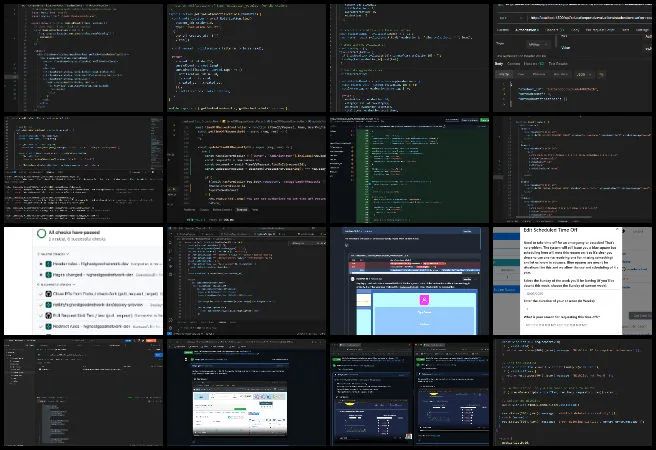
Manvitha developed the Daily Log page for the student dashboard, creating React components and CSS modules to display student time logs, integrating mock data for dynamic updates, and adding summary metrics and refined styling aligned with the existing design system. Mohan resolved duplicate time entry issues by implementing a save lock mechanism and disconnect event listener, refined the timer UI and frontend components, fixed merge conflicts, and cleaned up imports and linter warnings to ensure reliable builds and accurate time tracking. Neeraj enhanced the student-facing Tasks Dashboard by improving sidebar responsiveness, refining task card details and rubric modals, enhancing grouping, sorting, and due date awareness features, and initiating dark mode and an additional navigable page for extended functionality. Prem advanced backend development for the Student Evaluation Results module by defining aggregation and notification logic, verifying endpoints and authentication, coordinating with team members on schema alignment, and assuming managerial responsibilities for summarizing team progress, organizing materials, and finalizing database structures. Highest Good Society and Highest Good Network pages for more on how this relates to our mission of demonstrating sustainable and free-shared eco-solutions. Explore some of the team’s work in the collage below.
EXPRESSERS SOFTWARE DEVELOPMENT TEAM
The Expressers Team’s summary, which covers their work on the Highest Good Network, was managed by Rahul Trivedi (Software Engineer) and includes Layne Taylor (Software Engineer), Meenashi Jeyanthinatha (Full Stack Developer), and Tanmay Arora (Software Engineer). This contribution supports One Community’s goal of open sourcing sustainable and free-shared eco-solutions.
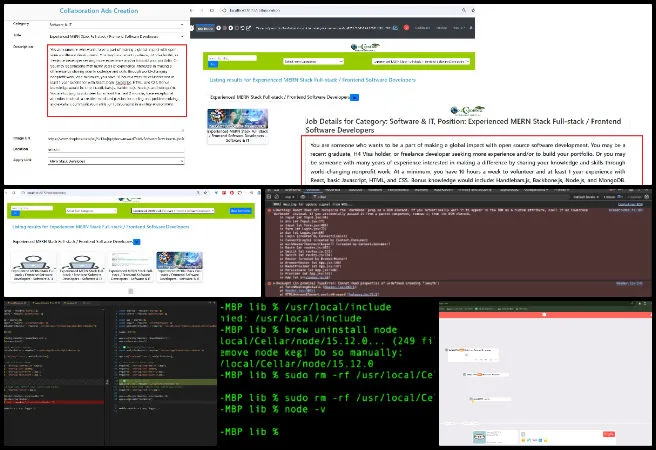
This week, Layne worked on PR #3374, focusing on resolving persistent Node version errors that prevented npm install from running properly. She spent most of her time troubleshooting version conflicts, consulting online resources, and coordinating with the branch owner, who suggested switching to Node 14 or updating package.json to support version 20. Layne created new frontend and backend branches, modified configuration files, and fixed a MongoDB whitelist error, which allowed her localhost to start, though some UI elements remained unresponsive. She carefully documented each troubleshooting step, researched compatibility issues, and posted for guidance on Slack while continuing efforts to achieve full functionality. This contribution supports One Community’s goal of open sourcing sustainable and free-shared eco-solutions. Meenashi created a new JobDetails component to display job information not stored in Dropbox, using Category and Position as props to show the corresponding details. She resolved URL encoding issues with spaces and slashes by applying encodeURIComponent and decodeURIComponent, and addressed duplicate entries by adding the _id to job links while setting localhost:5173 as a backend environment variable for link generation. After fixing a validation schema error, she confirmed proper navigation from the Collaboration Page and began developing an Apply Now component that loads template-based questionnaires with Submit and Cancel options. She also identified that Dropbox image URLs must end with raw=1 for proper display and continued implementing styling, validation, and database-saving functionality. This week’s development efforts align with One Community’s goal of open sourcing sustainable and free-shared eco-solutions.
Tanmay Arora focused on building and testing functionality for the Plurk auto-poster system, completing backend development of the /api/postToPlurk endpoint with OAuth 1.0a authentication and secure integration with the Plurk API for automated posting. She validated functionality using Postman and curl, resolved environment variable and authorization issues, and refined backend routing for clearer responses and better reliability. This contribution supports One Community’s goal of open sourcing sustainable and free-shared eco-solutions. Rahul Trivedi concentrated on resolving linting and refactoring issues within the src/badge folder, fixing multiple files, standardizing naming conventions, and reviewing additional repository folders to ensure overall code consistency. Along with his technical contributions, he managed team activities, reviewed videos, summaries, and images, and provided guidance to teammates as needed. This contribution supports One Community’s mission of open sourcing sustainable and free-shared eco-solutions. See the Highest Good Society and Highest Good Network pages for more on how this contributed in creating a sustainable world to benefit us all. See the collage below for the team’s work.
LUCKY STAR SOFTWARE DEVELOPMENT TEAM
The Lucky Star Team’s summary, covering their work on the Highest Good Network, was managed by Keerthana Chitturi (System Administrator). The team includes contributions from Abhiram Bylahalli Jagadish (Full Stack Software Developer), Abhishek Jain (Software Engineer), Aryan Rachala (Software Engineer), Chieh “Jerry” Jui Lee (Software Engineer), Chirag Bellara (Software Engineer), Dipti Yadav (Software Engineer), Dunstan Dsouza (Software Engineer), Durga Venkata Praveen Boppana (Software Engineer), Ganesh Karnati (Software Engineer), Kedarnath Ravi Shankar Gubbi (Software Engineer), Shashank Madan (Software Engineer), Shravya Kudlu (Software Development Engineer), Sohail Uddin Syed (Software Engineer), Veda Bellam (Software Engineer), and Venkataramanan Venkateswaran (Software Engineer). Their work continued to support our goal of sustainable and free-shared eco-solutions through collaborative and cross-functional software development.
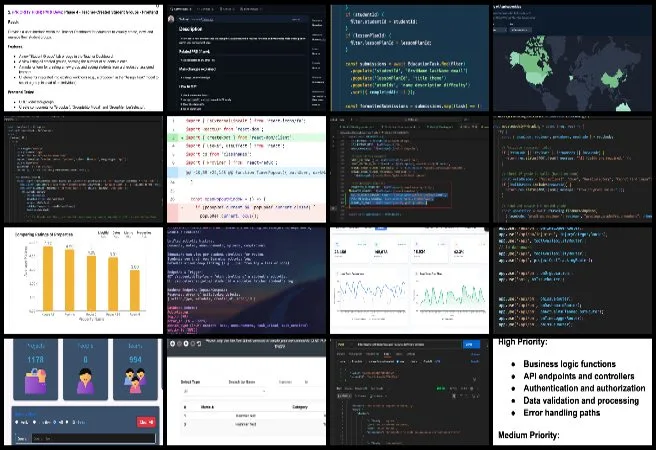
This week, Abhiram developed backend functionality for the Highest Good Education portal, including APIs for retrieving filtered student task data with dynamic logic and status-based workflows. His testing and refinements improved data accuracy and backend stability, contributing to sustainable and free-shared eco-solutions. Abhishek updated the HGN Unit Testing Guide to align with GitHub Actions workflows, enforcing a 60% code coverage requirement and clarifying troubleshooting steps. His improvements strengthened continuous integration and testing consistency, supporting sustainable and free-shared eco-solutions. Aryan defined backend and frontend specifications for Deliverable 3 of the Highest Good Education project, focusing on student group management and collaborative lesson planning. His structured design ensures clarity for upcoming implementation and contributes to sustainable and free-shared eco-solutions. Chieh resolved merge conflicts in Pull Request #1342, verified Express route registration, and ensured consistent API responses. His careful testing maintained backend reliability and supports sustainable and free-shared eco-solutions. Chirag finalized the Bugs and Features Tracker Sheet and reviewed multiple pull requests, identifying issues and improving documentation. His updates streamlined development reviews and supported sustainable and free-shared eco-solutions. Dipti enhanced the Listing and Bidding Dashboard with two reusable bar charts comparing villages and properties, improving layout and performance. Her visual analytics enhancements contribute to sustainable and free-shared eco-solutions. Dunstan analyzed the Total People Report feature to resolve missing chart data by tracing data-fetching and filtering inconsistencies. His debugging clarified data flow and laid groundwork for accurate visualization, contributing to sustainable and free-shared eco-solutions. Durga finalized the timer pop-out feature, resolved merge conflicts in the Age Bar Chart component, and began the student evaluation module. His updates improved functionality across pages and support sustainable and free-shared eco-solutions.
Ganesh advanced the Weekly PR Grading backend by developing CRUD endpoints, adding validation, and performing integration tests to ensure reliable performance. His refinements to backend structure and data handling contribute to sustainable and free-shared eco-solutions. Kedarnath implemented a donut chart for Job Posting Page Analytics and developed a Bidding Dashboard for real-time bid tracking. His work improved responsiveness and visualization quality, supporting sustainable and free-shared eco-solutions. Shashank tested the mark-as-done API and verified live data integration for student task displays. His focus on backend validation and frontend synchronization contributes to sustainable and free-shared eco-solutions. Shravya finalized the user profile accordion interface and added filter-by-preference functionality before starting backend planning for the Phase 4 Daily Log feature. Her frontend and backend updates support sustainable and free-shared eco-solutions. Sohail refined dark-mode styling, migrated components to CSS Modules, and resolved regex and build errors. His code cleanup improved accessibility and maintainability, contributing to sustainable and free-shared eco-solutions. Veda created the Country of Application Map Chart for Job Posting Analytics, integrating backend APIs and responsive layouts. Her work expanded visualization capabilities and supports sustainable and free-shared eco-solutions. Venkataramanan improved User Management and Profile pages with input validation, date fixes, and authentication logic updates. His improvements enhanced system accuracy and contribute to sustainable and free-shared eco-solutions. See the Highest Good Society and Highest Good Network pages to learn more about how this work supports sustainable and free-shared eco-solutions. See the collage below highlighting the team’s work for the week.
MOONFALL SOFTWARE DEVELOPMENT TEAM
The Moonfall Team’s summary, which covers their work on the Highest Good Network, was managed by Mridul Bhushan (Project and Strategy Analyst and Team Administrator). The team’s progress reflects input from Aayush Shetty (Software Engineer), Alisha Walunj (Software Engineer), Bhavpreet Singh (Software Engineer), Gurusai Chittoji (Software Engineer), Mani Shashank Marneni (Software Engineer), Munish Patel (Software Engineer), Ramakrishna Aruva (Software Engineer), Sai Krishna (Software Engineer), Sree Pujitha Kakani (Software Engineer), Sudheesh Thuralkalmakki Dharmappa Gowda (Full Stack Developer), Uha Kruthi (Software Engineer), and Zhicheng Tong (Software Engineer). Their efforts contributed to advancing One Community’s mission of developing sustainable and free-shared eco-solutions that promote open source collaboration, ecologically responsible innovation, and holistic global progress.
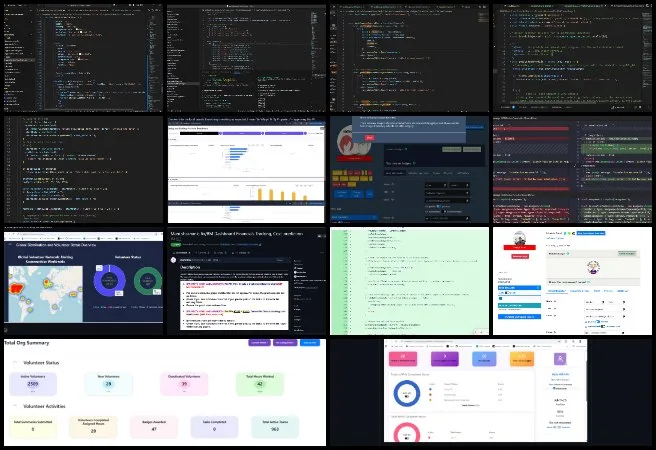
This week, Aayush worked on the Phase 4 Task-Level Comments backend by setting up APIs, configuring controllers, and building data models for MongoDB integration to enable comment retrieval without task ID dependency. Alisha advanced the Phase 2 Summary Dashboard by creating new APIs and routes to display grouped bar graphs comparing issues created versus resolved and resolving model integration errors. Bhavpreet updated the lesson planner portal by developing a backend feature for student task submissions, adding validation for file size and URL format, and merging updates for stability. Gurusai corrected font color inconsistencies in Dark Mode, reviewed pull requests from the coding problems area, and fixed recurring deployment conflicts. Mani resolved 401 authorization errors in Financials Tracking, integrated shared authentication logic, and verified accurate project list and cost visual renderings. Each of these updates strengthened One Community’s foundation for sustainable and free-shared eco-solutions. Munish continued progressing on his branch by studying module interactions, refining code testing workflows, and committing updates to reinforce his understanding of the project. Ramakrishna completed his assigned tasks and reviewed PRs for LBDashboard, Job Application, community page, dark mode popups, and volunteer pie components to ensure system stability.
Sai Krishna resolved logout errors by introducing a polling timer for automatic session updates and adding user alert banners. Sree finalized PR #3404 for the Event Management Engagement tab, refining comment sorting and reply logic, and contributed to PR #1790 to ensure accurate dashboard counts. Sudheesh built and tested backend routes and controllers for the Student Profile View page and began planning the material utilization ratio chart for the summary dashboard. Together, their work advanced One Community’s mission of developing sustainable and free-shared eco-solutions. Uha debugged the “Most Wasted Materials” bar graph in PRs #3809 and #1600, reproducing rendering issues, refining component logic, and confirming fixes through cross-browser testing. Zhicheng strengthened his knowledge of module dependencies, improved testing workflows, and ensured proper version control conventions. Collectively, the team enhanced backend stability, refined data visualizations, and resolved dark mode and authentication inconsistencies to support future feature expansions within the Highest Good Network. Visit the Highest Good Society and Highest Good Network pages for more on how this work supports creating sustainable and free-shared eco-solutions to benefit us all through open source development and globally accessible resources. The collage below highlights the impactful contributions made by the team this week.
REACTONAUTS SOFTWARE DEVELOPMENT TEAM
The Reactonauts Team’s summary, covering their work on the Highest Good Network, was managed by Sai Suraj Matta Veera Venkata (Business Data Analyst) and Akshay Jayaram (Software Engineer). The team includes Aseem Deshmukh (Software Developer), Diya Wadhwani (Software Developer), Fatima Villena (Software Engineer), Ghazi Rahman Shaik (Software Engineer Intern), Guna Pranith Reddy Cheelam (Software Developer), Kristin Dingchuan Hu (Software Engineer), Namitha Vijaykumar Pawar (Software Engineer), Peterson Rodrigues dos Santos (Full Stack Developer), Siva Putti (Software Engineer), Sri Satya Venkatasai Siri Sudheeksha Vavila (Software Engineer), and Ujjwal Baranwal (Full Stack Software Developer). The Highest Good Network software helps manage and objectively measure progress by focusing on demonstrating sustainable and free-shared eco-solutions. It supports social architecture, construction, production, and maintenance processes to build sustainable and thriving ecosystems.
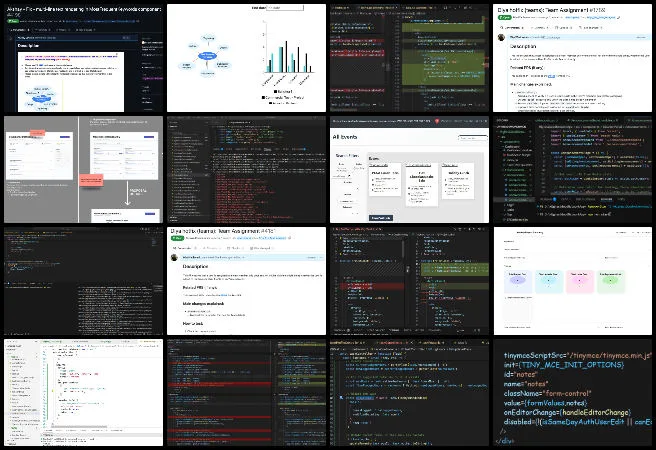
This week, Akshay completed work on the Most Frequent Keywords mind map and opened pull request 4198. He removed a truncateText method, implemented logic to render long keywords across multiple lines, adjusted D3 text rendering with tspan elements, centered text vertically within ellipses, and increased element spacing for readability. This work aligns with One Community’s purpose of promoting sustainable and free-shared eco-solutions. He also added a temporary frontend test keyword option for layout verification, hosted the Reactonauts team meeting, monitored team pull requests, assisted with Git issues, and submitted the weekly team review. Aseem searched for a new task related to the Instagram autoposter feature, resolved Git-related issues preventing branch publication, clarified task ownership overlap with other contributors, reviewed relevant pull requests, contacted peers for assistance, and submitted her collaborator bio. This update is a step forward in One Community’s plan for demonstrating sustainable and free-shared eco-solutions. Diya addressed multiple frontend and backend issues, including restoring the total construction summary page, limiting weekly summary emails to active users, preventing duplicate team memberships, fixing CCList counter sync issues, enabling CC user viewing in Blue Square workflows, refining the People Report UI, and resolving tooling issues through configuration and testing fixes. Fatima finalized the Project Status backend feature for the Phase 2 Summary Dashboard, addressed reviewer feedback, implemented dark mode header text, corrected CSS issues, and advanced detailed mockups for the Governance and Collaboration dashboard. Ghazi optimized the task management system by improving TagsSearch and AddTaskModal performance, resolving data mapping inconsistencies, fixing test failures, handling password-related conflicts, and adding detailed debugging logs to strengthen member data tracking. This task plays a role in One Community’s aim of demonstrating sustainable and free-shared eco-solutions.
Guna Pranith continued work on listings home page frontend fixes under PR 3999 and investigated a “Page Not Found” error in the Re-Engagement Strategies project to restore page functionality. This effort plays a key role in One Community’s advancement of sustainable and free-shared eco-solutions. Kristin implemented backend functionality for the Support Team Daily Log Access feature by developing a new controller, configuring route mounting, enforcing role-based access control, and adding activity logging for audits. Namitha integrated CSS modules into the Announcements Board and Modal components, replaced inline styles with modular structures, ensured import consistency, and refactored layout and typography for improved styling hierarchy. This work supports One Community’s mission of demonstrating sustainable and free-shared eco-solutions. Peterson enhanced the clock-out modal by adding a warning message when users attempt to add notes without selecting a project or task, ensuring proper interaction flow. This contribution enhances One Community’s mission of fostering sustainable and free-shared eco-solutions. Siva fixed the missing visual representation of assigned versus completed tasks in the Total Organization Summary dashboard, addressed overlapping issues in the Hours Completed section, and continued resolving a color discrepancy bug in the Reports pie chart. Sudheeksha implemented the POST endpoint for task hour tracking, created route handlers, added database logic for logging hours, introduced time-capping logic to prevent over-reporting, and ensured persistence in StudentTasks data. Ujjwal worked on integrating the Project Dropdown feature, continued development for the Project Dashboard, investigated the Most Wasted Material bar graph bug, traced data flow in the controller, and restarted implementation to address missing data issues. See the Highest Good Network and Highest Good Society pages to learn more about how this work supports demonstrating sustainable and free-shared eco-solutions. See below for the work done on demonstrating sustainable and free-shared eco-solutions.
SKYE SOFTWARE DEVELOPMENT TEAM
Skye Team’s summary, covering their work on the Highest Good Network, was managed by Georgina George (Business Intelligence Data Analyst and Team Administrator) and Anthony Weathers (Software Engineer). The team includes Julia Ha (Software Engineer) and Marcus Yi (Software Engineer). The Highest Good Network software helps manage and objectively measure progress by focusing on creating an ecological living paradigm. It supports social architecture, construction, production, and maintenance processes to build sustainable and thriving ecosystems. This solution is portable, scalable, and ideal for off-grid or sustainable living communities. This effort exemplifies One Community’s open source commitment to global-sustainability systems design as a path to global sustainability. This contribution advances One Community’s goals for sustainable and free-shared eco-solutions.
This week, Anthony created PR#1788 for a task still in progress to share the code with his colleague, allowing them to collaborate on the same branch instead of duplicating work and making coordination easier. He also updated the instructions on PR#3978, adding a link to the email document so reviewers could configure their .env values properly to test the email functionality in its backend pair, PR#1682. This contribution enhances One Community’s mission of fostering sustainable and free-shared eco-solutions. Anthony then merged the latest development branch into PR#1447 but encountered an issue where a role change triggered an undefined value. After reviewing the problem, he identified the cause and added a missing value to the userProfile modal to resolve it. On PR#3600, he merged development and began updating the related CSS files to align with the new module.css convention. He also started updating CSS imports for PR#3713, adjusting styling and ensuring all references to renamed files were properly updated. Julia focused on resolving conflicts in the pull requests julia_fix_mobile_responsive and julia_fix_report_responsiveness. This work supports One Community’s open source approach to sustainable and free-shared eco-solutions. She adjusted the Owner Message module to appear at the top of the page on smaller screens while maintaining header responsiveness and resolved conflicts in multiple components, including Header, CPHeader, WeeklySummariesReport, UserProfileAdd, and the package-lock.json file. Julie converted CSS files to module.css format, updated related code to ensure styles applied correctly, and expanded the conversion to additional files to meet the new requirement for using module.css before pushing changes. Afterward, she tested the Header, Weekly Summaries Report, and User Management pages before pushing updates to GitHub. This effort represents One Community’s continued focus on sustainable and free-shared eco-solutions. Marcus developed design plans and setup steps outlining his priorities for the organization and took over Snehal’s Facebook pull request while she is unavailable. He also began redesigning the overall wireframe to include support for photos, videos, and articles to expand the system’s content functionality. See the Highest Good Society and Highest Good Network pages for more on how this contributed to sustainable and free-shared eco-solutions. See the collage below for the team’s work.
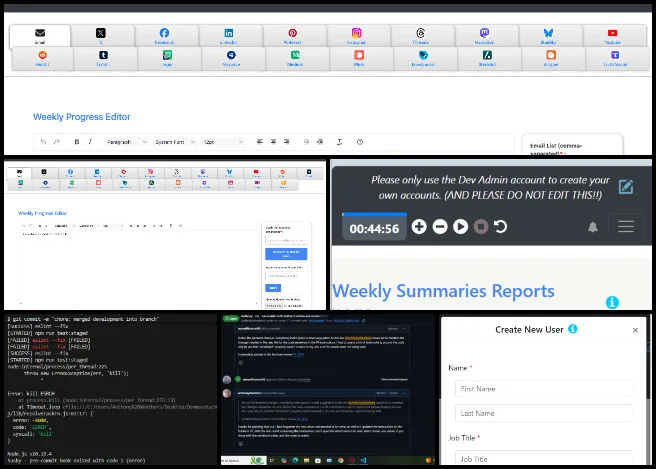
SOFTWARE PR REVIEW TEAM A-N
The PR Review Team’s summary for members with names starting A–N, managed by Neeharika Kamireddy (Data Analyst), highlights their contributions to the Highest Good Network software. This platform forms the foundation for measuring our results in demonstrating sustainable and free-shared eco-solutions. Active team members included Abdelmounaim Lallouache (Software Developer), Carl Bebli (Software Developer), Kurtis Ivey (Full Stack Developer), Lavanya Lahari Nandipati (Software Developer), Nahiyan Ahmed (Full Stack Software Developer), and Nathan Hoffman (Software Engineer). They supported the project by thoroughly reviewing all pull requests shared this week. Learn more about how the Highest Good Network tracks development toward demonstrating sustainable and free-shared eco-solutions in the Highest Good Network open source hub. The collage below showcases a compilation of this team’s work.
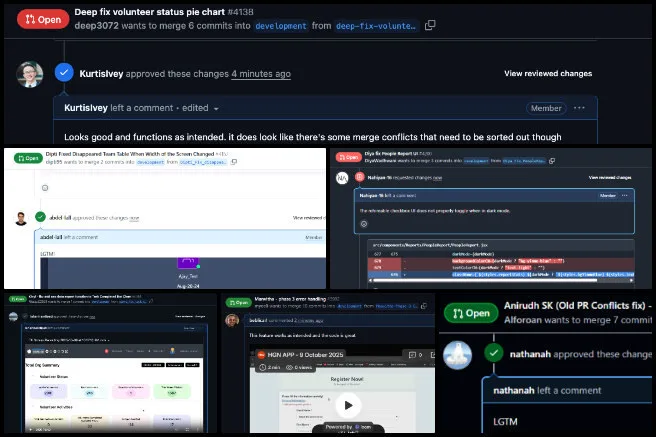
SOFTWARE PR REVIEW TEAM O-Z
The PR Review Team’s summary for team members with names starting from O–Z, covering their work on the Highest Good Network software, was managed by Jaiwanth Reddy Adavalli (Software Project Manager). The Highest Good Network software is a foundation for measuring our results in demonstrating sustainable and free-shared eco-solutions. This week’s active members of this team were: Shradha Bhadrannavar (Software Engineer) and Sundar Machani (Software Engineer). They reviewed all the Highest Good Network PRs (Pull Requests) shared in this week’s update. Learn more about how the Highest Good Network measures demonstrating sustainable and free-shared eco-solutions in the Highest Good Network open source hub. The images below highlight the work completed by this team
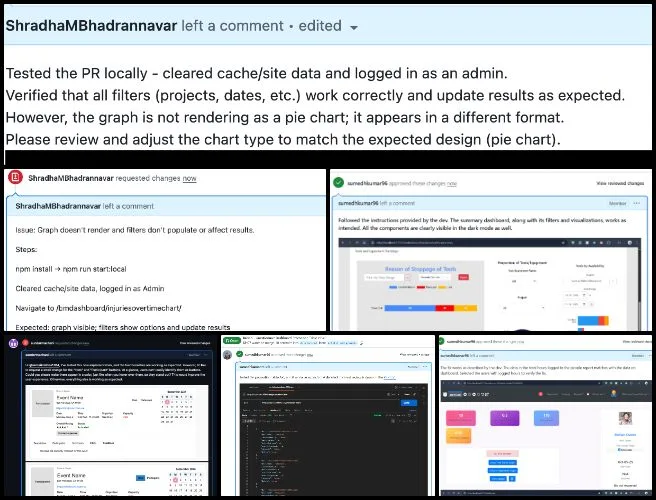
AND WE PRODUCED THIS WEEKLY UPDATES BLOG – CLICK HERE TO SUBSCRIBE
FOLLOW ONE COMMUNITY’S PROGRESS (click icons for our pages)
INVESTOR PAGES
GET INVOLVED
One Community Welcomes Mani Shashank Marneni to the Software Development Team!
One Community welcomes Mani Shashank Marneni to the Software Development Team as our newest Volunteer/Consultant!
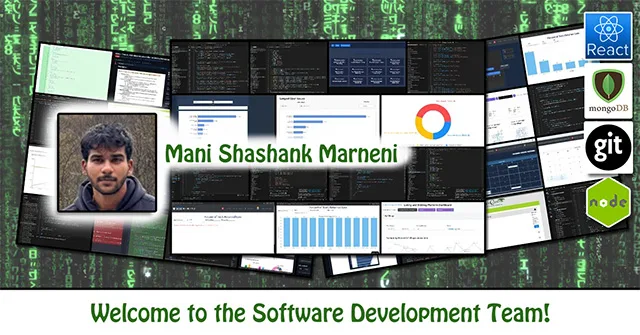
Mani is a Master of Computer Science graduate from the University of Alabama at Birmingham with experience in web development, data science, and cloud computing. He has worked on projects involving mobile safety applications, OCR-based vehicle number plate recognition, and NLP-driven slang definition generation, and on cloud platforms such as AWS and GCP. He also holds certifications including IBM Data Science, IBM Data Analyst, and AWS Cloud Practitioner Essentials. As a member of the One Community software team, Mani has contributed by creating the Phase 2 Summary Dashboard bar chart showing the percentage of tools returned late, resolving dark mode and validation bugs on the Job Posting Page Analytics dashboard, and fixing lint issues in the Announcements component in the Highest Good Network software.
WELCOME TO THE TEAM MANI!
FOLLOW ONE COMMUNITY’S PROGRESS (click icons for our pages)
INVESTOR PAGES
GET INVOLVED
One Community Welcomes Sphurthy Satish to the Software Development Team!
One Community welcomes Sphurthy Satish to the Software Development Team as our newest Volunteer/Consultant!
Sphurthy is a software engineer specializing in artificial intelligence, machine learning, and large-scale distributed systems. She has experience building scalable APIs, optimizing cloud-native applications, and developing generative AI and multi-agent platforms. Sphurthy has also worked with frameworks such as PyTorch, TensorFlow, and LangChain, and has contributed to projects focused on recommendation systems, retrieval-augmented generation (RAG), and intelligent automation. She is passionate about creating sustainable technology solutions that balance innovation, efficiency, and accessibility. As a member of the One Community software team, Sphurthy has contributed to implementing dark mode functionality across multiple BM Dashboard components in the Highest Good Network software, enhancing frontend styling, and ensuring a consistent user experience across tools, forms, and reusable components.
WELCOME TO THE TEAM SPHURTHY!
FOLLOW ONE COMMUNITY’S PROGRESS (click icons for our pages)
INVESTOR PAGES
GET INVOLVED
One Community Welcomes Rahul Bagul to the Software Development Team!
One Community welcomes Rahul Bagul to the Software Development Team as our newest Volunteer/Consultant!
Rahul is a skilled software engineer with more than three years of experience designing and building scalable, high-performance software applications. Proficient in Java, Python, and JavaScript, he combines strong technical expertise with a passion for solving complex problems. He holds a Master’s degree in Computer Science from Purdue University, where he honed his analytical and problem-solving skills. In his professional journey, Rahul has contributed to diverse projects across multiple domains, consistently delivering solutions that improve efficiency and performance. While a member of the One Community team, Rahul played a key role in developing automation workflows for seamless user onboarding and offboarding, as well as implementing performance optimizations that enhanced overall software reliability in the Highest Good Network software.
WELCOME TO THE TEAM RAHUL!
FOLLOW ONE COMMUNITY’S PROGRESS (click icons for our pages)
INVESTOR PAGES
GET INVOLVED
One Community Welcomes Ajay Kumar Naidu to the Software Development Team!
One Community welcomes Ajay Kumar Naidu to the Software Development Team as our newest Volunteer/Consultant!
Ajay brings over two years of professional experience as a Full Stack Engineer at Tata Consultancy Services (TCS), where he developed enterprise-scale applications and automated deployments to improve efficiency and reliability. Alongside his industry background, he has gained applied expertise in generative AI and deep learning through projects that include building neural networks, autoencoders, GANs, VAEs, and transformers, as well as fine-tuning large language models and developing retrieval-augmented generation pipelines. He is passionate about integrating AI-driven intelligence into full-stack systems to build scalable, user-focused applications. As part of the One Community team, Ajay has contributed to the Volunteer Management Dashboard of the Highest Good Network software, addressing a lack of structured feedback by building a user review system, stabilizing the platform by resolving complex merge conflicts, and streamlining team management through active/inactive user categorization. His work has improved search efficiency for admins, enhanced reporting accuracy, and supported scalability while exploring AI-powered insights.
WELCOME TO THE TEAM AJAY!
FOLLOW ONE COMMUNITY’S PROGRESS (click icons for our pages)
INVESTOR PAGES
GET INVOLVED
One Community Welcomes Rajeshwari Bhirud to the Software Development Team!
One Community welcomes Rajeshwari Bhirud to the Software Development Team as our newest Volunteer/Consultant!
Rajeshwari is a Software Engineer with more than three years of industry experience and a Master’s in Information Systems from Pace University. She has a strong background in full-stack development, database design, and building scalable systems with Java, Python, REST APIs, and cloud technologies. Passionate about user-centric solutions and technology for social good, she has contributed to enterprise-level applications and developed innovative projects that address everyday needs. As part of the One Community software team, Rajeshwari supports the Administration Team by reviewing documentation, identifying gaps, and improving clarity by providing structured feedback for the Highest Good Network software. She also streamlines processes by compiling summaries, editing content, and maintaining documentation across collaborative tools.
WELCOME TO THE TEAM RAJESHWARI!
FOLLOW ONE COMMUNITY’S PROGRESS (click icons for our pages)
INVESTOR PAGES
GET INVOLVED
One Community Welcomes Sreeja Nandyala to the Software Development Team!
One Community thanks Sreeja Nandyala for her contributions as a Volunteer/Consultant on the Software Development Team!
Sreeja earned her Master of Science in Computer Science from the University of North Texas in May 2025. She has prior industry experience as an Associate Software Engineer and Full Stack Developer Intern at Zemoso Technologies in India, where she contributed to open-source development, created reusable Angular UI components, and built full-stack applications using React.js, Node.js, Express.js, MongoDB, and Spring Boot while collaborating in Agile environments. While a member of the One Community software team, Sreeja contributed to the Highest Good Network software development initiative by working on the Application/Job Posting Page and supporting its design cleanup and completion.
WELCOME TO THE TEAM SREEJA!
FOLLOW ONE COMMUNITY’S PROGRESS (click icons for our pages)
INVESTOR PAGES
GET INVOLVED
One Community Welcomes Fatima Villena to the Software Development Team!
One Community welcomes Fatima Villena to the Software Development Team as our newest Volunteer/Consultant!
Fatima is a software engineer with a Bachelor’s degree in Computer Science and a background that includes experience as an AI trainer and full-stack developer. She enjoys the entire design-to-development process, with a particular interest in transforming ideas from concepts into responsive and engaging front-end experiences. Fatima is passionate about innovation and community building, values reflected in both her technical work and her long-standing commitment to developing user-friendly solutions. As a member of the One Community team, she has contributed to developing features for the Phase 2 PR Review Team Dashboard and components for the BM Dashboard in the Highest Good Network software and component the BM dashboard, as well as to the transition from CSS to CSS modules.
WELCOME TO THE TEAM FATIMA!
FOLLOW ONE COMMUNITY’S PROGRESS (click icons for our pages)
INVESTOR PAGES
GET INVOLVED
One Community Welcomes Juhitha Reddy Penumalli to the Software Development Team!
One Community welcomes Juhitha Reddy Penumalli to the Software Development Team as our newest Volunteer/Consultant!
Juhitha is a Software Engineer with over 2 years of experience in full-stack development, specializing in the MERN stack and cloud-based applications. She has worked on building scalable frontend applications using React, Redux, and modern UI frameworks, and has contributed to backend systems leveraging Node.js, Express, and MongoDB. Her background also includes developing secure microservices, optimizing state management, and implementing robust API integrations. Juhitha is passionate about creating clean, efficient solutions that align with user and business needs while ensuring maintainability and scalability. As a member of the One Community software team, she has worked on integrating AI-driven functionality into the project, implemented backend APIs, enhanced frontend features, and contributed to the development of the Summary Dashboard by building data-driven components and ensuring cross-environment consistency for the Highest Good Network software.
WELCOME TO THE TEAM JUHITHA!
FOLLOW ONE COMMUNITY’S PROGRESS (click icons for our pages)