One Community
One Community Welcomes Jaden Wong to the Software Development Team!
One Community welcomes Jaden Wong to the Software Development Team as our newest Volunteer/Software Engineer!
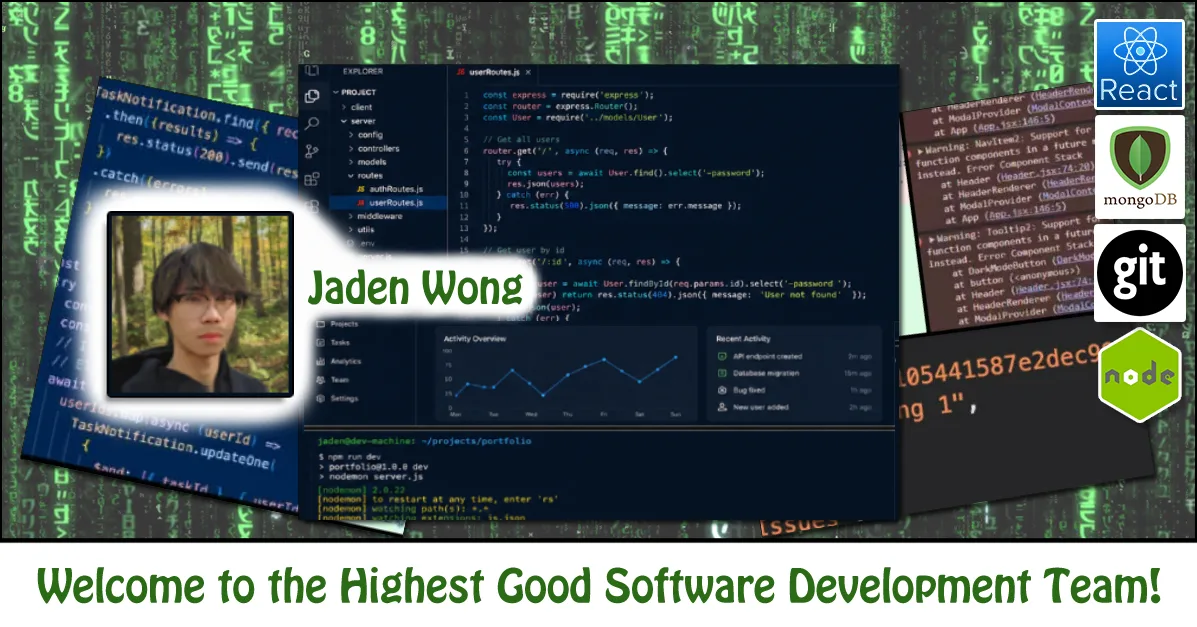
Jaden is a Software Engineer with two years of hands-on experience working across machine learning, full-stack web development, and quantitative systems. He specializes in applied machine learning, full-stack development using modern frameworks, and end-to-end system design, from raw data to deployed products. He believes the most impactful software is built at the intersection of technical rigor and real-world usability, and that clean architecture and thoughtful design are not trade-offs but complements. He is driven by the challenge of turning complex problems into elegant, maintainable solutions that make a measurable difference. As a member of the One Community team, Jaden works on the open source Highest Good Network software and has contributed to resolving merge conflicts on stalled PRs, implementing a “No Teams Found” message with a Create Team button on the Teams page, and improving the appearance of the loading message on the Permissions Management page.
WELCOME TO THE TEAM JADEN!
FOLLOW ONE COMMUNITY’S PROGRESS (click icons for our pages)


INVESTOR PAGES
GET INVOLVED
One Community Welcomes Nirali Patel to the Software Development Team!
One Community welcomes Nirali Patel to the Software Development Team as our newest Volunteer/Software Engineer!
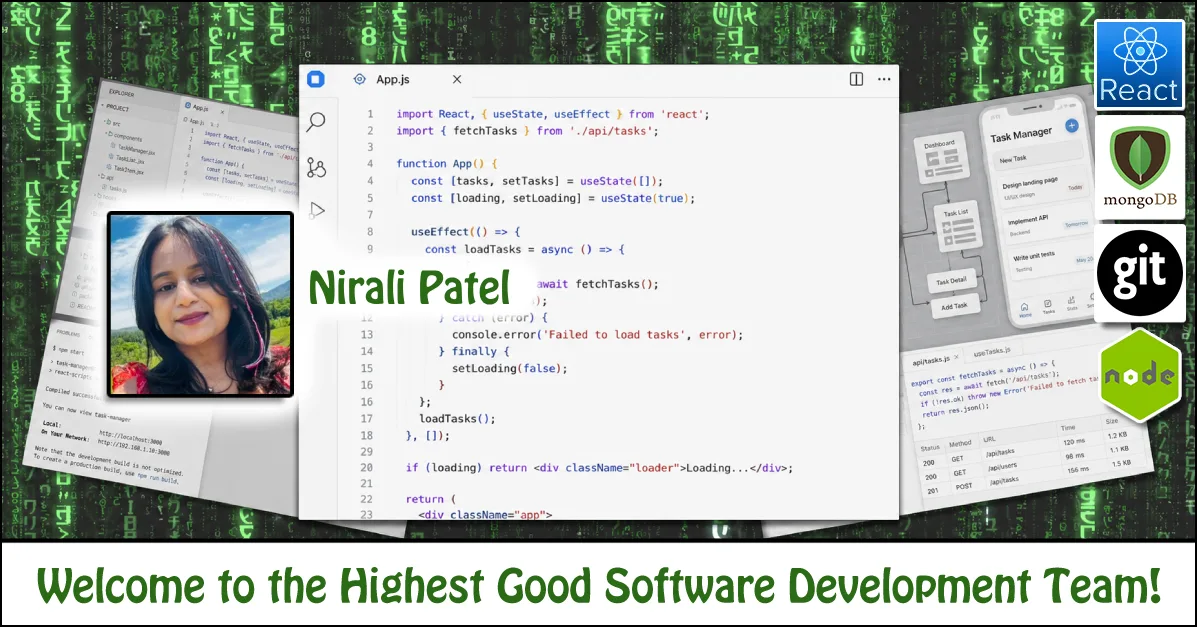
Nirali is a Full Stack Software Engineer with over 7 years of experience developing scalable web applications, microservices, and enterprise software solutions using Java, Spring Boot, React, Next.js, Node.js, and cloud technologies. She has a strong background in software development, database design, API integration, testing, and agile collaboration across diverse industries. Nirali is passionate about building efficient, user-focused applications that improve productivity, enhance user experiences, and support sustainable, technology-driven solutions. As a member of the One Community Software Team, Nirali has contributed to the Highest Good Network software application by developing and testing new features, resolving complex bugs, improving user management functionality, enhancing reporting systems, fixing responsive design issues, strengthening automated test coverage, and helping improve overall application stability and usability.
WELCOME TO THE TEAM NIRALI!
FOLLOW ONE COMMUNITY’S PROGRESS (click icons for our pages)
INVESTOR PAGES
GET INVOLVED
Developing Global-Sustainability Systems – One Community Weekly Progress Update #699
At One Community, we are developing global-sustainability systems designed for a global audience seeking real, replicable change. Our all-volunteer team is building a self-replicating model that links solutions across food, energy, housing, education, economics, and social architecture into one working whole, meant to grow into a global network of teacher/demonstration hubs. We’re building all of it as open source and freely shared, because we’re doing this for “The Highest Good of All.”
- Here’s our project overview
- Here’s our world-change methodology
- Here’s how this becomes self-replicating
- Here’s how we are open source and free-sharing all the do-it-yourself designs
OUR MAIN OPEN SOURCE HUBS
Click on each icon to be taken to the corresponding Highest Good hub page.
One Community’s physical location will forward this movement as the first of many self-replicating teacher/demonstration communities, villages, and cities to be built around the world. This is the August 10, 2026 edition (#699) of our weekly progress update detailing our team’s development and accomplishments:
Developing Global-Sustainability Systems
One Community Progress Update #699

DONATE | COLLABORATE | HELP WITH LARGE-SCALE FUNDING
CLICK HERE IF YOU’D LIKE TO RECEIVE AN EMAIL EACH WEEK WHEN WE RELEASE A NEW UPDATE
YOU CAN ALSO JOIN US THROUGH SOCIAL MEDIA
ONE COMMUNITY WEEKLY UPDATE DETAILS
HIGHEST GOOD HOUSING PROGRESS
One Community is developing global-sustainability systems through Highest Good housing that is artistic and beautiful, more affordable, more space efficient, lasts longer, DIY buildable, and constructed with healthy and sustainable materials:
- Learn about: Our Upcoming Crowdfunding Campaign
- Learn about the different village models and developing global-sustainability systems: 7 Sustainable Village Models
- Visit the open source portals for the first two: Earthbag Village OS Hub | Straw Bale Village OS Hub
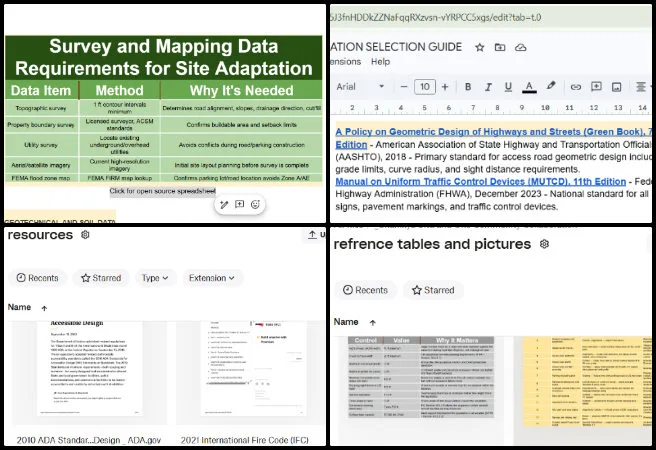
This week, Chanikya Sita (Volunteer Civil/Transportation Engineer) finalized the Sustainable Roads and Sustainable Parking Lot Adaptation Guide and the Land Purchasing and Transportation Infrastructure Due Diligence document. He worked on applying the latest round of supervisor feedback to the sustainable roads and parking lot location selection guide. Updates included adding a mini table of contents with all major headings and subheadings in the title case at the top of the document. The storm event design standard was updated throughout the drainage section to reflect that thousand-year storm events are becoming more frequent due to climate change, and that designers should consider sizing drainage systems beyond the traditional 25-year minimum. Three video coming placeholders were added at key sections including site data collection, drainage design process, and CAD update sequence to indicate where tutorial videos will be produced during construction. AI generated image prompts were also developed for four locations throughout the document, depicting the site selection and due diligence process including soil boring, wetland delineation, road grade measurement, and FEMA flood zone map review, to make the document more visually appealing for web publication. This work supports developing global-sustainability systems by improving the accessibility, organization, and reliability of open source transportation and infrastructure resources. See below for some of the pictures related to this work.
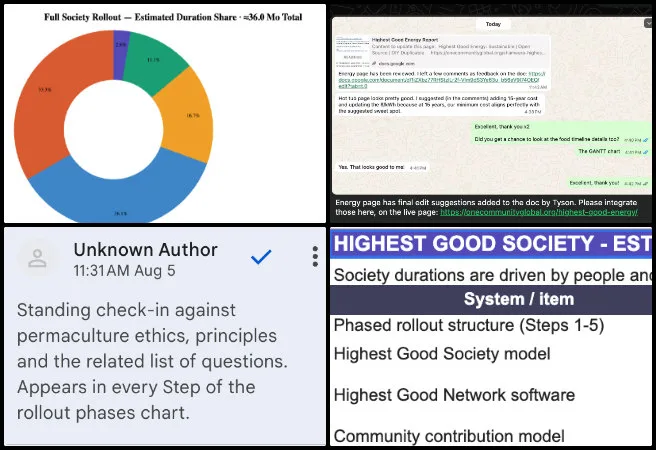
Devendranath Chowdary Maganti (Data Analyst) continued updating the Highest Good Energy web page by integrating new project work, revising existing content, and incorporating the latest updates into the page. He also reviewed the Highest Good Society materials and developed the timeline dashboard based on the available project information. He made further changes to the dashboard based on feedback from Jae, including updates to improve the organization and presentation of the timeline data. In addition, Devendranath continued completing regular Administration Team duties and supported related administrative activities. His efforts contribute to developing global-sustainability systems by making sustainability resources more accessible while strengthening collaboration, knowledge sharing, and volunteer development. Below, you’ll find some images of this work.
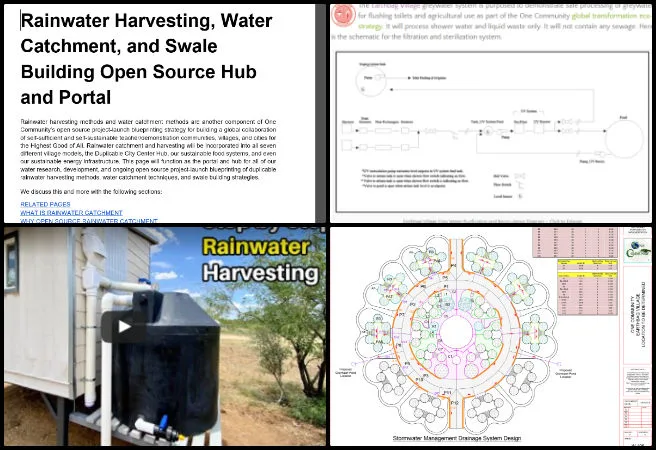
Sagar Chavan (Transportation Engineer) continued working on the Sustainable Roadways and Sustainable Parking Lot. He worked on integrating and finalizing the Earthbag Village stormwater and greywater system content. He reviewed the report formatting requirements, updated missing content for the Rainwater Harvesting, Water Catchment, and Swale Building page, and checked Yi-Ju’s latest water-harvesting report and the Earthbag Village Master Plan for consistency with the existing design. Sagar also worked on the Earthbag Village Greywater System page, added and organized the detailed stormwater cost analysis, and developed content for the tutorial on achieving maximum Stormwater Management LEED points. The work also included reviewing the existing stormwater design, hydraulic calculations, drainage information, and supporting project documentation while ensuring that the Earthbag Village design and layout remained unchanged. His work supports developing global-sustainability systems by strengthening practical, open source guidance for sustainable transportation and integrated water management systems. See below for some of the pictures related to this work.
DUPLICABLE CITY CENTER PROGRESS
One Community is developing global-sustainability systems through a Duplicable and Sustainable City Center that is LEED Platinum certified/Sustainable, can feed 200 people at a time, provide laundry for over 300 people, is beautiful, spacious, and saves resources, money, and space:
- Learn about this building, its function and developing global-sustainability systems: Duplicable City Center Open Source Hub
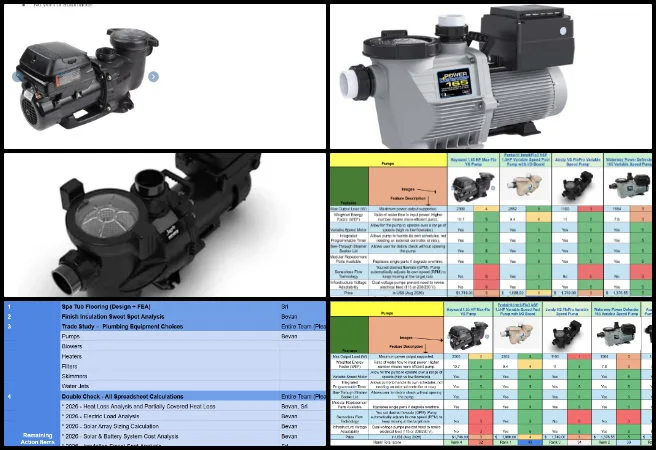
This week, Bevan Chiu (Mechanical Engineer) continued his work finishing the City Center Eco-spa Designs. He worked on the pump trade study for the plumbing equipment comparison to identify the most sustainable pump option. He researched several variable-speed pumps and evaluated factors including Weighted Energy Factor, sensorless flow technology, infrastructure voltage adaptability, and integrated programmable timer functions. He created a comparison matrix using a 0-to-5 scoring system for each evaluation factor and ranked the pumps based on their total scores. For the supporting documentation, Bevan prepared descriptions of the pump options, outlined their advantages and disadvantages, and wrote a conclusion explaining the comparison results and final pump selection. This open source Duplicable City Center project focuses on developing global-sustainability systems. For more details, refer to the image below.
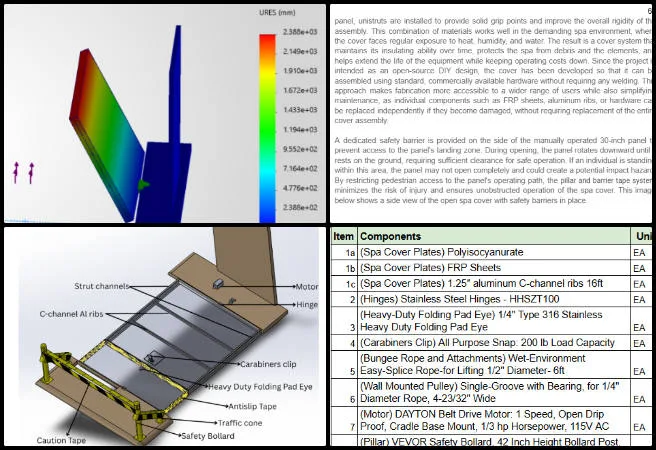
Shivarama Krishna Revanuru (Mechanical Engineer) continued working on the Duplicable City Center design. He focused on the heat capacity of the spa cover and the addition of a thermal blanket to the spa cover to reduce heat loss. He checked the boundary conditions for the thermal analysis and planned the approach for implementing the thermal blanket and evaluating its effect on heat loss. These tasks were based on the latest feedback provided by Jae. This open source Duplicable City Center project demonstrates developing global-sustainability systems. The images below illustrate aspects of this work.
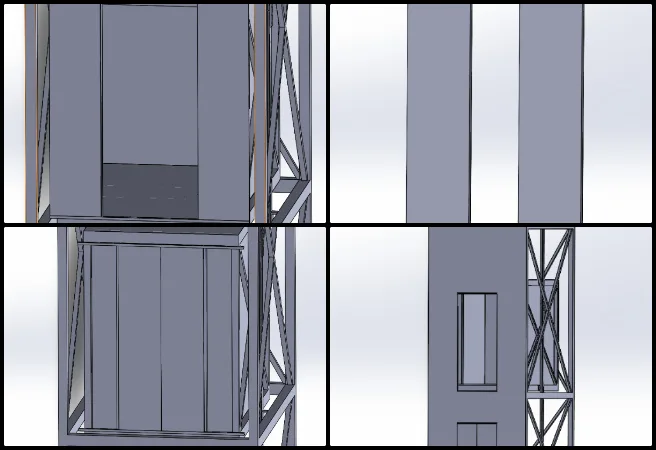
Nidish Reddy Koppula (Mechanical Engineer) continued working on the Duplicable City Center design. He worked on the hydraulic system layout, shaft enclosures, door systems, and final touchups for the elevator and lift shaft assembly. He updated the elevator model by adding and refining hydraulic components, completing enclosure-related details for the shaft, and continuing work on the lift cabin and shaft door systems. Nidish also made final model adjustments to improve the overall assembly representation for rendering. In addition, he began working on the digital movement rendering of the elevator to show the elevator motion within the shaft assembly. This open source Duplicable City Center project presents developing global-sustainability systems. For more details, refer to the image below.
HIGHEST GOOD FOOD PROGRESS
One Community is developing global-sustainability systems through Highest Good food that is more diverse, more nutritious, locally grown and sustainable, and part of our open source botanical garden model to support and share bio-diversity:
- Learn about the structures and developing global-sustainability systems: Hoop House Hub | Aquapini & Walipini Open Source Hub
- See what we’ll be growing: Gardens & Hoop Houses | Large-scale Structures | Food Forest | TA
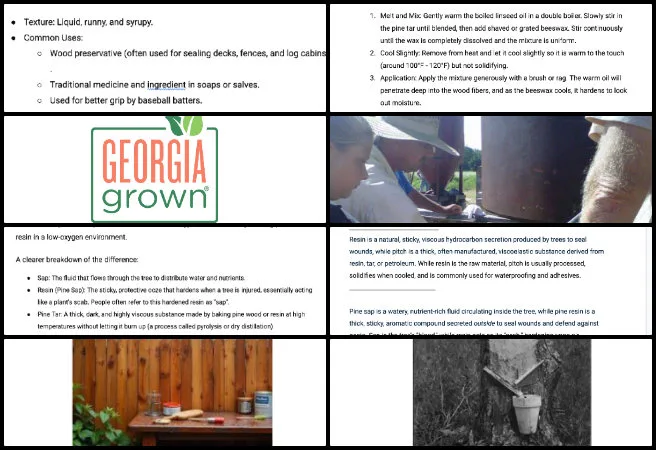
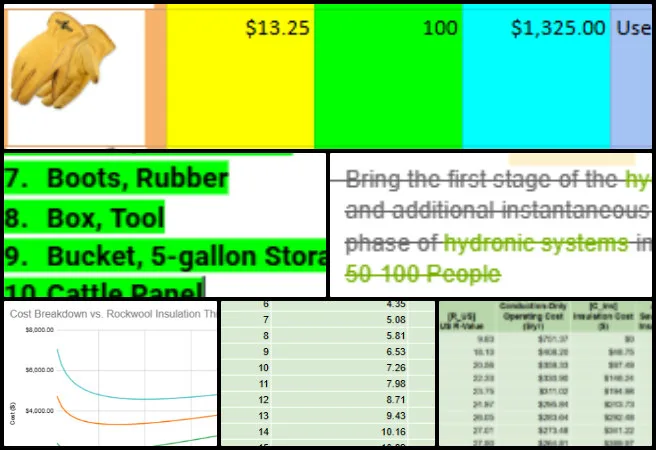
This week, the core team continued working on the Master Tools, Equipment, and Materials/Supplies List for the Large-scale Garden, Botanical Garden, and other Highest Good Food components, focusing on potential sources to supply real turpentine for the wood preservation of fence projects. Bulk quantities may be sourced but probably in other countries such as Brazil, Spain, and Portugal. The core team also utilized an AI assistant to search for potential property locations, though the process encountered repetitive querying and a lack of responses for the requested areas. Their efforts contribute to One Community’s mission of developing global-sustainability systems through open-source collaboration, ecologically responsible innovation, and a focus on long-term global development. The collage below portrays the team’s efforts and achievements for the week.
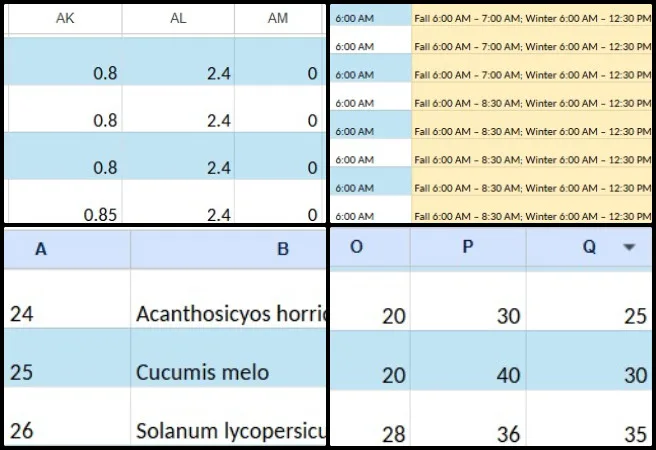
Jay Nair (BIM Designer) continued working on the Aquapini and Walipini Planting and Harvesting documents. He worked on developing the Google Sheets–based lighting energy calculator by refining the formulas and calculation logic to improve accuracy and usability. He updated values, optimized spreadsheet functions, and adjusted the calculation workflow to reduce manual input and simplify future greenhouse lighting energy calculations. The ongoing refinements support a more efficient, consistent, and scalable tool for analyzing lighting energy requirements. These updates improve the stability and adaptability of shared systems, supporting the broader goal of developing global-sustainability systems. See the collage below portraying the work done this week.
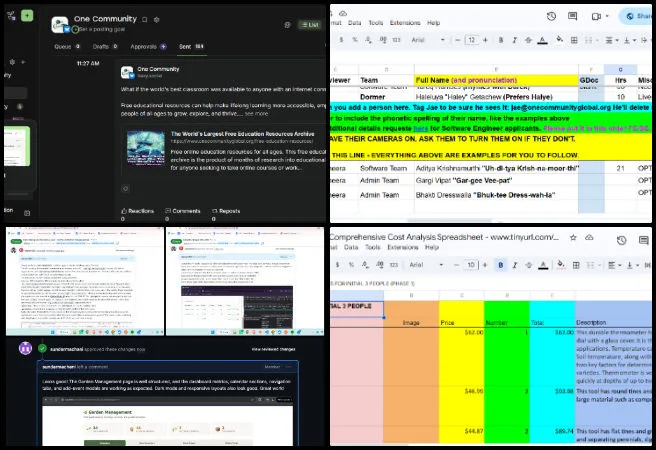
Shameera Musthafa (Data Analyst) continued working on the Highest Good Food initiative, supported OC Administration and the PR Review Team by coordinating PR review workflows, reviewing the work of both the Admin and PR teams, and providing feedback to ensure accuracy, clarity, and consistency across all deliverables. She organized and categorized project images, created visual collages, and finalized blog-related content as part of PR review coordination, ensuring that both visual and written materials were properly curated and documented. Additionally, she contributed to the Highest Good Food report pages and related visualizations. Shameera also managed the One Community Bluesky social media account, creating and publishing posts to help share project updates and increase outreach and engagement. In addition, she supported the hiring process by conducting interviews and evaluating candidates. This work plays a key role in developing global-sustainability systems. See below for images showcasing her work.
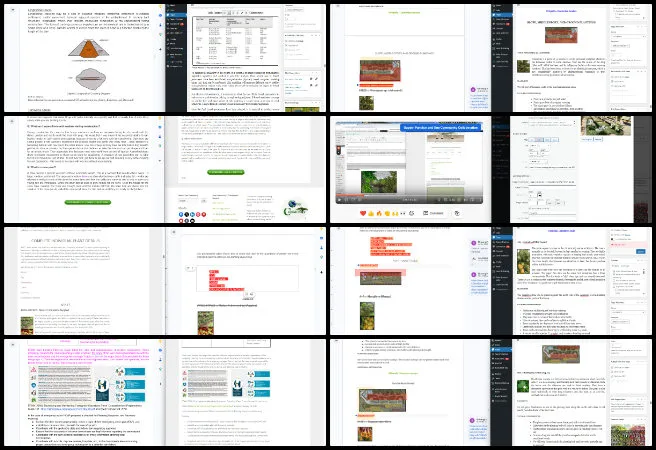
Navya Eeshani Boyapati (Web Designer) continued working on the Aquapini/Walipini planting page content. She completed Task 3: 280 Check Aquapini and Walipini Planting Page Content, SEO Optimize All Images by reviewing and updating the Aquapini and Walipini planting pages, correcting formatting and spacing issues, ensuring consistency with related pages, adding missing content from the provided documentation, checking for errors, and optimizing images with SEO-friendly alt text and keywords. She also started Task 4: 872 Open Source DIY Earth Dam Design & Construction Page Creation by reviewing the provided content, beginning webpage development, and preparing the page structure and formatting according to project requirements. See the collage below for a snapshot of this week’s work towards developing global-sustainability systems.
HIGHEST GOOD ENERGY PROGRESS
One Community is developing global-sustainability systems through Highest Good energy that is more sustainable, resilient, supports self-sufficiency and includes solar, wind, hydro and more:
- Learn about the open source sustainable-energy foundations and developing global-sustainability systems: Solar, Hydro, and Wind
- Explore our research into the most sustainable products and companies for saving water and energy: Insulation, Eco-laundry, Lightbulbs and Light Bulb Companies, Doors and Door Companies, Windows and Window Companies, Toilets, Faucets and Faucet Accessories, Urinals, and more.
This week, the core team continued contributing to the Highest Good Energy initiative, part of One Community’s work developing global-sustainability systems. They communicated with the Highest Good Food team about ideas for charts illustrating the food infrastructure rollout. The team reviewed the Highest Good Food GANTT chart and updates to the Highest Good Energy page. They also reviewed the hot tub insulation section and provided feedback. In addition, the team continued working on the infrastructure cost analysis for the Highest Good Food rollout. See the collage below for a snapshot of their work this week.
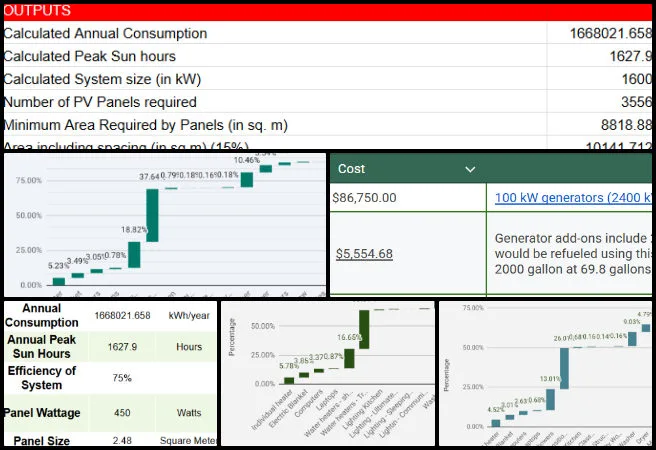
Rohan Pariakar (Operations and Supply Chain Analyst) continued working for the Highest Good Energy initiative, part of One Community’s broader work developing global-sustainability systems, and migrated the renewable energy planning and infrastructure analysis from the development workbook into the project’s primary engineering workbook. He transferred validated generator planning, solar sizing, procurement estimates, phase-based infrastructure planning, and energy demand analyses while preserving calculation integrity and updating cross-sheet references so dependent worksheets stayed synchronized. He also re-established links between the Hourly Energy Analysis, Phase Energy Summaries, Solar Sizing, Master Planning, and phase-specific infrastructure sheets so calculations propagate automatically across the workbook.
Rohan also recreated all analytical visualizations from scratch, including energy demand breakdowns, component cost distributions, and phase-level summary charts, referencing updated datasets so each dynamically reflects future revisions. He migrated the solar sizing model, including photovoltaic system sizing, installed capacity calculations, panel quantities, estimated energy generation, procurement recommendations, installation footprint calculations, battery sizing scenarios, and cost comparisons for renewable energy deployment. He updated generator infrastructure planning worksheets by transferring equipment selections, hardware requirements, fuel storage assumptions, battery storage integration, procurement estimates, and documentation links into the consolidated workbook. These improvements established a centralized planning environment integrating demand analysis, renewable sizing, procurement, and phased infrastructure deployment into one traceable engineering workflow, contributing to One Community’s mission of developing global-sustainability systems. See the collage below for highlights of his work.
HIGHEST GOOD EDUCATION PROGRESS
One Community is developing global-sustainability systems through Highest Good education that is for all ages, applicable in any environment, adaptable to individual needs, far exceeds traditional education standards, and more fun for both the teachers and the students. This component of One Community is about 95% complete with only the Open Source School Licensing and Ultimate Classroom construction and assembly details remaining to be finished.
With over 8 years of work invested in the process, the sections below are all complete until we move onto the property and continue the development and open sourcing process with teachers and students – a development process that is built directly into the structure of the education program and everything else we’re creating too:
- Program Overview: Education Open Source Hub
- How the components work together in designing human orchestrated eco-abundance and developing global-sustainability systems: How to use the Education for Life Program
- Lesson Plans for Life – Lesson Plans How-to
- Foundations of Outstanding Leaders, Teachers, and Communicators
- Curriculum for Life
- Teaching Strategies for Life
- Learning Tools and Toys for Life
- Evaluation and Evolution
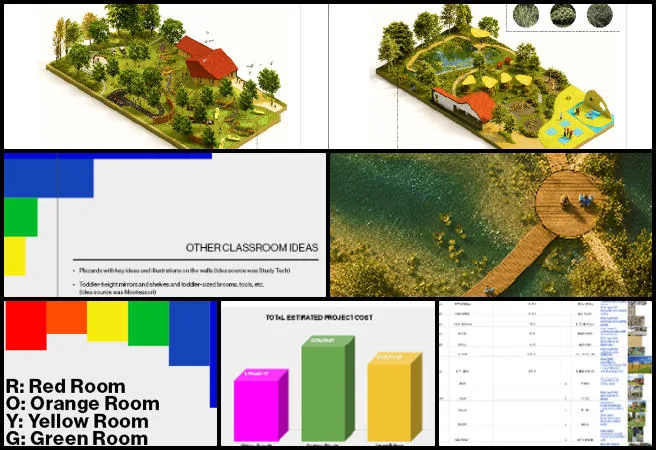
This week, Isaiah “Isa” Hernandez (Graphic Designer) continued working on the spreads for The Ultimate Classroom, and began integrating material from Jung Ah “Romey” Choi’s (Graphic Designer) book, which includes information about the external planning and general layout of the classroom. This project is developing global-sustainability systems, by incorporating this additional information into their version of the book, aiming for a logical narrative structure balancing between Romey’s and Isa’s content. See the collage below for his work this week.
HIGHEST GOOD SOCIETY PROGRESS
One Community is developing global-sustainability systems through a Highest Good society approach to living that is founded on fulfilled living, the study of meeting human needs, Community, and making a difference in the world:
- Read the Highest Good society overview: Highest Good Society
- Learn about the model for fulfilled living, sharing and developing global-sustainability systems: A Day in the Life
- Learn about the 4 economic models: RBE | For-profit | Non-profit | Entrepreneurship
- Learn about our open source community collaboration and management software: The Highest Good Network
This week, the core team completed over 43 hours managing volunteer work reviews, handling emails, overseeing social media accounts, supporting web development, and identifying and integrating bug fixes for the Highest Good Network. They also interviewed and onboarded new volunteer team members. Additionally, they produced and integrated the video above about developing global-sustainability systems and how developing global-sustainability systems serves as a foundational element of One Community’s broader mission. The following images showcase their work.
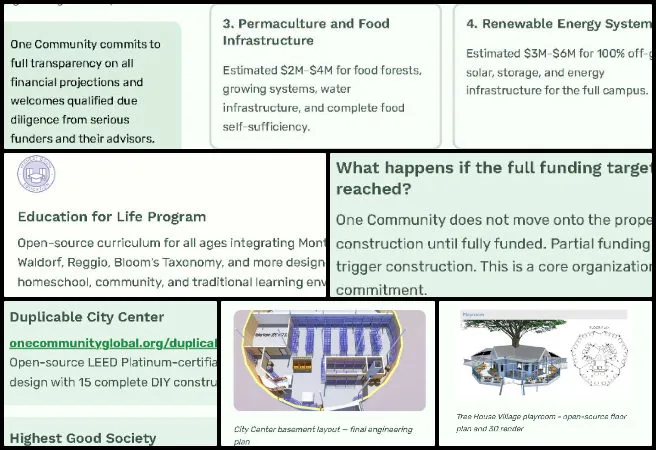
Pooja Kulkarni (UI/UX Designer) continued developing and refining One Community Global’s executive fundraising pitch deck by applying Jae’s feedback and reviewing the pitch deck references he shared. She created a shorter presentation version with 12 main slides and 3 appendix slides to make the story easier to follow and share with potential funder connections. She refined the problem statement, added a “Why Now” section, clarified the eight Highest Good systems, improved the replication model, and added sections for the project track record, seven village models, funding needs, financial model, team, accountability, and due diligence. Pooja also updated the funding language to show an approximately $40M target within a $30M-$50M projected range and kept the main call to action focused on qualified introductions to philanthropists, foundations, and family offices. She replaced long AI-style dashes with standard hyphens, used more One Community project images and renders, and prepared both shorter and longer deck versions for Jae to review before the next round of edits. See the collage below for snapshots of her work, which contributes to developing global-sustainability systems.
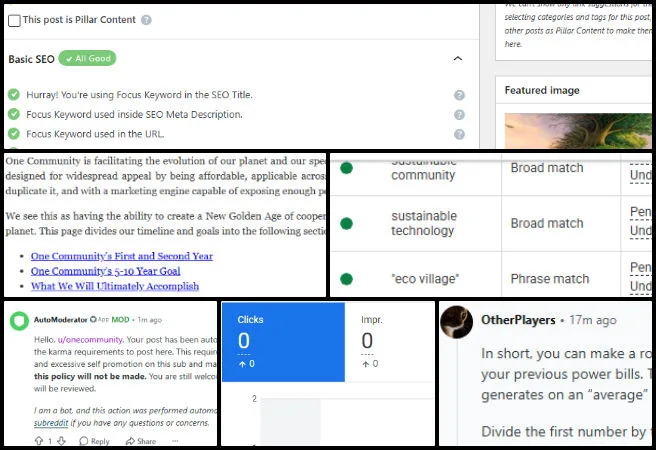
Adhya Rastogi (Business Analyst) continued Reddit engagement using the PostByPurpose and One Community accounts by creating a discussion post, responding to comments, and contributing to relevant community conversations while focusing on organic participation. She optimized Google Ads for the Overview and Solutions That Create Solutions pages by aligning keyword targeting, ad copy, negative keywords, and campaign settings with the corresponding SEO work and landing-page content. She also reviewed feedback on the First Five Years page, made the requested SEO and content adjustments, and rechecked the updated page. For the Methodology page, Adhya reviewed and improved keyword placement, headings, content structure, metadata, readability, internal linking, and search-intent alignment while maintaining the original messaging. She recorded baseline analytics for future performance tracking and updated the SEO tracking records with the completed work and optimization details. See the collage below for highlights of her work towards developing global-sustainability systems.
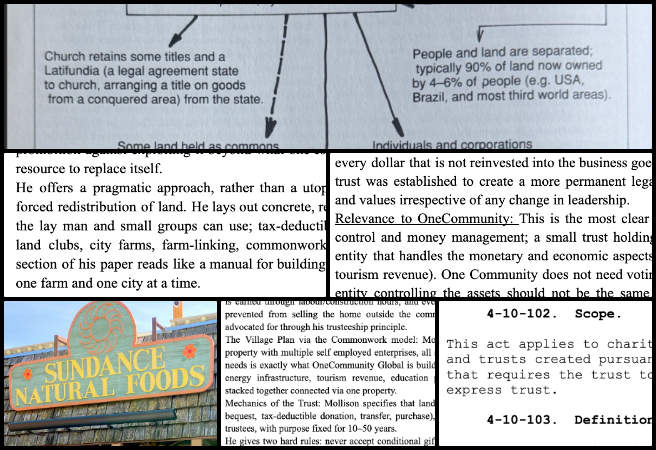
Anagha Sunil Bharadwaj (Legal Research And AI Policy Specialist) completed orientation and initial setup, then began work on the legal structure for perpetual property preservation and home shares for One Community. She read One Community’s five-year plan, global goals, eco-tourism revenue stream plans, and home shares structure, and read Bill Mollison’s arguments on land access from Permaculture: A Designers’ Manual. Anagha researched how Mollison’s theories on land trusteeship and commonwork systems apply to One Community’s goals towards developing global-sustainability systems, and identified specific points where his arguments do not transfer to One Community’s model. She researched US laws governing trusts and nonprofits to understand One Community’s existing legal structure before making recommendations. Anagha also reviewed case studies of perpetual purpose trusts such as Patagonia’s Perpetual Purpose Trust structure and examined additional case studies, including Organically Grown Company, Sundance Natural Foods, and The Walker Group, to understand how perpetual purpose trusts have been implemented at different organizational scales.
Additionally, Anagha researched jurisdictional differences in US trust law across five states with statutes supporting perpetual purpose trusts, and reviewed their enforceability provisions. Anagha began preliminary research into other legal structures applicable to the property preservation question, including conservation easements, title-holding nonprofit subsidiaries, community land trusts, and membership nonprofit structures with reserved powers. She documented the week’s research and continued developing the legal structure recommendation for One Community’s property preservation document to further the One Community’s mission of developing global-sustainability systems. See the collage below to see her week’s work.
ADMINISTRATION TEAM
The Administration Team’s summary, which covers their work on the Highest Good Network, was managed by Devendranath Chowdary Maganti (Data Analyst) and includes Leo Lishin Shiu (Software Engineer), Olawunmi “Ola” Ijisesan (Administrative and Management Support), Prathik Raju (Data Analyst), Sachit Varma (Business Operations & Cost Analyst), Sai Sree Dongari (Data Analyst), Tanmay Nihal Harwani (Data Scientist), and Yeshwanth Nanjegowda (Full-Stack Software Engineer). The Administration Team supports the Highest Good Network, a tool designed to track and measure progress while creating systems that support developing global-sustainability systems. Through administrative support, documentation, testing, training, recruitment, analytics, and content management, the team helps advance this mission, aligning with One Community’s vision of building a replicable and sustainable future model.
This week, Leo reviewed and compiled the 17 LeDCC, 15 LeHUS, and 20 LeFOD weekly summaries, created blog collages, met with the new Mastodon administrator to explain posting procedures and dashboard tracking, and reviewed social media insights while maintaining Facebook and Instagram analytics. Ola updated tracking dashboard performance metrics, maintained scheduled content accuracy, organized administrative documentation, reviewed operational routines, verified tracking data, and submitted the weekly report and images. These social media management and administrative organization efforts play a key role in developing global-sustainability systems.
Prathik tested sections of the Total Org Summary dashboard, documented chart display issues and volunteer location discrepancies between Dev and Production, managed Mastodon posts and analytics, refreshed the Social Media Master Dashboard, verified content, and reviewed Dev administrative work. He also reviewed Dev Dynasty submissions, corrected missing materials, updated the Blog #698 summary and collage, and maintained tracking records. Sachit restructured the funding matrix into a two-stage scoring system, created an association matrix, researched approximately fifteen funders, prepared prospect briefs, corrected profile information, evaluated lower-priority prospects, and aligned shared documents with spreadsheet data. These analytics, research, and evaluation activities further the goal of developing global-sustainability systems.
Sai Sree organized review images, created collages, finalized PR Admin Team blog content, reviewed candidate profiles and interview questions, completed four interviews, and recorded feedback. She also performed frontend testing across multiple PRs covering functionality, forms, modals, layouts, charts, filters, responsiveness, and dark mode, documented results, verified fixes, and assigned PRs for frontend and backend testing. Tanmay updated team bios, contacted members for missing summaries and photographs, consolidated content for the weekly blog, completed SEO adjustments, posted content on Threads, updated the Social Media Master Dashboard, and maintained tracking sheets and volunteer records. These quality assurance, content management, and administrative activities contribute to developing global-sustainability systems.
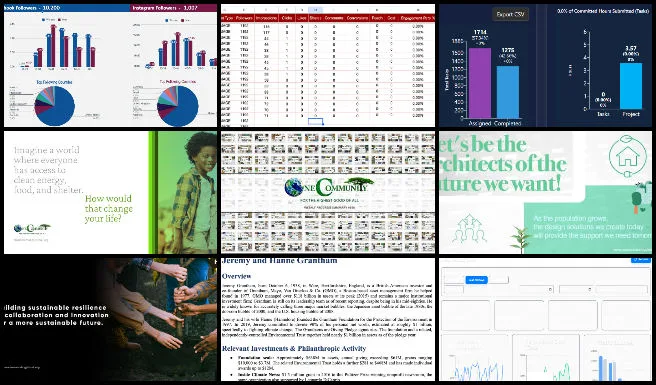
Yeshwanth reviewed documentation covering PR administration, analytics, application and job posting functionality, HGN Phase II materials, project tracking, and HGN Phase 6 food inventory management. He created 44 action items, addressed comments, removed outdated tasks, added and assigned new tasks, and communicated with team members about requirements and issues. He also reviewed Team Skye administrative work and submissions, identified missing materials, updated the Blog #698 summary and collage, corrected keyword and formatting issues, and updated tracking documents. These documentation, software planning, and workflow improvement activities align with the mission of developing global-sustainability systems. See the collage below for highlights of this week’s work.
HIGHEST GOOD NETWORK PROGRESS
 One Community is developing global-sustainability systems through open source Highest Good Network® software that is a web-based application for collaboration, time tracking, and objective data collection. The purpose of the Highest Good Network is to provide software for internal operations and external cooperation. It is being designed for global use in support of the different countries and communities replicating the One Community sustainable village models and related components.
- Learn about our open source community collaboration, management software and developing global-sustainability systems: The Highest Good Network
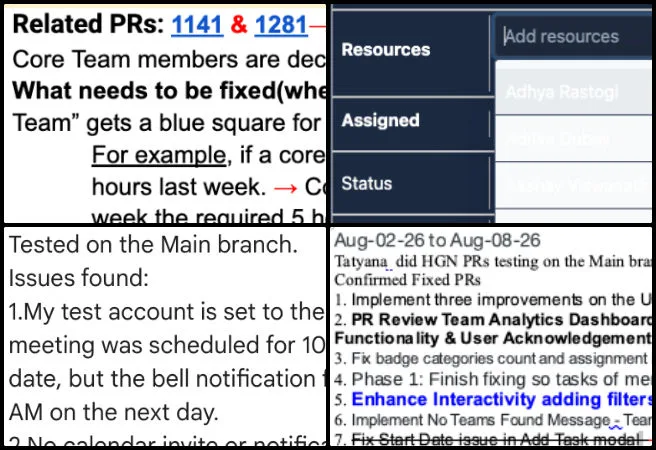
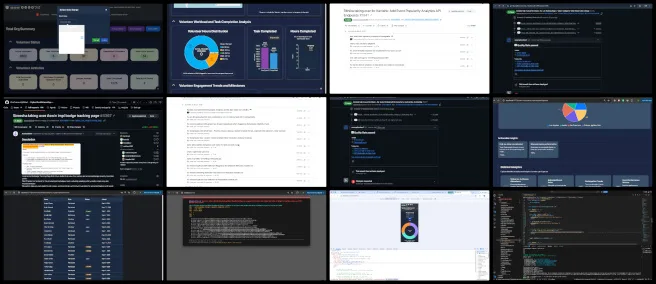
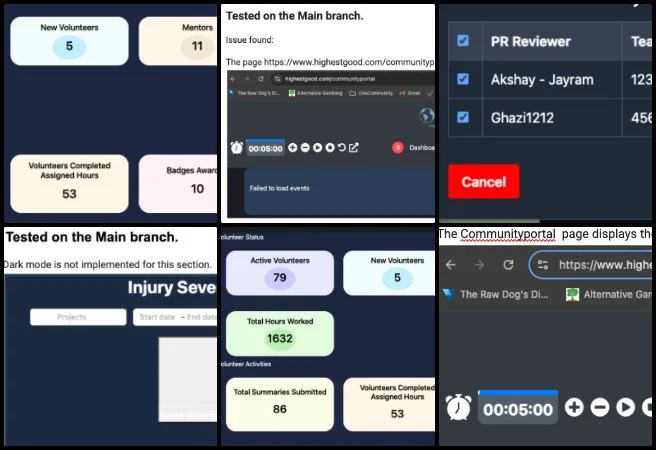
This week, the core team continued testing pull requests on the main branch for the Highest Good Network, a platform developing global-sustainability systems. They confirmed that 8 pull requests were fixed and identifying an issue with the Bell Notification for Meetings feature (PRs #3946 and #1677). The team was unable to test several pull requests because the required data was not available on the main branch, including Fix Dark Mode Display for Lesson List Page (PR #5372), Add Smart Insights and Predictive Utilization Analysis to the Utilization Chart (PRs #5073 and #2115), BM Dashboard – Fix “Reason of Stoppage of Tools” Data Loading Error (PRs #4396 and #1903), and Job Posting Page Analytics – Improve Tooltip Data Clarity for Application Time Chart (PR #5043). They also created a task to address an issue with the incorrect assignment of required hours when a Core Team volunteer did not complete their required hours and recorded Dark Mode issues on 2 pages. See the collage below to view the team’s work.
ALPHA SOFTWARE DEVELOPMENT TEAM
The Alpha Team’s summary, covering their work on the Highest Good Network, was managed by Lin Khant Htel (Frontend Software Developer) and Prathik Raju (Data Analyst) with a team consisting of Casstiel Pi (Software Engineer), Handika Harianto Ew Jong (Full Stack Developer), Maithili Kalkar (Software Engineer), Sai Sandeep (Software Engineer), Som Ramnani (Junior Software Engineer), and Yingshu Wang (Software Engineer) supporting One Community’s mission of cross-functional software development and system improvements. This work advances the team’s objectives, ensuring that all completed tasks directly contribute to developing global-sustainability systems.
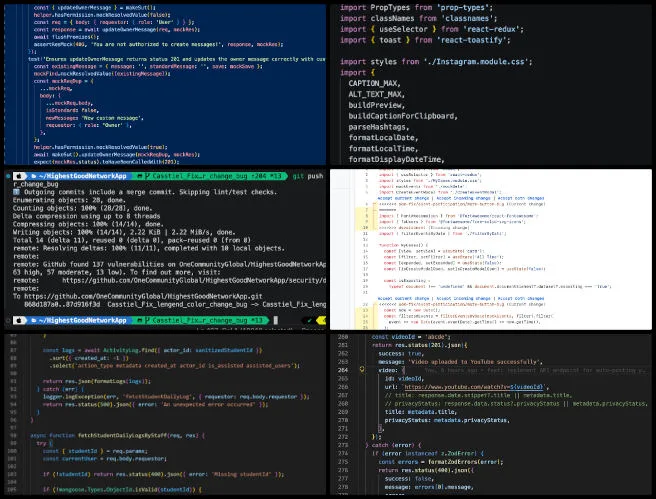
This week, Casstiel addressed feedback on the Injury Severity Chart by fixing data and rendering issues, maintaining consistent department labels and colors, restoring tooltip details, removing unwanted hover highlighting, correcting filter styling across light and dark modes, and resolving merge conflicts, while also analyzing the Purchase Request Form for possible improvements, work that supports developing global-sustainability systems. Handika updated PR #5405 by improving profile card sizing, empty states, chart and report layouts, dark mode styling, and task display, replacing the pie chart with a D3 implementation, and worked on backend PR #2300 by adding video upload support, file and metadata validation, and YouTube API integration, contributing to developing global-sustainability systems.
Maithili configured Instagram Professional and Threads accounts, tested the APIs with access tokens, created frontend and backend branches, and added the initial frontend implementation for the Instagram auto-poster, furthering the goal of developing global-sustainability systems. Sai finalized support team access to student logs in PR #2235 with JWT authentication, added session token expiration, updated unit tests, and worked on dark mode support for the interactive map, supporting developing global-sustainability systems. Som resolved merge conflicts in PR #5163 while preserving Upcoming Events filtering, expansion, and export behavior, and worked on PR #5435 by converting the scroll-to-top feature into a reusable component across multiple pages with dark mode, mobile, accessibility, and reduced-motion support, removing obsolete page-specific logic, and adding related tests, work that supports developing global-sustainability systems.
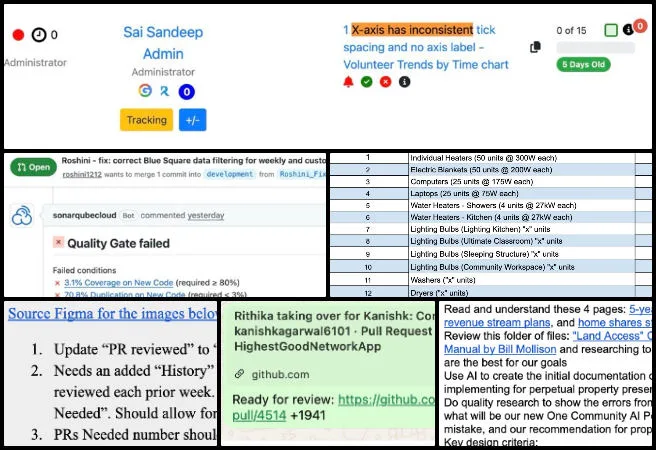
Yingshu continued investigating the Volunteer Time scrolling issue by reviewing modal, focus, and scroll behavior, updated the save workflow to preserve page and modal positions, prevented confirmation modal focus changes that caused page movement, reorganized the SaveButton implementation, and verified the changes with 13 related tests, ESLint checks, and a production build, advancing the team’s work toward developing global-sustainability systems. The collage below offers a visual representation of the team’s work for the week.
BINARY BRIGADE SOFTWARE DEVELOPMENT TEAM
The Team Binary Brigade’s summary, covering their work on the Highest Good Network, was managed by Roshini Seelamsetty (Software Engineer) and Prathik Raju (Data Analyst) with a team consisting of Amaan Syed (Volunteer Software Engineer), Mahitha Pasupuleti (Software Engineer), and Manoj Puttaswamy (Software Engineer). Roshini coordinated the weekly summary workflow, ensuring all technical milestones align with the project’s goal to contribute to developing global-sustainability systems.
This week, Amaan worked on multiple pull requests by reviewing feedback, updating implementations, verifying functionality, and addressing frontend and backend issues. His work included documenting investigation findings for PR #4063, updating dark mode behavior and reviewer responses for PR #4442, addressing People Report dark mode issues and validation for PR #4635, creating follow-up PR #5428 for light mode fixes, updating chart layouts, project filtering, calendar styling, and code quality findings for PR #4479, and restoring Reports page styling, updating dark mode text visibility, and resolving Stylelint findings for PR #4517, supporting the goal of developing global-sustainability systems.
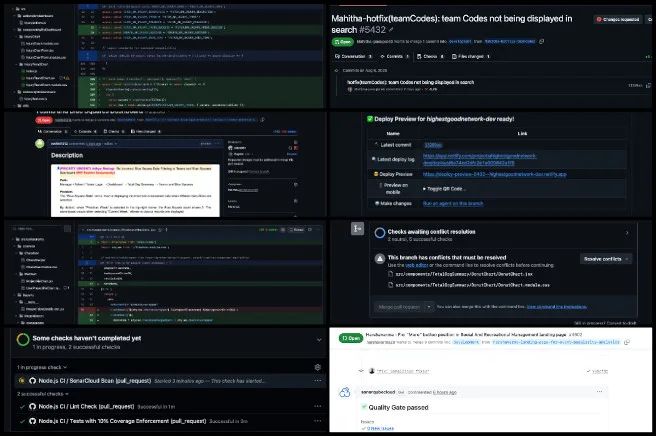
Mahitha worked on the Kitchen Inventory Management Phase 6 task by implementing the Seed Inventory section of the Garden Management page, displaying seed details, quantity information, viability percentages, and seed variety counts, while updating CSS modules, responsive layouts, and light and dark mode compatibility. She also worked on a Teams hotfix by reviewing team-code autocomplete behavior, API responses, loading states, and team-code integration with Teams components, contributing to developing global-sustainability systems.
Manoj worked across three pull requests, resolving merge conflicts and fixing SonarCloud issues in the frontend and backend. On the landing-page pull request, he resolved over thirty SonarCloud issues covering unused code, accessibility contrast, and duplicate styling, then merged with development, restoring dropped changes and consolidating two components that had diverged into separate versions, along with fixing a disconnected Cancel button. On a second frontend pull request, Manoj resolved conflicts without losing another contributor’s work and refactored a component to reduce complexity. On the backend pull request, he traced a failing security rating to an unvalidated input parameter and added the missing validation, work that advances developing global-sustainability systems.
Roshini worked on PR #5199 by implementing permission-based access for viewing the number of times time was added to a task and adding the permission under Project Management → Work Breakdown Structures → Tasks → Edit Task. She also resolved merge conflicts for PR #2298 related to Blue Square data filtering in the Teams and Blue Squares dashboard and began work on follow-up fixes for PR #5373 by reviewing issues related to Export PDF text visibility in dark mode and duplicate header rendering in the Total Org Summary dashboard, work that furthers developing global-sustainability systems. See the collage below for highlights of this week’s work.
DEV DYNASTY SOFTWARE DEVELOPMENT TEAM
The Dev Dynasty Team’s summary, covering their work on the Highest Good Network software, was managed by Yeshwanth Nanjegowda (Full-Stack Software Engineer) and Rithika Pai (Software Engineer). The team includes Akshay Viswanath (Software Engineer), Amaresh Chaudhary Nara (Software Engineer), Bosu Babu Bade (Software Developer), Mahathi Ganimisetti (Data Analyst), Shreevaths Karawal Satish Rao (Software Engineer), Sireesha Kunchala (Software Engineer), and Yuxuan Wang (Software Engineer). The Highest Good Network software supports developing global-sustainability systems by helping teams coordinate, manage, and measure collaborative work across sustainable operations, resource management, construction, production, maintenance, and community development.
This week, Rithika continued work on the Event Popularity Analytics frontend and backend PRs by rebasing both branches, resolving route conflicts, fixing a NoSQL injection vulnerability, adding Jest tests that brought controller coverage to 94.49%, resolving duplicate CSS selectors and WCAG contrast issues, and reducing component cognitive complexity to meet SonarQube requirements. She also addressed reviewer feedback on the Material Cost Correlation Chart, corrected a dark-mode contrast issue and date-picker styling problem, reviewed the HGN Questionnaire Dashboard action items, and began work on the PR Grading Screen takeover contributing to One Community’s mission of developing global-sustainability systems.
Akshay completed dark-mode remediation across 10 pages and interface areas spanning 28 files, added theme support to the Top Reviewed PRs dashboard and Announcements Email tab, moved TSA Form color rules into a shared module, added a regression test for undefined CSS Module classes, and improved dark-mode behavior across Task Submissions, Event No-Shows, attendance components, the Edit Links modal, Booking page, Role Distribution chart, and User Profile tabs. He also traced several issues to missing theme wiring, dead CSS Module references, global CSS leakage, Bootstrap defaults, and hardcoded colors furthering One Community’s mission of developing global-sustainability systems. Amaresh addressed reviewer feedback across the learner knowledge evolution, Add Lost Time, and collaboration category filter pull requests. He fixed a missing studentId parameter, authentication timing issues, dark-mode color problems, a page layout collapse caused by an unhashed CSS class, a broken team-selection popup, lost test coverage, navigation gaps, and merge conflicts, while increasing backend new-code coverage from 61 percent to above the required 80 percent threshold.
Bosu worked on the Student Activity Log Timer and Event Reschedule Button features, correcting timer controls, validation, popup behavior, refresh recovery, elapsed-time tracking, Activity Log creation, dashboard integration, and modal positioning. He added frontend and backend regression tests, addressed SonarCloud reliability and coverage issues, registered a missing backend route that caused rescheduling 404 errors, improved frontend error handling, added endpoint tests, and verified the reschedule flow locally. Mahathi progressed work on Production Identity Validation, Job Analytics application validation, and the Event Engagement Members List. She resolved reviewer requests and merge conflicts, restored email and phone validations, added location and timezone validation, corrected a missing job application submission endpoint, improved Members List dark-mode readability and dropdown styling, preserved semantic status colors, cleaned duplicate imports and unnecessary code, updated React hook dependencies, and resolved a SonarCloud duplication issue by restructuring mock member data.
Shreevaths addressed dark-mode, chart, layout, and feature issues on PR #4040 by fixing the date-picker theme and navigation-arrow contrast, removing a remaining white strip in dark mode, correcting chart artifacts and clipping, replacing empty chart results with a no-data message, fixing overlap between the statistics panel and date filters, and adding a Reset button for filters and validation errors. Sireesha updated the Date Picker to use a single-month view on smaller screens and resolved SonarQube findings across BMDashboard components involving duplicate CSS, accessibility and contrast issues, array keys, missing button types, cognitive complexity, merge conflicts, unused code, and Stylelint color syntax.
Yuxuan continued work on the Volunteer Hours Distribution feature by improving mobile responsiveness, replacing image-based icons with Font Awesome icons for dark-mode support, refining scrolling, text wrapping, and layout spacing, integrating a backend date-range fix so Total Hours Worked reflects the selected reporting period, adding regression tests, and tracing a remaining discrepancy to a mismatch between committed-hours data and frontend labels rather than the date-range calculation. To learn more about how this work supports developing global-sustainability systems and creating a free-shared future, visit the Highest Good Society and the Highest Good Network free education resources page. These resources demonstrate how open-source collaboration, sustainable project management, and community-focused systems contribute to developing scalable solutions for global sustainability. See the collage below for highlights of this week’s work.
SKYE SOFTWARE DEVELOPMENT TEAM
Team Skye’s summary this week, covering their work on the Highest Good Network, was managed by Yeshwanth Nanjegowda (Software Engineer) and Anthony Weathers (Software Engineer), includes Jaden Wong (Software Engineer), Ken Zou (Software Engineer), Purav Patel (Software Engineer) and Swathi Angadi (Software Engineer). The Highest Good Network software supports developing global-sustainability systems by providing collaborative tools that help teams manage sustainable projects, track resources, improve operational efficiency, coordinate development efforts, and support scalable solutions for long-term environmental and community sustainability.
This week, Anthony continued work on the role-change logout notification hotfix by applying additional feedback, updating the role-change modal to save changes while displaying a success message, and refining the forced-logout header and related styling. He also reviewed the header layout, including the timer, message, image, and navigation links, addressed the issue preventing Administrators from editing individual user permissions in PR #3600, verified the fix, investigated a Git pull error caused by a branch name containing an invalid Windows filename character, and continued addressing merge conflicts and review comments for PRs #3600 and #1447 contributing to One Community’s mission of developing global-sustainability systems.
Jaden resolved 48 stylelint violations across nine CSS Module files associated with a dark-mode implementation, corrected selector specificity issues, replaced deprecated CSS properties and media queries, converted remaining inline styles to CSS Module classes, and addressed WCAG 2.1 AA contrast issues. He also resolved 25 SonarCloud findings involving unused variables, button types, unstable keys, mutating sort operations, cognitive complexity, and nested ternaries, removed approximately 190 unrelated files from the working branch, fixed an undefined API endpoint and chart field-name mismatch, removed unused CSS imports causing build failures, and verified that all 29 tests passed furthering One Community’s mission of developing global-sustainability systems.
Ken reviewed pull requests covering PR Review Team Analytics, the Tools Most Susceptible to Breakdown chart, Support Team backend functionality, the 404 page, Badge Management, Purchase Request Tools validation, Injury Severity charts, Badge Tracking, production identity validation, the Project Manager Dashboard, Supplier Performance Graph, messaging-page dark mode, Event Management, and related features. He verified functionality where applicable and identified issues involving dark-mode inconsistencies, responsive date-picker behavior, duplicate project names, filtering errors, and uploaded-media persistence. He also transitioned to the Software Engineer role, was assigned as a Manager-in-Training, and reviewed the HGN Software Team Management documentation. These updates help in developing global-sustainability systems across teams and disciplines.
Purav took over the unfinished permission constants work from PR #2052, reimplemented it on the latest development branch, and created PR #5431. He created centralized permission constants from Permissions.json and required legacy keys, exported them through constants.js, replaced hardcoded permission checks across multiple components, updated Header and route-level checks to use RoutePermissions, resolved merge conflicts in Header and User Management, converted additional hardcoded permission usage throughout the repository, verified that the constants continued to resolve to the existing permission strings, and re-reviewed PRs #5426, #2297, and #2284 based on reviewer feedback. This work helps in developing global-sustainability systems through open-source sharing and transparency.
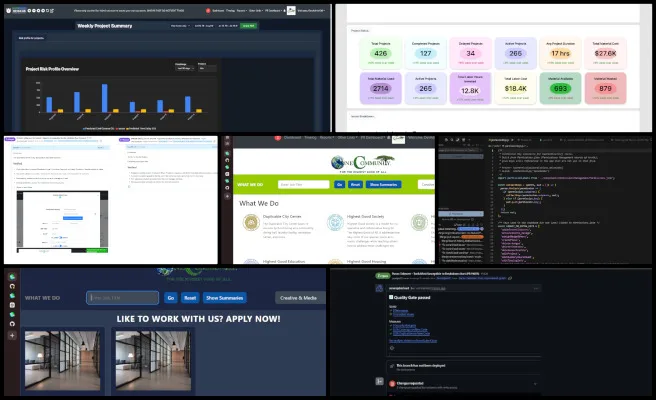
Swathi resolved merge conflicts and rewrote the What We Do section using the latest development code to maintain compatibility with the current codebase. She also worked on the Promotion Eligibility pull request and investigated a visibility issue related to user permissions. See the Highest Good Society and Highest Good Network pages to learn more about how this work supports developing global-sustainability systems through collaborative project management, resource coordination, and open-source development. Visit the open source hub to explore additional tools, resources, and solutions. See the collage below for examples of the team’s work.
SOFTWARE PR REVIEW TEAM A-N
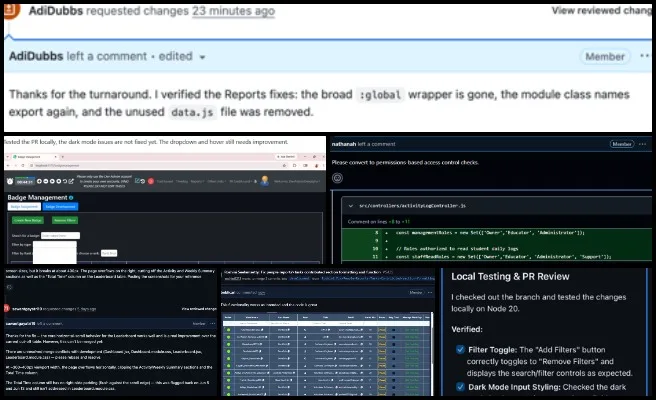
The PR Review Team’s summary for members with names starting with A–N was managed by Sai Sree Dongari (Data Analyst). The Highest Good Network is a foundation for measuring our results in developing global-sustainability systems. This week’s active members of this team were Aditya Dubey (Software Engineer), Ansh Shah (Software Engineer), Carl Bebli (Software Developer), Deepigha Japamony (Software Engineer), Gayatri Sawant (Software Engineer), Mallikharjuna Abhiram Mulpuri (Software Engineer) and Nathan Hoffman (Software Engineer). They reviewed all Highest Good Network PRs shared in this week’s update. Learn more about how the Highest Good Network open source hub measures progress toward developing global-sustainability systems. The collage below shows a compilation of this team’s work.
SOFTWARE PR REVIEW TEAM O-Z
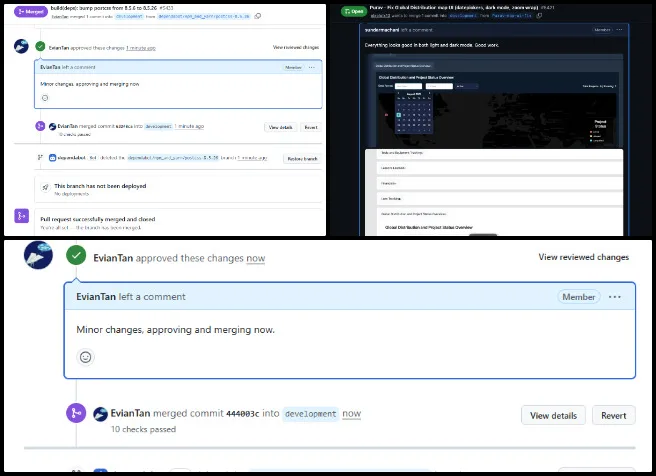
The PR Review Team’s summary for members with names starting with O–Z was managed by Shameera Musthafa (Data Analyst). The Highest Good Network is a foundation for measuring our results in developing global-sustainability systems. This week’s active members of this team were Sundar Machani (Software Engineer) and Yiyun Tan (Software Engineer). They reviewed all the Highest Good Network PRs (Pull Requests) shared in this week’s update. Learn more about how the Highest Good Network open-source hub measures progress towards our goal of developing global-sustainability systems. The collage below shows a compilation of the work from this team.
AND WE PRODUCED THIS WEEKLY UPDATES BLOG – CLICK HERE TO SUBSCRIBE
FOLLOW ONE COMMUNITY’S PROGRESS (click icons for our pages)
INVESTOR PAGES
GET INVOLVED
Creating a Free-shared Future – One Community Weekly Progress Update #698
At One Community, we are creating a free-shared future for a global audience seeking real, replicable change. Our all-volunteer team is building a self-replicating model that gives away every solution we develop across food, energy, housing, education, economics, and social architecture, designed to grow into a worldwide network of teacher/demonstration hubs. Everything we create, including our complete process, is open source and freely shared because we’re doing this for “The Highest Good of All.”
- Here’s our project overview
- Here’s our world-change methodology
- Here’s how this becomes self-replicating
- Here’s how we are open source and free-sharing all the do-it-yourself designs
OUR MAIN OPEN SOURCE HUBS
Click on each icon to be taken to the corresponding Highest Good hub page.
One Community’s physical location will forward this movement as the first of many self-replicating teacher/demonstration communities, villages, and cities to be built around the world. This is the August 3, 2026 edition (#698) of our weekly progress update detailing our team’s development and accomplishments:
Creating a Free-shared Future
One Community Progress Update #698

DONATE | COLLABORATE | HELP WITH LARGE-SCALE FUNDING
CLICK HERE IF YOU’D LIKE TO RECEIVE AN EMAIL EACH WEEK WHEN WE RELEASE A NEW UPDATE
YOU CAN ALSO JOIN US THROUGH SOCIAL MEDIA
ONE COMMUNITY WEEKLY UPDATE DETAILS
HIGHEST GOOD HOUSING PROGRESS
One Community is creating a free-shared future through Highest Good housing that is artistic and beautiful, more affordable, more space efficient, lasts longer, DIY buildable, and constructed with healthy and sustainable materials:
- Learn about: Our Upcoming Crowdfunding Campaign
- Learn about the different village models and creating a free-shared future: 7 Sustainable Village Models
- Visit the open source portals for the first two: Earthbag Village OS Hub | Straw Bale Village OS Hub
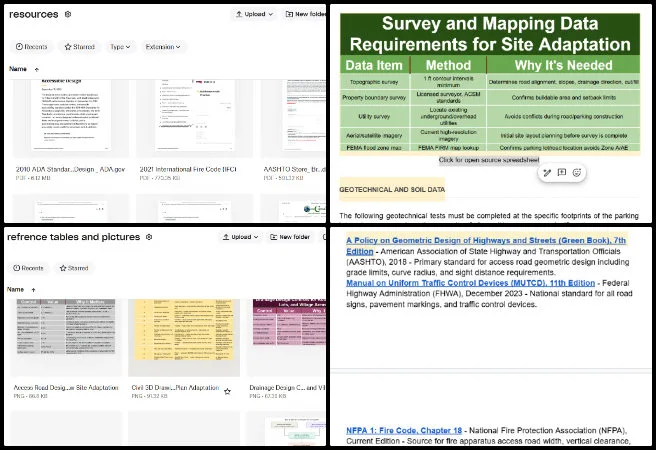
This week, Chanikya Sita (Volunteer Civil/Transportation Engineer) continued working on the Sustainable Roads and Sustainable Parking Lot Adaptation Guide and the Land Purchasing and Transportation Infrastructure Due Diligence document. He worked on applying supervisor feedback to the sustainable roads and parking lot adaptation guide. Changes included converting all linked tables to screenshot images and organizing them into a dedicated images folder in the shared Dropbox. An introduction section was added to the document along with a mini table of contents listing all major headings and subheadings in the title case. All bullet point lists were reformatted to use proper Google Docs list formatting, and extra line item spaces were added before each heading to match the One Community website formatting style. All references were hyperlinked to their official online sources and backed up as PDFs in a resources folder in the shared Dropbox. Underlined text and formatting inconsistencies throughout the document were also identified and corrected. This work supports creating a free-shared future by improving the accessibility, organization, and reliability of open source transportation and infrastructure resources. See below for some of the pictures related to this work.
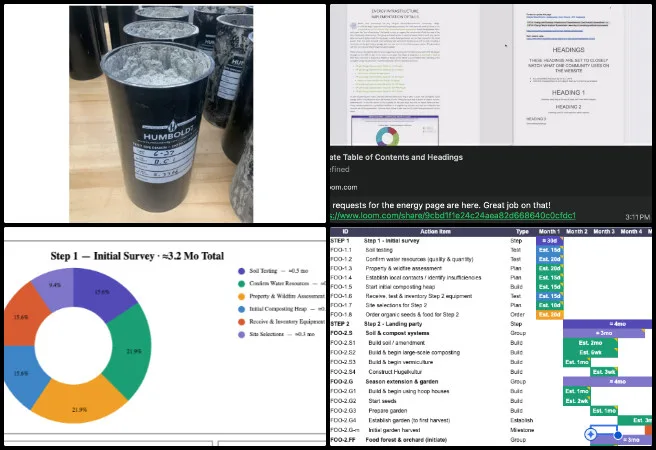
Devendranath Chowdary Maganti (Data Analyst) continued working on the Highest Good Energy and Aircrete webpages by integrating new content, revising existing sections, and incorporating the latest project updates and visualizations. He reviewed the Highest Good Food documentation and developed the Highest Good Food Timeline Dashboard by organizing project data into visualizations that support timeline analysis and project planning. Devendranath also studied the Highest Good Society documentation to build an understanding of its structure and requirements as part of his training. In addition, he supported the training team by assisting with onboarding activities and completing regular Administration Team responsibilities, including administrative tasks and weekly workflow support. His efforts contribute to creating a free-shared future by making sustainability resources more accessible while strengthening collaboration, knowledge sharing, and volunteer development. Below, you’ll find some images of this work.
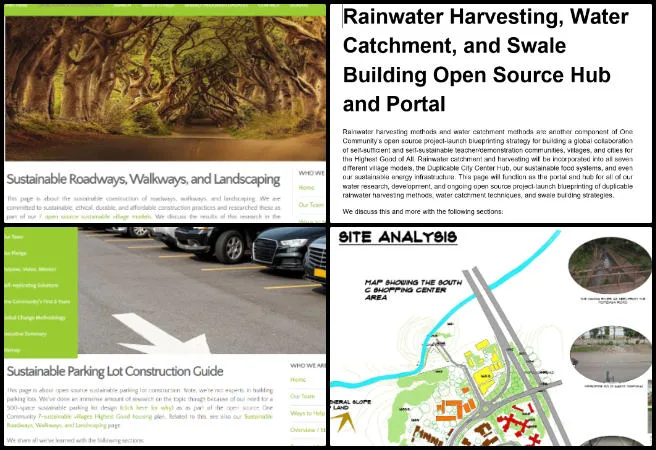
Sagar Chavan (Transportation Engineer) continued working on the Sustainable Roadways and Sustainable Parking Lot Designs project with Chanikya for the Earthbag Village stormwater management, rainwater harvesting, and sustainable roadway design materials. He reviewed the existing stormwater management plans, hydraulic calculations, CAD drawings, and supporting documentation to understand the current design requirements and related project information. Sagar worked on reviewing the integration of rainwater catchment, drainage, swales, and greywater system details while maintaining the existing Earthbag Village design and layout. Sagar reviewed the requirements for the Stormwater Management LEED points tutorial, cost analysis details, and the organization of technical information for the open-source documentation. He also worked with Chanikya on reviewing sustainable roadway and parking lot design materials, including drainage, grading, and stormwater management connections within the overall infrastructure plans. His work supports creating a free-shared future by strengthening practical, open source guidance for sustainable transportation and integrated water management systems. See below for some of the pictures related to this work.
DUPLICABLE CITY CENTER PROGRESS
One Community is creating a free-shared future through a Duplicable and Sustainable City Center that is LEED Platinum certified/Sustainable, can feed 200 people at a time, provide laundry for over 300 people, is beautiful, spacious, and saves resources, money, and space:
- Learn about this building, its function and creating a free-shared future: Duplicable City Center Open Source Hub
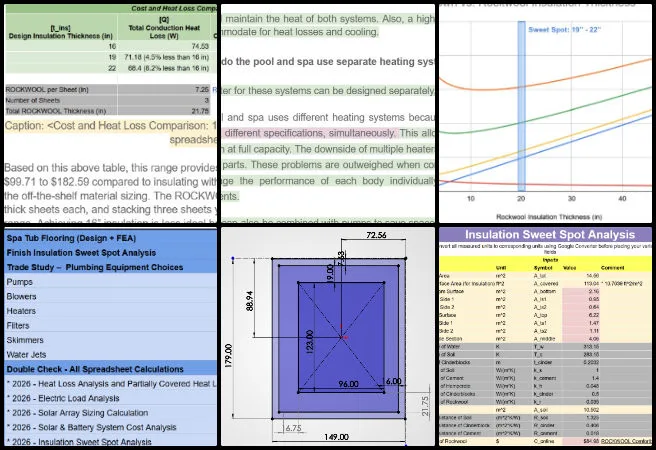
This week, Bevan Chiu (Mechanical Engineer) continued his work finishing the City Center Eco-spa Designs. He worked on the insulation sweet spot report, planned the integration of the selected insulation thickness into the CAD model, and updated the spa test tracker on the team tasks. For the insulation sweet spot analysis, he clarified the recommended insulation thickness range of 19 to 22 inches based on energy savings and compatibility with off-the-shelf components. Bevan expanded the graph descriptions, added a comparison of the incremental energy savings relative to the 16-inch insulation configuration, and refined the organization of the insulation sweet spot and FAQ sections. This open source Duplicable City Center project focuses on creating a free-shared future. See below for some of the pictures related to this work.
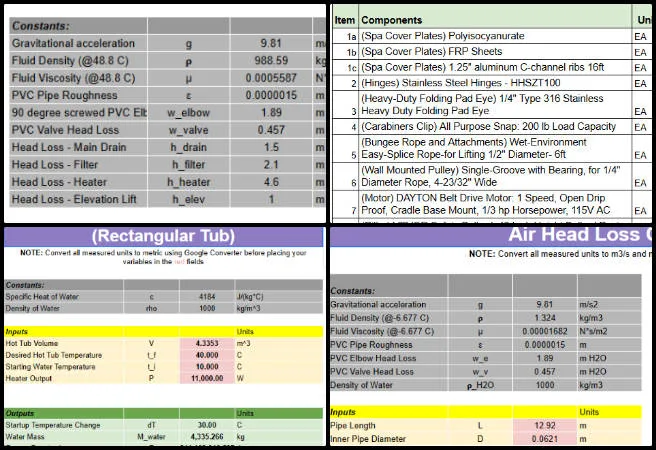
Shivarama Krishna Revanuru (Mechanical Engineer) continued working on the Duplicable City Center design. He focused on the spa cover heat capacity by identifying the required boundary conditions and planning the approach for the analysis. The hot tub calculations spreadsheet was also checked to review the available calculation data and confirm the information needed to support the heat capacity analysis. This open source Duplicable City Center project demonstrates creating a free-shared future. The images below illustrate aspects of this work.
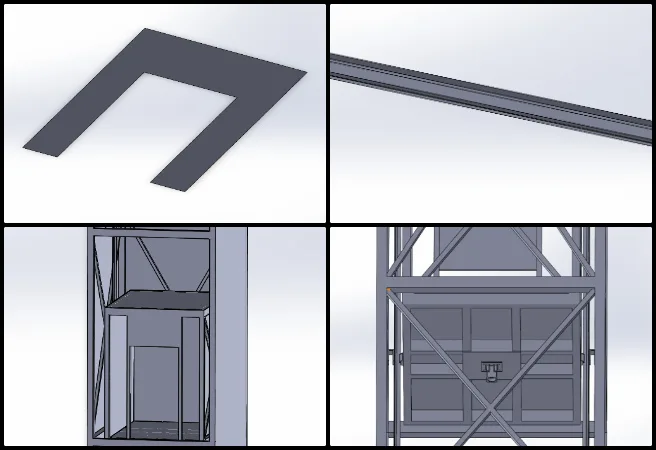
Nidish Reddy Koppula (Mechanical Engineer) continued working on the Duplicable City Center design. He worked on the final rendering stage of the elevator assembly. He started developing the door assemblies for the lift cabin, including the cabin door components and related fit considerations. He also completed the outer panels for the elevator shaft and the inner panels for the elevator cab to improve the visual and assembly representation of the model. In addition, Nidish started working on the hydraulic system layout for the elevator, including the placement and representation of hydraulic components needed for the final rendered assembly. This open source Duplicable City Center project presents creating a free-shared future. For more details, refer to the image below.
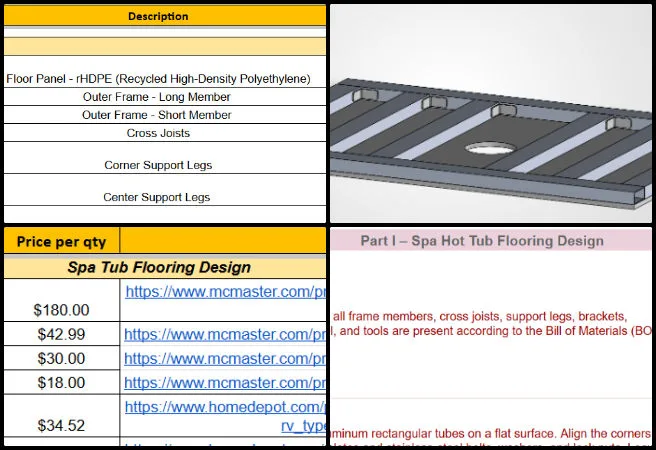
Sri Vidya Sai Thumu (Mechanical Design Engineer) continued developing the City Center Eco-spa Designs. She worked on the spa tub flooring design by refining the structural support layout, updating the SolidWorks assembly, and incorporating heavy-duty corner gusset brackets, L-angle brackets, T-brackets, and connector plates to improve the frame and support leg connections. The aluminum frame concept was reviewed using finite element analysis results, and design modifications were made based on engineering feedback, including updates to the middle support leg. A preliminary Bill of Materials was prepared with selected components, materials, and fastening hardware. DIY assembly instructions were created with step-by-step procedures, assembly goals, and required resources for end users. An engineering design summary was prepared for project review, and research was completed on an alternative flooring concept using cinder blocks with Rockwool insulation, including a comparison with the existing aluminum frame design and preparation for the Concept 2 CAD model. This open source Duplicable City Center project focused on creating a free-shared future. For more details, refer to the image below.
HIGHEST GOOD FOOD PROGRESS
One Community is creating a free-shared future through Highest Good food that is more diverse, more nutritious, locally grown and sustainable, and part of our open source botanical garden model to support and share bio-diversity:
- Learn about the structures and creating a free-shared future: Hoop House Hub | Aquapini & Walipini Open Source Hub
- See what we’ll be growing: Gardens & Hoop Houses | Large-scale Structures | Food Forest | TA
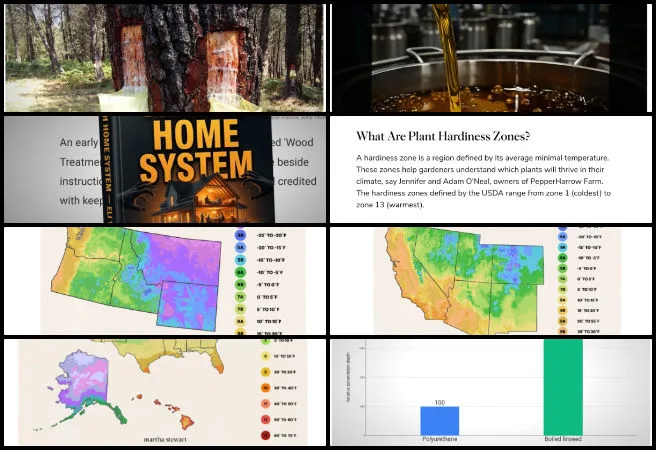
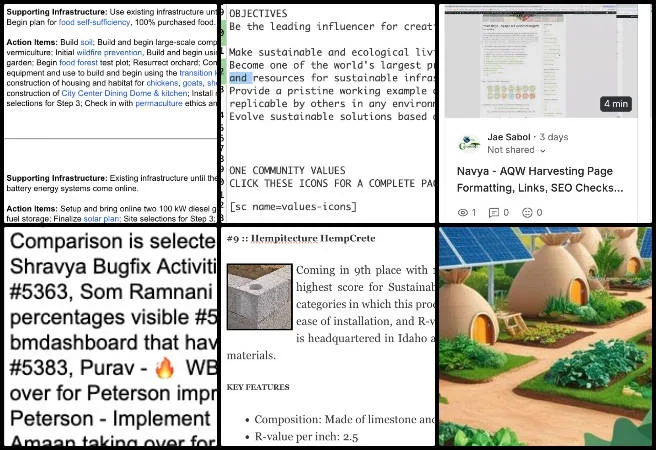
This week, the core team continued working on the Master Tools, Equipment, and Materials/Supplies List for the Large-scale Garden, Botanical Garden, and other Highest Good Food components, focusing on revisited the Amish wood preservation documentation and added the necessary tools and materials to the Master TEMS, including pine tar, boiled linseed oil, authentic turpentine, beeswax, paintbrushes, and cotton rags. He subsequently initiated a search for potential permanent general locations for One Community based on specific website parameters. This evaluation prioritized locations with favorable hardiness zones, projected climate change, surface and ground water availability, and reasonable proximity to major airports. Their efforts contribute to One Community’s mission of creating a free-shared future through open-source collaboration, ecologically responsible innovation, and a focus on long-term global development. The collage below portrays the team’s efforts and achievements for the week.
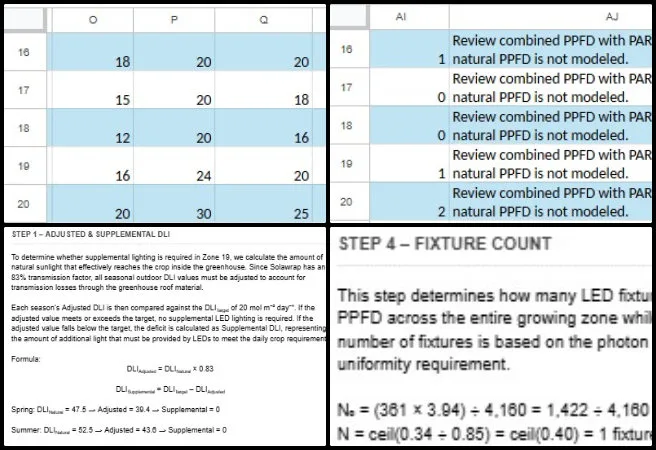
Jay Nair (BIM Designer) continued working on the Aquapini and Walipini Planting and Harvesting documents. He worked on validating the greenhouse lighting energy calculator by reviewing the calculations for each individual zone. He compared the calculator outputs with the documented step-by-step methodology, verified formulas and linked data, and examined zone-specific inputs to identify discrepancies and improve calculation accuracy. The ongoing work supports the refinement of the calculator and helps ensure reliable results for the Walipini 1 greenhouse. These updates improve the stability and adaptability of shared systems, supporting the broader goal of creating a free-shared future. See the collage below portraying the work done this week.
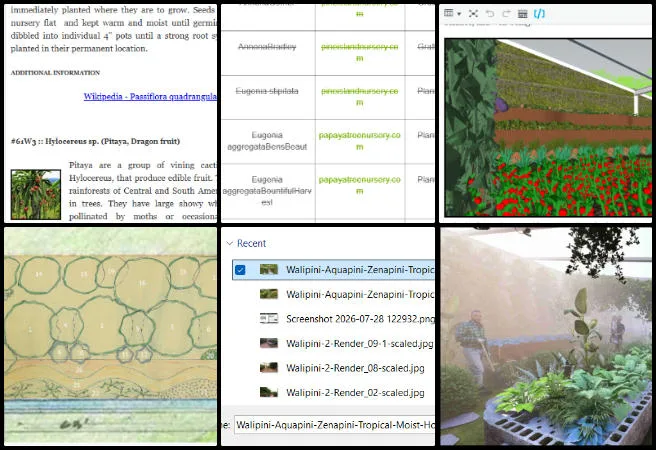
Navya Eeshani Boyapati (Web Designer) continued working on the Aquapini/Walipini planting page content by reviewing the Walipini 3 planting page, comparing the webpage with the provided Google Docs, correcting spacing and formatting inconsistencies, updating the HTML structure to match the formatting used on the other planting pages, identifying and adding missing content where indicated, optimizing applicable images with SEO-friendly alt text and keywords, checking the page for content and formatting errors, making corrections to align with project standards, and ensuring consistency across the page before preparing it for further review and updates. See the collage below for a snapshot of this week’s work towards creating a free-shared future.
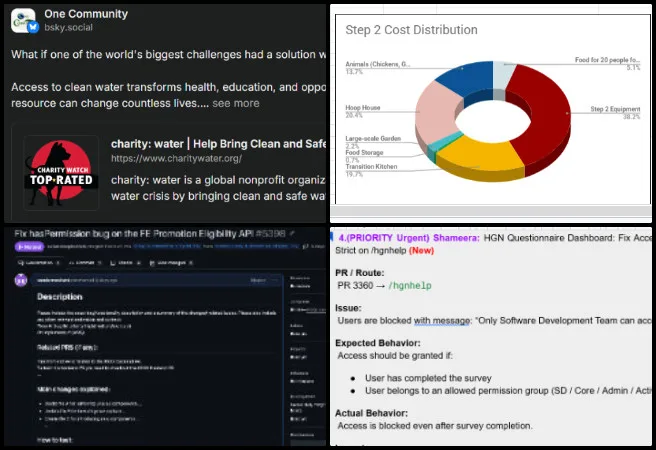
Shameera Musthafa (Data Analyst) continued working on the Highest Good Food initiative, supported OC Administration and the PR Review Team by coordinating PR review workflows, reviewing the work of both the Admin and PR teams, and providing feedback to ensure accuracy, clarity, and consistency across all deliverables. She organized and categorized project images, created visual collages, and finalized blog-related content as part of PR review coordination, ensuring that both visual and written materials were properly curated and documented. Additionally, Shameera contributed to the Highest Good Food report pages and related visualizations. She also managed the One Community Bluesky social media account, creating and publishing posts to help share project updates and increase outreach and engagement. In addition, she supported the hiring process by conducting interviews and evaluating candidates. This work plays a key role in creating a free-shared future. See below for images showcasing her work.
HIGHEST GOOD ENERGY PROGRESS
One Community is creating a free-shared future through Highest Good energy that is more sustainable, resilient, supports self-sufficiency and includes solar, wind, hydro and more:
- Learn about the open source sustainable-energy foundations and creating a free-shared future: Solar, Hydro, and Wind
- Explore our research into the most sustainable products and companies for saving water and energy: Insulation, Eco-laundry, Lightbulbs and Light Bulb Companies, Doors and Door Companies, Windows and Window Companies, Toilets, Faucets and Faucet Accessories, Urinals, and more.
This week, the core team continued contributing to the Highest Good Energy initiative, part of One Community’s work creating a free-shared future. They completed the review of the Aircrete Testing webpage and made a few updates to the Highest Good Food Infrastructure cost analysis. The team also evaluated the “sweet spot” for hot tub insulation. They began reviewing the updated Highest Good Energy webpage, leaving comments where changes are needed. See the collage below for a snapshot of their work this week.
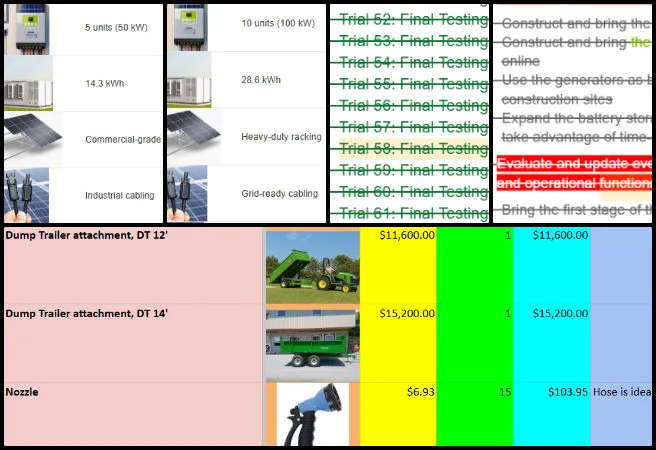
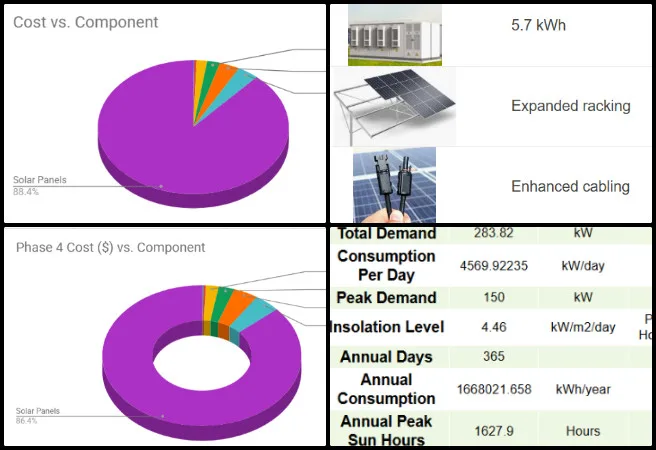
Rohan Pariakar (Operations and Supply Chain Analyst) continued working for the Highest Good Energy initiative, part of One Community’s broader work creating a free-shared future, and completed the migration of the renewable energy planning framework from the development workbook into the project’s primary engineering workbook, consolidating validated calculations, specifications, and procurement data into a single maintainable source. He restructured and updated dynamic cross-workbook references using linked master sheets to ensure phase-specific solar infrastructure, sizing, and cost information remained synchronized as calculations evolved. During the migration, Rohan resolved reference inconsistencies caused by workbook restructuring, eliminating manual updates through centralized data linking. He also rebuilt all phase-specific visualizations from scratch, including cost distribution charts for each deployment phase, enabling dynamic reporting of component-level procurement costs and improving project documentation.
In addition, Rohan updated the phased solar infrastructure tables with revised photovoltaic panel quantities, installed capacity, solar generation values, and cumulative deployment data, while validating procurement costs against the solar sizing calculations to maintain consistency across the Solar Sizing, Master Planning, and Solar Infrastructure workbooks. These improvements established a scalable engineering documentation system with traceable calculations, automated data flow, standardized reporting, and improved maintainability for future design revisions and procurement planning contributing to One Community’s mission of creating a free-shared future. See the collage below for highlights of his work.
HIGHEST GOOD EDUCATION PROGRESS
One Community is creating a free-shared future through Highest Good education that is for all ages, applicable in any environment, adaptable to individual needs, far exceeds traditional education standards, and more fun for both the teachers and the students. This component of One Community is about 95% complete with only the Open Source School Licensing and Ultimate Classroom construction and assembly details remaining to be finished.
With over 8 years of work invested in the process, the sections below are all complete until we move onto the property and continue the development and open sourcing process with teachers and students – a development process that is built directly into the structure of the education program and everything else we’re creating too:
- Program Overview: Education Open Source Hub
- How the components work together in designing human orchestrated eco-abundance and creating a free-shared future: How to use the Education for Life Program
- Lesson Plans for Life – Lesson Plans How-to
- Foundations of Outstanding Leaders, Teachers, and Communicators
- Curriculum for Life
- Teaching Strategies for Life
- Learning Tools and Toys for Life
- Evaluation and Evolution
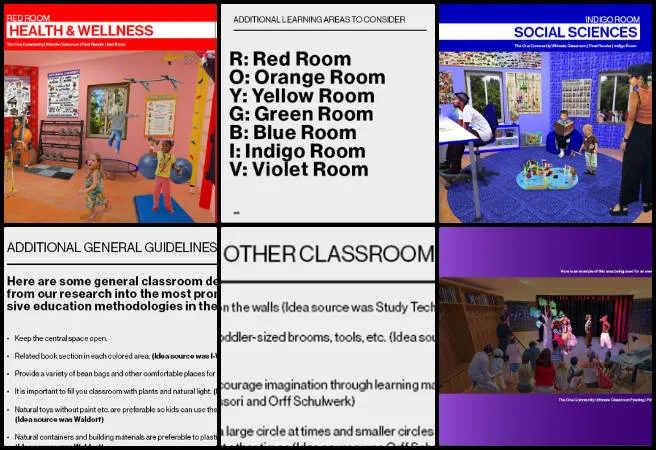
This week, Isaiah “Isa” Hernandez (Graphic Designer) continued working on the spreads for The Ultimate Classroom, and began typesetting the informational sections. This project is creating a free-shared future, for inclusion in the book. As additional content was incorporated, Isa revisited earlier layouts to make revisions, improve consistency, adjust formatting, and integrate new material with the existing page designs. See the collage below for a snapshot of his work this week.
Jung Ah “Romey” Choi (Graphic Designer) finalized The Ultimate Classroom project by updating, revising, and adding the required content, then integrated the materials and created a digital book formatted for PUBHTML5. He also created profile pages for two volunteers as part of the Volunteer Announcement Image Creation and Web Design project, applied feedback to the page content and layout, and completed the requested revisions. See the collage below for his week’s work, creating a free-shared future.
HIGHEST GOOD SOCIETY PROGRESS
One Community is creating a free-shared future through a Highest Good society approach to living that is founded on fulfilled living, the study of meeting human needs, Community, and making a difference in the world:
- Read the Highest Good society overview: Highest Good Society
- Learn about the model for fulfilled living, sharing, and creating a free-shared future: A Day in the Life
- Learn about the 4 economic models: RBE | For-profit | Non-profit | Entrepreneurship
- Learn about our open source community collaboration and management software: The Highest Good Network
This week, the core team completed over 34 hours managing volunteer work reviews, handling emails, overseeing social media accounts, supporting web development, and identifying and integrating bug fixes for the Highest Good Network. They also interviewed and onboarded new volunteer team members. Additionally, they produced and integrated the video above about creating a free-shared future and how creating a free-shared future serves as a foundational element of One Community’s broader mission. The following images showcase their work.
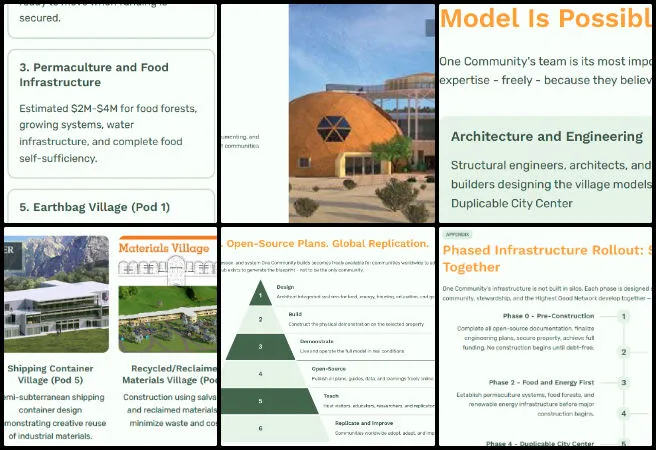
Pooja Kulkarni (UI/UX Designer) continued developing and refining One Community Global’s executive fundraising pitch deck by translating extensive organizational research, infrastructure planning, funding strategy, and stakeholder insights into a cohesive visual narrative. She created and enhanced presentation materials illustrating the phased implementation roadmap, funding allocation strategy, sustainable village models, and the interconnected Highest Good systems while ensuring complex information was communicated through clear information architecture, visual hierarchy, and accessible storytelling. She also collaborated with stakeholders to refine content, validate messaging, and align the presentation with the organization’s long-term vision, ultimately creating a free-shared future, and producing donor- and leadership-focused communication materials that effectively convey One Community’s implementation strategy, funding priorities, and global replication model. See the collage below for snapshots of her work.
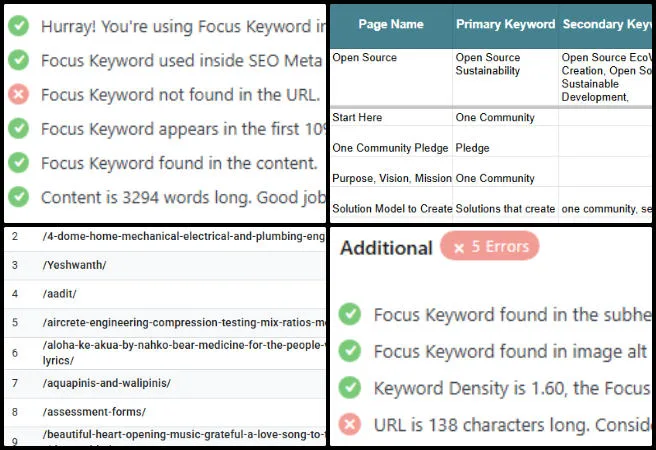
Adhya Rastogi (Business Analyst) completed SEO optimization for the Solutions that Create Solutions and First Five Years webpages. She reviewed each page using Rank Math and improved on-page SEO by refining content structure, keyword placement, heading hierarchy, metadata, readability, and internal linking while maintaining the original purpose and messaging of the content. Adhya updated page content and SEO elements to improve search relevance and recorded baseline analytics and performance data to support future comparison of organic traffic and engagement. She also created a dedicated GA4 Free Form exploration for the First Five Years page and other pages to track organic users, page views, engagement time, and bounce rate. In addition, she updated the SEO tracking framework with optimization details, analytics data, and implementation progress for each page, and completed a final review to verify that the SEO changes and analytics setup were accurate and ready for ongoing performance monitoring. See the collage below for highlights of her work towards creating a free-shared future.
ADMINISTRATION TEAM
The Administration Team’s summary, which covers their work on the Highest Good Network, was managed by Devendranath Chowdary Maganti (Data Analyst) and includes Leo Lishin Shiu (Software Engineer), Olawunmi “Ola” Ijisesan (Administrative and Management Support), Prathik Raju (Data Analyst), Sachit Varma (Business Operations & Cost Analyst), Sai Sree Dongari (Data Analyst), Tanmay Nihal Harwani (Data Scientist), and Yeshwanth Nanjegowda (Full-Stack Software Engineer). The Administration Team supports the Highest Good Network, a tool designed to track and measure progress while developing systems that contribute to creating a free-shared future. Through administrative support, documentation, testing, training, recruitment, analytics, and content management, the team helps advance this mission, aligning with One Community’s vision of building a replicable and sustainable future model.
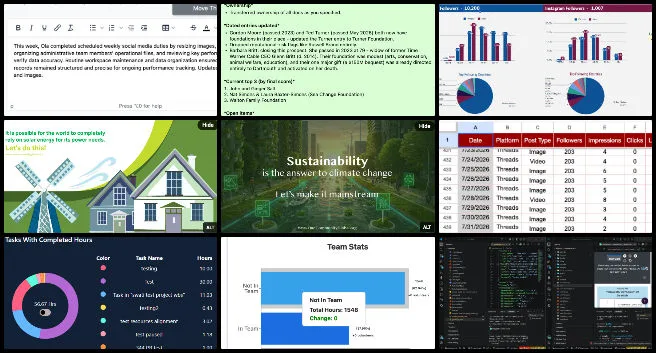
This week, Leo reviewed and compiled the 17LeDCC and 20LeFOD team weekly summaries, created blog collages, reviewed social media insights maintained by other administrators, managed Facebook and Instagram insights, scheduled posts for August 9 through August 14, and loaded previous week social media insights. Ola completed weekly social media duties by resizing images, preparing content, organizing administrative files, reviewing key performance indicators, maintaining workspace organization, updating the weekly summary report, and uploading related images. These social media management and administrative organization efforts contribute to creating a free-shared future.
Prathik reviewed weekly reporting submissions from four admins, provided feedback on Step 4 documentation issues, tested the Total Org Summary Analytics Dashboard, documented chart-related issues, completed Mastodon posts, performed Mastodon analytics reviews, updated the volunteer tracker, reviewed social media analytics documentation, and coordinated access for Mastodon account onboarding contributing to One Community’s mission of creating a free-shared future.
Sachit updated the funding research matrix by reviewing older entries against revised criteria, removing unreliable evaluation factors, updating outdated data, closing unavailable prospects, applying reputational risk checks, calculating final composite scores, transferring document ownership, and identifying documentation gaps for future research. These analytics, research, and evaluation activities further the goal of creating a free-shared future.
Sai Sree organized review images, created visual collages, finalized PR Admin Team blog content, reviewed candidate profiles, prepared interview questions, completed interviews, documented feedback, performed frontend testing across filters, charts, dashboards, notifications, reporting features, and theme compatibility, and provided training feedback for Yeshwanth furthering One Community’s mission of creating a free-shared future.
Tanmay continued bio administration, blog publishing, SEO optimization, social media management, Threads posting, Social Media Master Dashboard updates, tracking sheet maintenance, and volunteer record updates. These quality assurance, content management, and administrative activities play a key role in creating a free-shared future.
Yeshwanth reviewed team management, software component management, and Level 1 and Level 2 software testing documentation, completed local application setup, configured GitHub, Sentry, and Slack, reviewed HGN documentation, created new action items, updated existing documents, removed completed tasks, and added 32 new action items across the HGN Phase I Bugs and Needed Functionalities document and HGN Software Team Questionnaire Dashboard Action Items document. These documentation, software planning, and workflow improvement activities contribute to creating a free-shared future. See the collage below for highlights of this week’s work.
HIGHEST GOOD NETWORK PROGRESS
One Community is creating a free-shared future through open source Highest Good Network® software that is a web-based application for collaboration, time tracking, and objective data collection. The purpose of the Highest Good Network is to provide software for internal operations and external cooperation. It is being designed for global use in support of the different countries and communities replicating the One Community sustainable village models and related components.
- Learn about our open source community collaboration, management software, and creating a free-shared future: The Highest Good Network
This week, the core team continued testing pull requests on the main branch for the Highest Good Network, a platform creating a free-shared future. They tested HGN pull requests on the main branch, confirming that 14 pull requests were fixed and identifying 8 pull requests that were not fixed. The team also confirmed Dark Mode fixes for 7 pages and recorded Dark Mode issues affecting 6 pages. They were unable to test the job application form page pull request (PRs #4958 and #2255) because the required data was not available on the main branch. See the collage below to view the team’s work.
ALPHA SOFTWARE DEVELOPMENT TEAM
The Alpha Team’s summary, covering their work on the Highest Good Network, was managed by Lin Khant Htel (Frontend Software Developer) and Pranjul Garg (Business Analyst) with a team consisting of Casstiel Pi (Software Engineer), Handika Harianto Ew Jong (Full Stack Developer), Maithili Kalkar (Software Engineer), Sai Sandeep (Software Engineer), Som Ramnani (Junior Software Engineer), and Yingshu Wang (Software Engineer) supporting One Community’s mission of cross-functional software development and system improvements. This work advances the team’s objectives, ensuring that all completed tasks directly contribute to creating a free-shared future.
This week, Casstiel resolved issues in the Injury Severity Chart by fixing merge conflicts, correcting CSS and dark mode styling, resolving a chart rendering problem caused by outdated logic, and updating the legend and tooltip behavior so department names and colors remain consistent across different filter combinations. Handika completed layout and styling improvements for PR #5405 by separating the completed tasks chart and logged hours chart, improving table layout and responsiveness, updating metric cards and user profile styling, enhancing dark mode support, removing unnecessary CSS, optimizing large-screen table display, removing dummy data, and adding a loader to the People Report page. These support the objective of creating a free-shared future.
Maithili set up Instagram Professional and Threads accounts, verified Meta API authentication and publishing with access tokens, reviewed previous implementations, and began a new implementation of the Instagram and Threads auto-poster based on a different reference pull request. Sai finalized PR #2235 by implementing JWT-based access control for student logs to restrict access to authorized support users and completed PR #5419 by fixing filtering issues on the Total Org Summary page to restore accurate reporting. Som enhanced PR #5364 by adding a Reorder workflow for Inventory Management with a quick restock modal, backend integration, validation, testing, and light and dark mode support, updated PR #4585 by improving dark mode behavior, button styling, and regression tests, and further refactored PR #5364 to address SonarCloud recommendations by simplifying utilities, using native dialog elements, and reducing component complexity contributing to One Community’s mission of creating a free-shared future.
Yingshu continued work on the Volunteer Time feature by fixing responsive layout issues, improving modal behavior, restoring the Refresh function, updating the local development configuration to use 127.0.0.1, removing automatic test execution before startup, verifying that Volunteer Time tests and production builds passed, and continuing investigation into remaining local frontend startup issues. These technical updates advance the team’s objectives, ensuring that all completed tasks directly contribute to creating a free-shared future. The images below showcase some of the work completed.
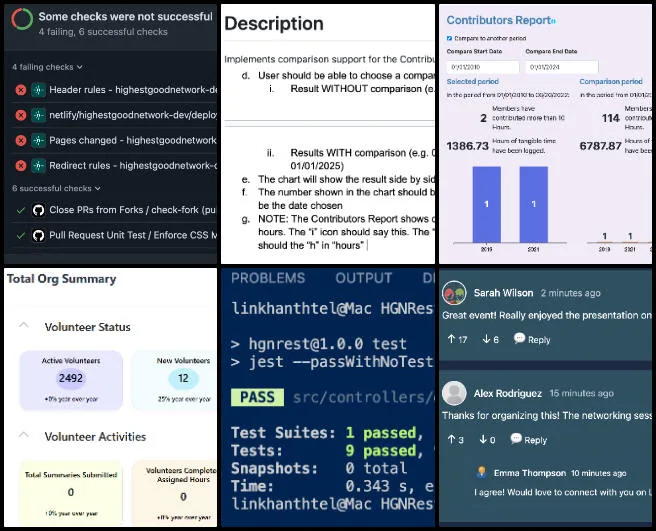
BINARY BRIGADE SOFTWARE DEVELOPMENT TEAM
The Team Binary Brigade’s summary, covering their work on the Highest Good Network, was managed by Roshini Seelamsetty (Software Engineer) and Pranjul Garg (Business Analyst) with a team consisting of Amaan Syed (Volunteer Software Engineer), Mahitha Pasupuleti (Software Engineer), and Manoj Puttaswamy (Software Engineer). Roshini coordinated the weekly summary workflow, ensuring all technical milestones align with the project’s goal to contribute to creating a free-shared future.
This week, Amaan worked on multiple HighestGoodNetworkApp pull requests by addressing review feedback, resolving merge conflicts, updating frontend and backend functionality, and validating application behavior. His work on the Injury Trend Chart included updating chart layout, addressing backend filtering issues related to shared legacy project IDs, implementing project-specific filtering, validating functionality with Postman and end-to-end testing, and updating the pull requests for review. He also updated the People Report page by modifying pie chart behavior to respond to theme changes without requiring a page refresh and updating responsive layouts for the theme toggle. Additional work included updating Request ID search normalization, addressing code quality feedback, updating accessibility-related styling, verifying Resource Management Dashboard functionality in light and dark modes, resolving merge conflicts in the Permissions Management page, and updating the Supplier Performance dashboard while validating chart behavior, dropdown functionality, totals, percentages, and dark mode support furthering One Community’s mission of creating a free-shared future.
Manoj worked on BMDashboard updates by merging development changes into his branch, resolving conflicts across inventory-related files and the application header, preserving both the meeting notification system and BM Dashboard navigation functionality, and updating dark mode behavior on the All Inventory Types page. This work supports creating a free-shared future.
Mahitha worked on PR #5422 for the Kitchen Inventory Management Garden Management page by adding Seed Orders and Online Tools sections, implementing order details including supplier information, item lists, dates, status badges, and action buttons, creating gardening resource displays with descriptions, features, and external links, and integrating CSS module styling with support for light and dark modes and responsive layouts. Roshini worked on PR #5199 by implementing permission-based access for viewing the number of times time was added to a task, creating a permission under Permissions Management within Project Management → Work Breakdown Structures → Tasks → Edit Task → See # of Times Time Added to Task, and assigning the permission to applicable roles while supporting assignment to individual users contributing to One Community’s mission of creating a free-shared future.
Roshini also worked on the People Reports Tasks Contributed section by addressing formatting and functionality issues in the User Management report view. In addition, she continued work on PR #5236 for the Blue Square Stats chart by updating chart behavior related to zero-value categories, label visibility, dynamic data updates, and hover interaction functionality. These visual and analytical dashboard optimizations provide the clarity necessary for creating a free-shared future. The collage below offers a visual representation of the team’s work for the week.
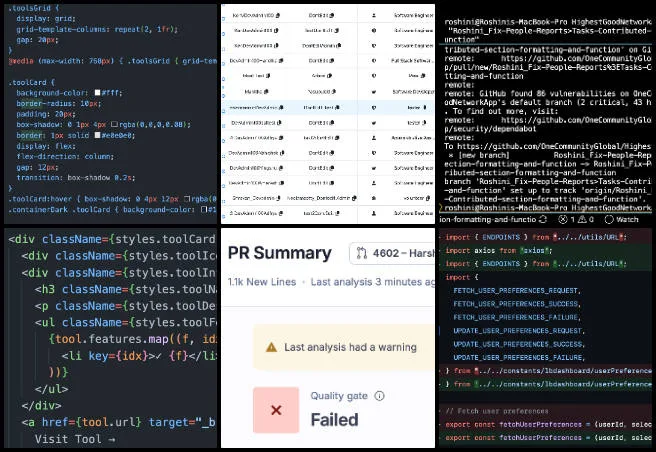
DEV DYNASTY SOFTWARE DEVELOPMENT TEAM
The Dev Dynasty Team’s summary, covering their work on the Highest Good Network software, was managed by Prathik Raju (Data Analyst) and Rithika Pai (Software Engineer). The team includes Akshay Viswanath (Software Engineer), Amaresh Chaudhary Nara (Software Engineer), Bosu Babu Bade (Software Developer), Mahathi Ganimisetti (Data Analyst), Shreevaths Karawal Satish Rao (Software Engineer), Sireesha Kunchala (Software Engineer), and Yuxuan Wang (Software Engineer). The Highest Good Network software supports creating a free-shared future by helping manage and measure sustainable, zero-waste operational processes across social architecture, construction, production, and maintenance systems.
This week, Rithika worked on PR #4587 + #1957, PR #4797 + #2031, and PR #4514 + #1941, resolving rebase conflicts across WeeklyProjectSummary.module.css, ProjectDetails.module.css, Header.jsx, routes.jsx, EventParticipation.jsx, MyCases.jsx, MyCases.module.css, and Participation.module.css, fixing broken CSS and dropped imports uncovered along the way, raising bmMaterialsController.js test coverage above the required 80% threshold, fixing dark mode bugs on TotalMaterialCostPerProject.jsx and the ResolvedTasks page, resolving several SonarQube issues, and finding and restoring missing AnalyticsNavigation styles and flagging unrelated pre-existing conflict markers on development, furthering the team’s work toward creating a free-shared future.
Sireesha addressed UI alignment issues and dark mode styling enhancements, including dropdown alignment, the Default (Sort) and Export Data buttons, the Export Data modal popup layout, the Download and Share buttons, and the Detailed Analytics tab, resolved git merge conflicts and rebased branches across multiple feature pull requests, and fixed mobile responsiveness and overflow issues on the Calendar Date Picker component, contributing to creating a free-shared future.
Mahathi completed the Production Identity Validation feature by resolving SonarCloud quality issues in the frontend and backend, expanded backend test coverage with unit tests for identity verification, locked field enforcement, account creation validation, duplicate prevention, webhook behavior, and activation restrictions, investigated and fixed the Job Posting Analytics timeline issue caused by a parseInt fallback and stale data range, and began evaluating date-range logic for the remaining filters, supporting the broader goal of creating a free-shared future.
Amaresh worked on PR #1934 and #4486, building the educator task submissions review page, fixing tooltip, routing, and educator ID bugs, and raising SonarCloud coverage above threshold; on PR #1927 and #4476, he resolved merge conflicts, identified and fixed a knowledge evolution chart bug caused by a query against the wrong database collection, wired up the search box and subject filter, and raised coverage to meet the SonarCloud gate, work that helps move the team closer to creating a free-shared future.
Bosu completed 20 hours on the Phase 4 Student Activity Log Timer across PR #4432 and #1916, synchronizing branches with development, resolving merge conflicts, fixing an invalid minutes value causing a 400 error on Start, improving Start, Pause, Resume, Stop, Reset, refresh recovery, overtime tracking, and error handling, strengthening validation and logging safeguards, adding 29 frontend and 99 backend tests, and discovering and correcting a routing issue where the timer was integrated into the wrong dashboard component, advancing the mission of creating a free-shared future.
Shreevaths worked on PR #1940, resolving merge conflicts, reverting unrelated changes, and adding tests for the resourceRequestRouter file, then on PR #5102 and #2151, fixing a merge conflict, correcting the dark mode bar graph color, fixing the granularity filter bug, writing 17 new test cases to reach 34 passing tests, and resolving all flagged SonarQube issues, work that supports creating a free-shared future.
Yuxuan fixed inconsistent date boundaries in the Volunteer Hours Distribution report by updating the backend and removing timezone-dependent conversions, corrected the Total Org Summary frontend’s Current Week and Previous Week presets, restored shared date range utilities, completed frontend testing and API verification, created separate frontend and backend pull requests, and updated a feature to unify inline editing and support moving weekly summaries between weeks, in support of creating a free-shared future.
Akshay took over the remaining development tasks on PR #5136, fixing dark-mode styling issues across PeopleTableDetails, the Pie Chart legend, the Teams table, Resource Usage dropdowns, the Reports page, the Tasks filter row and table, and User Management labels, replacing raw class-name references with proper CSS Module selectors after discovering that several stylesheets had been converted to modules while components still referenced the old class names, and confirming through 193 passing tests, a clean ESLint result, and static class-mapping inspection that the fixes resolved correctly. To learn more about how this work supports creating a free-shared future, visit the Highest Good Society and the Highest Good Network free education resources page. See the collage below for highlights of this week’s work.
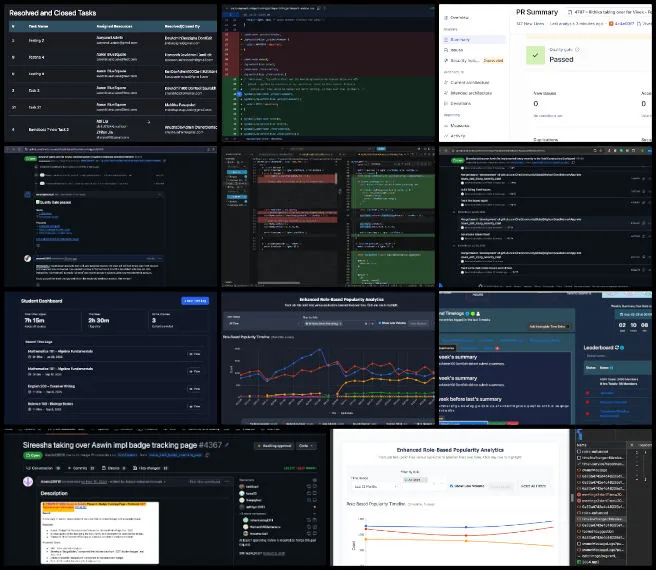
SKYE SOFTWARE DEVELOPMENT TEAM
Team Skye’s summary this week, covering their work on the Highest Good Network, was managed by Yeshwanth Nanjegowda (Full-Stack Software Engineer) and Anthony Weathers (Software Engineer), includes Jaden Wong (Software Engineer), Purav Patel (Software Engineer), and Swathi Angadi (Software Engineer). The Highest Good Network software supports creating a free-shared future by helping manage and measure sustainable, zero-waste operational processes across social architecture, construction, production, and maintenance systems.
This week, Anthony contributed to creating a free-shared future by implementing a delayed forced-logout popup, updating the automatic acknowledgment process to work with recent development-branch changes, revising permission-change header messages, adjusting styling based on reviewer feedback, and working on responsive layout fixes for the User Profile badge section. He also created progress videos, addressed reviewer feedback for PR #5340, clarified its testing instructions, helped move the pull request to completion, resolved merge conflicts for PR #3600, and investigated and partially fixed an issue preventing Administrator accounts from editing user permissions. Jaden replaced inline styles across multiple BMDashboard components with CSS Module classes, converted finite theme variations into static classes, moved theme-dependent styling from JavaScript into dark-mode CSS selectors, updated chart components to use supported SVG attributes, introduced discriminant fields for dynamic class selection, corrected accessibility contrast issues, and migrated remaining layout properties into CSS Modules. He also refactored imports to meet linting requirements, ran the pre-commit formatting and correction process, executed the test suite without regressions, and resolved the remaining reviewer requests. Purav fixed the map interface on the Construction Summary page, resolved merge conflicts for Backend PR #2272, and opened Frontend PR #5421. He updated Backend PR #2285 for the PR Review Team Analytics Dashboard by correcting reviewer-to-team code resolution through GitHub handles, fallback links, and cache handling while retaining the API response structure used by Frontend PR #5413. Purav also completed the Tool Replacement graph across Backend PR #2297 and Frontend PR #5426 by creating clean branches from the development branch, transferring the required changes, resolving route conflicts, and adding API sorting, project and date filters, validation, indexes, sanitized query handling, unit tests, and project-linked seed data. His frontend changes added the Tools Most Susceptible to Breakdown chart, Redux integration, percentage and axis labels, filtering, BM project-state alignment, dark-mode support, and responsive behavior. Swathi restored the Edit to Reorder functionality by correcting an error message that appeared after successful API calls and fixing an issue that prevented the reorder modal from opening on the Summaries page. She then began converting the related stylesheet and JSX files to use CSS Modules. See the Highest Good Society and the Highest Good Network pages to learn more about how this work supports creating a free-shared future through eco-civilization design, implementation, and the open source hub. See the collage below for the team’s work.
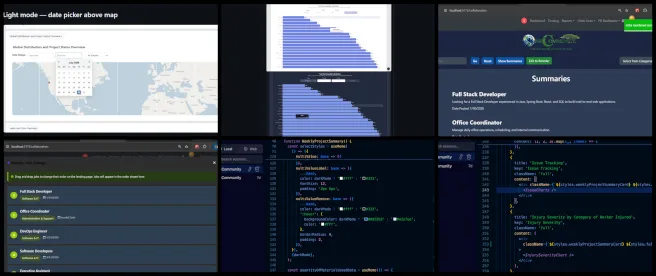
SOFTWARE PR REVIEW TEAM A-N
The PR Review Team’s summary for members with names starting with A–N was managed by Sai Sree Dongari (Data Analyst). The Highest Good Network is a foundation for measuring our results in creating a free-shared future. This week’s active members of this team were Aditya Dubey (Software Engineer), Ansh Shah (Software Engineer), Carl Bebli (Software Developer), Deepigha Japamony (Software Engineer), Ken Zou (Software Engineer), Mallikharjuna Abhiram Mulpuri (Software Engineer), and Nathan Hoffman (Software Engineer). They reviewed all Highest Good Network PRs shared in this week’s update. Learn more about how the Highest Good Network open source hub measures progress toward creating a free-shared future. The collage below shows a compilation of this team’s work.
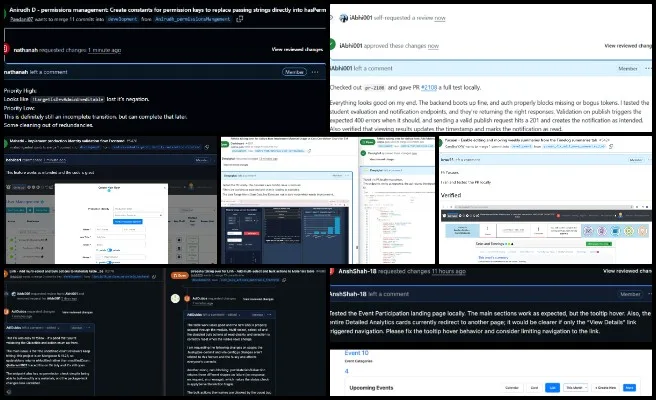
SOFTWARE PR REVIEW TEAM O-Z
The PR Review Team’s summary for members with names starting with O–Z was managed by Shameera Musthafa (Data Analyst). The Highest Good Network is a foundation for measuring our results in creating a free-shared future. This week’s active members of this team were Sita Ram Prasad Martha (Software Engineer) and Sundar Machani (Software Engineer). They reviewed all the Highest Good Network PRs (Pull Requests) shared in this week’s update. Learn more about how the Highest Good Network open-source hub measures progress towards our goal of creating a free-shared future. The collage below shows a compilation of the work from this team.
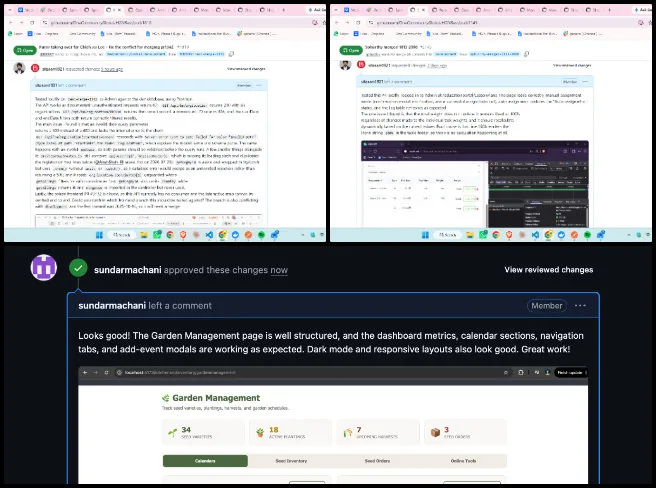
AND WE PRODUCED THIS WEEKLY UPDATES BLOG – CLICK HERE TO SUBSCRIBE
FOLLOW ONE COMMUNITY’S PROGRESS (click icons for our pages)
INVESTOR PAGES
GET INVOLVED
Eco-civilization Design and Implementation – One Community Weekly Progress Update #697
At One Community, we are pursuing eco-civilization design and implementation for a global audience seeking real, replicable change. Our all-volunteer team is building a self-replicating model that puts global stewardship practices into action across food, energy, housing, education, economics, and social architecture, each part designed to demonstrate regeneration in a growing network of teacher/demonstration hubs. Our complete process is open source and freely shared, because we’re doing this for “The Highest Good of All.“
- Here’s our project overview
- Here’s our world-change methodology
- Here’s how this becomes self-replicating
- Here’s how we are open source and free-sharing all the do-it-yourself designs
OUR MAIN OPEN SOURCE HUBS
Click on each icon to be taken to the corresponding Highest Good hub page.
One Community’s physical location will forward this movement as the first of many self-replicating teacher/demonstration communities, villages, and cities to be built around the world. This is the July 27, 2026 edition (#697) of our weekly progress update detailing our team’s development and accomplishments:
Eco-civilization Design and Implementation
One Community Progress Update #697

DONATE | COLLABORATE | HELP WITH LARGE-SCALE FUNDING
CLICK HERE IF YOU’D LIKE TO RECEIVE AN EMAIL EACH WEEK WHEN WE RELEASE A NEW UPDATE
YOU CAN ALSO JOIN US THROUGH SOCIAL MEDIA
ONE COMMUNITY WEEKLY UPDATE DETAILS
HIGHEST GOOD HOUSING PROGRESS
One Community is demonstrating eco-civilization design and implementation through Highest Good housing that is artistic and beautiful, more affordable, more space efficient, lasts longer, DIY buildable, and constructed with healthy and sustainable materials:
- Learn about: Our Upcoming Crowdfunding Campaign
- Learn about the different village models and eco-civilization design and implementation: 7 Sustainable Village Models
- Visit the open source portals for the first two: Earthbag Village OS Hub | Straw Bale Village OS Hub
This week, Chanikya Sita (Volunteer Civil/Transportation Engineer) finalized the Sustainable Roads and Sustainable Parking Lot Adaptation Guide and the Land Purchasing and Transportation Infrastructure Due Diligence document. A table of contents was added to improve navigation throughout both documents, and titles were added to every table to improve clarity and consistency. Hyperlinks were also added to all references, connecting each source title to its official online page. In addition, Chanikya backed up all reference materials as PDFs and organized them into a shared Dropbox resources folder, while images of the completed work were added to a dedicated images folder in accordance with One Community’s documentation standards. This work supports eco-civilization design and implementation by improving the accessibility, organization, and reliability of open source transportation and infrastructure resources. See below for some of the pictures related to this work.
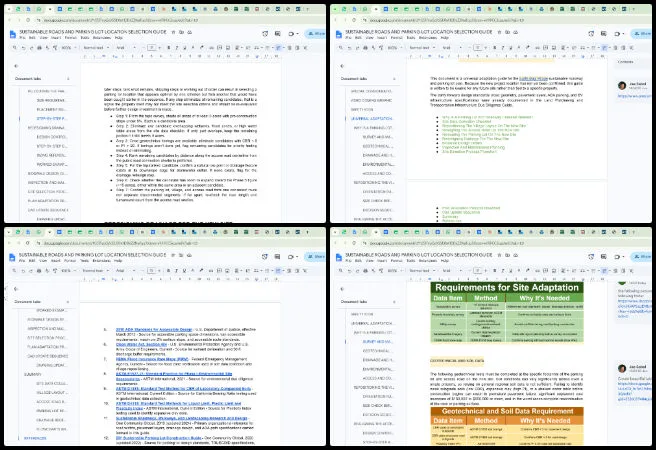
Devendranath Chowdary Maganti (Data Analyst) updated the Highest Good Energy and Aircrete webpages by integrating new project content, revising existing sections, and incorporating the latest documentation and visualizations. He also reviewed the Highest Good Food documentation and related project materials to better understand the data and planning requirements for developing the timeline dashboard. In addition, Devendranath supported the Training Team by reviewing onboarding blogs, providing feedback to new volunteers, and assisting with training-related activities. He also completed regular Administration Team responsibilities and contributed to the team’s weekly administrative workflow. His efforts contribute to eco-civilization design and implementation by making sustainability resources more accessible while strengthening collaboration, knowledge sharing, and volunteer development. Below, you’ll find some images of this work.
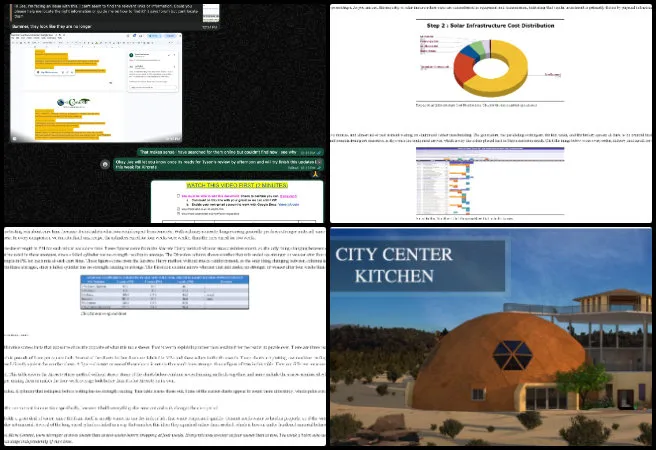
Sagar Chavan (Transportation Engineer) continued working on the Sustainable Roadways and Sustainable Parking Lot Designs project by updating and refining technical documentation related to roadway layouts, parking lot planning, and stormwater management concepts. He reviewed existing project materials to improve the organization and clarity of the open source tutorials while verifying implementation details and cost analysis information for consistency. Sagar also compared the roadway design content with rainwater harvesting and drainage documentation to ensure alignment across related project resources. In addition, he prepared notes to support the development of guidance for adapting roadway and parking lot designs to different site conditions and coordinated with the project collaborator to maintain consistency between the design documentation and planned updates. His work supports eco-civilization design and implementation by strengthening practical, open source guidance for sustainable transportation and integrated water management systems. See below for some of the pictures related to this work.
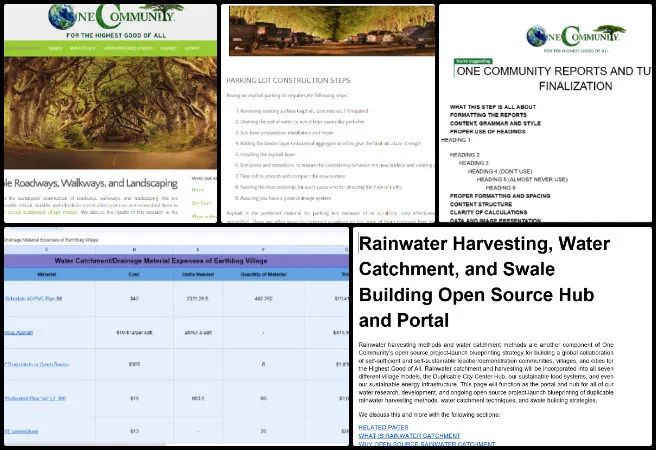
DUPLICABLE CITY CENTER PROGRESS
One Community is demonstrating eco-civilization design and implementation through a Duplicable and Sustainable City Center that is LEED Platinum certified/Sustainable, can feed 200 people at a time, provide laundry for over 300 people, is beautiful, spacious, and saves resources, money, and space:
- Learn about this building, its function, eco-civilization design and implementation: Duplicable City Center Open Source Hub
This week, Bevan Chiu (Mechanical Engineer) continued his work finishing the City Center Eco-spa Designs. He worked on checking the Hot Tub Design calculations and evaluating the spa tub flooring finite element analysis (FEA). For the Hot Tub Design calculations, he revised the startup heating calculation to account for heat loss, added missing variables to the waterfall plumbing calculations, and provided recommendations for the electric load calculations. For the flooring FEA analysis, Bevan recalculated the applied loads, including hydrostatic pressure and stepping pressure, refined the boundary conditions and mesh aspect ratio, and evaluated the resulting stress and displacement outputs. This open source Duplicable City Center project focuses on eco-civilization design and implementation. For more details, refer to the image below.
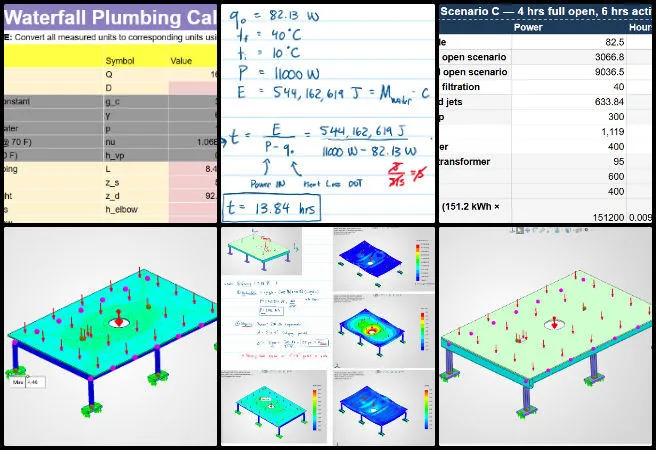
Shivarama Krishna Revanuru (Mechanical Engineer) continued working on the Duplicable City Center design. The report sections covering the finite element analysis (FEA) of the spa cover hinge and Plate 2 were completed by incorporating result images and revising the content based on feedback from Jae and team members. Previous report sections were proofread to identify and correct errors, improve consistency, and ensure that no gaps remained in the documentation. The report was updated to incorporate the latest revisions and finite element analysis results. This open source Duplicable City Center project demonstrates eco-civilization design and implementation. The images below illustrate aspects of this work.
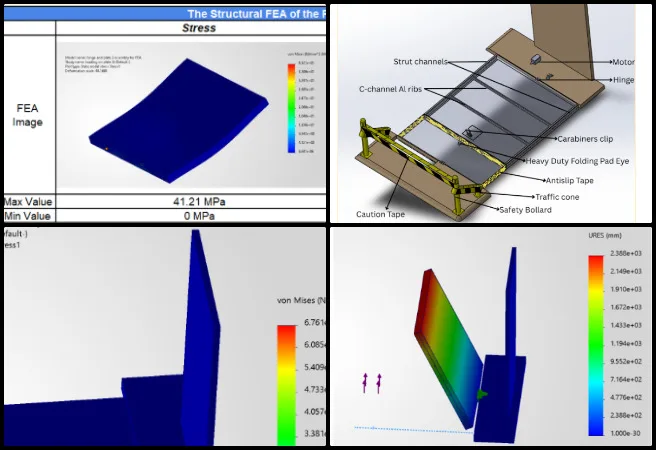
Nidish Reddy Koppula (Mechanical Engineer) continued working on the Duplicable City Center design. He worked on finite element analysis for the open source elevator design, including the elevator cab chassis, hydraulic rod-to-cab bracket, lift shaft, and full lift assembly. He set up boundary conditions and mesh controls for the cab chassis analysis, completed the cab frame FEA, and reviewed the results to check whether the frame could handle the applied and additional load cases. He also worked on the analysis of the bracket connecting the hydraulic rod to the lift cab and completed hand calculations to support verification of the lift shaft analysis setup. Nidish then set up and completed the lift shaft FEA, reviewed the results, and confirmed that the updated shaft design met the intended load requirements for the current analysis stage. He finished the week by completing finite element analysis on the full lift assembly and its critical components. This open source Duplicable City Center project presents eco-civilization design and implementation. For more details, refer to the image below.
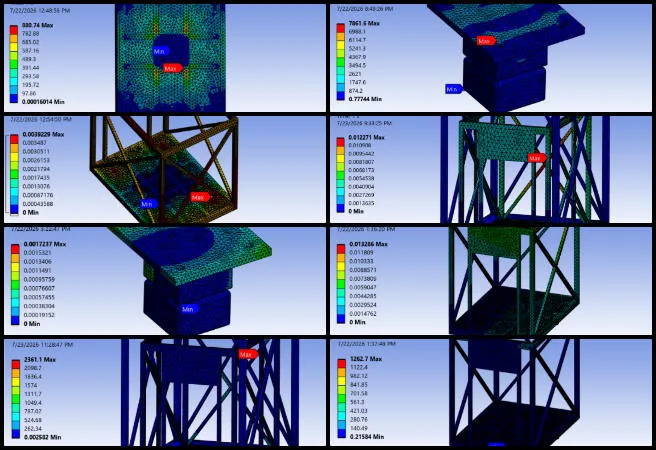
Sri Vidya Sai Thumu (Mechanical Design Engineer) continued developing the City Center Eco-spa Designs. She worked on the spa tub flooring structural support and insulation layout design in SOLIDWORKS 2026. She updated the structural support assembly by refining the aluminum perimeter frame, support legs, and floor panel layout while incorporating non-welded mechanical connections throughout the design. Sri Vidya added heavy-duty corner gusset brackets at the frame corners, L-angle brackets between the aluminum joists and perimeter frame, flat plate connectors between the floor panel and frame, and corner brackets connecting the frame to the support legs. She evaluated bracket placement, connector locations, and fastener arrangements to improve load transfer and structural stability while maintaining a bolted assembly. Sri Vidya coordinated with her supervisor regarding finite element analysis, reviewed the proposed loading conditions for hydrostatic pressure, gravity, and stepping loads, updated the CAD model based on feedback, repositioned the center support leg, and uploaded the revised assembly for structural validation. She also documented design changes, prepared the assembly for FEA, and organized updated CAD files and supporting images for project review and submission. This open source Duplicable City Center project focused on eco-civilization design and implementation. For more details, refer to the image below.
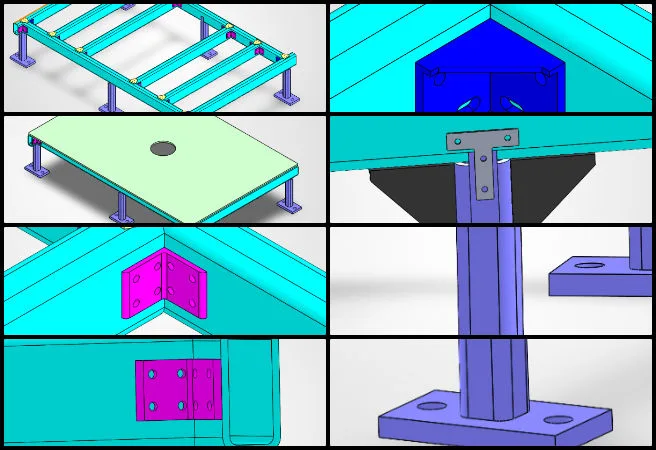
HIGHEST GOOD FOOD PROGRESS
One Community is demonstrating eco-civilization design and implementation through Highest Good food that is more diverse, more nutritious, locally grown and sustainable, and part of our open source botanical garden model to support and share bio-diversity:
- Learn about the structures and eco-civilization design and implementation: Hoop House Hub | Aquapini & Walipini Open Source Hub
- See what we’ll be growing: Gardens & Hoop Houses | Large-scale Structures | Food Forest | TA
This week, the core team continued working on the Master Tools, Equipment, and Materials/Supplies List for the Large-scale Garden, Botanical Garden, and other Highest Good Food components, focusing on summarizing data from a video regarding Amish wood preservation and incorporated the findings into the Master TEMS document for future use on the One Community website. The method involves a mixture of pine tar, boiled linseed oil, turpentine, and beeswax, a practice historically used by the Vikings, Romans, and Amish for wooden fencing and construction. This technique is documented to extend the functional lifespan of wood for over a century. Further research was conducted for suppliers that carry large quantities of pure turpentine. Their efforts contribute to One Community’s mission of eco-civilization design and implementation through open source collaboration, ecologically responsible innovation, and a focus on long-term global development. The collage below portrays the team’s efforts and achievements for the week.
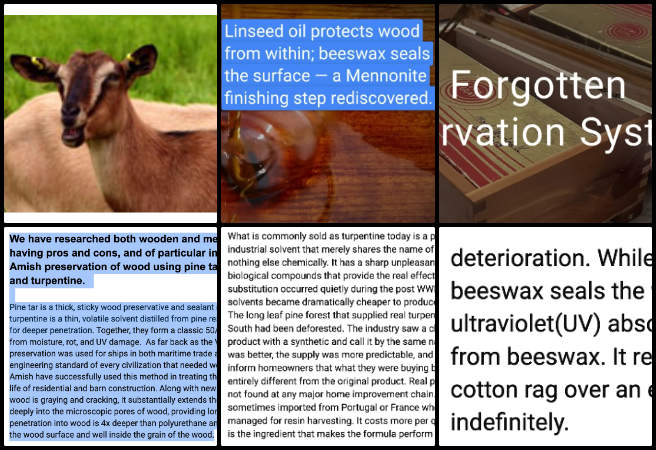
Jay Nair (BIM Designer) continued working on the Aquapini and Walipini Planting and Harvesting documents. He worked on validating the greenhouse lighting energy calculator by reviewing each zone against the documented step-by-step calculations. The work focused on comparing calculation outputs with the written methodology, checking the accuracy of formulas, verifying linked inputs and zone-specific data, and identifying any discrepancies requiring correction. These updates support the ongoing refinement of the calculator and improve consistency across all lighting energy calculations for Walipini 1. These updates improve the stability and adaptability of shared systems, supporting the broader goal of eco-civilization design and implementation. See the collage below portraying the work done this week.
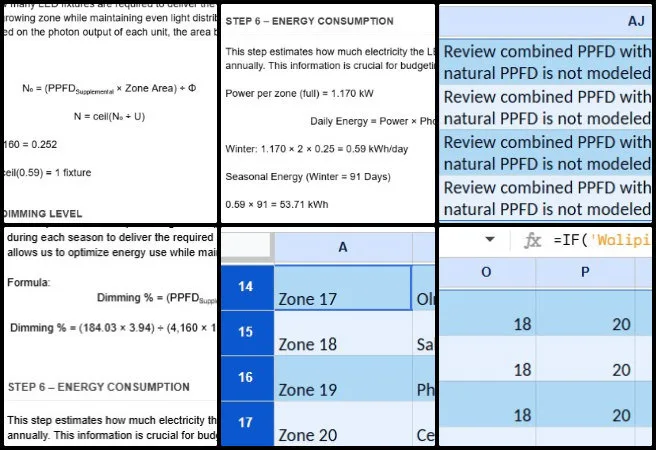
Shameera Musthafa (Data Analyst) continued working on the Highest Good Food initiative, OC Administration, and the PR Review Team, coordinating review workflows and providing feedback to ensure accuracy, clarity, and consistency across deliverables. She organized and categorized project images, created visual collages, and finalized blog-related content as part of PR review coordination, ensuring that both visual and written materials were properly curated and documented. Additionally, Shameera contributed to the Highest Good Food report pages and related visualizations. She also managed the One Community Bluesky social media account, creating and publishing posts to help share project updates and increase outreach and engagement. In addition, she supported the hiring process by conducting interviews and evaluating candidates. This work plays a key role in eco-civilization design and implementation. See below for images showcasing her work.
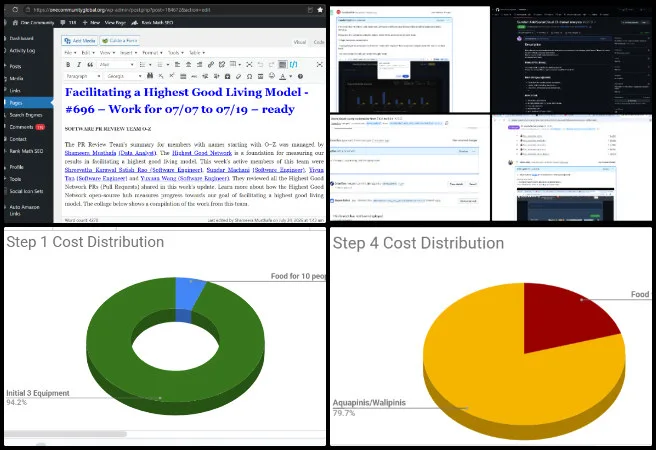
HIGHEST GOOD ENERGY PROGRESS
One Community is demonstrating eco-civilization design and implementation through Highest Good energy that is more sustainable, resilient, supports self-sufficiency and includes solar, wind, hydro, and more:
- Learn about the open source sustainable-energy foundations and eco-civilization design and implementation: Solar, Hydro, and Wind
- Explore our research into the most sustainable products and companies for saving water and energy: Insulation, Eco-laundry, Lightbulbs and Light Bulb Companies, Doors and Door Companies, Windows and Window Companies, Toilets, Faucets and Faucet Accessories, Urinals, and more.
This week, the core team continued contributing to the Highest Good Energy initiative, part of One Community’s work demonstrating eco-civilization design and implementation. They followed up with Shameera and Rishikesh to provide guidance on their assigned tasks. The team also reviewed sections of the Vermiculture Eco-Toilet document again, completed their review of the Aircrete document, and added comments with suggested revisions. They reviewed the Goats document and inserted a placeholder for a video. In addition, the team continued updating the food infrastructure cost analysis documents by adding and organizing project cost information. See the collage below for a snapshot of their work this week.
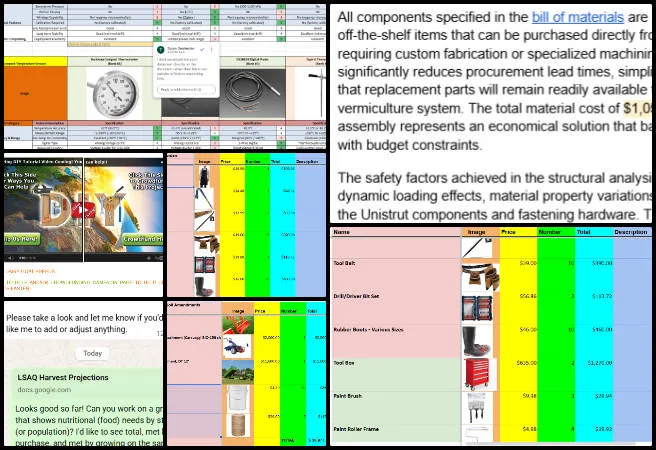
Rohan Pariakar (Operations and Supply Chain Analyst) continued working for the Highest Good Energy initiative, part of One Community’s broader work demonstrating eco-civilization design and implementation, consolidating the project’s energy analysis and solar infrastructure workbooks by migrating validated calculations and supporting data from the development copy into the original project workbook. He updated dynamic cross-sheet references to maintain data integrity after the migration, resolving formula and reference errors introduced by the workbook restructuring. Rohan rebuilt and standardized data visualizations, including category-based pie charts and summary graphics, to accurately reflect the latest energy demand analysis. He also verified engineering calculations, reconciled procurement cost estimates by resolving panel cost precision and rounding inconsistencies, and ensured consistency across the Energy Analysis, Solar Sizing, Master Planning, and Solar Infrastructure workbooks. These improvements established a cleaner, more maintainable workbook structure with reliable dynamic references, standardized visual reporting, and enhanced traceability for future engineering analysis, procurement planning, and project documentation. See the collage below for highlights of his work.
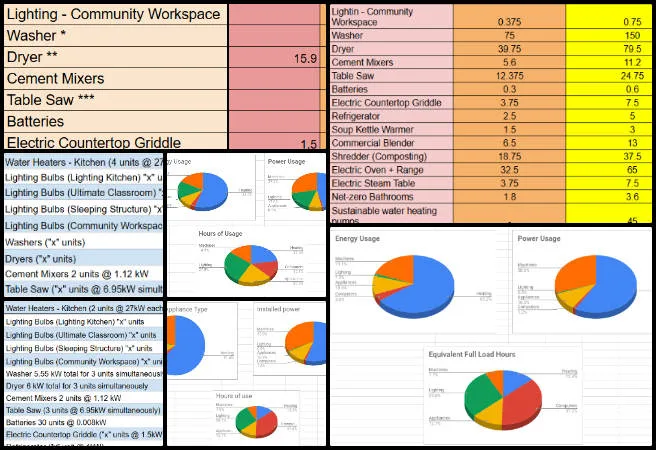
HIGHEST GOOD EDUCATION PROGRESS
One Community is demonstrating eco-civilization design and implementation through Highest Good education that is for all ages, applicable in any environment, adaptable to individual needs, far exceeds traditional education standards, and more fun for both the teachers and the students. This component of One Community is about 95% complete with only the Open Source School Licensing and Ultimate Classroom construction and assembly details remaining to be finished.
With over 8 years of work invested in the process, the sections below are all complete until we move onto the property and continue the development and open sourcing process with teachers and students – a development process that is built directly into the structure of the education program and everything else we’re creating too:
- Program Overview: Education Open Source Hub
- How the components work together in designing human orchestrated eco-abundance, eco-civilization design and implementation: How to use the Education for Life Program
- Lesson Plans for Life – Lesson Plans How-to
- Foundations of Outstanding Leaders, Teachers, and Communicators
- Curriculum for Life
- Teaching Strategies for Life
- Learning Tools and Toys for Life
- Evaluation and Evolution
Isaiah “Isa” Hernandez (Graphic Designer) created seven new spreads for The Ultimate Classroom, a project demonstrating eco-civilization design and implementation, including content explaining why the project exists, project details, and the purposes of the Red Room through the Blue Room. He also updated the biographies from the previous week based on additional revisions and specific requests provided by Sara. See the collage below for a snapshot of his work this week.
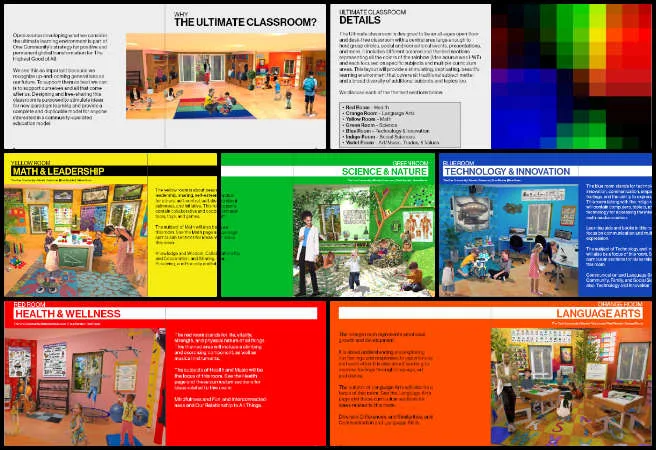
Navya Eeshani Boyapati (Web Designer) continued working on The Ultimate Classroom webpage by updating and organizing content for the 959 4-Dome Home MEP Engineering page, improving HTML formatting, adding and adjusting image captions, ensuring proper alignment, optimizing SEO elements including image alt text and keywords, and making corrections based on the provided documentation and webpage requirements. She also began reviewing the Aquapini/Walipini planting page content, identifying areas for improvement and starting SEO optimization for all images to improve accessibility and search visibility. See the collage below for a snapshot of this week’s
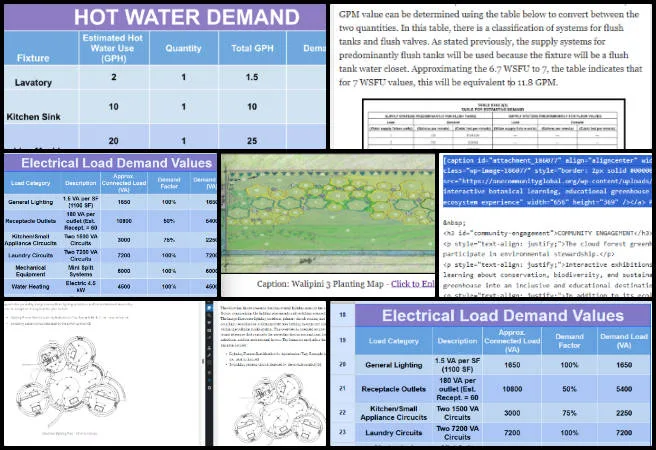
HIGHEST GOOD SOCIETY PROGRESS
One Community is demonstrating eco-civilization design and implementation through a Highest Good society approach to living that is founded on fulfilled living, the study of meeting human needs, Community, and making a difference in the world:
- Read the Highest Good society overview and eco-civilization design and implementation: Highest Good Society
- Learn about the model for fulfilled living and sharing: A Day in the Life
- Learn about the 4 economic models: RBE | For-profit | Non-profit | Entrepreneurship
- Learn about our open source community collaboration and management software: The Highest Good Network
This week, the core team completed over 46 hours managing volunteer work reviews, handling emails, overseeing social media accounts, supporting web development, and identifying and integrating bug fixes for the Highest Good Network. They also interviewed and onboarded new volunteer team members. Additionally, they produced and integrated the video above about demonstrating eco-civilization design and implementation and how demonstrating eco-civilization design and implementation serves as a foundational element of One Community’s broader mission. The following images showcase their work.
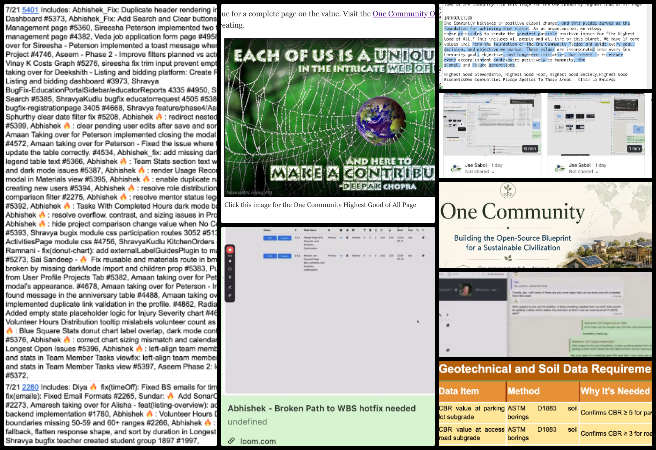
Pooja Kulkarni (UI/UX Designer) continued developing and refining the One Community philanthropic pitch deck. She organized the presentation into a clear narrative covering the sustainability challenge, One Community’s integrated solution demonstrating eco-civilization design and implementation, global replication model, proof of work, phased development roadmap, funding requirements, long-term sustainability, accountability, and the final philanthropic ask. Pooja also strengthened the visual storytelling by creating and improving supporting graphics for areas such as property acquisition, food and energy infrastructure, the Earthbag Village and City Center, working capital, and open source documentation. Her work emphasized a consistent visual identity, stronger information hierarchy, simplified messaging, and a more persuasive presentation flow designed to communicate the organization’s mission and the impact of the proposed $25 million funding opportunity. See the collage below for snapshots of her work.
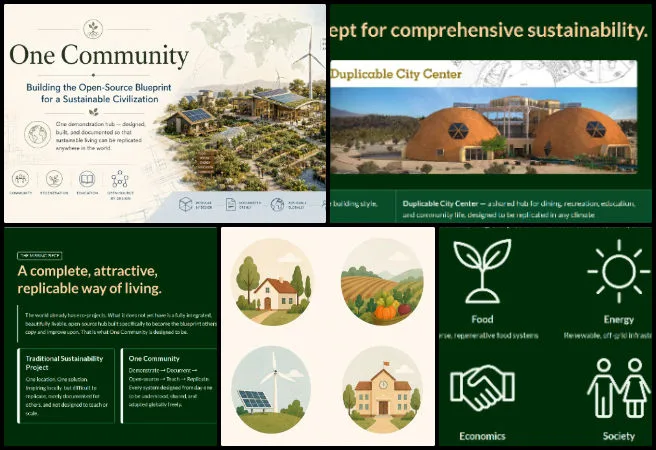
Adhya Rastogi (Business Analyst) continued reviewing the Total Organization Summary Dashboard to verify the status of previously reported issues, cross-checked the Root Cause Matrix, bug documentation, and tracking spreadsheet, updated testing records, and shared unresolved issues requiring further developer attention with Jae. She continued Reddit engagement by publishing a discussion post, contributing comments through both the PostByPurpose and One Community accounts, and monitoring community interactions to better understand engagement patterns. Adhya also optimized Google Ads for multiple webpages by updating headlines, descriptions, keyword targeting, and negative keywords, reviewing campaign settings and optimization recommendations, and verifying that the ads aligned with campaign objectives and landing page content. She completed SEO optimization for the Mission and Purpose page, which is focused on demonstrating eco-civilization design and implementation, by improving content structure, heading hierarchy, keyword placement, metadata, internal linking, readability, and analytics tracking, updating the SEO tracking spreadsheet, and verifying the implemented changes in WordPress. See the collage below for highlights of her work.
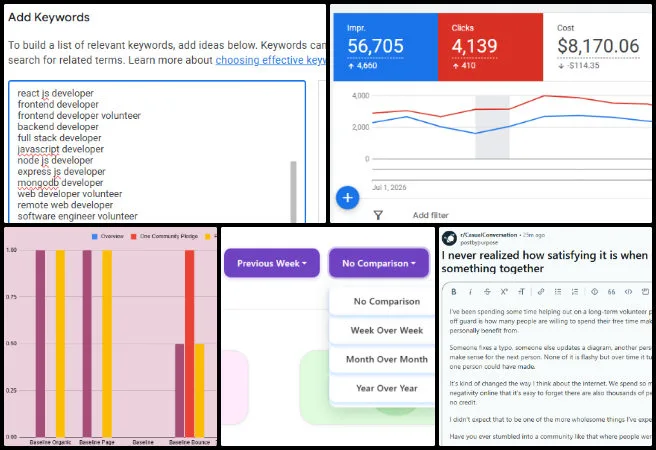
Valentina Collini (Designer) continued creating social media images to support One Community’s outreach efforts, designing graphics that align with the organization’s visual standards and effectively communicate its mission of demonstrating eco-civilization design and implementation. She also reviewed and refined volunteer biographies, making corrections to improve accuracy, consistency, and overall presentation. In addition, Valentina carefully checked content for errors and implemented necessary updates, helping maintain the quality of both the website and promotional materials. Her work contributed to strengthening One Community’s online presence while ensuring that volunteer profiles and related content remained clear, professional, and up to date. See the collage below for highlights of her work.
ADMINISTRATION TEAM
The Administration Team’s summary, which covers their work on the Highest Good Network, was managed by Devendranath Chowdary Maganti (Data Analyst) and includes Leo Lishin Shiu (Software Engineer), Olawunmi “Ola” Ijisesan (Administrative and Management Support), Pranjul Garg (Business Analyst), Sachit Varma (Business Operations & Cost Analyst), Sai Sree Dongari (Data Analyst), Sayantan Paul (Frontend Tester and Software Team Administrator), Tanmay Nihal Harwani (Data Scientist), and Yeshwanth Nanjegowda (Full-Stack Software Engineer). The Administration Team supports the Highest Good Network, a tool designed to track and measure progress while developing systems that contribute to demonstrating eco-civilization design and implementation. Through administrative support, documentation, testing, training, recruitment, analytics, and content management, the team helps advance this mission, aligning with One Community’s vision of building a replicable and sustainable future model.
This week, Leo reviewed and compiled the 17LeDCC and 20LeFOD team weekly summaries, created blog collages, scheduled Facebook and Instagram posts, loaded previous week insights, and reviewed social media analytics including the newly added Mastodon platform. Ola reviewed the Pinterest social media account, prepared administrative folder dropboxes, organized the Google Workspace environment, verified account settings, updated directory structures, archived outdated documents, and consolidated shared drive folders. These social media management and administrative organization efforts contribute to demonstrating eco-civilization design and implementation.
Pranjul managed volunteer time log monitoring, identified and corrected logging issues, guided volunteers on updates, maintained activity records, scheduled Tumblr and Medium posts, gathered team project updates, and published WordPress blogs for multiple teams. Sachit developed a structured funding matrix with financial capacity screening, weighted evaluation criteria, standardized scoring methods, and sustainability-focused assessment categories. He researched potential funders, evaluated funding alignment, discussed business planning and funding continuity with management, and improved the framework for comparing prospective funding opportunities. These administrative, research, and planning activities contribute to demonstrating eco-civilization design and implementation.
Sai Sree organized PR review images, created collages, finalized PR Admin Team blog content, reviewed candidate profiles, completed interviews, documented hiring feedback, performed frontend testing across forms, search, filters, charts, validation, and theme compatibility, documented merged PRs, assigned testing items, and provided training feedback. Sayantan completed OC Administration responsibilities by submitting team blogs, performing peer reviews, identifying formatting and SEO issues, reviewing training work, updating feedback tracking, and guiding administrators on summaries, image titles, SEO text, folder naming, and contribution descriptions. These quality assurance, administration, and collaboration activities contribute to demonstrating eco-civilization design and implementation.
Tanmay continued bio administration, blog management, social media coordination, and administrative reviews by updating bios, collecting missing information, merging team blogs, completing SEO optimization, reviewing new admin work, creating Threads posts, updating the Social Media Master Dashboard, and maintaining tracking sheets. Yeshwanth completed onboarding tasks by reviewing documentation, completing checklists, adding feedback in Google Docs, organizing files through Dropbox, reviewing team members’ work, preparing team summaries, updating WordPress pages and Google Docs, and maintaining accurate content across documentation systems. These documentation, content management, and training activities contribute to demonstrating eco-civilization design and implementation. See the collage below for highlights of this week’s work.
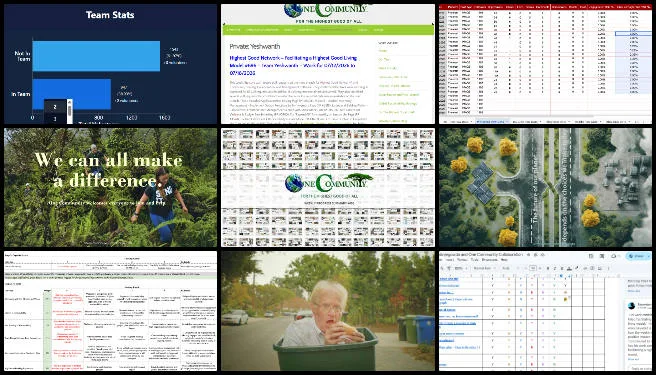
HIGHEST GOOD NETWORK PROGRESS
One Community is demonstrating eco-civilization design and implementation through open source Highest Good Network® software that is a web-based application for collaboration, time tracking, and objective data collection. The purpose of the Highest Good Network is to provide software for internal operations and external cooperation. It is being designed for global use in support of the different countries and communities replicating the One Community sustainable village models and related components.
- Learn about our open source community collaboration, management software, eco-civilization design and implementation: The Highest Good Network
This week, the core team continued testing pull requests on the main branch for the Highest Good Network, a platform demonstrating eco-civilization design and implementation. They confirmed that 15 fixed pull requests were resolved and identified that 11 pull requests were still not fixed. The team was also unable to test several pull requests because the required data was not available on the main branch. These included BM Dashboard – Add .module.css for /BMDashboard/RentalChart/RentalChart (PR #4092), Phase 2: Create an Interactive List of Open Issues (PRs #4800 and #2032), and Improve the Functioning of Tools/EquipmentUpdate Page (PR #4972). See the collage below to view the team’s work.
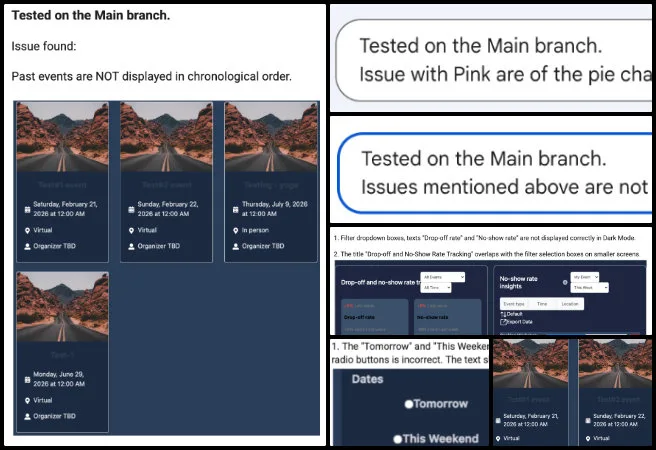
ALPHA SOFTWARE DEVELOPMENT TEAM
The Alpha Team’s summary, covering their work on the Highest Good Network, was managed by Lin Khant Htel (Frontend Software Developer) and Sayantan Paul (Frontend Tester and Software Team Administrator) with a team consisting of Casstiel Pi (Software Engineer), Handika Harianto Ew Jong (Full Stack Developer), Maithili Kalkar (Software Engineer), Sai Sandeep (Software Engineer), and Som Ramnani (Junior Software Engineer) supporting One Community’s mission of cross-functional software development and system improvements. This work advances the team’s objectives, ensuring that all completed tasks directly contribute to eco-civilization design and implementation.
This week, Lin managed the weekly work summary for Team Alpha, reviewed PR #5319 by reviewing the code and running tests locally, verified Alpha team members’ weekly summaries, photos, and videos as part of team management duties. Casstiel completed and refined the Weekly Project Summary frontend updates, including the active project and week banner, Expand All and Collapse All controls, comparison toggle structure, section badges, empty-state support, loading feedback, dark mode styling, print behavior, and layout improvements for comparison mode. They confirmed that additional backend support is required for comparison data and badge counts, implemented and tested the /issues/breakdown endpoint, verified the Issues Breakdown chart using backend data, submitted the frontend pull request with notes on the remaining backend dependency, and began reviewing the Purchase Request enhancement task, furthering One Community’s mission of demonstrating eco-civilization design and implementation.
Handika completed PR #5405 by replacing the completed tasks chart with a paginated react-table, adding page size controls, retaining total logged time and completed task counts, improving the mobile layout, formatting time values, adding an empty state, and supporting dark mode. Maithili continued the Instagram auto-poster work by setting up ngrok, configuring Instagram and Meta Developer accounts, reviewing the existing frontend and backend implementation, investigating authentication and credential issues, creating a trial account for testing, and tracing integration issues affecting the feature. These combined technical improvements support the objective of demonstrating eco-civilization design and implementation.
Sai completed PR #4810 by restricting promotions to unpromoted users, adding toast notifications, updated backend PR #2270 to exclude promoted users from retrieval, and resolved an underlying issue through PR #5398 after collaborating with community members. Som resolved merge conflicts in PR #5189 while preserving filtering, sorting, dark mode, PDF export, list view, column alignment, and the More and Show Less functionality in MyCases, verified the changes with tests and code quality checks, resolved stylesheet conflicts in PR #4987 while retaining pagination and search functionality, and updated Community Portal routing in PR #4712 by resolving route conflicts and aligning navigation with registered resource management paths. This work advances the goal of demonstrating eco-civilization design and implementation through improvements to system efficiency and usability. The collage below offers a visual representation of the team’s work for the week.
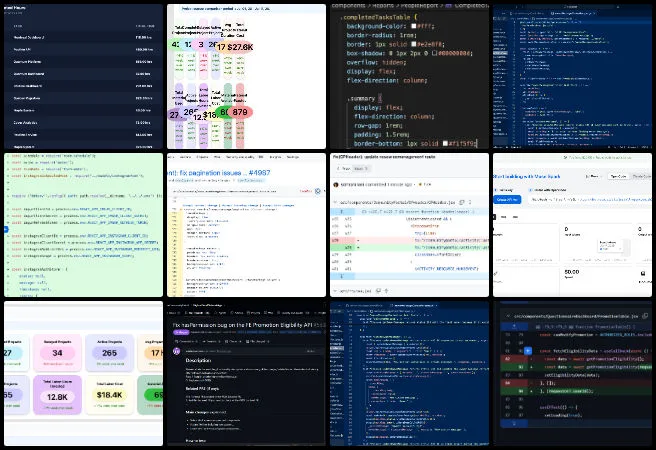
BINARY BRIGADE SOFTWARE DEVELOPMENT TEAM
The Team Brigade’s summary, covering their work on the Highest Good Network, was managed by Roshini Seelamsetty (Software Engineer) and Sayantan Paul (Frontend Tester and Software Team Administrator) with a team consisting of Amaan Syed (Volunteer Software Engineer), Mahitha Pasupuleti (Software Engineer), and Manoj Puttaswamy (Software Engineer). Roshini coordinated the weekly summary workflow, ensuring all technical milestones aligned with the project’s goal of demonstrating eco-civilization design and implementation.
This week Amaan worked on frontend development and follow-up tasks across multiple HighestGoodNetworkApp pull requests. His work included merging the latest development branch, resolving merge conflicts, addressing reviewer feedback, updating Injury Trend Chart filter alignment, project filtering logic, duplicate project handling, tooltips, hover behavior, and dark mode readability, and validating functionality before requesting review. He also worked on the Resource Management Dashboard by updating Request ID and Certification ID search functionality, refining dark mode readability, modifying table hover behavior, testing search, filters, actions, responsive layouts, dark mode, and user access behavior, and updating the pull request for review contributing to One Community’s mission of eco-civilization design and implementation.
In addition, Amaan worked on the People Report page by updating responsive layouts across desktop, tablet, and mobile viewports, modifying report layouts and dark mode styling, updating report table hover behavior, refining the Infringement modal layout and responsiveness, correcting profile column layout issues, testing across multiple screen sizes, and addressing reviewer feedback, furthering One Community’s mission of demonstrating eco-civilization design and implementation.
Mahitha worked on the Kitchen Inventory Management feature by creating the Suppliers section of the Orders page in PR #5106. Her work included implementing a supplier grid with supplier details, actions for viewing pricing history, editing supplier information, and creating supplier orders through external website links stored in the database, integrating CSS modules, and supporting responsive layouts, light and dark themes, and accessibility requirements. She also worked on the Seed Inventory section for the Garden Management page in PR #5111 by implementing functionality to display collected seed information, updating seed variety counts in summary cards, integrating CSS modules, and supporting responsive layouts, light and dark themes, and accessibility requirements, furthering One Community’s mission of demonstrating eco-civilization design and implementation.
Manoj worked on BMDashboard updates by addressing issues related to searchable multi-select filter components across inventory categories, updating localStorage handling, restoring filter user interface elements, resolving sort header functionality issues, addressing dropdown display behavior, updating Reset button functionality, and extending multi-select filters and localStorage persistence to the Equipment page. He also updated dark mode behavior across inventory pages by addressing table text visibility, aligning page backgrounds, removing display inconsistencies on the Materials page, and updating Equipment page category icon colors furthering One Community’s mission of eco-civilization design and implementation.
Roshini worked on Hours Completed and Tasks report by reviewing report data accuracy, validating calculation and aggregation behavior across historical data, updating the display to show a single hours distribution label with task and project percentages that dynamically total 100 percent, resolving merge conflicts, and correcting frontend issues. Roshini also worked on implementing permission-based access for viewing the number of times time was added to a task, creating a new permission under Permissions Management, and assigning the permission to applicable roles while supporting assignment to individual users. These combined technical improvements support the objective of demonstrating eco-civilization design and implementation. This work advances the goal of demonstrating eco-civilization design and implementation through improvements to system efficiency and usability. The collage below offers a visual representation of the team’s work for the week.
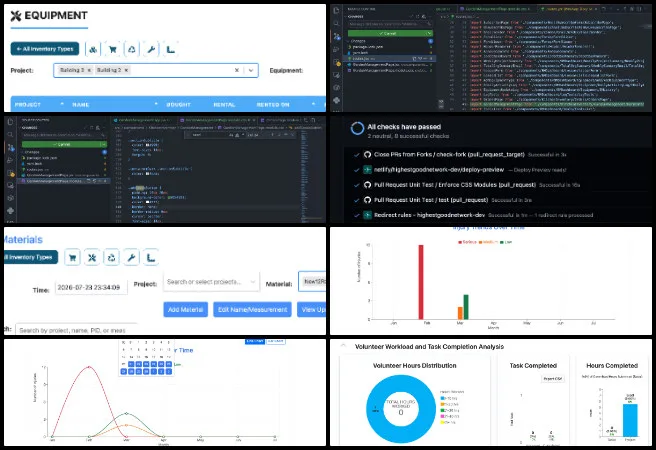
DEV DYNASTY SOFTWARE DEVELOPMENT TEAM
The Dev Dynasty Team’s summary, covering their work on the Highest Good Network software, was managed by Sayantan Paul (Frontend Tester and Software Team Administrator) and Rithika Pai (Software Engineer). The team includes Amaresh Chaudhary Nara (Software Engineer), Bosu Babu Bade (Software Developer), Mahathi Ganimisetti (Data Analyst), Shreevaths Karawal Satish Rao (Software Engineer), and Sireesha Kunchala (Software Engineer). The Highest Good Network software supports eco-civilization design and implementation by helping manage and measure sustainable, zero-waste operational processes across social architecture, construction, production, and maintenance systems.
This week, Rithika resumed work on several paired PRs across the BM Dashboard, part of the Highest Good Network’s ongoing work demonstrating eco-civilization design and implementation. For PRs #4396/#1903 (Tool Stoppage Reason), Rithika rebased both branches, resolved repeated WeeklyProjectSummary.module.css conflicts, fixed a SonarQube duplication issue by extracting a shared aggregation utility, added a unit test suite, and fixed a CI coverage-report issue. For PRs #5073/#2115 (Smart Insights and Predictive Utilization Analysis), conflicts in DropOffTracking.jsx and a lockfile mismatch were resolved, the CI fix was propagated, and a SonarQube-flagged unused variable was resolved. For PRs #4587/#1957 (Material Usage vs Cost Correlation Chart), reviewer feedback on the date picker and clear icon was addressed, a dark mode issue was flagged, and a SonarQube cleanup began on 17 backend issues, furthering One Community’s mission of demonstrating eco-civilization design and implementation.
Amaresh worked on dark mode fixes for the Community Portal Participation page (PR #4530), tracing a black-text bug to an overly broad global CSS selector, restoring Event Participation Analytics components and routes that a merge had silently dropped, and applying debouncing (via lodash) to recomputation/re-render logic in Team search, User Management search, and Assign Team/Project options in UserProfile, plus a Reports page search box, without debouncing the input fields themselves. Bosu worked on frontend PR #5386 and backend PR #1856 for the Event Reschedule feature, resolving merge conflicts, restoring missing reschedule routes, fixing modal close behavior, adding a reschedule confirmation view, fixing dark mode text visibility, adding backend support for mock activity IDs and OAuth-less email dry-run mode, and addressing ESLint, Stylelint, and SonarCloud findings, furthering One Community’s mission of demonstrating eco-civilization design and implementation.
Mahathi fixed a User Management page crash caused by an incorrect endpoint mapping, added defensive array validation for user profile data, completed test suite updates across configuration gating, identity verification, webhook controllers, and service scenarios, and completed end-to-end verification of the create flow, one-to-one linkage enforcement, deactivate/reactivate synchronization, and webhook signature validation using a real production account. Shreevaths fixed a login regression on PR #4340 caused by an incorrect jwt-decode import style, reworked EPProtectedRoute.jsx so a stale logged-out flag no longer permanently traps a user who has since regained access, updated the corresponding test suites, and cleaned up the branch by reverting unrelated edits that had crept in. These updates support eco-civilization design and implementation by improving platform functionality, code quality and the reliability of collaborative tools within the Highest Good Network.
Sireesha contributed 18 hours across PRs #4489, #4367, and #4742, resolving merge conflicts for the injury severity grouped bar graph display, implementing dark mode styling and accessibility fixes across the Weekly Project Summary Dashboard and badge detail modals, and integrating dark mode support into FeedbackForm and FollowUpEmailTemplate while fixing focus outlines, CTA hover states, and removing unused CSS, thus contributing to One Community’s mission of demonstrating eco-civilization design and implementation. To learn more about how this work supports eco-civilization design and implementation, visit the Highest Good Society and the Highest Good Network pages. Below is the collage showcasing the Dev Dynasty team’s work for the week.
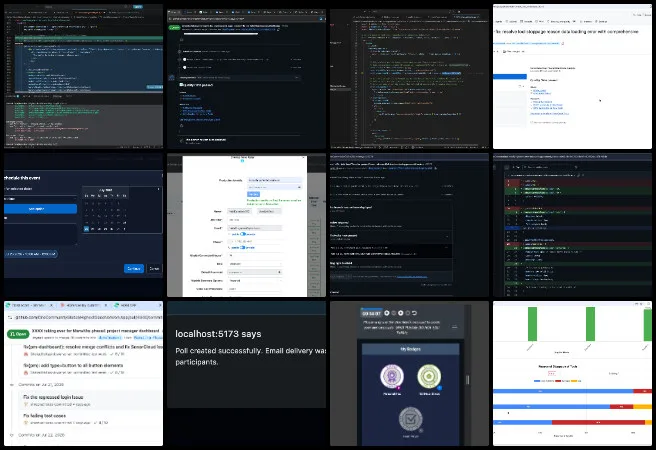
SKYE SOFTWARE DEVELOPMENT TEAM
The Skye Team’s summary, covering their work on the Highest Good Network, was managed by Sayantan Paul (Frontend Tester and Software Team Administrator) and Anthony Weathers (Software Engineer). The team includes Jaden Wong (Software Engineer), Purav Patel (Software Engineer), and Swathi Angadi (Software Engineer). demonstrating eco-civilization design and implementation is a service commitment of the Highest Good Network software which is accomplished by objectively tracking and managing progress across social architecture, construction, production and maintenance processes, utilizing transparent, scalable systems that strengthen accountability, coordination and resilient ecosystems.
This week, Jaden resolved merge conflicts on PR #3286 related to 404-page fixes by reconciling eight conflicted files with the latest development branch, preserving the authenticated and unauthenticated conditional rendering logic, and retaining the custom 404 catch-all route in the routing configuration. He also completed PR #3517 for Badge Management improvements by creating a dedicated BadgeDevelopment.module.css file, replacing inline styles with scoped CSS module classes, extracting helper functions to resolve a SonarQube cognitive complexity issue, and standardizing dark mode class handling throughout the component. Both pull requests were completed with passing CI checks, zero new SonarQube issues, and successful Netlify deployment previews, furthering One Community’s mission of demonstrating eco-civilization design and implementation.
Purav completed unfinished frontend and backend work for the PR Review Team Analytics Dashboard and the Educator Document Review Workflow. For Frontend PR #5413, which replaces PR #3861, he created a new feature branch from the latest development code, migrated the required analytics changes, completed the Reviewers Ranked by Requirement Satisfied chart with duration filters, responsive layout, dark mode support, readable tooltips, and navigation under the PR Dashboard. For Backend PR #2285, which replaces PR #1648, he completed the review summary API required by the dashboard and documented the local backend and GitHub token setup needed for testing. Purav completed Backend PR #2284 for the Educator Document Review Workflow by selectively migrating the required changes from the older branch, implementing APIs for submission retrieval, progress auto-save, page comment management, grading, and change requests, extending the education task schema with review fields, fixing grading state and student name issues, aligning submitted task discovery, verifying all eight endpoints locally, adding unit tests, and resolving SonarCloud coverage and complexity issues before submitting the completed branches for review, furthering One Community’s mission of demonstrating eco-civilization design and implementation.
Anthony investigated a reviewer comment on PR #3600 regarding an Administrator account being unable to modify another user’s permissions despite the original requirements indicating it should be possible. He identified the cause of the issue and shared a video with the stakeholder to confirm the expected behavior. Based on stakeholder feedback, Anthony implemented styling updates, prepared the description for an upcoming hotfix PR, and created additional videos to review the completed changes and discuss a remaining issue to determine whether it was expected behavior or required another fix. He also updated the styling for user role and job information, modified the User Profile container and save button styling, and began implementing a fix for the permission change header messages shown before forcing a user logout, with additional testing and refinements still in progress. These updates support eco-civilization design and implementation by improving platform functionality, code quality and the reliability of collaborative tools within the Highest Good Network.
Swathi continued working on the Go button functionality from the previous week after determining that the initial implementation did not fully match the expected behavior. She pushed the existing changes, raised questions in the documentation to clarify the requirements, and then began work on the Edit to Reorder functionality for the Collaboration page. Swathi also investigated files and code that had been overwritten during merge conflict resolution, identified the previous implementation, began updating it to work with the current codebase, and committed portions of the revised implementation, thus contributing to One Community’s mission of demonstrating eco-civilization design and implementation. See the Highest Good Society and the Highest Good Network pages to learn more about how this work supports eco-civilization design and implementation through our open source hub. See the collage below for the team’s work.
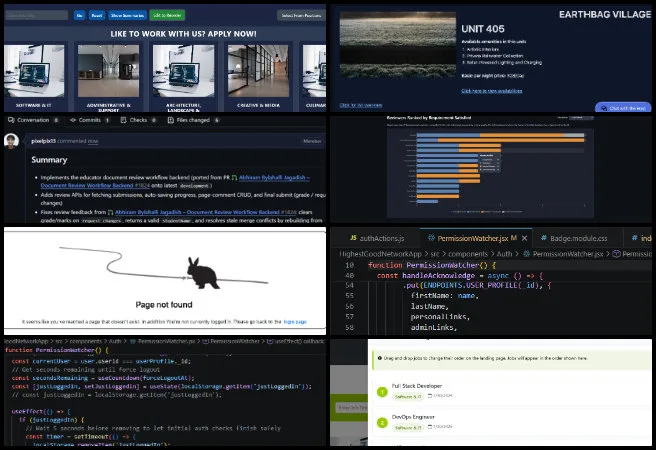
SOFTWARE PR REVIEW TEAM A-N
The PR Review Team’s summary for members with names starting with A–N was managed by Sai Sree Dongari (Data Analyst). The Highest Good Network is a foundation for measuring our results in demonstrating eco-civilization design and implementation. This week’s active members of this team were Akshay Viswanath (Software Engineer), Ansh Shah (Software Engineer), Carl Bebli (Software Developer), Deepigha Japamony (Software Engineer), Ken Zou (Software Engineer), Mallikharjuna Abhiram Mulpuri (Software Engineer), and Nathan Hoffman (Software Engineer). They reviewed all Highest Good Network PRs shared in this week’s update. Learn more about how the Highest Good Network open source hub measures progress toward demonstrating eco-civilization design and implementation. The collage below shows a compilation of this team’s work.
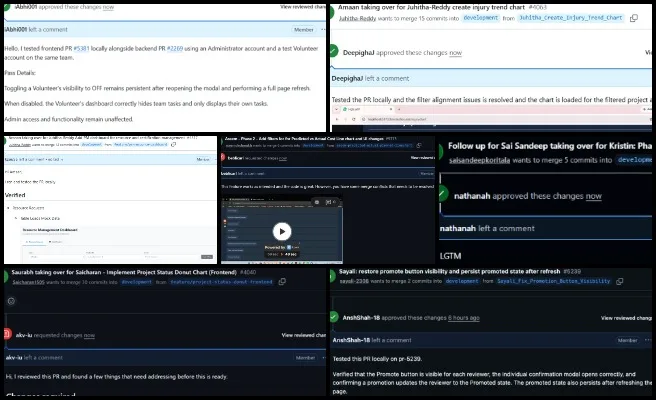
SOFTWARE PR REVIEW TEAM O-Z
The PR Review Team’s summary for members with names starting with O–Z was managed by Shameera Musthafa (Data Analyst). The Highest Good Network is a foundation for measuring our results in eco-civilization design and implementation. This week’s active members of this team were Sundar Machani (Software Engineer), Yiyun Tan (Software Engineer), and Yuxuan Wang (Software Engineer). They reviewed all the Highest Good Network PRs (Pull Requests) shared in this week’s update. Learn more about how the Highest Good Network open source hub measures progress towards our goal of eco-civilization design and implementation. The collage below shows a compilation of the work from this team.
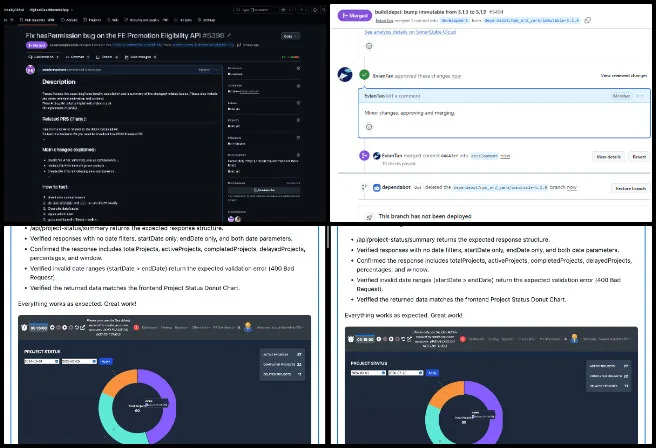
AND WE PRODUCED THIS WEEKLY UPDATES BLOG – CLICK HERE TO SUBSCRIBE
FOLLOW ONE COMMUNITY’S PROGRESS (click icons for our pages)
INVESTOR PAGES
GET INVOLVED
One Community Welcomes Devendranath Chowdary Maganti to the Administration Team!
One Community welcomes Devendranath Chowdary Maganti to the Administration Team as our newest Volunteer/Consultant!
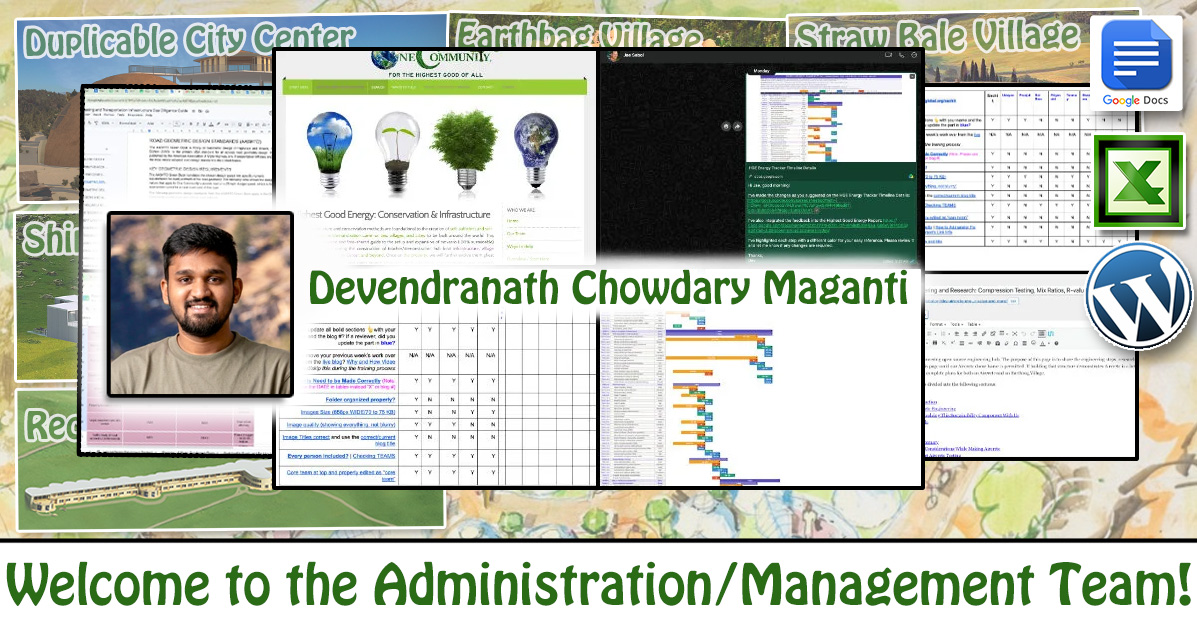
Devendranath is a data analyst with experience in data visualization, dashboard development, and technical documentation. He has worked on transforming complex datasets into clear visual reports and dashboards that improve accessibility and support data-driven decision-making. His interests include data analytics, business intelligence, and visualization design for collaborative, sustainability-focused projects. As a member of the One Community Software Team, Devendranath has contributed to the Aircrete project by creating summary tables, graphical representations, explanatory content, and web pages from technical documentation. He also developed the Highest Good Energy Construction Timeline Data Analysis Dashboard and Visualizations, enhanced the Highest Good Network Tracker based on project feedback, and supported the Administration Team by reviewing onboarding blogs, providing feedback to new volunteers, and assisting with training and administrative workflows.
WELCOME TO THE TEAM DEVENDRANATH!
FOLLOW ONE COMMUNITY’S PROGRESS (click icons for our pages)
INVESTOR PAGES
GET INVOLVED
One Community Welcomes Deepigha Japamony to the Software Development Team!
One Community welcomes Deepigha Japamony to the Software Development Team as our newest Volunteer/Consultant!
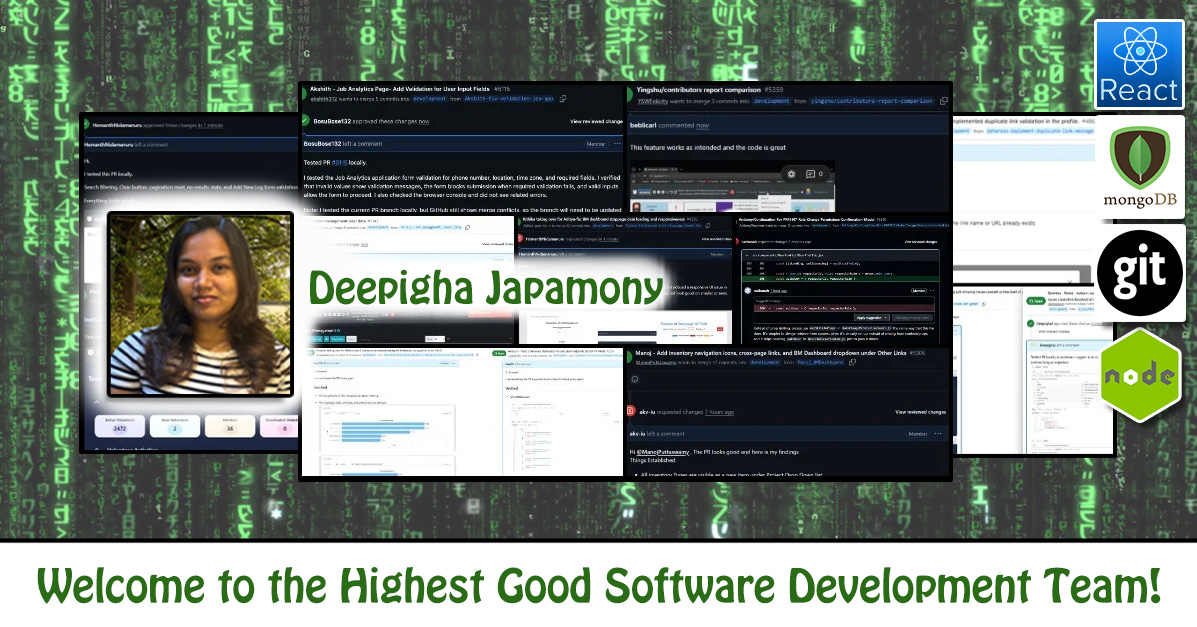
Deepigha has over 7 years of experience in Software Engineering and Quality Assurance. She is proficient in Java, Python, TypeScript, JavaScript, and has hands-on experience with React, Node.js, MongoDB, FastAPI, Streamlit, QA Automation, AWS, and GCP. She has built and deployed independent projects including AI agents, data visualization tools, and web scraping applications, and has contributed to open-source development as a pull request reviewer for a MERN stack application. Her work spans frontend and backend development, API validation, and AI agent development. As a member of the One Community team, Deepigha has reviewed pull requests for the Highest Good Network app, covering frontend, backend, and full-stack features across profile management, dashboards, event management, materials tracking, and data visualization, identifying functional bugs, dark mode contrast issues, API backend gaps, and UI regressions, and approving PRs after fixes were confirmed.
WELCOME TO THE TEAM DEEPIGHA!
FOLLOW ONE COMMUNITY’S PROGRESS (click icons for our pages)
INVESTOR PAGES
GET INVOLVED
One Community Welcomes Sai Sandeep Koritala to the Software Development Team!
One Community welcomes Sai Sandeep Koritala to the Software Team as our newest Volunteer/Consultant!
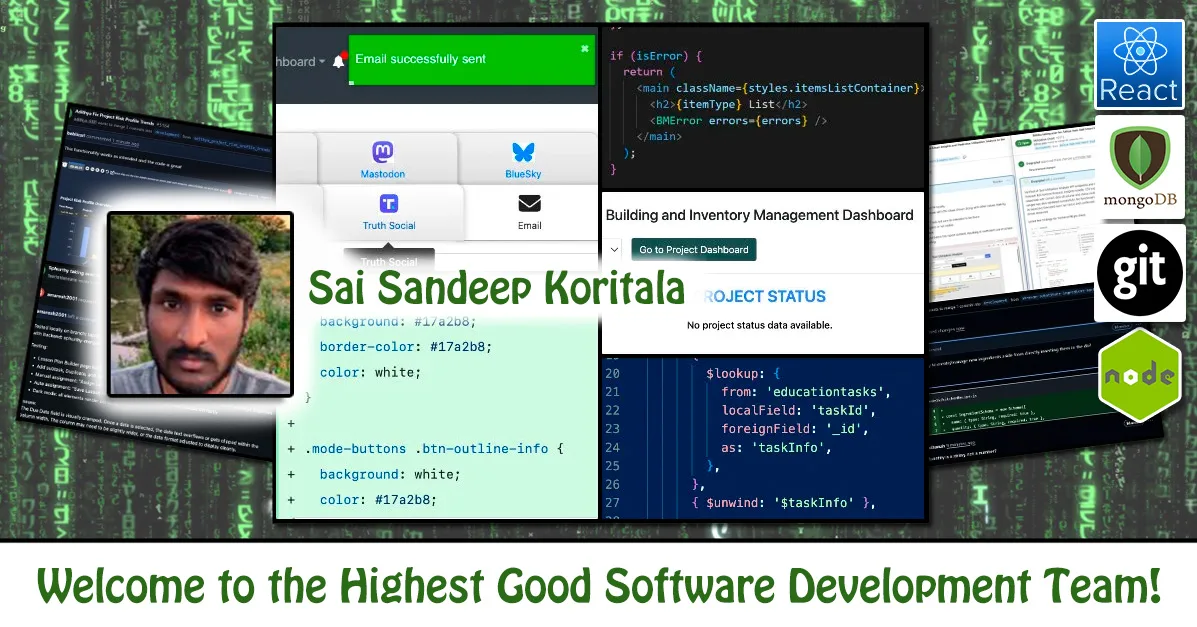
Sai Sandeep is a Full Stack Developer with expertise across the MERN stack, TypeScript, and backend security protocols. He has a proven track record of refactoring complex codebases and building interactive, data-driven user interfaces that optimize the overall user experience. He thrives in fast-paced environments where he can transition between frontend visualization challenges and complex backend integration work. As a member of the One Community team, Sai has contributed to the Highest Good Network by implementing secure JWT authentication workflows, engineering backend student logging infrastructure, integrating dynamic charting systems for financial and volunteer metrics, delivering advanced tooltip features for doughnut charts, and building full-text search, pagination, and multi-tier date filtering systems alongside light and dark mode UI enhancements.
WELCOME TO THE TEAM SAI SANDEEP!
FOLLOW ONE COMMUNITY’S PROGRESS (click icons for our pages)
INVESTOR PAGES
GET INVOLVED
One Community Welcomes Valentina Collini to the Graphic Design Team!
One Community welcomes Valentina Collini to the Graphic Design Team as our newest Volunteer Graphic Designer!
Valentina recently graduated from Las Positas College with a degree in graphic design and is focused on developing her skills in design and marketing. She is passionate about continuing to learn, expanding her horizons, and building a career that combines creativity with meaningful communication. Her interests include visual storytelling, branding, and creating designs that support clear and effective messaging. As a member of the One Community team, Valentina helps with design tasks, primarily creating images for volunteers and social media, as well as uploading biographies to the website. She is excited to keep growing professionally while contributing to projects that support the mission of One Community.
WELCOME TO THE TEAM VALENTINA!
FOLLOW ONE COMMUNITY’S PROGRESS (click icons for our pages)
INVESTOR PAGES
GET INVOLVED
Facilitating a Highest Good Living Model – One Community Weekly Progress Update #696
At One Community, we are facilitating a highest good living model for a global audience seeking real, replicable change. Our all-volunteer team is building a self-replicating framework that weaves together sustainable approaches to food, energy, housing, education, economics, and social architecture, all designed to evolve into a global network of teacher/demonstration hubs. Everything we create is open source and freely shared because we’re doing this for “The Highest Good of All.“
- Here’s our project overview
- Here’s our world-change methodology
- Here’s how this becomes self-replicating
- Here’s how we are open source and free-sharing all the do-it-yourself designs
OUR MAIN OPEN SOURCE HUBS
Click on each icon to be taken to the corresponding Highest Good hub page.
One Community’s physical location will forward this movement as the first of many self-replicating teacher/demonstration communities, villages, and cities to be built around the world. This is the July 20, 2026 edition (#696) of our weekly progress update detailing our team’s development and accomplishments:
Facilitating a Highest Good Living Model
One Community Progress Update #696

DONATE | COLLABORATE | HELP WITH LARGE-SCALE FUNDING
CLICK HERE IF YOU’D LIKE TO RECEIVE AN EMAIL EACH WEEK WHEN WE RELEASE A NEW UPDATE
YOU CAN ALSO JOIN US THROUGH SOCIAL MEDIA
ONE COMMUNITY WEEKLY UPDATE DETAILS
HIGHEST GOOD HOUSING PROGRESS
One Community is facilitating a highest good living model through Highest Good housing that is artistic and beautiful, more affordable, more space efficient, lasts longer, DIY buildable, and constructed with healthy and sustainable materials:
- Learn about: Our Upcoming Crowdfunding Campaign
- Learn about the different village models and facilitating a highest good living model: 7 Sustainable Village Models
- Visit the open source portals for the first two: Earthbag Village OS Hub | Straw Bale Village OS Hub
This week, Devendranath Chowdary Maganti (Data Analyst) finalized the Highest Good Energy Rollout Tracker and completed the full set of visualizations for the webpage, including the rollout Gantt chart, timeline charts for each construction step, and corresponding duration-share donut charts. He integrated these visualizations into the webpage by drafting introductory text, captions, explanatory content, and source references before revising the page based on feedback to improve organization, consistency, and readability. Devendranath also continued supporting the Administration Team by reviewing onboarding blogs, providing feedback to new volunteers, assisting with training activities, and completing regular administrative tasks. His work contributes to facilitating a highest good living model by making complex sustainability information easier to understand and apply through well-organized open-source resources. Below, you’ll find some images of this work.
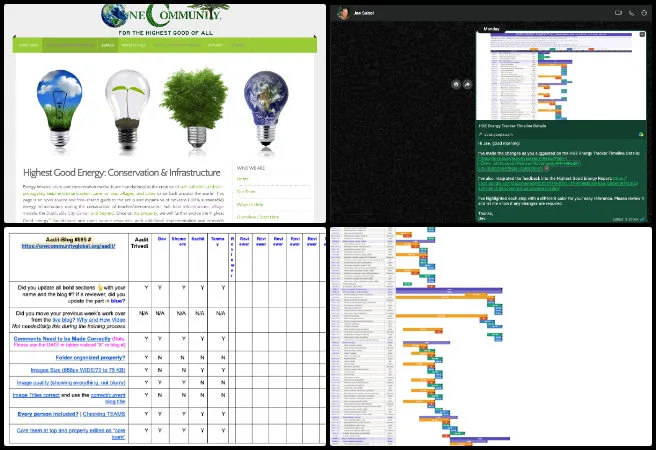
Sagar Chavan (Transportation Engineer) continued working on sustainable infrastructure documentation for One Community. This week, he shifted focus to the roadway, parking lot, and stormwater management materials that support the broader Sustainable Roadways, Walkways, and Landscaping component. He examined plans, reports, and tutorial materials related to sustainable infrastructure, including drainage systems, stormwater collection methods, and roadway and parking lot design elements, to better understand the project requirements and available design information. Sagar organized the project information, identified areas requiring updates, and prepared notes to improve the clarity and usability of the open-source documentation. He also reviewed existing design documentation and technical requirements to support future project updates. His efforts support facilitating a highest good living model by strengthening the quality and usability of open-source guidance for sustainable transportation and water management systems. See below for some of the pictures related to this work.
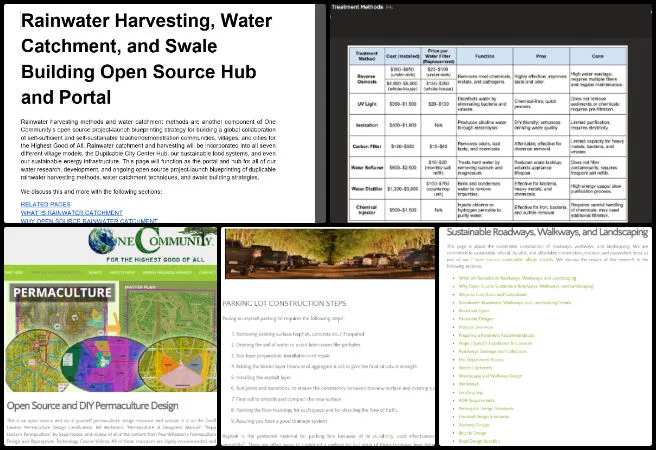
DUPLICABLE CITY CENTER PROGRESS
One Community is facilitating a highest good living model through a Duplicable and Sustainable City Center that is LEED Platinum certified/Sustainable, can feed 200 people at a time, provide laundry for over 300 people, is beautiful, spacious, and saves resources, money, and space:
- Learn about this building, its function and facilitating a highest good living model: Duplicable City Center Open Source Hub
This week, Bevan Chiu (Mechanical Engineer) continued his work finishing the City Center Eco-spa Designs. He worked on selecting an insulation sweet spot range of 18 to 21 inches, edited report content, began verifying team calculations, and integrated the initial flooring structure into the CAD assembly. For the insulation sweet spot, Bevan updated the graphs and revised the accompanying write-up to reflect the selected thickness range. He also edited the spa cover section to improve the organization of the content and checked the FEA boundary conditions for the spa cover components. As part of the calculation verification effort, Bevan checked each entry in the Heat Loss, Hot Tub Startup, and Water Head Loss calculators, documenting any calculation updates along with the supporting references for specific values. In addition, he integrated the spa tub flooring structure into the CAD assembly, checking component fit and overall integration between the flooring structure and the existing assembly. This open source Duplicable City Center project focuses on facilitating a highest good living model. For more details, refer to the image below.
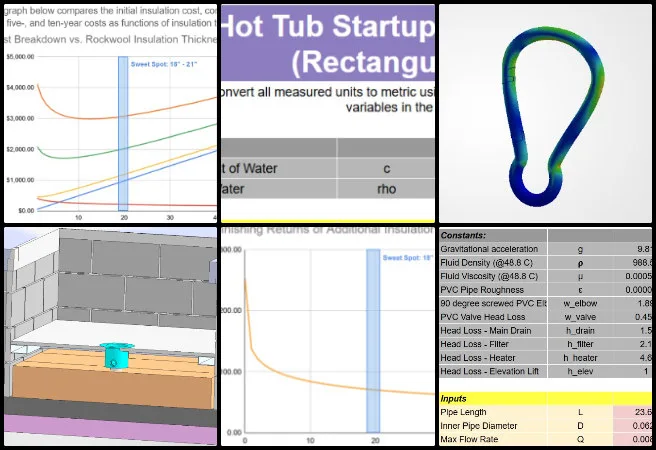
Shivarama Krishna Revanuru (Mechanical Engineer) continued working on the Duplicable City Center design. He focused on preparing the report write-up for the finite element analysis (FEA) of the spa cover by adding relevant images and incorporating edits suggested by JAE and team members. Team members’ report sections were proofread to identify and address gaps, improving consistency across the document. Work also included progressing on the FEA of the weight loading applied to Plate 2 and continuing analysis related to the FEA model. This open source Duplicable City Center project is facilitating a highest good living model. The images below illustrate aspects of this work.
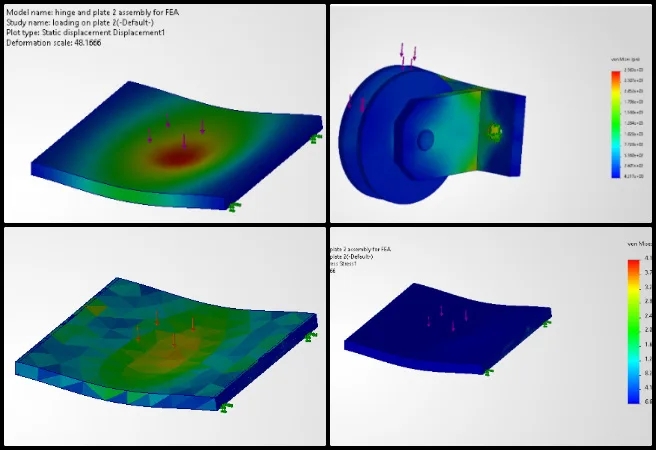
Nidish Reddy Koppula (Mechanical Engineer) continued working on the Duplicable City Center design. He worked on the hydraulic elevator assembly by assembling major components, checking tolerances, verifying mating alignment, and identifying parts that required modification for proper fit. He updated components that were not mating correctly and adjusted the assembly to improve alignment between the cab, guide rails, guide shoes, brackets, and lift shaft structure. Nidish also performed preliminary FEA on the guide shoes and guide rails to evaluate stress, deformation, and load response under selected guide loading conditions. After completing those component-level checks, he started the FEA setup and analysis process for the lift cab chassis to evaluate the structural response of the cab frame and hydraulic load path. This open source Duplicable City Center project is facilitating a highest good living model. For more details, refer to the image below.
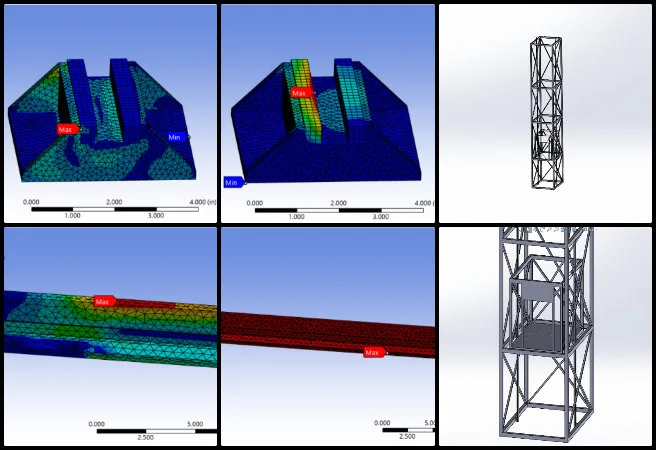
Sri Vidya Sai Thumu (Mechanical Design Engineer) continued developing the City Center Eco-spa Designs. She worked on City Center Spa Tub flooring system in SOLIDWORKS by refining the floor panel assembly and aluminum structural frame. The work included researching aluminum rectangular hollow sections and weld-free connection methods, evaluating structural support concepts, and modifying the design to use vertical supports for transferring loads to the cinderblock walls while maintaining clearance for the drain and Rockwool insulation. The floor panel, perimeter frame, interior joists, and support members were updated, and the assembly was refined to improve the overall structural layout. Time was also spent learning the SOLIDWORKS Simulation workflow, researching FEA setup and boundary conditions, and preparing the model for structural analysis. This open source Duplicable City Center project focused on facilitating a highest good living model. For more details, refer to the image below.
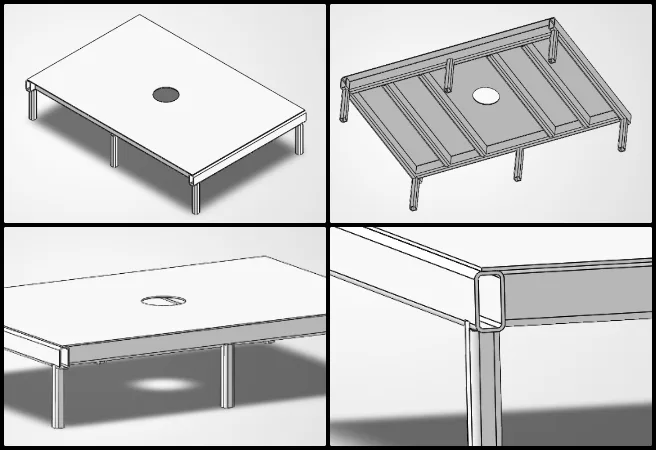
HIGHEST GOOD FOOD PROGRESS
One Community is facilitating a highest good living model through Highest Good food that is more diverse, more nutritious, locally grown and sustainable, and part of our open source botanical garden model to support and share bio-diversity:
- Learn about the structures and facilitating a highest good living model: Hoop House Hub | Aquapini & Walipini Open Source Hub
- See what we’ll be growing: Gardens & Hoop Houses | Large-scale Structures | Food Forest | TA
This week, the core team continued working on the Master Tools, Equipment, and Materials/Supplies List for the Large-scale Garden, Botanical Garden, and other Highest Good Food components, focusing on the storage location for the EQSB to include fencing supplies, lumber, and cardboard, and respirators for the Earthbag Village project. They reviewed the goat information on the website and provided necessary corrections. Furthermore, the team researched the Amish method of wood preservation, specifically the application of pine tar, boiled linseed oil derived from flax, and turpentine. Current consideration is for constructing one fence from metal and the remaining from wood treated with these substances. Their efforts contribute to One Community’s mission of facilitating a highest good living model through open-source collaboration, ecologically responsible innovation, and a focus on long-term global development. The collage below portrays the team’s efforts and achievements for the week.
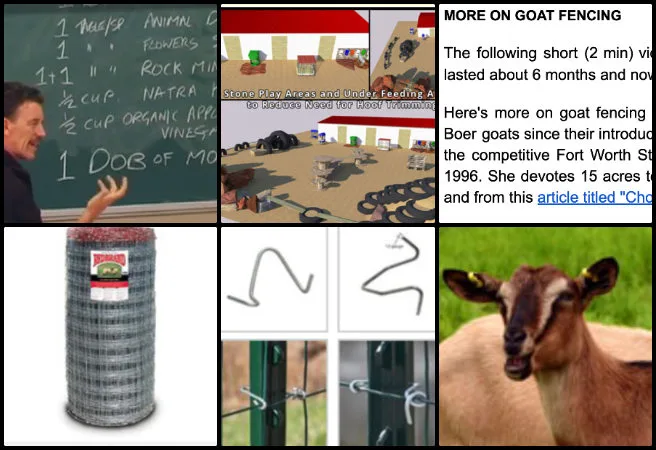
Jay Nair (BIM Designer) continued working on the Aquapini and Walipini Planting and Harvesting documents. He worked on analyzing each zone in the greenhouse lighting energy calculator using the written step-by-step calculations to verify the equations and supporting data. The work focused on comparing calculator outputs against the manual calculation process, checking linked inputs, reviewing zone-specific values, and identifying inconsistencies in the formulas while refining the calculator for accuracy and future use. These updates improve the stability and adaptability of shared systems, supporting the broader goal of facilitating a highest good living model. See the collage below portraying the work done this week.
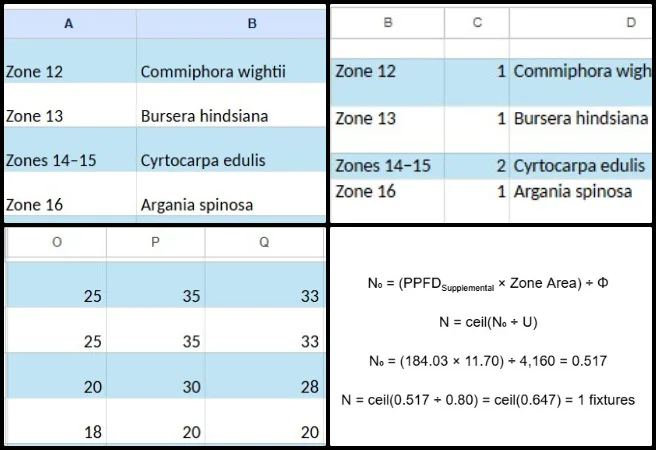
Shameera Musthafa (Data Analyst) continued working on the Highest Good Food initiative, OC Administration, and the PR Review Team, coordinating review workflows and providing feedback to ensure accuracy, clarity, and consistency across deliverables. She organized and categorized project images, created visual collages, and finalized blog-related content as part of PR review coordination, ensuring that both visual and written materials were properly curated and documented. She also contributed to the Highest Good Energy report pages, related visualizations, and managed the One Community Bluesky social media account, creating and publishing posts to help share project updates and increase outreach and engagement furthering One Community’s mission of facilitating a highest good living model.
In addition, Shameera supported the hiring process, interviewing and evaluating candidates. She also carried out end-to-end testing of the PR Review Team Admin Dashboard, validating key workflows, identifying issues, documenting results, and helping ensure the dashboard functioned as intended. This work plays a key role in facilitating a highest good living model. See below for images showcasing her work.
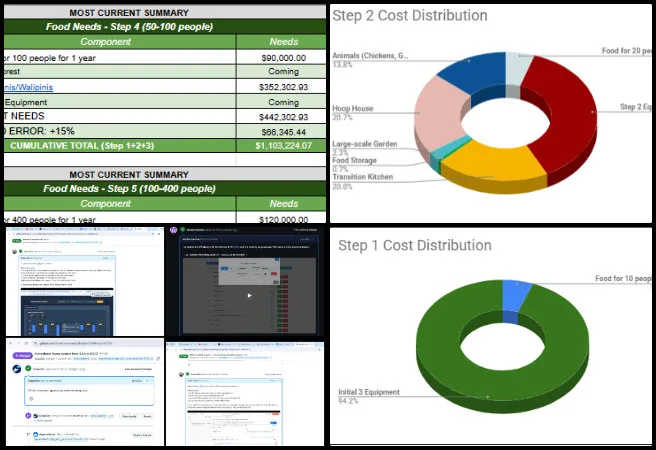
HIGHEST GOOD ENERGY PROGRESS
One Community is facilitating a highest good living model through Highest Good energy that is more sustainable, resilient, supports self-sufficiency and includes solar, wind, hydro and more:
- Learn about the open source sustainable-energy foundations and facilitating a highest good living model: Solar, Hydro, and Wind
- Explore our research into the most sustainable products and companies for saving water and energy: Insulation, Eco-laundry, Lightbulbs and Light Bulb Companies, Doors and Door Companies, Windows and Window Companies, Toilets, Faucets and Faucet Accessories, Urinals, and more.
This week, the core team continued contributing to the Highest Good Energy initiative. They completed the review of the Aircrete webpage, leaving comments about broken links, missing units, minor edits, and small content revisions. The team also communicated with the vermiculture eco-toilet team regarding force calculations and with the hot tub team regarding bather load. In addition, they completed the spreadsheet cost analysis for the hoop house infrastructure in step 2 of the food infrastructure rollout as part of facilitating a highest good living model. See the collage below for a snapshot of their work this week.
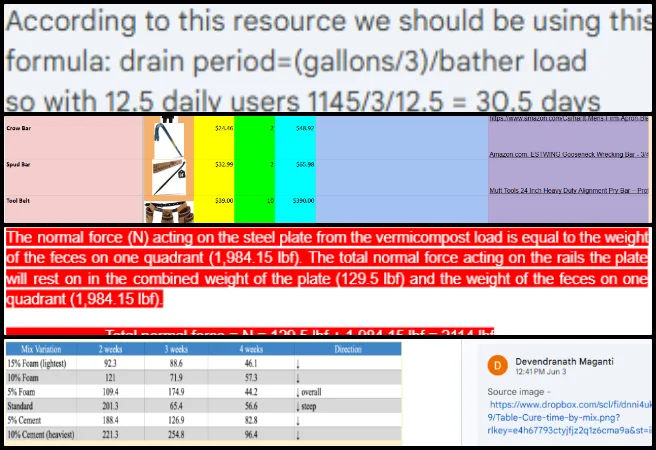
Rohan Pariakar (Operations and Supply Chain Analyst) continued working for the Highest Good Energy initiative, facilitating a highest good living model. He advanced the project’s renewable energy planning and infrastructure analysis by completing the Phase 4 energy demand model and standardizing phase-based energy calculations using validated operating-hour assumptions derived from the hourly load analysis. He updated phase summaries, generated comparative visualizations, and verified calculation consistency across the Energy Analysis workbook. Building on these results, he refined the solar sizing methodology by standardizing the project around 450 W First Solar Series 6 photovoltaic modules, validating the selected 1.6 MW system design, recalculating panel quantities, installation footprint, and expected energy generation, while correcting engineering units and improving workbook traceability.
Rohan also developed a phased solar deployment strategy aligned with community growth by allocating the final 1.6 MW system across the 3-10, 10-20, 20-50, and 50-100 population phases, updating procurement quantities, installed capacities, and cost estimates while ensuring consistency between the Energy Analysis, Solar Sizing, Master Planning, and Solar Infrastructure workbooks. Additionally, he implemented dynamic cross-workbook references, reconciled panel cost calculations with supplier pricing, resolved rounding and precision discrepancies, and strengthened the overall engineering workflow to support future infrastructure planning, procurement, and project documentation. See the collage below for highlights of his work, which contributes to facilitating a highest good living model.
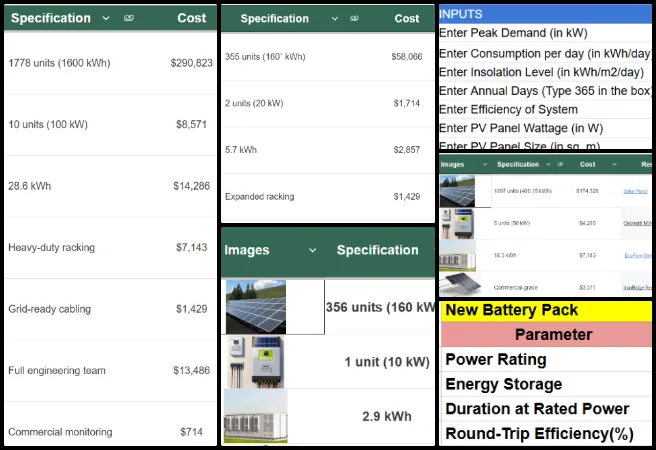
HIGHEST GOOD EDUCATION PROGRESS
One Community is facilitating a highest good living model through Highest Good education that is for all ages, applicable in any environment, adaptable to individual needs, far exceeds traditional education standards, and more fun for both the teachers and the students. This component of One Community is about 95% complete with only the Open Source School Licensing and Ultimate Classroom construction and assembly details remaining to be finished. With over 8 years of work invested in the process, the sections below are all complete until we move onto the property and continue the development and open sourcing process with teachers and students – a development process that is built directly into the structure of the education program and everything else we’re creating too:
- Program Overview: Education Open Source Hub
- How the components work together in designing human orchestrated eco-abundance and facilitating a highest good living model: How to use the Education for Life Program
- Lesson Plans for Life – Lesson Plans How-to
- Foundations of Outstanding Leaders, Teachers, and Communicators
- Curriculum for Life
- Teaching Strategies for Life
- Learning Tools and Toys for Life
- Evaluation and Evolution
This week, Jung Ah “Romey” Choi (Graphic Designer) continued contributing to the Ultimate Classroom outdoors book design, as part of facilitating a highest good living model. She completed the revisions and creation of additional ones for the Ultimate Classroom project. Romey updated and finalized a total of 81 files to improve the quality and completeness of the materials. Additionally, she completed the digital book conversion in the PubHTML5 format, uploaded the finalized version, and shared it with the manager. Romey also reviewed the final materials carefully to ensure accuracy and quality before completion. See the collage below for a snapshot of the work done this week.
Isaiah “Isa” Hernandez (Graphic Designer) reformatted the Ultimate Classroom book and designed bios for Deepigha and Devendranath, as a part of facilitating a highest good living model. He also completed the first two web announcements for each bio. The work involved reformatting the book, learning the basics with coding One Community’s web announcements, preparing biography layouts, and developing announcement materials for use on the web. See the collage below for a snapshot of his work this week.
Navya Eeshani Boyapati (Web Designer) updated the Ultimate Classroom webpage by revising HTML formatting, correcting heading levels for the table of contents, adjusting image captions and alignment, and adding or fixing anchor links. She edited foundation-related content, updated SEO elements including image alt text and keywords, compared the webpage with the Google Doc instructions to ensure consistency, corrected formatting issues in WordPress, made revisions based on supervisor feedback, and prepared the page for additional updates. See the collage below for a snapshot of this week’s work towards facilitating a highest good living model.
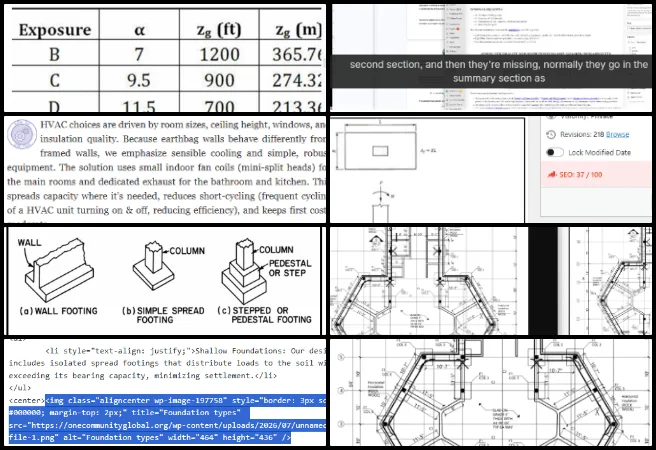
HIGHEST GOOD SOCIETY PROGRESS
One Community is facilitating a highest good living model through a Highest Good society approach to living that is founded on fulfilled living, the study of meeting human needs, Community, and making a difference in the world:
- Read the Highest Good society overview: Highest Good Society
- Learn about the model for fulfilled living, sharing and facilitating a highest good living model: A Day in the Life
- Learn about the 4 economic models: RBE | For-profit | Non-profit | Entrepreneurship
- Learn about our open source community collaboration and management software: The Highest Good Network
This week, the core team completed over 37 hours managing volunteer work reviews, handling emails, overseeing social media accounts, supporting web development, and identifying and integrating bug fixes for the Highest Good Network. They also interviewed and onboarded new volunteer team members. Additionally, they produced and integrated the video above, which highlights facilitating a highest good living model and serves as a foundational element of One Community’s broader mission. The following images showcase highlights of this work.
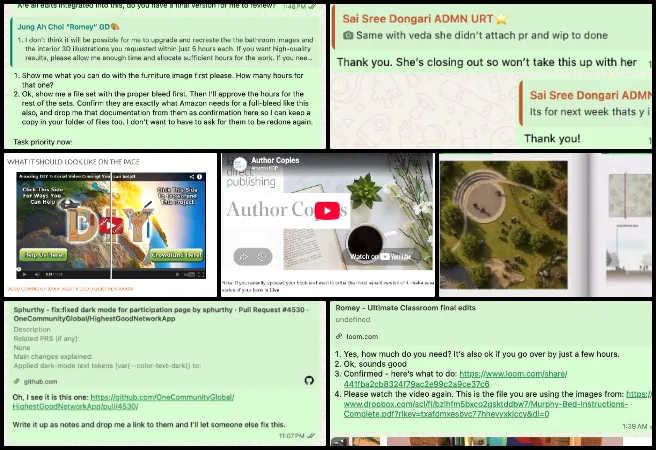
Pooja Kulkarni (UI/UX Designer) continued working on the One Community Governance Portal, expanding and refining the experience across both public-display and personal-device formats. She designed a Live Governance TV dashboard to present real-time proposal activity, voting distribution, approaching deadlines, urgent items, participation levels, and the complete governance-stage flow in a format that is easy for the public to understand. She also created community outreach and calendar-management experiences that organize partner information, shared projects, contacts, announcements, governance meetings, resource availability, and booking options. In addition, Pooja refined the Total Organization Governance Summary by improving the information hierarchy, chart readability, spacing, color differentiation, KPI visibility, and proposal-outcome reporting across infrastructure, sustainability, health and wellness, education, and community outreach sections. These updates support facilitating a highest good living model across teams and disciplines. See the collage below for snapshots of her work.
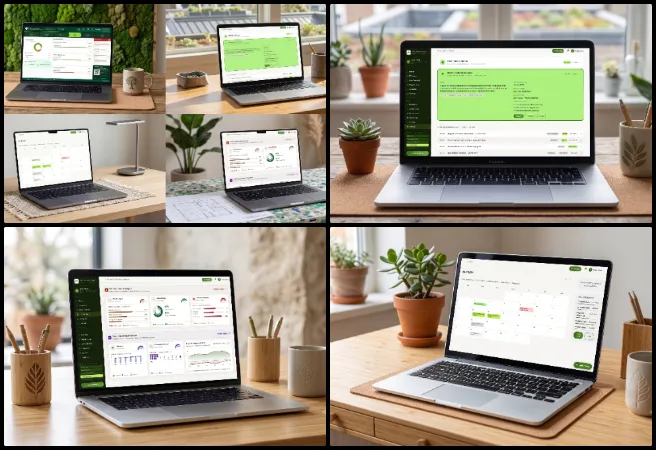
Adhya Rastogi (Business Analyst) continued end-to-end testing of the Total Organization Summary Dashboard by rechecking previously tested components, verifying the status of reported issues after recent updates, performing additional validation of selected features, updating the testing records, and documenting components that required further verification. She maintained Reddit engagement by contributing comments across relevant communities, publishing a discussion post, and monitoring community responses to better understand engagement patterns and facilitating a highest good living model.
Adhya also optimized Google Ads campaigns by refining keyword targeting, adding relevant and negative keywords, updating ad copy, reviewing campaign performance, analyzing budget allocation and spending patterns, evaluating Google Ads recommendations, and studying upcoming bidding system changes to understand their potential impact on campaign optimization. She completed SEO optimization for the Pledge page by improving content structure, keyword placement, headings, metadata, internal linking, readability, and other on-page SEO elements, recording baseline analytics, updating the SEO tracking spreadsheet, and verifying the implemented changes in WordPress. contributing to One Community’s mission of facilitating a highest good living model. See the collage below for highlights of this work.
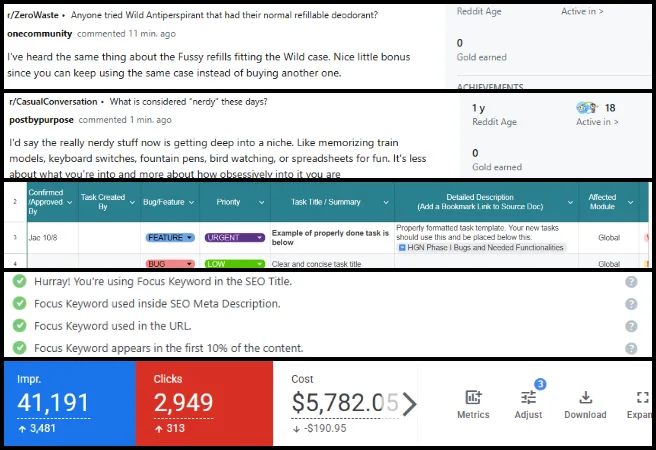
Valentina Collini (Designer) continued reviewing and refining volunteer biographies and correcting website content for accuracy and consistency. This week, she shifted focus to creating social media images to support outreach efforts, designing graphics that align with the organization’s visual standards and communicate its mission. She also spent time reviewing and refining volunteer biographies, making corrections to improve accuracy, consistency, and overall presentation. In addition, Valentina checked content for errors and implemented necessary updates, helping maintain the quality of both the website and promotional materials. Her work contributed to facilitating a highest good living model and ensuring that volunteer profiles and related content remained clear, professional, and up to date. See the collage below for highlights of this work.
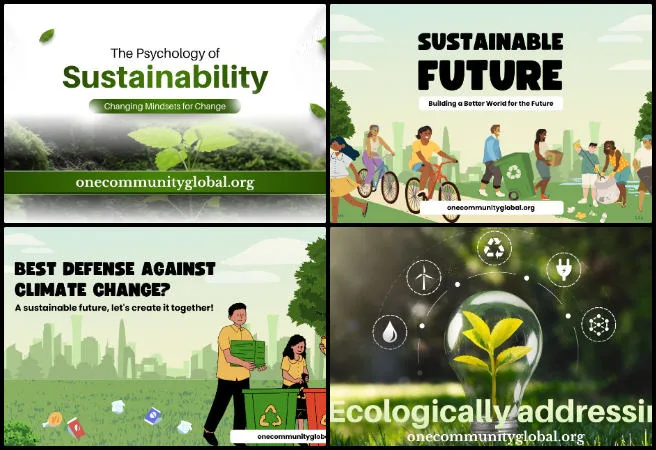
ADMINISTRATION TEAM
The Administration Team’s summary, which covers their work on the Highest Good Network, was managed by Devendranath Chowdary Maganti (Data Analyst) and includes Leo Lishin Shiu (Software Engineer), Mridul Bhushan (Volunteer Project Strategy Analyst and Team Administrator), Olawunmi “Ola” Ijisesan (Administrative and Management Support), Pranjul Garg (Business Analyst), Sachit Varma (Business Operations & Cost Analyst), Sai Sree Dongari (Data Analyst), Sayantan Paul (Frontend Tester and Software Team Administrator), and Tanmay Nihal Harwani (Data Scientist). The Administration Team supports the Highest Good Network, a tool designed to track and measure progress while developing systems that contribute to facilitating a highest good living model. Through administrative support, documentation, testing, training, recruitment, analytics, and content management, the team helps advance this mission, aligning with One Community’s vision of building a replicable and sustainable future model.
This week, Leo reviewed the 17LeDCC and 20LeFOD team weekly summaries, prepared collages for the weekly blog, scheduled Facebook and Instagram posts through Meta Business Suite, and analyzed social media insights and tracking data. Mridul continued supporting One Community as a Senior Admin Mentor Member by scheduling Twitter/X posts, completing weekend analytics for Twitter/X and LinkedIn, and mentoring Sachit through Blog #695 by reviewing formatting, organization, clarity, and compliance with blog standards. These content management, analytics, and mentoring efforts contribute to facilitating a highest good living model.
Ola reviewed the Pinterest social media dashboard, updated weekly folders for the admin team, organized workspaces, responded to priority comments, updated scheduled posts, created and resized images, prepared published content, and uploaded the weekly summary report. Pranjul monitored volunteer time logs, corrected logging issues, updated activity records, scheduled Tumblr and Medium posts, gathered weekly team updates, and published the final WordPress blog. These administrative coordination and content management efforts contribute to facilitating a highest good living model.
Sachit restructured One Community’s funding matrix into a two-stage evaluation framework, created an Association Matrix for connector analysis, researched prospective funders, produced detailed evaluation briefs, corrected factual information, and applied the updated scoring system to compare organizational alignment and funding potential. Sai Sree organized PR review images, created collages, finalized PR Admin Team blog content, completed candidate interviews, recorded hiring feedback, performed frontend testing across multiple dashboard areas, documented UI observations, and reviewed Aadit’s training submissions. These research, evaluation, hiring, and testing activities contribute to facilitating a highest good living model.
Sayantan completed OC Administration responsibilities by managing Team Skye’s blog submission, performing peer evaluations, assessing admin training work, providing guidance on formatting and SEO requirements, updating administration feedback records, and supporting warning procedures. He also tested multiple HGN frontend improvements, documented remaining software issues, monitored bug and feature trackers, assigned tasks, and supported developers with implementation guidance furthering One Community’s mission of facilitating a highest good living model.
Tanmay continued bio administration, blog management, social media coordination, and administrative audits by updating bios, following up on missing information, merging team blogs, completing SEO optimization, checking new admin work, publishing Threads posts, and maintaining project tracking records. These administration, software testing, and communication activities contribute to facilitating a highest good living model. See the collage below for highlights of this week’s work.
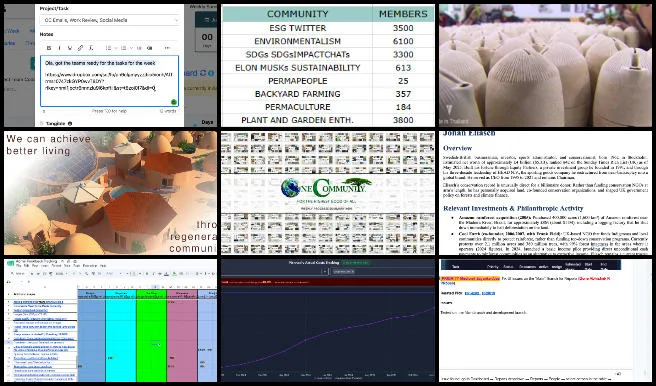
HIGHEST GOOD NETWORK PROGRESS
One Community is facilitating a highest good living model through open source Highest Good Network® software that is a web-based application for collaboration, time tracking, and objective data collection. The purpose of the Highest Good Network is to provide software for internal operations and external cooperation. It is being designed for global use in support of the different countries and communities replicating the One Community sustainable village models and related components.
- Learn about our open source community collaboration, management software and facilitating a highest good living model: The Highest Good Network
This week, the core team continued testing pull requests on the main branch for the Highest Good Network. They confirmed that fixes were working as expected for 10 pull requests and identified that 8 pull requests were not fixed. The team also identified several pull requests that could not be tested because the required data was not available on the main branch. These included Application/Job Posting Page (PR #5238), Phase 6 – Kitchen Inventory Management – Implement Search Functionality for Inventory Page (PR #5318), Listing and Bidding Platform – Implement Frontend User Management Section with Static Mock Data (PR #5328), Add Labor Cost Variance & Budget Benchmarking (PR #5260), Fix “Expand All” Functionality on Lesson List Page (PR #4528), Fix Paid Labor Cost Filters Visibility in Dark Mode (PR #4683), and Fix “Issue” Option in Dropdown Not Functioning (PR #4385). See the collage below to view the team’s work, which contributes to facilitating a highest good living model.
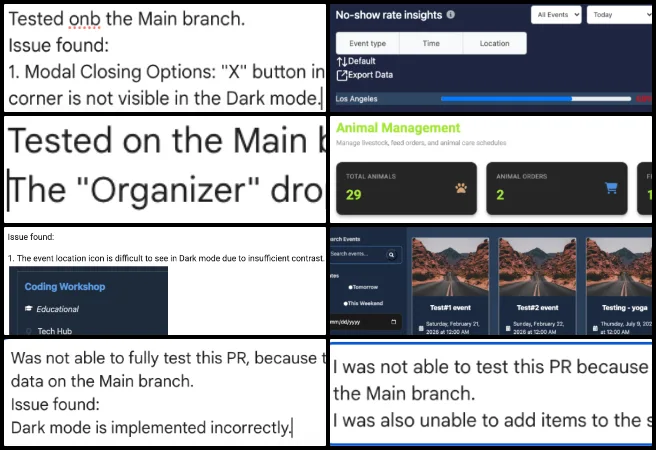
ALPHA SOFTWARE DEVELOPMENT TEAM
The Alpha Team’s summary, covering their work on the Highest Good Network, was managed by Lin Khant Htel (Frontend Software Developer) and Pranjul Garg (Business Analyst) with a team consisting of Casstiel Pi (Software Engineer), Handika Harianto Ew Jong (Full Stack Developer), Maithili Kalkar (Software Engineer), Sai Sandeep (Software Engineer), Som Ramnani (Junior Software Engineer), and Yingshu Wang (Software Engineer) supporting One Community’s mission of cross-functional software development and system improvements. This work advances the team’s objectives, ensuring that all completed tasks directly contribute to facilitating a highest good living model.
This week, Casstiel verified the deployment of frontend usability features for the Weekly Project Summary interface, including project and week labels, section controls, dynamic badge structures, empty-state UI handling, and loading state feedback. Upon identifying necessary backend dependencies for comparison datasets, badge counts, and filtering logic, he created a dedicated repository branch to construct the /issue/breakdown endpoint. He concluded the sprint by validating data delivery payloads directly feeding the Issues Breakdown visualization chart contributing to One Community’s mission of facilitating a highest good living model.
Handika updated pull requests #5002 and #4998 to introduce full dark mode compatibility across the analytics dashboard layout. He engineered direct click handlers to bind filter criteria to the Apply component, restructured tooltip rendering states, and synchronized quick-select operations with custom calendar date inputs. Additionally, he integrated react-select architectures to replace legacy comparison filters, repaired layout typography alignment faults, and refined cross-theme CSS styling rules. These combined technical improvements support the objective of facilitating a highest good living model.
Maithili deployed an ngrok local tunneling infrastructure to provision secure sandboxed testing conditions for social media automation integrations. She established and configured isolated testing environments inside Meta Developer and Instagram business profiles to map out API capabilities. This foundation allowed her to audit existing codebase routing logic and trace current authorization flows to diagnose authentication flaws and configuration bottlenecks. Sai finalized critical feature enhancements on pull request #4810, neutralizing an edge-case bug in the application’s elevation logic that restricted previously promoted reviewers from re-entering promotion workflows. He followed this up by deploying multiple interface responsiveness patches and troubleshooting regression anomalies on pull request #5383, fully restoring application routing functionality across all core BM Dashboard view states. This work advances the goal of facilitating a highest good living model through improvements to system efficiency and usability.
Som pushed visual polish updates to pull request #5273, correcting spacing values, connector line boundaries, hover informational tooltips, and legend data keys for the Blue Square Stats component. To secure these UI enhancements, he authored fresh testing layers evaluating theme rendering behaviors, then targeted SonarQube duplication warnings within pull request #5364. He resolved these warnings by modularizing shared utility files and consolidating redundant PropTypes declaration trees before running local formatting, linting, and production compilation pipelines furthering One Community’s mission of facilitating a highest good living model.
Yingshu completed onboarding protocols across the master project architecture and frontend repository structure to establish a development environment baseline. She initiated development phases for the Volunteer Time subsystem, systematically restructuring the functional file architecture and checking in the preliminary codebase configuration commits. Finally, she isolated lingering state errors tied to Task 1191, evaluating data mutations within profile hour updates to isolate the source of erroneous calculations. This work advances the goal of facilitating a highest good living model through improvements to system efficiency and usability. The collage below offers a visual representation of the team’s work for the week.
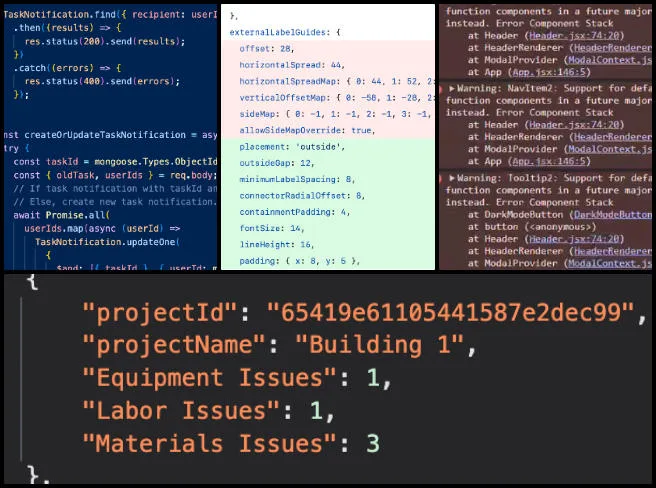
BINARY BRIGADE SOFTWARE DEVELOPMENT TEAM
The Team Brigade’s summary, covering their work on the Highest Good Network, was managed by Roshini Seelamsetty (Software Engineer) and Pranjul Garg (Business Analyst) with a team consisting of Amaan Syed (Volunteer Software Engineer), Mahitha Pasupuleti (Software Engineer), Manoj Puttaswamy (Software Engineer), and Divya Sai Nagabhairu (Software Engineer). Roshini coordinated the weekly summary workflow, ensuring all technical milestones align with the project’s goal to contribute to facilitating a highest good living model.
This week, Amaan worked on frontend development and follow-up tasks across multiple HighestGoodNetworkApp pull requests. His work included resolving merge conflicts, updating responsive layouts in the Header and Permissions Management pages, addressing reviewer feedback and SonarCloud findings, validating implementations across different viewport sizes, updating dark mode styling and modal behavior in the PR Review Promotion Modal, refactoring User Management filter logic to address code quality recommendations, validating searches containing embedded spaces, running frontend tests, refactoring anniversary rendering logic to reduce complexity while maintaining existing functionality, and updating Edit Links modal behavior, duplicate link validation, and dark mode styling while testing add, edit, delete, cancel, and update workflows contributing to One Community’s mission of facilitating a highest good living model.
Mahitha worked on the server date protection feature for time logging and weekly summaries by finalizing backend and frontend implementations, submitting pull requests #2271 and #5390, implementing server-side date validation, and updating frontend validation to use server date values instead of local system dates. Divya submitted the weekly summary report, reviewed completed work, and updated project documentation to reflect current progress. The work also included contributing to PR #5273, PR #5276, and PR #5369 by reviewing the implementation, making code updates, testing changes where applicable, addressing updates related to the pull requests, and preparing the changes for review. Additional time was spent supporting software development activities related to project tasks, maintaining progress on assigned work, and ensuring documentation and pull request updates were aligned with ongoing development efforts. These combined technical improvements support the objective of facilitating a highest good living model.
Mahitha also worked on Phase 6 of the Kitchen Inventory Management feature by taking over PR #5106 for the Suppliers section on the Orders page, reviewing the existing implementation and feature requirements, addressing issues preventing completion, and working on supplier profiles, supplier details, action buttons, and CSS module integration. Manoj worked on fixes related to regressions introduced in the BMDashboard inventory pages after updates to searchable multi-select filter components. His work included addressing localStorage key conflicts affecting filter state across inventory categories, updating missing and incorrect parent component properties, restoring filter user interface elements on the Tools page, resolving state type issues affecting sort header functionality, updating dropdown display behavior related to the sticky table header, and correcting Reset button alignment issues by updating the page structure. This work advances the goal of facilitating a highest good living model through improvements to system efficiency and usability. The collage below offers a visual representation of the team’s work for the week.
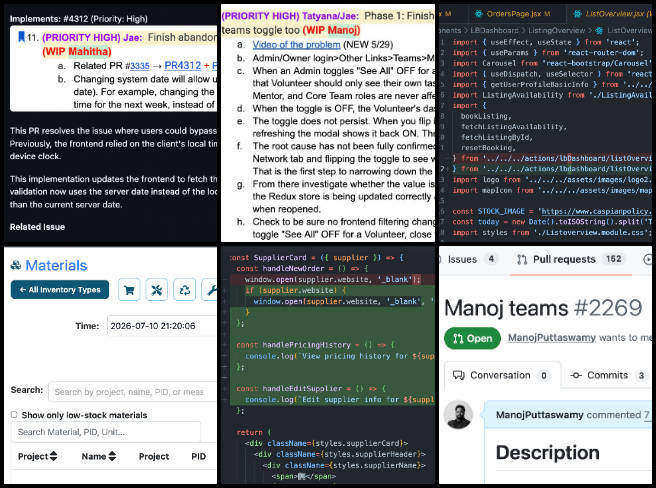
DEV DYNASTY SOFTWARE DEVELOPMENT TEAM
The Dev Dynasty Team’s summary, covering their work on the Highest Good Network software, was managed by Sayantan Paul (Frontend Tester and Software Team Administrator) and Rithika Pai (Software Engineer). The team includes Amaresh Chaudhary Nara (Software Engineer), Mahathi Ganimisetti (Data Analyst), and Sireesha Kunchala (Software Engineer). The Highest Good Network software supports facilitating a highest good living model by helping manage and measure sustainable, zero-waste operational processes across social architecture, construction, production, and maintenance systems.
This week, Amaresh completed Phase 1 of the global CSS cleanup by reviewing module.css files, fixing unscoped global selectors and styling conflicts that affected unrelated components, and resolving dark mode display issues. He also fixed PR 4738 by restoring lost time form rendering on the Reports page, improving dark mode readability, correcting backend issues that caused 404 errors when saving project or team lost time entries, resolving cache-related delays, and submitting the backend fixes in PR 2276. Mahathi worked on the frontend admin workflow for Production Identity Validation by adding production identity verification during user creation, auto-filling and locking verified user information, making identity fields read-only during edits, adding a Production Auto-Deactivated filter in User Management, fixing email case-sensitivity issues through normalized email handling, and improving local validation and error handling. These updates contribute to One Community’s mission of facilitating a highest good living model.
Rithika worked on paired frontend and backend pull requests for the BM Dashboard by fixing incorrect backend responses for invalid project IDs, extracting shared utility functions to reduce duplicate code, improving chart sizing and responsive layouts, confirming date-filter behavior through database validation, resolving dependency and test issues after rebasing, reducing SonarQube issues through code cleanup, and documenting a new task for Attendance and No-Show Tracking. Sireesha resolved merge conflicts and build failures across pull requests 4272, 4367, 4489, and 3933 by fixing dark mode styling issues, addressing SonarCloud quality gate failures and code smells, correcting UI contrast problems in the Weekly Project Summary, fixing an application crash in User Management, and updating the loading state interface. To learn more about how this work supports facilitating a highest good living model, visit the Highest Good Society and the Highest Good Network pages. Below is the collage showcasing the Dev Dynasty team’s work for the week.
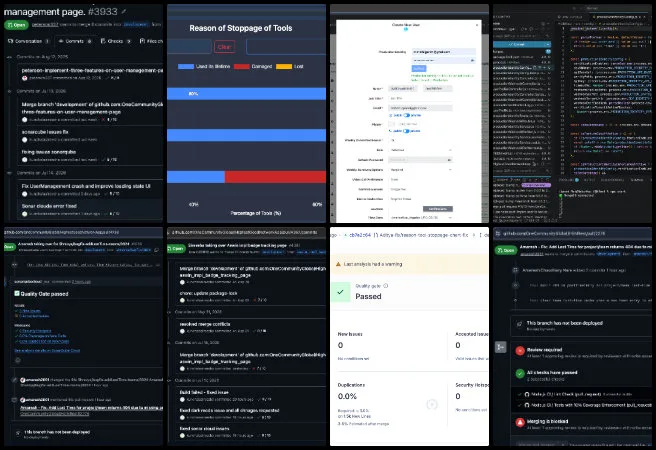
SKYE SOFTWARE DEVELOPMENT TEAM
The Skye Team’s summary, covering their work on the Highest Good Network, was managed by Sayantan Paul (Frontend Tester and Software Team Administrator) and Anthony Weathers (Software Engineer). The team includes Jaden Wong (Software Engineer), Nirali Patel (Full Stack Developer), Purav Patel (Software Engineer) and Swathi Angadi (Software Engineer). Facilitating a highest good living model is a service commitment of the Highest Good Network software which is accomplished by objectively tracking and managing progress across social architecture, construction, production and maintenance processes, utilizing transparent, scalable systems that strengthen accountability, coordination and resilient ecosystems.
This week, Jaden worked on PR #3517 by implementing dark mode support across the BadgeDevelopment component. He moved inline styles into a dedicated CSS module, updated styling to use the project’s standard dark mode utility, reduced SonarQube cognitive complexity to meet quality gate requirements by extracting helper functions and precomputing derived values, separated filter logic into module-level functions, and styled the filter interface using Bootstrap utility classes with CSS Modules while maintaining accessibility standards. For PR #3631, he determined that Netlify deployment failures were caused by unresolved merge conflicts rather than code issues, resolved the conflicts by merging the latest development branch, reverted unnecessary import changes, and restored the branch to its intended minimal scope. Both pull requests were finished with passing SonarQube quality gates and CI checks thereby furthering One Community’s mission of facilitating a highest good living model.
Purav worked on the backend Interactive Map feature by troubleshooting a startup dependency issue, reviewing the related routes and implementation, and examining pull request history and reviewer feedback. He reviewed PR #1342 and PR #1810, pushed the latest modifications, resolved merge conflicts while preserving the appropriate development implementation, removed obsolete files, and verified that the branch contained all current development commits and remained aligned with the latest codebase. Purav also created PR #2272 to merge the feature branch with the latest development changes, furthering One Community’s mission of facilitating a highest good living model.
Nirali worked on fixing failing tests for PR #5230 in the HighestGoodNetworkApp. She investigated the test failures, implemented the necessary fixes, verified the changes to improve test stability and ensure the pull request functioned as expected, and reviewed project documentation while exploring available tasks in preparation for her next assignment. Swathi worked on the Job Form Builder creation page by making it accessible to all users instead of only the owner. She also implemented functionality for the Go button click, submitted the completed changes, and continued working on the remaining Go button functionality that has not yet been submitted. These updates support facilitating a highest good living model by improving platform functionality, code quality and the reliability of collaborative tools within the Highest Good Network.
Anthony continued work on PR #5340 by reviewing feedback, making the requested code changes, addressing a Sonar issue, resolving reviewer comments, and removing an unnecessary line of code before pushing multiple follow-up commits. He communicated with a reviewer to discuss additional improvements, performed testing after each round of changes to verify the fixes, and created an update video for the stakeholder to gather feedback before proceeding with a new PR. Anthony continued investigating a logout issue affecting the wrong user, tested a potential fix and acknowledged a bug found during a follow‑up review thus contributing to One Community’s mission of facilitating a highest good living model. See the Highest Good Society and the Highest Good Network pages to learn more about how this work supports facilitating a highest good living model through our open source hub. See the collage below for the team’s work.
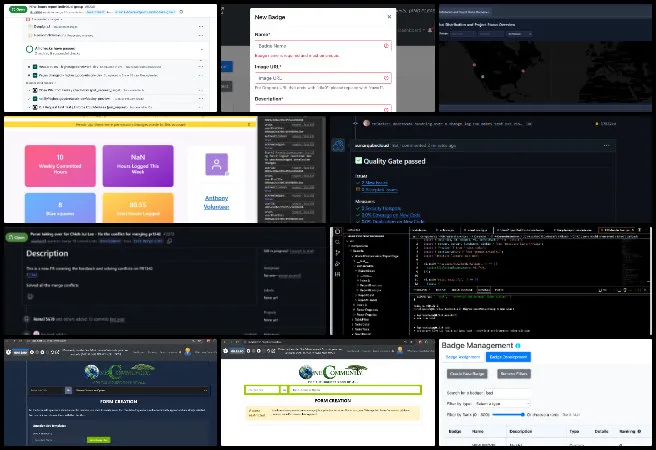
SOFTWARE PR REVIEW TEAM A-N
The PR Review Team’s summary for members with names starting with A–N was managed by Sai Sree Dongari (Data Analyst). The Highest Good Network is a foundation for measuring our results in facilitating a highest good living model. This week’s active members of this team were Akshay Viswanath (Software Engineer), Ansh Shah (Software Engineer), Bosu Babu Bade (Software Developer), Carl Bebli (Software Developer), Hemanth Nidamanuru (Data Engineer), Ken Zou (Software Engineer), Mallikharjuna Mulpuri (Software Engineer), and Nathan Hoffman (Software Engineer). They reviewed all Highest Good Network PRs shared in this week’s update. Learn more about how the Highest Good Network open source hub measures progress toward facilitating a highest good living model. The collage below shows a compilation of this team’s work.
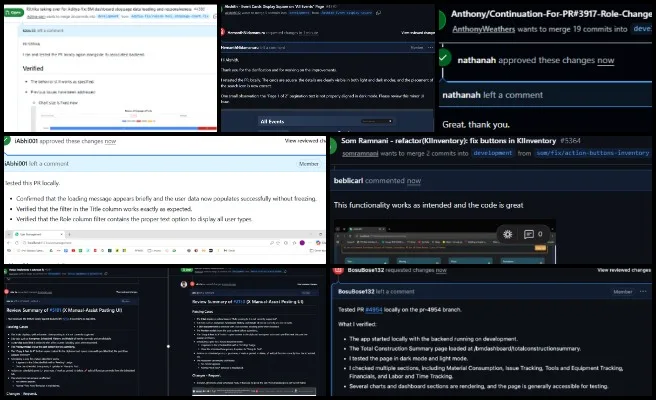
SOFTWARE PR REVIEW TEAM O-Z
The PR Review Team’s summary for members with names starting with O–Z was managed by Shameera Musthafa (Data Analyst). The Highest Good Network is a foundation for measuring our results in facilitating a highest good living model. This week’s active members of this team were Shreevaths Karawal Satish Rao (Software Engineer), Sundar Machani (Software Engineer), Yiyun Tan (Software Engineer), and Yuxuan Wang (Software Engineer). They reviewed all the Highest Good Network PRs (Pull Requests) shared in this week’s update. Learn more about how the Highest Good Network open-source hub measures progress towards our goal of facilitating a highest good living model. The collage below shows a compilation of the work from this team.
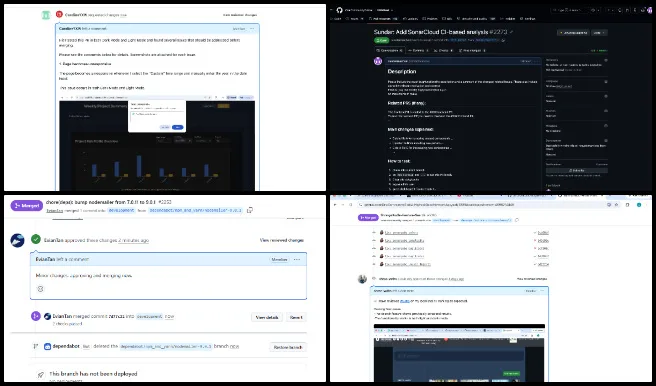
AND WE PRODUCED THIS WEEKLY UPDATES BLOG – CLICK HERE TO SUBSCRIBE
FOLLOW ONE COMMUNITY’S PROGRESS (click icons for our pages)
INVESTOR PAGES